
Beat the heat on the Acropolis. This Spanish-guided tour gets you to Athens’ top sights early, with a calmer pace and built-in audio so you don’t miss the details.
I love two things most: the licensed Spanish guide keeps the explanations clear and well timed, and the route is structured so you see major landmarks without constantly backtracking. The panoramic views from the upper parts of Acropolis Hill are another big win.
One thing to consider: the climb to the Acropolis can feel demanding, especially in warm weather, so comfortable shoes and water are not optional.
In This Review
- Key things to love about this Acropolis tour
- Why start early: First-access Acropolis in Spanish
- Meet your licensed guide and hear every detail (headsets included)
- Theatre of Dionysus and the start of the route
- Odeon of Herodes Atticus: when music and power met
- Propylaea and Temple-of-Athena-Nike moments for photos
- Parthenon: why 30 minutes can be exactly enough
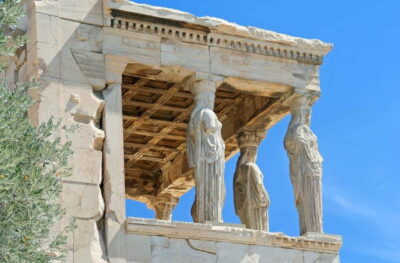
- Erechtheion: the stop that rewards close looking
- Acropolis Hill free time: getting your own rhythm
- Price and what you get for $45: value check
- Timing, tickets, and the one-moment mistake to avoid
- Who this tour fits best (and who should skip it)
- Book it or pass: my recommendation
- FAQ
- Is the tour conducted in Spanish?
- How long is the Acropolis and Parthenon tour?
- What does the tour include besides the guide?
- Do I skip the ticket line?
- Is the entrance ticket included in the price?
- If I choose the option without tickets, what do I need to do?
- What sites are included on the itinerary?
- Where does the tour start?
- Do I get hotel pickup or drop-off?
- Is the tour wheelchair accessible?
Key things to love about this Acropolis tour
- Early-access entry helps you see the monuments before the crowds stack up.
- Professional Spanish-speaking guide tells the story of each landmark in a way you can follow.
- Headsets included, so your guide’s voice stays sharp even in louder areas.
- A smart walking route ties together theater, gates, temples, and viewpoints.
- Time for photos and views, including a free segment on Acropolis Hill.
- Timed-entry awareness means you’ll get in smoothly when you match your ticket to your departure time.
More ways up the sacred rock, set side by side
- Athens: Acropolis & up to 5 Archaeological Sites Combo Pass
★ 4.2 · 13,904 reviews - Athens: Acropolis, Parthenon & Acropolis Museum Guided Tour
★ 4.8 · 9,316 reviews - The Acropolis, Parthenon & Acropolis Museum Guided Tour
★ 4.7 · 8,493 reviews - Acropolis: Premium Acropolis and Parthenon Guided Tour
★ 4.8 · 5,208 reviews
Why start early: First-access Acropolis in Spanish
Athens is famous for good reason, but the Acropolis can turn into a slow-moving crowd on a sunny day. The big value here is timing. By choosing First Access, Morning, or Afternoon, you’re making a real decision about comfort and how much you’ll enjoy the site.
An early slot also helps you read what you’re looking at. When the light is softer and the air is cooler, stone details stand out more, and it’s easier to concentrate on the architecture instead of just fighting for a photo spot. And because the tour is guided in Spanish, you’re not stuck trying to piece together the “why” behind the Parthenon and the neighboring temples on your own.
Meet your licensed guide and hear every detail (headsets included)
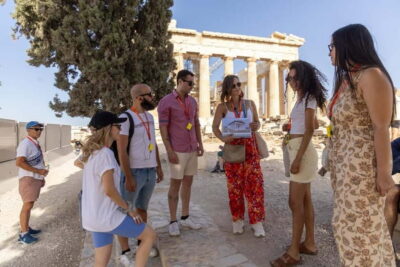
This tour is run with a professional, licensed Spanish-speaking guide, and that matters more than people expect. At the Acropolis, it’s easy to look at impressive ruins and still miss the connections: what each building was for, how the parts relate to one another, and what changed over time.
Two practical touches help you stay locked in:
- You get headsets, so your guide’s voice stays clear throughout the walk.
- The tour format includes short guided segments at key spots, plus time to look around and take photos.
Language can be a dealbreaker with tours in Athens. Here, Spanish is the working language, so if that’s your comfort zone, you’ll follow the stories without translating in your head. Reviews also highlight a particular strength: the explanations are the right length and depth, and the guide answers questions effectively. One named guide, Georgios, has been singled out for strong explanations of the different parts of the Acropolis.
Theatre of Dionysus and the start of the route
The tour begins at KeyTours Greece S.A, and then you head to the Theatre of Dionysus. Even if you only remember the word theater, this stop adds meaning to the whole Acropolis visit. The Theatre of Dionysus is tied to the origins of performance culture in ancient Greece, and it sets the tone for what comes next: a site where art, religion, politics, and public life overlap.
Expect a guided walk and a short sightseeing pause here. The main benefit is context. You’re not starting with the Parthenon and calling it a day. Instead, you begin at a place connected to how Athenians gathered to watch stories being performed—then you move into the monumental “stage” of temples and civic architecture.
More days made easy with a guide
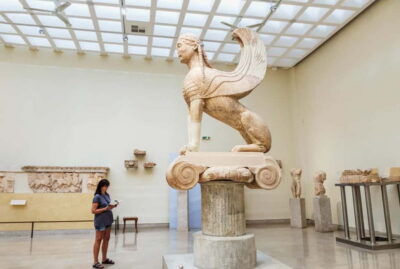

Odeon of Herodes Atticus: when music and power met
Next up is the Odeon of Herodes Atticus, a dramatic reminder that the Acropolis isn’t only about temples. This venue is associated with large public gatherings, and it helps you understand why Athens built monumental spaces for gatherings and events.
The guided time here is shorter, so the goal is quick clarity: what the structure is, why it matters, and how it fits into the bigger Acropolis picture. If you like archaeology that connects directly to daily life in the ancient world, this stop tends to land well because it’s not just “look at columns.” It’s “this is how people came together.”
Propylaea and Temple-of-Athena-Nike moments for photos
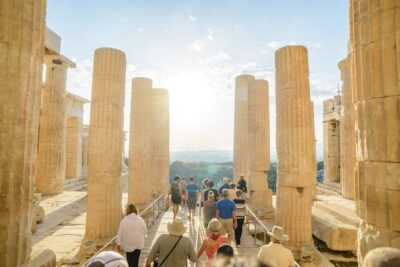
A major visual highlight is the Propylaea, the grand gateway approach. In practical terms, it’s also a great orientation point. After walking through the first zones, you’ll have a better sense of how the site is laid out and where each monument sits in relation to the next.
The tour includes a photo stop and guided walk here, which is exactly what you want on a timed visit. You get time to frame the views without the pressure of rushing straight through.
Then you’ll reach the Temple of Athena Nike. This is a smaller temple compared with the Parthenon, but it’s important, and it sits in a location where you can appreciate the design choices. You’ll get a guided segment with a short walk, so you can catch the story without losing too much momentum.
One practical note: bring your phone power bank or ensure your battery is ready. Athens views turn into photo marathons fast, especially when the walking rhythm is already organized for you.
Parthenon: why 30 minutes can be exactly enough
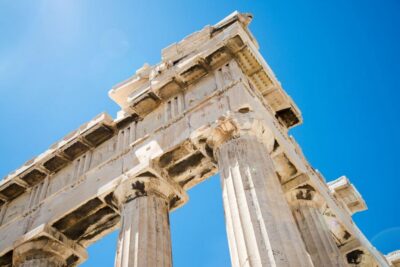
The centerpiece is the Parthenon, with about 30 minutes allotted for guided visit. That time is well chosen. If you’ve ever toured big landmarks without enough time, you know how it goes: you look, you read a few signs, then you’re hurried away before things connect.
Here, you’ll have enough minutes to:
- understand what you’re looking at,
- absorb the main architectural ideas, and
- step back for photos from a few angles.
The Parthenon section is also where your guide’s Spanish explanations pay off most. The Parthenon can feel like a pile of stone if you only see it through a quick sightseeing lens. But with clear guidance, it becomes easier to track the symbolism and purpose behind the design, and to recognize how the neighboring structures “talk” to it.
Erechtheion: the stop that rewards close looking
After the Parthenon, the tour heads to the Erechtheion (about 10 minutes guided). This is the kind of stop that works even when the time is shorter. Why? Because the Erechtheion often rewards attention to detail—shape, placement, and how it sits within the topography of the Acropolis.
With limited minutes, the key is to stay present and not multitask. Put your camera down for a moment and look up and around. If you can, take one slow sweep of the area, then switch back to photo mode. Your guide’s job here is to make the “why this part matters” clear, and that’s where the guided format really earns its place.
Acropolis Hill free time: getting your own rhythm
At the top, you get free time for about 30 minutes on Acropolis Hill. This segment is important because it’s where you decide how you want to experience the site.
Some you’ll likely do:
- walk a little farther for better photo angles,
- linger at viewpoints for skyline views of modern Athens,
- step away from the main route to see the excavations and the broader archaeological context.
This is also the time to think about weather. If the sun is high, you’ll want to find a shaded spot and reset. If the morning is clear, this is when those panoramic views can feel extra crisp—especially because the early timing helps you avoid the hottest part of the day.
Price and what you get for $45: value check
At $45 per person for a 2-hour guided experience, you’re paying for three things that matter at the Acropolis:
- A licensed guide who speaks Spanish (not just a basic audio narration).
- Headsets, which make a big difference on open-air sites.
- Skip-the-line access (and timed entry), so you’re not spending your best sightseeing hours waiting.
Your biggest “value choice” is whether you select the option with tickets. If you choose the option without an entrance ticket, you still need to purchase an Acropolis ticket in advance for your exact tour departure time. Entry is allowed only at the scheduled time, and there’s no safety net if your ticket doesn’t match the slot.
No hotel pickup is included, so factor in how you’ll get to the meeting point. Still, for many visitors, saving time at the monument itself is what makes this cost feel fair.
Timing, tickets, and the one-moment mistake to avoid
Acropolis visits run on timed entry slots. This tour is built around that reality, and that’s why the ticket option matters.
Here’s the practical rule to follow:
- If your booking includes the entrance ticket, you’re covered for the timed entry included with the tour.
- If your booking is without the entrance ticket, you must buy your ticket online in advance for the exact time that matches your departure.
The most common mistake is assuming you can arrive early and figure it out on-site. With timed entry, that approach can backfire. If you want the smoothest experience, match your ticket to the tour time and arrive with buffer.
Who this tour fits best (and who should skip it)
This experience is a strong fit if you:
- want the Acropolis story told in Spanish without translating,
- prefer structured sightseeing with clear stops,
- care about early access to reduce heat and crowd pressure,
- like an itinerary that mixes major monuments with meaningful context (like the Theatre of Dionysus).
It’s also a good match if you’re comfortable with walking and short climbs between stops. The route involves a moderate level of physical fitness, and the climb to the Acropolis can be demanding, particularly in warm weather.
It’s not suitable for wheelchair users based on the accessibility note provided. If mobility is limited, you’ll want a different type of tour or plan.
Book it or pass: my recommendation
If you’re spending limited time in Athens, I think this tour is worth booking. For the price, you get a real guide-led structure plus headsets and timed access—exactly the stuff that keeps your day from turning into stress management.
I’d especially choose it if Spanish is your working language and you want more than a checklist of ruins. The pairing of theater, gates, temples, and the Parthenon makes the Acropolis feel like a connected story instead of separate photo stops.
I’d reconsider only if:
- the climb is a concern for you (the tour does require moderate physical effort),
- you don’t want to manage a timed-entry ticket carefully, or
- you prefer an audio-only, self-paced visit rather than guided interpretation.
FAQ
Is the tour conducted in Spanish?
Yes. The tour language is Spanish, with a professional licensed Spanish-speaking guide.
How long is the Acropolis and Parthenon tour?
The duration is about 2 hours.
What does the tour include besides the guide?
The tour includes headsets to help you hear the guide better during the walk.
Do I skip the ticket line?
Yes, the tour includes skip-the-ticket-line access.
Is the entrance ticket included in the price?
It depends on the option you select. Entrance to the Acropolis is included only if you choose the option with tickets.
If I choose the option without tickets, what do I need to do?
You need to purchase your Acropolis ticket in advance for the exact time of your tour’s departure, since entry is allowed only at the scheduled time.
What sites are included on the itinerary?
The guided route includes stops such as the Theatre of Dionysus, Odeon of Herodes Atticus, Propylaea, Temple of Athena Nike, the Parthenon, and the Erechtheion, plus free time on Acropolis Hill.
Where does the tour start?
The starting location is KeyTours Greece S.A.
Do I get hotel pickup or drop-off?
No. Hotel pickup and drop-off service is not included.
Is the tour wheelchair accessible?
No. The tour is not suitable for wheelchair users.
More Tours in Athens
- Athens: Acropolis, Parthenon & Acropolis Museum Guided Tour★ 4.8 · 9,316 reviews
- The Acropolis, Parthenon & Acropolis Museum Guided Tour★ 4.7 · 8,493 reviews
- Acropolis: Premium Acropolis and Parthenon Guided Tour★ 4.8 · 5,208 reviews
- Athens: Mythology of Delphi, Museum and Arachova Guided Tour★ 4.7 · 5,102 reviews
- Acropolis and Parthenon Guided Walking Tour★ 5.0 · 4,755 reviews
- Greek Food Walking Tour in Athens★ 5.0 · 4,740 reviews
More Tour Reviews in Athens
- Athens: Acropolis & up to 5 Archaeological Sites Combo Pass★ 4.2 · 13,904 reviews
- Athens: Acropolis, Parthenon & Acropolis Museum Guided Tour★ 4.8 · 9,316 reviews
- The Acropolis, Parthenon & Acropolis Museum Guided Tour★ 4.7 · 8,493 reviews
- Athens: Cape Sounion & Poseidon Temple Sunset Half-Day Trip★ 4.8 · 8,241 reviews
- Acropolis: Premium Acropolis and Parthenon Guided Tour★ 4.8 · 5,208 reviews
- Athens: Mythology of Delphi, Museum and Arachova Guided Tour★ 4.7 · 5,102 reviews
The Acropolis, a Few More Ways Up
- Athens: Acropolis & up to 5 Archaeological Sites Combo Pass★ 4.2 · 13,904 reviews
- Athens: Acropolis, Parthenon & Acropolis Museum Guided Tour★ 4.8 · 9,316 reviews
- The Acropolis, Parthenon & Acropolis Museum Guided Tour★ 4.7 · 8,493 reviews
- Acropolis: Premium Acropolis and Parthenon Guided Tour★ 4.8 · 5,208 reviews
- Acropolis and Parthenon Guided Walking Tour★ 5.0 · 4,755 reviews
- Athens: Acropolis, Parthenon & Acropolis Museum Guided Tour★ 4.8 · 3,579 reviews
Fresh Off the Boat: New Athens Reviews





Acropolis & Parthenon Tours, compared.
 ★ 4.2Acropolis & up to 5 Archaeological Sites Combo PassFrom $4213,904 reviews
 ★ 4.8Acropolis, Parthenon & Acropolis Museum Guided TourFrom $409,316 reviews
 ★ 4.7The Acropolis, Parthenon & Acropolis Museum Guided TourFrom $408,493 reviews
 ★ 4.8Acropolis: Premium Acropolis and Parthenon Guided TourFrom $405,208 reviews
 ★ 5.0Acropolis and Parthenon Guided Walking TourFrom $414,755 reviews
★ 4.8Acropolis, Parthenon & Acropolis Museum Guided TourFrom $413,579 reviews
★ 5.0Acropolis and Parthenon Guided Walking TourFrom $414,755 reviews
★ 4.8Acropolis, Parthenon & Acropolis Museum Guided TourFrom $413,579 reviews
 ★ 4.0Acropolis Ticket with Audio GuideFrom $473,575 reviews
 ★ 5.0Athens Scenic Electric Bike Tour with optional Acropolis visitFrom $353,350 reviews