
Reviewed · ACROPOLIS & PARTHENON TOURS
Athens: Acropolis Guided Private Tour without Entry Ticket
The Acropolis story starts at the top. This private walking tour gives you a licensed guide in Spanish to connect the ruins to Greek mythology and the daily religious festivals that once shaped Athens.
I like two things most: you get a small group setup (so questions come up naturally), and you move through the big-ticket sights in a smart order, from the Propylaea gateway to theaters like Dionysus and structures such as the Odeon of Herodes Atticus. One catch to plan around: the Acropolis entry ticket isn’t included, and you must buy a timed ticket in advance before you meet.
In This Review
- Key things to know before you go
- Acropolis in 2 hours: how this tour helps it make sense
- Where the tour starts and ends (and how to avoid last-minute stress)
- Tickets are not optional here: plan the timed entry first
- The guided walk: what you’ll see, stop by stop
- Propylaea: the monumental gateway into the citadel
- Caryatides and Temple of Athena Nike: smaller forms with big meaning
- Parthenon area: Athena’s space in the city’s myth cycle
- Theater of Dionysus: the stage behind the festivals
- Erechtheion: named after a demi-god, shaped by many stories
- Odeon of Herodes Atticus: a giant stone theater
- Temple of Asclepius: the health-and-hope thread
- What the guide experience really adds (and why Spanish is fine)
- How hard is it? Comfort, surfaces, and who it’s best for
- After the tour: use your time wisely on the Acropolis
- Price and value: is $292 per group a smart deal?
- Who should book this Acropolis private tour?
- Should you book it?
- FAQ
- What’s included in this tour?
- Is the Acropolis entry ticket included?
- Where do I meet the guide?
- Where does the tour end?
- How long is the tour?
- What language is the live guide?
- Is this a private group tour?
- Do I need to buy tickets online?
- What if I can’t get a ticket because there’s no availability?
- When should I buy my timed ticket in low vs high season?
- Is the tour accessible for strollers or wheelchairs?
Key things to know before you go

- Private group format for up to 3 people, with time for your questions
- Spanish live guide who explains the myths behind what you’re seeing
- 2 hours of guided walking plus a chance to linger after the tour
- Core Acropolis landmarks covered, including Propylaea, Parthenon, Dionysus theater, Erechtheion, and Caryatids
- Entry ticket needed in advance, with a specific time window depending on season
More ways up the sacred rock, set side by side
- Athens: Acropolis & up to 5 Archaeological Sites Combo Pass
★ 4.2 · 13,904 reviews - Athens: Acropolis, Parthenon & Acropolis Museum Guided Tour
★ 4.8 · 9,316 reviews - The Acropolis, Parthenon & Acropolis Museum Guided Tour
★ 4.7 · 8,493 reviews - Acropolis: Premium Acropolis and Parthenon Guided Tour
★ 4.8 · 5,208 reviews
Acropolis in 2 hours: how this tour helps it make sense

The Acropolis can feel like a jumble of famous stones if you arrive without context. What I appreciate about this tour style is that it’s built to make the site click fast. Your guide doesn’t just point. They link each stop to the myths and religious events that gave these places meaning in ancient Athens.
You’ll also be walking with a licensed professional, and the tour is private (up to 3). That matters on a crowded site. You’re more likely to hear the explanations clearly, and you can ask the questions that pop into your head—like why a particular theater mattered, or what the different buildings were meant to honor.
The experience is also nicely balanced between “wow factor” views and story-focused details. Yes, you get the famous landmarks people come for, but you also get guided interpretation of how the city’s identity, religion, and mythology played out in stone.
Where the tour starts and ends (and how to avoid last-minute stress)
This tour meets your guide at the Acropolis Metro station entrance on street level. That’s a good thing: it’s easy to get to on foot or via public transit, and you’re not stuck hunting for some hidden meeting spot.
After the tour, it ends back at the meeting point. So you can plan your next step confidently—coffee, a museum detour, or just wandering around town without wondering where your group might end up.
No hotel pickup or drop-off is included. If you’re staying in central Athens, plan to get to the Metro station area on your own. I’d treat this as a “show up and go” tour, not a door-to-door service.
Tickets are not optional here: plan the timed entry first
This is the part that can make or break your day. The tour includes the guide, but Acropolis entry tickets are not included. You must purchase tickets prior to the start of the activity, and you’ll need to match the correct time window based on season.
Here’s what you need to know from the tour rules:
- For low season (01/11–31/03), select the 09:00–10:00 ticket.
- For high season (01/04–31/10), select the 08:00–09:00 ticket.
If you can’t get the ticket because there’s no availability, the provider says they’ll help you. That’s worth keeping in mind if you’re booking close to your travel dates.
Also, don’t assume you can buy the ticket at the last second. If you don’t already have it, you need to go to the ticket office area of the South entrance 30 minutes before your tour time to buy while waiting in line. Then you’ll head to the meeting point, which is less than 2 minutes walk away.
A practical tip: treat those 30 minutes as part of your tour day, not optional buffer time. The Acropolis can run on timed entry rules, and you’ll enjoy the tour more if you start it calm.
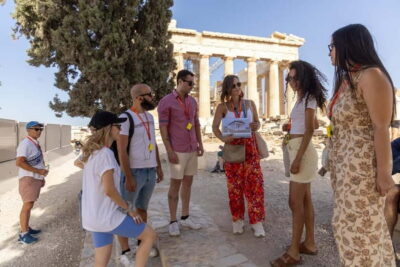
Just your group, at your own pace


The guided walk: what you’ll see, stop by stop
Your 2-hour visit focuses on the main spine of the Acropolis, with a mix of temples, gateways, and major performance spaces. The uphill walking and uneven surfaces are real, so you’ll want comfortable shoes. If you can handle that, the payoff is huge.
Propylaea: the monumental gateway into the citadel
You start your walking route by going through the Propylaea, the monumental gateway into the Acropolis. This is a strong first stop because it frames the rest of the site. When you enter through a gateway like this, you feel the shift from normal city life into a sacred, elevated world.
A good guide will also explain what you’re seeing in human terms: who came here, why it mattered, and how the layout supported religious ceremony and civic identity. Even if you’ve heard of the Propylaea before, guided context helps it register as more than a scenic photo spot.
Caryatides and Temple of Athena Nike: smaller forms with big meaning
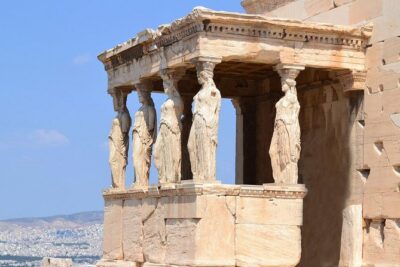
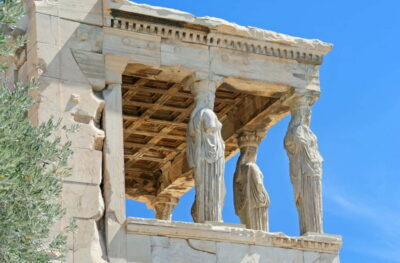
From the gateway zone, you’ll move toward the carved Caryatides (stone figures) and the Temple of Athena Nike.
The Temple of Athena Nike is called out as the smallest temple on the Acropolis, and that detail is exactly the kind of thing a guide helps you notice. When you’re at ground level, “small” can be underwhelming—until someone points out what the scale implies and how the site’s designers used even modest spaces to carry religious importance.
Caryatides add a different texture to the visit. Instead of only looking at walls and columns, you’re looking at sculpted bodies that feel like they’re holding up more than stone. It’s the kind of detail that’s easy to miss without someone narrating why it’s there.
Parthenon area: Athena’s space in the city’s myth cycle
You’ll gaze at the Temple of Parthenon. The guide’s job here is to connect what you’re seeing with why Athenians cared. You’ll also walk through the Acropolis dedicated to Athena, described as the goddess protector of the city.
This is where you start to feel the tour’s rhythm: you’re not just moving between landmarks; you’re following a theme. The theme is Athens as a place where mythology and religion weren’t separate from civic life. They were the civic life.
Theater of Dionysus: the stage behind the festivals
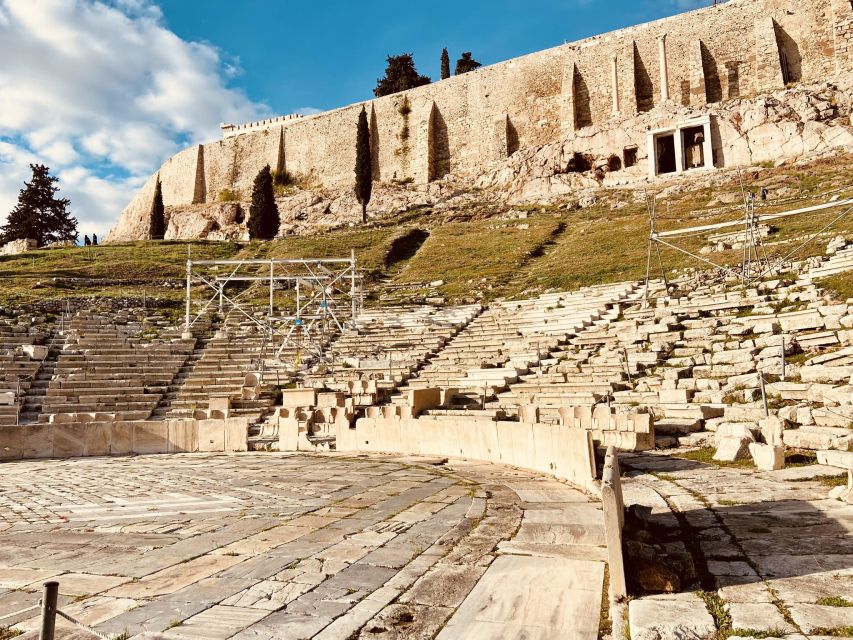
Next up is the theater of Dionysus, which held 17,000 spectators. That number matters. It turns a stone seating bowl into something social and loud—an event space big enough to pull a city together.
The guide explains how festivals were tied to the theater, including celebrations honoring the birth of the Greek god (Dionysus). Even if you’re not a theater person, this stop helps you understand why these sites were built to hold crowds and mark seasonal or religious moments.
Practical note: theaters are visually dramatic, but they’re also among the places where the ground can be uneven. You’ll likely do a bit of careful walking to keep your footing while looking around.
Erechtheion: named after a demi-god, shaped by many stories
You’ll visit the Erechtheion, described as being named after the demi-god Erechtheus. Naming is power here. When a guide connects a building to a myth-linked name, you start reading the site differently—less like a museum and more like a living map of stories people believed in.
This stop is also a good breather before you move to the more massive-feeling structures. It’s the kind of place where you’ll want a minute to slow down and actually look.
Odeon of Herodes Atticus: a giant stone theater
The tour also includes the Odeon of Herodes Atticus, described as a giant stone theater. This is another “performance” stop, but it adds variety to the story of Acropolis entertainment and public gathering.
I like this pairing: you see Dionysus first (with the festival context and the huge spectator count), and then you see the Odeon as another expression of how Athenians used theaters and monumental architecture to shape public life. Two performances spaces, two angles on why the city cared.
Temple of Asclepius: the health-and-hope thread
You’ll also see the temple of Asclepius. That’s a nice addition because it expands your tour beyond arts and civic ceremonies. Asclepius is the Greek god associated with healing, so this stop hints at how religion covered everyday needs, not only dramatic festivals.
If you’ve been thinking the Acropolis was only about temples and war-like power, this temple is a reminder that the Greeks built sacred spaces for many parts of life.
What the guide experience really adds (and why Spanish is fine)
This is a guided private tour, with the guide live and in Spanish. If you’re comfortable following Spanish narration—or you don’t mind using your own language tools—you’ll get a lot out of this.
The real value is the way myths become interpretive glue. Instead of memorizing random facts, the guide helps you associate stories with architecture. That makes you remember what you saw later, not just while you’re standing there.
The tour is also built for questions. With a small group, it’s easier to steer the conversation toward what you care about: the theaters, the goddess Athena, the smaller temples, or why the route feels like a story arc.
And yes, names matter for trust. The experience provider has been associated with guides such as Sara and Amancio, both noted as excellent, which lines up with what you want on a site like this: clear explanations and good pacing.
How hard is it? Comfort, surfaces, and who it’s best for
Plan on walking uphill and on uneven surfaces. That’s not a minor detail. The Acropolis isn’t smooth like a park trail, and you’ll want a steady pace.
Also, the tour isn’t set up for everyone in terms of equipment:
- Baby strollers aren’t allowed
- Non-folding wheelchairs aren’t allowed
- Electric wheelchairs aren’t allowed
If you use a wheelchair or need stroller access, check alternatives before booking. For everyone else, good walking shoes matter more than fancy clothes. Carry a small bottle of water if you tend to get thirsty, and keep your plan flexible on hot days.
After the tour: use your time wisely on the Acropolis
After your guided portion, you get free time to stay longer and explore at your own pace. I like that setup. The guide gives you structure. After that, you can slow down for the views, re-check details you noticed, or linger where you felt the story land best.
If you’re the type who wants photos, use this extra time as your second pass. The guided time is for understanding. The free time is for soaking it in visually.
Price and value: is $292 per group a smart deal?
The price is $292 per group up to 3, for a tour lasting about 2 hours.
On a per-person basis, the value depends on how many people you book with:
- If you fill all 3 spots, the effective cost is about $97 per person.
- If it’s just you or you have one companion, you’re paying the full group rate.
So the value is strongest for small groups: couples, friends, or families where everyone can walk the uphill route comfortably. It also makes sense if you care about interpretation more than ticking boxes. A guide here isn’t a luxury add-on. It’s the difference between seeing a famous site and understanding the myth-and-festival logic behind it.
Who should book this Acropolis private tour?
This tour fits you if:
- You want a licensed guide to explain myths tied to the ruins
- You prefer a private group where you can ask questions
- You’re okay handling uphill walking on uneven surfaces
- You can buy the timed Acropolis entry ticket in advance (and for the right time window)
It might be less ideal if you can’t manage uphill terrain, need stroller access, or want an all-in-one package with entry tickets included.
Should you book it?
Yes, I think it’s a solid choice if you’re willing to handle the entry-ticket timing on your end. The reason is simple: the guide-driven format is exactly what helps the Acropolis go from famous to meaningful. You’ll see the big landmarks—Propylaea, Parthenon area, theaters, Athena Nike, Caryatides—and you’ll get the myth context that makes those stones stick in your memory.
Just don’t treat the ticket rules as an afterthought. Buy your timed ticket first, show up early enough for ticket pickup if needed, and you’ll start the tour in a relaxed state. With that handled, you’re set up for a genuinely satisfying, question-friendly 2 hours at the heart of ancient Athens.
FAQ
What’s included in this tour?
The tour includes a guided Acropolis tour with a licensed guide. It does not include the Acropolis entry ticket.
Is the Acropolis entry ticket included?
No. You must purchase the Acropolis entry ticket in advance.
Where do I meet the guide?
Meet your guide at the entrance of the Metro station Acropolis, on the street level.
Where does the tour end?
The tour ends back at the meeting point.
How long is the tour?
The guided portion is about 2 hours. Starting times depend on availability.
What language is the live guide?
The live tour guide is in Spanish.
Is this a private group tour?
Yes. It’s a private group for up to 3 people.
Do I need to buy tickets online?
Yes. Tickets to the venue must be purchased prior to the start of the activity, and you can purchase them online.
What if I can’t get a ticket because there’s no availability?
The provider says that if you can’t get the ticket due to lack of availability, they will help you.
When should I buy my timed ticket in low vs high season?
For low season (01/11–31/03), select the 09:00–10:00 ticket. For high season (01/04–31/10), select the 08:00–09:00 ticket.
Is the tour accessible for strollers or wheelchairs?
Baby strollers are not allowed. Non-folding wheelchairs and electric wheelchairs are not allowed. The tour also involves walking uphill and on uneven surfaces.
More Tour Reviews in Athens
- Athens: Acropolis & up to 5 Archaeological Sites Combo Pass★ 4.2 · 13,904 reviews
- Athens: Acropolis, Parthenon & Acropolis Museum Guided Tour★ 4.8 · 9,316 reviews
- The Acropolis, Parthenon & Acropolis Museum Guided Tour★ 4.7 · 8,493 reviews
- Athens: Cape Sounion & Poseidon Temple Sunset Half-Day Trip★ 4.8 · 8,241 reviews
- Acropolis: Premium Acropolis and Parthenon Guided Tour★ 4.8 · 5,208 reviews
- Athens: Mythology of Delphi, Museum and Arachova Guided Tour★ 4.7 · 5,102 reviews
Just Your Group: More Private Days
- Best of Athens Half Day Private Tour★ 5.0 · 3,714 reviews
- Athens Full Day Private Tour★ 5.0 · 2,903 reviews
- Athens Greece Full Day private tour★ 5.0 · 785 reviews
- 4 Hours – Athens & Acropolis Highlights Private Tour★ 5.0 · 681 reviews
- Athens Full Day Private Tour★ 5.0 · 667 reviews
- Enjoy Cape Sounio Private Majestic Sunset With Seaside Dinner★ 5.0 · 613 reviews
The Acropolis, a Few More Ways Up
- Athens: Acropolis & up to 5 Archaeological Sites Combo Pass★ 4.2 · 13,904 reviews
- Athens: Acropolis, Parthenon & Acropolis Museum Guided Tour★ 4.8 · 9,316 reviews
- The Acropolis, Parthenon & Acropolis Museum Guided Tour★ 4.7 · 8,493 reviews
- Acropolis: Premium Acropolis and Parthenon Guided Tour★ 4.8 · 5,208 reviews
- Acropolis and Parthenon Guided Walking Tour★ 5.0 · 4,755 reviews
- Athens: Acropolis, Parthenon & Acropolis Museum Guided Tour★ 4.8 · 3,579 reviews
Fresh Off the Boat: New Athens Reviews





Acropolis & Parthenon Tours, compared.
 ★ 4.2Acropolis & up to 5 Archaeological Sites Combo PassFrom $4213,904 reviews
 ★ 4.8Acropolis, Parthenon & Acropolis Museum Guided TourFrom $409,316 reviews
 ★ 4.7The Acropolis, Parthenon & Acropolis Museum Guided TourFrom $408,493 reviews
 ★ 4.8Acropolis: Premium Acropolis and Parthenon Guided TourFrom $405,208 reviews
 ★ 5.0Acropolis and Parthenon Guided Walking TourFrom $414,755 reviews
★ 4.8Acropolis, Parthenon & Acropolis Museum Guided TourFrom $413,579 reviews
 ★ 4.0Acropolis Ticket with Audio GuideFrom $473,575 reviews
 ★ 5.0Athens Scenic Electric Bike Tour with optional Acropolis visitFrom $353,350 reviews