
Reviewed · ACROPOLIS & PARTHENON TOURS
Athens: Acropolis Guided Tour in Spanish-Option Tickets
The Acropolis clicks into focus on this walk. You’re led by a Spanish-speaking licensed guide, so the monuments stop being a list and start sounding like a story you can follow. I especially love how the tour moves in a logical line across the hill, and how the guide work keeps you from getting lost in the details.
The second thing I really like is the pacing: it’s long enough to hit the big names—Parthenon, Erechtheion, Caryatids—but short enough that you’re not stuck for half the day. One thing to consider: this is a compact 2-hour route, and it’s not set up for people with mobility impairments, plus you’ll need to travel light since bags aren’t allowed.
The result is a tour that feels efficient without feeling rushed—if you come prepared.
In This Review
- Key things that make this tour worth your time
- Why a Spanish Acropolis guide makes the hill click
- Meeting at Dionysiou Areopagitou and planning your start
- Theatre of Dionysus to the Propylaea: where art meets politics
- Asklepieion of Athens: ancient medicine isn’t just a rumor
- Odeon of Herodes Atticus: a live venue inside an ancient setting
- Temple of Athena Nike: the short stop with the big payoff
- Parthenon and Erechtheion: two styles, two kinds of attention
- The Porch of the Caryatids: your final proof of attention
- Headphones, time limits, and the $33 value question
- What the stops feel like in real life (and what might slow you down)
- Who should book this Spanish Acropolis guided tour
- Before you go: simple prep that makes the tour feel smooth
- Should you book it?
- FAQ
- What language is the tour guide?
- How long is the Acropolis guided tour?
- Where does the tour meet?
- Are headphones included?
- Is the entrance ticket included in the price?
- Is the tour suitable for mobility impairments?
Key things that make this tour worth your time
- Spanish licensed guide: You’ll get guided explanations in Spanish, not just a generic audio track.
- Headphones included: You can keep up with the guide even in crowded sections.
- The route covers the must-see monuments: Theatre of Dionysus, Asclepius, Odeon of Herodes Atticus, Athena Nike, Parthenon, Erechtheion, and Caryatids.
- Ancient medicine stops at Asclepius: You don’t just see ruins—you get the idea behind them.
- Views are part of the plan: The Athena Nike stop is built around that moment looking out over Athens.
- Good guide energy matters: Names like Efi and Simon are associated with guides who explain with passion and clarity.
More ways up the sacred rock, set side by side
- Athens: Acropolis & up to 5 Archaeological Sites Combo Pass
★ 4.2 · 13,904 reviews - Athens: Acropolis, Parthenon & Acropolis Museum Guided Tour
★ 4.8 · 9,316 reviews - The Acropolis, Parthenon & Acropolis Museum Guided Tour
★ 4.7 · 8,493 reviews - Acropolis: Premium Acropolis and Parthenon Guided Tour
★ 4.8 · 5,208 reviews
Why a Spanish Acropolis guide makes the hill click
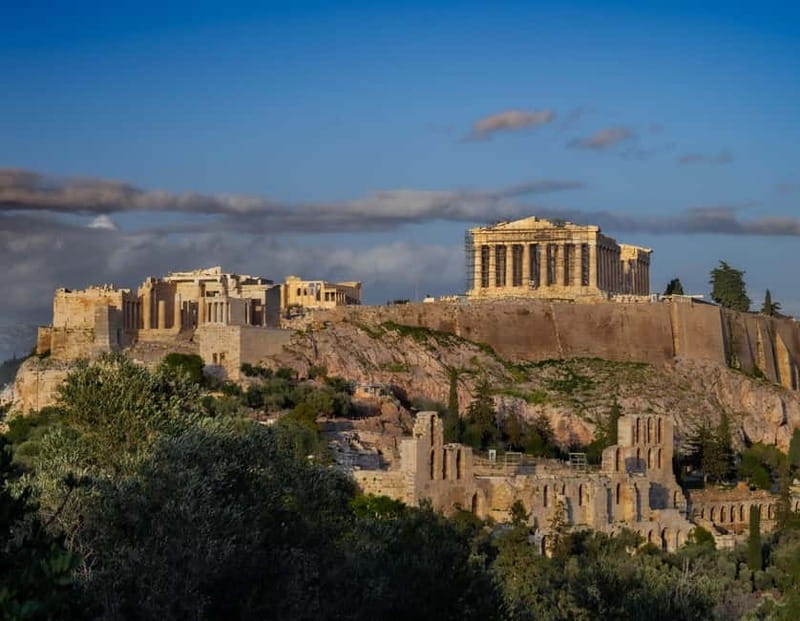
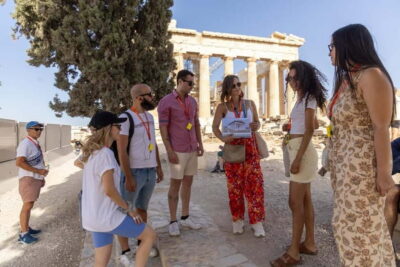
The Acropolis is famous, but it can also be confusing. Without context, you end up bouncing between “important-looking rocks” and trying to remember what you read back home. With a Spanish-option licensed guide, you get the who/what/why as you walk—right in the places where the answers belong.
I like that the tour doesn’t treat the site like a museum checklist. You’re guided from one landmark to the next, and each stop adds a new layer: religion, civic life, arts, medicine. When that connection is explained while you’re standing there, the place starts making sense.
And because you’re using headphones, you can keep your focus on the monuments instead of fighting for group position every few minutes. That’s a small thing that changes the experience.
Meeting at Dionysiou Areopagitou and planning your start
Your meeting point can vary depending on what you book, but one common option is the Tourist Information Center Athens on Dionysiou Areopagitou 18. Arrive a bit early so you’re not trying to find the right group while also negotiating the crowds.
This tour doesn’t include hotel pickup or drop-off. So you’ll want to think of it as: get yourself to the meeting point, then let the guide handle the rest. In central Athens, that’s normal. Still, it’s worth planning your route from where you’re staying.
Two practical notes:
- Wear comfortable shoes. The Acropolis paths involve steady walking and stone surfaces.
- Bring a sun hat. Two hours can feel longer in strong light, especially with limited shade.
Theatre of Dionysus to the Propylaea: where art meets politics

The tour starts at the Theatre of Dionysus, which matters because it connects the Acropolis to more than temples. This was a major stage—linked to the cultural life of Athens—so it sets the tone early. If you like theater or stories, you’ll appreciate the angle this stop gives to everything after it.
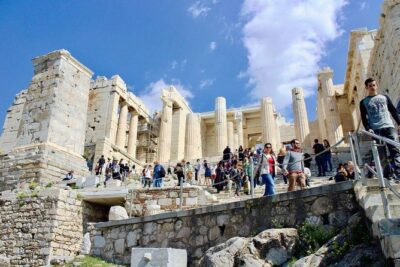
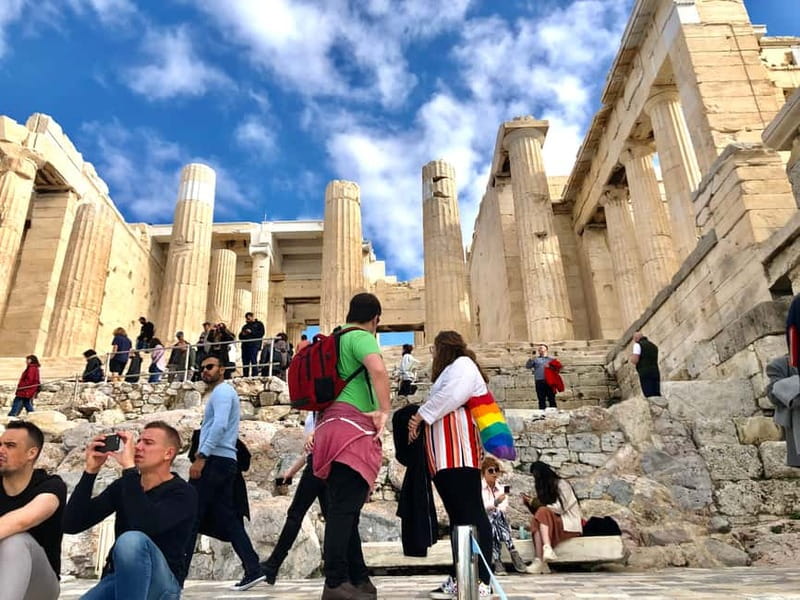
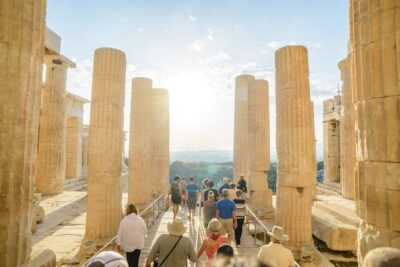
From there, you move deeper into the complex toward the Propylaea area. The Propylaea is like a grand entry moment—more than decoration. It helps you understand how the site was organized as you approach, not just what’s inside once you’re already there.
In a short tour like this, I like that these two points help you “get oriented.” You’re not starting with the Parthenon out of nowhere. You’re learning how people understood the space as they entered and participated.
Worth comparing before you book this Athens tour:
Asklepieion of Athens: ancient medicine isn’t just a rumor
Next comes the Temple of Asclepius, tied to ancient medicine. This is one of the best switches in perspective on the whole tour. You’ve likely heard myths and medicine words separately, but here they’re physically connected to the god and the place people came for healing.
The guide’s job is to make the idea feel grounded. Even if you don’t consider yourself a history person, medicine is easy to grasp as human need—comfort, recovery, rituals, beliefs. That can make the stop surprisingly emotional in a quiet way.
It’s also a useful reminder that the Acropolis wasn’t only for big ceremonies. It shaped everyday ideas, too—what people expected from the divine when their bodies weren’t cooperating.
Odeon of Herodes Atticus: a live venue inside an ancient setting
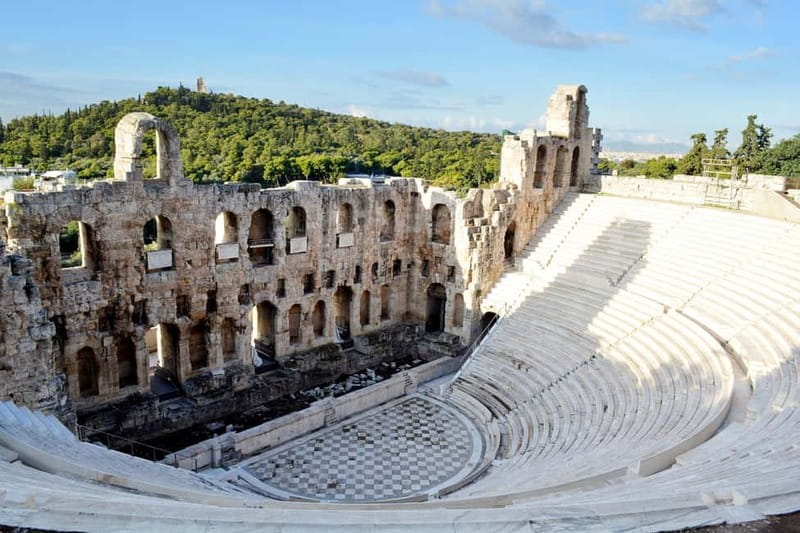
Then you’ll reach the Odeon of Herodes Atticus. This is one of those places where you can almost feel the continuity: it’s described as a venue still used for Athens’ most important concerts and performances.
That matters because it turns the Acropolis from “then” into “still.” You’re standing in a space built for gatherings, and it’s not just a reenactment. Even with the modern world all around it, the geometry of the theater keeps the audience connected to the same basic idea: people come together to watch and hear.
If you’re a music fan or enjoy live performance, this stop adds extra juice. And if you’re not, it still helps you understand why the Acropolis is such a recognizable identity marker for Athens.
Temple of Athena Nike: the short stop with the big payoff
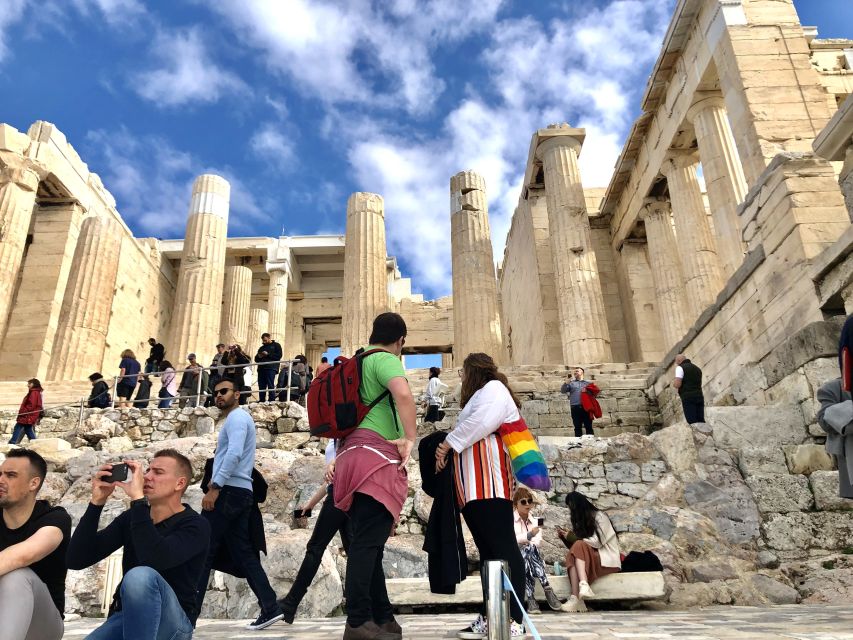
The Temple of Athena Nike is brief in time, but it’s built to land. This is the stop where the tour hits a high point—both for architecture and for the view over Athens.
I like that the guide doesn’t just point things out. You’re timed for that “look out” moment, so you can connect the temple’s purpose to its setting. Standing here, the hill and the city make a kind of visual argument: the Acropolis wasn’t hidden. It was meant to be seen, approached, and remembered.
Because the stop is about five minutes, you’ll get value without losing half your tour to photo-hunting. Still, be ready—make sure your phone is charged and your shot plan is simple.
Parthenon and Erechtheion: two styles, two kinds of attention
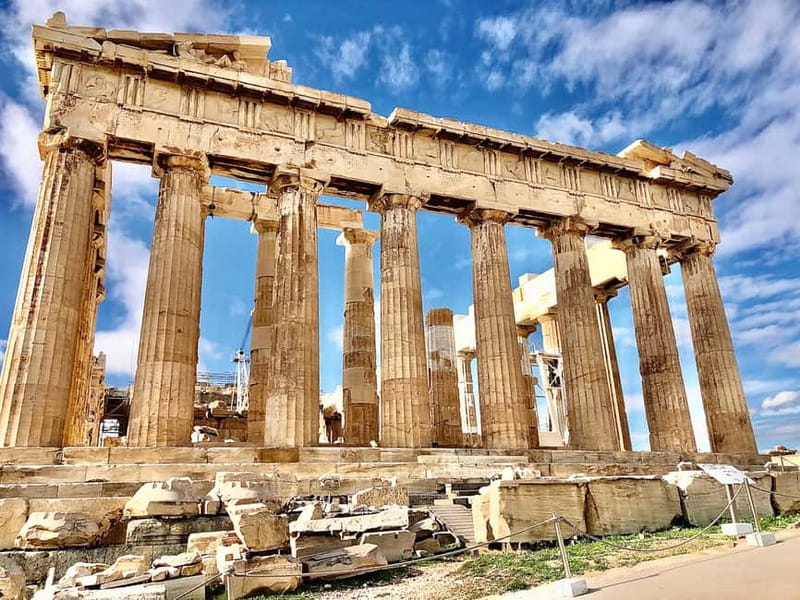
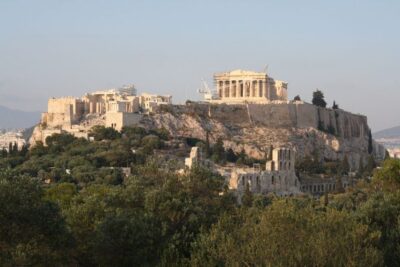
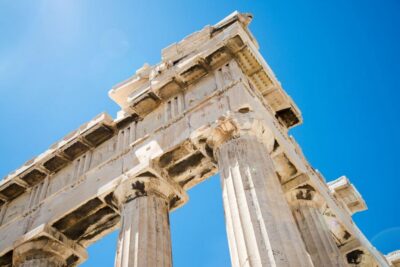
Then comes the main event: the Parthenon, with about twenty minutes of guided time. This is your best chance to understand what you’re actually looking at—why the Parthenon is iconic, and how its elements relate to the larger complex.
If you’ve ever seen the Parthenon in postcards, it can feel like you already know it. In person, it’s different. The scale forces you to pay attention, and the guide’s explanations help you see details you’d otherwise miss.
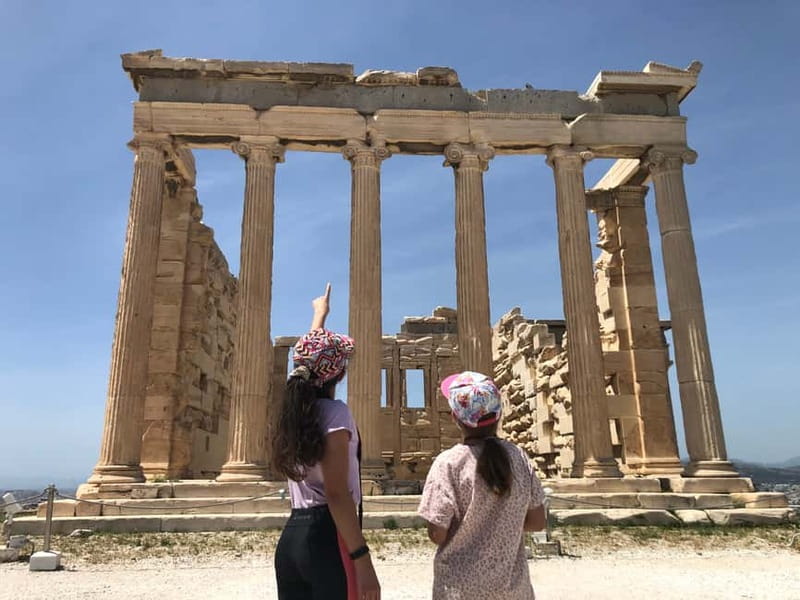
After the Parthenon, you’ll visit the Erechtheion. This is where variety shows up. It’s not just another temple stop—it’s a reminder that the Acropolis is a layered place, built and rebuilt across changing needs and beliefs. The guide can make that feel logical, not chaotic.
If you’re the kind of person who likes to compare buildings, the shift from Parthenon to Erechtheion is a satisfying moment. You stop thinking of the Acropolis as one monument and start seeing it as an evolving center.
The Porch of the Caryatids: your final proof of attention
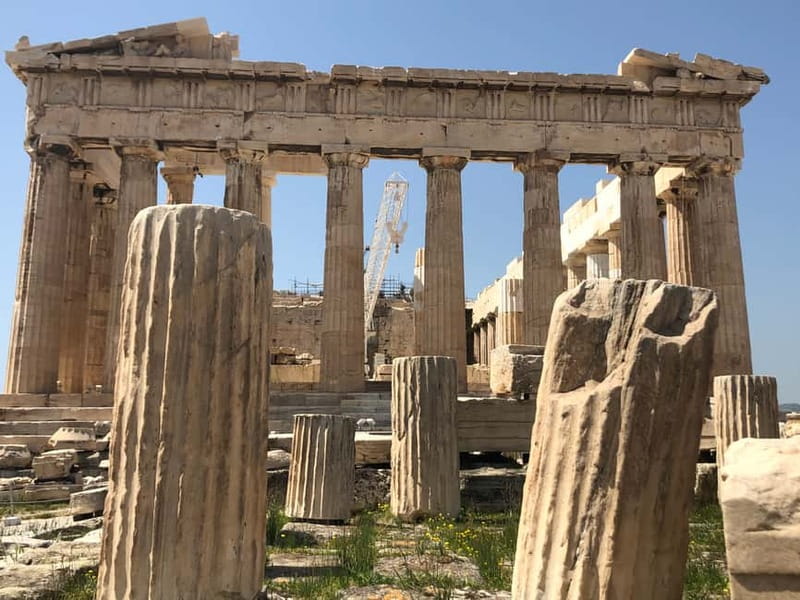
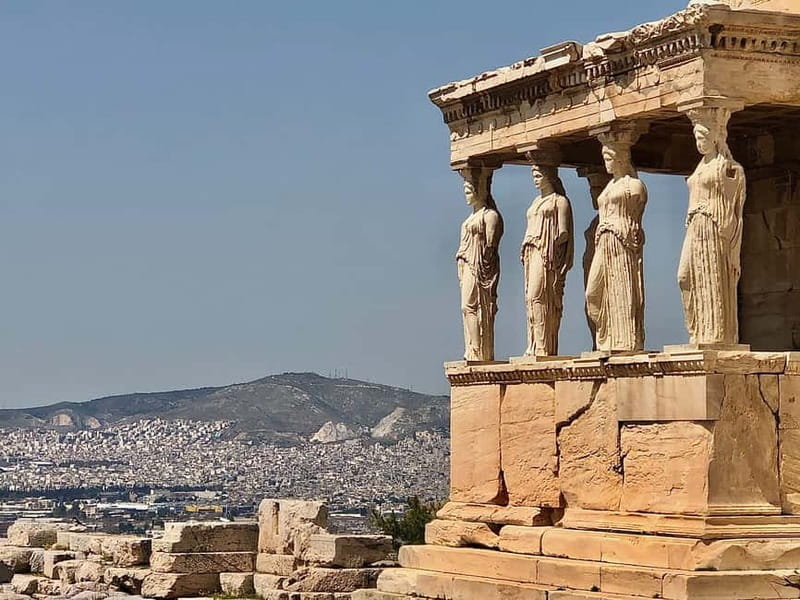
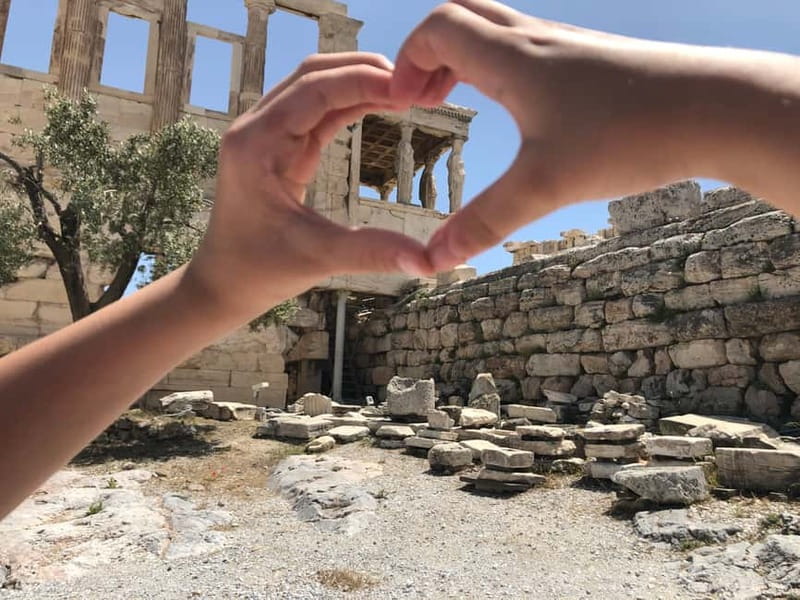
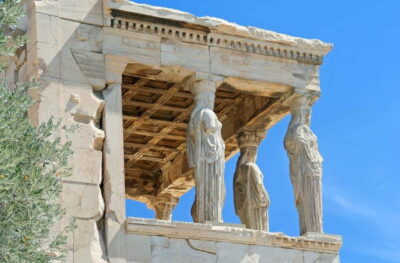
The tour ends with the Porch of the Caryatids, with about ten minutes here. This is the stop where your eyes finally slow down. Caryatids are immediately recognizable, and they’re also a good place to understand symbolism—because they blend human form with architecture in a way that’s hard to forget.
I find it’s a strong closer for a short tour. You’ve covered a lot of ground, and by the end, you’re not just tired—you’re paying attention. That makes the Caryatids feel like more than a pretty photo. They become part of why the Acropolis is still such a powerfully recognizable site.
Headphones, time limits, and the $33 value question
At $33 per person for about 2 hours, the value depends on one detail: whether you selected the option that includes the entrance ticket. The entrance ticket is included only if you choose that option. Either way, the tour includes the licensed guide and headphones, which is a big deal for staying focused on the explanations.
Here’s how I’d judge the value:
- You’re paying for a guided, structured walk through the key monuments in one compact block.
- You’re getting headphones, which often makes these tours easier to enjoy in crowds.
- If you choose the ticket-included option, you remove one more variable and can focus on the site itself.
Two hours is also the reason the price feels reasonable. You’re not booking a full day where you pay for hours you can’t fully enjoy in the heat and footwork. This is a focused hit of the highlights.
One small caution: if you need help with tickets, the organizers say to let them know. If you’re unsure what you selected, clarify early so you don’t waste time on the day.
What the stops feel like in real life (and what might slow you down)
This route covers a lot of terrain and a lot of visibility. Even with a great guide, the Acropolis can be crowded at peak hours, and that can affect how quickly you move between stops.
Also, the tour is not designed for people with mobility impairments. If walking the site’s uneven surfaces is a challenge for you, you’ll want to rethink this format.
On the logistics side, you’ll want to follow the rules:
- Comfortable shoes are non-negotiable.
- Bring a sun hat for daylight.
- No bags allowed, plus no baby strollers.
- No food or drinks during the tour.
- Non-folding wheelchairs and electric wheelchairs aren’t allowed.
That last part matters. If you normally like to keep a small daypack for water, snacks, and essentials, you’ll need an alternative plan before you arrive.
Who should book this Spanish Acropolis guided tour
I’d recommend this tour if you want:
- a Spanish-speaking guide (licensed) rather than relying on your own translation,
- a clean, structured way to see the main monuments without spending a whole day,
- a guided focus on the stories behind the sites—medicine, theater, worship, and civic life.
It also works well for couples and friends who want to learn but keep moving. If you love architecture and symbolism, the Parthenon-to-Erechtheion-to-Caryatids flow gives you good “before/after” comparisons.
If you need longer breaks, are traveling with limited walking ability, or plan to bring a bag for water and snacks, this probably won’t feel comfortable.
Before you go: simple prep that makes the tour feel smooth
This is one of those tours where preparation is tiny but impact is big.
Do this:
- Wear closed, sturdy shoes.
- Bring a sun hat and keep sunglasses handy.
- Leave anything that counts as a bag behind (the tour rules are strict).
Think about your timing, too. Two hours on the Acropolis means you’ll feel the sun and the climb. If you’re sensitive to heat, choose a start time that gives you a gentler sunlight angle.
And if you’re worried about tickets, reach out so you can get your confirmation straight. That saves your energy for the actual stones.
Should you book it?
Book this Spanish-option Acropolis guided tour if you want a guided, efficient walk that hits the must-see monuments—Theatre of Dionysus, Asclepius, Herodes Atticus, Athena Nike, Parthenon, Erechtheion, and the Caryatids—in two focused hours. The value is strongest when you pick the option that includes the entrance ticket, because it reduces friction.
Skip it or choose a different format if you can’t handle steady walking, if you strongly prefer to carry a bag for supplies, or if you want a slower pace with long independent time for lingering.
If you’re here for your first trip to Athens and want your time on the Acropolis to feel meaningful and readable—this is a solid way to do it.
FAQ
What language is the tour guide?
The live tour guide speaks Spanish.
How long is the Acropolis guided tour?
The duration is about 2 hours.
Where does the tour meet?
The meeting point may vary depending on the option booked. One starting point option is the Tourist Information Center Athens at Dionysiou Areopagitou 18.
Are headphones included?
Yes. Headphones are included with the tour.
Is the entrance ticket included in the price?
It depends on the option you choose. Entrance Ticket is included only if that option is selected.
Is the tour suitable for mobility impairments?
No. It is listed as not suitable for people with mobility impairments.
More Tours in Athens
- Athens: Acropolis, Parthenon & Acropolis Museum Guided Tour★ 4.8 · 9,316 reviews
- The Acropolis, Parthenon & Acropolis Museum Guided Tour★ 4.7 · 8,493 reviews
- Acropolis: Premium Acropolis and Parthenon Guided Tour★ 4.8 · 5,208 reviews
- Athens: Mythology of Delphi, Museum and Arachova Guided Tour★ 4.7 · 5,102 reviews
- Acropolis and Parthenon Guided Walking Tour★ 5.0 · 4,755 reviews
- Greek Food Walking Tour in Athens★ 5.0 · 4,740 reviews
More Tour Reviews in Athens
- Athens: Acropolis & up to 5 Archaeological Sites Combo Pass★ 4.2 · 13,904 reviews
- Athens: Acropolis, Parthenon & Acropolis Museum Guided Tour★ 4.8 · 9,316 reviews
- The Acropolis, Parthenon & Acropolis Museum Guided Tour★ 4.7 · 8,493 reviews
- Athens: Cape Sounion & Poseidon Temple Sunset Half-Day Trip★ 4.8 · 8,241 reviews
- Acropolis: Premium Acropolis and Parthenon Guided Tour★ 4.8 · 5,208 reviews
- Athens: Mythology of Delphi, Museum and Arachova Guided Tour★ 4.7 · 5,102 reviews
The Acropolis, a Few More Ways Up
- Athens: Acropolis & up to 5 Archaeological Sites Combo Pass★ 4.2 · 13,904 reviews
- Athens: Acropolis, Parthenon & Acropolis Museum Guided Tour★ 4.8 · 9,316 reviews
- The Acropolis, Parthenon & Acropolis Museum Guided Tour★ 4.7 · 8,493 reviews
- Acropolis: Premium Acropolis and Parthenon Guided Tour★ 4.8 · 5,208 reviews
- Acropolis and Parthenon Guided Walking Tour★ 5.0 · 4,755 reviews
- Athens: Acropolis, Parthenon & Acropolis Museum Guided Tour★ 4.8 · 3,579 reviews
Fresh Off the Boat: New Athens Reviews





Acropolis & Parthenon Tours, compared.
 ★ 4.2Acropolis & up to 5 Archaeological Sites Combo PassFrom $4213,904 reviews
 ★ 4.8Acropolis, Parthenon & Acropolis Museum Guided TourFrom $409,316 reviews
 ★ 4.7The Acropolis, Parthenon & Acropolis Museum Guided TourFrom $408,493 reviews
 ★ 4.8Acropolis: Premium Acropolis and Parthenon Guided TourFrom $405,208 reviews
 ★ 5.0Acropolis and Parthenon Guided Walking TourFrom $414,755 reviews
★ 4.8Acropolis, Parthenon & Acropolis Museum Guided TourFrom $413,579 reviews
★ 5.0Acropolis and Parthenon Guided Walking TourFrom $414,755 reviews
★ 4.8Acropolis, Parthenon & Acropolis Museum Guided TourFrom $413,579 reviews
 ★ 4.0Acropolis Ticket with Audio GuideFrom $473,575 reviews
 ★ 5.0Athens Scenic Electric Bike Tour with optional Acropolis visitFrom $353,350 reviews