
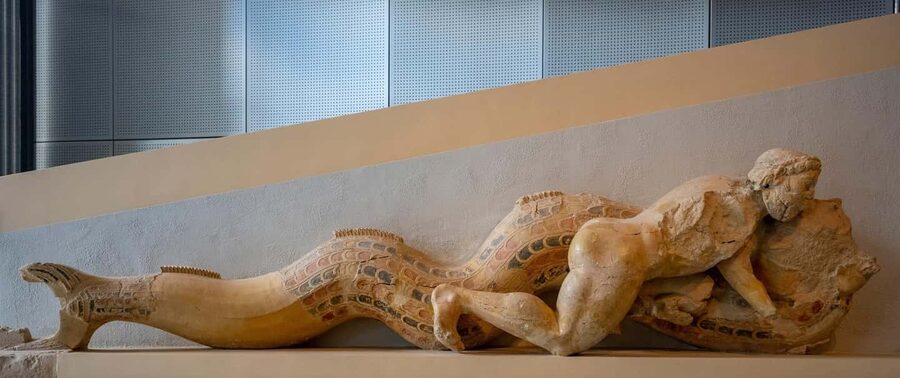
Reviewed · ACROPOLIS & PARTHENON TOURS
Athens: Acropolis Museum Reserved Entry Ticket & Audio Tour
Marble, myths, and an audio guide you can control. This ticket bundles Acropolis Museum admission with a multilingual audio tour that turns the objects into a story, plus a separate Athens city audio guide. I like the way it spotlights Eglin (Elgin) Marbles and uses audio to connect sculptures to what the Parthenon meant. The main caution: audio language can be a weak link, so double-check your language before you get comfortable.
You’ll enter the museum at Dionysiou Areopagitou 15 and spend about 2 hours doing a self-paced route inside the galleries. You just need your own headphones and a charged phone, and you must have your ticket and audio ready for the time slot. If you’re expecting a full guided tour with a human, this isn’t that.
In This Review
- Key highlights worth your time
- Why the Acropolis Museum feels like the real starting point
- Reserved entry + audio tour: what you actually get for $34
- How the audio guide works once you’re inside
- Your walk through the galleries: Bronze Age to Byzantine Athens
- The Parthenon connection: Eglin (Elgin) Marbles and reconstructed meaning
- The archaeological setting: excavated villas and bathhouses
- A realistic 2-hour game plan (so you don’t feel rushed)
- Price and value: is $34 a good deal?
- The one thing to double-check: audio language
- Who should book this Acropolis Museum audio ticket
- Should you book it?
- FAQ
- Does this ticket include entry to the Acropolis archaeological site?
- How long is the Acropolis Museum visit with this ticket?
- What languages are available for the audio guide?
- Do I need to bring headphones?
- Do I need a phone or device for the audio?
- Where do I go to enter?
- How do I get the ticket and audio access?
- Can I enter at any time slot, or do I have to match the selected time?
- Is it possible to cancel?
Key highlights worth your time

- Acropolis story, told by the museum objects (not just big-name views)
- Eglin (Elgin) Marbles and Parthenon context through the audio
- Built over ancient Athens remains, with visible archaeological layers
- Multilingual audio in English, French, German, Italian, and Spanish
- Audio includes an extra Athens city guide, so you can keep learning after the museum
More ways up the sacred rock, set side by side
- Athens: Acropolis & up to 5 Archaeological Sites Combo Pass
★ 4.2 · 13,904 reviews - Athens: Acropolis, Parthenon & Acropolis Museum Guided Tour
★ 4.8 · 9,316 reviews - The Acropolis, Parthenon & Acropolis Museum Guided Tour
★ 4.7 · 8,493 reviews - Acropolis: Premium Acropolis and Parthenon Guided Tour
★ 4.8 · 5,208 reviews
Why the Acropolis Museum feels like the real starting point
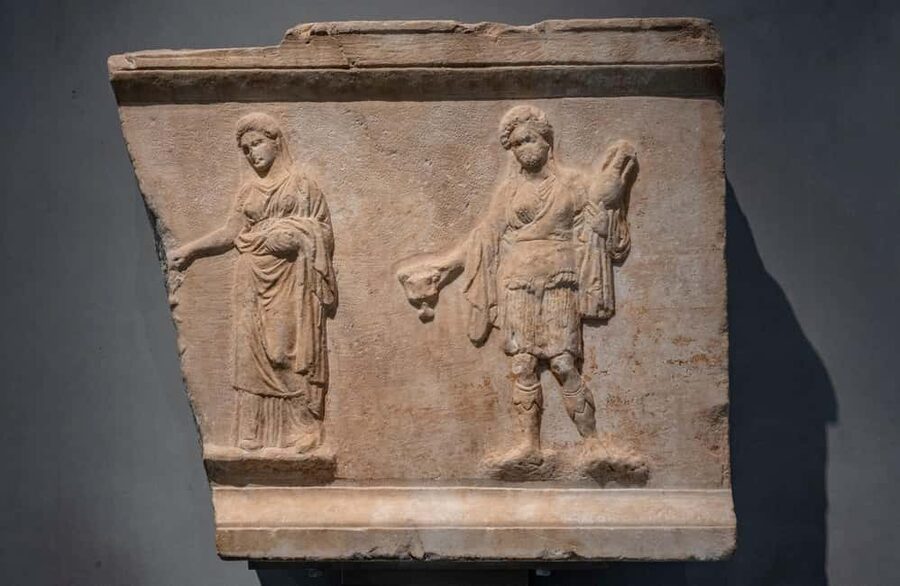
The Acropolis hill is the headline. The Acropolis Museum is where the plot starts making sense.
Here’s why you’ll likely care even if you’ve seen photos of the Parthenon for years: the museum is set up to explain what you’re looking at. You’re not just wandering past statues. You’re following how Athens developed, changed hands, and re-invented itself across centuries.
I also love that this museum isn’t a copy-paste “collection in a box.” It’s built on remnants of ancient Athens. That archaeological setting makes the building part of the story, not just the container.
Reserved entry + audio tour: what you actually get for $34
At $34 per person for a 2-hour visit, this ticket is priced for two things: entry and audio support. You’re not paying extra for a guide standing over you with a microphone. Instead, you’re paying for a smooth, guided-by-headphones experience.
Included with your ticket:
- Entry to the Acropolis Museum
- A multilingual audio guide
- Athens city audio guide (also multilingual)
- Access for the general admission adult ticket
What you don’t get (and you’ll want to plan for this):
- Headphones
- A mobile device
- Entry to the Acropolis archaeological site itself (that’s a separate plan)
For many people, that’s the value sweet spot. You can pause, speed up, and spend more time where your brain is firing. If you prefer a group guide who stops for questions and controls the pace, you might find this style less satisfying.
How the audio guide works once you’re inside

The ticket is designed around an audio app experience. Before you arrive, you scan a QR code to download the audio guide. Plan to do this with your charged phone and your own headphones.
You’re given multilingual audio commentary in:
- English
- French
- German
- Italian
- Spanish
You also get an Athens city audio guide in:
- English
- French
- German
- Spanish
The big thing to know: the audio isn’t optional window dressing. It’s the main way the ticket turns the museum into a timeline, especially for the Parthenon section. So if your audio doesn’t load or your language isn’t what you expected, your visit can feel like you’re looking at art without the labels that explain why it mattered.
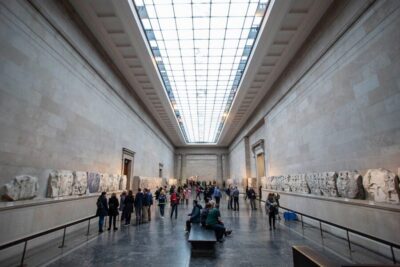
Cool marble halls, out of the Athens sun


Your walk through the galleries: Bronze Age to Byzantine Athens
The museum’s layout is built for a “this led to that” kind of visit. The audio route guides you from early periods all the way to later eras, with the collection showing how ancient Athens kept evolving.
Here’s the story the galleries are set up to tell:
- Greek Bronze Age artifacts
- the shift through later classical and imperial periods
- Roman conquest impacts
- up to Byzantine Greece
Why this matters: the Acropolis wasn’t frozen in time. Even when the Parthenon was already ancient, the city didn’t stop living. People reused spaces, repurposed ideas, and left new layers behind. Seeing these eras in the same museum helps you understand Athens as a long-running city, not a single monument.
In practical terms, you’ll likely want to spend time where the timeline changes. That’s where the audio is most helpful, because it gives you a reason to look longer at the details—materials, styles, and the kinds of objects you might otherwise skim.
The Parthenon connection: Eglin (Elgin) Marbles and reconstructed meaning
One of the headline features here is the recreated display of the Eglin (Elgin) Marbles, plus audio stories tied to the Parthenon. Even if you’ve never studied classical sculpture, this is the section where the audio can do a lot of work for you.
What to look for:
- the marble sculptures as physical evidence of artistic skill and religious/political messaging
- how the audio connects these works to what the Parthenon represented
- how the museum uses the reconstructions to help you see the bigger scheme
A quick reality check: you’re not standing on the actual Acropolis hill with the wind blowing and the original context around you. But inside the museum, you get a calmer chance to understand relationships between pieces. For many first-timers, that makes this section the “aha” moment.
If you want one strategy: don’t rush the Parthenon area. That’s where you can start connecting what you saw in the Acropolis Museum to what you’ll see later outside—whether you go up to the Acropolis site on another ticket or just connect the ideas from afar.
The archaeological setting: excavated villas and bathhouses
Here’s what makes this museum feel different from most big museum visits: it’s built on the remnants of ancient Athens.
Your ticket experience includes an archaeological journey inside the building. You can see excavated structures linked to everyday life, including villas and bathhouses, along with other treasures uncovered through excavations.
Why you’ll probably like this part:
- it grounds the sculptures and monuments in real homes and daily routines
- it makes ancient Athens feel lived-in, not just monumental
- it helps you picture the city as a place people moved through, not a stage for statues
Even if you only give this part a short stop, try not to skip it entirely. It’s one of those rare moments where the building itself is part of the lesson.
A realistic 2-hour game plan (so you don’t feel rushed)
This is a self-paced visit capped at about 2 hours. That’s enough time to cover the main story, but not enough time to linger for hours like a museum super-fan.
My suggested flow:
- Start with the early-period galleries on your way into the timeline section, using the audio to orient yourself.
- Move through the mid-sections at a steady pace, pausing when the audio points you to a key theme or artifact type.
- Give extra time to the Parthenon-related area with the reconstructed Eglin (Elgin) Marbles.
- Finish with the archaeological context areas so the last thing you remember is that the museum sits on ancient remains.
Two practical tips:
- Use your audio like a tour guide. If the audio says to focus on a detail, do it. That’s when the experience clicks.
- If your headphones start dying or your phone battery dips, shorten your stops and prioritize the sections that rely most on audio.
Price and value: is $34 a good deal?
For $34, you’re essentially buying:
1) admission to the Acropolis Museum
2) a multilingual audio guide (plus the Athens city audio guide)
If you’ve ever been to museums where you wander with weak labels, this is the kind of add-on that can be worth it. The audio gives structure and interpretation, and the Parthenon section especially benefits from that.
The “value risk” is the quality and reliability of the audio experience. One cancellation-proof truth: if you end up with the wrong language, or if the audio doesn’t match what you expected, the museum becomes harder to understand. At that point, you’re paying full price for what feels like only half the service.
So here’s how I’d judge value before you buy:
- If you’re comfortable using audio and you can verify your language settings on arrival, this can feel like a smart buy.
- If you’re picky about language and you need precision in Italian/French/German/Spanish, you should plan to test early (and accept that it’s still audio-led rather than a human guide).
The one thing to double-check: audio language
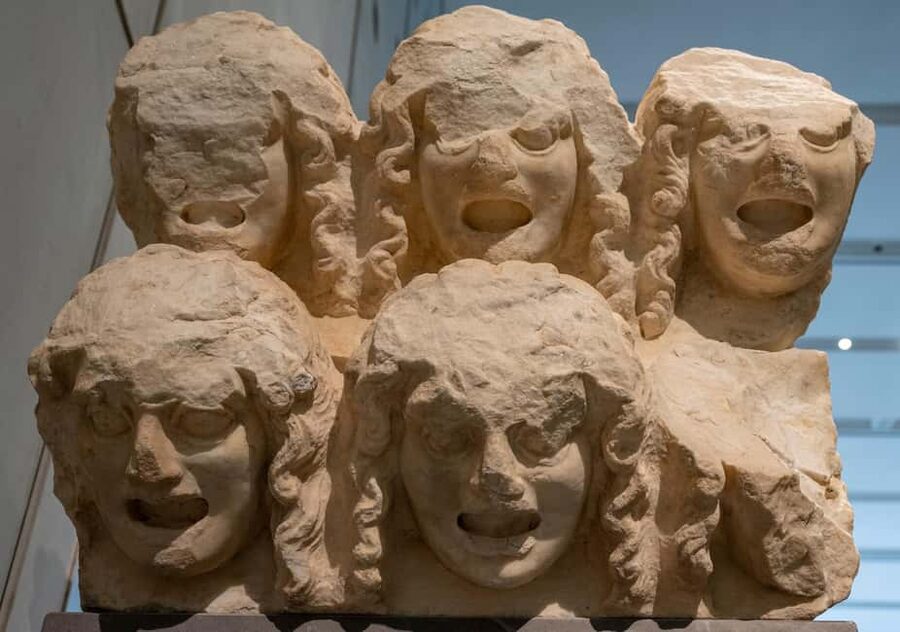
Your biggest decision point isn’t the museum. It’s the audio.
The information you get says the audio is available in multiple languages, including English, French, German, Italian, and Spanish. But one of the key issues that can happen in real life is mismatch between the language you expected and the audio you actually hear. In one reported case, the booked language wasn’t available and the person ended up switching away from their preferred language, which made the visit less rewarding.
How to avoid that headache:
- Make sure the QR download actually completes before you settle into the galleries.
- If the app asks you to select a language, confirm it immediately.
- Start listening before you commit to a long sequence, so you can correct course fast.
If your language needs are strict, you may still enjoy the museum visually—but you’ll lose some of the storytelling layer that makes this ticket work.
Who should book this Acropolis Museum audio ticket
I think this works best for you if:
- you want a structured visit without joining a guided group
- you like museums but don’t want to study every placard
- you’re the kind of person who enjoys matching art objects to the story behind them
- you want a Parthenon-focused explanation that you can control at your own pace
It may not be ideal if:
- you strongly prefer a live guide who answers questions and adjusts on the fly
- you need guaranteed audio-language precision for a specific language at all costs
- you’re planning to also do the Acropolis archaeological site during the same timed plan (this ticket does not include that site)
Should you book it?
Book this ticket if you want the Acropolis Museum to feel like a guided storyline rather than a self-directed shuffle. At $34 for museum entry plus multilingual audio support, it’s a solid value if your audio works the way you expect and you’re happy to let headphones steer your pace.
Skip or rethink if audio reliability would make or break your enjoyment. The museum itself is a great place to learn, but this ticket’s value depends on the audio guide doing its job. If you’re careful—download the audio with the QR, bring headphones, confirm your language—you’ll likely get a smoother, more rewarding visit.
FAQ
Does this ticket include entry to the Acropolis archaeological site?
No. This ticket is for the Acropolis Museum only. Entry to the Acropolis archaeological site is not included.
How long is the Acropolis Museum visit with this ticket?
The experience is listed as 2 hours. You can check availability to see starting times.
What languages are available for the audio guide?
The audio guide includes multilingual commentary in English, French, German, Italian, and Spanish. The Athens city audio guide is available in English, French, German, and Spanish.
Do I need to bring headphones?
Yes. Headsets/headphones are not included, so you should bring your own headphones.
Do I need a phone or device for the audio?
Yes. You’ll need your own mobile device to access the audio (and it needs to be charged).
Where do I go to enter?
Go directly to the Acropolis Museum entrance at Dionysiou Areopagitou 15. Bring your headphones and have your ticket downloaded and ready to show.
How do I get the ticket and audio access?
Your ticket is available for download and is sent via WhatsApp within 24 hours of your travel date. You’ll also scan the QR code to download your audio guide before arrival.
Can I enter at any time slot, or do I have to match the selected time?
Entry is only permitted at your selected time slot. Re-entry is not permitted.
Is it possible to cancel?
Yes, free cancellation is available up to 24 hours in advance for a full refund.
More Tour Reviews in Athens
- Athens: Acropolis & up to 5 Archaeological Sites Combo Pass★ 4.2 · 13,904 reviews
- Athens: Acropolis, Parthenon & Acropolis Museum Guided Tour★ 4.8 · 9,316 reviews
- The Acropolis, Parthenon & Acropolis Museum Guided Tour★ 4.7 · 8,493 reviews
- Athens: Cape Sounion & Poseidon Temple Sunset Half-Day Trip★ 4.8 · 8,241 reviews
- Acropolis: Premium Acropolis and Parthenon Guided Tour★ 4.8 · 5,208 reviews
- Athens: Mythology of Delphi, Museum and Arachova Guided Tour★ 4.7 · 5,102 reviews
Athens Indoors: More Museums
- Athens: Acropolis, Parthenon & Acropolis Museum Guided Tour★ 4.8 · 9,316 reviews
- The Acropolis, Parthenon & Acropolis Museum Guided Tour★ 4.7 · 8,493 reviews
- Athens: Acropolis, Parthenon & Acropolis Museum Guided Tour★ 4.8 · 3,579 reviews
- Acropolis monuments & Parthenon Walking Tour with Optional Acropolis Museum★ 5.0 · 2,678 reviews
- Athens: Acropolis Museum Ticket with optional Audio Guide★ 4.4 · 2,652 reviews
- Athens: Acropolis, Parthenon and Acropolis Museum Guided Tour★ 5.0 · 1,778 reviews
The Acropolis, a Few More Ways Up
- Athens: Acropolis & up to 5 Archaeological Sites Combo Pass★ 4.2 · 13,904 reviews
- Athens: Acropolis, Parthenon & Acropolis Museum Guided Tour★ 4.8 · 9,316 reviews
- The Acropolis, Parthenon & Acropolis Museum Guided Tour★ 4.7 · 8,493 reviews
- Acropolis: Premium Acropolis and Parthenon Guided Tour★ 4.8 · 5,208 reviews
- Acropolis and Parthenon Guided Walking Tour★ 5.0 · 4,755 reviews
- Athens: Acropolis, Parthenon & Acropolis Museum Guided Tour★ 4.8 · 3,579 reviews
Fresh Off the Boat: New Athens Reviews





Acropolis & Parthenon Tours, compared.
 ★ 4.2Acropolis & up to 5 Archaeological Sites Combo PassFrom $4213,904 reviews
 ★ 4.8Acropolis, Parthenon & Acropolis Museum Guided TourFrom $409,316 reviews
 ★ 4.7The Acropolis, Parthenon & Acropolis Museum Guided TourFrom $408,493 reviews
 ★ 4.8Acropolis: Premium Acropolis and Parthenon Guided TourFrom $405,208 reviews
 ★ 5.0Acropolis and Parthenon Guided Walking TourFrom $414,755 reviews
★ 4.8Acropolis, Parthenon & Acropolis Museum Guided TourFrom $413,579 reviews
★ 5.0Acropolis and Parthenon Guided Walking TourFrom $414,755 reviews
★ 4.8Acropolis, Parthenon & Acropolis Museum Guided TourFrom $413,579 reviews
 ★ 4.0Acropolis Ticket with Audio GuideFrom $473,575 reviews
 ★ 5.0Athens Scenic Electric Bike Tour with optional Acropolis visitFrom $353,350 reviews
Browse the lists this tour appears in