
Reviewed · MUSEUMS
Athens: Kotsanas Ancient Greek Technology Museum Guided Tour
Ancient tech, explained in plain language. The Kotsanas Museum turns Greek engineering into something you can see, touch, and follow, with a private guide (often an engineer or historian) leading you through the biggest hits like the analog computing story behind the Antikythera mechanism. I love the interactive models that make the inventions feel real, and I also love how the tour connects mechanisms to everyday logic you already know. One heads-up: it’s not suitable for people with mobility impairments, so plan accordingly.
This 1-hour private tour is built for focus, not wandering forever. You’ll start at Pindarou 6, about a 5-minute walk from Syntagma Metro Station, and you’ll spend your time inside a unique Art Nouveau building that houses roughly 300 artifacts of ancient technology. Expect English interpretation, lots of diagrams and audio-visual material (Greek and English), and time to explore further after the guided portion.
In This Review
- Key things to know before you go
- A short walk from Syntagma: where the tour starts
- Inside a 700-square-meter Art Nouveau building
- The private guide experience: engineer logic, historian context
- Following the mechanisms: what your hour actually covers
- The big wow machines: Antikythera and analog computing
- How Greeks built into entertainment: Philon, Heron, and robot-servants
- Audio-visual support and hands-on displays that reduce confusion
- Price and value: what $54 buys you for up to four people
- Who should book this Athens tech tour (and who might not)
- Should you book this tour?
- FAQ
- How long is the Athens Kotsanas Ancient Greek Technology Museum guided tour?
- Is this tour private?
- What language is the guide?
- What do I get with the ticket price?
- Where does the tour meet?
- Are food and drinks allowed during the visit?
- Is the museum tour suitable for people with mobility impairments?
Key things to know before you go
- Private, 1-hour guided tour with qualified staff in a format that actually lets you ask questions.
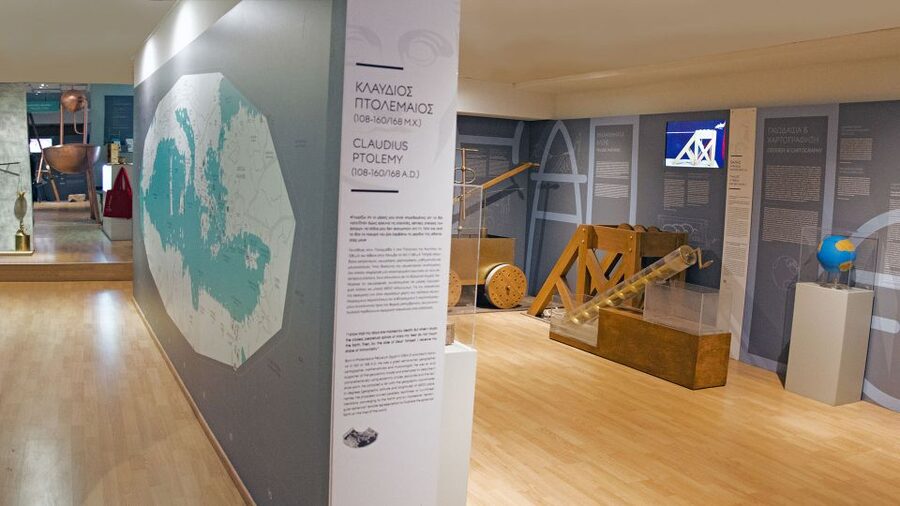
- About 300 artifacts presented through hands-on displays and lots of visual explanation.
- Big science-meets-story inventions, including the Antikythera calculating mechanism and other famous mechanisms.
- Thematic exhibits such as robot-servants, Philon’s cinema, and Heron’s puppet shows.
- Engaging audio-visual stations with video/animation and documentaries that explain how mechanisms work.
- Free time after the guide, so you can linger where your curiosity grabs you.
More days made easy with a guide
- Athens: Acropolis, Parthenon & Acropolis Museum Guided Tour
★ 4.8 · 9,316 reviews - The Acropolis, Parthenon & Acropolis Museum Guided Tour
★ 4.7 · 8,493 reviews - Acropolis: Premium Acropolis and Parthenon Guided Tour
★ 4.8 · 5,208 reviews - Athens: Mythology of Delphi, Museum and Arachova Guided Tour
★ 4.7 · 5,102 reviews
A short walk from Syntagma: where the tour starts
The tour meets at Pindarou 6, Athina 106 71, near Syntagma Metro Station. That matters because this museum is easy to fit into an Athens day without complicated planning. You’re not stuck hunting for a remote site or waiting on transport; just walk in, check in, and get started.
From the start, the pacing feels intentional. It’s a private group format, so you’re not competing with a crowd to see key mechanisms up close. Also, the tour is in English, which makes a big difference here. Ancient technology is full of terms and concepts, and you’ll get the meaning of what you’re looking at without needing to translate it in your head.
If you’re traveling as a family, this location helps too. Kids and adults can usually handle a 1-hour indoor visit in central Athens, especially with interactive displays and clear labeling.
Inside a 700-square-meter Art Nouveau building
One of the first things you’ll notice is the setting. The Kotsanas Museum sits in a historic Art Nouveau building and covers about 700 square meters. That gives you the sense that this is more than a small side room with a few models. It’s organized, designed, and big enough that you won’t feel like you’re rushing through a single hallway.
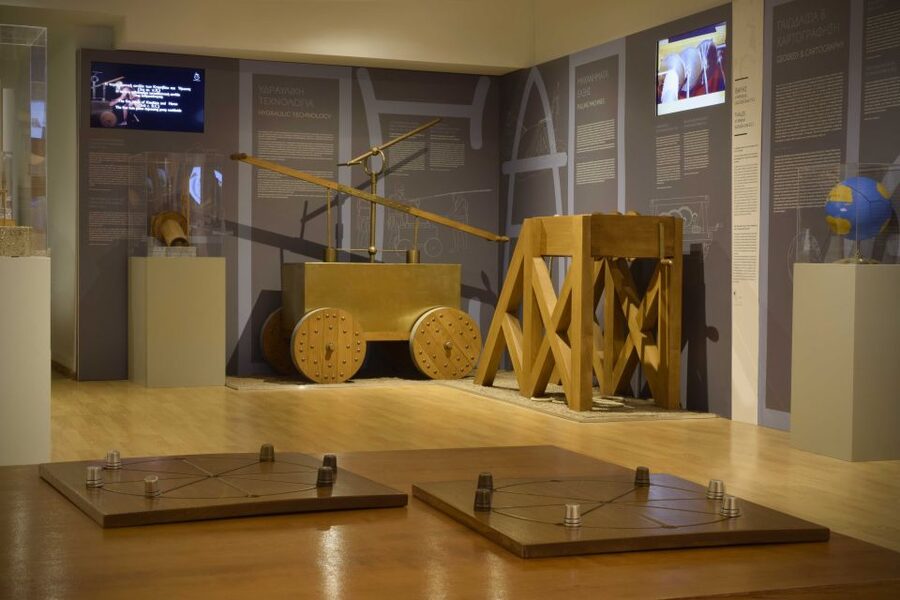
The museum’s size also helps with the quality of the tour. A 1-hour private guided experience works best when the guide can point out the core ideas without you getting lost. Here, the exhibition materials are spread across multiple areas, with explanatory labels, giant posters full of information, diagrams, photos, and complete bibliographical references. If you like to read while you look, you’ll have plenty to do.
Another detail I appreciate: there’s audio-visual material in both Greek and English. Even if you’re an audio person or a visual person, you’re not stuck with just one style of interpretation. Video, animation, and documentaries help explain not only what the mechanism is, but what it’s doing and why it matters.
The private guide experience: engineer logic, historian context
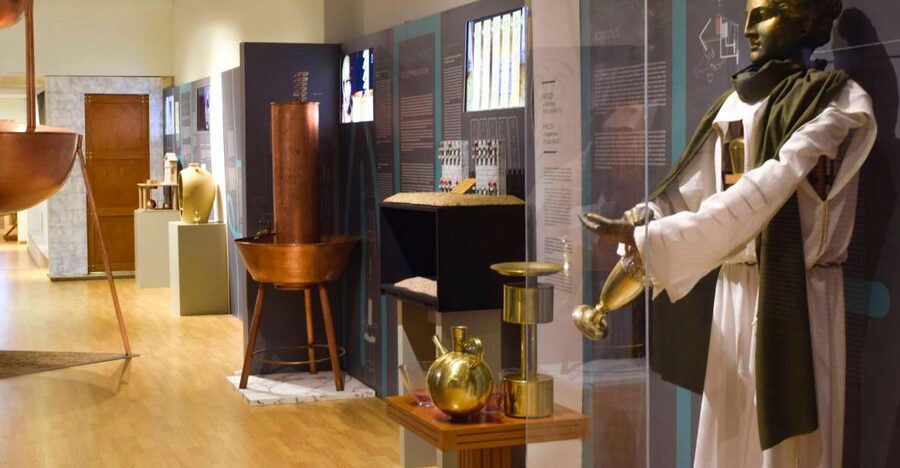
The heart of this tour is the human explanation. You’re joining a private tour led by qualified staff—either experienced engineers, archaeologists, historians, or museologists. That mix is smart for this topic. You need both the technical understanding of mechanisms and the cultural framing of why Greeks built them.
In practice, this kind of guide format makes the difference between seeing objects and understanding them. A great example from the tour experience: guides like Vasilis have a way of walking people through the exhibits so the machinery turns into a story you remember. The goal isn’t to overwhelm you with engineering math. It’s to help you recognize the logic—how parts connect, how motion turns into function, and how information is represented.
I also like that the museum supports the tour with your own self-guided options after the main hour. That means you can follow your curiosity at your own speed. If you’re the type who wants to re-read a diagram or compare two mechanisms, you have time.
Where to be careful: since it’s a private group up to four people, your experience depends partly on group dynamics. If everyone wants a different kind of focus (engineering vs. history vs. kid-friendly hands-on), the guide will likely try to balance it, but you’ll still want to be ready to steer the conversation with questions.
More museum hours worth the queue
Following the mechanisms: what your hour actually covers
You won’t get a long list of random objects. The guided tour focuses on core mechanisms and explains how they work. Think of it as learning to read the museum like a machine.
Here’s how the tour flow typically feels:
- You start with key inventions that show the range of Greek engineering.
- Then you move through displays that explain mechanisms through interactive elements—some you can try, some you can operate in concept.
- Along the way, the guide helps you connect components to outcomes: gears producing motion, fluids powering timing, and analog systems representing relationships rather than digital numbers.
- You’ll also use the museum’s built-in visuals—diagrams, poster-size explanations, and video stations—to keep your understanding anchored.
This matters because ancient technology is easy to misunderstand if you only see the object. You might think it’s a model without purpose. The guide helps you see function. And the museum helps with visuals so you don’t feel like you’re guessing what you’re looking at.
The tour also includes free time to explore further after the guided portion. That’s a huge value-add. It turns the visit into two parts: guided understanding first, then personal exploration second.
The big wow machines: Antikythera and analog computing
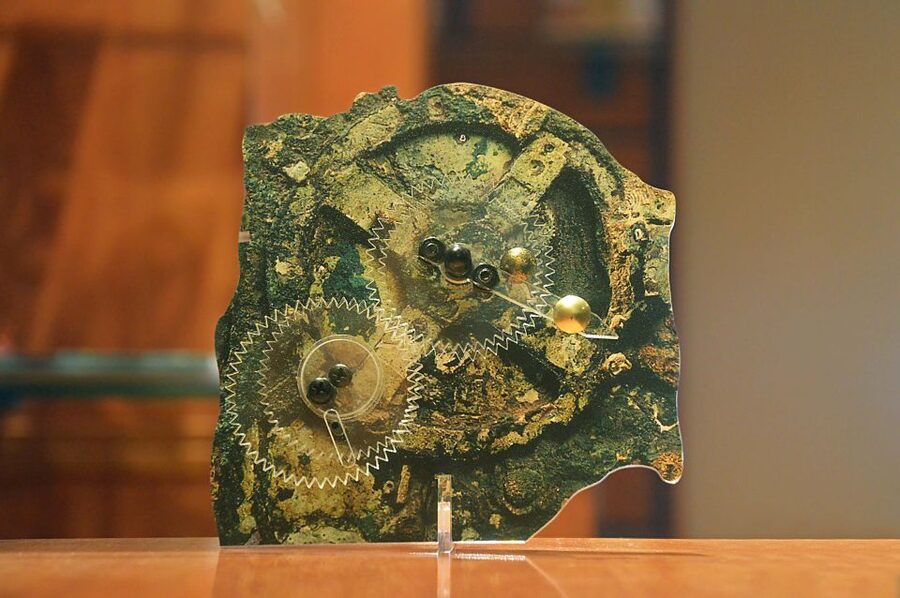
If you come expecting the famous names, you’ll get them. The museum highlights inventions like the Antikythera calculating mechanism, presented as the oldest analog computer in the world. That framing is powerful. It shifts your mental model from ancient artifacts to early information machines.
When you’re standing in front of a mechanism like this, it can feel mysterious—until someone connects the dots for you. The guide helps you understand how an analog system can represent relationships. Instead of numbers flashing on a screen, you get gears, scale, and motion acting as the calculator.
What I like most is that this isn’t treated like trivia. It’s treated like technology—mechanisms with jobs. Even if you’re not an engineer, you’ll learn the basic logic behind how the mechanism tracks or represents information.
The tour’s pacing also works here. With so many exhibits, it’s easy to forget details. But when the guide gives you a clear starting idea, you can come back later in your free time and look at the mechanism again with better eyes.
How Greeks built into entertainment: Philon, Heron, and robot-servants
Not all ancient technology here is about clocks and computation. The museum also leans hard into the Greek sense of performance and spectacle—technology used to create experiences.
One featured theme is The Hi-Tech Inventions of Ancient Greeks, which includes about 100 selected exhibits. This portion is where you’ll see ideas like:
- the robot-servant concept
- Philon’s “cinema”
- Heron’s automotive-puppet show
- and other playful-but-technical mechanisms
I love this angle because it breaks the stereotype that ancient engineering was only for temples, wars, or pure science. Greek inventors also built devices for show, teaching, and wonder. You get the sense that the technology was a tool for storytelling as much as it was a tool for measurement.
And yes, these are still mechanisms. Even the entertaining ones rely on real engineering principles—motion transfer, timed actions, and system control. Watching the museum explain these connections helps you understand why the technology can feel so similar to early modern ideas.
If you’re visiting with kids, this section tends to land well. The museum experience is frequently described as something families can enjoy together because the interactive elements and visual explanations keep attention.
Audio-visual support and hands-on displays that reduce confusion
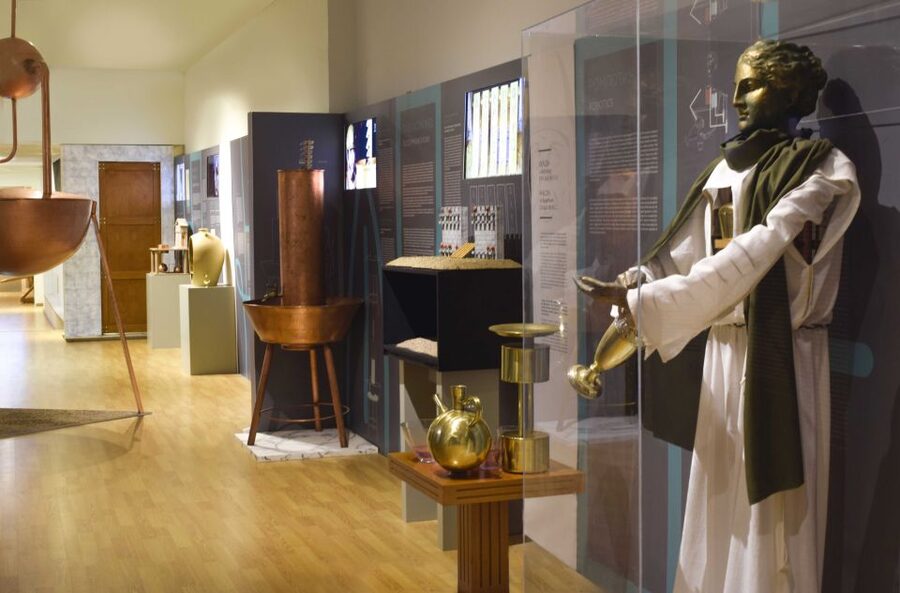
A museum about technology can fail in one of two ways: either it turns everything into dry text, or it throws you into objects without enough explanation. This one avoids both problems.
You’ll see:
- explanatory labels and large posters
- detailed diagrams and photos
- complete bibliographical references for deeper reading
- projecting stations with video and animation
- documentaries where the exhibitor explains how mechanisms work
That mix helps because people learn differently. If you want to read, you can. If you want to watch something move, there’s support. If you’re more of a hands-on learner, interactive displays help you test your understanding.
The private guide also makes these supports more useful. Instead of wandering through the museum trying to figure out what matters, your guide points you toward the key mechanism logic. Then you can use the visuals to confirm what you think you understood.
One practical note: the museum setting is focused on learning. Food and drinks aren’t allowed, so plan to grab a meal before or after your visit and keep the hour free of distractions.
Price and value: what $54 buys you for up to four people
The price is listed as $54 per group up to 4 people. That’s not just a number; it’s how you should think about value.
If you travel as a single person, that price might feel like a premium for an hour indoor visit. But if you’re a pair or a small family, your cost per person drops fast. And because this is a private tour with an English-speaking guide plus museum entry, you’re not paying for a crowd. You’re paying for time with an expert-style explanation and guided selection of what to prioritize.
This is also a museum where the guide really matters. If you walk in alone, you’ll likely understand some parts from the diagrams and audio-visual content. Still, you’ll miss the shortcut: a guide translating mechanism logic into clear human terms. That translation is where the money tends to show up.
The $54 group format is especially good for:
- couples who like learning together
- families who want a guided structure for kids
- history lovers who don’t want a lecture, but do want meaning
- curious non-engineers who want to see what the hype is about
Who should book this Athens tech tour (and who might not)
This tour is a strong fit if you want a different side of Athens. Instead of classical ruins and marble photos, you get engineering thinking—how ideas became mechanisms.
It’s also ideal if you enjoy hands-on learning. The museum’s interactive exhibits and video stations help you understand the function, not just the concept. People who care about how inventions influenced later thinking usually leave with a sharper sense of continuity—how Greek technology can feel familiar once you understand the underlying principles.
It’s less ideal if:
- you need mobility-friendly access (it’s not suitable for people with mobility impairments)
- you prefer only outdoor activities or you want long time spans
- you dislike structured museum tours and want complete freedom from start to finish
Also, it’s not an all-day museum marathon. It’s 1 hour plus free time to explore, so choose it when you have the energy to look closely.
Should you book this tour?
I’d book it if you want a short, high-impact Athens experience that feels genuinely different. The combination of a private guided hour and an interactive museum about ancient engineering is a smart use of time. You’ll come out with more than impressions—you’ll have mechanism-based understanding, from analog computing ideas like the Antikythera story to entertaining tech concepts tied to Philon and Heron.
Skip it only if mobility access is an issue for your group or if you’re looking for a purely casual walk with zero structure. If you fall anywhere in the middle—curious, tech-friendly, history-minded—this is exactly the kind of experience that makes you look at the ancient world with new eyes.
FAQ
How long is the Athens Kotsanas Ancient Greek Technology Museum guided tour?
The tour lasts 1 hour. Starting times vary, so you’ll want to check availability when you book.
Is this tour private?
Yes. It’s a private group experience, priced per group up to 4 people.
What language is the guide?
The live tour guide speaks English.
What do I get with the ticket price?
You get museum entry, a 1-hour private guided tour, and free time to explore further after the guided portion.
Where does the tour meet?
Meet at Pindarou 6, Athina 106 71. The museum is about a 5-minute walk from Syntagma Metro Station.
Are food and drinks allowed during the visit?
No. Food and drinks are not allowed.
Is the museum tour suitable for people with mobility impairments?
No, it’s listed as not suitable for people with mobility impairments.
Simpler With a Local Guide
- Athens: Acropolis, Parthenon & Acropolis Museum Guided Tour★ 4.8 · 9,316 reviews
- The Acropolis, Parthenon & Acropolis Museum Guided Tour★ 4.7 · 8,493 reviews
- Acropolis: Premium Acropolis and Parthenon Guided Tour★ 4.8 · 5,208 reviews
- Athens: Mythology of Delphi, Museum and Arachova Guided Tour★ 4.7 · 5,102 reviews
- Acropolis and Parthenon Guided Walking Tour★ 5.0 · 4,755 reviews
- Athens: Cape Sounio & Poseidon Temple Trip with Audio Guide★ 4.4 · 4,521 reviews
More Tours in Athens
- Athens: Acropolis, Parthenon & Acropolis Museum Guided Tour★ 4.8 · 9,316 reviews
- The Acropolis, Parthenon & Acropolis Museum Guided Tour★ 4.7 · 8,493 reviews
- Acropolis: Premium Acropolis and Parthenon Guided Tour★ 4.8 · 5,208 reviews
- Athens: Mythology of Delphi, Museum and Arachova Guided Tour★ 4.7 · 5,102 reviews
- Acropolis and Parthenon Guided Walking Tour★ 5.0 · 4,755 reviews
- Greek Food Walking Tour in Athens★ 5.0 · 4,740 reviews
More Tour Reviews in Athens
- Athens: Acropolis & up to 5 Archaeological Sites Combo Pass★ 4.2 · 13,904 reviews
- Athens: Acropolis, Parthenon & Acropolis Museum Guided Tour★ 4.8 · 9,316 reviews
- The Acropolis, Parthenon & Acropolis Museum Guided Tour★ 4.7 · 8,493 reviews
- Athens: Cape Sounion & Poseidon Temple Sunset Half-Day Trip★ 4.8 · 8,241 reviews
- Acropolis: Premium Acropolis and Parthenon Guided Tour★ 4.8 · 5,208 reviews
- Athens: Mythology of Delphi, Museum and Arachova Guided Tour★ 4.7 · 5,102 reviews
Fresh Off the Boat: New Athens Reviews





Museums, compared.
 ★ 4.8Acropolis, Parthenon & Acropolis Museum Guided TourFrom $409,316 reviews
 ★ 4.7The Acropolis, Parthenon & Acropolis Museum Guided TourFrom $408,493 reviews
 ★ 4.7Mythology of Delphi, Museum and Arachova Guided TourFrom $305,102 reviews
★ 4.8Acropolis, Parthenon & Acropolis Museum Guided TourFrom $413,579 reviews
★ 4.7Mythology of Delphi, Museum and Arachova Guided TourFrom $305,102 reviews
★ 4.8Acropolis, Parthenon & Acropolis Museum Guided TourFrom $413,579 reviews
 ★ 5.0Acropolis monuments & Parthenon Walking Tour with Optional Acropolis MuseumFrom $422,678 reviews
 ★ 4.5Athens All Included: Acropolis and Museum Guided Tour with TicketFrom $1652,673 reviews
 ★ 4.4Acropolis Museum Ticket with optional Audio GuideFrom $302,652 reviews
 ★ 4.8From Athens: Small-Group Delphi, Museum & Arachova Day TripFrom $342,476 reviews
Browse the lists this tour appears in