
Reviewed · ATHENS
Athens: Philosophy Experience at Plato’s Academy Park
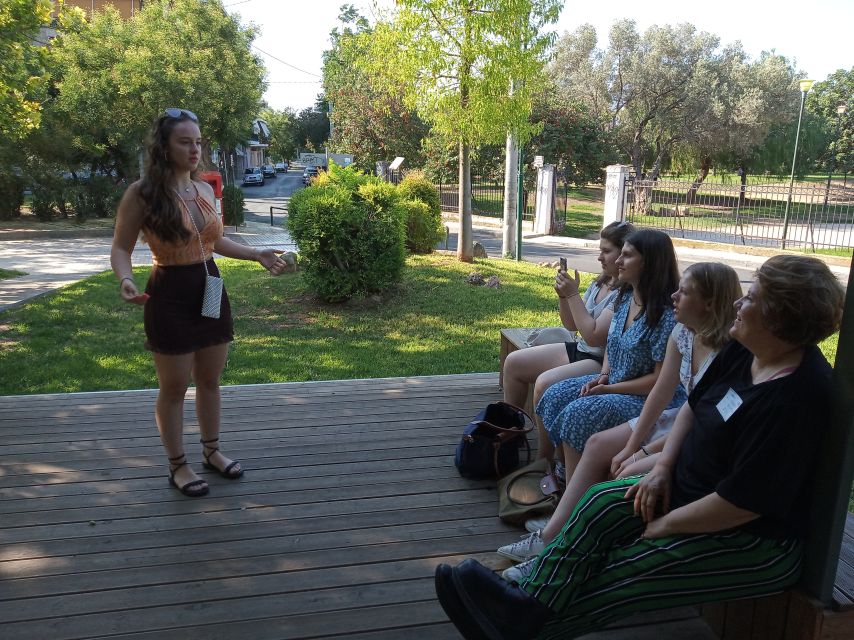
Plato’s Academy turns thinking into action. In this 2-hour workshop at Plato’s Academy Park, you walk from real ancient ruins to a modern conversation about the Allegory of the Cave. I love that it is interactive (not a lecture), and I also like the Socratic midwife-style questioning, which pushes you to test your own ideas. One thing to consider: the Digital Museum stop depends on whether it is open, so your experience may shift slightly by day and onsite conditions.
Because this happens in a historic archaeological site, you’ll want to come ready for a bit of quiet, respectful behavior. Wear comfy shoes, keep your volume down, and treat the ruins with care. Do that, and you’ll get a genuinely human, joyful way to practice philosophy rather than just read about it.
In This Review
- Key highlights that make this workshop worth your time
- Plato’s Academy Park: where philosophy stops being abstract
- Meeting point and timing: show up ready for a 2-hour conversation
- Digital Museum basics: a free start when it is open
- Walking the ruins: the Gymnasium area and why the setting matters
- Socrates’ midwife art in real time: questioning that works
- The debate game: Plato’s idea of how a philosopher should act
- Optional extra hour: Aristotle and the virtue-choice game
- Price and value: what $53 buys you in the real world
- What to bring and how to behave at an archaeological site
- Who this workshop is perfect for, and who should skip it
- Should you book the Athens Plato’s Academy Philosophy Experience?
- FAQ
- Where is the meeting point?
- How long is the experience, and what languages are available?
- Is the Plato’s Academy Digital Museum visit included, and is it always available?
- What happens if there is archaeological excavation at Plato’s Academy Park?
- Is it suitable for beginners, and what should I bring?
- Can I cancel for a refund, and can I reserve now and pay later?
Key highlights that make this workshop worth your time
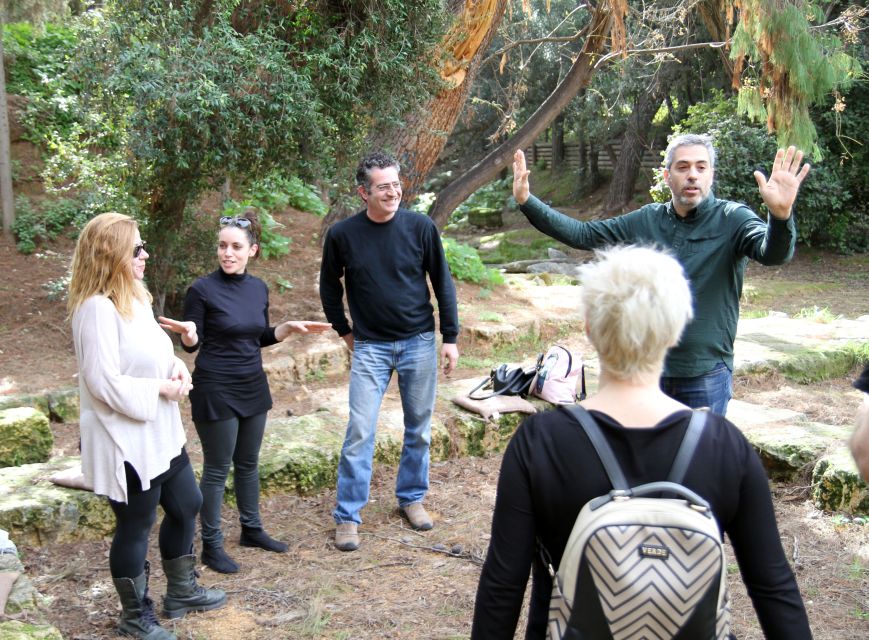
- Plato’s Academy Park setting: walk through the place tied to the world’s first Academy
- Free Digital Museum option: when open, you get a guided-by-you starting point before dialogue
- Socrates-style maieutic practice: you learn how questioning can help ideas grow
- Allegory of the Cave workshop: you connect Plato’s ideas to everyday choices
- Small-group feel: private or small groups keep the discussion active
- Optional Aristotle add-on: an extra hour with a virtue-choice game
Weighing this one up? Set it beside a few Athens favourites first.
- Athens: Acropolis & up to 5 Archaeological Sites Combo Pass
★ 4.2 · 13,904 reviews - Athens: Acropolis, Parthenon & Acropolis Museum Guided Tour
★ 4.8 · 9,316 reviews - The Acropolis, Parthenon & Acropolis Museum Guided Tour
★ 4.7 · 8,493 reviews - Athens: Cape Sounion & Poseidon Temple Sunset Half-Day Trip
★ 4.8 · 8,241 reviews
Plato’s Academy Park: where philosophy stops being abstract
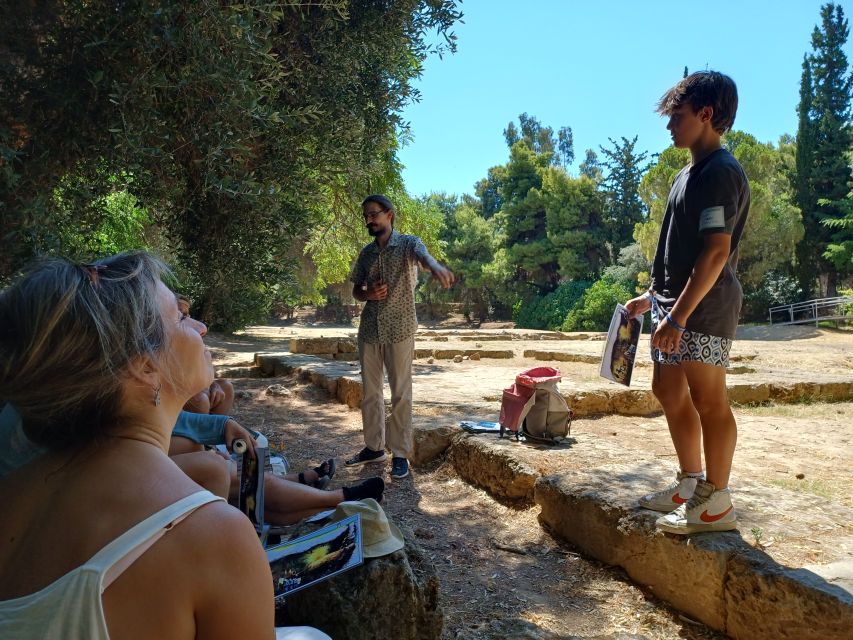
There is something powerful about doing philosophy in the actual setting where it was first systematized. At Plato’s Academy Park, you are not only learning what Plato wrote—you are stepping into a landscape of ruined buildings, where people once gathered, argued, trained, and tried to make sense of the world.
What I like most is that this experience treats philosophy as a skill you practice. You are not just asked to repeat facts about Plato. You’re nudged into making your own thoughts clearer—and that is harder, and more useful, than memorizing definitions.
You’ll also get a setting that naturally supports the theme of perception. The workshop’s anchor is the Allegory of the Cave, which is basically about what we think is real and how we move toward understanding. Standing near ancient remains helps that message land with less effort, because you can feel the gap between surfaces and deeper meaning.
Finally, the format stays grounded. The session is built for people who do not have a philosophy background. That matters because it lowers the fear factor. You can show up as a regular person and still get something meaningful out of the conversation.
Meeting point and timing: show up ready for a 2-hour conversation
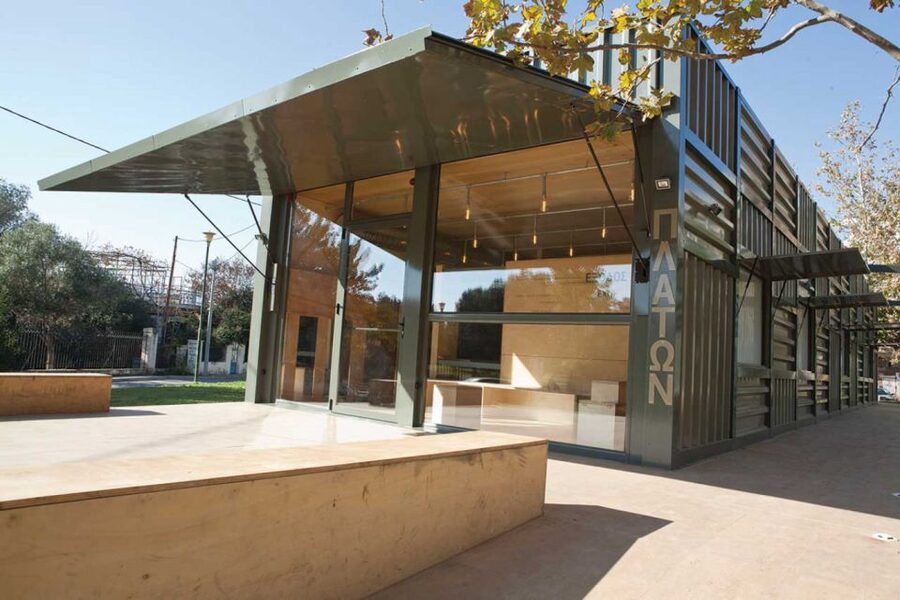
Your instructor meets you outside Plato’s Digital Museum, at the entrance, holding a Hellas Revival sign. The session runs 2 hours, and you can choose starting times based on availability.
Two practical notes I think you should take seriously:
1) This is an educational interactive workshop, not a traditional guided tour. Expect discussion and activities rather than a nonstop history talk.
2) You’ll want to plan for walking around an outdoor historical site, including possibly uneven terrain.
Language options are English or French, and the experience is described as plain English with no heavy jargon. That’s a real advantage if you’ve ever worried that philosophy tours will turn into wordy lectures.
Also keep in mind that small groups or private options are available. Even if you are in a shared group, the structure is designed to keep you speaking, not just listening.
Digital Museum basics: a free start when it is open
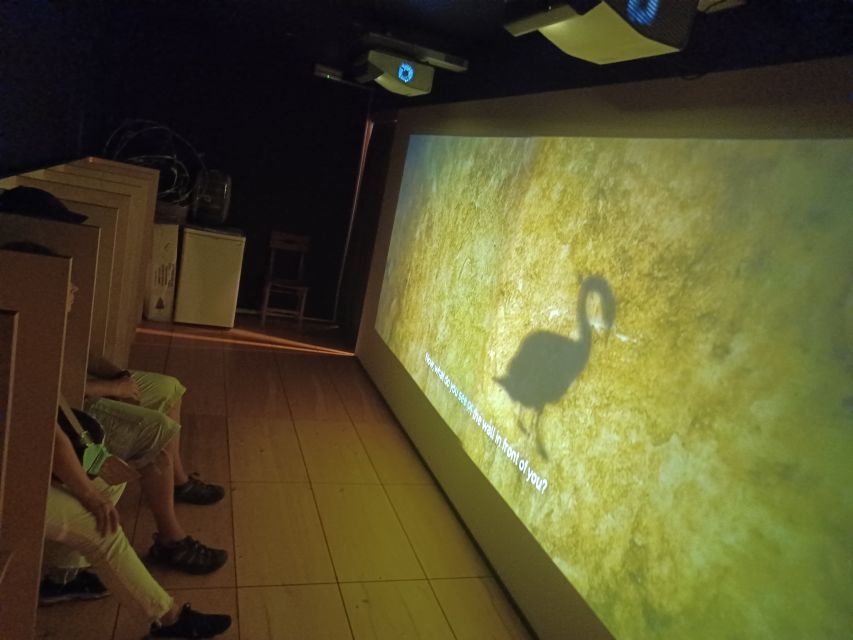
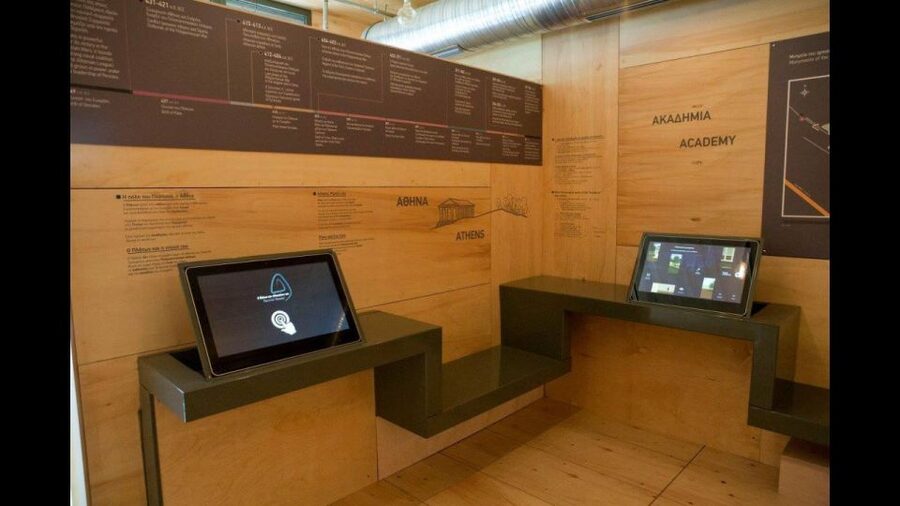
A big part of this experience is a short visit to the Plato’s Academy Digital Museum. When it is open, entry is free. The museum is listed as open Tuesday to Friday from 10:00 AM to 4:00 PM, but schedules can change and it can sometimes be closed without notice.
Here is why this stop is more useful than it sounds:
- You do not just wander. You gather specific information about Plato’s life and works and about the Academy.
- Then you use that info in the later dialogue portion, when your instructor connects it to the Cave and to the way ancient philosophers questioned the world.
If the museum is closed on your day, you don’t lose the experience. The plan is to replace that museum time with an engaging discussion that covers the same key insights. So you still get the foundation, even without the museum stop.
If you’re the kind of traveler who likes “orientation first, discussion second,” this format is a good match. You get context quickly, then you can spend the rest of the time thinking out loud.
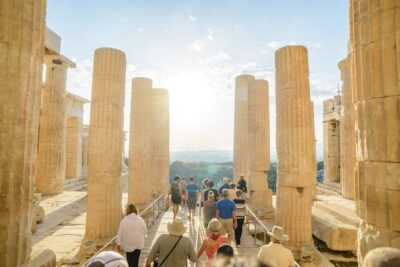
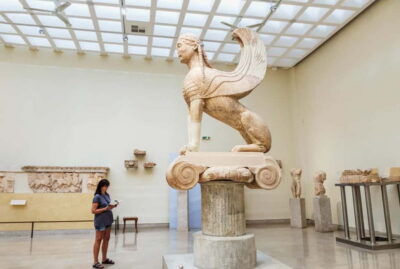


Walking the ruins: the Gymnasium area and why the setting matters
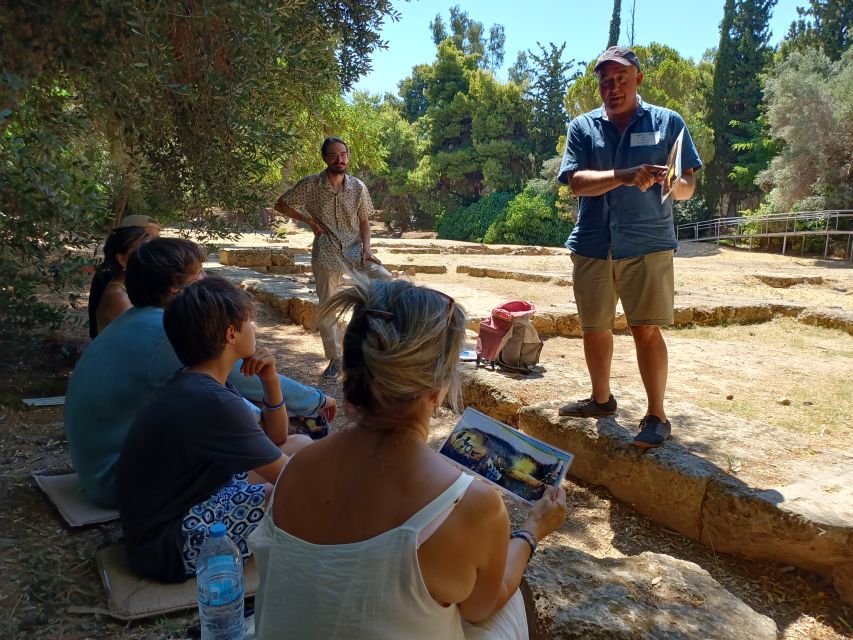
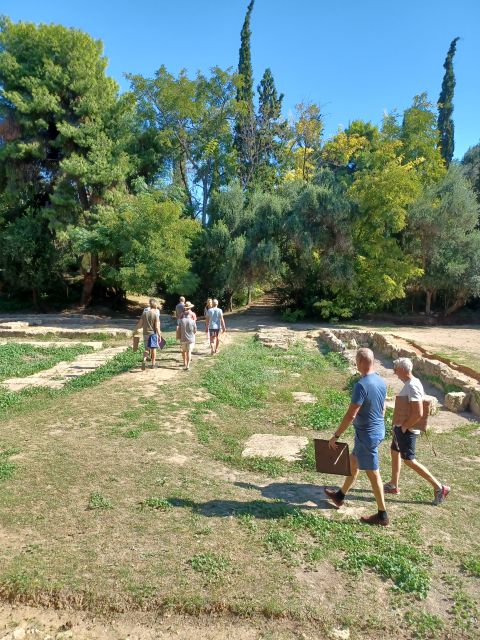
After the Digital Museum step, you’ll walk through the archaeological park of Plato’s Academy. The goal is to reach the ruins of the ancient Gymnasium.
This part is not about checking boxes. It’s about locating the ideas in physical space. When you’re later asked to interpret the Cave and talk about what you believe, you’re doing it with an actual sense of place behind you.
There is one potential drawback to note: archaeological excavation can be happening. In that case, you might see the Gymnasium ruins from a short distance and then settle at a different spot in the park. The workshop still proceeds, but the exact viewing angle and location can change.
From a practical standpoint, that’s why you should bring comfortable shoes and water. You’re moving through an outdoor site, and the group may adjust where it sits or stands depending on the day’s conditions.
Socrates’ midwife art in real time: questioning that works
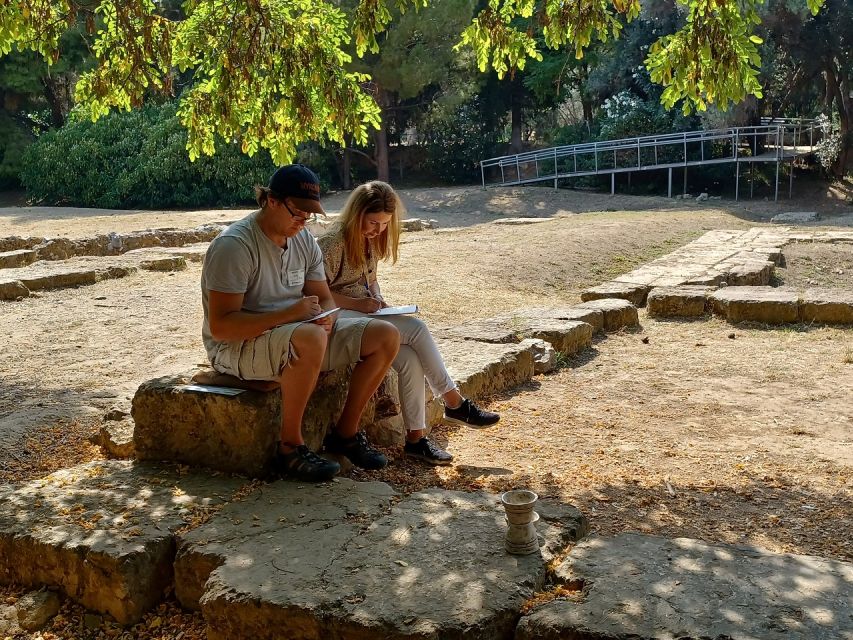
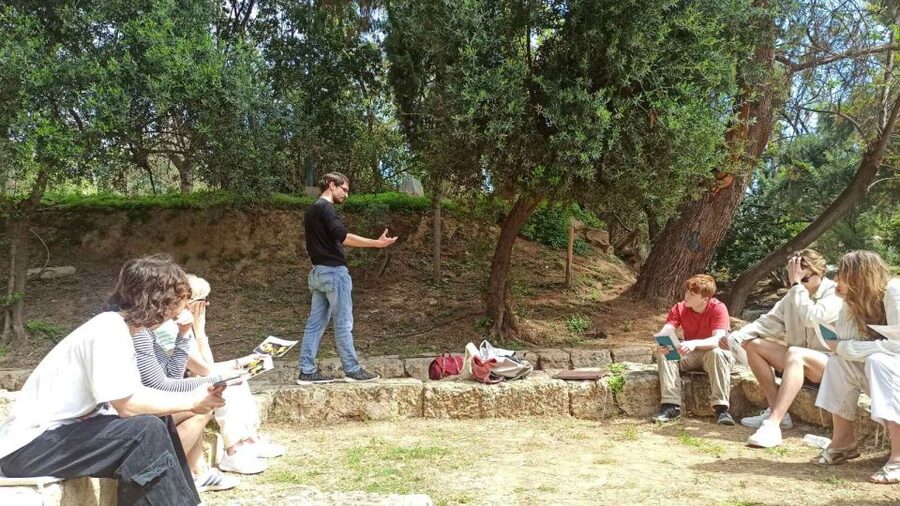
The heart of the workshop is the dialogue portion, shaped around Socrates’ maieutic (midwife) art and Plato’s dialogue techniques. Translation into traveler-friendly terms: the instructor doesn’t just tell you what to think. They facilitate a conversation where you examine your assumptions and refine your ideas through questioning.
I especially like that this is described as a productive and joyful philosophical quest. That matters because a lot of philosophy experiences can feel tense or overly academic. Here, the tone is meant to keep discussion human and active.
Here’s what that looks like during the session:
- You’ll reveal what you gathered about Plato earlier.
- You’ll talk about what it may have been like to be a philosopher in ancient Athens.
- Then you’ll move into the Allegory of the Cave, using guided prompts to explore what the Cave could mean for modern life.
Instead of a one-way lecture, you get structured exchange of opinions, beliefs, experiences, and views. The point is not to “win” a debate. The point is to practice the craft of thinking—how to ask, how to respond, and how to notice when your reasoning is shaky.
If you tend to keep your thoughts private at group tours, you might still be able to join in here because the workshop is set up for beginner-friendly participation. The questions are meant to be accessible, and the process is designed to build clarity step by step.
The debate game: Plato’s idea of how a philosopher should act
At the end, you’ll play a short debate game based on a modern life case study connected to Plato’s opinion of how a philosopher should act.
This is a smart ending, because it forces the big themes to go somewhere real. You cannot leave the Cave as a concept and call the job done. Instead, you’re asked to take the philosophical attitudes and apply them to a situation you can recognize from daily life.
In practice, this part tends to be the moment where people who thought they were here for facts realize they are here to practice judgment. You’re essentially testing how you reason under pressure—without it turning into an aggressive argument.
The materials are included, and the instructor is there to keep the discussion structured. That’s important because philosophy can go sideways fast if the group is too freeform. This format aims for “guided freedom,” where you get to speak and think, but still stay inside the lesson.
Optional extra hour: Aristotle and the virtue-choice game
If you want more, there is an optional extra hour on Aristotle’s philosophy. You can select this option at checkout.
The described activity is a thought-provoking virtue-choice game. Without getting into made-up specifics, the key value here is simple: you’ll shift from Plato’s dialogue-centered vision to Aristotle’s focus on how good character and choices shape a good life.
This add-on is a great idea if:
- you already know Plato a little and want the broader Greek framework,
- you prefer learning through practical decision-making rather than only reading,
- or you just want more time talking with the group.
If you’re not sure, start with the 2-hour Plato experience. You’ll still cover the Cave, Socrates-style questioning, and a modern debate moment.
Price and value: what $53 buys you in the real world
At $53 per person for 2 hours, this workshop is priced like an experience, not a museum ticket. You get an expert facilitator, all materials, and local taxes (24%) are included.
The main value comes from the interaction. You are paying for a structured conversation and activities that push you to think, not just observe. That usually makes the cost feel more justified than a passive sightseeing add-on—especially if you like hands-on learning.
One more value factor: the workshop is designed for people without prior knowledge, using plain language. That reduces the risk of ending up bored because you missed earlier concepts. You can join in from scratch.
What is not included is a guided tour in the traditional sense. That might matter if you prefer lots of factual explanations with minimal speaking. If that is you, ask yourself whether you like participating in discussions. If yes, the price feels fair for what you get.
What to bring and how to behave at an archaeological site
Bring comfortable shoes, sun hat, and water. Comfortable clothes help too, because the session takes place in a historical outdoor setting.
Also take the conduct rules seriously. Because this happens at a historical site, participants are required to respect etiquette and local expectations, including sobriety, cleanliness, and appropriate dress and noise levels. If you don’t follow the rules, the facilitator can terminate your participation without refund.
One more practical note that surprises people: because it’s a public-space workshop, you consent to possible photo/video shooting, including future publication. You can withdraw consent before the workshop by contacting in writing.
If you want a smooth day, you’ll do best by showing up calm, dressed appropriately, and ready to engage without being loud.
And yes—wheelchair accessible is listed, so you should be able to participate even if mobility is limited.
Who this workshop is perfect for, and who should skip it
This is ideal if you want philosophy that feels practical. You should like it if:
- you enjoy discussion-based activities,
- you want to understand Plato’s ideas through the Allegory of the Cave,
- you like questioning your own beliefs using Socratic-style prompts,
- and you prefer plain language over complicated terminology.
You might skip it if you want a classic sightseeing tour with lots of dates, names, and uninterrupted narration. This is an interactive workshop, so your time is best spent participating.
It’s also a strong choice for couples and friends who want a shared “think out loud” experience, not just separate wandering.
And because the format is described as suitable for beginners, it works even if you last took a philosophy class years ago—or never took one at all.
Should you book the Athens Plato’s Academy Philosophy Experience?
Book it if you want a philosophy experience that is hands-on, set in a real ancient site, and built around dialogue rather than passive listening. The combination of the Digital Museum foundation (when open), the Gymnasium ruins setting, and the Socrates-style questioning is a solid “learn by doing” way to meet Plato.
Skip or reconsider if you hate group discussion, need a strict museum-style tour format, or are likely to be frustrated by day-to-day changes (museum hours, possible excavation adjustments).
If you’re flexible, bring good shoes, and show up ready to talk, you’ll leave with more than information. You’ll leave with better habits for thinking.
FAQ
Where is the meeting point?
The instructor meets you outside Plato’s Digital Museum, at the entrance, holding a Hellas Revival sign.
How long is the experience, and what languages are available?
It lasts 2 hours. The instructor offers English and French.
Is the Plato’s Academy Digital Museum visit included, and is it always available?
The Digital Museum visit is free if it is open. It is listed as open Tuesday to Friday from 10:00 AM to 4:00 PM, but schedules can change and it may sometimes be closed without announcement. On other days, the museum visit is replaced with a discussion that covers the same key insights.
What happens if there is archaeological excavation at Plato’s Academy Park?
If excavation is taking place, you may see the ancient Gymnasium ruins only from a short distance, and the group will settle at a different spot in the park. The workshop still continues.
Is it suitable for beginners, and what should I bring?
Yes. It’s described as basic philosophy, suitable for people without previous knowledge, using plain English with no difficult words. Bring comfortable shoes, a sun hat, water, and comfortable clothes.
Can I cancel for a refund, and can I reserve now and pay later?
Yes. There is free cancellation up to 24 hours in advance for a full refund. There is also a reserve now & pay later option where you can book your spot and pay nothing today.
More Tour Reviews in Athens
- Athens: Acropolis & up to 5 Archaeological Sites Combo Pass★ 4.2 · 13,904 reviews
- Athens: Acropolis, Parthenon & Acropolis Museum Guided Tour★ 4.8 · 9,316 reviews
- The Acropolis, Parthenon & Acropolis Museum Guided Tour★ 4.7 · 8,493 reviews
- Athens: Cape Sounion & Poseidon Temple Sunset Half-Day Trip★ 4.8 · 8,241 reviews
- Acropolis: Premium Acropolis and Parthenon Guided Tour★ 4.8 · 5,208 reviews
- Athens: Mythology of Delphi, Museum and Arachova Guided Tour★ 4.7 · 5,102 reviews