
Reviewed · ATHENS
Athens Riverside: A Journey in Mythical Athens
Two buried rivers make Athens make sense.
This tour turns Athens into a living map by walking along the ancient Heridanos and Ilissos river paths—some visible, some tucked under modern streets—and tying each bend to Greek myth and later history. I also like the built-in payoff: you end up with big views and major hits like the Acropolis and Ancient Agora, but reached in a smarter, story-first order than the usual checklist. The main drawback is simple: it’s a 3-hour walking experience on uneven ground, so plan for real steps and sun.
I like that the route keeps changing scenery—from uncovered ancient waterways near Monastiraki to archaeological remains, Roman-era traces, and Christian-era remnants—so you don’t feel stuck in one type of sight. One thing to keep in mind: the tour runs in all weather, so dress for that, and if you’re visiting in the hottest months, go early or be ready to slow your pace.
In This Review
- Key highlights worth your attention
- Walking with Two Buried Rivers in Athens
- Getting Started at Monastiraki Square: the Heridanos clue near the metro
- Following the Ilissos: mythology’s “teaching locale” feeling
- Ancient Agora and the Acropolis: classics, but with a river map
- Pnyx and the hill stops: sacred views, Ares, and the Assembly
- Philoppapos and the Hill of Muses: a Roman-era surprise on the way
- How long is it, and what’s the walking like in real life?
- Price and value: is $83.77 worth 3 hours?
- Guides: where the story quality actually shows
- Who should book this Athens Riverside walk?
- Should you book Athens Riverside: A Journey in Mythical Athens?
- FAQ
- How long is the Athens Riverside tour?
- Where do I meet the guide for the tour?
- Where does the tour end?
- What’s included in the price?
- Are food and drinks included?
- What languages is the tour offered in?
- Does the tour run in bad weather?
- Is there a private group format?
- Can I cancel for free, and how late?
- Is the tour suitable for most travelers?
Key highlights worth your attention
- Heridanos + Ilissos route: Two ancient rivers guide the walk through the city’s layers.
- Metro-era river discovery: You start at Monastiraki Square, where part of the Heridanos was uncovered during the metro works.
- Major sites without the crowds-only feel: Ancient Agora and Acropolis fit into the story, not as isolated stops.
- Panoramic hills: Stops include views from Pnyx and Philoppapos, with possible sunset timing depending on your departure.
- Myth stops with specific landmarks: You’ll hear legends connected to places like the hill of Nymphs, the Assembly, and Ares’ rock.
- Short, focused, and guided: A local guide leads a compact route (about 3 hours) with clear context as you walk.
Weighing this one up? Set it beside a few Athens favourites first.
- Athens: Acropolis & up to 5 Archaeological Sites Combo Pass
★ 4.2 · 13,904 reviews - Athens: Acropolis, Parthenon & Acropolis Museum Guided Tour
★ 4.8 · 9,316 reviews - The Acropolis, Parthenon & Acropolis Museum Guided Tour
★ 4.7 · 8,493 reviews - Athens: Cape Sounion & Poseidon Temple Sunset Half-Day Trip
★ 4.8 · 8,241 reviews
Walking with Two Buried Rivers in Athens
Most Athens tours feel like a series of monuments. This one feels like a city puzzle. Instead of starting at a temple and working outward, you start with water—ancient riverbeds and streams that once shaped daily life, travel routes, and myth.
The genius is that the rivers still exist in parts. Some stretches are visible, some run underground, and some show up indirectly through archaeological remains and clues in neighborhoods. You’re basically learning where the old city flowed, then watching modern Athens grow across it.
That theme matters because it changes how you look at everything. The Ancient Agora doesn’t just become a ruin; it becomes a place along a living landscape. The Acropolis doesn’t just become a viewpoint; it becomes part of a story landscape shaped by routes, hills, and water.
Getting Started at Monastiraki Square: the Heridanos clue near the metro
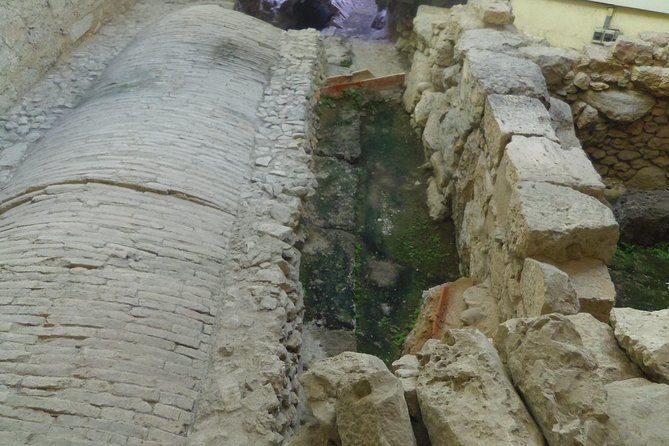
You meet in central Athens at Ermou 111 (Athens), right in the Monastiraki area. The walk begins with a piece of the Heridanos (Eridanos) river uncovered during the construction of the metro system in the 1990s. That detail alone makes the tour feel fresh, because you’re not just hearing about ancient Athens—you’re standing where the modern city physically revealed an older one.
From there, your guide follows the logic of where this river once went: it’s linked to a source area near Mount Lycabettos and historically flowed toward the Kerameikos archaeological site. The tour then uses that thread to move you through streets where ancient paths run beneath the surface.
Practical tip: show up a few minutes early and take a quick look around Monastiraki before the group gathers. It helps you get your bearings fast before the guide starts connecting landmarks to the river map.
Following the Ilissos: mythology’s “teaching locale” feeling
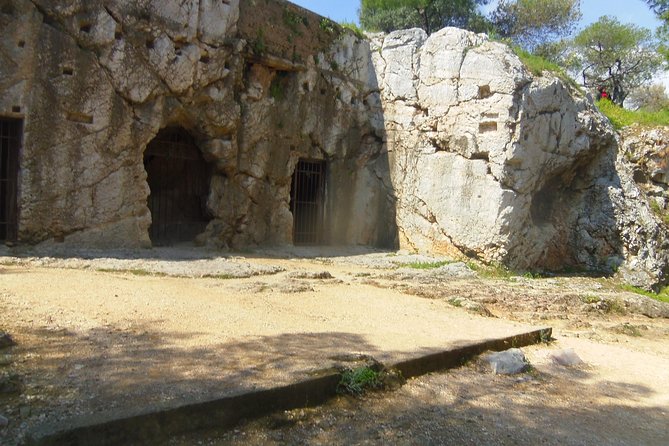
The tour doesn’t stop with one river. You’ll also follow the ancient course of the Ilissos, which runs mostly underground through modern Athens. This part is more than geography. The Ilissos shows up in ancient Greek mythology and writing, and it’s tied to a famously teachable vibe—Socrates used the area as a favored teaching locale.
As you walk, you’ll pass through places that reflect more than one era. You’ll see ancient sanctuaries built for Greek gods, remnants of Christian churches, mystical caves, and Roman bath ruins. Even if you don’t remember every name, the pattern sticks: Athens kept reusing important terrain.
This is where the best guides really earn their keep. Instead of dumping facts, they connect what you’re looking at now to what people believed and practiced long ago. With guides like Eleni and Dionysus, the storytelling angle shows up strongly in the way they link past and present at each turn.
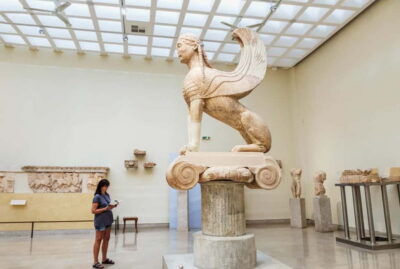


Ancient Agora and the Acropolis: classics, but with a river map
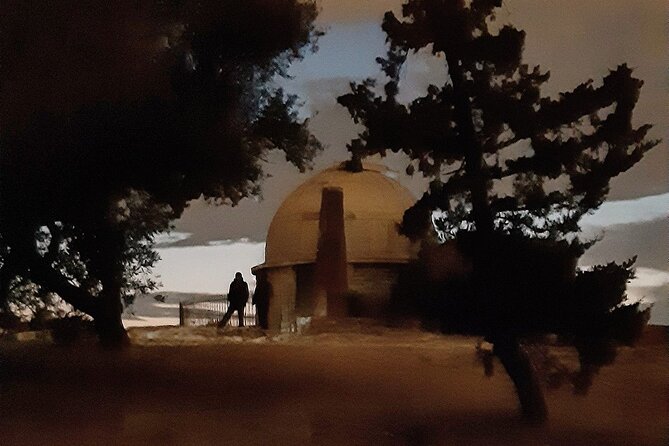
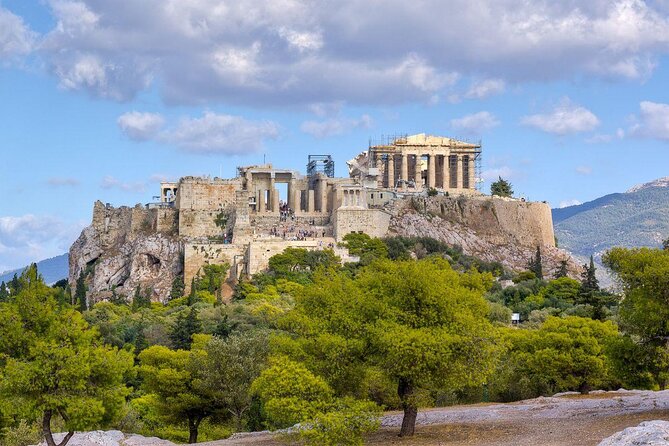
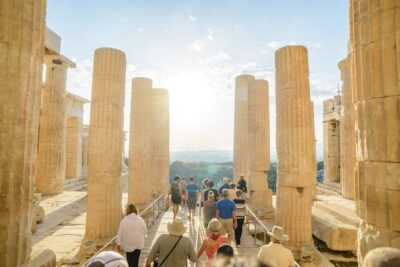
You’ll hit major archaeological areas including the Ancient Agora and the Acropolis. The difference here is the route’s logic. Because you’re tracking the river paths first, these big sites feel like destinations inside a connected city system, not isolated stops.
Ancient Athens wasn’t one “main street.” It was networks: water, hills, sanctuaries, gathering spaces, and routes for daily movement. The Agora fits naturally into that system, since it was a hub where ideas, trade, and civic life met. And when you arrive at the Acropolis, the views land differently because you’ve been building the mental picture all along.
Ending near the Acropolis Museum is another practical win. You’re in the right area to keep exploring at your own pace afterward, without needing to reorganize your day for transport.
Pnyx and the hill stops: sacred views, Ares, and the Assembly
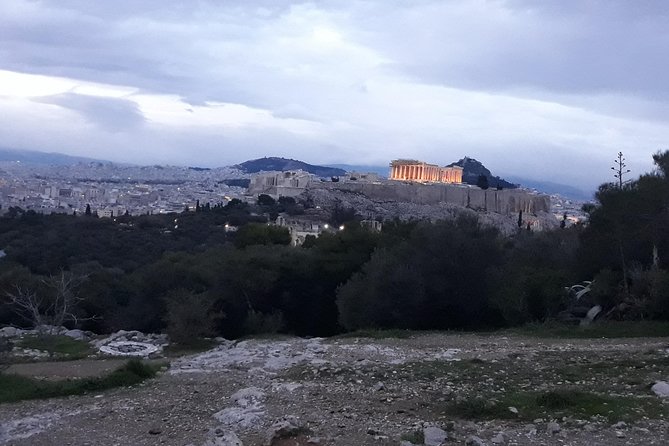
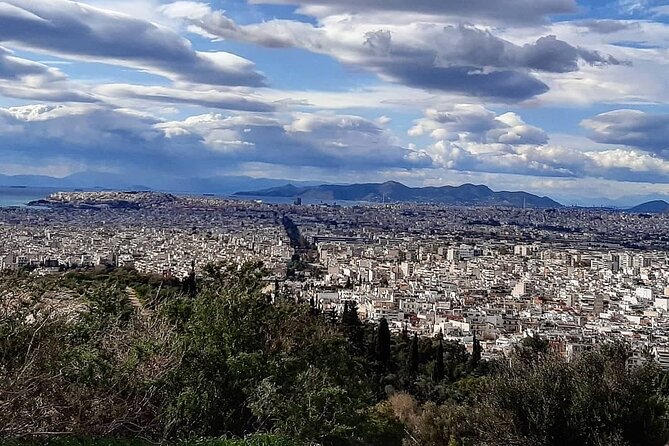
After the river thread starts making sense, the tour pushes upward toward Athens’ sacred hills. One stop focuses on the best views from the sacred hill and its slopes—this aligns with Pnyx, a key area tied to the Athenian Assembly setting.
You’ll also hear about the small naked rock of Ares. That detail matters because it puts “myth” back into a specific place you can point to, not just a story floating in the air.
Then comes the mythical hill of Nymphs and the move toward the Athenian Assembly. Even if you only catch parts of the legend, the place names help you remember where you are: you’re not just walking through nice viewpoints, you’re walking through political and myth geography.
If you’re the type who likes to see the big city from above, you’ll appreciate this segment. The route is designed so the viewpoints feel like rewards, not detours.
Philoppapos and the Hill of Muses: a Roman-era surprise on the way
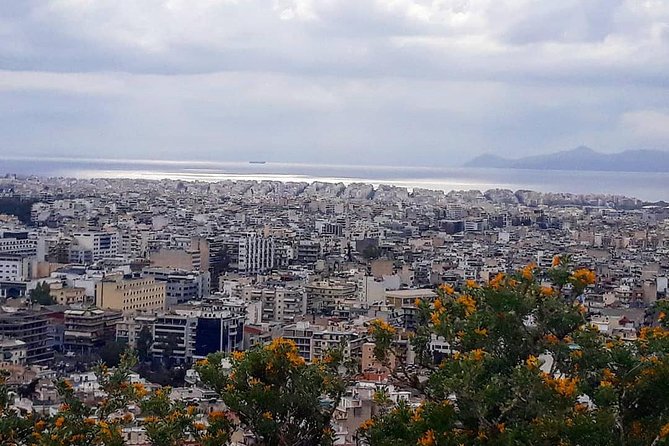
The later part of the tour leans into panoramic hillside Athens. Philoppapos Hill is part of the payoff, and the walk includes the hill of the Muses. That kind of stop is exactly where this tour’s theme shines: mythology isn’t stuck in the museum. It’s built into the landscape you’re standing on.
Along the way, you’ll pass the Roman Conservatory of Athens. It’s a nice reminder that Athens’ layers didn’t stop at the classical period. Roman Athens still left visible marks, and the guide typically ties those marks back to how different eras re-used public space.
Also: depending on your departure time, you might catch sunset views. The hills are ideal for golden light, and the tour timing often lines up with at least the possibility of that extra wow factor.
How long is it, and what’s the walking like in real life?
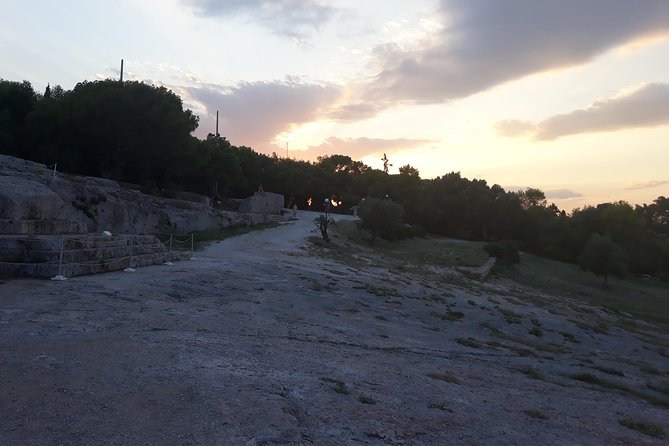
The tour runs about 3 hours. That’s a manageable chunk if you plan it smartly. The catch is that it’s still a walking tour, on a city full of slopes and uneven stone.
What this means for your day:
- If you’re doing it mid-day, bring water and protect yourself from strong sun.
- If you’re sensitive to heat, choose an earlier departure time.
- Wear casual shoes with decent grip. You’ll be on archaeological surfaces and hill paths, not smooth sidewalks.
Weather note: it operates in all weather conditions, so pack for rain or hot conditions based on the season. Dress casual, but dress for the ground you’ll be stepping on.
Price and value: is $83.77 worth 3 hours?
At $83.77 per person, this isn’t a bargain-bin “quick history” walk. But you’re paying for a very specific experience style: a guided story route that connects buried ancient waterways to major archaeological zones and big views—all within a compact timeline.
Here’s the value logic that makes sense:
- You’re guided by a local expert who can connect multiple eras (ancient Greek, Roman, Christian layers) as you walk.
- You’re not only hitting the obvious sites; you’re seeing how they connect through the rivers’ paths.
- You get a route that’s built around myths with named place stops, not vague storytelling.
It helps that it’s a private tour format—only your group participates—so you’re less likely to feel rushed or drowned out by a large crowd. If you want a more personalized pace and clearer explanations at small landmarks, that’s part of the price justification.
Also check the practical perks: there are group discounts and a mobile ticket option. Small things, but they reduce friction when you’re juggling Athens logistics.
Guides: where the story quality actually shows
The biggest difference in experiences like this comes from the guide, and this one seems to attract strong talent. Guides such as Helena, Eleni, Dionysus, and Arthur show up in prior experiences with a consistent theme: linking mythology to the exact stops you’re walking to, then tying ancient life to the city’s modern look.
You’ll also get a sense of how flexible the guide can be. For example, one guide had an unusual start with a late arrival, but then the tour moved on and the group still benefited from strong knowledge and the ability to answer questions. That tells me the guide quality isn’t only in the script; it’s in how they respond when the day gets messy.
Practical note: if punctuality matters to you, arrive a little early. Athens runs on human time, and the tour begins when your group is ready.
Who should book this Athens Riverside walk?
You’ll likely love this if you:
- Want Athens mythology tied to places you can actually point to.
- Have already seen the top “must-sees” and want a less standard route.
- Like walking tours that explain how ancient Athens worked as a system.
- Enjoy panoramic viewpoints from hills like Pnyx and Philoppapos.
You might skip it (or pick a different tour) if:
- You hate hills and slopes.
- You’re only interested in the Acropolis strictly as a standalone site.
- You need a fully flat route with minimal walking.
It also suits families and most travelers, since the tour is built for general participation. Still, comfort depends on your footwear and heat tolerance.
Should you book Athens Riverside: A Journey in Mythical Athens?
If you’re trying to see a different Athens, this is a smart pick. The rivers idea makes the whole city click: you walk the paths of Heridanos and Ilissos, then you use that map to make sense of the Agora, the Acropolis area, and the hillside myths above it. For the price, you’re getting real guidance and a focused route that feels more “under the surface” than most.
Book it if you want story + sites + views in one package. Choose your departure time based on your tolerance for heat, and if you can, aim for a time that gives you the best chance at those hilltop sunset scenes.
If you prefer a monument-only day, you can still do that in Athens. This tour is for the days when you want the city to feel like it has a pulse—beneath your feet.
FAQ
How long is the Athens Riverside tour?
It runs for about 3 hours.
Where do I meet the guide for the tour?
You meet at Ermou 111, Athina 105 55, Greece in the Monastiraki area.
Where does the tour end?
It ends at Str. Makryianni 1, Athina 117 42, Greece, in front of the Acropolis Museum.
What’s included in the price?
A local guide is included.
Are food and drinks included?
No. Food and drinks are not included, so plan to bring or buy what you need.
What languages is the tour offered in?
The tour is offered in English.
Does the tour run in bad weather?
Yes, it operates in all weather conditions, so dress appropriately.
Is there a private group format?
Yes. It’s listed as private, meaning only your group participates.
Can I cancel for free, and how late?
Free cancellation is available. You can cancel up to 24 hours in advance for a full refund.
Is the tour suitable for most travelers?
Most travelers can participate.
More Tour Reviews in Athens
- Athens: Acropolis & up to 5 Archaeological Sites Combo Pass★ 4.2 · 13,904 reviews
- Athens: Acropolis, Parthenon & Acropolis Museum Guided Tour★ 4.8 · 9,316 reviews
- The Acropolis, Parthenon & Acropolis Museum Guided Tour★ 4.7 · 8,493 reviews
- Athens: Cape Sounion & Poseidon Temple Sunset Half-Day Trip★ 4.8 · 8,241 reviews
- Acropolis: Premium Acropolis and Parthenon Guided Tour★ 4.8 · 5,208 reviews
- Athens: Mythology of Delphi, Museum and Arachova Guided Tour★ 4.7 · 5,102 reviews