

Reviewed · ATHENS
Athens: Women in Ancient Greece
Athens feels different when women tell the story. This guided walk through central Athens uses legends, everyday details, and real named figures to show you how Greek women shaped (and fought over) their world—under the umbrella of Women in Ancient Greece.
I especially liked how the guide, Maelle, tells the stories in a conversational way, not a lecture. And I love that you see major monuments through a female lens, connecting the Agora and Pnyx to roles shaped by goddesses like Athena and stories like Penelope and Pandora.
One drawback to plan for: this tour involves steps and isn’t suitable for people with mobility impairments, wheelchair users, or heart problems.
In This Review
- Key Things You’ll Notice on This Athens Women in Ancient Greece Tour
- Why This Women-First Walk Changes How You See Athens
- Meeting at Monastiraki: Where the Tour Starts, and What to Bring
- Monastiraki to Hadrian’s Library: Getting the City Context in Minutes
- Plaka Streets and the Gate of Athena Archegetis: Myth Becomes Real Social Pressure
- A Secret Stop That Breaks the Usual Athens Pattern
- Ancient Agora of Athens: Where Civic Life Happened, and Who Was Left Out
- Pnyx: Democracy, First Votes, and the Big Question of Participation
- Sappho, Aspasia, and Agnodice: Women Who Refused the Script
- Kidnapped Spartan Girls and the Women’s Festival Mystery
- Acropolis Views Toward Filopappou Hill: Closing With Perspective
- Price and Value: What $88 Gets You for Two Hours
- Who This Tour Is Best For
- Should You Book Athens: Women in Ancient Greece?
- FAQ
- Where does the tour start?
- How long is the walking tour?
- Is the tour guided in English or other languages?
- Are archaeological site tickets included?
- What’s included in the price?
- What should I bring?
- Is it suitable for people with mobility issues?
- What’s the cancellation policy?
Key Things You’ll Notice on This Athens Women in Ancient Greece Tour
- A female lens on Athens’ most important ruins without feeling like a textbook
- Myth as social context (Athena, Penelope, Demeter, Pandora) and how it shaped expectations
- Famous women who broke the script like Sappho, Aspasia, and Agnodice
- Stories reach beyond Athens with references to Sparta and Thebes and events like the kidnapped Spartan girls
- A small private-group pace with questions and interaction, so it moves fast and feels personal
Weighing this one up? Set it beside a few Athens favourites first.
- Athens: Acropolis & up to 5 Archaeological Sites Combo Pass
★ 4.2 · 13,904 reviews - Athens: Acropolis, Parthenon & Acropolis Museum Guided Tour
★ 4.8 · 9,316 reviews - The Acropolis, Parthenon & Acropolis Museum Guided Tour
★ 4.7 · 8,493 reviews - Athens: Cape Sounion & Poseidon Temple Sunset Half-Day Trip
★ 4.8 · 8,241 reviews
Why This Women-First Walk Changes How You See Athens

Most Athens tours point you at the usual story: men, politics, wars, and monuments. This one flips the angle. You still walk past iconic places, but you’re always asked to picture who lived nearby, who had rights, who had limits, and what it meant to be a woman in that system.
What makes it work is the mix of the everyday and the dramatic. You’re not only hearing names from mythology; you’re hearing how myths could shape what people thought women should do. And you’re not only getting famous examples. You also get the sense of daily life and the social pressure behind it.
Meeting at Monastiraki: Where the Tour Starts, and What to Bring
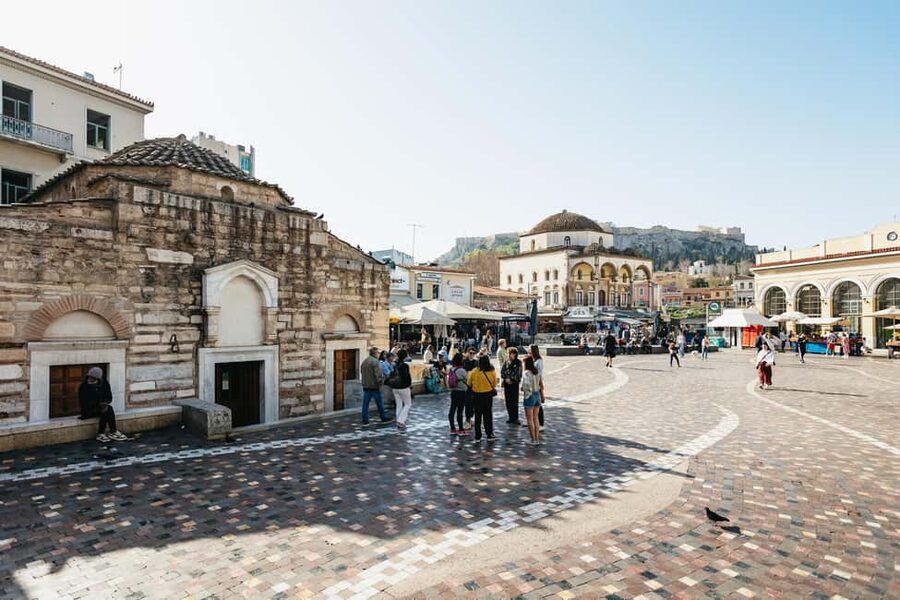
You’ll meet your guide at the Church Pantanassa, on Monastiraki Square. The guide holds a sign that reads Women in Ancient Greece, which makes it easy to spot.
This is a walking tour with steps, so it helps to wear grippy shoes and bring the basics: a sun hat, sunscreen, and water. On a hot Athens day, that small practical prep matters because you’ll be outside a lot.
Monastiraki to Hadrian’s Library: Getting the City Context in Minutes
Monastiraki is a great starting point because it’s busy, layered, and close to the ancient core—so you quickly feel how old Athens sits inside the modern one. From there, the tour moves toward Hadrian’s Library, a key stop that helps you understand the setting around the classical center.
The theme stays consistent: instead of treating monuments like isolated leftovers, you’re taught to connect them to real people and social roles. The guide’s stories use the architecture as a stage—who would move through these spaces, who could speak, who could learn, and who was expected to stay in the background.


Plaka Streets and the Gate of Athena Archegetis: Myth Becomes Real Social Pressure
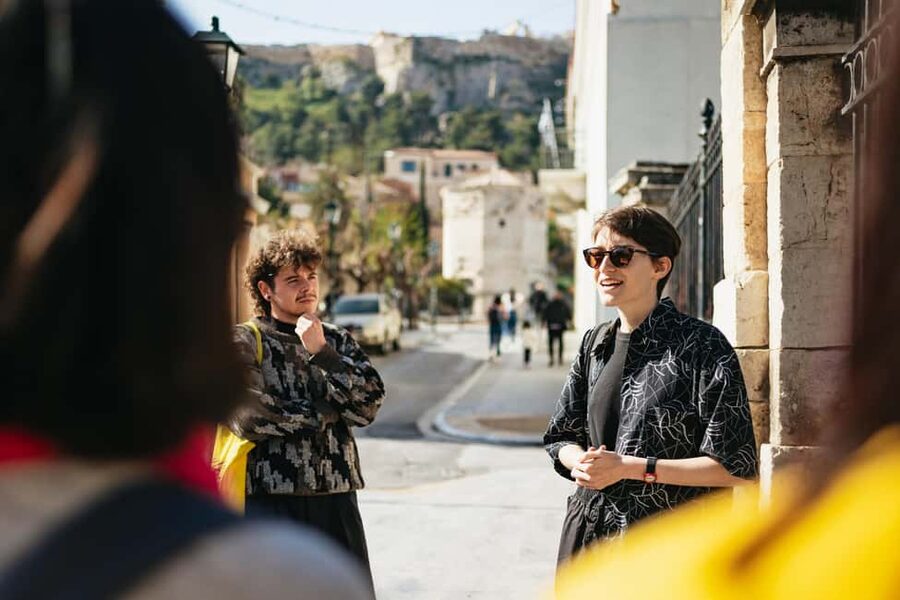
As you drift through Plaka, the tour slows just enough for you to read the city like a map. You’re not rushing for photos. You’re building the mental picture of how neighborhoods fit into life in ancient Athens.
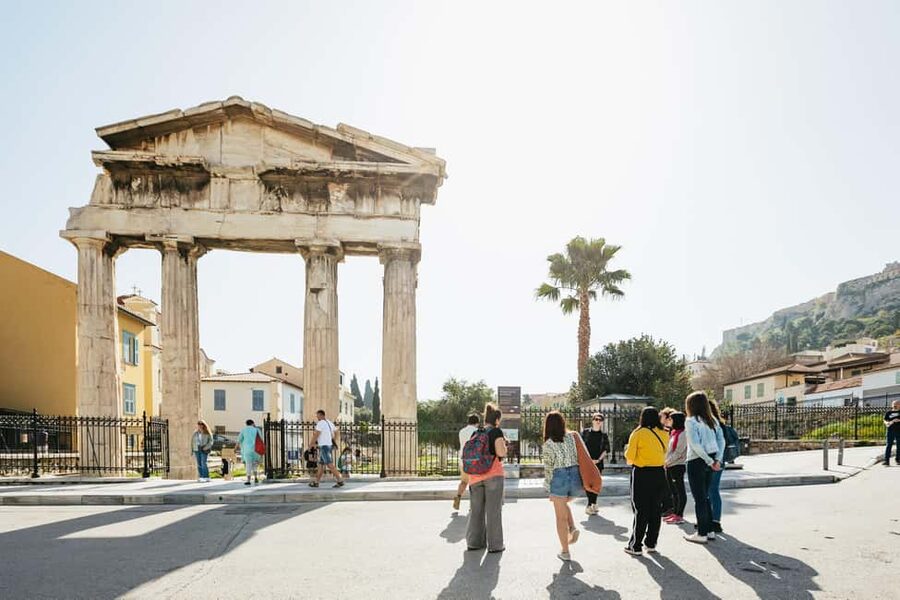
Then you reach the Gate of Athena Archegetis. Athena isn’t just a goddess here. She becomes part of how people justified power and behavior—especially the kind of roles society expected women to follow. The tour ties these myth references to social expectations, so the stories feel less like trivia and more like the rules of the world you’re standing in.
This is also where the tour’s tone matters. The guide separates legend from what can be supported as history, and keeps the conversation grounded while still letting mythology do what it does best: explain human attitudes.
A Secret Stop That Breaks the Usual Athens Pattern
You’ll include a secret stop along the route—one of those moments that gives the tour personality. Instead of just sprinting through the big-name sights, you get at least one place that feels like it was chosen for meaning, not for popularity.
Because details of this stop aren’t presented as part of a standard “checklist,” it can feel more like a conversation with the city. That matters on a themed tour: you want the theme to lead, not just the calendar.
Ancient Agora of Athens: Where Civic Life Happened, and Who Was Left Out
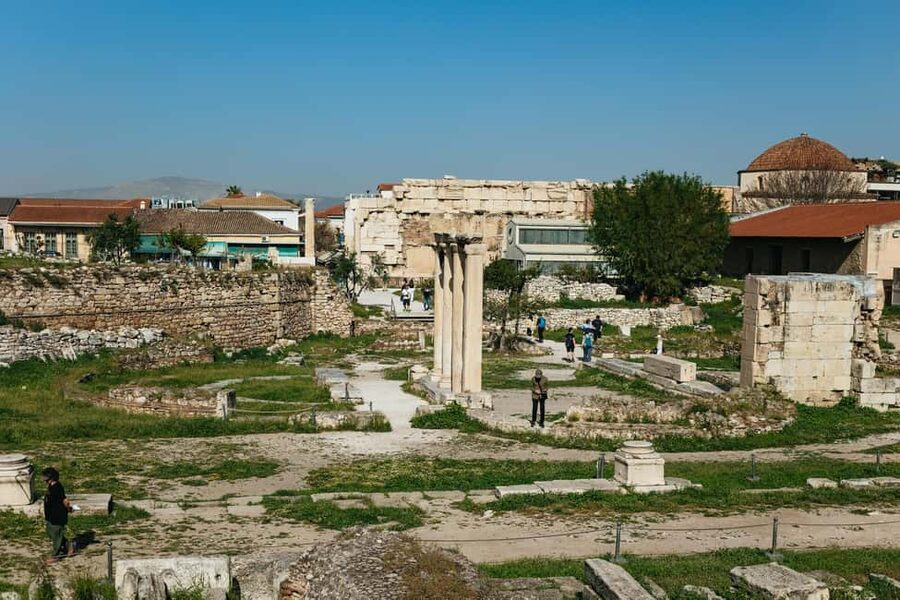
The Ancient Agora is one of those places where you can practically hear echoes. But on this tour, you don’t only think about commerce and politics. You think about participation, access, and the social structure around public life.
This stop is where the guide’s focus really pays off. You learn how women’s status related to mythology and to the legal-social limits of the era. You also hear stories that make those limits feel personal, like the gap between what people said women were supposed to be—and what some women actually did.
You’ll also see how the stories change your interpretation of the space. The Agora stops feeling like a generic ruin and starts feeling like a living machine of rules: who belonged, who was heard, who was controlled, and who found cracks in the system.
Pnyx: Democracy, First Votes, and the Big Question of Participation
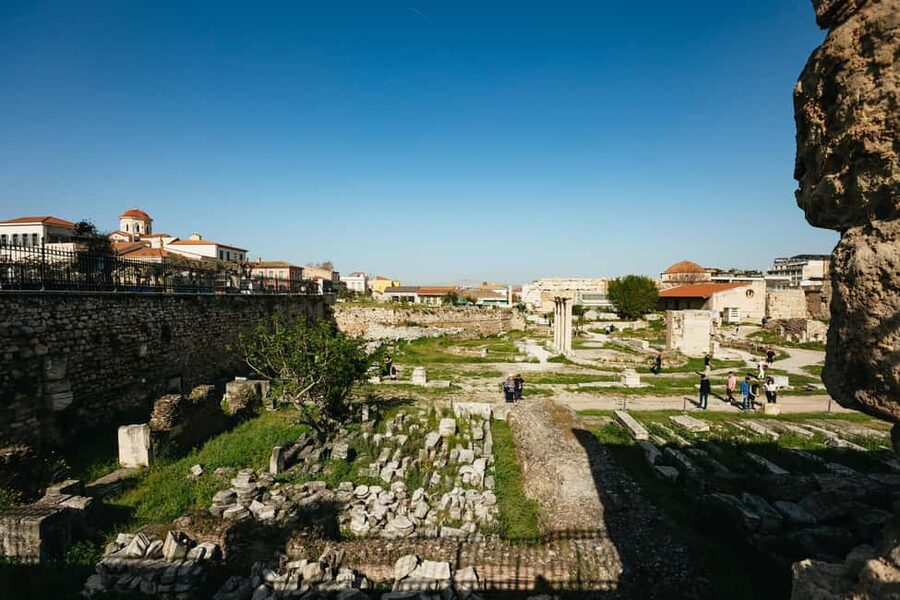
Pnyx is a powerful stop because it connects Athens to the idea of democracy—complete with the platform where early voting happened. But the tour keeps asking a crucial question: democracy for whom?
This is where you get a real sense of contrast. You can admire the site’s role in civic history, while also hearing how women were positioned outside the center of political decision-making. The guide brings in examples and themes that explain what women could do instead—roles shaped by household life, social expectations, and religious-myth reasoning.
And then comes the angle that makes it stick. The stories don’t just label women as powerless. They show pressure, negotiations, and the way some women pushed back through writing, teaching, public influence, or learned roles that society didn’t intend.
Sappho, Aspasia, and Agnodice: Women Who Refused the Script

Half the reason this tour is so memorable is that it doesn’t treat famous women like ornaments. It treats them like evidence of something bigger: there were individuals who defied expectations.
You’ll hear about Sappho and her place in the cultural imagination, about Aspasia and her impact in a world that didn’t make room for her the way it made room for men, and about Agnodice as an example of a woman stepping into a field that would have been heavily restricted. These aren’t presented as “wow, an exception.” They’re presented as signals that the system had friction.
The tour also connects these stories to broader themes: mythology and how it shaped roles, and the real-world behavior that could result—either compliance, resistance, or a complicated mix.
Kidnapped Spartan Girls and the Women’s Festival Mystery

Some tours give you a clean narrative line. This one is more honest about how ancient life could feel strange, intense, and chaotic. You’ll hear stories such as the kidnapped Spartan girls, which gives you a window into conflict and how women’s bodies and lives were treated as part of political outcomes.
You’ll also hear about a mysterious women’s festival in Athens. Even without turning it into a “gotcha,” the guide uses it to show that religious and ritual life could shape women’s identity and public visibility in unexpected ways.
These moments add emotional weight. They also help you understand how myths, rites, and power weren’t separate categories in ancient Greece. They were braided together.
Acropolis Views Toward Filopappou Hill: Closing With Perspective
You’ll end with viewpoints toward the Acropolis area, then conclude at Filopappou Hill, with scenic views on the way. This closing segment is a nice reset after all the story work. Once the facts and names settle, you can look at the city again and see how the monuments sit over everyday life.
It’s also a reminder that the theme isn’t only about history inside museums. It’s about how the city’s bones shaped human roles long before modern Athens grew around them.
The tour finishes with two drop-off locations, including Rovertou Galli 69 near a kiosk, so you’re not left stranded far from neighborhoods you’ll want to explore afterward.
Price and Value: What $88 Gets You for Two Hours
At $88 per person for about two hours, you’re paying for something that’s hard to replicate on your own: a curated storyline with an expert guide who can connect myths, civic spaces, and named women into one walking narrative.
Tickets aren’t included. You’ll get exterior views, not paid entry into archaeological sites. So if you want to go inside major sites, you’ll need separate tickets or a different tour.
But for the price, the value is in the focus. A standard Athens walk can cover the Agora and Pnyx in a straightforward way. This one uses those same places to teach you how women’s lives and expectations worked—then throws in big names and standout stories that most general tours skip.
Who This Tour Is Best For
This is ideal if you want Athens to feel personal and thought-provoking, not only monumental. It’s also a great choice if you’re traveling with a partner or friend who isn’t sure they want more ancient history—because the focus on women makes the city feel like a living society, not a set of rocks.
It’s also a strong pick for anyone who likes discussion. The guide asks questions, keeps the tone interactive, and stays ready to answer what you’re curious about. You’ll come away with names to remember and ideas to test while you explore on your own.
Should You Book Athens: Women in Ancient Greece?
Book it if you want a different Athens story—one that uses myth, daily life, and famous women to change how you read the ruins. If you like asking questions as you walk, this tour fits your style.
Skip it (or choose something easier) if you need step-free access. This one includes steps and isn’t suitable for wheelchair users or people with mobility impairments or heart problems. Also keep in mind you’ll mostly be seeing monuments from the outside, so pair it with separate site tickets if interiors matter to you.
If you want Athens with a new angle and a guide who can make the topic feel real, this is a smart use of two hours.
FAQ
Where does the tour start?
You meet at the Holy Church of the Virgin Mary Pantanassa in Monastiraki Square.
How long is the walking tour?
The tour lasts about 2 hours.
Is the tour guided in English or other languages?
It’s offered with a live guide in English and French.
Are archaeological site tickets included?
No. Tickets are not included, and you’ll see sights from the outside.
What’s included in the price?
The price includes the guide, a walking tour, a private tour option if selected, and a small gift.
What should I bring?
Bring a sun hat, sunscreen, and water.
Is it suitable for people with mobility issues?
No. It includes steps and may not be suitable for people with health or mobility difficulties. It is not suitable for wheelchair users, people with mobility impairments, or people with heart problems.
What’s the cancellation policy?
Free cancellation is available up to 24 hours in advance for a full refund.
More Tour Reviews in Athens
- Athens: Acropolis & up to 5 Archaeological Sites Combo Pass★ 4.2 · 13,904 reviews
- Athens: Acropolis, Parthenon & Acropolis Museum Guided Tour★ 4.8 · 9,316 reviews
- The Acropolis, Parthenon & Acropolis Museum Guided Tour★ 4.7 · 8,493 reviews
- Athens: Cape Sounion & Poseidon Temple Sunset Half-Day Trip★ 4.8 · 8,241 reviews
- Acropolis: Premium Acropolis and Parthenon Guided Tour★ 4.8 · 5,208 reviews
- Athens: Mythology of Delphi, Museum and Arachova Guided Tour★ 4.7 · 5,102 reviews