
Reviewed · TOURS
Byzantine and Ottoman Athens Tour
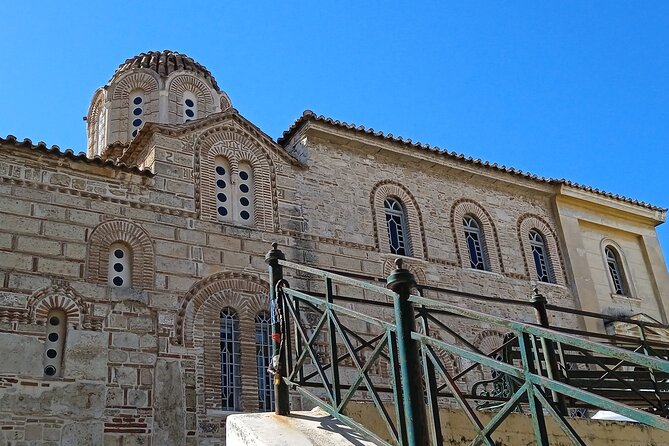
A few steps in Athens and the timeline flips. This Byzantine and Ottoman Athens tour turns Plaka into a living map of faith, power, and everyday life, with small-group storytelling and plenty of church architecture to look at. I love how much context you get for what you’re seeing, and I also like the pace of frequent stops—enough time to notice details, not so much that you’re stuck in one place. One thing to consider: it’s a walking tour, so if you don’t usually walk, you may feel it by the end.
What makes this tour especially useful is how it connects buildings to bigger moments: martyrs, empires, the Greek Revolution, and even the role of women in Byzantium. The guide is hands-on and in-person, with personal stories tied to the Byzantine emperors and the places you pass.
The route covers a lot of stops in about 3 to 4 hours, so you won’t treat it like a slow museum visit. Also, it’s not recommended for people with hearing problems, since the experience depends on listening to the guide’s explanations.
In This Review
- Key highlights you’ll care about before you go
- Byzantine and Ottoman Athens in Plaka: Why this tour works
- The walk begins at the Arch of Hadrian: get your bearings fast
- Stop-by-stop in Byzantine and Ottoman Athens: what each place teaches you
- The story of the mosque (Ottoman Athens thread)
- Metropolitan Cathedral of Athens: architecture plus martyrs and heirlooms
- Mansion Benizelou: a mansion as a window into how parts worked
- Eye clinic of Athens: architecture with a purpose
- Ekklisia Agios Nikolaos Ragkava: Byzantium inside, including women’s roles
- Church of St. Mary Pantanassa: connections to people in the tour
- Church of Kapnikarea: frescoes you’ll want to linger over
- Holy Church of Saint Irene: medieval architecture and Revolution-era meaning
- Agion Anargiron & Plateia Agion Avargiron: Revolution links and Greek-Ottoman culture
- A lost neighborhood story and the importance of baths in art and history
- Agias Ekaterinis: Byzantine architecture and Orthodox Tradition links
- Temple of Olympian Zeus: discussed as a place of torture (entrance only if asked)
- Little Metropolis: masonry and Byzantine-era story
- Tripodon: the most ancient street in Europe (and why it matters)
- St. Marina Church: a secret baptistery and a longer look
- Melina Mercuri Museum and Cultural Centre: Karagiozis and cultural memory
- Kolokotroni statue: a hero’s life turned into craft
- Statue of Constantine XI Palaiologos: the last Byzantine emperor
- What you learn that you won’t get with a solo walk
- Price and value for $102.43: where your money goes
- Small-group reality: what the experience feels like
- Who should book this Byzantine and Ottoman Athens tour
- Should you book it or pass? My practical take
- FAQ
- How long is the Byzantine and Ottoman Athens tour?
- What’s the group size?
- Where do I meet the guide?
- Is the Metropolitan Cathedral admission included?
- Is the tour mainly walking?
- Is it accessible for people with hearing problems?
Key highlights you’ll care about before you go
- Plaka on foot, with a guided storyline through Byzantine and Ottoman Athens rather than random photo stops
- Small-group size (max 15) for more personal attention and questions
- Many stops are free once you’re there, with only a few optional paid entries
- Constant context for what you’re looking at, from icons and frescoes to Revolution-era connections
- A mix of sites: churches, mansions, streets, a puppet-related museum, and statues
Weighing this one up? Set it beside a few Athens favourites first.
- Athens: Acropolis & up to 5 Archaeological Sites Combo Pass
★ 4.2 · 13,904 reviews - Athens: Acropolis, Parthenon & Acropolis Museum Guided Tour
★ 4.8 · 9,316 reviews - The Acropolis, Parthenon & Acropolis Museum Guided Tour
★ 4.7 · 8,493 reviews - Athens: Cape Sounion & Poseidon Temple Sunset Half-Day Trip
★ 4.8 · 8,241 reviews
Byzantine and Ottoman Athens in Plaka: Why this tour works
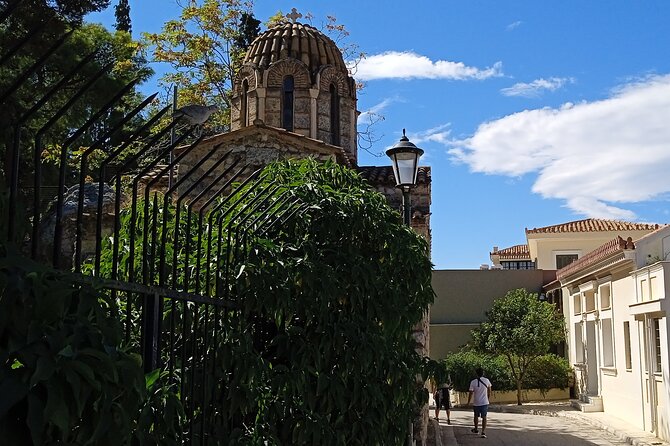
Most Athens trips focus on “ancient Greece,” and then you’re off to beaches or a museum. This tour nudges you sideways—into the centuries when Athens was shaped by Byzantine faith and Ottoman rule, right where you’re already walking.
I like that the focus isn’t only big names. You spend time with churches and small landmarks that look similar on the outside until someone explains what’s going on inside: why a church was built, what was painted, which details were meant to be seen, and how later events changed what people used them for.
And it’s not just religious history in a vacuum. Byzantine and Ottoman Athens is also architecture, politics, and culture—how communities lived, worshiped, and remembered. The tour’s structure helps you build that timeline while you’re still in the neighborhood.
The walk begins at the Arch of Hadrian: get your bearings fast
You start near the Arch of Hadrian at Leof. Vasilisis Amalias 50. That’s a smart starting point because it puts you close to the older Athens core, so the “then-and-now” feeling lands quickly.
From there, the tour stays grounded in Plaka and nearby areas. The meeting point is near public transportation, which matters if you’re juggling metro timing or coming from another part of the city. You’ll also have a mobile ticket, which simplifies entry day-of.
Logistically, remember this is built for walking, not for a car tour. Even though the guide is listed as also being a driver, the experience is fundamentally you moving stop to stop on foot, listening and looking. If you’re expecting a long, comfortable ride through multiple distant neighborhoods, this route probably won’t match that idea.
Stop-by-stop in Byzantine and Ottoman Athens: what each place teaches you
The itinerary is a sequence of short, focused visits—mostly around 10 minutes, with a couple longer stops. That’s ideal when you want to learn the “why” behind the “what,” but you still need to keep moving.


The story of the mosque (Ottoman Athens thread)
The tour opens with a mosque storyline—an early clue that Ottoman Athens isn’t just “ancient ruins with an updated label.” It’s a lived layer of the city, with different religious spaces, different rules for architecture, and different ways communities organized public life.
It’s a good opener because it trains your eyes for what changes across eras: forms, functions, and even the way later communities interpreted earlier structures.
Metropolitan Cathedral of Athens: architecture plus martyrs and heirlooms
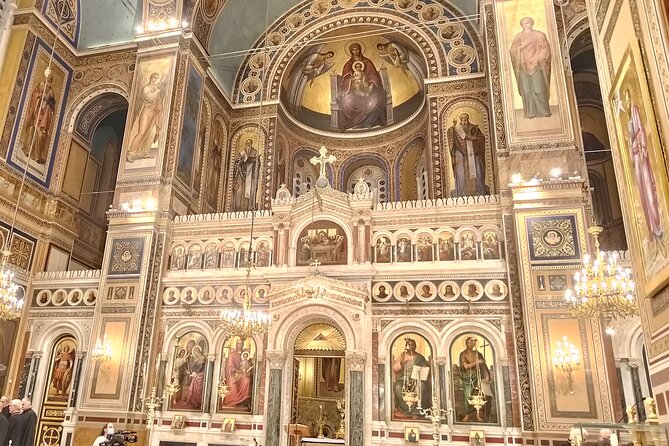
Next comes the Metropolitan Cathedral of Athens. You’ll talk about the church’s architecture and its story, plus the life and deeds of two martyrs. There’s also a mention of the church’s heirloom you’ll visit.
Practical note: the cathedral admission is 3 Euros per person and is described as optional. If you want the full experience, budget for that small add-on.
Mansion Benizelou: a mansion as a window into how parts worked
Then you step into Mansion Benizelou, which is all about architecture and the operation of different parts of the building. This isn’t just about pretty walls—it’s about how a complex household or institution was structured, and how daily life ran through that layout.
An extra practical detail: alms are welcomed, so if you carry small cash, you’ll be prepared for that.
Eye clinic of Athens: architecture with a purpose
The Eye clinic of Athens stop focuses on both its story and architecture. These stops matter because they broaden the tour beyond church-only history. Athens under Byzantine and Ottoman influence wasn’t only sacred spaces; it was also medical care, institutions, and public service.
Ekklisia Agios Nikolaos Ragkava: Byzantium inside, including women’s roles
At Ekklisia Agios Nikolaos Ragkava, the emphasis is clearly Byzantine: the church’s architecture, what’s inside, and interior details. You’ll hear secret stories about famous Byzantine personalities and—importantly—the role of women in Byzantium, plus an iconic item tied to that talk.
This is the kind of stop where a good guide turns a small interior into a lesson. If you’re the type who likes symbolism, icons, and hidden clues, this one tends to land well.
Church of St. Mary Pantanassa: connections to people in the tour
Then you visit the Church of St. Mary Pantanassa, with attention to story and architecture, plus a special link to a personality discussed during the tour. That means you’re not just reading a sign—you’re connecting people to places.
Church of Kapnikarea: frescoes you’ll want to linger over
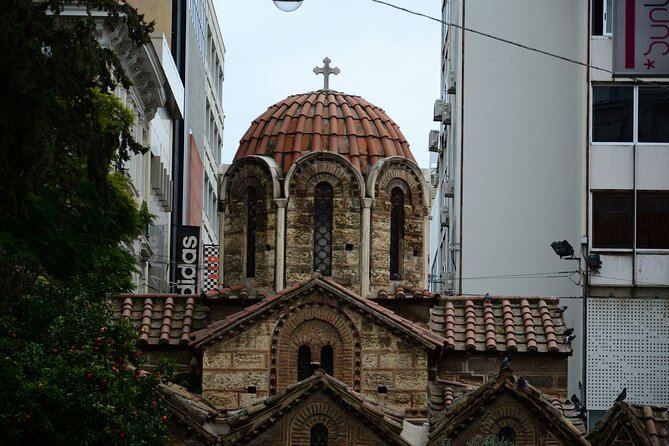
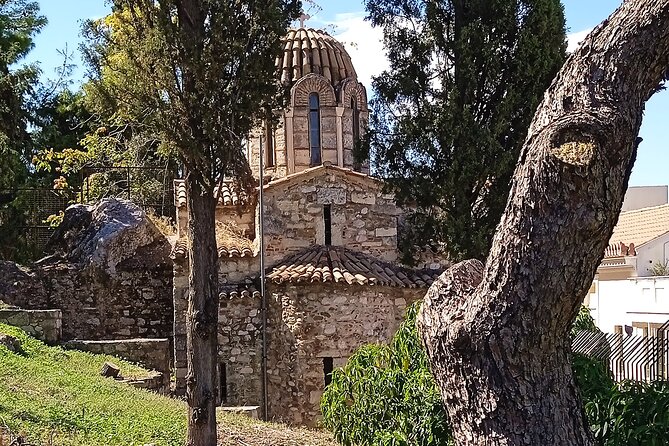
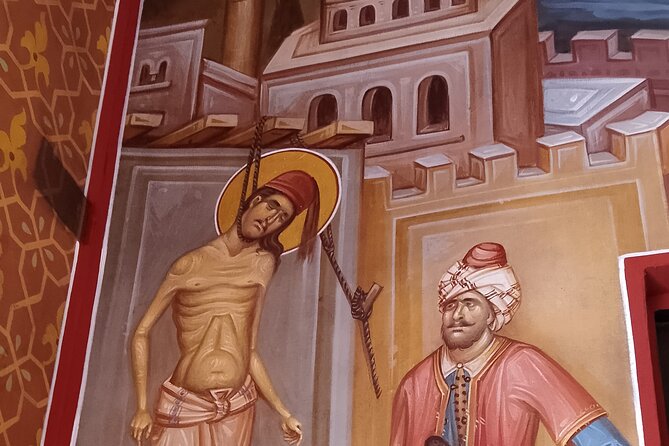
Church of Kapnikarea is where the tour leans into art. You’ll hear about wall paintings and frescoes, along with the church’s story and architecture.
One drawback to note: the stop is about 15 minutes. If you love frescoes and want long viewing time, you may wish you had a bit more. Still, guided attention here is useful because it tells you what to look for, instead of letting you stare at paintings with no context.
Holy Church of Saint Irene: medieval architecture and Revolution-era meaning
At Holy Church of Saint Irene, you get medieval architecture and special wall paintings at the interior. You also connect the church to the Greek Revolution, showing how older sacred spaces gained new political meaning over time.
Even if you’re not a history buff, the Revolution connection usually makes people pay closer attention to what’s inside.
Agion Anargiron & Plateia Agion Avargiron: Revolution links and Greek-Ottoman culture
At Agion Anargiron & Plateia Agion Avargiron, the tour discusses the church’s role in the Greek Revolution. You’ll also hear about the cell of a famous writer and how this area reflects Greek-Ottoman culture.
This is another stop that helps Athens feel like a continuum, not a set of isolated periods.
A lost neighborhood story and the importance of baths in art and history
Between later church stops, the itinerary shifts into a story about a lost neighborhood and the importance of baths in art and history. This is the kind of narrative bridge that stops the tour from becoming only a list of buildings.
It also gives you a more human Athens picture: how people gathered, washed, cooled off, and built community around everyday rhythms.
Agias Ekaterinis: Byzantine architecture and Orthodox Tradition links
At Agias Ekaterinis, the focus returns to Byzantine architecture, special icons, and wall paintings. You’ll also get a link to the church’s place in Orthodox Tradition.
If you’ve ever wondered why certain symbols show up again and again in Orthodox spaces, this stop is designed to explain that pattern.
Temple of Olympian Zeus: discussed as a place of torture (entrance only if asked)
The tour includes Temple of Olympian Zeus as a discussion stop. You’ll see it and talk about it as a place of torture, with no entrance unless asked.
So plan for viewing rather than museum-style wandering inside. If you want to go in somewhere, you’ll need to ask at the moment—this tour is set up as a look-and-listen experience.
Little Metropolis: masonry and Byzantine-era story
Next is Little Metropolis, focusing on its masonry and its important story in Byzantine times. This stop is useful if you like learning how building materials, construction choices, and repair patterns reveal what changed between eras.
Tripodon: the most ancient street in Europe (and why it matters)
Then you stand at Tripodon, described as the most ancient street in Europe. This is a classic “small time window, big meaning” stop: a street name isn’t trivia here—it’s a clue to how old Athens still organizes the city.
St. Marina Church: a secret baptistery and a longer look
At St. Marina Church, the tour highlights a secret baptistery. This is the longer church stop at 20 minutes, which gives you breathing room to actually notice what’s special.
If you’re the type who likes quiet moments with guided attention—rather than rushing—this is a good place to mentally slow down.
Melina Mercuri Museum and Cultural Centre: Karagiozis and cultural memory
The stop at Melina Mercuri Museum and Cultural Centre visits the museum of Karagiozis. That’s the puppet tradition tied to Greek comedy and folk culture, and it widens the tour beyond strictly religious architecture.
It also helps you remember that culture persists through storytelling, not only through buildings.
Kolokotroni statue: a hero’s life turned into craft
Then you get the Kolokotroni Statue, with the life story of a hero and the craft of the statue itself. A statue might sound like a simple photo stop, but this one is framed as how public memory gets manufactured in stone.
Statue of Constantine XI Palaiologos: the last Byzantine emperor
Finally, the tour ends with the statue of Constantine XI Palaiologos, focusing on the life story of the last emperor of the Byzantine Empire. It’s a fitting bookend because the tour began by tracing Byzantine and Ottoman layers, and now you land on the final act.
What you learn that you won’t get with a solo walk
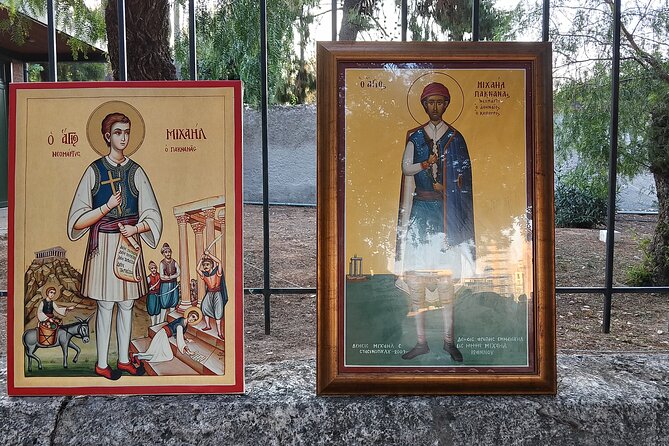
A self-guided stroll through Plaka can be lovely—but you’ll likely miss the “translation layer” that makes the architecture readable. Here, the guide connects details across stops so you can build a mental model.
For example:
- You’re told what to notice in frescoes and icons, instead of just admiring them.
- You’re given political and social context—Greek Revolution roles, Ottoman-era cultural blending, and Byzantine religious life.
- You hear personal stories tied to Byzantine emperors, which turns dates into motives.
Also, the stop structure helps learning. Short visits plus frequent transitions mean your attention stays active. You’re not stuck waiting for one place to open or scanning a map while your brain is doing admin work.
Price and value for $102.43: where your money goes
At $102.43 per person, this isn’t the cheapest way to see Athens, but it’s also not pricing itself like a high-end private tour.
Here’s where the value comes from:
- The tour lasts 3 to 4 hours, with a lot of interpretive stops in a tight area.
- The group size is capped at 15, so the guide can respond to questions more easily than on big bus tours.
- Many of the church and site stops are described as free once you’re there.
- Your biggest “paid” add-on potential is small—like the 3 Euro optional cathedral admission.
In other words: you’re paying mostly for guidance and context. If you’re the type who enjoys learning why things look the way they do, the cost starts to make sense quickly.
Small-group reality: what the experience feels like
This tour is designed for a particular style of sightseeing: walking, listening, and looking closely at places that most visitors skim past.
The pros are obvious: you get more personal attention and a guide who’s prepared to explain Byzantine and Ottoman architecture, religion, and history in a way that matches the route you’re on.
The trade-off is pace. You may not spend as long inside each church as you want, especially if you’re drawn to art. You also need to be comfortable standing and walking through multiple stops without a lot of downtime. Bring water if you need it—snacks aren’t included—and wear shoes you can rely on.
And yes, it’s worth saying plainly: this isn’t recommended for hearing problems. Since the tour hinges on what the guide explains, clear audio matters.
Who should book this Byzantine and Ottoman Athens tour
You’ll likely love this if:
- You want Plaka with a Byzantine and Ottoman lens, not just ancient ruins.
- You enjoy churches, frescoes, icons, and architecture that rewards close looking.
- You prefer a small group where you can ask questions and get answers tied to what you’re seeing.
You might want to skip it if:
- You don’t usually walk and don’t want a steady pace for 3 to 4 hours.
- You need quiet or you have hearing limitations that make listening difficult.
- You’re expecting a long, comfortable ride with minimal walking.
Should you book it or pass? My practical take
Book it if your goal is to understand Athens beyond the usual headline sites. The tour is built like a guided “story route,” with enough stops to create a timeline and enough time at each stop to notice real details.
Pass on it if you want maximum time inside buildings, or if walking is a struggle for you. Also, if you’re the kind of traveler who assumes every tour includes a car ride, double-check your expectations before you book. The experience is organized around walking and guided storytelling, and the listed inclusions don’t promise a special vehicle ride upgrade.
FAQ
How long is the Byzantine and Ottoman Athens tour?
The tour lasts about 3 to 4 hours.
What’s the group size?
It’s a small-group tour with a maximum of 15 travelers.
Where do I meet the guide?
You meet at the Arch of Hadrian, Leof. Vasilisis Amalias 50, Athina 105 58, Greece.
Is the Metropolitan Cathedral admission included?
Admission to the Metropolitan Cathedral of Athens is not included. It’s listed as optional at 3 Euros per person.
Is the tour mainly walking?
Yes. It’s a walking tour through Plaka with multiple stops, and it’s recommended only for travelers with a moderate physical fitness level.
Is it accessible for people with hearing problems?
It’s not recommended for travelers with hearing problems, since the experience depends on listening to the guide’s stories and explanations.
More Tours in Athens
- Athens: Acropolis, Parthenon & Acropolis Museum Guided Tour★ 4.8 · 9,316 reviews
- The Acropolis, Parthenon & Acropolis Museum Guided Tour★ 4.7 · 8,493 reviews
- Acropolis: Premium Acropolis and Parthenon Guided Tour★ 4.8 · 5,208 reviews
- Athens: Mythology of Delphi, Museum and Arachova Guided Tour★ 4.7 · 5,102 reviews
- Acropolis and Parthenon Guided Walking Tour★ 5.0 · 4,755 reviews
- Greek Food Walking Tour in Athens★ 5.0 · 4,740 reviews
More Tour Reviews in Athens
- Athens: Acropolis & up to 5 Archaeological Sites Combo Pass★ 4.2 · 13,904 reviews
- Athens: Acropolis, Parthenon & Acropolis Museum Guided Tour★ 4.8 · 9,316 reviews
- The Acropolis, Parthenon & Acropolis Museum Guided Tour★ 4.7 · 8,493 reviews
- Athens: Cape Sounion & Poseidon Temple Sunset Half-Day Trip★ 4.8 · 8,241 reviews
- Acropolis: Premium Acropolis and Parthenon Guided Tour★ 4.8 · 5,208 reviews
- Athens: Mythology of Delphi, Museum and Arachova Guided Tour★ 4.7 · 5,102 reviews
Fresh Off the Boat: New Athens Reviews





Tours, compared.
 ★ 4.8Acropolis, Parthenon & Acropolis Museum Guided TourFrom $409,316 reviews
 ★ 4.7The Acropolis, Parthenon & Acropolis Museum Guided TourFrom $408,493 reviews
 ★ 4.8Acropolis: Premium Acropolis and Parthenon Guided TourFrom $405,208 reviews
 ★ 4.7Mythology of Delphi, Museum and Arachova Guided TourFrom $305,102 reviews
 ★ 5.0Acropolis and Parthenon Guided Walking TourFrom $414,755 reviews
 ★ 5.0Greek Food Walking Tour in AthensFrom $874,740 reviews
 ★ 4.3City Sightseeing Hop-On Hop-Off Bus TourFrom $254,520 reviews
 ★ 5.0Best of Athens Half Day Private TourFrom $913,714 reviews