
Reviewed · TICKETS
Hellenic Motor Museum Entrance Ticket
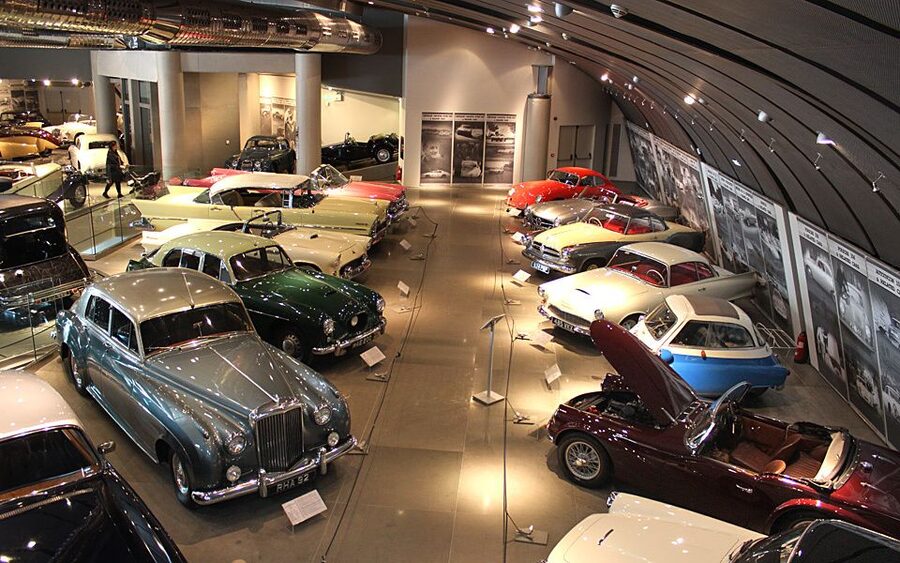
Cars, wheels, and surprises in Athens. The Hellenic Motor Museum turns a quick stop in the middle of the city into a hands-on look at how cars evolved. I especially like the old car workshop walkthrough and the spiral-ramp route that strings the story from early wheels to late-20th-century motoring. One drawback: it can be a little tricky to find inside a busy mall building, and the outdoor signage isn’t super clear.
You’ll enter at street level and then climb through a museum designed for wandering at your own pace—3 floors, bright display lighting, and a collection that keeps changing. I also like that you get an audio guide in English, which helps when you want the why behind the cars, not just the what. Plan on at least an hour, and if you’re the type who hates close viewing, some exhibits may feel tight up close.
In This Review
- Key Highlights Worth Your Time Before You Go
- Getting There: Capitol Mall Location and Finding the Museum
- What the Ticket Gets You: Entrance + English Audio Guide
- The 3-Floor Layout: A Spiral Ramp Timeline You Can Walk at Your Pace
- The Cars You’ll Actually Want to Stop For (110+ Global Exhibits)
- The Old Car Workshop: Where the Collection Feels Tangible
- The Wheel Story: A Clever Way to Make Motoring Make Sense
- Comfort and Atmosphere: Lighting, Air Conditioning, and Staff Help
- How Long to Plan: Best Timing for a 1-Day Visit
- Price and Value: Is $14 Worth It?
- Practical Tips That Make the Difference
- Who This Museum Suits Best
- Should You Book This Ticket?
- FAQ
- Where is the Hellenic Motor Museum located?
- How much is the entrance ticket?
- How long is the visit valid for?
- What’s included with the ticket?
- What are the opening hours?
- What days is the museum closed?
- Is the museum wheelchair accessible, and what languages are available?
Key Highlights Worth Your Time Before You Go
- 110+ vehicles from the 19th and 20th century, including makers that no longer exist
- Three floors of displays in Capitol Mall, including a spiral ramp with a long timeline
- A walk-through old car workshop with period details
- A wheel-focused route that ties design to how people actually moved
- Pop-culture moments like Lightning McQueen and the Flintstones Mobile mixed in with serious classics
- An indoor win: bright rooms and air conditioning help on hot Athens days
Worth comparing before you book this Athens tour:
- Athens: Acropolis Ticket with Audio Guide
★ 4.0 · 3,575 reviews - Athens All Included: Acropolis and Museum Guided Tour with Ticket
★ 4.5 · 2,673 reviews - Athens: Acropolis Museum Ticket with optional Audio Guide
★ 4.4 · 2,652 reviews - Athens: Guided Tour of Acropolis & Parthenon with Tickets
★ 4.7 · 2,049 reviews
Getting There: Capitol Mall Location and Finding the Museum
The museum is set inside Capitol Mall in central Athens. The meeting point listed for the experience is at IOULIANOU 33–35 & C’ SEPTEMVRIOU 74–78, Athens, which is helpful when you’re entering via the main mall streets.
Here’s the practical heads-up: the museum can feel tucked away because it’s on the top floors of a building with lots of offices. A couple of visitors noted you need a bit of patience and good wayfinding to locate it quickly. My advice is simple: once you’re at Capitol Mall, ask where the museum is within the building instead of hunting for it outside. If you’re arriving on foot and the street signage seems vague, that’s normal here.
Also, set your expectations for a museum-style walk, not a quick roadside attraction. You’re moving through a multi-floor indoor space, which is great when it’s hot, but it does mean you’ll want a little buffer time before your ideal viewing window.
What the Ticket Gets You: Entrance + English Audio Guide
This is a straightforward ticket purchase. You get entrance to the museum, plus an English audio guide. There’s no need to figure out group logistics or wait for a specific guided moment—the experience is built around self-paced wandering.
That audio guide piece matters more than you might think. Cars are easy to admire as objects, but the audio helps connect the dots: how the automobile changed, why wheels mattered, and what design shifts reflected in real life. If you’re a “show me the story” person, the audio makes the collection feel less like a random parking lot of cool metal.
If you’re traveling with kids or a mixed-interest group, the audio can also keep things moving. It’s easier to stay engaged when you’ve got someone (or something) pacing the narrative while you pause at the cars that catch your eye.
The 3-Floor Layout: A Spiral Ramp Timeline You Can Walk at Your Pace
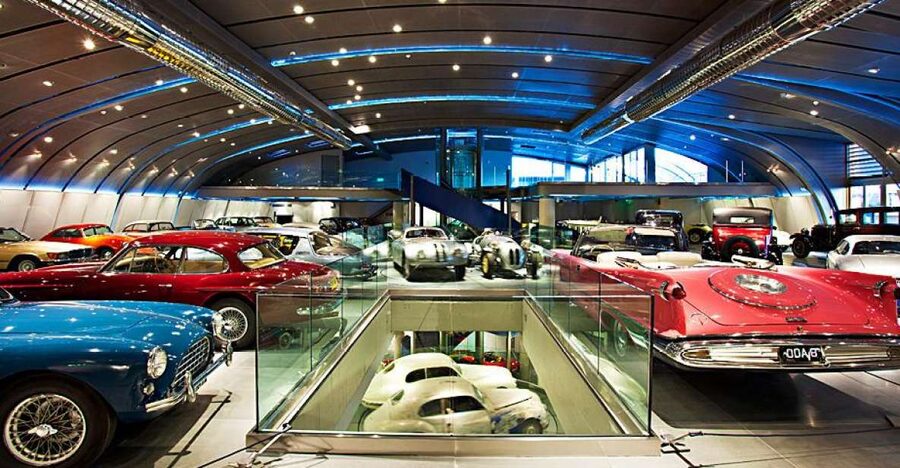
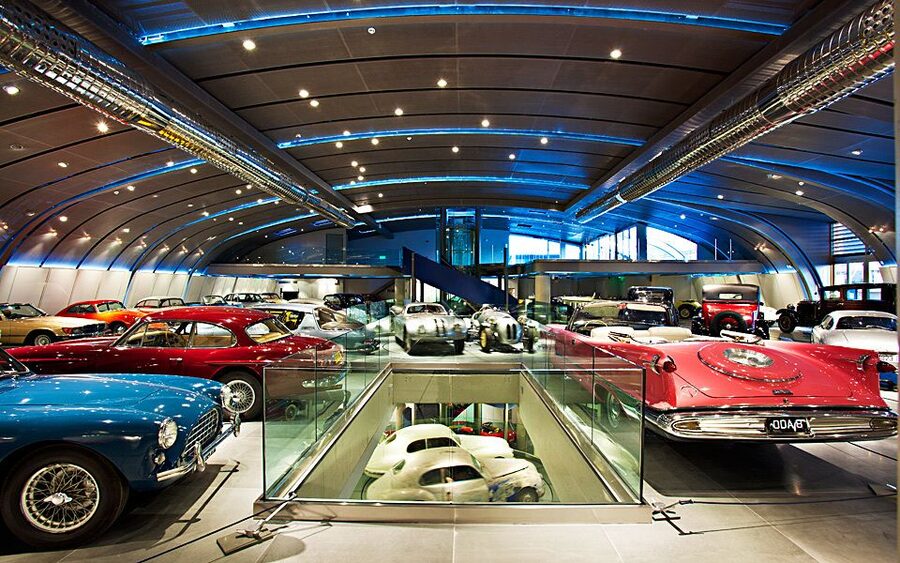
The Hellenic Motor Museum spreads across 3 floors. The big organizing idea is the spiral ramp route, which lets you climb while the exhibits travel through time.
The museum’s spiral ramp includes 72 unique exhibits ranging from 300 B.C. to the end of the 20th century. That’s an unusual choice for a car museum, and it’s one reason the visit feels more like a history lesson you can walk through than a static display of vehicles.
On the ramp, you’re not just looking at cars—you’re seeing how design evolved. The “history of the wheel” concept is part of the logic of the collection, so you’ll get a clearer picture of why early wheel technology mattered, then how automotive changes built on that foundation.
You can take the route up and back down, lingering where you want. The displays are organized on three levels with good lighting, so you’re not constantly fighting shadows or dim corners.
More museum hours worth the queue



The Cars You’ll Actually Want to Stop For (110+ Global Exhibits)
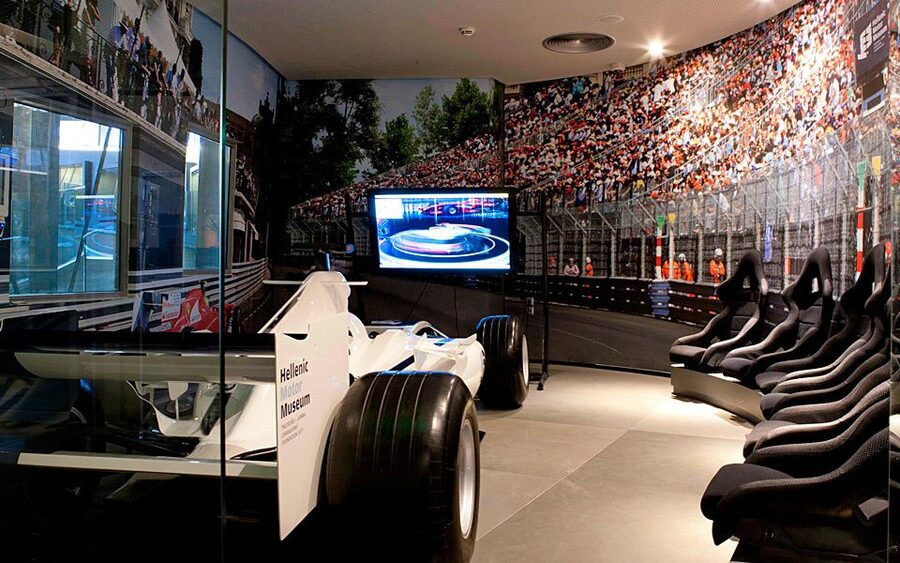
The museum highlights more than 110 unique examples from the global automotive industry. That range is a big part of the value: you’re not limited to one country’s story, and you can see how different automakers interpreted the same basic problem—moving people efficiently.
What I find most satisfying is the mix of eras and levels of importance:
- You’ll see cars from the 19th and 20th centuries.
- You’ll encounter manufacturers that no longer exist, which gives the collection extra meaning.
- Current-famous brands show up too, but the museum is more interesting when it leans into the forgotten names.
Some cars may be close enough that you’re viewing from mostly one side or from the front. One visitor pointed out that a few exhibits only really work from the front angle. If you care about close-up details from multiple perspectives, keep that in mind and move around the displays when you can.
And yes, it’s not all solemn classics. The collection includes playful references like Lightning McQueen and the Flintstones Mobile, which can break the ice if you’re bringing kids or people who don’t usually care about engines.
The Old Car Workshop: Where the Collection Feels Tangible
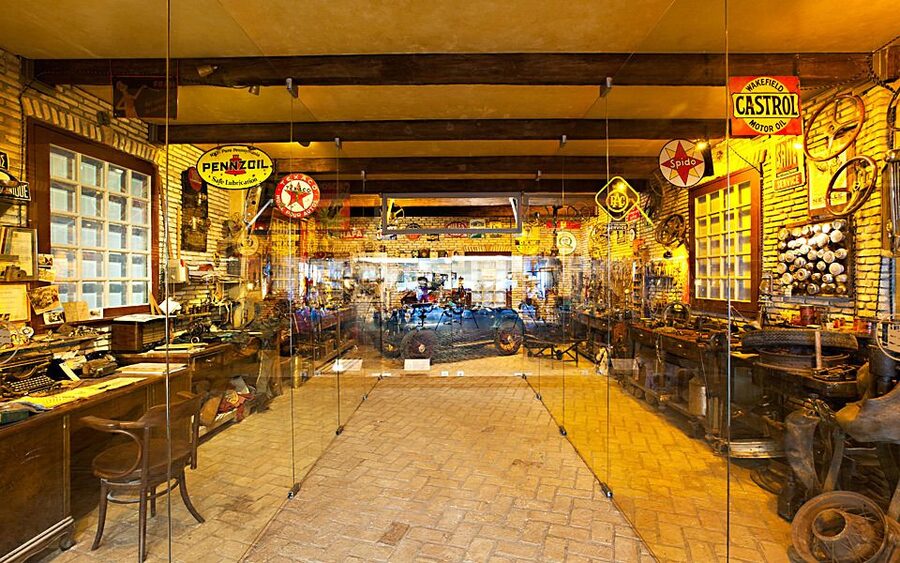
One of the top draws is the chance to walk through an old car workshop with period features. This is where the museum shifts from “look at cars” to “understand the world around cars.”
A workshop setting helps you notice how cars were maintained, repaired, and built. Even without technical knowledge, the physical environment makes the history feel more real. You’re not just seeing a vehicle as an artifact—you’re seeing it as something that lived in a working life.
This part of the museum also tends to work better for non-experts. If you’re not sure you’ll enjoy 3 floors of cars, the workshop can still pull you in because it’s interactive in the way it frames the objects.
If you want to maximize your enjoyment, I’d prioritize this stop earlier in your visit—before you get tired from walking. Once you’re warmed up, you’ll appreciate the rest of the exhibits more.
The Wheel Story: A Clever Way to Make Motoring Make Sense
A typical car museum assumes you already understand the fundamentals. This one pushes a different angle: it connects automotive development to the evolution of the wheel.
That sounds small until you’re in front of the timeline. When you connect wheel changes to mobility, ride quality, and practicality, the entire collection feels more coherent. You can start to see that the automobile didn’t evolve in isolation—it was tied to how people solved movement problems over time.
The spiral-ramp design supports this. Instead of jumping randomly between decades, your path builds a storyline as you go up through the museum levels.
If you love history but want it in a format that doesn’t feel like a lecture, this section is the “why” that makes the cars click.
Comfort and Atmosphere: Lighting, Air Conditioning, and Staff Help
A nice surprise: the museum is set up for comfort. Multiple visitors noted air conditioning, and the displays are bright with good lighting. That matters in Athens. Even if you love wandering outside, a museum stop can be a welcome reset when the sun is strong.
Staff support is also a plus. The experience lists a host or greeter who speaks English and Greek. That’s useful if you need help locating a specific floor, or if you want quick answers without guessing.
One small practical note: the building is busy (many offices in the same structure). If you feel like you’re wandering in circles, don’t blame yourself—just ask. It’s worth it to avoid losing your museum time to confusion.
How Long to Plan: Best Timing for a 1-Day Visit
The ticket is valid for 1 day, and the experience is designed as a museum visit you can pace. A lot of people aim for about an hour or so, especially if they start in the middle and move quickly through the main sections.
But I’d plan a little longer if you’re the type who stops for details. The museum collection is arranged across three floors, and it’s not just about seeing cars quickly. There’s enough variety—workshop, wheel timeline, rotating exhibits—that slowing down can pay off.
Timing tip: check the opening hours and target arrival with time to spare. The museum is open:
- Monday–Friday: 10:00–17:00
- Saturday–Sunday: 11:00–18:00
- Last admission: 30 minutes before closing
That last admission detail is important. If you roll in late, you might spend your last stretch outside, wishing you had planned earlier.
Also, it’s closed on January 1st, January 6th, Easter Sunday, Easter Monday, August 15th, and December 25th. If you’re traveling around those dates, check before you build your schedule.
Price and Value: Is $14 Worth It?
At $14 per person, this is the kind of attraction that often wins by value, not by hype. You’re paying for a physical experience with scale: 110+ exhibits, a multi-floor layout, and a themed structure that includes both a workshop and a wheel-based history route.
For car enthusiasts, the value is obvious: many museums focus on a single brand or a narrow time window. Here, you get a broader global spread and the bonus of makers that disappeared over time.
For non-car lovers, the value depends on your tolerance for indoor walking. If you can enjoy objects and design without needing technical specs, the workshop room plus the timeline angle can still make the visit feel meaningful. The pop-culture vehicles can also help keep things light.
The best part: even if your car interest is moderate, the indoor setup gives you a break from heat while still feeling like more than a generic indoor stop.
Practical Tips That Make the Difference
A smooth museum visit is all about small decisions. Here’s what helps:
- Wear comfy shoes. Three floors adds up, especially when you pause often.
- Start with the spiral ramp if you like a timeline. It gives the collection structure.
- Don’t rush the workshop. It’s one of the most memorable parts.
- If you’re picky about viewing angles, expect that some cars may be easier to see from certain positions.
- If you’re struggling to locate it in the building, ask at the mall information desk. Outside signage isn’t described as reliable.
One more thought: the collection is rotating, so your visit can differ from someone else’s trip. That makes it more likely you’ll feel you saw something specific to your date rather than a repeat experience.
Who This Museum Suits Best
This ticket fits best if you like:
- Cars, design, and how technology changes over time
- Museums that teach through themed rooms rather than endless text
- Indoors stops that still feel like an attraction, not just a break
It can also work well for families because the setup covers serious history plus playful surprises. If you’re traveling with a mixed group, you’ll likely find something for more than one interest level—history buffs, kids, and people who just like unusual objects.
Should You Book This Ticket?
Yes, if you want a structured, indoor attraction in central Athens that’s more than a quick glance. The workshop walkthrough, the wheel timeline spiral ramp, and the scale of 110+ global exhibits make the $14 price feel reasonable.
Book this if:
- you want a cool, air-conditioned break on a hot day
- you like museums that connect objects to a bigger story
- your group includes at least one person who enjoys cars (or weirdly famous pop vehicles)
Skip it or adjust expectations if you hate close viewing spaces or you want a deeply guided, hands-on workshop experience. This is primarily a self-paced museum ticket with an audio guide, so your enjoyment depends on how much you like wandering and reading the room.
FAQ
Where is the Hellenic Motor Museum located?
It’s in central Athens inside Capitol Mall. The meeting point listed is IOULIANOU 33–35 & C’ SEPTEMVRIOU 74–78, Athens.
How much is the entrance ticket?
The price is $14 per person.
How long is the visit valid for?
The entrance ticket is valid for 1 day.
What’s included with the ticket?
The ticket includes entrance to the museum and an English audio guide.
What are the opening hours?
Monday–Friday: 10:00–17:00. Saturday–Sunday: 11:00–18:00. Last admission is 30 minutes before closing.
What days is the museum closed?
It’s closed on January 1st, January 6th, Easter Sunday and Easter Monday, August 15th, and December 25th.
Is the museum wheelchair accessible, and what languages are available?
Yes, it’s wheelchair accessible. The host or greeter speaks English and Greek, and the audio guide is available in English.
Indoors Done Well: Athens Museums
- Athens: Acropolis, Parthenon & Acropolis Museum Guided Tour★ 4.8 · 9,316 reviews
- The Acropolis, Parthenon & Acropolis Museum Guided Tour★ 4.7 · 8,493 reviews
- Athens: Mythology of Delphi, Museum and Arachova Guided Tour★ 4.7 · 5,102 reviews
- Athens: Acropolis, Parthenon & Acropolis Museum Guided Tour★ 4.8 · 3,579 reviews
- Acropolis monuments & Parthenon Walking Tour with Optional Acropolis Museum★ 5.0 · 2,678 reviews
- Athens All Included: Acropolis and Museum Guided Tour with Ticket★ 4.5 · 2,673 reviews
More Tickets in Athens
- Athens: Acropolis Ticket with Audio Guide★ 4.0 · 3,575 reviews
- Athens All Included: Acropolis and Museum Guided Tour with Ticket★ 4.5 · 2,673 reviews
- Athens: Acropolis Museum Ticket with optional Audio Guide★ 4.4 · 2,652 reviews
- Athens: Guided Tour of Acropolis & Parthenon with Tickets★ 4.7 · 2,049 reviews
- Athens Half-Day Sightseeing Tour with Tickets of Acropolis★ 4.0 · 1,402 reviews
- Athens: Acropolis Museum Ticket with Audio Guide★ 4.1 · 835 reviews
More Tour Reviews in Athens
- Athens: Acropolis & up to 5 Archaeological Sites Combo Pass★ 4.2 · 13,904 reviews
- Athens: Acropolis, Parthenon & Acropolis Museum Guided Tour★ 4.8 · 9,316 reviews
- The Acropolis, Parthenon & Acropolis Museum Guided Tour★ 4.7 · 8,493 reviews
- Athens: Cape Sounion & Poseidon Temple Sunset Half-Day Trip★ 4.8 · 8,241 reviews
- Acropolis: Premium Acropolis and Parthenon Guided Tour★ 4.8 · 5,208 reviews
- Athens: Mythology of Delphi, Museum and Arachova Guided Tour★ 4.7 · 5,102 reviews
Fresh Off the Boat: New Athens Reviews





Tickets, compared.
 ★ 4.0Acropolis Ticket with Audio GuideFrom $473,575 reviews
 ★ 4.5Athens All Included: Acropolis and Museum Guided Tour with TicketFrom $1652,673 reviews
 ★ 4.4Acropolis Museum Ticket with optional Audio GuideFrom $302,652 reviews
 ★ 4.7Guided Tour of Acropolis & Parthenon with TicketsFrom $352,049 reviews
 ★ 4.0Athens Half-Day Sightseeing Tour with Tickets of AcropolisFrom $1041,402 reviews
 ★ 4.1Acropolis Museum Ticket with Audio GuideFrom $30835 reviews
 ★ 4.9Parthenon & Acropolis Guided Tour in Spanish -Option TicketsFrom $33804 reviews
 ★ 4.5Athens Sightseeing Small Group Tour (Acropolis Tickets Included)From $133754 reviews
Browse the lists this tour appears in