
Reviewed · ATHENS
Kifissia Stargazing & Astrophotography
Athens goes cosmic after dark. This Kifissia stargazing and astrophotography session turns the night sky into a guided story, with Greek mythology and constellations helping you get your bearings fast. I especially like how the night-sky basics are explained in a way that feels friendly, not schoolbook.
What I love most is the hands-on mix of telescope viewing and practical camera guidance. You’re not just standing around waiting for magic; you’re shown targets in the AAC telescope, with tips for capturing your own souvenir from an Aegean-style starry night.
One consideration: this experience depends on good weather. If clouds roll in, you’ll need to reschedule or get a full refund, so plan a little flexibility on your Athens dates.
In This Review
- Key Highlights Worth Your Attention
- Where This Kifissia Stargazing Session Really Starts
- The 90 Minutes: A Clear Path Through the Night Sky
- Part One: Observational Astronomy With Greek Constellations
- Part Two: Philosophical Astronomy for the Big Questions
- Part Three: Astrophotography Tips That Turn Looking Into a Keepsake
- Telescope Time: Moon Details and Saturn’s Rings
- What Makes This Tour Feel High-Value (Even at $102)
- Logistics That Matter for Your Night
- Who This Is For (and Who Might Want Something Different)
- Should You Book Kifissia Stargazing & Astrophotography?
- FAQ
- How long is the Kifissia Stargazing & Astrophotography experience?
- Where do we meet for the tour?
- Is this tour private or shared with other groups?
- What language is the experience offered in?
- What’s included with the price?
- What happens if the weather is poor?
- When will I receive confirmation after booking?
Key Highlights Worth Your Attention
- Myth + astronomy, tied together so constellations feel meaningful, not random.
- Real telescope time using the Aegean Astronomy Club setup, throughout the session.
- Star-mapping guidance so you learn how to find things again later.
- Astrophotography tips that focus on technique, not just aesthetics.
- A private group experience where your questions don’t get crowded out.
- Patient, flexible hosting if you run into timing issues getting to the meeting point.
Weighing this one up? Set it beside a few Athens favourites first.
- Athens: Acropolis & up to 5 Archaeological Sites Combo Pass
★ 4.2 · 13,904 reviews - Athens: Acropolis, Parthenon & Acropolis Museum Guided Tour
★ 4.8 · 9,316 reviews - The Acropolis, Parthenon & Acropolis Museum Guided Tour
★ 4.7 · 8,493 reviews - Athens: Cape Sounion & Poseidon Temple Sunset Half-Day Trip
★ 4.8 · 8,241 reviews
Where This Kifissia Stargazing Session Really Starts
You meet at Leof. Kifisias 182, Marousi (145 62), Greece, and the night’s program is built around a specific stargazing stop at Alsos Ktimatos Siggrou. That park setting matters, because stargazing lives or dies on darkness and clear air, not just enthusiasm.
I like that this is framed as a guided night with a clear structure instead of an open-ended wander. You get orientation first, then bigger ideas, and only after that do you spend time aiming a telescope at what’s worth seeing.
The tour is also private, meaning it’s only your group. For couples, birthdays, and small groups, that makes a huge difference: you can ask more questions and you don’t feel like you’re sharing the sky with a crowd.
The 90 Minutes: A Clear Path Through the Night Sky
This experience runs about 1 hour 30 minutes and it’s built in three thematic sections. That timing is smart. It’s long enough to feel immersive, short enough that you’re not stuck outside so long you start fidgeting for warmth or comfort.
Also note: the admission ticket is free, so what you’re paying for is the guide time, the observing, and the astrophotography instruction with the club’s equipment.
If you’re the type who wants a plan, this tour delivers. If you’re the type who just wants to look up and ask questions, it still works, because the guide uses the structure to keep you moving from easy targets to deeper astronomy ideas.
Part One: Observational Astronomy With Greek Constellations
The first section is all about observational astronomy. You start with a quick tour through astronomy’s history and how ancient civilizations thought about the sky. Then the focus turns to constellations and how they connect to Greek mythology—so the stars aren’t just pinpoints, they become characters with stories.
I like this approach because it gives you something to hold onto. When you understand why certain star patterns were named and how people used them, the night sky becomes easier to read—even before you ever touch a telescope.
You’ll also orient yourself using the stars. That’s not fancy jargon. It’s the practical skill of learning what direction to face and how to recognize patterns so the rest of the night feels less like luck.
A bonus: the guide includes “cosmic neighborhood” thinking—helping you place what you’re seeing into a larger picture. That makes the sky feel bigger than a phone screen, but still understandable.


Part Two: Philosophical Astronomy for the Big Questions
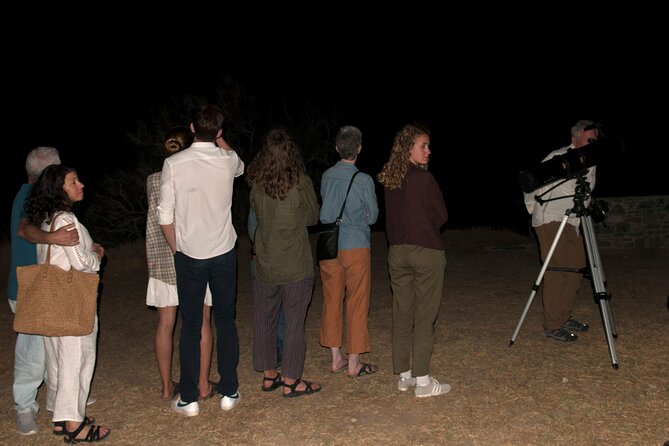
In the second section, the tone shifts toward philosophical astronomy. This is where the session goes beyond names and basics into mind-bending questions and mysteries about the cosmos.
I find this part works best when you ask follow-ups, even simple ones. If you’ve ever wondered why planets move the way they do, or what it really means to measure something so far away, this is the section that makes those questions feel approachable.
You’re not left with theory only, either. It’s tied back to what you’ll do during the telescope time—so the ideas don’t float off on their own. The goal is to give you context while you’re still under the stars.
Part Three: Astrophotography Tips That Turn Looking Into a Keepsake
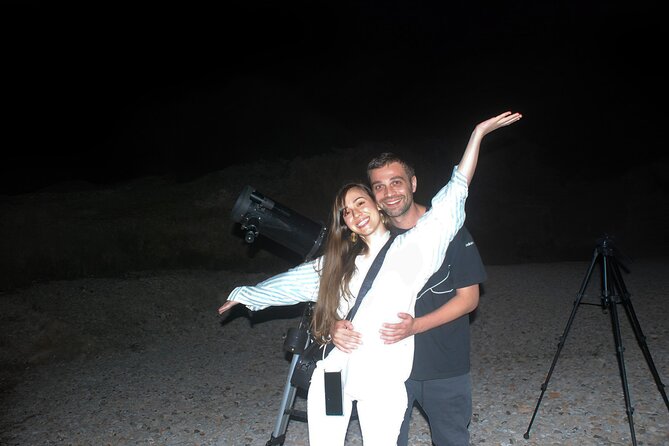
The final section is about photography, with astrophotography tips and techniques. The point here isn’t to turn you into a night-sky expert in 90 minutes. It’s to help you come away with images you feel proud of, plus the starting knowledge to improve next time.
From this kind of session, you can expect instruction geared toward real conditions: low light, long viewing, and the challenge of aiming and composing. You’ll also get guidance that helps you avoid the most common beginner frustrations, like spending time fiddling instead of actually capturing.
The tour frames this as a personal souvenir from an Aegean starry night. That matters because it sets expectations. You’re not just sightseeing. You’re leaving with something tangible—an image, a reference point, and the confidence to try again.
Telescope Time: Moon Details and Saturn’s Rings
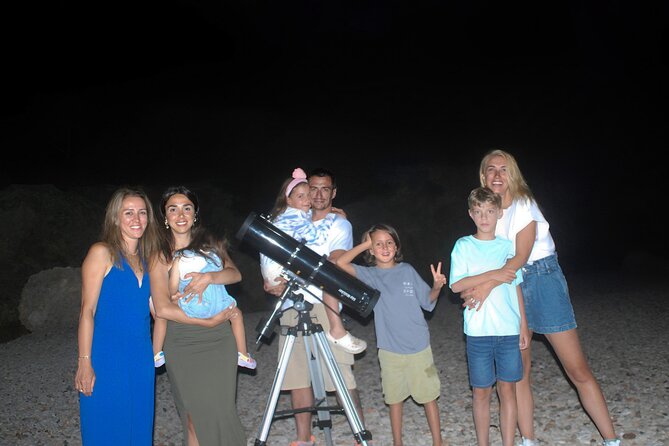
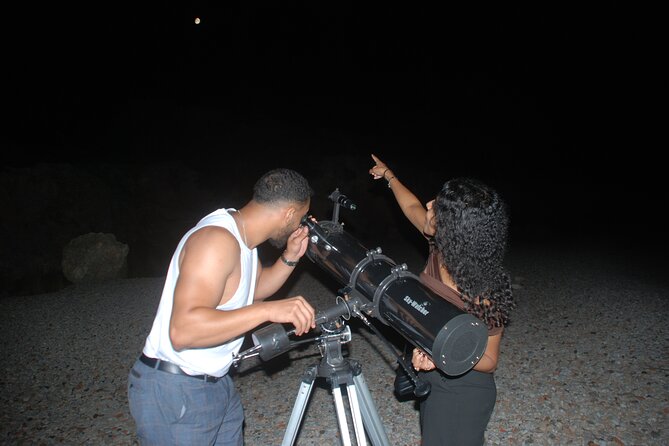
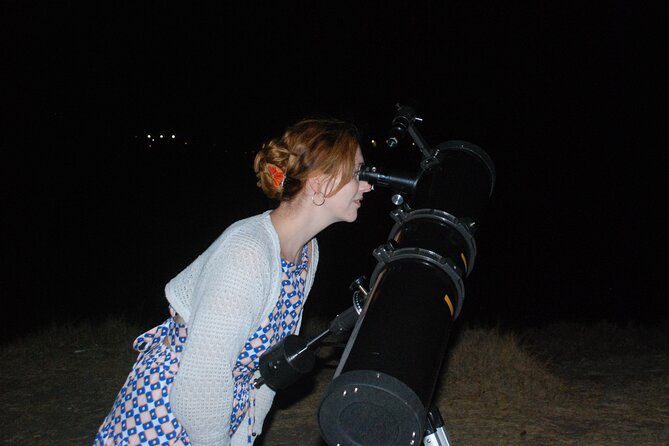
This is the part many people remember. Throughout the experience, the AAC telescope is used, bringing you closer to what’s in the sky.
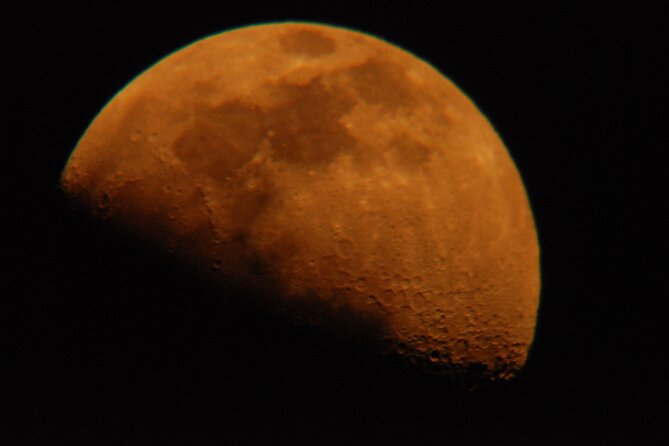
One big highlight is that you can view the moon through the scope. Even if you’ve seen the moon with your eyes a thousand times, telescope views can change how you notice its texture and presence.
Another standout target is Saturn’s rings, when conditions allow. Seeing rings through a telescope is the kind of moment that makes the whole night feel worth it. Even if Saturn isn’t the only object you’ll look at, it anchors the experience with a clear, exciting goal.
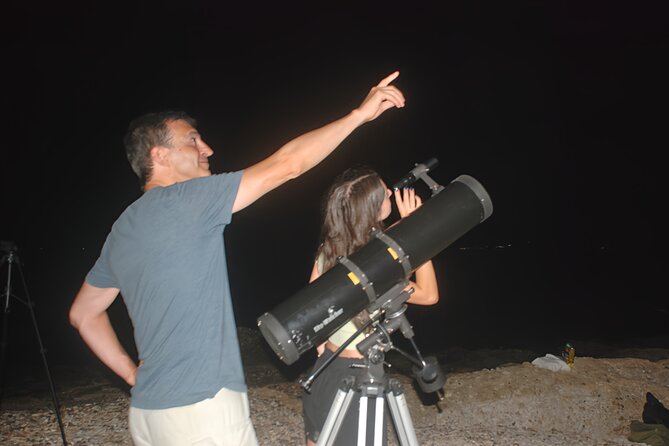
I also like that the guide helps you map and find what you’re seeing. That transforms the experience from passive viewing into something you understand. You’ll leave knowing how to locate celestial objects again, instead of only remembering what you happened to catch that night.
What Makes This Tour Feel High-Value (Even at $102)
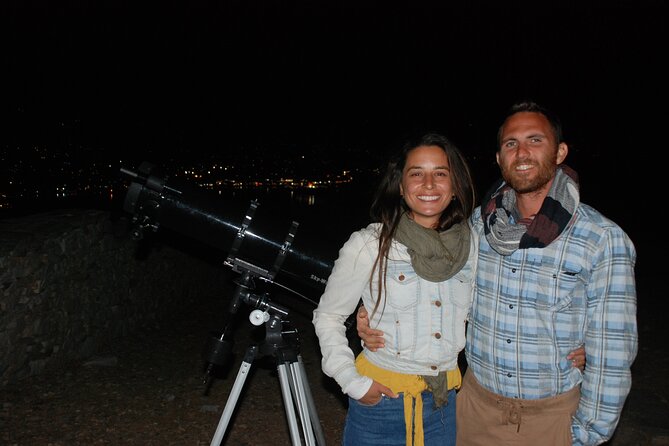
At $102.13 per person for about 1 hour 30 minutes, the price looks straightforward. But the real value comes from what’s bundled into that time: private guiding, telescope access, observational instruction, and astrophotography coaching.
Also, the session is in English, uses mobile tickets, and has free cancellation if you adjust plans early enough. That reduces stress if your schedule changes.
The tour is booked about 33 days in advance on average, which usually means it’s popular. If you’re traveling during a busy stretch, I’d plan to reserve early so you’re not gambling with availability.
Finally, you’re paying for a focused experience. There’s no wasted time like a long ride between random photo stops. You spend your energy on the sky, where the guide’s expertise actually matters.
Logistics That Matter for Your Night
Let’s keep this practical.
First, treat this like a weather-dependent activity. Clear skies are essential. If the skies don’t cooperate, you’ll be offered a different date or a full refund—so build in a backup plan for that evening.
Second, plan to arrive at the meeting point in Marousi (Leof. Kifisias 182) on time. This is a short tour, and stargazing rewards punctuality because darkness is precious.
Third, remember this is a private tour/activity, so the atmosphere is quieter and more flexible. In the reviews shared with the provider, the host is described as patient and adaptable if someone has trouble getting there by taxi. That’s a reassuring sign that the guide isn’t rigid when real-life delays happen.
Who This Is For (and Who Might Want Something Different)
This tour is a strong fit if you:
- want astronomy explained with stories and clear guidance
- enjoy both mythology and science (and don’t feel like they have to pick one)
- like photography enough to want tips, not just pretty views
- prefer a private setting where you can ask lots of questions
It’s also a good choice for people who think stargazing sounds simple but want it to be more than luck. The orientation, the star-mapping coaching, and the telescope focus make it feel purposeful.
If you want a long, sit-anywhere “stargazing picnic” lasting half the night, this may feel too short. But if you want a tight, guided experience with strong instruction and a real target like Saturn, it fits well.
Should You Book Kifissia Stargazing & Astrophotography?
I’d book this if you want your Athens night to include something genuinely different: a guided sky lesson plus telescope views, with astrophotography tips so you can take the experience home.
The biggest reason to say yes is the combination of storytelling, practical observing skills, and the chance to see standout targets like the moon and Saturn’s rings. If you can align your plans with good weather and you like learning while you look, this tour feels like excellent use of 90 minutes.
If weather might be unreliable for you, I’d still consider booking because the option to reschedule or get a refund helps. Just don’t treat it as a guaranteed star-show on a single night—treat it as a plan that depends on clear skies.
FAQ
How long is the Kifissia Stargazing & Astrophotography experience?
It lasts about 1 hour 30 minutes (approx.).
Where do we meet for the tour?
You start at Leof. Kifisias 182, Marousi 145 62, Greece, and the activity ends back at the same meeting point.
Is this tour private or shared with other groups?
This is a private tour/activity, so only your group will participate.
What language is the experience offered in?
The tour is offered in English.
What’s included with the price?
You get a guided stargazing and astrophotography experience, and the ACC telescope is used. The admission ticket is free.
What happens if the weather is poor?
This experience requires good weather. If it’s canceled due to poor weather, you’ll be offered a different date or a full refund.
When will I receive confirmation after booking?
Confirmation is received within 48 hours of booking, subject to availability.
More Tour Reviews in Athens
- Athens: Acropolis & up to 5 Archaeological Sites Combo Pass★ 4.2 · 13,904 reviews
- Athens: Acropolis, Parthenon & Acropolis Museum Guided Tour★ 4.8 · 9,316 reviews
- The Acropolis, Parthenon & Acropolis Museum Guided Tour★ 4.7 · 8,493 reviews
- Athens: Cape Sounion & Poseidon Temple Sunset Half-Day Trip★ 4.8 · 8,241 reviews
- Acropolis: Premium Acropolis and Parthenon Guided Tour★ 4.8 · 5,208 reviews
- Athens: Mythology of Delphi, Museum and Arachova Guided Tour★ 4.7 · 5,102 reviews