
Reviewed · TOURS
Philosophical Tour in Athens
Athens turns your mind on. This 2.5-hour private walking philosophical tour with Lampros strings tragedy, Plato, democracy, and Stoicism across Athens’ key sites, with multimedia explanations at the stops. I love how the guide connects ancient ideas to modern psychology and how we reason today, and I love the way he keeps you comfortable with shade and well-timed sit-down moments. One possible drawback: you’ll be standing and walking a good chunk of the time, so hot weather or mobility limits can matter.
You’re paying one price for a group up to six, and it’s built for real attention from your guide, not a crowd shuffle. The tour is in English, starts at 11:00 am, and ends back at the meeting point near AcropoliAthens (117 42). Most stops don’t require paid admission, and one key site has admission included.
In This Review
- Key things that make this tour worth your time
- Athens Philosophy, But Make It Practical
- Price and Timing: Is $90.11 Good Value?
- Setting Off From the Acropolis Area at 11:00
- Theatre of Dionysus: Why Tragedy Was a Mind Training
- Herod Atticus Odeon: Persona, Animus, and Anima in Stone
- The Prison of Socrates and the Allegory of the Cave
- Agios Dimitrios Loumbardiaris: Where Democracy Was Born
- Philopappos Monument: The Best View Payoff for Plato and Happiness
- Pnyx: The Assembly Area and Aristotle’s Eudaimonia
- Kerameikos Cemetery: Epicurus and the Happiness of Quiet
- A Place Where Stoicism Was Born, Plus the Roman Agora
- The First Meteorological Station and the Weather of Thought
- The Mnisikleous Stairs Feeling, Plus a Natural Lunch Break
- Lysikratous Square: Nietzsche’s Apollonian and Dionysian Sides
- Anafiotika: A Cycladic Feeling Inside Athens
- Who This Tour Fits Best
- Who Might Want Another Option
- Should You Book This Philosophical Tour in Athens?
- FAQ
- FAQ
- How long is the Philosophy Tour in Athens?
- Is this tour private?
- What language is the tour offered in?
- Where does the tour meet, and where does it end?
- Are any admission tickets required?
- Is this tour mostly walking?
- Is the tour good for families or mixed-age groups?
- What happens if the weather is bad?
- What’s the cancellation rule?
- Are service animals allowed?
Key things that make this tour worth your time
- Lampros keeps the pace human: short rests in shade and clear takeaways at each stop
- Multimedia plus story, not just facts: speakers/videos help ideas stick
- You walk the philosophical “why,” not only the “what”: tragedy, cave, democracy, happiness, and ethics
- You get big view payoffs: especially from Philopappos and toward the Parthenon/Acropolis
- It’s private for up to six: you can ask questions and shape the discussion
- It ends with a practical break: a natural lunch-feeling moment near the philosophers’ atmosphere
Weighing this one up? Set it beside a few Athens favourites first.
- Athens: Acropolis & up to 5 Archaeological Sites Combo Pass
★ 4.2 · 13,904 reviews - Athens: Acropolis, Parthenon & Acropolis Museum Guided Tour
★ 4.8 · 9,316 reviews - The Acropolis, Parthenon & Acropolis Museum Guided Tour
★ 4.7 · 8,493 reviews - Athens: Cape Sounion & Poseidon Temple Sunset Half-Day Trip
★ 4.8 · 8,241 reviews
Athens Philosophy, But Make It Practical
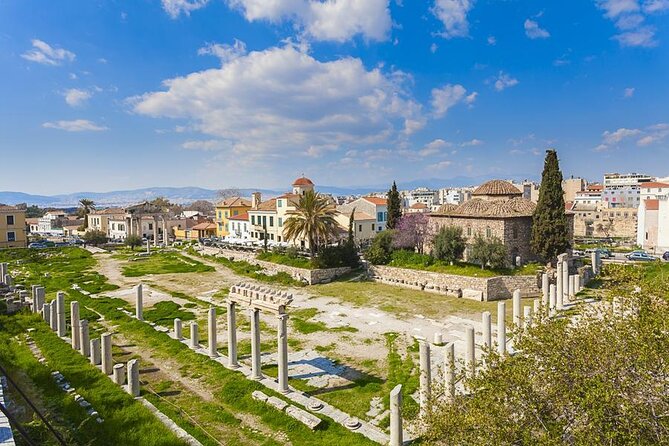
If you’ve ever toured Athens with a headphone loop, this will feel different fast. The point here is not to race from ruin to ruin. You’re stopping where ideas were born, argued, and stress-tested by real people.
Lampros runs the tour like a thinking workout. One minute you’re at a theater tied to tragedy and judgment, the next you’re at a spot used to talk about perception, the self, and what makes a life good. And because it’s private for up to six people, you’re not forced into someone else’s pace.
Price and Timing: Is $90.11 Good Value?
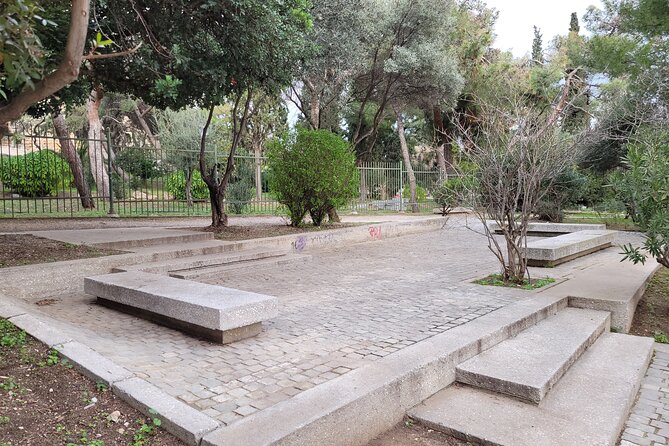
At $90.11 per person for about 2 hours 30 minutes, you’re not paying for a ticket to one museum. You’re paying for a guide-led route with multiple major sites, plus multimedia explanations, plus time to talk.
Here’s why that can be good value:
- Many stops have free admission on the tour route.
- Pnyx includes admission (so one key site is handled for you).
- You get a guided narrative that ties sites together, which is hard to DIY in a satisfying way.
At the same time, the schedule is tight enough that you should treat it like a main event, not an add-on after lunch. If you book this, plan the rest of your day around walking and heat.
Setting Off From the Acropolis Area at 11:00
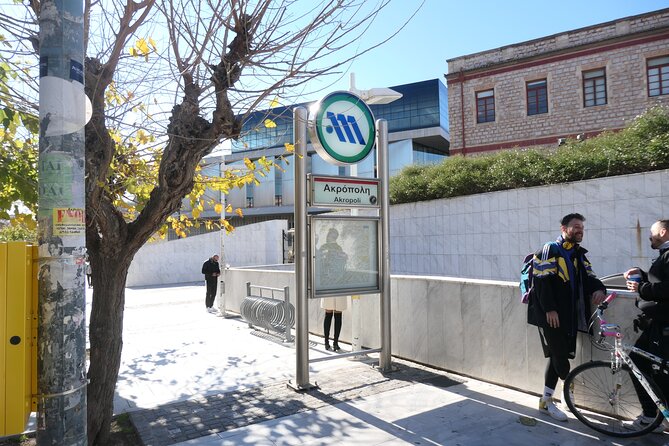
The tour starts at AcropoliAthens (117 42, Athens) at 11:00 am and ends back there. That matters because you’re not crisscrossing the city with extra transit time.
Also, a good surprise: the guide tends to manage comfort actively. In past tours, Lampros has been careful about finding shady spots to explain concepts, and he uses short audiovisual moments to reinforce the ideas you’re hearing. If you like learning that doesn’t fry you in the sun, that’s a big plus.


Theatre of Dionysus: Why Tragedy Was a Mind Training
Your walk begins at the Theatre of Dionysus Eleuthereus, known as the birthplace of tragedy. This stop isn’t only about ancient drama. The core theme is why tragedy was seen as a kind of cure—something that helps with quick, easy judgment.
Expect a mix of cultural context and psychology-style interpretation. You’ll hear how Carl Jung’s ideas connect to the experience of tragedy, and you’ll also get discussion touching evolution psychology and comparative viewpoints.
What I like here: the tour frames the theater as a tool for thinking, not just entertainment. Even if you’re not a theater person, you end up understanding what people were practicing when they attended plays.
Herod Atticus Odeon: Persona, Animus, and Anima in Stone
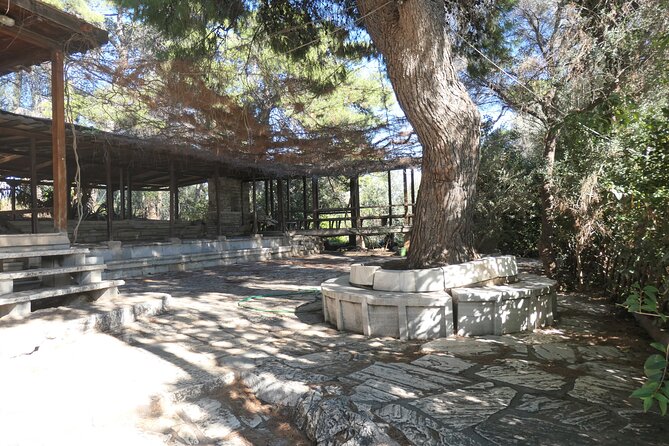
Next is the Herod Atticus Odeon, one of the world’s best-known open-air theaters. The tour uses it as a bridge to talk about identity and roles—how we present ourselves, and what inner forces shape behavior.
The discussion centers on persona and classic Jung-style pairs, including animus and anima. Translation: you’re being encouraged to notice the difference between how you appear and what’s driving you underneath.
Potential drawback: if you come hoping for only strict historical facts, this stop can feel more interpretive than academic.
The Prison of Socrates and the Allegory of the Cave
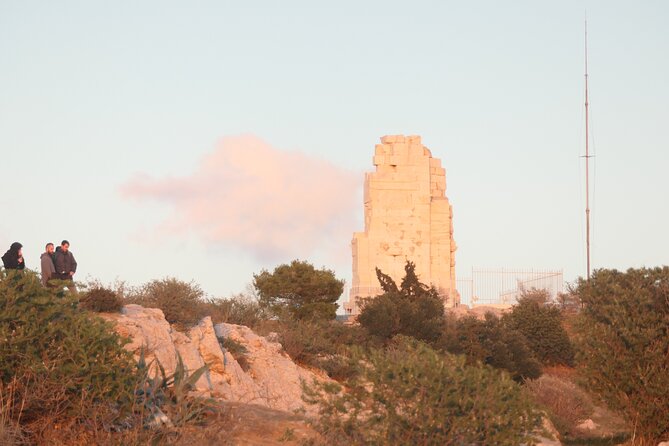
Then you hit one of the tour’s emotional anchors: the Prison of Socrates stop. This is where the theme turns to Plato’s thinking and the allegory of the cave.
The clever part is how the tour uses place as a thinking prompt. You don’t just hear a summary of the cave. You’re nudged toward the bigger question: what do you treat as real because it’s familiar, and what happens when you see beyond it?
This is also one of those stops where the best questions usually pop up. If your group likes discussion, you’ll likely stay engaged here longer than you planned.
Agios Dimitrios Loumbardiaris: Where Democracy Was Born
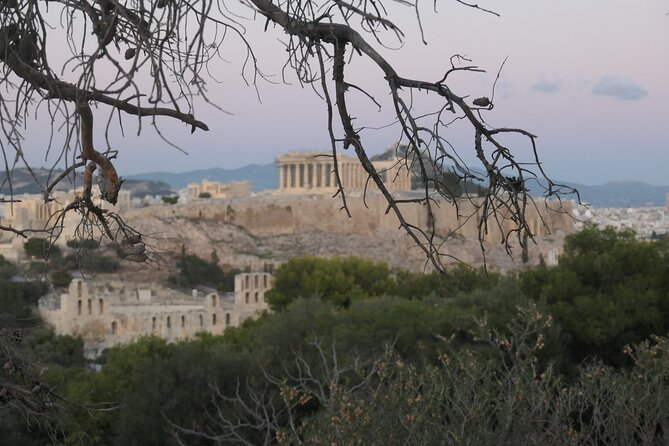
At Eglise D’agios Dimitrios Loumbardiaris, the tour pivots to democracy. You’ll hear this is a place tied to the origin story of Athenian democracy.
What makes this stop work in a philosophical tour is the framing: democracy is not only about voting. It’s about whether people can reason together, argue, and adjust their views without falling apart.
In short: you start to see how ethics and politics share the same mental skills.
Philopappos Monument: The Best View Payoff for Plato and Happiness
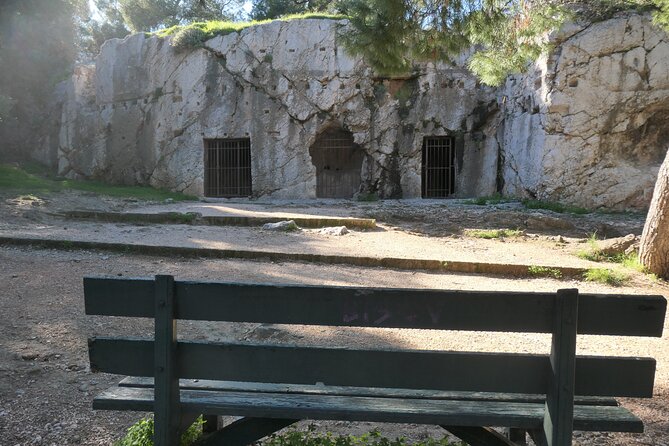
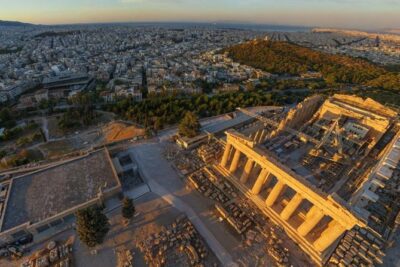
Now you get a reward Athens does well: views. At Philopappos Monument, the guide points out what many people consider the best viewpoint toward the Parthenon and the Acropolis.
But the stop isn’t just for photos (though yes, you’ll want one). The tour uses the height and openness to talk about the recipe of happiness through Plato and Socrates. It’s a natural pairing: the higher you look, the easier it is to think in bigger terms.
If you’re trying to pick one Athens viewpoint to earn with meaning, this is a strong choice.
Pnyx: The Assembly Area and Aristotle’s Eudaimonia
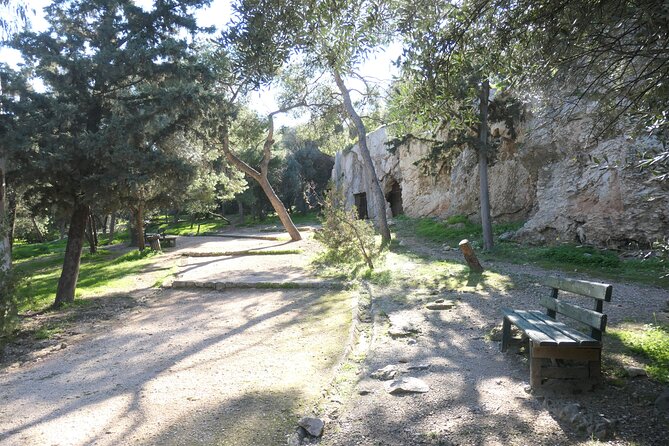
From there, you move toward Pnyx, the assembly space where Athenian citizens gathered. This is where the tour leans into civic life as a philosophical practice.
You’ll also hear about Aristotle’s perspective of eudaimonia, often treated as a kind of thriving or blissful flourishing. In other words, the tour asks what makes a life go right, not just what makes you feel good for a moment.
A bonus angle here: the guide also frames the area as a secret place linked to Socrates. Whether you treat that as strict fact or storytelling context, it gets you thinking about how power, questioning, and community meet in one space.
Kerameikos Cemetery: Epicurus and the Happiness of Quiet
Next up is Keramikos Archaeological Site, the ancient cemetery of Athens. The tour treats cemeteries with respect, not as sad scenery. You’ll connect it to Epicurus and the idea of a happiness recipe tied to Epicurean thinking.
The Epicurean angle matters because it’s not only about pleasure. It’s often about peace of mind, boundaries, and learning what you truly need.
What works for you: this stop gives emotional variety. After theaters, debates, and politics, you get a calmer philosophy track.
A Place Where Stoicism Was Born, Plus the Roman Agora
The route then touches the idea that Stoicism was born here, and you continue toward the Roman Agora, where Stoicism was taught as a philosophy of life.
Stoicism in this tour feels practical. The theme is how to meet difficulty with steadiness, and how to train your response—not just your opinions. It’s the kind of philosophy that can sound abstract until you hear it tied to everyday mental habits.
The Roman Agora stop also helps you feel Athens as a city where teaching happened in public, not only in private schools. You start to see philosophy as part of daily life.
The First Meteorological Station and the Weather of Thought
One of the more surprising stops is described as the first meteorological station in the world. Even if you don’t come with science interests, it fits the philosophical theme.
It turns the mind toward observation and measurement—how humans used evidence to navigate life. That’s a quiet contrast to purely theoretical debate, and it gives your brain a different kind of workout.
The Mnisikleous Stairs Feeling, Plus a Natural Lunch Break
The tour also includes a discussion atmosphere tied to the Mnisikleous stair. The guide uses it as a pause point, often framed as a good spot for lunch.
This part is smart. You get a break right when your brain is ready for it, so you don’t drag through the last leg exhausted.
If you like eating while you still have ideas in your head, plan to grab lunch nearby and keep the pace light. The tour ends back at the meeting point, so you’re not forced into rushing afterward.
Lysikratous Square: Nietzsche’s Apollonian and Dionysian Sides
At Lysikratous Square, the theme turns toward the tension between Apollonian and Dionysian viewpoints, tied to Nietzsche’s thinking.
The idea works well in Athens because the city holds both order and chaos in the same view. The guide uses the stop to show how culture swings between form, beauty, reason, and the raw power of emotion and instinct.
If your group loves big ideas, you’ll likely enjoy this stop a lot.
Anafiotika: A Cycladic Feeling Inside Athens
Finally, you reach Anafiotika, which the tour describes as feeling like a Cycladic island inside Athens. This is the tonal shift: from philosophical weight to a more human-scale Athens you can wander slowly.
It’s also a good way to end because it gives your legs a chance to process everything you just learned. After tragedy, democracy, and ethics, you can just soak in atmosphere.
Who This Tour Fits Best
This is ideal if you want:
- Philosophy that’s tied to real places, not worksheets
- A guide who will answer questions and adjust the pace
- A mix of history and modern mental-life connections
It’s also a great fit for first-time Athens visitors who want a framework. If you hit the major sites first without context, you can feel lost. This tour gives you a lens to revisit Athens afterward with better instincts.
Who Might Want Another Option
Consider skipping (or booking a shorter, lighter plan) if:
- You hate walking and standing for long stretches
- You’re traveling during harsh heat and don’t do well outdoors
- You want a purely factual history tour with minimal interpretation
Also, this tour depends on good weather, so if Athens is gloomy or rainy during your dates, you might be rescheduled or offered a refund.
Should You Book This Philosophical Tour in Athens?
If you like your travel with ideas attached, I think this one is worth booking. The best part is not any single ruin. It’s the way the tour connects tragedy, Plato, democracy, happiness, Stoicism, and Epicurus into a single walking conversation.
Book it especially if you:
- Want a private group experience up to six
- Enjoy multimedia and guided discussion
- Want the view time at Philopappos without feeling like you’re just chasing photos
Skip it if you only want passive sightseeing with minimal thinking. This tour expects you to participate.
FAQ
FAQ
How long is the Philosophy Tour in Athens?
It’s about 2 hours 30 minutes.
Is this tour private?
Yes. It’s private, and only your group participates. Your group can be up to six people.
What language is the tour offered in?
The tour is offered in English.
Where does the tour meet, and where does it end?
It starts at AcropoliAthens, 117 42, Greece and ends back at the meeting point.
Are any admission tickets required?
Most stops list admission as free. Pnyx has admission included in the experience.
Is this tour mostly walking?
Yes, it’s a walking philosophical tour, so you should expect to stand and walk between stops.
Is the tour good for families or mixed-age groups?
Most travelers can participate, and the tour experience includes time to pause and understand concepts at the sites.
What happens if the weather is bad?
The experience requires good weather. If it’s canceled due to poor weather, you’ll be offered a different date or a full refund.
What’s the cancellation rule?
You can cancel up to 24 hours in advance for a full refund.
Are service animals allowed?
Yes, service animals are allowed.
More Tours in Athens
- Athens: Acropolis, Parthenon & Acropolis Museum Guided Tour★ 4.8 · 9,316 reviews
- The Acropolis, Parthenon & Acropolis Museum Guided Tour★ 4.7 · 8,493 reviews
- Acropolis: Premium Acropolis and Parthenon Guided Tour★ 4.8 · 5,208 reviews
- Athens: Mythology of Delphi, Museum and Arachova Guided Tour★ 4.7 · 5,102 reviews
- Acropolis and Parthenon Guided Walking Tour★ 5.0 · 4,755 reviews
- Greek Food Walking Tour in Athens★ 5.0 · 4,740 reviews
More Tour Reviews in Athens
- Athens: Acropolis & up to 5 Archaeological Sites Combo Pass★ 4.2 · 13,904 reviews
- Athens: Acropolis, Parthenon & Acropolis Museum Guided Tour★ 4.8 · 9,316 reviews
- The Acropolis, Parthenon & Acropolis Museum Guided Tour★ 4.7 · 8,493 reviews
- Athens: Cape Sounion & Poseidon Temple Sunset Half-Day Trip★ 4.8 · 8,241 reviews
- Acropolis: Premium Acropolis and Parthenon Guided Tour★ 4.8 · 5,208 reviews
- Athens: Mythology of Delphi, Museum and Arachova Guided Tour★ 4.7 · 5,102 reviews
Fresh Off the Boat: New Athens Reviews





Tours, compared.
 ★ 4.8Acropolis, Parthenon & Acropolis Museum Guided TourFrom $409,316 reviews
 ★ 4.7The Acropolis, Parthenon & Acropolis Museum Guided TourFrom $408,493 reviews
 ★ 4.8Acropolis: Premium Acropolis and Parthenon Guided TourFrom $405,208 reviews
 ★ 4.7Mythology of Delphi, Museum and Arachova Guided TourFrom $305,102 reviews
 ★ 5.0Acropolis and Parthenon Guided Walking TourFrom $414,755 reviews
 ★ 5.0Greek Food Walking Tour in AthensFrom $874,740 reviews
 ★ 4.3City Sightseeing Hop-On Hop-Off Bus TourFrom $254,520 reviews
 ★ 5.0Best of Athens Half Day Private TourFrom $913,714 reviews