
Reviewed · ATHENS
Philosophy Experience at Plato’s Academy Park – basic version
One lesson, one park, and you’re thinking differently. This small-group, interactive Philosophy Experience at Plato’s Academy Park turns Plato’s ideas into live conversation, using the Allegory of the Cave and Socratic questions. I especially like how you sit right on the ancient gymnasium foundations under trees, and how the format pushes real dialogue instead of passive listening. One thing to consider: it’s outdoor time plus a digital museum stop, so if the museum is closed for technical reasons or the weather isn’t great, parts of the experience may feel less smooth.
The setting matters here. You start at the Plato’s Academy Digital Museum (free entrance) and then walk about 300 meters into the archaeological park, where your junior facilitator guides a group debate with everyone participating. It’s family friendly for adults and teenagers over 15, but if you expect a classic guided tour with set facts, this is more workshop than sightseeing.
In This Review
- Key reasons this Plato’s Academy workshop is worth your time
- Plato’s Academy Park: where the lessons feel physical
- Start at the Plato’s Academy Digital Museum (free entrance)
- The short walk to the ancient gymnasium ruins
- The Allegory of the Cave: Plato’s big idea, in modern conversation
- Socratic maieutic: the midwife method you’ll feel in your answers
- How the basic version runs: interactive, small-group, and thoughtfully guided
- Price and value: what your $495 is really buying
- Practical tips so the outdoors part doesn’t trip you up
- Who should book this workshop at Plato’s Academy Park?
- Should you book this Plato’s Academy Park philosophy experience?
- FAQ
- How long is the Plato’s Academy Park philosophy workshop?
- Where does the experience start and end?
- Is the Plato’s Academy Digital Museum visit included?
- Is this a guided tour with narration?
- What ages is it suitable for?
- How big are the groups?
- Is it outdoors, and what if the museum is closed for technical reasons?
Key reasons this Plato’s Academy workshop is worth your time
- Real dialogue practice using Socratic-style questioning, not just hearing about philosophy
- Historic “classroom” setting at the ruins tied to the first Academy
- The Allegory of the Cave made practical through modern-life case scenarios
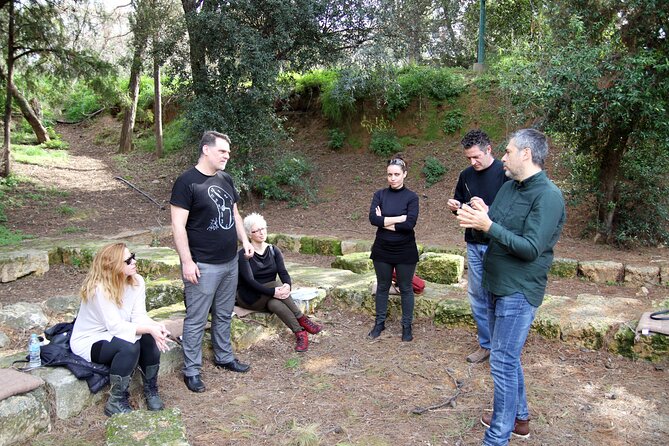
- Small group (max 10) so you actually get pulled into the discussion
- Guided by a junior facilitator for the basic version, with support to keep everyone involved
Weighing this one up? Set it beside a few Athens favourites first.
- Athens: Acropolis & up to 5 Archaeological Sites Combo Pass
★ 4.2 · 13,904 reviews - Athens: Acropolis, Parthenon & Acropolis Museum Guided Tour
★ 4.8 · 9,316 reviews - The Acropolis, Parthenon & Acropolis Museum Guided Tour
★ 4.7 · 8,493 reviews - Athens: Cape Sounion & Poseidon Temple Sunset Half-Day Trip
★ 4.8 · 8,241 reviews
Plato’s Academy Park: where the lessons feel physical
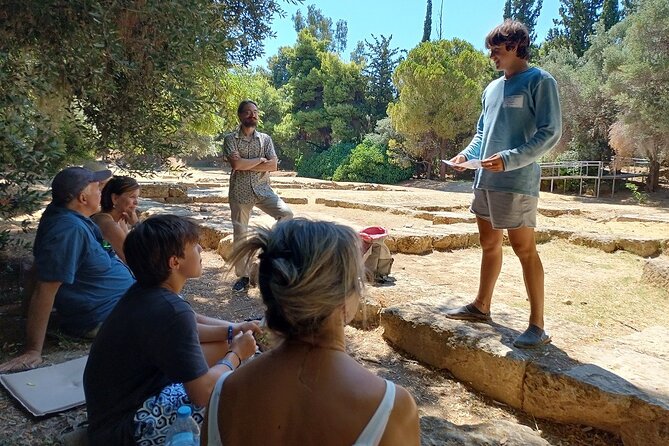
Plato’s Academy Park isn’t just a background for photos. It’s a working-feeling site where ideas get grounded in place—because this is where students once gathered, trained, and learned in an outdoor, public rhythm.
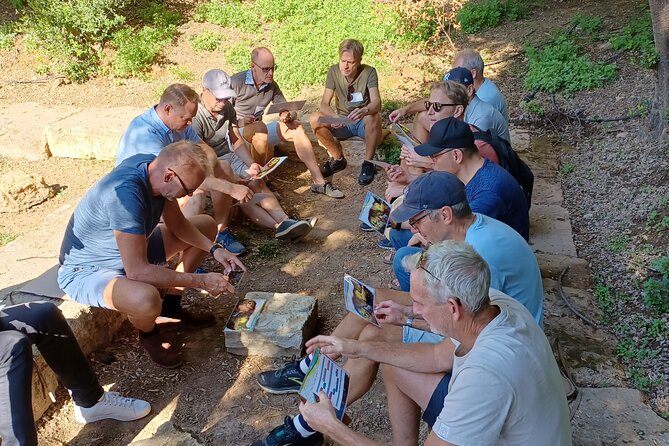
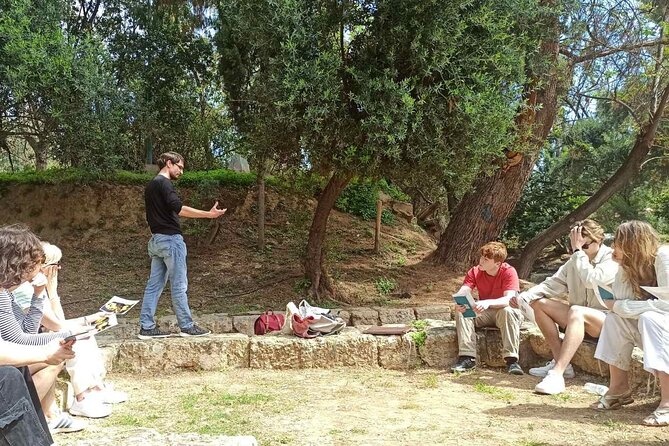
For this workshop, you’re not roaming aimlessly. You’ll be walking a short distance (about 300 meters) and then settling on foundation stones associated with the ancient gymnasium. That detail sounds small, but it changes the mood: you’re not “touring Athens,” you’re doing a philosophy session where the setting reinforces the topic.
Also, the park can be affected by ongoing archaeology work. If excavation is happening, you may see the gymnasium ruins from a bit farther away and settle in another spot, but the focus stays on the same discussion ground.
Start at the Plato’s Academy Digital Museum (free entrance)
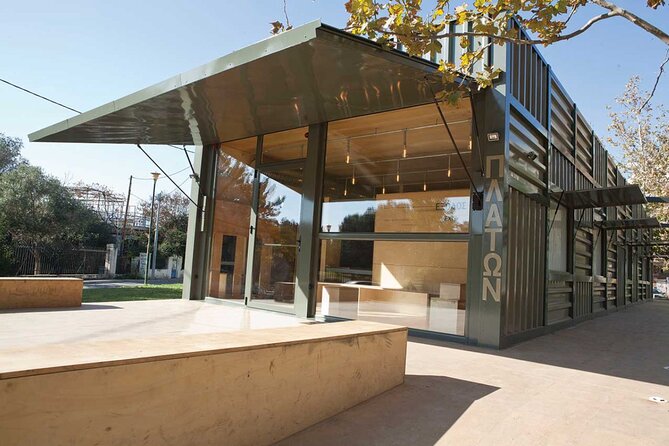
Your first stop is the Plato’s Academy Digital Museum at Alkmeonos 1, Athina 104 42. This is where you get oriented to Plato as a person and to his methods before you move into the ruins.
The goal here isn’t to watch a lot of screen time and call it learning. It’s to “meet” Plato through museum content—walls, screens, and videos—so when your facilitator brings up the big themes (especially the Allegory of the Cave), you have enough context to participate instead of just nodding.
A practical note: the digital museum can sometimes be closed due to technical reasons. Even when it’s open, screens may not always work perfectly, and the smoothness depends on conditions that day. In those moments, a good facilitator keeps you moving and helps you connect the dots anyway.
The short walk to the ancient gymnasium ruins
After the digital museum, you head roughly 300 meters through the archaeological park. The walk is brief, but it does something useful: it transitions you from museum explanation to outdoors-for-real conversation.
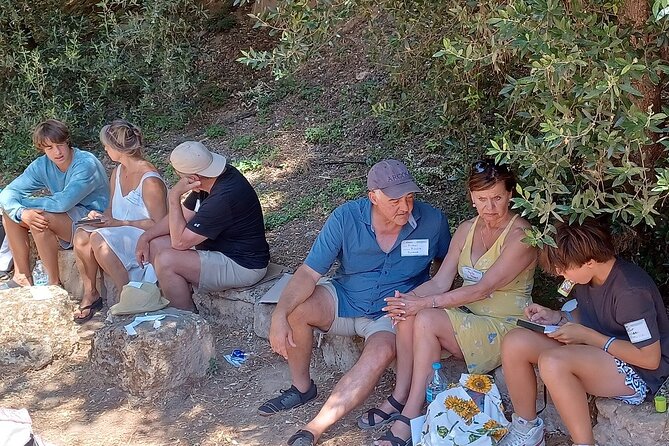
You’ll stop at the ruins of the ancient gymnasium area—described as a place where young people trained and where philosophers liked to gather. Then you sit on the foundation stones, under shade if weather allows, which gives you a natural “circle” setup for dialogue. That seating choice also helps with one of the session’s main aims: keeping the group engaged and equal.
If you’re the type who likes your history with your feet planted firmly, this part delivers. If you prefer lots of standing and strolling for photos, it might feel more stationary than you expected—but the workshop style is designed for discussion.


The Allegory of the Cave: Plato’s big idea, in modern conversation
This experience uses Plato’s famous Allegory of the Cave as the anchor for everything you do. The key is how it’s handled: you’re not just being told what it means; you’re guided into figuring it out through questions, comparisons, and debate.
In a classic classroom, the Allegory can feel like a dense story from ancient times. Here, the approach is different. Your facilitator acts as another Socrates, asking the kind of follow-up questions that test assumptions and push you to clarify what you really think.
What makes this work for most people is the “translation” into modern life examples. The experience explicitly includes applying Plato’s philosophy to today, using real-life case scenarios. So instead of treating the Cave as a museum artifact, you’re asked to ask: what are your own shadows, your own assumptions, your own blind spots?
And yes, you’ll practice the dialogue style itself. You’ll exchange opinions, beliefs, experiences, and views—not as a trivia exercise, but as a way to sharpen thinking.
Socratic maieutic: the midwife method you’ll feel in your answers
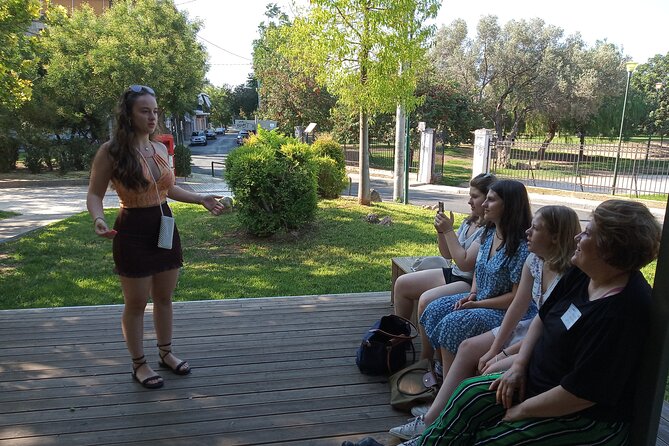
Plato’s Socrates is famous for maieutic, often described like a midwife method—helping ideas come out through questions, not through lectures. This workshop gives you a real taste of that process.
Here’s what to expect in practice. Your facilitator will guide you with questions that sound simple but force you to be more careful. You’ll get prompted to explain your reasoning, consider counterpoints, and refine your stance. The emphasis is on critical thought and self-awareness, not on winning an argument.
That matters because it changes the “type” of debate. This isn’t about proving you’re right. It’s about noticing how you think—what you assume, what you value, what you’re willing to revise when the conversation challenges you.
The group format also helps. The facilitator is meant to reassure that everyone is involved, so you’re less likely to get stuck as a silent observer.
How the basic version runs: interactive, small-group, and thoughtfully guided
This is the basic version, hosted by a junior facilitator. That could sound like a downgrade, but the structure here is designed to keep things on track: the facilitator leads the flow, manages participation, and uses plain English, with no difficult terminology.
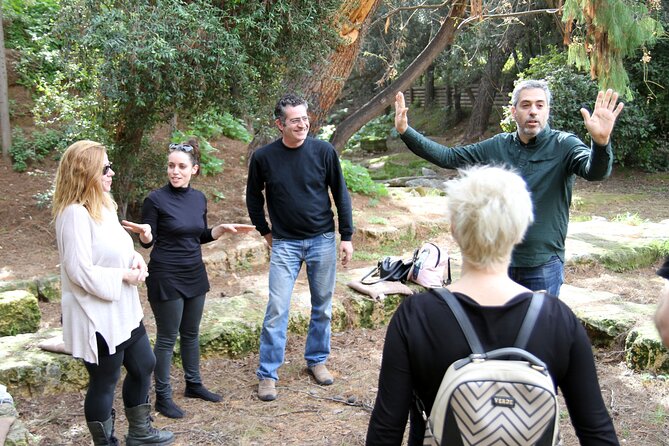
The group is capped at 10 travelers, which is a sweet spot for real conversation. You can hear others, and the facilitator can keep attention from wandering. It also makes it easier to speak up, because you’re surrounded by a smaller number of people instead of a big mixed crowd.
The session is described as highly interactive and dialogue-based. It’s important to understand the “no guided tour” piece: this is an educational workshop, not a route with narration at every corner. If you want facts delivered as commentary while you walk, you might prefer a different style of Athens tour. If you want philosophy made into a practice you do with your hands and your voice, this one fits.
Instructors are part of the experience, too. One facilitator you’ll hear people mention is Olga, praised for being excellent at running the discussion and handling the museum tech hiccups when screens aren’t cooperating.
Price and value: what your $495 is really buying
At $495 for about 2 hours, this isn’t a “cheap and cheerful” add-on. So the value question is fair.
What you’re paying for is mostly time and format, not just location. You’re getting:
- A small-group workshop with guided dialogue
- A session built around the Allegory of the Cave and Socratic questioning
- Access to the Plato’s Academy Digital Museum with free entrance
- A structured outdoor setting with seating on historic foundations
You’re also covered by liability insurance, and local VAT (24%) is included. There’s even a mobile ticket, which is meant to simplify entry.
If you’re the kind of traveler who likes to think while you travel—someone who prefers active learning over passively collected facts—this pricing can make sense. If you’d rather spend your money on a longer museum tour with more visual content and no participation, then $495 might feel steep for a 2-hour workshop.
Practical tips so the outdoors part doesn’t trip you up
This experience takes place outdoors, which means weather matters. You’ll want to dress for conditions you can actually handle: comfortable shoes, breathable layers if it’s warm, and something to help with wind if needed. Even a mild day can feel different sitting on stone for a while.
Also, respect the heritage site. The session notes that you should follow conduct etiquette like keeping noise down, staying clean, and dressing appropriately for a historical/cultural space. Your facilitator can end participation without refund for disrespectful behavior, so it’s worth treating the park like an actual classroom.
Bring your best “curious but polite” energy. The whole point is debate and questions, but it only works when you’re respectful with how you disagree.
Since it’s at a public space, you should also assume photo/video shooting may occur during the workshop. Service animals are allowed, and the site is near public transportation.
Who should book this workshop at Plato’s Academy Park?
This one is especially well suited if:
- You enjoy philosophy as conversation, not as a lecture
- You want a hands-on Socratic-style practice
- You’re traveling with teens 15+ who can handle discussion
- You’d rather do something memorable and participatory in Athens than just check off another landmark
It’s also a good fit if you’re visiting Plato’s Academy for the first time and want context without the pressure of expert-level reading.
If you don’t like being prompted to speak, the experience could feel uncomfortable. But because the facilitator is set up to keep everyone involved, you’ll usually get support to join in in a way that feels possible.
If you’re under 15, you can’t book alone—at least one adult must book too and supervise.
Should you book this Plato’s Academy Park philosophy experience?
Book it if you want Athens to do more than impress you. This workshop turns Plato into something you practice: questioning, clarifying, and debating using the Allegory of the Cave as a modern mirror.
Skip it (or compare options) if you’re looking for a classic guided walk with lots of factual commentary and minimal participation. Also, if you know you struggle with outdoor sessions or you’re traveling during a weather-volatile period, be ready for the day to depend on conditions and museum tech working order.
For the right traveler, though, this is a rare kind of Athens activity: a historic place paired with a thinking exercise that feels surprisingly human.
FAQ
How long is the Plato’s Academy Park philosophy workshop?
It’s about 2 hours.
Where does the experience start and end?
You start at the Plato’s Academy Digital Museum at Alkmeonos 1, Athina 104 42, Greece, and the workshop ends back at the meeting point.
Is the Plato’s Academy Digital Museum visit included?
Yes. The museum entrance is free as part of the experience.
Is this a guided tour with narration?
No. It’s an educational interactive workshop with dialogue and debates. It’s not described as a guided tour.
What ages is it suitable for?
It’s suitable for adults and teenagers over 15 years old. Underaged participants cannot book alone and need at least one adult booking as well.
How big are the groups?
The workshop has a maximum of 10 travelers.
Is it outdoors, and what if the museum is closed for technical reasons?
It’s an outdoor experience, so good weather matters. The digital museum may sometimes be closed due to technical reasons, and conditions can vary day to day.
More Tour Reviews in Athens
- Athens: Acropolis & up to 5 Archaeological Sites Combo Pass★ 4.2 · 13,904 reviews
- Athens: Acropolis, Parthenon & Acropolis Museum Guided Tour★ 4.8 · 9,316 reviews
- The Acropolis, Parthenon & Acropolis Museum Guided Tour★ 4.7 · 8,493 reviews
- Athens: Cape Sounion & Poseidon Temple Sunset Half-Day Trip★ 4.8 · 8,241 reviews
- Acropolis: Premium Acropolis and Parthenon Guided Tour★ 4.8 · 5,208 reviews
- Athens: Mythology of Delphi, Museum and Arachova Guided Tour★ 4.7 · 5,102 reviews