
Reviewed · VIP
Private Luxury Tour: Ancient Messene – Glory of the Peloponnese
One narrow road out of Athens can change your whole day. This private luxury tour makes Ancient Messene feel readable and alive, with smooth transport and context before you ever step among the stones.
What I like most is the comfortable, door-to-door ride with WiFi and bottled water, and the way the guide’s storytelling helps you connect the big monuments to what people actually did there. The one thing to keep in mind: entrance fees are extra at about €15 per person, and you’ll also pay for lunch if you choose the Zevgolatio taverna.
In This Review
- Key things that make this tour worth your time
- Leaving Athens in Comfort: How the Private Luxury Format Works
- Price and Logistics: What $399.07 Covers and What Doesn’t
- Isthmus of Corinth and the Corinth Canal Stop: A Quick Start With Big Context
- Mavrozoumena Bridge: A Photo Break With a Myth-Laced Feel
- Arcadian Gate: The Threshold Into Ancient Messene’s World
- Ancient Messini (Ancient Messene): Walking a Whole City, Not Just Ruins
- The Ancient Theater: Where Politics, Performance, and People Converged
- Asklepieion of Ancient Messene: Healing, Ritual Sleep, and Sanctuary Calm
- Roman Power at the Sebasteion (Caesareion): Emperors in Stone
- From Pagan to Byzantine to Civic Life: Basilica and Ekklesiasterion
- Palaistra and the Stadium: Training Ground and Spectacle
- Museum Time and the Zevgolatio Taverna: Turning Ruins Into Meaning
- Your Driver Matters: The Pericles/Periklis Effect
- Should You Book This Tour?
Key things that make this tour worth your time
- Private group sizes (1–4 in sedans, 5–7 in mini vans) so you move at your pace
- Expert English-speaking driver with historical framing for each stop
- Ancient Messene’s scale and preservation, so it’s more than scattered ruins
- A smart mix of sites, from Hellenistic city life to Roman worship and early Christianity
- A real countryside stop in Zevgolatio, including time for pasteli shopping
More private options, your group only
- Best of Athens Half Day Private Tour
★ 5.0 · 3,714 reviews - Athens Full Day Private Tour
★ 5.0 · 2,903 reviews - Athens Airport Private Arrival Transfer with Meet & Greet
★ 4.5 · 1,495 reviews - Athens Airport to Athens Hotels Private Arrival Transfer
★ 5.0 · 947 reviews
Leaving Athens in Comfort: How the Private Luxury Format Works
This tour is built for people who don’t want to “collect ruins” from one crowded bus stop to the next. You get pickup and drop-off from your hotel or port area, you ride in an air-conditioned vehicle, and you stay with only your group the whole day.
In practice, that matters at Ancient Messene. The site is large, and it takes time to walk between areas. When your transportation is waiting on you and you’re not squeezing into timed group shuffles, your day feels calmer.
You’ll also appreciate the small luxuries that add up on a long day: WiFi on board and bottled water help when you’re on the road for hours and still expect to focus once you arrive.
Price and Logistics: What $399.07 Covers and What Doesn’t
At $399.07 per person, you’re paying for the private vehicle, the coordinated day plan, and an English-speaking historical guide/driver. If you’re comparing options, treat this as a “get there easily + understand what you’re seeing” package.
Here’s what’s not included so you don’t get surprised:
- Archaeological site and museum entrance fees: €15 per person
- Meals: the lunch stop in Zevgolatio is on the plan, but meal costs aren’t included
- Licensed guide inside sites: your driver provides historical knowledge, but the tour does not include a separate licensed guide to accompany you into every archaeological interior
That entrance-fee detail is worth noting because some visitors assume every ticket is baked into the price. If you’re budgeting, plan on that extra €15 per person, plus lunch if you eat.
Isthmus of Corinth and the Corinth Canal Stop: A Quick Start With Big Context
The day starts at the Isthmus of Corinth, a thin link that has mattered for centuries. You’ll get an orientation moment right away: how this land bridge connected the Peloponnese with mainland Greece, and why it was repeatedly fought over, traded through, and engineered around.
You’ll also see the Corinth Canal, a 19th-century engineering shortcut cut through rock. Even if you’re not an engineering person, the views and the scale usually land. It’s the kind of stop that helps you understand why the Peloponnese sits where it does on the map, instead of feeling like a random day trip.
Good news for time and money: this stop is listed with free admission, and it’s a short one (about 20 minutes), so you don’t burn the whole morning before Messene.
Worth comparing before you book this Athens tour:
Mavrozoumena Bridge: A Photo Break With a Myth-Laced Feel
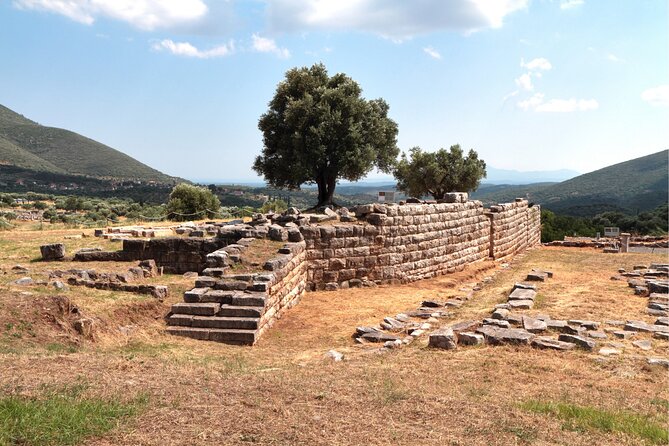
Between the headline sites, you get a scenic breather at the Mavrozoumena Bridge, an ancient stone bridge known for its arched design. The setting matters here: it’s surrounded by greenery and looks like it belongs in a storybook, but you’re still learning something grounded in old construction methods.
The tour notes that legends and folklore are often tied to this bridge. You won’t need to hunt for them. Just use this stop as a palate cleanser—stretch your legs, take a few photos, and reset before the fortification and city core.
Arcadian Gate: The Threshold Into Ancient Messene’s World
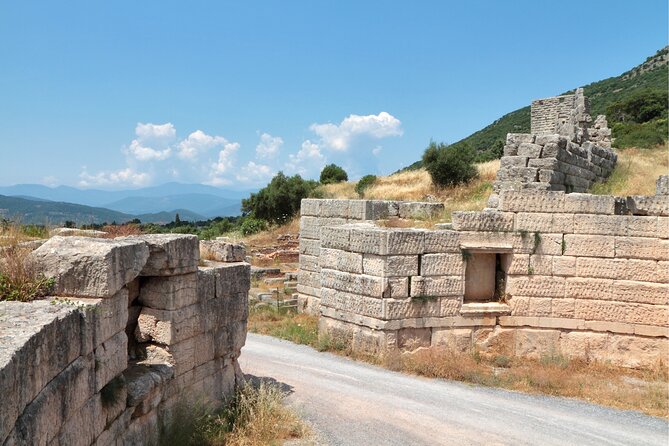
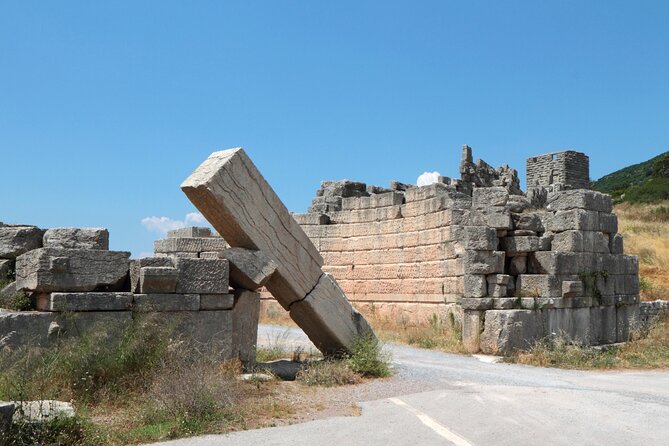
One of the most satisfying moments on this tour is the stop at the Arcadian Gate, the main northern entrance to Ancient Messene. It’s a circular gateway built from huge stone blocks, and the size does the talking even when you don’t know every name yet.
The tour’s context helps you read the entrance in a deeper way: the gate wasn’t only defensive. It also marked a ceremonial threshold for processions tied to sacred rituals associated with the Mysteries of Andania. The idea of moving through purification and then crossing that gate gives the stones a role in people’s lives, not just a role in archaeology.
This is another short stop (about 15 minutes) with free admission, so you can appreciate it without feeling rushed.
Ancient Messini (Ancient Messene): Walking a Whole City, Not Just Ruins
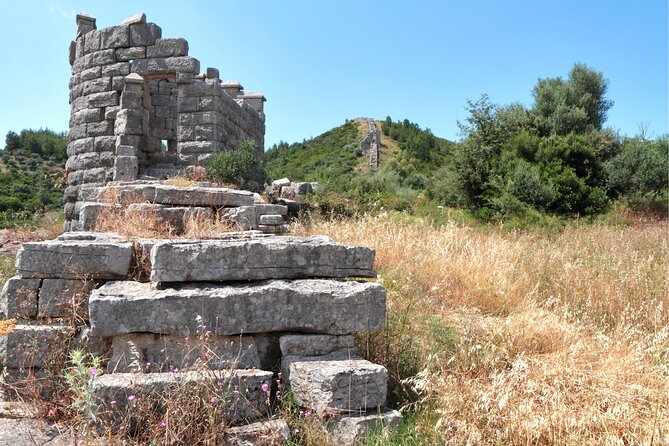
When most people hear ruins, they picture a couple of columns and a broken wall. Ancient Messene is different. It’s one of Greece’s best-preserved archaeological sites, and the day plan is timed so you can take in both the monuments and the layout.
Founded in 369 BCE by Epaminondas, Messene grew into a strong political, religious, and cultural center. A key factor in why it feels so intact: unlike many sites, it wasn’t heavily redeveloped over time. You’re walking through a place where the street plan and major public structures still make sense.
What you’re likely to focus on during your time there:
- The great theater
- The Asklepieion (healing sanctuary)
- The stadium
- The massive fortifications
- The central role it played in sacred rites connected to the Mysteries of Andania
One detail I love here is the connection to Petros Themelis, the archaeologist who restored and brought Messene back into view. His tomb is integrated into the site (described as resting beneath an olive tree overlooking the area). It’s a rare feeling: you’re not just seeing ancient stones—you’re also seeing proof of modern dedication and careful restoration.
Your time at this stop is about 30 minutes, and admission is listed as not included. That means your entrance fee covers this kind of deeper on-site exploring.
The Ancient Theater: Where Politics, Performance, and People Converged
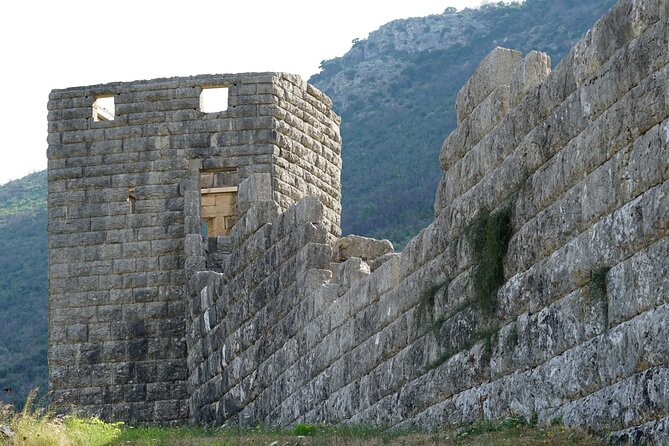
At the theater, you’ll spend a short window (around 10 minutes) and get the essentials fast: it was built in the 3rd century BCE and could hold roughly 10,000 spectators. It wasn’t only for drama. This space also worked for political assemblies and religious ceremonies.
There’s also a practical reason this stop works: the theater sits in a position that offers views, so you get to understand how the city looked from the inside-out. Even if you only stay briefly, that location helps your brain map where the streets and stadium relate to the civic heart.
The tour also points out something helpful for today: the theater is not dead archaeology. It’s been revived as a cultural venue that hosts events and performances, which is a big part of why the place can still feel social and human.
This portion is listed as not included for admission, so keep it in your mental “paid ticket area” bucket.
Asklepieion of Ancient Messene: Healing, Ritual Sleep, and Sanctuary Calm
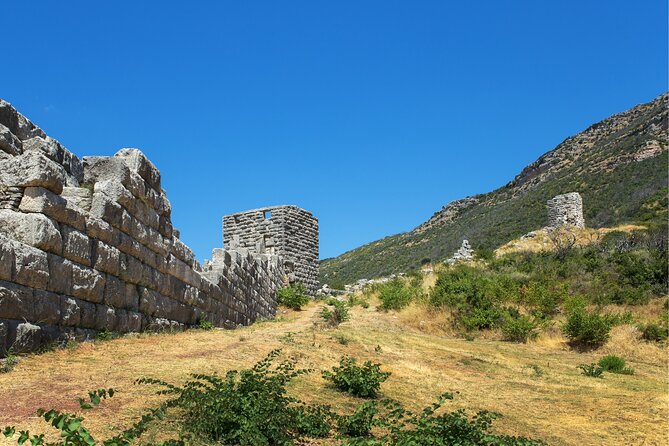
Next up is the Asklepieion—the city’s healing center dedicated to Asklepios, the god of medicine. If you want one site that feels quietly different from the rest, this is it.
The tour explains how the sanctuary blended worship and care. People came seeking health through a mix of rituals, herbal remedies, and incubation sleep (a ritualized night rest as part of the healing process). The calm layout matters: the site included a colonnaded courtyard, altars, and temples, giving it a ritual atmosphere rather than a purely “medical facility” feel.
Even in ruin form, it’s a place where you can slow down mentally. You’ll usually find it easier to imagine the day-to-day flow—prayers, preparation, waiting—than at large stadium spaces.
Time is short (about 10 minutes) and admission is not included, but it’s enough to understand why this sanctuary was a major part of Messene’s identity. It wasn’t random. Healing was civic. It brought people to the city.
Roman Power at the Sebasteion (Caesareion): Emperors in Stone
The Sebasteion (Caesareion) shows you a different Messene: one that’s loyal to Rome. In Roman times, emperors were honored as divine figures, and this sanctuary reflected that blend of Greek and Roman architectural language.
This stop (about 10 minutes) focuses on the monument’s role as a space for imperial worship—ceremonies, festivals, and political gatherings. So even if you’re here for the Hellenistic era, you’re also getting the story of how Messene adapted when the political weather changed.
You’ll likely notice the emphasis on columns, altars, and statue-like elements. The practical value for you is that the guide’s framing helps you interpret what you’re looking at, instead of treating it as “just another set of ruins.”
From Pagan to Byzantine to Civic Life: Basilica and Ekklesiasterion
Two ruins stops tie together a bigger theme: Messene didn’t stop existing when one empire fell.
First is the Basilikḗ (the early Christian basilica). Built in the 5th century CE, it’s described as a church constructed over older classical structures. The point isn’t only architectural. It’s historical transformation—early Christianity taking hold, literally building over what came before. The basilica is said to have a three-aisled design, marble columns, mosaic floors, and an elevated apse for ceremonies.
Then comes the Ekklesiasterion, the citizen assembly meeting place. This is where Messene shows a civic side that feels startlingly familiar if you’ve studied ancient democracy. The tour explains its role as a central hub for political, social, and legal decisions, built in the Hellenistic period and functioning similarly to the Pnyx in Athens.
Architecturally, it’s described with stone seating arranged in a semicircle, almost like a small theater for large gatherings. That structure detail is useful. It helps you picture voices filling a space and decisions being made face-to-face, not in a distant palace.
Both stops are timed around 10 minutes each and are not included for admission.
Palaistra and the Stadium: Training Ground and Spectacle
Athletics are a major thread in Messene, and this tour doesn’t ignore it.
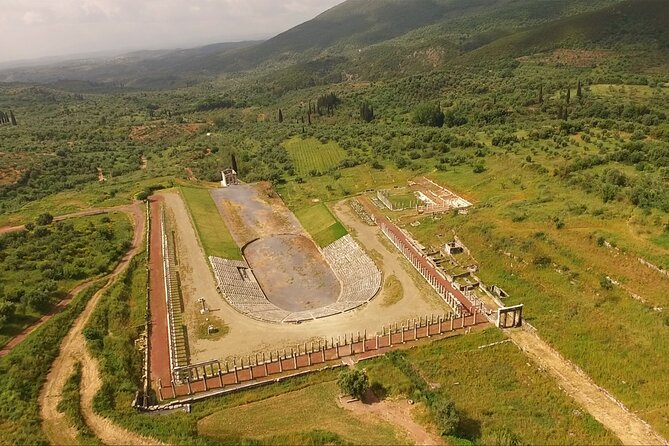
The Palaistra was part of the athletic and educational complex, a training ground for young men preparing for competitions and military service. The tour notes it served wrestling, boxing, and other exercises in a rectangular courtyard surrounded by Doric colonnades. The takeaway I like is the discipline angle: training wasn’t just for winning. It was about endurance, mental resilience, and social life.
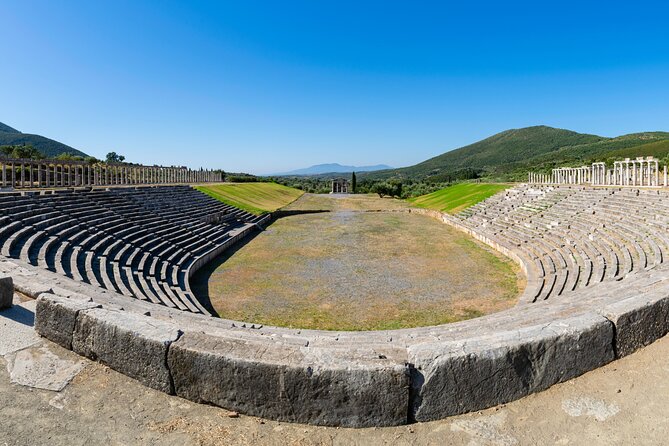
Then you reach the Stadium of Ancient Messene, described as one of Greece’s best-preserved ancient stadiums. Built in the 3rd century BCE, it hosted sporting events, military training, and public ceremonies. This stadium is the kind of site where you can almost feel the rhythm of races and the surge of crowds.
You’ll have about 10 minutes here, not enough to be a deep study, but long enough to walk the track area and appreciate the engineering and scale.
Time and admission are similar to other main ruins stops: about 10 minutes each, with admission not included.
Museum Time and the Zevgolatio Taverna: Turning Ruins Into Meaning
Most archaeological trips stop when the sun starts dropping. This one adds a practical step: the Archaeological Museum of Ancient Messene. Your time is about 20 minutes and admission is not included, but it’s usually worth it because it anchors what you saw outside.
The museum is described as holding important artifacts from across the city’s timeline—Classical through Byzantine. Highlights include statues of gods and emperors, inscriptions, pottery, objects connected to the Asklepieion and Agora, and funerary reliefs, architectural fragments, and coins.
If you ever worry that ruins can feel like a puzzle with missing pieces, museum time helps you fill in those gaps. It turns “I saw a structure” into “I understand what lived around that structure.”
Then comes Zevgolatio, the countryside village stop—about 1 hour. Instead of a generic tourist lunch, you’re directed to a traditional taverna near an old train station. The tour specifically notes locally sourced meats raised by the tavern’s owners and grilled over an open flame, plus seasonal vegetables and herbs grown from their own gardens.
If you eat here, you’re paying for your meal, but you’ll get a real sense of Messenian countryside food rather than a rushed highway stop.
One souvenir note I like: Zevgolatio pasteli, a sesame-and-honey bar made with high-quality ingredients. It’s mentioned as something to grab before you leave, and it’s the kind of item that feels tied to place, not just packaged sweetness.
Your Driver Matters: The Pericles/Periklis Effect
The day’s quality depends heavily on your guide/driver, and the strongest praise you’ll see is consistent: Pericles (also spelled Periklis) is described as exceptional, with deep knowledge and engaging storytelling. In other words, he doesn’t just point. He connects.
That’s the secret sauce on this kind of tour. Ancient Messene is impressive, but you only get the most value when someone helps you place each site in the larger story—fortifications, sacred rites, healing practices, civic assembly, Roman worship, and early Christian reuse.
So if you care about context (and not just photos), this is exactly the right format.
Should You Book This Tour?
I’d book it if you want a long day with breathing room and real interpretation. This tour is especially strong for you if:
- You’re interested in Ancient Messene as a living ancient city, not just a few dramatic ruins
- You value comfortable private transport out of Athens
- You like historical connections explained in simple, clear English
- You’re okay paying the €15 entrance fee and choosing whether to spend on lunch
I would skip it if you’re the type who only wants free stops and quick photo stops, because several key sites require paid entrance.
If you want one trip that feels rare in Greece—big, intact ruins plus a guide who helps you read them—this is a smart pick.
Private Days, Your Group Only
- Best of Athens Half Day Private Tour★ 5.0 · 3,714 reviews
- Athens Full Day Private Tour★ 5.0 · 2,903 reviews
- Athens Airport Private Arrival Transfer with Meet & Greet★ 4.5 · 1,495 reviews
- Athens Airport to Athens Hotels Private Arrival Transfer★ 5.0 · 947 reviews
- Athens Greece Full Day private tour★ 5.0 · 785 reviews
- Private Biblical Tour Ancient Corinth & Isthmus Canal from Athens★ 5.0 · 762 reviews
More Tours in Athens
- Athens: Acropolis, Parthenon & Acropolis Museum Guided Tour★ 4.8 · 9,316 reviews
- The Acropolis, Parthenon & Acropolis Museum Guided Tour★ 4.7 · 8,493 reviews
- Acropolis: Premium Acropolis and Parthenon Guided Tour★ 4.8 · 5,208 reviews
- Athens: Mythology of Delphi, Museum and Arachova Guided Tour★ 4.7 · 5,102 reviews
- Acropolis and Parthenon Guided Walking Tour★ 5.0 · 4,755 reviews
- Greek Food Walking Tour in Athens★ 5.0 · 4,740 reviews
More Tour Reviews in Athens
- Athens: Acropolis & up to 5 Archaeological Sites Combo Pass★ 4.2 · 13,904 reviews
- Athens: Acropolis, Parthenon & Acropolis Museum Guided Tour★ 4.8 · 9,316 reviews
- The Acropolis, Parthenon & Acropolis Museum Guided Tour★ 4.7 · 8,493 reviews
- Athens: Cape Sounion & Poseidon Temple Sunset Half-Day Trip★ 4.8 · 8,241 reviews
- Acropolis: Premium Acropolis and Parthenon Guided Tour★ 4.8 · 5,208 reviews
- Athens: Mythology of Delphi, Museum and Arachova Guided Tour★ 4.7 · 5,102 reviews
Fresh Off the Boat: New Athens Reviews




VIP, compared.
 ★ 5.0Luxury Catamaran Cruise from Athens with Traditional Greek Meal and BBQFrom $2051,346 reviews
 ★ 4.0Hydra, Poros and Egina Day Cruise from Athens with Optional VIP UpgradeFrom $1681,310 reviews
 ★ 4.7Athens Pub Crawl with 1hr Open Bar & VIP Nightclub AccessFrom $22794 reviews
★ 5.0Athens Pub Crawl with 1hr Open Bar & VIP Nightclub AccessFrom $26486 reviews
 ★ 4.7Half Day Best Of Athens Highlights Luxury Private Tour 4HouFrom $110210 reviews
 ★ 5.0Private Luxury Biblical Tour: Apostle Paul in Athens & CorinthFrom $250162 reviews
 ★ 4.5Athens AirPort To Athens Hotels Luxury Private Transfer ServiceFrom $137161 reviews
 ★ 5.0Private Luxury Biblical Tour: Apostle Paul’s Footsteps – CorinthFrom $179148 reviews
Browse the lists this tour appears in