
Reviewed · CORINTH DAY TRIPS
Private Tour of Apostle Paul’s Footsteps in Ancient Corinth
Paul’s route through Corinth still feels close.
This private tour is a smart way to connect Christianity and ancient Greek city life, with stops tied to Paul’s visits and letters, plus major Corinth landmarks like the Corinth Canal. I like that it’s private, so your pace and photo stops feel realistic, not rushed.
I especially like the mix of locations: the Agora/Bema area where Paul is associated with public debate and trial, plus the walk up to Acrocorinth for the fortress views. Guides reported in local feedback are often praised for practical timing (including helping you plan restroom breaks) and for linking sights to specific Bible details, with names like George, Giannis, Nick, Ruslan, Dennis, and Johnny popping up often in their descriptions of the route.
One thing to consider: most of the day is outdoors and you’ll do quite a bit of walking in heat, so plan for sun protection and comfortable shoes. Also, the big archaeological site and museum entry fees are not included (budget about €15 per person), so your final day cost will be a little higher than the base price.
In This Review
- Key highlights you should care about
- A private Corinth route that doesn’t feel like a checklist
- Corinth Canal and the Diolkos: engineering first, then meaning
- Kenchreai port: where Paul’s travel connects to Romans and Phoebe
- Ancient Corinth’s Agora and the Bema: civic space meets faith
- Museum of Ancient Corinth: the 45 minutes that make the ruins click
- Acrocorinth fortress: the view that explains why control mattered
- Apostolos Pavlos Church: the modern mosaic that closes the loop
- Price and value: what $169.03 really buys
- Timing tips to keep this day comfortable and photo-friendly
- Who should book this Paul’s footsteps tour?
- Should you book this private Apostle Paul in Corinth tour?
- FAQ
- Is this a private tour or a group tour?
- How long is the tour, and where does it run from?
- Do I need to pay entrance fees for archaeological sites and the museum?
- What’s included in the price?
- Does the tour include pickup from hotels, ports, or airports?
- What happens if the tour can’t run due to weather?
Key highlights you should care about
- Private, 1–4 person vehicle setup that keeps the day calm and flexible.
- Agora + Bema focus that helps you understand how Corinth’s civic life shaped Paul’s message.
- Kenchreai port connection to Paul’s journeys and the mention of Phoebe.
- Acrocorinth fortress walk with sweeping views and the Temple of Aphrodite area.
- Museum stop at the end of the ruins so you can make sense of what you saw in the field.
The canal and old Corinth, a few more days
- From Athens: Ancient Corinth Day Trip with Canal & VR Guide
★ 4.6 · 1,073 reviews - Biblical Tour Letters ToThe Corinthians St Paul’s Footsteps 6Hour
★ 5.0 · 1,065 reviews - Private Biblical Tour Ancient Corinth & Isthmus Canal from Athens
★ 5.0 · 762 reviews - Athens: Ancient Corinth & Nafplio Full Day Trip with Swim
★ 4.8 · 531 reviews
A private Corinth route that doesn’t feel like a checklist
This is built for people who want an actual day trip plan rather than a bus schedule. You’ll have pickup and drop-off (hotel or port), an air-conditioned vehicle, WiFi onboard, bottled water, and a professional English-speaking driver with strong historical context.
The private part matters in Corinth because the sites are spread out and some paths are uphill. In a small group, you can slow down for a better look at floor plans, inscriptions, or viewpoints, and you’re not stuck timing every stop to strangers’ stamina.
You’re also getting a helpful “map day.” Many people think they’ll just see ruins, but Paul’s footsteps make the geography click: ports, market space, public platforms, and the fortified hill above the city all connect to how a traveler and preacher would move.
Corinth Canal and the Diolkos: engineering first, then meaning
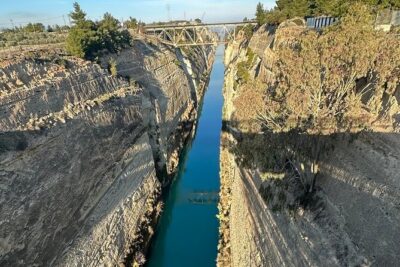
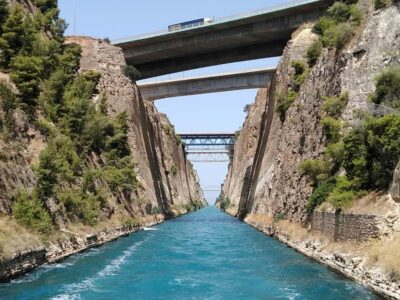
Most days start with Paul-related sites, so it’s refreshing that this one begins with the Isthmus of Corinth and the canal area. You get a clear sense of where mainland Greece meets the Peloponnese, and why this strip mattered in antiquity as a boundary and shortcut.
The Corinth Canal view is a fast introduction to the region’s layered story—ancient geography changed by later engineering. The isthmus stop is short, but it’s a strong mental warm-up: you start the day understanding movement and trade before you talk about letters and missions.
Next comes the Diolkos, an ancient stone-paved trackway where ships could be hauled over land. It’s not just a fun relic—this helps explain why Corinth could be such a busy hub. When you later stand near the port area and the marketplace context, the Diolkos makes those “why here, why now” questions easier to answer.
Kenchreai port: where Paul’s travel connects to Romans and Phoebe
The tour then shifts to the Ancient Port of Kenchreai (often spelled Kechrees/Kenchreae in different sources). This is the spot linked to Paul disembarking around 51 AD during his first visit to Corinth, and later sailing toward Ephesus.
Even though only modest traces remain, the value here is the story geometry. You’re standing at the kind of place where itinerant missionaries could meet people, arrange lodging, and start conversations that would eventually travel farther than the city itself.
This stop also ties directly to the early Christian network. From here, the narrative connects to Paul’s letter activity and the role of Phoebe, described as a prominent Christian woman and deaconess connected with the Corinthians’ community. If you like when Bible details meet physical geography, this is one of the most satisfying points on the day.
Just your group, at your own pace


Ancient Corinth’s Agora and the Bema: civic space meets faith
Now you get into the heart of what makes this tour feel like more than sightseeing: the Ancient Corinth area, especially around the Agora and the Bema.
At the Bema, Paul is associated with public standing and judgment/trial context in the city’s civic setting. The reason I like this focus is simple: Corinth wasn’t a backwater. It was a major classical city, and civic life shaped how arguments, announcements, and authority worked.
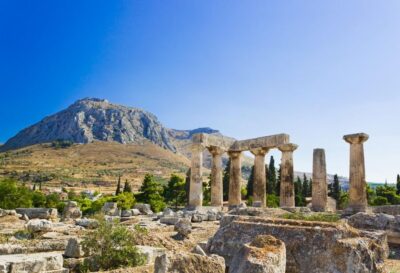
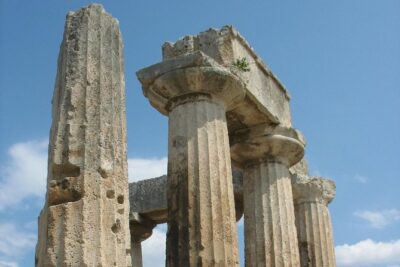
The Agora adds texture. This was the bustling marketplace zone where everyday life happened—so when you think of Paul speaking, you can imagine the crowd dynamics and the everyday questions people carried. Nearby, you’ll also see the Temple of Apollo, which helps you compare the city’s older pagan religious structures with the newer Christian message Paul brought.
A practical note: this stop is where your “walking legs” matter most. Wear shoes you can trust on uneven ground, and bring a hat. The ruins look timeless, but the heat is real.
Museum of Ancient Corinth: the 45 minutes that make the ruins click
If you’ve ever visited ruins and later felt like you only saw stones, the museum stop fixes that. The Museum of Ancient Corinth (built in 1932) is a logical follow-up to the archaeological walk, not a random detour.
You’ll likely encounter artifacts that broaden what you think you saw outside. Finds from prehistoric periods are included, and you can also connect material culture to major religious settings, including the Sanctuary of Asklepios.
Here’s the payoff: instead of just “spotting” Paul-linked sites, you start seeing Corinth as a living place with daily routines, worship practices, and artistic styles. That makes your mental map stronger when you head to Acrocorinth and look down on the city layout.
Acrocorinth fortress: the view that explains why control mattered
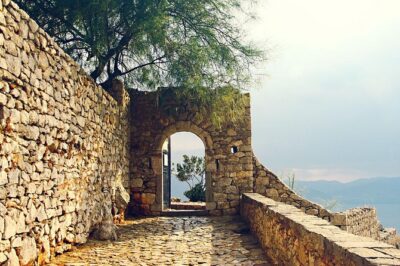
Then you climb into Acrocorinth, the fortified acropolis above ancient Corinth. This is a dramatic shift from market-level history to high-ground power and defense.
Acrocorinth’s walls and towers reflect multiple periods—Greek, Byzantine, Frankish, Venetian, and Ottoman—so the place reads like a timeline you can physically walk through. It’s also linked to religion, including the Temple of Aphrodite area, where historical accounts describe a community of up to 1,000 priestesses.
Even if you care less about the religious detail, the main value is strategic. From the fortress, you understand why rulers and institutions fought to control the high point. When Paul’s story plays out back in the city below, you can feel how power, geography, and public life were tied together.
This is also one of the few stops where your pace might matter more than your interest level. If you want photos, give yourself time. If you’re conserving energy, mention it early to your guide so you don’t feel pressured.
Apostolos Pavlos Church: the modern mosaic that closes the loop
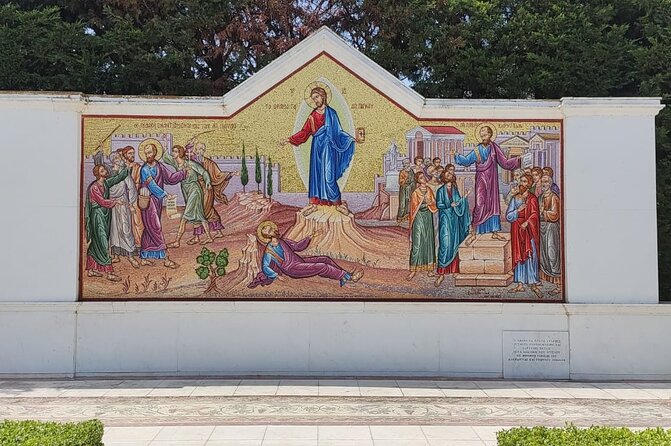
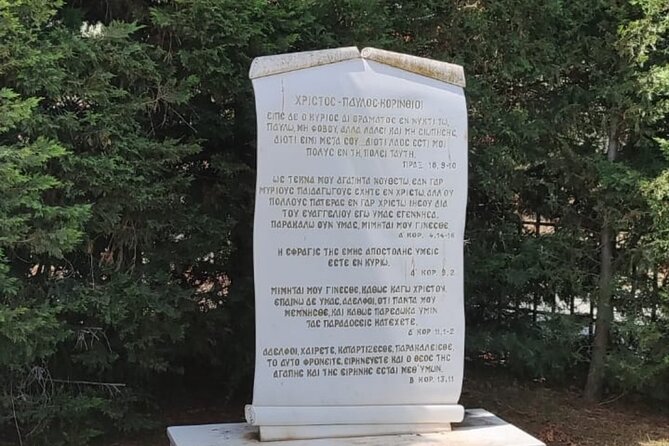
To finish, the tour ends at the Apostolos Pavlos Church (modern Church of Saint Paul) in ancient Corinth. Inside, you’ll see a notable mosaic depicting Paul’s mission through the city.
The artists credited for the mosaic are Pastorutti and Tsotsonis, and the effect is practical: you’re not leaving with only ruin-charm. You’re leaving with a present-day visual reminder that people still connect Corinth’s location to Paul’s story.
This final stop makes a difference for many visitors. After a day of outdoors heat and stone surfaces, the church feels like a pause—somewhere to reflect while the earlier sites are still fresh in your head.
Price and value: what $169.03 really buys
At $169.03 per person for a private 5–6 hour tour, the value comes from the combination of small-group experience and transportation. You’re not just paying for a car—you’re paying for a driver with in-depth historical guidance, plus pickup/drop-off service and onboard comfort.
You also get practical inclusions that make a day trip smoother: air-conditioned vehicle, WiFi onboard, bottled water, and the fact that for groups of 1–4 people, sedan vehicles are used. If you’re with a partner or family member, that private format often ends up feeling like the efficient option compared with cobbling together trains, taxis, and self-guided site planning.
Your budget should include the extra site costs. Archaeological site and museum entrance fees are not included, listed at €15.00 per person. Several of the driving/overview stops are free of ticket requirements, but the Ancient Corinth area and the museum are where you’ll pay.
One more value detail: the tour is offered in English and includes travel time in the total duration. That matters in Athens because the drive isn’t instant.
Timing tips to keep this day comfortable and photo-friendly
This experience requires good weather, so if conditions are poor, you’ll be offered another date or a full refund. In real life, that means you should check the forecast the night before and plan for sun.
Bring a hat and sunscreen. Even when your stops are short on paper, you’ll still stand, walk uneven ground, and wait for viewpoints. Comfortable shoes are not optional here, especially around the fortress and ruin surfaces.
For pacing, I’d treat the day like two halves: first, orientation and Paul-linked points (canal/Diolkos/port), then the “reading Corinth” section (Ancient Corinth + museum + Acrocorinth + church). If you try to power through everything at once, Acrocorinth can feel like a grind. If you slow down there, the whole day gets better.
Also, if you’re sensitive to crowds, you’ll appreciate the private structure. It’s much easier to slow down for a question or a better angle when no one else is waiting behind you.
Who should book this Paul’s footsteps tour?
Book it if you want:
- A private, small-group day trip that balances transportation comfort with real walking at key sites.
- A Paul-focused itinerary that connects Agora and Bema to Corinth’s public life, not just a list of religious landmarks.
- A mix of faith connections and ancient city context, including the contrast between Christianity and the older religious structures you can still see remnants of.
You might want a different option if:
- You’re looking for an all-day, sermon-style religious experience rather than an archaeological-and-historical route.
- You want more time inside each site. This is built as a 5–6 hour overview with guided interpretation, not a multi-day slow study.
Should you book this private Apostle Paul in Corinth tour?
Yes, with a caveat: budget the €15 per person entrance fees and plan for walking in heat. If you’re traveling from Athens and you want the day to feel intentional—ports to markets to fortress to church—the private format is exactly what makes it work.
I’d especially recommend it to people who like connecting scripture details to geography. Guides such as George, Giannis, Nick, and Ruslan are repeatedly praised for translating locations into story context, and that’s the difference between seeing Corinth and understanding Corinth.
If your goal is a meaningful, well-paced “Paul’s footsteps” day with comfort built in, this tour fits the bill.
FAQ
Is this a private tour or a group tour?
It’s a private tour/activity, meaning only your group participates.
How long is the tour, and where does it run from?
The duration is about 5 to 6 hours and it operates from Athens with pickup and drop-off.
Do I need to pay entrance fees for archaeological sites and the museum?
Yes. Entrance fees to archaeological sites and the museum are not included and are listed at €15.00 per person.
What’s included in the price?
Included items include an air-conditioned vehicle, WiFi on board, bottled water, hotel/port pickup and drop-off, and a professional English-speaking tour driver with in-depth historical knowledge. Mobile tickets are also provided.
Does the tour include pickup from hotels, ports, or airports?
Hotel and port pickup/drop-off are included. Airport pickup is optional and costs an additional €50.00 per booking.
What happens if the tour can’t run due to weather?
The experience requires good weather. If it’s canceled due to poor weather, you’ll be offered a different date or a full refund.
More Tour Reviews in Athens
- Athens: Acropolis & up to 5 Archaeological Sites Combo Pass★ 4.2 · 13,904 reviews
- Athens: Acropolis, Parthenon & Acropolis Museum Guided Tour★ 4.8 · 9,316 reviews
- The Acropolis, Parthenon & Acropolis Museum Guided Tour★ 4.7 · 8,493 reviews
- Athens: Cape Sounion & Poseidon Temple Sunset Half-Day Trip★ 4.8 · 8,241 reviews
- Acropolis: Premium Acropolis and Parthenon Guided Tour★ 4.8 · 5,208 reviews
- Athens: Mythology of Delphi, Museum and Arachova Guided Tour★ 4.7 · 5,102 reviews
Just Your Group: More Private Days
- Best of Athens Half Day Private Tour★ 5.0 · 3,714 reviews
- Athens Full Day Private Tour★ 5.0 · 2,903 reviews
- Athens Greece Full Day private tour★ 5.0 · 785 reviews
- 4 Hours – Athens & Acropolis Highlights Private Tour★ 5.0 · 681 reviews
- Athens Full Day Private Tour★ 5.0 · 667 reviews
- Enjoy Cape Sounio Private Majestic Sunset With Seaside Dinner★ 5.0 · 613 reviews
Corinth and the Canal
- From Athens: Ancient Corinth Day Trip with Canal & VR Guide★ 4.6 · 1,073 reviews
- Biblical Tour Letters ToThe Corinthians St Paul’s Footsteps 6Hour★ 5.0 · 1,065 reviews
- Private Biblical Tour Ancient Corinth & Isthmus Canal from Athens★ 5.0 · 762 reviews
- Athens: Ancient Corinth & Nafplio Full Day Trip with Swim★ 4.8 · 531 reviews
- Athens: Corinth Canal, Mycenae & Nafplio Premium Guided Tour★ 4.7 · 322 reviews
- Athens: Corinth Canal, Mycenae and Nafplio Day Tour★ 4.3 · 252 reviews
Fresh Off the Boat: New Athens Reviews


Corinth Day Trips, compared.
 ★ 4.6From Athens: Ancient Corinth Day Trip with Canal & VR GuideFrom $411,073 reviews
 ★ 5.0Biblical Tour Letters ToThe Corinthians St Paul’s Footsteps 6HourFrom $1701,065 reviews
 ★ 5.0Private Biblical Tour Ancient Corinth & Isthmus Canal from AthensFrom $301762 reviews
 ★ 4.8Ancient Corinth & Nafplio Full Day Trip with Swim531 reviews
 ★ 4.7Corinth Canal, Mycenae & Nafplio Premium Guided TourFrom $32322 reviews
 ★ 4.3Corinth Canal, Mycenae and Nafplio Day TourFrom $129252 reviews
 ★ 4.5Corinth Half-Day Trip from Athens with Entrance TicketsFrom $91242 reviews
 ★ 4.5Ancient Corinth Tour with Official Guide & TicketsFrom $89220 reviews
Browse the lists this tour appears in