
Reviewed · DINNER EXPERIENCES
Santorini Dinner Class with Margarita in Athens
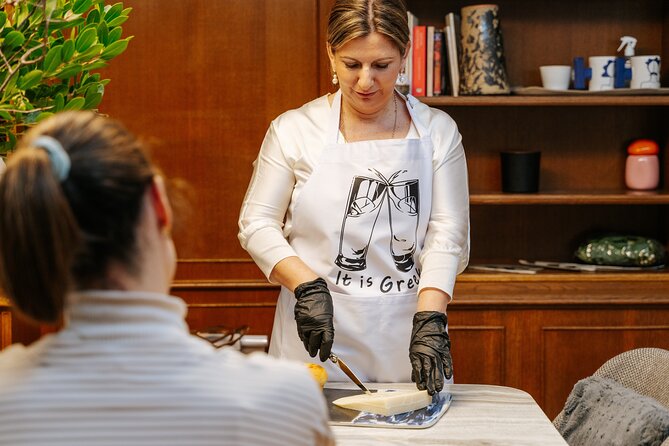
A trip to Santorini, no ferry required. This Greek dinner class turns a private home in Athens into a food-focused story of the island, with Santorini wines and recipe lessons that feel personal, not scripted. I especially like the small group feel and the way the menu maps to real Santorini flavors instead of generic Greek cooking.
One thing to consider: this is an evening activity that starts at 7:00 pm, so it’s not ideal if you prefer early nights or want to pack in sightseeing right before dinner.
The hosts, including Magda and Yannis, keep the mood warm and interactive. If you go hungry for conversation and practical cooking ideas—not just a meal—you’ll get a lot out of it.
In This Review
- Quick hits you’ll care about
- Why this Santorini Dinner Class in Athens feels worth it
- Your 7:00 pm start at Akadimias 8 (and what “3 hours of tastes” means)
- Margarita’s home setup: elegant, local, and social
- Course-by-course: building Santorini flavor from cheese to dessert
- Starters that show Santorini’s ingredients clearly
- Main course: Santorini Garlic Pasta
- Dessert: two iconic Santorini sweets
- Santorini wines at the table: what you’re tasting and why it matters
- Price and value: what you’re really paying for
- Who should book this (and who might not love it)
- Practical tips to make the most of the night
- Should you book Santorini Dinner Class with Margarita in Athens?
- FAQ
- What time does the Santorini Dinner Class start?
- How long is the experience?
- Where is the meeting point?
- Is the class in English?
- How many people are in the group?
- Is there free cancellation?
Quick hits you’ll care about
- Max 8 people: enough space to ask questions and actually join the conversation
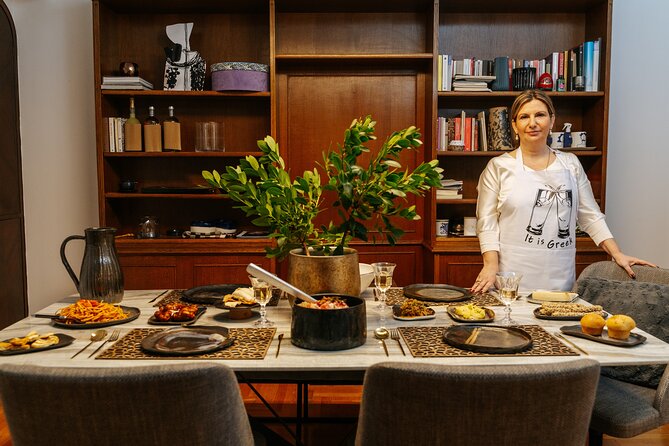
- Margarita’s home setting: elegant and local, not a commercial kitchen
- Santorini wine tasting built in: Assyrtiko, Athiri, Aidani, Mandilaria, and Mavrotragano
- Hands-on recipe teaching: you learn the why behind dishes, not just the what
- A full menu arc: from cheeses and fava to garlic pasta and two classic sweets
- 4 hours approx. with a 3-hour tasting journey that keeps the pace lively
Worth comparing before you book this Athens tour:
- Greek Cooking Class in Athens Including Rooftop Dinner with Acropolis View
★ 5.0 · 826 reviews - Enjoy Cape Sounio Private Majestic Sunset With Seaside Dinner
★ 5.0 · 613 reviews - Greek Small-Group Athens Cooking Class & Dinner
★ 5.0 · 574 reviews - Dinner in the Sky Athens
★ 5.0 · 427 reviews
Why this Santorini Dinner Class in Athens feels worth it
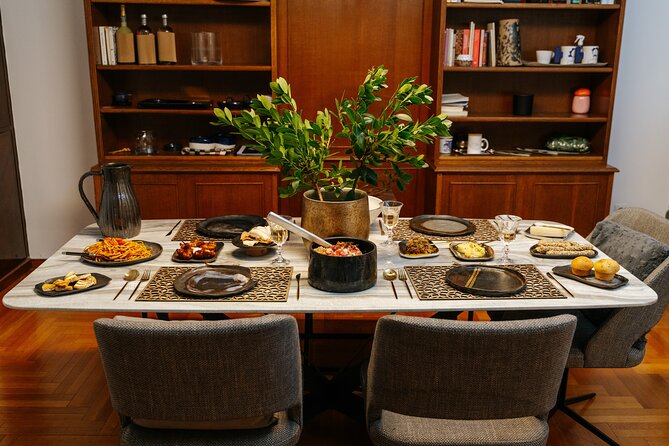
Most food tours give you a few bites and a brochure of facts. This one leans the other direction: you sit down for a full meal, sip local wine, and learn the dishes as a sequence—starter to dessert—like you’re building a Santorini table in real time.
The biggest value here is that it’s not only about taste. It’s also about technique and context. When you learn how each dish is put together and why Santorini is known for the ingredients it uses (especially around cheese, tomatoes, fava, and those wine grapes), you remember the flavors longer. You also leave with ideas you can recreate at home.
The setting helps too. You’re not eating in a busy restaurant with rotating seats. You’re in a home where Margarita lives her daily life, with a table that’s meant to look special. That turns the class into something closer to a dinner with friends—just structured enough that you’re never guessing what comes next.
Your 7:00 pm start at Akadimias 8 (and what “3 hours of tastes” means)
You meet at Akadimias 8, Athina 106 78, Greece at 7:00 pm, and the experience ends back at the meeting point. The total duration is listed as about 4 hours, and the tasting journey is described as about 3 hours of guided food and teaching. In practice, that usually means: time to settle in, then a run of courses with explanations and pauses to share stories.
This is also the part where the small group size matters. With a maximum of 8 travelers, you’re more likely to talk with the hosts and other diners instead of being herded through. You can ask questions and get direct answers about the dishes as they land on the table.
One more practical note: the meeting point is near public transportation, so you’re not stuck with a complicated last-mile plan. That’s a big deal for an evening activity.
Margarita’s home setup: elegant, local, and social
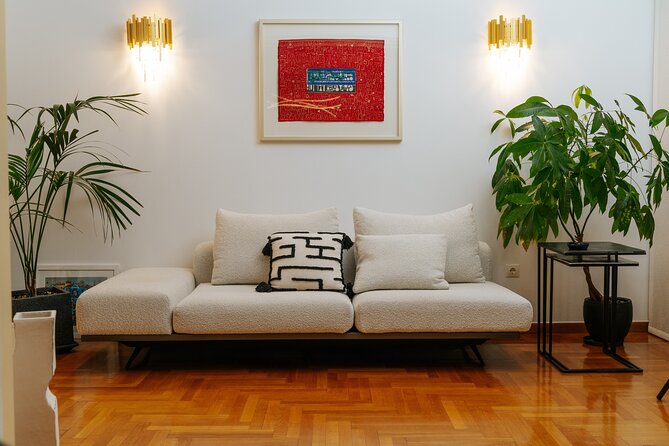
The description of Margarita’s place hits the right tone: a unique, elegant, luxurious house where she spends her daily life. Even without going overboard on formality, it signals that this is a “slow down” experience. You’ll want to arrive on time, because the whole evening works like a meal service—if you’re late, you miss the rhythm.
What I like about this setup is that it supports the most important part of any cooking class: attention. When you’re in someone’s home, the food feels like an invitation, not a performance. And because the group is small, the hosts can explain dishes clearly and still keep the mood relaxed.
The social element is also real here. The experience is designed as a warm environment where locals and visitors share stories. If you’re the kind of traveler who likes meeting people, this is one of the better ways to do it in Athens without turning it into a loud nightlife plan.
Worth comparing before you book this Athens tour:
Course-by-course: building Santorini flavor from cheese to dessert
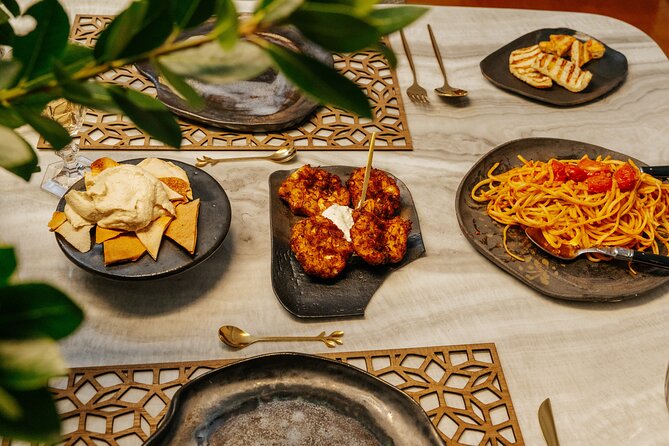
The menu is a guided “trip of tastes to the famous island of Santorini.” You get multiple starters, then a main, then two desserts. Below is what each course likely teaches you, and why it works.
Starters that show Santorini’s ingredients clearly
1) Chlorotiri
This is a local Santorini cheese made from goat’s or sheep’s milk, with a strong, distinctive flavor. Cheese like this matters because it trains your palate for the rest of the meal. Even if you’re new to Greek cheeses, you’ll learn what to notice: texture, intensity, and how it pairs with the rest of the table.
2) Smoked Eggplant
This uses white eggplants and leans into a classic idea from Mediterranean cooking: sweetness and depth from slow flavors. Eggplant is a great starter because it’s familiar enough to recognize, but different enough to feel new when smoke and seasonings change the profile.
3) Apochti
This is described as a Greek alternative to carpaccio, made from pork treated with a process that includes roasting with salt, vinegar, and herbs. The point isn’t only that it’s tasty—it shows how Greek flavors can “tune” meat using acidity and herbs. If you’ve mostly had meat heavy dishes, this offers a lighter, sharper angle.
4) Traditional Santorini Fava with Onions
Fava is one of Santorini’s best-known products: a puree made of yellow split peas, served with onions. This dish deserves attention because it’s not just a side. It’s a local specialty built on a single ingredient. You’ll see why fava earns its reputation when it’s paired the way Santorini cooks do.
5) Tomato Meatballs
These are made with local Santorinian tomatoes plus basil and mint. That combo is classic Greek summer thinking: tomato brightness balanced by herbs, with mint adding lift. If you’ve ever had meatballs that felt one-note, this variation is a useful contrast.
6) Greek Salad with Feta Cheese (Horiatiki)
The salad includes tomatoes, cucumbers, onions, olive oil, and oregano. Horiatiki is simple, but it’s also a benchmark. It’s a good reset after richer starters, and it helps you connect the salad flavors to what you’ll taste later in the main course.
Main course: Santorini Garlic Pasta
Santorini Garlic Pasta is built around Santorini tomatoes plus olive oil, garlic, and salt. Pasta is an easy dish to “home cook” later, but the class version is valuable because you’ll likely learn how the ingredient balance should feel: when garlic is supportive, when olive oil carries the sauce, and how tomato freshness changes everything.
This main course is also where the meal starts to feel like a complete experience, not just a sequence of snacks. By now you’ve tasted cheese, vegetables, savory meat, fava, and salad—so the pasta ties it together in a comfort-food way.
Dessert: two iconic Santorini sweets
1) Melitinia
These sweet treats use salted mizithra cheese, yoghurt, and mastic. Melitinia are often offered at celebrations or weddings. It’s not your average dessert route, which is exactly why it’s memorable: the salty element from mizithra makes it feel more sophisticated than plain sweet pastries.
2) Cufeto Spoon Sweet
This iconic Santorini dessert is a honey-and-almond custard served by the spoon. If melitinia is the unusual choice, cufeto is the comfort finish. It also helps you end on a distinctly Santorini note rather than drifting into generic honey desserts.
And yes, the night ends with that moment you’d expect from a good dinner: clinking glasses and wrapping up with everyone still in conversation.
Santorini wines at the table: what you’re tasting and why it matters
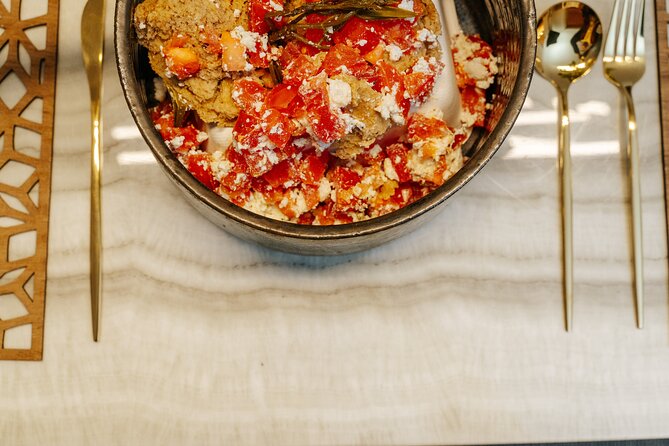
Guests are served local wines of Santorini across white and red styles, listed as: Assyrtiko, Athiri, Aidani, Mandilaria, and Mavrotragano. The description ties these grapes to the island’s unique volcanic soils.
Here’s why that’s valuable for you as a traveler: wine tasting gets much easier when someone gives you a framework. You’re not just sipping and guessing. You’re learning that these varieties have place-based characteristics. Volcanic soil is part of the story, and you can taste how the wines differ from one another across the evening.
If you’re not a wine expert, don’t worry. The menu includes the wines, and the course structure gives you built-in moments to notice differences: whites often feel sharper and fresher, and reds often feel deeper and more structured. You’ll be able to connect those impressions to what you just ate.
Price and value: what you’re really paying for
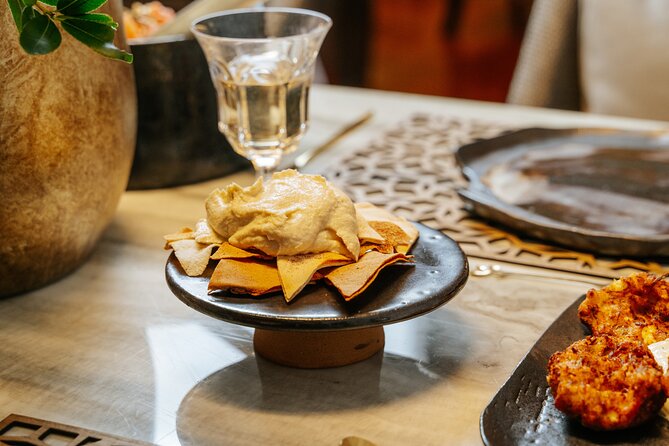
At $272.09 per person, this isn’t a bargain-basement meal. But you are paying for several concrete things that add up fast:
- A private-home setting with a host-led class format
- A full multi-course menu with Santorini dishes, not a small tasting
- Local Santorini wine served during the experience
- A small group size (max 8), which usually means more interaction
- English offered as the experience language
- A set timeframe that’s long enough to teach, eat, and chat (about 4 hours)
If you compare this to the cost of a normal dinner plus wine plus a cooking workshop somewhere else, the math starts to make sense. The value is in the pairing: you eat a Santorini-style menu while learning what makes it tick. That’s the part that’s hard to replicate on your own.
Who should book this (and who might not love it)
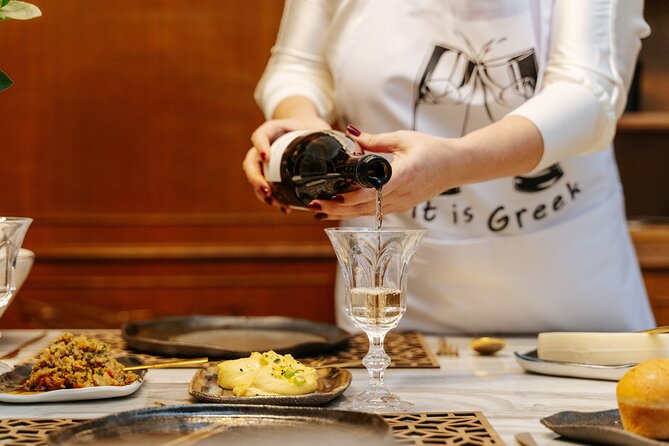
This experience is a strong match for you if:
- You want a food-focused evening with hands-on recipe teaching
- You like small-group activities more than crowded tours
- You’re curious about Santorini beyond the postcard view
- You enjoy Greek wine and want to taste multiple Santorini varieties
- You’d rather spend time learning at the table than racing between sights
It may not be the best fit if:
- You want an outdoor, sightseeing-heavy itinerary
- You’re looking for a short stop with minimal commitment
- You hate structured meals with timed courses (this is still a meal service)
Practical tips to make the most of the night
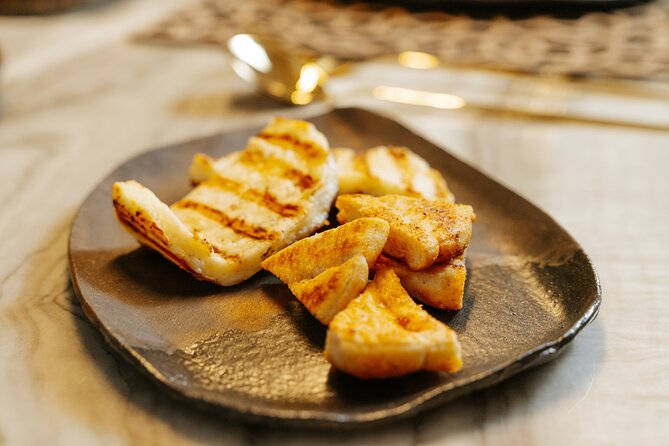
A few simple choices can help you enjoy this more:
- Arrive a few minutes early so you can settle without stress. The class runs on a meal rhythm.
- Come hungry but pace yourself; there are many courses, and you’ll be sipping wine while eating.
- Ask questions during the course. With only up to 8 people, the hosts can answer you directly.
- Use the desserts as a final checkpoint. If you remember only one thing from the evening, focus on how the sweets are built with local ingredients like mizithra, mastic, honey, and almonds.
You don’t need fancy gear. Just expect a calm, friendly evening in a private home setting.
Should you book Santorini Dinner Class with Margarita in Athens?
If you want a genuine tasting experience that mixes Santorini flavors, Greek cooking lessons, and local wine in a small-group home setting, this is an easy yes. The strongest reason to book is the way the menu is built as a story: cheese and vegetables lead into recognizable Greek classics like fava and horiatiki, then the garlic pasta and the two Santorini desserts land the island identity at the end.
If you’re torn because of the price, think about what you’re buying: a hosted evening meal with multiple courses, wine, and interaction, lasting about 4 hours. That’s not just dinner. It’s a structured culinary evening you can’t easily recreate without guidance.
If your ideal Athens day is late-night energy and constant movement, you might prefer something else. But if you want one memorable night where you learn, eat well, and leave with a stronger sense of what Santorini tastes like, this is a smart booking.
FAQ
What time does the Santorini Dinner Class start?
The activity starts at 7:00 pm.
How long is the experience?
It runs for about 4 hours (approx.), with a 3-hour trip of tastes described within the experience.
Where is the meeting point?
The start (and return) is at Akadimias 8, Athina 106 78, Greece.
Is the class in English?
Yes, the experience is offered in English.
How many people are in the group?
The experience has a maximum of 8 travelers.
Is there free cancellation?
Yes. You can cancel for a full refund if you cancel at least 24 hours in advance of the experience start time, and the refund is free to process when you meet that timing.
If you want, tell me your travel dates and what else you’re doing in Athens that week (especially what time you usually eat dinner). I can suggest how to fit this smoothly into your schedule.
More Dinner Experiences in Athens
- Greek Cooking Class in Athens Including Rooftop Dinner with Acropolis View★ 5.0 · 826 reviews
- Enjoy Cape Sounio Private Majestic Sunset With Seaside Dinner★ 5.0 · 613 reviews
- Greek Small-Group Athens Cooking Class & Dinner★ 5.0 · 574 reviews
- Dinner in the Sky Athens★ 5.0 · 427 reviews
- Athens: Greek Cooking Class & Dinner on a Rooftop★ 5.0 · 383 reviews
- Athens: Dinner in the Sky Experience★ 4.9 · 283 reviews
A Table Worth Booking
- Greek Cooking Class in Athens Including Rooftop Dinner with Acropolis View★ 5.0 · 826 reviews
- Enjoy Cape Sounio Private Majestic Sunset With Seaside Dinner★ 5.0 · 613 reviews
- Greek Small-Group Athens Cooking Class & Dinner★ 5.0 · 574 reviews
- Dinner in the Sky Athens★ 5.0 · 427 reviews
- Athens: Greek Cooking Class & Dinner on a Rooftop★ 5.0 · 383 reviews
- Athens: Dinner in the Sky Experience★ 4.9 · 283 reviews
More Tour Reviews in Athens
- Athens: Acropolis & up to 5 Archaeological Sites Combo Pass★ 4.2 · 13,904 reviews
- Athens: Acropolis, Parthenon & Acropolis Museum Guided Tour★ 4.8 · 9,316 reviews
- The Acropolis, Parthenon & Acropolis Museum Guided Tour★ 4.7 · 8,493 reviews
- Athens: Cape Sounion & Poseidon Temple Sunset Half-Day Trip★ 4.8 · 8,241 reviews
- Acropolis: Premium Acropolis and Parthenon Guided Tour★ 4.8 · 5,208 reviews
- Athens: Mythology of Delphi, Museum and Arachova Guided Tour★ 4.7 · 5,102 reviews
Fresh Off the Boat: New Athens Reviews





Dinner Experiences, compared.
 ★ 5.0Greek Cooking Class in Athens Including Rooftop Dinner with Acropolis ViewFrom $120826 reviews
 ★ 5.0Enjoy Cape Sounio Private Majestic Sunset With Seaside DinnerFrom $151613 reviews
 ★ 5.0Greek Small-Group Athens Cooking Class & DinnerFrom $118574 reviews
 ★ 5.0Dinner in the Sky AthensFrom $229427 reviews
 ★ 5.0Greek Cooking Class & Dinner on a RooftopFrom $108383 reviews
 ★ 4.9Dinner in the Sky ExperienceFrom $223283 reviews
 ★ 4.8Greek Cuisine Cooking Class and 3-Course DinnerFrom $115270 reviews
 ★ 3.5Athens Night Sightseeing Tour with Greek Dinner ShowFrom $96268 reviews
Browse the lists this tour appears in