
Reviewed · PRIVATE
Semi-Private Balkans Tour; From Athens to Sarajevo or Belgrade
UNESCO sites, borders, and old-world cities in one run. This semi-private Balkans tour strings together Greece and the West Balkans, from Athens pickup to either Sarajevo or Belgrade drop-off, with a small group size (max 10). I like that planning feels handled for you, with private driving, a professional guide, and the right mix of big-name ruins plus less-frequented towns.
I also like the built-in rhythm of meals and local culture: breakfast is included each morning, and several days are organized around food stops like byrek, Albanian coffee, and a proper Balkan lunch moment in Tirana. Plus, entry tickets are included for the sites you’ll actually visit, so you’re not playing ticket-scavenger hunt all day.
The main thing to watch is the pace. This is a long 14-day sweep with lots of driving and some uneven walking (especially in Sarajevo), and lunches and dinners are not included, so you’ll want a realistic food budget.
In This Review
- Key Takeaways Before You Go
- Semi-Private Pace: Why This Tour Feels Less Like a Checklist
- Value Check: What the Price Actually Covers
- Athens-to-UNESCO: Delphi and Meteora Without the Stress
- What to watch
- Ioannina to Gjirokaster: Ottoman Streets and Castle City Vibes
- What makes it special
- Berat: The Town of 1001 Windows in One Focused Visit
- The small drawback
- North Macedonia Break: Drilon Waters to St Naum’s Calm
- What I like about this day
- Ohrid: Churches Everywhere and a Lake That Changes the Mood
- Consideration
- Tirana: Local Food Culture, Not Just Landmarks
- Why this works
- Kruje and Prizren: Fortresses, Mosques, and Mosque Details
- What to watch
- Gjakova, Decan Monastery, and Rahovec Wine Country
- Why I think this day is valuable
- Slow-Food Albania: Mrizi i Zanave and the Shkodra Castle Views
- Consideration
- Montenegro’s Coastal Contrast: Sveti Stefan, Budva, and Kotor’s Old Maze
- What to watch
- Mostar and Blagaj: The Bridge, the Bazaar, and That Blue-Water Moment
- Why this day lands
- Sarajevo: Ottoman and Austria-Hungary Chapters, With War-Era Reminders
- Consideration
- Ending Options: Sarajevo Airport or Belgrade Hotel Drop
- Your Best Fit: Who This Tour Works For
- Booking Advice: What to Ask Before You Pay
- Should You Book This Athens-to-Sarajevo-or-Belgrade Semi-Private Tour?
- FAQ
- What countries does this semi-private Balkans tour visit?
- How many travelers are on the tour at most?
- What is included in the tour price?
- Are lunch and dinner included?
- Where does the tour end?
- What time does the tour start each day?
Key Takeaways Before You Go
- Max group size of 10 keeps the day from feeling like a bus tour checklist
- Private transportation means less waiting around and more control over timing
- Entry tickets plus tourist and road taxes remove a chunk of day-to-day hassle
- Breakfast included (13 times) helps you start early and keep momentum
- Two different ending options: Sarajevo airport drop or Belgrade hotel drop
More private options, your group only
- Best of Athens Half Day Private Tour
★ 5.0 · 3,714 reviews - Athens Full Day Private Tour
★ 5.0 · 2,903 reviews - Athens Airport Private Arrival Transfer with Meet & Greet
★ 4.5 · 1,495 reviews - Athens Airport to Athens Hotels Private Arrival Transfer
★ 5.0 · 947 reviews
Semi-Private Pace: Why This Tour Feels Less Like a Checklist
The tour is sold as semi-private, and the “max 10 travelers” limit matters. In practice, it usually means you get more back-and-forth with your guide, and fewer times when you’re forced into a single-file move through sights.
You’ll also spend a lot of time in a vehicle moving between countries. Private transportation helps here: fewer stops to pick up others, fewer schedule surprises, and a smoother flow into each town. Starting at 9:00am gives you a full day, which is great if you like seeing a lot, but it does mean you’ll want to sleep well the night before.
Value Check: What the Price Actually Covers
At $5,142.79 per person, this is not a budget-only trip. The reason it can still feel fair is what’s included versus what you still need to plan for.
Here’s the practical included core:
- 3-star hotel stays with breakfast for all nights (BB listed throughout, and breakfast is included 13 times)
- Private transportation across the itinerary
- Professional tour guide
- Hotel pickup in Athens
- Airport drop in Sarajevo (last day) or hotel drop in Belgrade
- Entry tickets for sites that are visited on the program
- Tourist taxes and major road costs like petrol, road taxes, and international car insurance
What’s not included:
- Lunches, dinners, drinks, and snacks
- Souvenirs and personal spending
So the value math is basically: you’re paying for time saved (planning + driving + ticket handling) and for the heavy lifting of logistics. If you’re the kind of traveler who hates last-minute ticket lines, map stress, and figuring out which bus goes where, this model makes a lot of sense.
Athens-to-UNESCO: Delphi and Meteora Without the Stress
Your day one is built like a power opener. You’ll leave Athens with hotel pickup and drive to Delphi, a UNESCO site tied to ancient Greek religion and power.
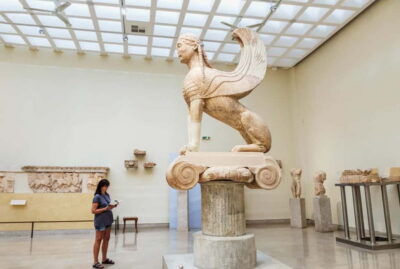
Delphi is not just one postcard view. You’re set up to see multiple landmarks in one sweep—Temple of Apollo, the Castalian Fountain, the Large Sphinx of Naxos, plus major highlights like the Treasury of the Athenians, the Theatre, the Stadium, and museum space connected to famous artifacts.
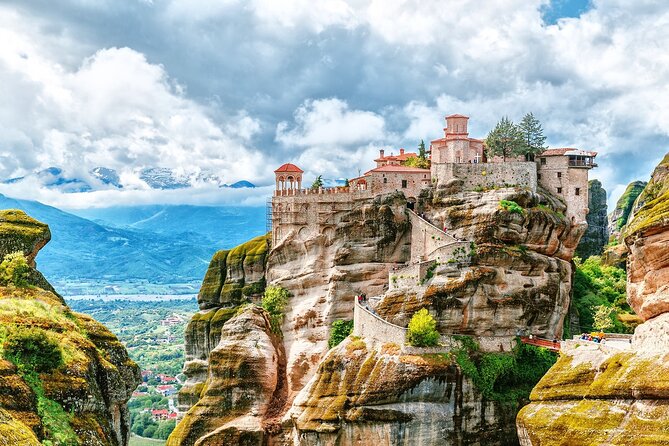
Then comes Meteora, also UNESCO and a completely different kind of spectacle. Monasteries sit on top of dramatic rock formations from the 14th–15th century, and the timing is designed so you can catch a memorable sunset. Practical note: bring a layer for the evening wind. Meteora can cool off fast near sunset.
What to watch
Both stops are big for walking and standing. If you’re sensitive to steps and uneven ground, plan for slower pacing and comfortable shoes.
Ioannina to Gjirokaster: Ottoman Streets and Castle City Vibes
Day two shifts from major UNESCO icons to layered regional culture. In Ioannina, you’ll explore cobbled streets and architecture influenced by Byzantine and Ottoman eras, then move into Ioannina Castle where narrow, winding streets cluster inside the walls.
In the afternoon, you’ll head toward Gjirokaster, nicknamed the Stone City. This is where the tour leans into a preserved medieval feel. Gjirokaster is described as a fortified city where houses act like small fortresses, and it’s tied to a castle tradition going back to Roman-era beginnings.
Day three then gives you deeper time in Gjirokaster:
- the castle area,
- the medieval bazaar right before entering,
- and Skenduli House, singled out as especially well-preserved and original.
What makes it special
Gjirokaster works because you’re not just passing through. You get town layers in sequence: old bazaar life, then the castle viewpoints and domestic interior storytelling through Skenduli House.
Berat: The Town of 1001 Windows in One Focused Visit
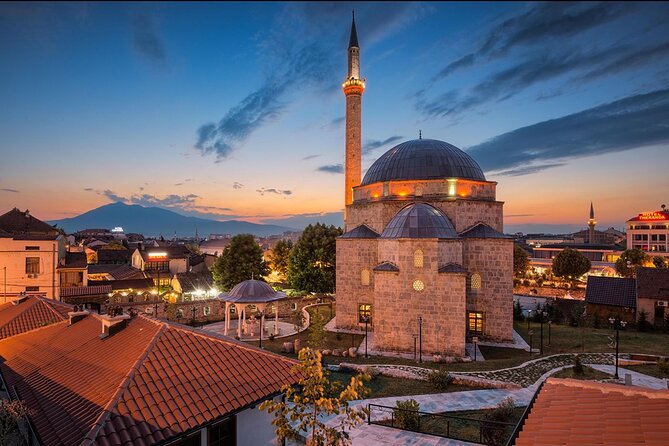
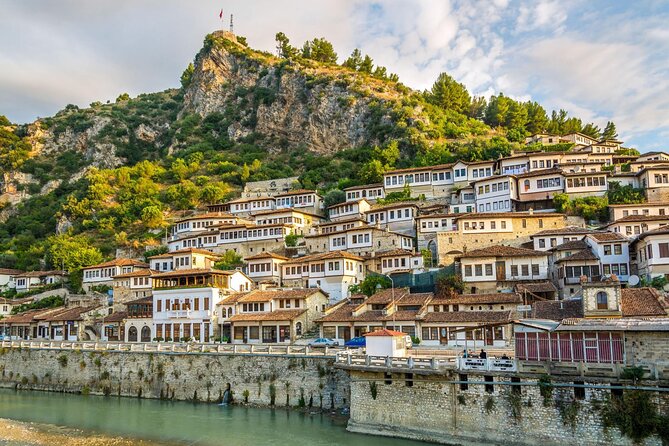
Berat is the next UNESCO highlight: a hillside town with layers of medieval houses and the famous “1001 windows” idea. You’ll walk narrowed stone streets and see the city’s old structure where residents still live within castle areas.
The day includes a lot of meaningful variety for one stop:
- Berat Castle
- the National Iconographic Museum Onufri (with Onufri tied to a specific reddish church-painting style)
- Gorica Bridge and the surrounding neighborhood feel
The small drawback
This is a compact schedule in a town built for slopes. If you’re not used to hills, pace yourself. The views are great, but you’ll feel it in your legs.
North Macedonia Break: Drilon Waters to St Naum’s Calm
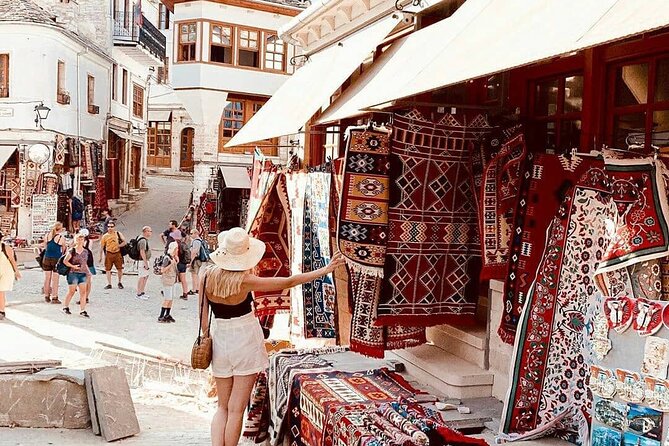
After crossing into North Macedonia, day five mixes nature pause with historic monastery drama.
You stop at Driloni National Park, with springs and a small lake shaded by greenery and weeping willow trees. It’s the kind of reset that keeps a fast itinerary from feeling purely exhausting.
Then comes Tushemisht, described as a quiet stop that blends nature and hospitality. Finally you reach Monastery of Saint Naum, on the source of River Crni Drim flowing into Lake Ohrid. The monastery complex sits within strict protected-area rules, and the water-and-mountain setting is part of why it’s memorable.
What I like about this day
It gives you a breather between big cities and big ruins. The day stays human-scaled even while you’re crossing borders.
Ohrid: Churches Everywhere and a Lake That Changes the Mood
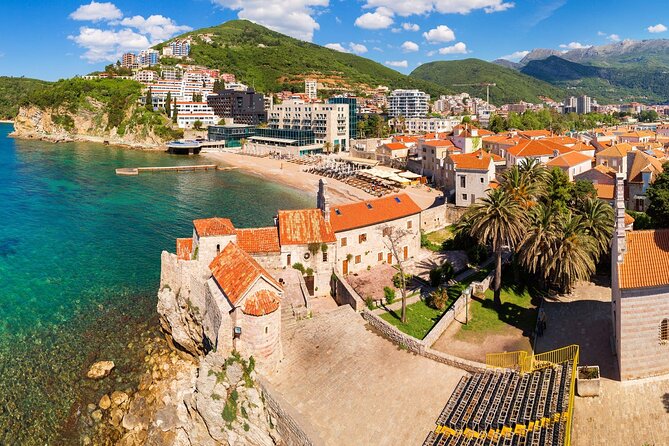
Day six is anchored by Ohrid and the surrounding UNESCO setting—city and Ohrid Lake together. Ohrid is framed as one of Europe’s oldest human settlements, with layers from Illyrian roots through Roman naming (Lyhnidas) and later major religious importance.
You’ll cover key religious landmarks:
- viewpoints tied to church of St. John
- church of St. Nicolas
- Halveti Hayati Tekke (a mosque complex)
The itinerary also emphasizes Ohrid’s Orthodox identity, including the idea of 365 Orthodox churches, one for each day of the year. Even if you don’t count them in real life, you’ll feel the theme everywhere you turn.
Consideration
Ohrid sightseeing can mean more stair-and-street walking than you expect. If you like photography, you’ll want extra patience; the best angles aren’t always at eye level.
Tirana: Local Food Culture, Not Just Landmarks
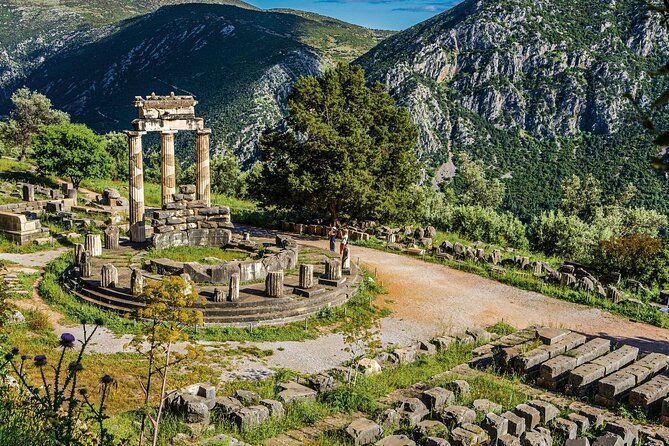
Day seven is Tirana through a food-and-neighborhood lens. You meet with a local companion and start with a chance to try byrek like a local.
You’ll also visit Tregu Çam, a bazaar linked to the Çam community, where you can shop for goods from clothes to household items. Then the tour returns to Tirana with your local companion for more neighborhood time, including Albanian coffee culture at a cozy café and dessert stops in areas meant to help you skip common tourist traps.
Day seven also includes:
- Pazari i Ri with the Bicycle bazaar concept and a New Bazaar food segment
- a traditional lunch moment (Qofte) and vegetarian alternative options, plus Albanian raki tasting
- Bunk’Art 2, the former nuclear bunker turned video-history museum connected to Enver Hoxha’s era
Why this works
Tirana is easy to underestimate. This itinerary builds it around everyday life—markets, pastries, and coffee—so you leave with the city’s rhythm, not just the top monuments.
Kruje and Prizren: Fortresses, Mosques, and Mosque Details
Day eight begins with Kruje, a symbol of Albanian resistance in the 15th century. You’ll move through Kruja Bazaar (a major old bazaar known for handmade crafts) and then into Kruja Castle, with the guide pointing out historic paths locals used for escape routes during conflict.
In the afternoon, you shift to Prizren, often described as Kosovo’s cultural capital. You’ll walk the old town where the river threads through the center and bridges connect areas together.
The included Prizren religious highlight is Sinan Pasha Mosque, known for decorative arabesque patterns. Then you’ll reach Kalaja Fortress for the panorama view.
What to watch
Prizren is a walking town with stairs and viewpoints. If your knees are sensitive, plan a slower pace and take breaks in shaded corners.
Gjakova, Decan Monastery, and Rahovec Wine Country
Day nine continues Kosovo with a strong “crafts plus faith” blend.
- Gjakova is centered on its bazaar tradition, described as the oldest and largest in Kosovo, rebuilt after conflict damage.
- Decan Monastery is next, highlighted for its white exterior and ongoing monastic life. It’s UNESCO-listed for frescoes, including 14th-century scenes and Palaeologan renaissance painting style.
- Rahovec follows, framed as the viticulture heart tied to grape cultivation reaching back thousands of years. Vineyards sit on soft hillocks, and the area produces fine wines with an annual September festival.
Why I think this day is valuable
It keeps Kosovo from being reduced to a single story. Bazaar craft, living monastery culture, and wine region economics all sit side-by-side in one day’s arc.
Slow-Food Albania: Mrizi i Zanave and the Shkodra Castle Views
Day ten gives you a different pace again with Mrizi i Zanave – Restorant Agroturizëm. You’ll tour the farm, hear how it supports local jobs, and learn how it preserves regional bio products. There’s also time for a traditional lunch or to buy fresh produce.
Then you drive to Shkoder and visit Rozafa Castle, offering lake-and-river meeting views, plus a look at architecture influenced by Venetian style. The itinerary even flags the carnival angle in February, including the tradition of handmade Venetian masks produced in Shkodra.
Consideration
This is the kind of day where you’ll feel how quickly “scenery time” changes into “walking time.” If you’re sensitive to fatigue, eat steadily and don’t wait until late afternoon.
Montenegro’s Coastal Contrast: Sveti Stefan, Budva, and Kotor’s Old Maze
Day eleven is built for coastline drama. You first stop at a viewpoint near Sveti Stefan, where the resort island itself isn’t accessible anymore, but the photo view is still a major moment.
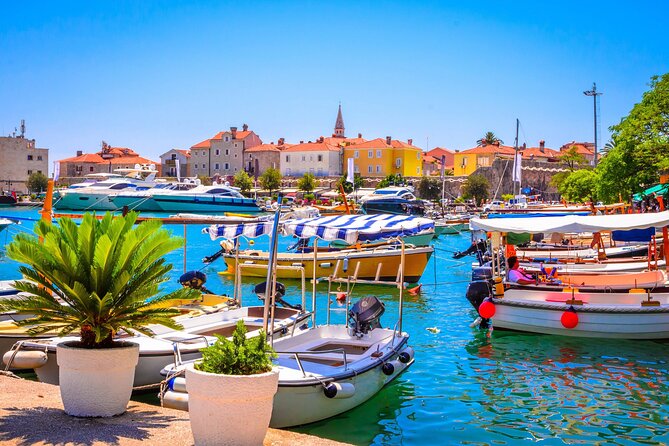
Then it’s Budva, split into old and new parts. You’ll visit the old town center and key churches like St. Ivan church and the small church of St. Mary, plus medieval old-town sights.
Next is Kotor, a UNESCO site and one of the region’s most “made streets” places: a maze of narrow cobblestone lanes in a historic old town. You’ll also visit Saint Luke’s church, described as significant for locals as a symbol of unity.
What to watch
Kotor’s old town streets are tight. Expect more stop-and-go and less spacious wandering.
Mostar and Blagaj: The Bridge, the Bazaar, and That Blue-Water Moment
Crossing into Bosnia and Herzegovina, day twelve centers on Mostar.
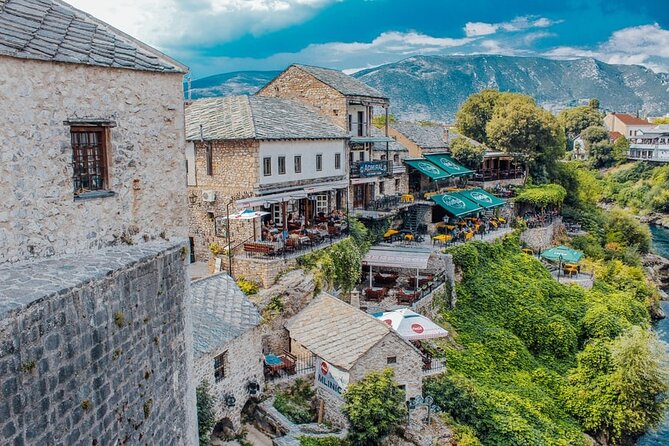
You’ll visit Old Bridge Mostar (Stari Most), UNESCO, built in 16th-century Islamic architectural style. Then you’ll wander the Old Bazaar with colorful streets and lively atmosphere, including historic stone details marked with commemorations like Don’t Forget.
You also go slightly outside town to Blagaj tekija, described as an Ottoman medieval site at the foot of a cliff with blue water in front of it, tied to the spring of the Buna River.
Why this day lands
Mostar plus Blagaj is a contrast combo: man-made history at Mostar’s bridge scale, then a nature-and-spiritual setting outside town.
Sarajevo: Ottoman and Austria-Hungary Chapters, With War-Era Reminders
Day thirteen is Sarajevo, and the focus is on layers. You’ll walk on uneven terrain and see reminders of the Yugoslav War, including bullet holes and cannon marks.
Your route covers:
- Ottoman and Austria-Hungarian parts of the city
- markets and bazaars
- mosques, churches, and synagogues
- medieval Bosnian Kingdom origins storytelling
Then comes Latin Bridge, tied to the explanation of how WWI was triggered in Sarajevo’s center—named for connecting the Catholic quarter and linked with the term Latinluk.
You finish with free time to eat traditional meat dishes and desserts in the old town.
Consideration
This is the heaviest walking day in the “touring history” category. Wear shoes that handle uneven ground, and pace yourself.
Ending Options: Sarajevo Airport or Belgrade Hotel Drop
Day fourteen is straightforward: transfer after breakfast.
If you end in Sarajevo, the airport drop-off is noted as free of charge only on the last day (day 14). If you want another kind of transfer timing, the company asks you to request a quotation.
If you end in Belgrade, you get a hotel drop-off instead.
Your Best Fit: Who This Tour Works For
This tour suits you if:
- you want a guided, small-group introduction to the West Balkans
- you prefer private driving and ticket handling
- you like UNESCO stops paired with local markets and food moments
- you want to cover a lot without spending weeks planning
It may not be your best match if:
- you hate early mornings and long drive days
- you want lots of free time in each city
- you’re aiming for a “no extra spending” trip (lunches and dinners aren’t included)
Booking Advice: What to Ask Before You Pay
A smart move is to confirm two practical things with the operator when you book:
- which ending you’re choosing (Sarajevo vs Belgrade), and what your day 14 transfer looks like
- your room occupancy (double/twin/triple/quad affect how pricing is calculated)
Also, since this is a maximum of 10 people, ask what the group mix is like. Semi-private tours work best when expectations match the day’s pace.
Should You Book This Athens-to-Sarajevo-or-Belgrade Semi-Private Tour?
If you want an organized, high-yield intro to the Balkans, I think this is a strong pick. The value comes from the blend of private transport, included entry tickets, and small-group attention, plus the fact that days alternate between big-ticket UNESCO sights and more human-scale market and food time.
One more reason to feel good: guide quality keeps showing up in the feedback I saw, with names like Ervin and Julian credited for going beyond expectations, and Sirma and Eri Veseli singled out for responsive help and strong command of history and English. That matters because on an itinerary this packed, your guide is the difference between seeing places and understanding them.
Book it if you can handle a full schedule and you’re ready to spend extra on meals on your own. Skip it if you want deep, slow time in just one or two countries.
FAQ
What countries does this semi-private Balkans tour visit?
It covers seven West Balkan countries in one itinerary: Greece, North Macedonia, Kosovo, Albania, Montenegro, Bosnia and Herzegovina, and Serbia.
How many travelers are on the tour at most?
The maximum group size is 10 travelers.
What is included in the tour price?
Included are 3-star hotel stays with breakfast (BB) for all overnights, private transportation, a professional tour guide, hotel pickup in Athens, entry tickets for the sites visited, tourist taxes, road taxes/petrol/international car insurance, and breakfast (13).
Are lunch and dinner included?
No. Lunches, dinners, drinks, and snacks are not included.
Where does the tour end?
You’ll end either in Sarajevo (airport drop on the last day) or in Belgrade (hotel drop-off), based on your preference.
What time does the tour start each day?
The tour meeting start time is 9:00am.
Private Days, Your Group Only
- Best of Athens Half Day Private Tour★ 5.0 · 3,714 reviews
- Athens Full Day Private Tour★ 5.0 · 2,903 reviews
- Athens Airport Private Arrival Transfer with Meet & Greet★ 4.5 · 1,495 reviews
- Athens Airport to Athens Hotels Private Arrival Transfer★ 5.0 · 947 reviews
- Athens Greece Full Day private tour★ 5.0 · 785 reviews
- Private Biblical Tour Ancient Corinth & Isthmus Canal from Athens★ 5.0 · 762 reviews
More Tours in Athens
- Athens: Acropolis, Parthenon & Acropolis Museum Guided Tour★ 4.8 · 9,316 reviews
- The Acropolis, Parthenon & Acropolis Museum Guided Tour★ 4.7 · 8,493 reviews
- Acropolis: Premium Acropolis and Parthenon Guided Tour★ 4.8 · 5,208 reviews
- Athens: Mythology of Delphi, Museum and Arachova Guided Tour★ 4.7 · 5,102 reviews
- Acropolis and Parthenon Guided Walking Tour★ 5.0 · 4,755 reviews
- Greek Food Walking Tour in Athens★ 5.0 · 4,740 reviews
More Tour Reviews in Athens
- Athens: Acropolis & up to 5 Archaeological Sites Combo Pass★ 4.2 · 13,904 reviews
- Athens: Acropolis, Parthenon & Acropolis Museum Guided Tour★ 4.8 · 9,316 reviews
- The Acropolis, Parthenon & Acropolis Museum Guided Tour★ 4.7 · 8,493 reviews
- Athens: Cape Sounion & Poseidon Temple Sunset Half-Day Trip★ 4.8 · 8,241 reviews
- Acropolis: Premium Acropolis and Parthenon Guided Tour★ 4.8 · 5,208 reviews
- Athens: Mythology of Delphi, Museum and Arachova Guided Tour★ 4.7 · 5,102 reviews
Fresh Off the Boat: New Athens Reviews

Private, compared.
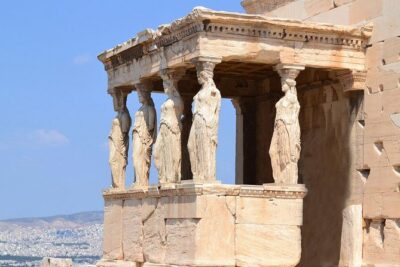 ★ 5.0Best of Athens Half Day Private TourFrom $913,714 reviews
 ★ 5.0Athens Full Day Private TourFrom $2442,903 reviews
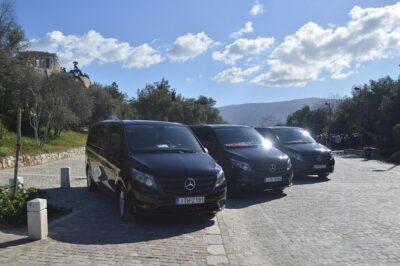 ★ 4.5Athens Airport Private Arrival Transfer with Meet & GreetFrom $491,495 reviews
 ★ 5.0Athens Airport to Athens Hotels Private Arrival TransferFrom $42947 reviews
 ★ 5.0Athens Greece Full Day private tourFrom $683785 reviews
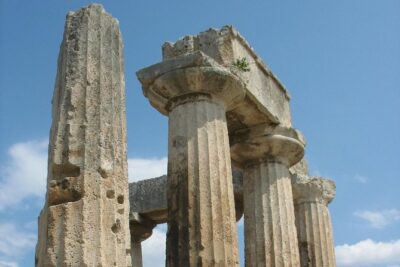 ★ 5.0Private Biblical Tour Ancient Corinth & Isthmus Canal from AthensFrom $301762 reviews
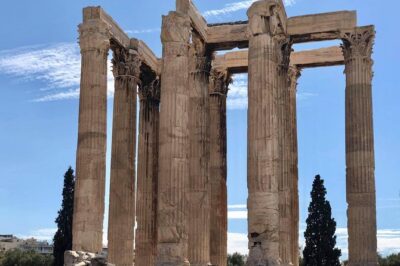 ★ 5.04 Hours – Athens & Acropolis Highlights Private TourFrom $181681 reviews
★ 5.0Athens Full Day Private TourFrom $205667 reviews
★ 5.04 Hours – Athens & Acropolis Highlights Private TourFrom $181681 reviews
★ 5.0Athens Full Day Private TourFrom $205667 reviews