
Reviewed · CAPE SOUNION DAY TRIPS
Temple of Artemis, Temple of Poseidon and Athens Riviera -Private
Two temples. One long, satisfying day.
This private Athens outing is a smart way to stitch together myth, archaeology, and sea views with a professional driver-guide doing the talking in one efficient route. I like how the day pairs the story-based stop at Vravrona with the big-photograph moment at Cape Sounion, so you get meaning and mood, not just ruins.
I especially like the contrast at Vravrona, where the sanctuary of Artemis shares space with the church of Saint George, and you can see how the coastal wetland shaped what people built to cope with flooding. The day also gives you a proper look at Cape Sounion’s Temple of Poseidon and the scattered remains around it, plus a drive along the Athenian Riviera before lunch by the Saronic Sea.
The main thing to plan for is extra cost: entrance fees for the two temples are not included (listed as EUR 20 per person), and the museum also charges separately. If you want a very detailed, stop-by-stop explanation at every turn, it helps to ask questions, since the guide time may feel a bit stretched for such a packed day.
In This Review
- Key points to know before you go
- Private 7-hour routing from Athens: what the day feels like
- Vravrona’s Saint George Church: history stacked on a coastal wetland
- Temple of Artemis at Vravrona: the myth you can actually picture
- Brauron Archaeological Museum: She-Bears, toys, and what children’s roles meant
- Cape Sounion’s Temple of Poseidon: ruins, sea wind, and big panoramas
- Athenian Riviera drive and lunch by the Saronic Sea: your break in the middle
- Why the private driver-guide setup is worth it
- Cost and value: $289.65 plus temple entries and your lunch order
- Who this trip suits best (and who should choose something else)
- Should you book this Temple of Artemis and Temple of Poseidon private day?
- FAQ
- How long is the private tour?
- Do you get hotel or port pickup and drop-off?
- Is this a private experience?
- What’s included in the price?
- What’s not included?
- Is the Temple of Artemis entrance fee included?
- Is the Temple of Poseidon entrance fee included?
- How long do you spend at each main site?
- What if the weather is bad?
- What is the cancellation policy?
Key points to know before you go
- Private, hotel/port pickup and drop-off with a driver-guide, so you’re not fighting schedules
- Two temple sites in one day: Artemis at Vravrona and Poseidon at Cape Sounion
- Saint George Church next to Artemis makes Vravrona feel layered instead of frozen in time
- Brauron Museum adds the missing context, including famous She-Bears items
- Cape Sounion is all about views—Poseidon’s temple plus Aegean/Saronic Sea panoramas
- Temple entry fees and museum entry are extra, so budget accordingly
Sunset at the Temple of Poseidon, other ways there
- Athens: Cape Sounion & Poseidon Temple Sunset Half-Day Trip
★ 4.8 · 8,241 reviews - Athens: Cape Sounio & Poseidon Temple Trip with Audio Guide
★ 4.4 · 4,521 reviews - Cape Sounion and Temple of Poseidon Half-Day Small-Group Tour from Athens
★ 4.5 · 3,205 reviews - Cape Sounion & Temple of Poseidon: Small Group Tour
★ 4.7 · 1,945 reviews
Private 7-hour routing from Athens: what the day feels like
This is built as a full day (about 7 hours), using private, air-conditioned vehicles and included pickup/drop-off from your hotel or port. That matters in Athens. Distances are real, and you’ll spend less time figuring out logistics and more time actually looking at what you came for.
You also get practical comfort items: WiFi on board and bottled water. The big variable is weather. The tour notes it requires good weather, and if conditions are poor, you’ll be offered another date or a full refund. In other words, the schedule is designed for a day when you can enjoy Cape Sounion’s views.
Vravrona’s Saint George Church: history stacked on a coastal wetland
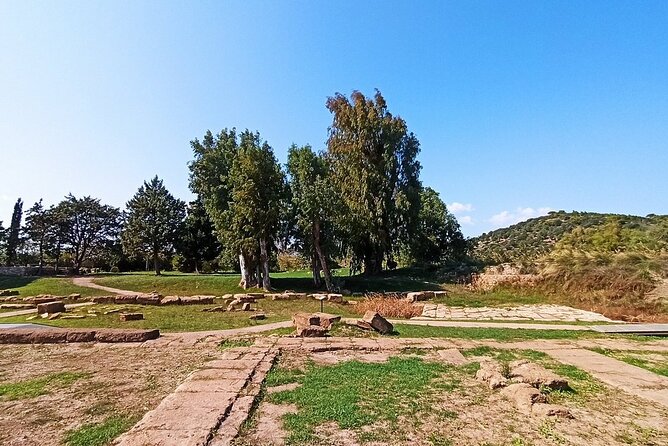
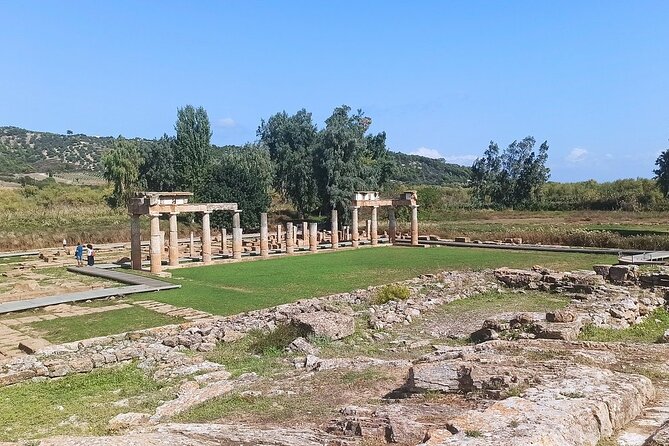
Vravrona is where the day starts to feel interesting fast, because it’s not just a single ancient site. Right beside the Artemis sanctuary, you’ll see the church of Saint George. The pairing is unusual in a good way. It shows how places can keep their importance even when religions and languages shift over centuries.
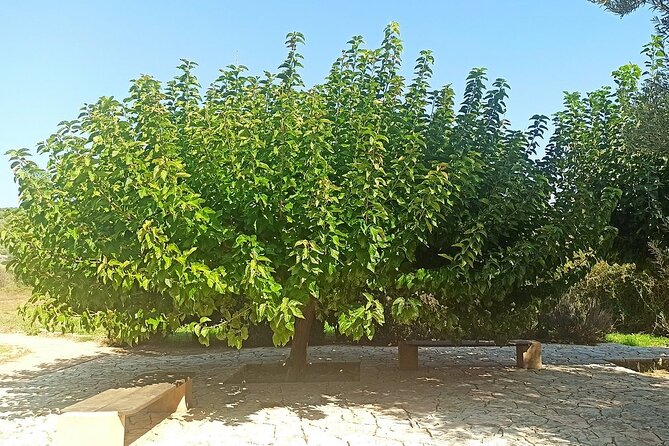
One more detail makes Vravrona especially worth your attention: it sits in a coastal wetland that used to flood every winter. That seasonal flooding pushed people to build bridges, and remnants of that practical engineering still show up in the area. So when you stand there, you’re not only looking at myth. You’re seeing how real geography forced real solutions.
This stop is short (about 15 minutes) and the admission ticket is listed as free for this part. Use the time for quick orientation: take in the setting, notice the shoreline/wetland feeling, then let the guide connect it to what comes next.
Temple of Artemis at Vravrona: the myth you can actually picture
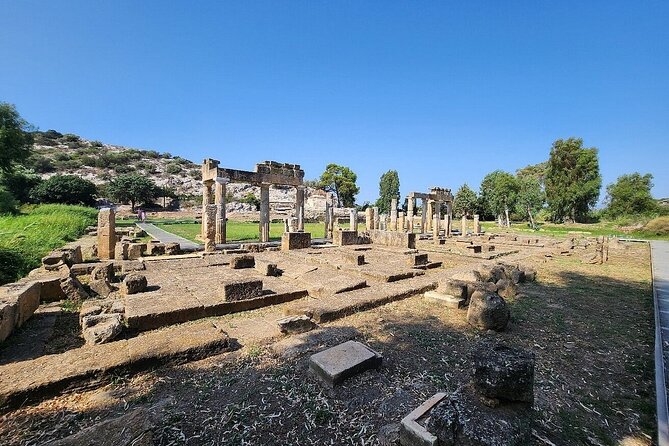
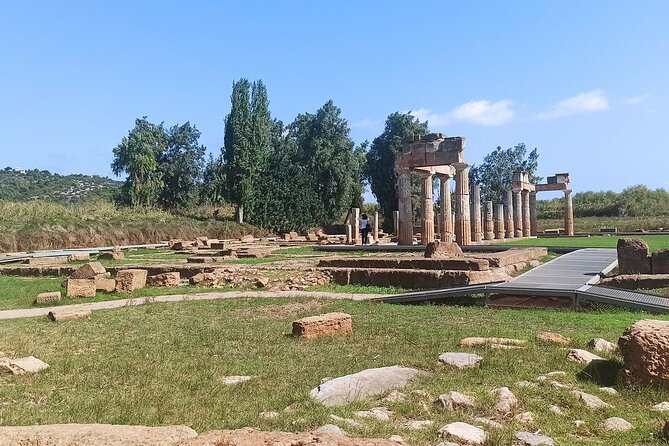
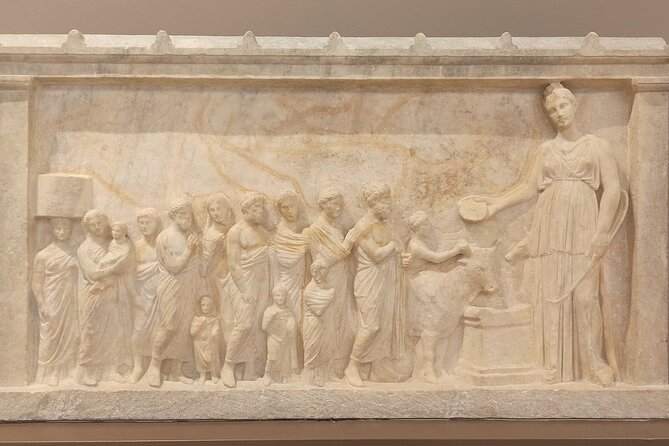
After the Saint George church area, you move to the Temple of Artemis itself. Artemis is known as protector of hunters, animals, and childbirth, and Vravrona is tied to a specific story. The legend goes that Artemis sent a plague after the killing of two young female bears. To calm her, Athenians reportedly sent young girls (around ages 5 to 10) to serve in her temple. In local tradition, they were called arkti, meaning bears.
If you like mythology, this is one of the best kinds of archaeological stops: the story gives you a lens for what you’re seeing. Even when the ruins are fragmentary, the guide can help you notice the layout and the way sanctuaries were designed for ritual life.
You’ll have about 45 minutes here, and the temple admission is not included. Plan for the extra entry fee and factor it into your budget. Also, this is the kind of site where it’s worth slowing down for a few minutes. Don’t try to rush through the photos. Use the guide’s story as a prompt: what would daily life and ceremony have felt like in this space?
Out along the Apollo Coast by boat



Brauron Archaeological Museum: She-Bears, toys, and what children’s roles meant
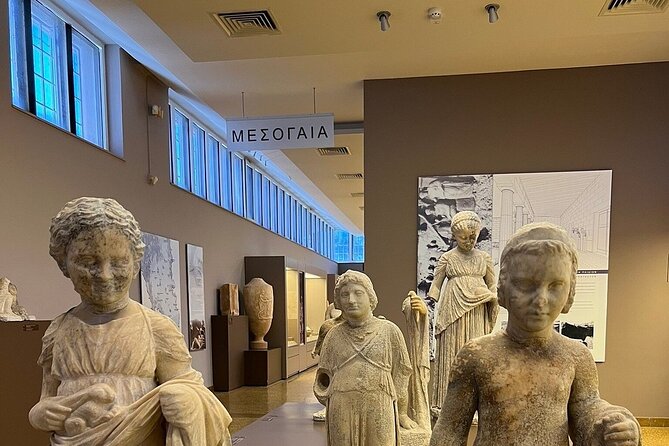
Next comes the Archaeological Museum of Brauron. This small museum is positioned near the Artemis sanctuary, with lush greenery around it, so you’re still in the same world geographically. The key value here is context. Ruins can be hard to read unless someone connects them to artifacts and everyday meaning.
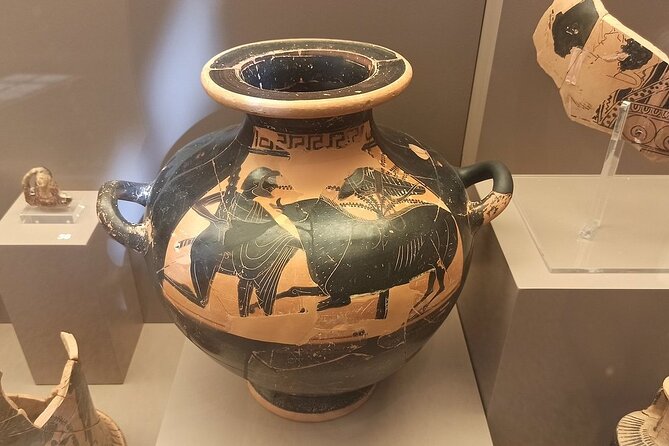
The museum covers items from the prehistoric to the Roman era. Highlights include sculptures linked to the She-Bears theme and depictions of young devotees honoring Artemis. One particularly specific focus in the museum materials relates to children’s items—especially toys for little girls—because Artemis was tied to ideas around virginity in upbringing, education, and preparing them for marriage.
Even if you’re not traveling with kids, this stop gives you a clear reminder that sanctuaries weren’t only for adult performances. They also shaped education and identity. That’s the sort of detail that makes the earlier myth at Vravrona feel less like a story you read and more like something that structured real lives.
The museum time is about 45 minutes, and admission is not included. If you’re choosing between rushing the museum or giving it attention, pick attention. This is the part that turns scattered stones into a fuller picture.
Cape Sounion’s Temple of Poseidon: ruins, sea wind, and big panoramas
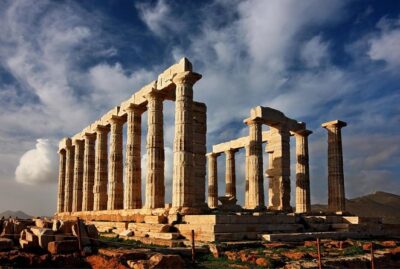
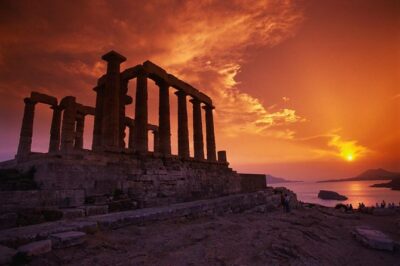
Cape Sounion is where the day’s mood shifts from inland stories to open sea. At the Temple of Poseidon, you’ll see the ancient Greek god associated with the sea—also known as Neptune in Roman tradition. The site sits within a broader area of remnants: porticos and houses nearby, plus the remains of the Athena Souniada temple.
The guide can help you understand how temples worked as anchor points within a cluster of religious and everyday activity. You’re not only looking at a single building. You’re scanning a wider zone that shows how people organized sacred space on the coast.
And then there’s the part you’ll feel in your body as much as in your eyes: the view. Cape Sounion is known for panoramic scenes of the islands, and the tour notes the Saronic Sea feeds into the Aegean here. In practical terms, that means wind and sea light—great for photos, but also a reason to dress for temperature swings.
You’ll spend about 1 hour on site here, and temple admission is not included. If you’re trying to maximize value, use this hour for both things: look closely at the architectural remains and then step back for the sea sweep. Poseidon makes you do both.
Athenian Riviera drive and lunch by the Saronic Sea: your break in the middle
Between Vravrona and Sounion, you also get a drive by the Athenian Riviera, with beaches and coastline views along the way. Even if you’re not a beach person, this stretch gives you a sense of where Athens sends you when you want sea air and slower pacing.
Lunch is planned by the Saronic Sea at a favorite taverna or restaurant. Here’s the practical note: the tour lists food and drinks as not included, even though lunch is part of the day. So you should expect to pay for what you order, then treat the location as the benefit you’re buying.
If you want the best experience, keep lunch simple: fuel up, don’t over-order, and leave yourself time to re-set before Cape Sounion. That coastal stop deserves a clear head and comfortable shoes.
Why the private driver-guide setup is worth it
The private nature of this tour matters more than it sounds. With a group tour, you often get a script and a clock. Here, you get one vehicle, one team, and the chance to ask questions in real time—especially useful for myth sites like Artemis where the meaning is tied to stories.
The standout praise for this experience is straightforward: the guide is fantastic. That aligns with the tour promise of a professional driver-guide well versed in Greek history. And your day will go better if you treat the guide like your translator between ruins and meaning.
One caution, based on real feedback: some people want more information about what you’re seeing while driving and about specific details at each stop. You can fix that easily. Ask one or two focused questions early in the day, such as what to notice at Vravrona besides the main temple area, or which parts at Cape Sounion are most important to look for first.
Cost and value: $289.65 plus temple entries and your lunch order
Price is listed at $289.65 per person for the private day. That’s not a budget trip, but it’s also not just sitting on a bus. You’re paying for private air-conditioned transportation, pickup/drop-off, a professional guide-driver, WiFi on board, and bottled water.
What you should budget on top:
- Temple entrance fees are not included, listed as EUR 20 per person for the Temple of Artemis and the Temple of Poseidon.
- The Archaeological Museum of Brauron entry is not included.
- Food and drinks are not included, even though lunch is scheduled.
- Tips/gratuities are not included.
So the value equation is: you pay for convenience and guided interpretation, then you cover entry fees and your own meal. If that fits your travel style, this route can be a very efficient way to pack two major religious sites into one day without the stress of independent planning.
Who this trip suits best (and who should choose something else)
This is a great fit if you want Greek mythology tied to physical places. The Vravrona stops do myth work, and the Cape Sounion stop rewards you with views and iconic ruins. It’s also a strong choice if you dislike complicated self-driving or public-transport transfers in Athens.
You’ll probably enjoy it even more if you like archaeology with stories attached. The temple myths, the She-Bears artifacts, and the child-focused items at the museum make this day feel human, not just monumental.
It may not be the best fit if you want lots of unstructured free time or if you’re extremely sensitive to a packed schedule. The day is built for seeing a lot, and the time at each major location is set.
Should you book this Temple of Artemis and Temple of Poseidon private day?
Book it if you want one well-organized day that connects Vravrona and Cape Sounion under a single guide. It’s a smart route for first-time visitors who want meaning plus atmosphere, and it’s especially good if you value a private setup with pickup and a dedicated driver-guide.
Skip it (or consider alternatives) if you’re on a tight budget for entrances and meals, or if you need slow travel with lots of extra downtime. Also keep weather in mind—this tour is geared for a clear day so the sea views at Cape Sounion land the way they should.
If you do book, come with curiosity. Ask questions. Wear comfortable shoes. Then you’ll leave with a stronger sense of how Artemis and Poseidon live in both story and stone.
FAQ
How long is the private tour?
The total duration is about 7 hours, including travel time.
Do you get hotel or port pickup and drop-off?
Yes. The tour includes hotel/port pick-up and drop-off.
Is this a private experience?
Yes. It’s private, and only your group participates.
What’s included in the price?
Included are the full-day experience, a professional tour driver-guide, transportation by private air-conditioned luxury vehicle, WiFi on board, and bottled water.
What’s not included?
Entrance fees for the Temple of Artemis and the Temple of Poseidon (EUR 20 per person), food and drinks, tips/gratuities, and airport pick-up/drop-off (extra cost).
Is the Temple of Artemis entrance fee included?
No. The Temple of Artemis admission is not included.
Is the Temple of Poseidon entrance fee included?
No. The Temple of Poseidon admission is not included.
How long do you spend at each main site?
Vravrona is about 15 minutes, the Temple of Artemis about 45 minutes, the Brauron Museum about 45 minutes, and the Temple of Poseidon about 1 hour. The rest is travel and the Riviera/lunch period.
What if the weather is bad?
The tour requires good weather. If it’s canceled due to poor weather, you’ll be offered a different date or a full refund.
What is the cancellation policy?
Free cancellation is available. You can cancel up to 24 hours in advance for a full refund.
More Tour Reviews in Athens
- Athens: Acropolis & up to 5 Archaeological Sites Combo Pass★ 4.2 · 13,904 reviews
- Athens: Acropolis, Parthenon & Acropolis Museum Guided Tour★ 4.8 · 9,316 reviews
- The Acropolis, Parthenon & Acropolis Museum Guided Tour★ 4.7 · 8,493 reviews
- Athens: Cape Sounion & Poseidon Temple Sunset Half-Day Trip★ 4.8 · 8,241 reviews
- Acropolis: Premium Acropolis and Parthenon Guided Tour★ 4.8 · 5,208 reviews
- Athens: Mythology of Delphi, Museum and Arachova Guided Tour★ 4.7 · 5,102 reviews
Along the Athens Riviera
- City Sightseeing Athens, Piraeus & Beach Riviera Hop-On Hop-Off Bus Tours★ 4.0 · 1,887 reviews
- Luxury Catamaran Cruise from Athens with Traditional Greek Meal and BBQ★ 5.0 · 1,346 reviews
- Big Bus Athens Hop-On Hop-Off with optional Piraeus & Riviera★ 4.0 · 652 reviews
- Athens: Riviera Catamaran Tour with Fresh Meal and Drinks★ 5.0 · 462 reviews
- Athens: Sounio Poseidon Temple Athens Riviera Trip, Swimming★ 5.0 · 361 reviews
- Athens: Riviera Catamaran Cruise with Meal and Drinks★ 5.0 · 345 reviews
Sunset at Cape Sounion
- Athens: Cape Sounion & Poseidon Temple Sunset Half-Day Trip★ 4.8 · 8,241 reviews
- Athens: Cape Sounio & Poseidon Temple Trip with Audio Guide★ 4.4 · 4,521 reviews
- Cape Sounion and Temple of Poseidon Half-Day Small-Group Tour from Athens★ 4.5 · 3,205 reviews
- Cape Sounion & Temple of Poseidon: Small Group Tour★ 4.7 · 1,945 reviews
- Athens: Cape Sounion & Temple of Poseidon Sunset Experience★ 4.3 · 1,338 reviews
- From Athens: Temple of Poseidon & Cape Sounion Half-Day Tour★ 4.3 · 1,082 reviews
Fresh Off the Boat: New Athens Reviews




Cape Sounion Day Trips, compared.
 ★ 4.8Cape Sounion & Poseidon Temple Sunset Half-Day TripFrom $238,241 reviews
 ★ 4.4Cape Sounio & Poseidon Temple Trip with Audio GuideFrom $234,521 reviews
 ★ 4.5Cape Sounion and Temple of Poseidon Half-Day Small-Group Tour from AthensFrom $423,205 reviews
 ★ 4.7Cape Sounion & Temple of Poseidon: Small Group TourFrom $411,945 reviews
 ★ 4.3Cape Sounion & Temple of Poseidon Sunset ExperienceFrom $221,338 reviews
 ★ 4.3From Athens: Temple of Poseidon & Cape Sounion Half-Day TourFrom $221,082 reviews
 ★ 5.0Essential Athens Highlights Plus Cape Sounion Skip-The-Line TourFrom $365705 reviews
 ★ 5.0Enjoy Cape Sounio Private Majestic Sunset With Seaside DinnerFrom $151613 reviews
Browse the lists this tour appears in