
Reviewed · ACROPOLIS & PARTHENON TOURS
Visit of the Acropolis with an official guide in Spanish
The Acropolis is easier with the right guide. This official Spanish tour gives you the history, architecture, and stories behind the big icons of Athens in about 2 hours. I like that you move efficiently from site to site without wasting time on guesswork.
What I like most is the official Spanish guide style, often led by guides praised for passion and clear explanations (Efi is a standout name you’ll see a lot). You also get wireless audio, so you can actually hear the story even when you’re surrounded by a crowd.
One consideration: the Acropolis entry ticket is not included, and you need to plan for timed entry (8:00–9:00). If you forget your ticket, the tour can’t do its magic.
In This Review
- Key things to know before you go
- An official Spanish Acropolis tour, built for real understanding
- Price and what you’re actually paying for
- The morning logistics: 8:30 start and timed entry (8:00–9:00)
- Stop-by-stop: what you’ll get from each monument
- Acropolis opening: myths, society, and why the hill mattered
- Parthenon: optical refinements and the layers of reuse
- Propylaea: the marble gateway and its wartime role
- Athena Nike area: a victory monument that keeps its message
- Erechtheion: Caryatids and sacred symbolism
- Odeon of Herodes Atticus: Roman architecture still in use
- Temple of Asclepios: a short stop with surprisingly human details
- Theatre of Dionysus: marble seating and ancient performances
- The guide experience: why Spanish explanations work so well
- Walking it: how to dress and plan your energy
- Who this tour is best for
- Should you book this Acropolis guided tour?
- FAQ
- Is the Acropolis entrance ticket included?
- What language is the guide?
- How long is the tour?
- Does the tour include wireless audio?
- How big is the group?
- Where do we meet and where does the tour end?
- Is the tour walk-only?
- Are service animals allowed?
Key things to know before you go
- Official Spanish-only guidance that connects myths, construction, and later changes to what you see
- Wireless audio so the group stays together and you don’t miss details
- Timed entry needed (8:00–9:00) and the walking route starts early
- A tight stop sequence covering major monuments without turning it into a day-long hike
- Small group size (up to 27), which helps questions and pacing
- Ends at the Acropolis top for extra photos and breathing room
More ways up the sacred rock, set side by side
- Athens: Acropolis & up to 5 Archaeological Sites Combo Pass
★ 4.2 · 13,904 reviews - Athens: Acropolis, Parthenon & Acropolis Museum Guided Tour
★ 4.8 · 9,316 reviews - The Acropolis, Parthenon & Acropolis Museum Guided Tour
★ 4.7 · 8,493 reviews - Acropolis: Premium Acropolis and Parthenon Guided Tour
★ 4.8 · 5,208 reviews
An official Spanish Acropolis tour, built for real understanding
If your goal is to leave Athens feeling like you actually understood the Acropolis—not just “saw it”—this kind of guided route makes a huge difference. You’re not handed random facts. You’re guided through how ancient Athenians thought, built, and repurposed these spaces over time.
This tour is exclusive in Spanish, so it’s a great fit if you want your learning in your comfort language rather than hoping you catch English over the din. And because it’s an official guide, you’re getting a structured explanation instead of a loose narration.
The pacing also matters. At around 2 hours, you get enough time to connect the monuments, but not so much that you feel stuck in one spot while the light and crowds change.
Price and what you’re actually paying for
At $44.03 per person, this isn’t trying to be the cheapest way to reach the Acropolis. The value here is that you’re paying for time: a guided path that hits the main monuments and gives context fast.
The big thing to keep straight: the tour price includes the guided visit and on-site support (including wireless audio), but admission to the Acropolis is not included. Practically, that means you’ll still need a separate entry ticket.
So the value equation is simple:
- If you want the monuments explained in Spanish, and you hate scrambling for context on your own, this is a strong deal.
- If you’re the type who only wants photos and you’re fine using a guide app, you might compare against a self-guided ticket.
The morning logistics: 8:30 start and timed entry (8:00–9:00)
The tour starts at 8:30 am, and the information provided points to Acropolis entry from 8:00 to 9:00. That early window is not random. It helps you access the site when the light is good and the crowds are still forming.
Because entrance is required and not included, I’d plan like this:
- Secure your Acropolis ticket ahead of time.
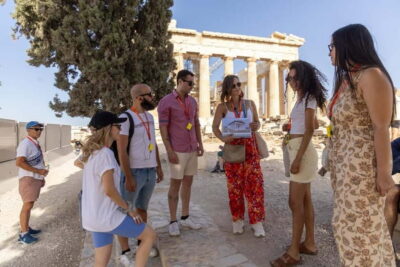
- Show up at the meeting point early enough to get oriented.
- Keep your ticket details handy for the moment you need to enter.
Meeting point: Greek National Tourism Organisation Information Point, Dionysiou Areopagitou 18, Athina 117 42, Greece. The tour ends at Theorias 21, Athina 105 58, but in practice you’ll finish directly at the top of the Acropolis, so you can linger for photos.
More days made easy with a guide

Stop-by-stop: what you’ll get from each monument
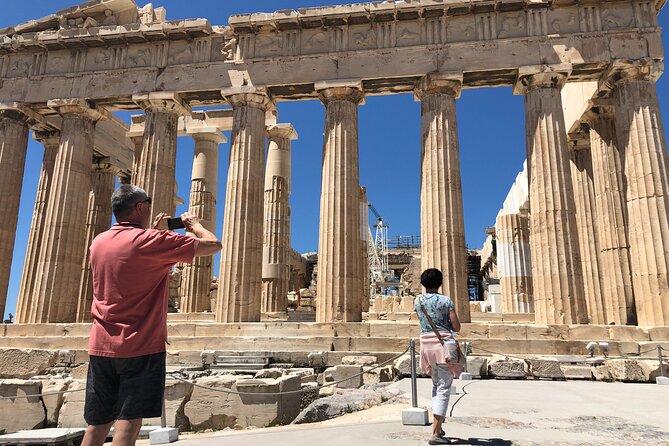
This is the part that makes the tour feel worth it. The sequence is designed to keep the story moving, so each site answers a question the last one started.
You should expect a steady walk on foot the whole way, with short stays at each point. The total format is manageable, but you do want moderate physical fitness, since it’s uphill and you’ll be outside in Athens sun.
Acropolis opening: myths, society, and why the hill mattered
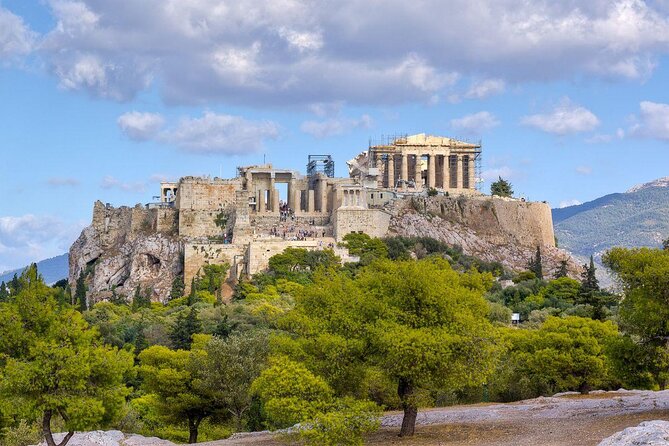
You start at the Acropolis itself, where the guide sets the stage with historical, mythological, and cultural context. This is the moment where the rest of your visit becomes easier to follow.
Without context, the stones can feel like a pile of ruins. With context, you start seeing how the Acropolis functioned as a civic and religious center—something like the city’s headline monument.
Parthenon: optical refinements and the layers of reuse
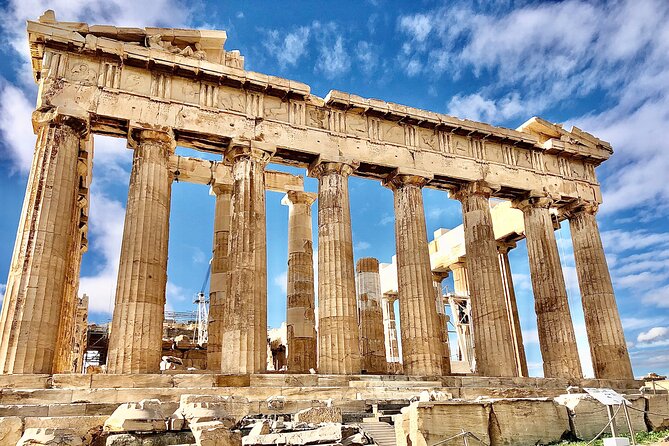
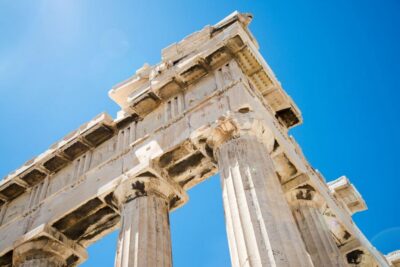
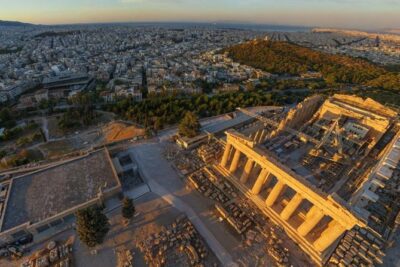
Next comes the Parthenon, one of the most important buildings of antiquity, famous for both scale and harmony. The tour doesn’t just point out the obvious. It highlights why the building looks so perfect—down to the optical refinements that influence how you perceive it.
Then you’ll move through the story of changes across eras:
- how it shifted into a church in the Byzantine period
- how it became a mosque during Ottoman occupation
- what happened through decoration and looting
- and what’s been done during restoration
That arc matters because it turns a single monument into a timeline. You stop looking at the Parthenon as a museum object and start seeing it as something that lived through centuries.
Propylaea: the marble gateway and its wartime role
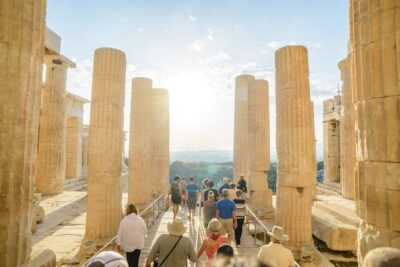
At Propylaea, the tour focuses on the monumental marble entrance and why it’s more than just a fancy threshold. You’ll learn how the position and topography helped function as a kind of funnel during conflict—useful when you think about the Acropolis as a fortress as well as a temple zone.
You’ll also hear why the gateway uses different types of columns, an easy detail to miss if you’re just trying to “get the shot.”
Athena Nike area: a victory monument that keeps its message
There’s also a stop described as the architectural jewel built in honor of Athena Victorious. This part is tied to the moment after victories against the Persians, and the point is memory: a monument meant to carry a key achievement across generations.
Even if you don’t know the details now, you’ll leave with a clearer sense of what victory meant in Athens and why it was worth stone.
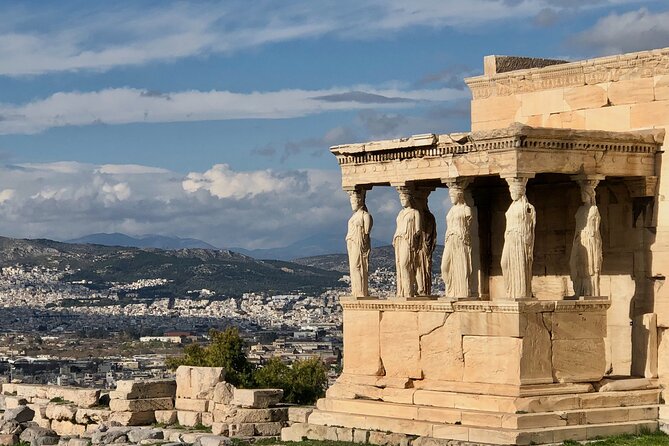
Erechtheion: Caryatids and sacred symbolism
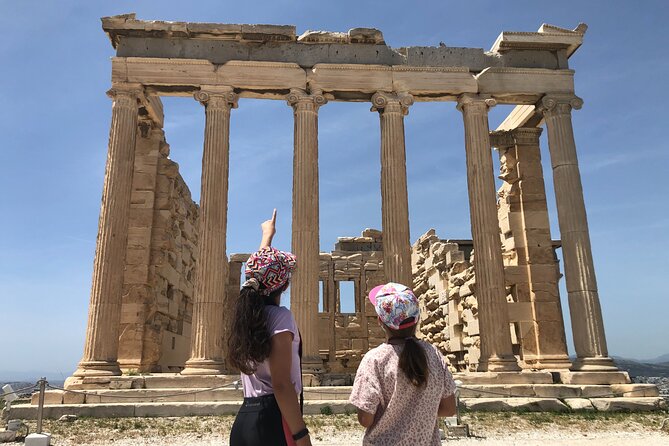
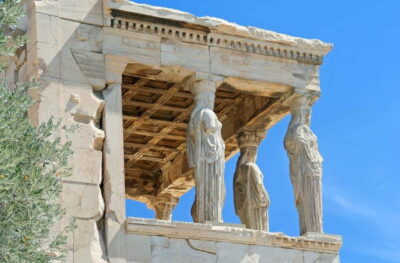
The Erechtheion is often the photogenic highlight, and for a good reason. You’ll see the Caryatids, the female-shaped columns that make this building instantly recognizable.
The tour also ties the space to religious variety. It was consecrated to multiple divinities, including Athena, Poseidon, and Erectios. And you’ll get the kind of detail that changes how you look at the ruins—like why the olive tree in this story is so sacred.
A practical note: this is one of those areas where people slow down for photos. Having a guide helps you pause where it counts, instead of wasting time waiting in the wrong spot.
Odeon of Herodes Atticus: Roman architecture still in use
Then you step into the Herod Atticus Odeon, a theater-like auditorium with space for 5,000 spectators. Built by a prominent Roman governor and dedicated to his wife Regina, it’s described as today’s only fully restored ancient building in use.
If you think the Acropolis is only about ancient Greek gods and a single era, this stop helps correct that. Athens didn’t “stop” after classical times—it kept reusing and reinventing spaces.
You’ll also learn that it hosts major performances during the festival of Athens, which adds a modern time layer to what can otherwise feel like a dead stone bowl.
Temple of Asclepios: a short stop with surprisingly human details
The Temple of Asclepios is dedicated to the god of medicine. This is a quick stop, but it gives you a different angle on the Acropolis: not just politics and religion, but healing.
You’ll hear how ancient Athenians approached care and what kinds of votive offerings people gave in thanks. It’s brief, but it’s the kind of detail that makes ancient life feel closer.
Theatre of Dionysus: marble seating and ancient performances
Finally, you visit the Theatre of Dionysus Eleuthereus, described as one of the oldest theaters in the world and built entirely of marble. It seats around 17,000 spectators, and the placement on the Acropolis slope helped with acoustics.
Here’s what makes the stop memorable: the tour connects the space to famous playwrights like Euripides, Aeschylos, Sophocles, and Aristophanes—the works of these authors were first presented here.
If you ever wondered why Athens is tied so strongly to drama and philosophy, this is the physical reason.
The guide experience: why Spanish explanations work so well
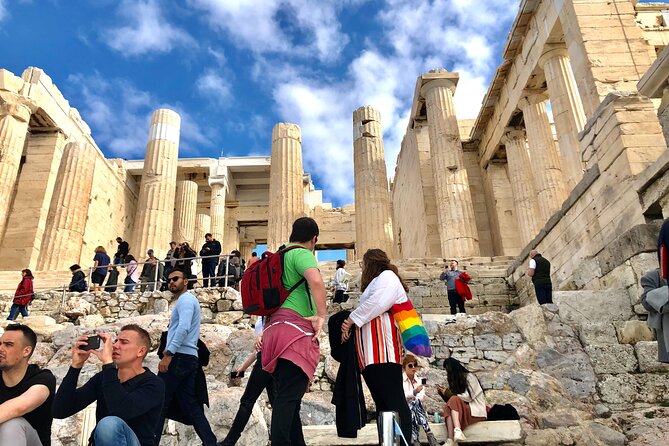
A big chunk of the tour’s value is the human part. The reviews emphasize guides who teach with energy and clarity, especially Efi. You’ll see mentions of how guides:
- ask questions to keep the group involved
- encourage imagination of what happened in the past
- explain with care and take the time needed
- point out where to stand for better photos without getting lost from the group
- help with the ticket process
That combination is practical. It’s not just facts; it’s pacing, direction, and making sure everyone understands where they are and why it matters.
If you’re traveling with kids or a mixed group of ages, this kind of style tends to work better than a fast lecture. The tour format stays structured, but the guide behavior keeps it lively and readable.
Walking it: how to dress and plan your energy
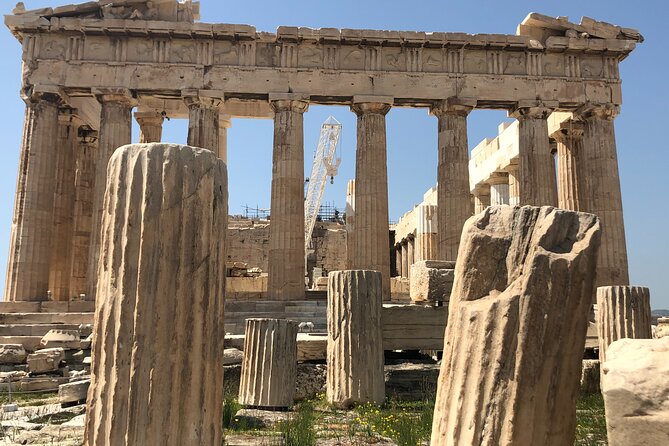
This tour is on foot for the entire route, and it’s described as requiring moderate physical fitness. Even though the total time is around 2 hours, you’ll still be walking on uneven ground and up slopes.
My practical advice:
- Wear shoes with solid grip.
- Bring water and a hat. You’ll be outdoors for the whole experience.
- Try to arrive early so you don’t rush at the start.
Also, because it ends at the top with free time for photos, you can plan a slow wander after the tour. That’s a nice payoff: you’re not just “checked off and gone.”
Who this tour is best for
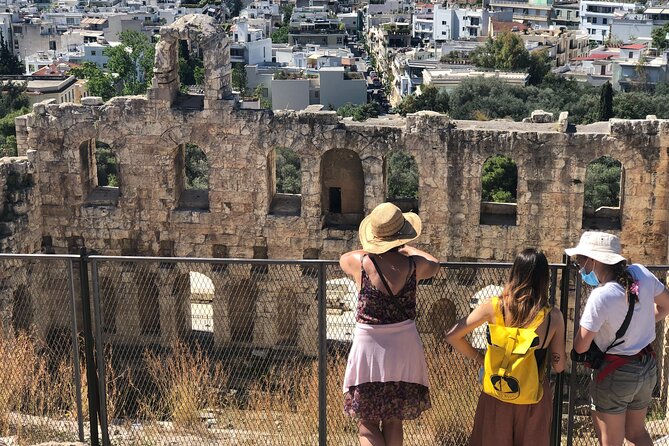
This fits you if:
- You want an official Spanish guide and don’t want to translate everything yourself.
- You care about the why behind monuments (construction phases, reuse, decoration, restoration).
- You have limited time in Athens and want the core Acropolis highlights handled in one go.
It’s also a good choice if you dislike the feeling of being stuck in a self-guided crowd. The group pacing and audio system help keep you moving and hearing the story.
If you’re a total architecture nerd and want deep technical analysis for hours, you might want something longer or more specialized. But for a first, high-impact Acropolis visit, this is aimed right at the sweet spot.
Should you book this Acropolis guided tour?
Yes—if your priority is understanding fast and doing the classic Acropolis highlights in a smart order. The Spanish-only official guide, wireless audio, and tight stop sequence give you a lot of meaning per hour. And with guides described as passionate and organized, you’ll spend less time trying to figure things out on your own.
Just don’t treat it as a ticket. The Acropolis entry is required and not included, and the visit is tied to an early entry window. If you plan your ticket ahead, the rest runs like a well-made machine.
If Spanish is comfortable for you, this is one of the better-value ways to see the Acropolis with context, not confusion.
FAQ
Is the Acropolis entrance ticket included?
No. Entrance to the venue is not included, and you need an entry ticket for the 8:00 to 9:00 time window.
What language is the guide?
The tour provides an official guide exclusively in Spanish.
How long is the tour?
The visit is about 2 hours (approx.).
Does the tour include wireless audio?
Yes. The tour includes a wireless audio system.
How big is the group?
The tour has a maximum of 27 travelers.
Where do we meet and where does the tour end?
You start at the Greek National Tourism Organisation Information Point on Dionysiou Areopagitou 18. The excursion ends directly at the top of the Acropolis for free time and photos, with the listed end address at Theorias 21.
Is the tour walk-only?
Yes. Transfers aren’t included, and the visit is done on foot.
Are service animals allowed?
Yes, service animals are allowed.
Simpler With a Local Guide
- Athens: Acropolis, Parthenon & Acropolis Museum Guided Tour★ 4.8 · 9,316 reviews
- The Acropolis, Parthenon & Acropolis Museum Guided Tour★ 4.7 · 8,493 reviews
- Acropolis: Premium Acropolis and Parthenon Guided Tour★ 4.8 · 5,208 reviews
- Athens: Mythology of Delphi, Museum and Arachova Guided Tour★ 4.7 · 5,102 reviews
- Acropolis and Parthenon Guided Walking Tour★ 5.0 · 4,755 reviews
- Athens: Cape Sounio & Poseidon Temple Trip with Audio Guide★ 4.4 · 4,521 reviews
More Tour Reviews in Athens
- Athens: Acropolis & up to 5 Archaeological Sites Combo Pass★ 4.2 · 13,904 reviews
- Athens: Acropolis, Parthenon & Acropolis Museum Guided Tour★ 4.8 · 9,316 reviews
- The Acropolis, Parthenon & Acropolis Museum Guided Tour★ 4.7 · 8,493 reviews
- Athens: Cape Sounion & Poseidon Temple Sunset Half-Day Trip★ 4.8 · 8,241 reviews
- Acropolis: Premium Acropolis and Parthenon Guided Tour★ 4.8 · 5,208 reviews
- Athens: Mythology of Delphi, Museum and Arachova Guided Tour★ 4.7 · 5,102 reviews
The Acropolis, a Few More Ways Up
- Athens: Acropolis & up to 5 Archaeological Sites Combo Pass★ 4.2 · 13,904 reviews
- Athens: Acropolis, Parthenon & Acropolis Museum Guided Tour★ 4.8 · 9,316 reviews
- The Acropolis, Parthenon & Acropolis Museum Guided Tour★ 4.7 · 8,493 reviews
- Acropolis: Premium Acropolis and Parthenon Guided Tour★ 4.8 · 5,208 reviews
- Acropolis and Parthenon Guided Walking Tour★ 5.0 · 4,755 reviews
- Athens: Acropolis, Parthenon & Acropolis Museum Guided Tour★ 4.8 · 3,579 reviews
Fresh Off the Boat: New Athens Reviews





Acropolis & Parthenon Tours, compared.
 ★ 4.2Acropolis & up to 5 Archaeological Sites Combo PassFrom $4213,904 reviews
 ★ 4.8Acropolis, Parthenon & Acropolis Museum Guided TourFrom $409,316 reviews
 ★ 4.7The Acropolis, Parthenon & Acropolis Museum Guided TourFrom $408,493 reviews
 ★ 4.8Acropolis: Premium Acropolis and Parthenon Guided TourFrom $405,208 reviews
 ★ 5.0Acropolis and Parthenon Guided Walking TourFrom $414,755 reviews
★ 4.8Acropolis, Parthenon & Acropolis Museum Guided TourFrom $413,579 reviews
★ 5.0Acropolis and Parthenon Guided Walking TourFrom $414,755 reviews
★ 4.8Acropolis, Parthenon & Acropolis Museum Guided TourFrom $413,579 reviews
 ★ 4.0Acropolis Ticket with Audio GuideFrom $473,575 reviews
 ★ 5.0Athens Scenic Electric Bike Tour with optional Acropolis visitFrom $353,350 reviews