
Reviewed · DELPHI DAY TRIPS
2 Days Herodotus Tour – Marathon, Thermopylae, Delphi, Thebes, Plataea, Salamis
Two days can feel like five eras. You’ll trace the Greco-Persian War story across battlefield ground, oracle sites, and museum rooms, all with private transport and time to breathe between stops. This is a great fit if you want the big names—Marathon, Thermopylae, Delphi, Plataea—without feeling herded.
I especially love how the route gives you both context and control. Your English-speaking driver shares historical background while you ride, then you can explore each site at your own pace instead of racing through with a big group. The second thing I like is the stop mix: major landmarks (Thermopylae and Delphi) plus smaller “read-the-place” moments like the Marathon burial mound and the Delphi Tholos.
The main thing to consider is cost on top of the base price: key museums and archaeological sites have separate admission fees, and the tour price doesn’t include them. Also, the driver is not a licensed guide inside the archaeological sites, so if you want a specialist there, you’ll need to arrange that separately.
In This Review
- Key takeaways for your Marathon-to-Plataea plan
- Private transport turns Herodotus into something you can pace yourself through
- What you actually see on Day 1: Marathon’s burial mound to Thermopylae’s pass
- Marathon Tomb and the burial mound that explains the land
- Schinias: a quick coastline reset between battle sites
- Marathon Archaeological Museum: Neolithic to the Tomb of the Athenians
- Leoforos Marathonos and the modern Olympic link
- Lake Marathon: the practical Athens water story behind the scenery
- Thermopylae and the Hot Gates: the day’s emotional core, with breathing room
- Thermopylae Museum: small ticket, clear focus
- Loutra Thermopilon: a low-pressure stop at the Hot Gates
- Mount Parnassus and the traditional village overnight that changes the tone
- Delphi the practical way: museum first, then the sanctuary grounds
- Delphi Archaeological Museum: set the names before you wander outside
- Delphi Ancient Town: the oracle, the omphalos, and UNESCO-scale influence
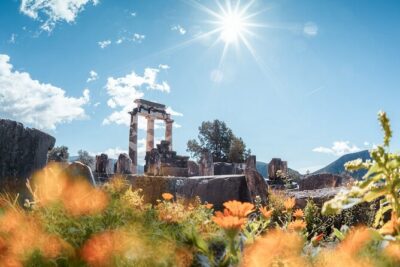
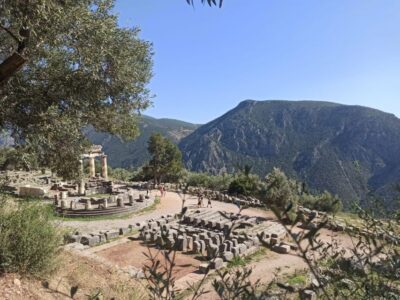
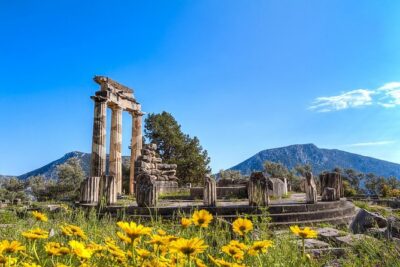
- Tholos of Athena Pronaia: one structure, 20 columns worth of impact
- Thebes museum and Plataea: from oracle wealth to battlefield memory
- Archaeological Museum of Thebes: long timeline in one stop
- Plataea battlefield: back to 479 BC, plus Gargathia spring
- Kithaeron and Eleutherai: a drive that adds names to the map
- Ending in Perama and the Salamis ferry line: the calm finish
- Price and value: what $694.56 covers, and what you should budget for next
- One practical note on guides: the driver sets the frame, specialists are optional
- Who should book this Herodotus route—and who might want a different style
- Should you book the 2 Days Herodotus Tour?
- FAQ
- What time does the tour start?
- Where do you get picked up and dropped off?
- Is admission included for Marathon, Thermopylae, Delphi, and Thebes?
- Is overnight accommodation included?
- Does the driver guide you inside museums and archaeological sites?
- What vehicle sizes are available?
- What cancellation timing gives a full refund?
Key takeaways for your Marathon-to-Plataea plan
- Private pickup and drop-off from Athens or Piraeus locations, so you start from your doorstep.
- Scenic drives with photo stops between major battle sites and the Delphi sanctuary area.
- Driver-provided audio documentary while you travel, which helps the sites click together faster.
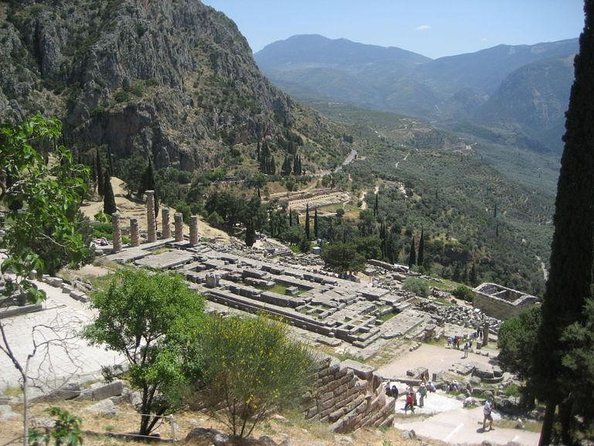
- Tholos of Athena Pronaia included, a unique, high-impact structure inside the Delphi complex.
- Admission fees are extra for Marathon, Thermopylae (museum), Delphi (museum and site), and Thebes (museum).
- Overnight in the Parnassus area is part of the flow, with accommodation offered as an add-on.
North to the oracle, more Delphi runs
- Athens: Mythology of Delphi, Museum and Arachova Guided Tour
★ 4.7 · 5,102 reviews - From Athens: Delphi Full Day V.R. Audio Guided Tour
★ 4.6 · 3,028 reviews - From Athens: Small-Group Delphi, Museum & Arachova Day Trip
★ 4.8 · 2,476 reviews - Delphi English Day Trip from Athens with Official Guide
★ 4.5 · 2,199 reviews
Private transport turns Herodotus into something you can pace yourself through
This tour’s strongest advantage is that you’re not stuck in a big-group rhythm. You leave at 8:00am, ride in an air-conditioned vehicle, and your driver can shape the day as you go—then you get time to linger at the places that grab you.
That matters on this particular theme. The Greco-Persian Wars are huge in scope, but most people experience them as a list: Marathon, Thermopylae, Delphi, Plataea. The private format helps you treat those as connected scenes in one story instead of disconnected highlights.
You also get flexibility with your own group. It’s private, so it’s your group only, and you can choose the vehicle type (sedan/SUV up to 3 adults or a family of 4; minivan up to 7; minibus up to 14). If you’re traveling with kids, note that children up to 11 years old can be free on the smaller vehicle types listed.
What you actually see on Day 1: Marathon’s burial mound to Thermopylae’s pass
Day 1 starts with Marathon, and it doesn’t waste time on “museum-first” fatigue. You begin with the place where the story feels physical: the burial mound and the surrounding battlefield area.
Marathon Tomb and the burial mound that explains the land
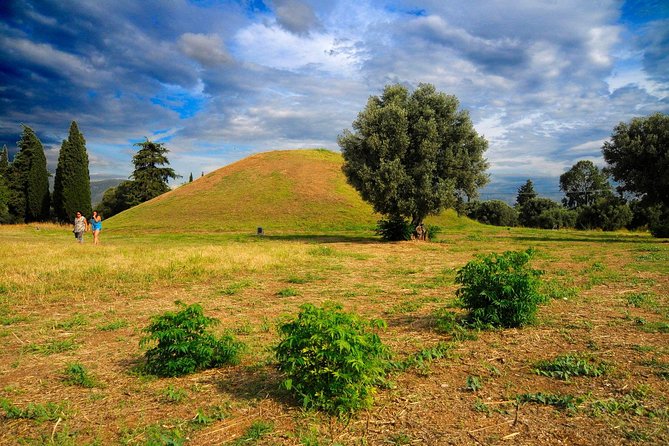
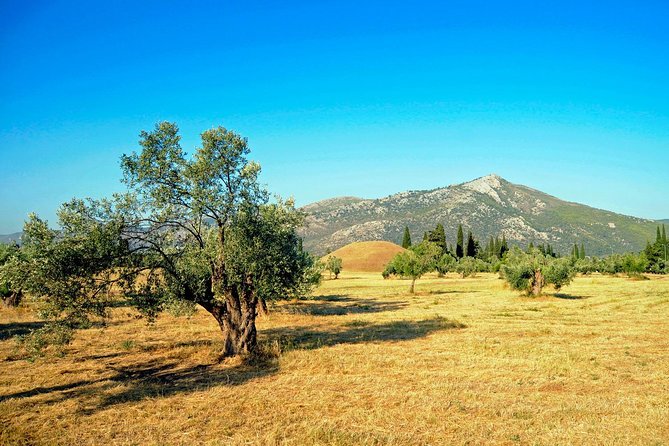
At the Marathon Tomb, you’ll visit the battlefields and the burial mound about 10 meters high, located roughly 1 kilometer west of Marathon beach. The mound is the kind of site where you don’t need a long lecture to understand why it mattered—your eyes naturally go back and forth between the ground and the marker.
You’ll also see how the tour handles admissions here: entry for the Tomb area and related museum coverage isn’t included in the tour price. The ticket is listed as 6€, with a reduced price at 3€, and the reduced ticket mentions that it includes the Marathon Museum. If you care about squeezing every bit of meaning from the location, this is one of the easiest “yes, pay the extra” moments on Day 1.
Tip: if you’re sensitive to time, aim to arrive ready to walk a bit. This stop is about absorbing the terrain and the monument, not about a quick photo and move-on.
Olympia to Delphi over several days
Schinias: a quick coastline reset between battle sites
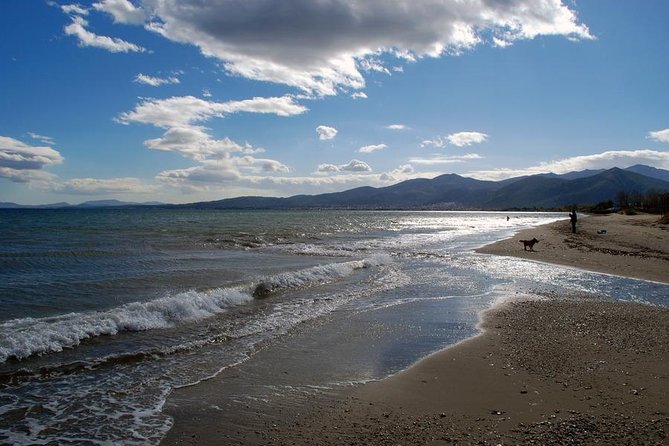
After Marathon, the itinerary gives you a breather at Schinias, a coastal area around 40 km northeast of Athens. The stop is short, and it’s mostly there to reset your brain after the serious tone of Marathon.
This is the part of the day that feels very practical: you get a stretch, a look at the coastline, and a chance to take photos without feeling like you’re abandoning the theme. Admission here is free, so it’s a low-cost way to make the day feel less relentless.
Marathon Archaeological Museum: Neolithic to the Tomb of the Athenians
Next you hit the Archaeological Museum of Marathon, about 5 km from Marathon bay. It’s a solid stop because it connects the area’s human story across periods, including Neolithic pottery from the Cave of Pan and finds associated with the Tomb of the Athenians.
This museum time is listed at 30 minutes, and admission is included. That’s a rare win in a trip where most site fees are extra. If you only had time for one museum on Day 1, I’d still say the Marathon one is worth it because it gives you the local archaeological context right where the war story took place.
Leoforos Marathonos and the modern Olympic link
You’ll also stop at Leoforos Marathonos, the route area associated with the Athens Marathon concept—starting in Marathon and finishing at the Olympic Stadium in Athens. The tour keeps this brief, but it’s a nice bridge between ancient commemoration and modern sporting memory.
Admission is listed as free here. It’s not a “must-see” for everyone, but if you like those cultural echoes, it adds a layer to why people still return to Marathon.
Lake Marathon: the practical Athens water story behind the scenery
Then you’ll pass by Lake Marathon, a water supply reservoir created from the Marathon Dam near the town of Marathon. The notes you’re given place it in context: it was Athens’s primary water supply from 1931 to 1959, after which water from Lake Yliki became available.
This is a small stop, but it’s a good example of why this tour’s route makes sense. Greece’s ancient stories didn’t happen in a vacuum—modern infrastructure sits on top of the same geography.
Thermopylae and the Hot Gates: the day’s emotional core, with breathing room
Thermopylae is the world-famous stop, but what makes it work on this tour is the pace. You get about 1 hour at the Battlefield of Thermopylae, and admission there is free.
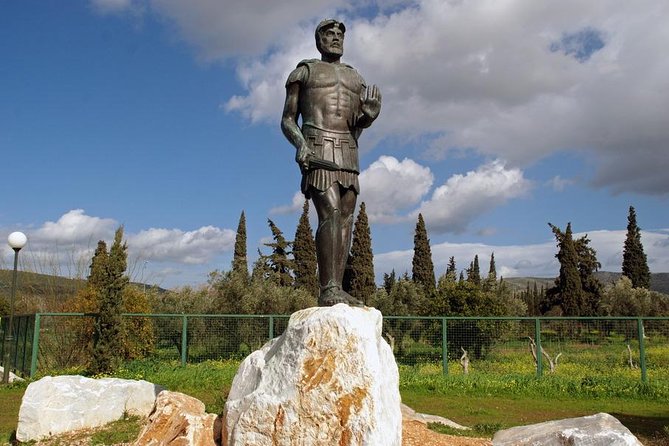
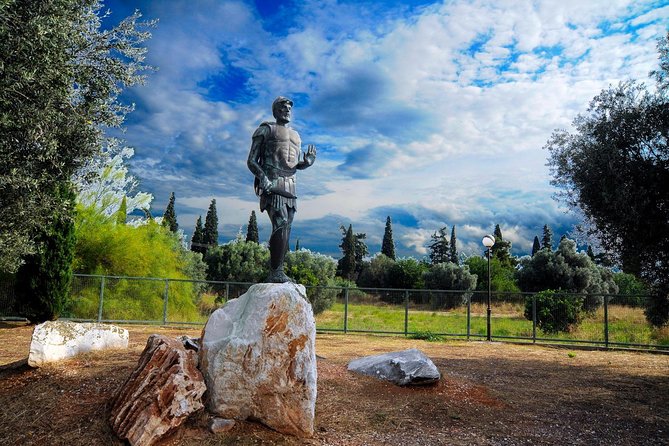
You’ll see the pass area on the east coast peninsula that became a repeated battleground for anyone trying to control movement through Greece. It’s also where the famous Spartan epitaph theme lives in public memory, which helps you understand why Simonides’ words are tied to this specific ground.
Thermopylae Museum: small ticket, clear focus
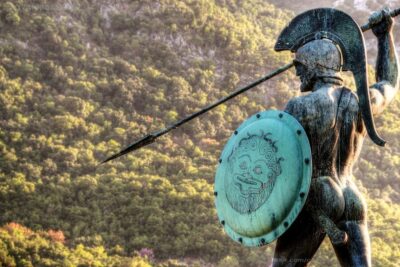
Right beside the Leonidas monument area is the Thermopylae Museum. It’s listed as about 1 hour, with a ticket noted as 3€, and admission isn’t included in the tour price.
If you’re the kind of traveler who likes your site facts tidy and visual, this is a good add-on. If you’re not, you can keep your time budget flexible and focus more on the monument and pass itself, since the battlefield stop is free.
Loutra Thermopilon: a low-pressure stop at the Hot Gates
Finally, you’ll go to Loutra Thermopilon, the baths area tied to the battle memory and also linked to the mythology idea of the entrance to the underworld. The itinerary keeps it short, around 30 minutes, and admission is free.
What I like about this timing is that it gives you a quick “place-feel” moment without dragging your day into exhaustion. You end Day 1 with a move toward Mount Parnassus and an overnight in the area.
Mount Parnassus and the traditional village overnight that changes the tone
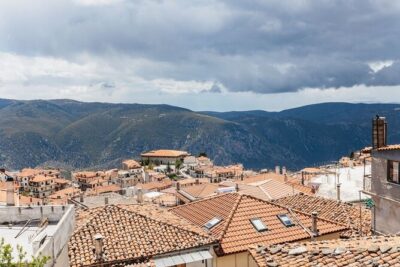
After Thermopylae, the plan routes you via Mount Parnassus, with driving time noted as about 1 hour 30 minutes. The mountain towers above Delphi, and the notes emphasize olive groves and the surrounding countryside.
Then comes the overnight: the tour states accommodation can be arranged for you on the slopes in a traditional village. This is more than a sleep stop. Staying in the Parnassus area makes the Delphi day feel less like a drive-by.
Just keep in mind that accommodation is an add-on. The pricing is shown as additional cost per double room with different numbers depending on the hotel option and dates (the listing gives examples like 90€ for some cases, 110€ for weekend-holidays, and a separate note mentioning accommodation pricing starting around 125€ per double room with weekend-holiday rates higher). Your driver’s room is listed as complimentary, but you’ll want to confirm the exact quote when you book.
Delphi the practical way: museum first, then the sanctuary grounds
Day 2 begins at Delphi with the museum, which is the smartest way to orient yourself. Without that, you tend to walk the site like you’re guessing names.
Delphi Archaeological Museum: set the names before you wander outside
The Delphi Archaeological Museum is about 1 hour and its admission is not included. The museum is described as one of Greece’s most important, with collections centered on the Delphic sanctuary and the oracle of Pythia.
You’ll see architectural sculpture, statues, and smaller objects that show the sanctuary’s role in religious, political, and artistic life from the 8th century BC through later decline. In plain terms: this is where you learn what you’re looking at so the outdoor ruins don’t feel like a random pile of stones.
Delphi Ancient Town: the oracle, the omphalos, and UNESCO-scale influence
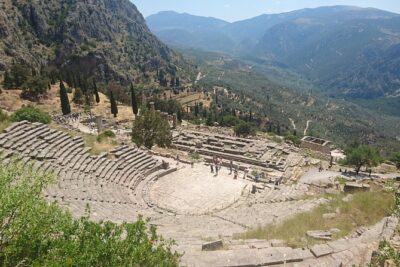
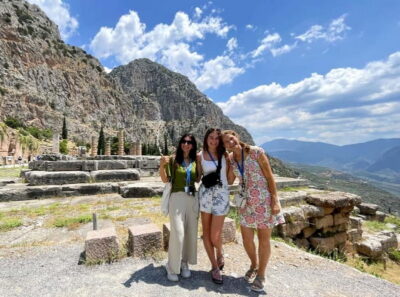
Then you move to the Delphi archaeological site (often called the ancient town/sanctuary area). The time here is listed at about 1 hour 30 minutes, and admission is again not included.
The tour notes the omphalos stone marking the idea of Delphi as the center of the world, plus the sanctuary’s UNESCO recognition for its influence across the ancient Greek world. If you’re a fan of how politics and religion mixed in the classical era, Delphi is where that becomes real.
Admission here is shown with a seasonal structure: 20€ in summer (reduced is mentioned), and 10€ in winter (reduced). Since that’s extra cost, you’ll want to decide what matters most to you. If you’re doing Delphi only once, pay for the full site experience—it’s the heart of the day.
Tholos of Athena Pronaia: one structure, 20 columns worth of impact
One stop is called out as included: the Tholos of Athena Pronaia. You get about 30 minutes, and admission is included.
The notes describe a circular building created around 380–360 BC, with 20 Doric columns on the exterior and interior columns in the Corinthian order. Even if you’re not a column-nerd, this is a special pause. It gives the sense that Delphi wasn’t just a collection of temples—it was an architectural program.
Thebes museum and Plataea: from oracle wealth to battlefield memory
The itinerary moves from Delphi to Thebes, then to Plataea, and it also includes driving segments rich in place names.
Archaeological Museum of Thebes: long timeline in one stop
The Archaeological Museum of Thebes is listed for about 1 hour, with admission not included. Ticket examples are 6€ for general admission and 3€ for reduced/winter.
The museum’s collections are described as spanning from Paleolithic to Post Byzantine periods, with exhibits tied to excavations around Boeotia. If Delphi makes you think about religion and power, Thebes helps balance that with a broader archaeological timeline for the wider region.
Plataea battlefield: back to 479 BC, plus Gargathia spring
Then you visit Plataea, focused on the 479 BC events. The tour notes that you’ll see the battlefield area and the Gargathia spring, described as the place where the battle began.
This is a “place you can trace” stop. Plataea isn’t only about one monument; it’s about understanding how terrain and water worked together in a real campaign. If you like Herodotus-style thinking—where geography and storytelling are tangled—this part tends to land well.
Kithaeron and Eleutherai: a drive that adds names to the map
Between Plataea and onward, you drive via Mount Kithaeron and through the area of Eleutherai on the old Athens-Thebes National Road. The notes add fascinating detail: Eleutherai is associated with Dionysus Eleuthereus, with a cult statue reportedly moved to Athens on the orders of Peisistratus, tying the name to sanctuary life on the Acropolis.
You’ll also hear about the fortress called Gyftokastro, plus the strategic idea of controlling movement between Athens and Thebes. This is one of those segments where you’re grateful for the driver’s audio documentary and commentary—without it, the road is just a road.
Ending in Perama and the Salamis ferry line: the calm finish
Your last major stop is Perama – Salamis Ferry Line, about 30 minutes, with admission listed as free. Perama is described as part of Athens’s urban area near Piraeus, on the Saronic Gulf coast.
The notes connect the name Perama to the Greek word for passage, which is a neat final thematic echo: after tracing invasions and passages through Greece, you end near a modern-day crossing point.
This last stop is a good reset. You’re not adding another “big museum hour.” You’re letting the day end with sea air and an easy orientation around Piraeus.
Price and value: what $694.56 covers, and what you should budget for next
At $694.56 per person for about two days, you’re paying for the private logistics and the structured route between distant sites. The tour includes an air-conditioned vehicle with cleanliness and covers fuels, toll roads, and parking fees.
It also includes pickup and drop-off from/to your Athens (or Piraeus) accommodation, plus a professional English-speaking tour driver for the two days and an informative audio documentary during travel.
What’s not included is the main budget variable: admission fees. The tour explicitly lists admission as extra for Marathon, Thermopylae, Delphi, and Thebes. Delphi’s site and museum combo is especially important: the notes give 20€ in summer and 10€ in winter (reduced). Thermopylae Museum is 3€, and Thebes Museum is 6€ general or 3€ reduced. Marathon Tomb has a ticket listed as 6€ with reduced 3€.
Then there’s accommodation near Mount Parnassus, which you can arrange as an add-on. The operator lists multiple price examples depending on hotel tier and date type. If you’re doing this tour, assume you’ll need a second budget line for lodging and admissions so you don’t get surprised.
Finally, gratuities are listed as suggested from 1€ per person. That’s modest, but still worth factoring into your plan.
One practical note on guides: the driver sets the frame, specialists are optional
The tour driver is described as not being a licensed tourist guide for inside archaeological sites or museums. That means you’ll get narration and historical framing while you travel, but for highly technical on-site interpretation inside Delphi or other archaeological areas, you may need an additional archaeologist tourist guide you arrange separately.
For many people, that’s fine. Delphi especially can be enjoyed at multiple levels: you can read things on your own, use the museum orientation, and appreciate how the buildings and ruins line up. If you want a deep expert-led experience, plan for that extra.
Who should book this Herodotus route—and who might want a different style
This is a strong choice if you want private pacing through iconic Greco-Persian War sites, and you like historical context paired with physical locations. It also fits well if you’re traveling with kids under 11, since children are listed as free on certain vehicle configurations.
You might want to think twice if you’re trying to minimize extra spending, because many of the core experiences involve separate admissions. You also might prefer a guided-archaeologist add-on if you’re the type who wants someone to walk you through the site with interpretive detail rather than on-your-own exploring.
For most first-timers doing this part of Greece, the structure makes sense: start with Marathon, hit Thermopylae, sleep near Parnassus, then go through Delphi and finish at Thebes and Plataea.
Should you book the 2 Days Herodotus Tour?
If your goal is to see the headline Greco-Persian War sites without enduring a strict group pace, I’d say yes—this tour’s private format is the main reason. The inclusion of museum and site guidance through the driver plus the stop-by-stop flexibility makes it feel efficient in a good way.
Book if you’re happy to budget for museum and archaeological admissions on top of the base price, and you don’t mind that the driver doesn’t serve as the on-site licensed guide inside museums. If those two points don’t work for your style, you might look for a version with included site guides or a different scope.
FAQ
What time does the tour start?
The start time is listed as 8:00am.
Where do you get picked up and dropped off?
Pickup and drop-off are offered from/to your hotel or apartment in Athens or Piraeus. You can also request another location.
Is admission included for Marathon, Thermopylae, Delphi, and Thebes?
Admission for those stops is listed as not included in the tour price.
Is overnight accommodation included?
Accommodation for the overnight near Mount Parnassus is described as something the provider can arrange for an additional cost, so it’s not automatically included in the base price.
Does the driver guide you inside museums and archaeological sites?
The driver is stated to not be a licensed tourist guide for walking to Delphi or inside archaeological sites or museums. If you want an archaeologist tourist guide, you need to arrange one separately.
What vehicle sizes are available?
Options listed include sedan/SUV up to 3 adults or family of 4, a minivan up to 7 persons, and a minibus up to 14 persons. Price varies by group size or vehicle type.
What cancellation timing gives a full refund?
You can cancel up to 6 days in advance of the experience for a full refund, based on the experience’s local time.
More Tour Reviews in Athens
- Athens: Acropolis & up to 5 Archaeological Sites Combo Pass★ 4.2 · 13,904 reviews
- Athens: Acropolis, Parthenon & Acropolis Museum Guided Tour★ 4.8 · 9,316 reviews
- The Acropolis, Parthenon & Acropolis Museum Guided Tour★ 4.7 · 8,493 reviews
- Athens: Cape Sounion & Poseidon Temple Sunset Half-Day Trip★ 4.8 · 8,241 reviews
- Acropolis: Premium Acropolis and Parthenon Guided Tour★ 4.8 · 5,208 reviews
- Athens: Mythology of Delphi, Museum and Arachova Guided Tour★ 4.7 · 5,102 reviews
Classical Greece, Coast to Coast
- 4-Day Classical Greece Tour: Epidaurus, Mycenae, Olympia, Delphi, Meteora★ 4.5 · 732 reviews
- Delphi, Thermopylae, Corycian Cave 300 Spartans Tour★ 5.0 · 492 reviews
- Athens: Delphi, Corycian Cave, and 300 Battlefield Day Trip★ 4.8 · 344 reviews
- 3-Day Classical Greece Tour: Epidaurus, Mycenae, Nafplion, Olympia, Delphi★ 4.5 · 342 reviews
- Delphi & Thermopylae Full Day Private Tour from Athens★ 5.0 · 259 reviews
- Thermopylae, Meteora and Delphi Private Full Day Tour★ 5.0 · 216 reviews
North to Delphi: More Day Trips
- Athens: Mythology of Delphi, Museum and Arachova Guided Tour★ 4.7 · 5,102 reviews
- From Athens: Delphi Full Day V.R. Audio Guided Tour★ 4.6 · 3,028 reviews
- From Athens: Small-Group Delphi, Museum & Arachova Day Trip★ 4.8 · 2,476 reviews
- Delphi English Day Trip from Athens with Official Guide★ 4.5 · 2,199 reviews
- Athens: Delphi Oracle & Museum Tour with a Licensed Guide★ 4.8 · 2,121 reviews
- Historical Delphi One Day Tour with Arachova Stop & Expert Guide★ 4.5 · 1,247 reviews
Fresh Off the Boat: New Athens Reviews


Delphi Day Trips, compared.
 ★ 4.7Mythology of Delphi, Museum and Arachova Guided TourFrom $305,102 reviews
 ★ 4.6From Athens: Delphi Full Day V.R. Audio Guided TourFrom $303,028 reviews
 ★ 4.8From Athens: Small-Group Delphi, Museum & Arachova Day TripFrom $342,476 reviews
 ★ 4.5Delphi English Day Trip from Athens with Official GuideFrom $782,199 reviews
 ★ 4.8Delphi Oracle & Museum Tour with a Licensed GuideFrom $362,121 reviews
 ★ 4.5Historical Delphi One Day Tour with Arachova Stop & Expert GuideFrom $341,247 reviews
 ★ 4.5Premium Delphi Day Trip with an Expert Guide, Museum & LunchFrom $381,100 reviews
 ★ 4.5From Athens: Delphi and Meteora 2-Day Guided TourFrom $271825 reviews
Browse the lists this tour appears in