Reviewed · DELPHI DAY TRIPS
3-day classical Spanish guided tour in Peloponesse & Delphi
Ancient Greece makes more sense in three days. This Spanish-language guided tour strings together Peloponnese and Delphi into one clear story, with licensed Spanish speaking guides who explain the sites while you’re moving. I like how the plan is structured around the big places (Mycenae, Epidaurus, Olympia, Delphi) and I like that you get practical help like headsets and skip-the-line access. One consideration: it’s an active itinerary with lots of walking at archaeological sites, so bring comfortable shoes and plan for a full day pace.
For value, the price isn’t just “transport and tickets.” Your hotel nights include breakfast and dinner, and you’re riding in a luxury A/C coach with WiFi onboard. You’ll also visit key cultural landmarks like the Epidaurus theatre for its famous acoustics and the stadium at Ancient Olympia, where the Olympic games started.
In This Review
- Key points to know before you go
- Peloponnese to Delphi: a route that turns ruins into a story
- Day 1: Corinth Canal, Mycenae, and Epidaurus theatre acoustics
- Practical note on Day 1 lunch
- What to watch for
- Day 1 evening in Olympia: dinner and an easy reset
- Day 2: Ancient Olympia stadium and museum, then the ride to Delphi
- The bus ride matters more than you think
- Day 3: Delphi’s oracle story, Apollo, and the Navel of the Earth
- Spanish-only guiding: what it feels like when language support is built in
- Hotels, dinners, and the real value of the $506 price
- Accommodation tax: don’t let it surprise you
- What you’re actually touring (and why each stop is worth it)
- Mycenae: power, myths, and the early Greek world
- Epidaurus: theatre as engineering and culture
- Ancient Olympia: where ritual, sport, and identity meet
- Delphi: oracle, Apollo, and the Navel concept
- Logistics that affect your comfort: meeting point, walking, and timing
- Bring what you need
- Accessibility
- Keep your day flexible
- Should you book this 3-day Spanish classics tour?
- FAQ
- Is the tour guided in Spanish?
- What is included in the price?
- Are lunch and drinks included?
- Where do we meet for the tour?
- Is skip-the-line access included?
- What hotels are used?
- Do we need to pay an extra accommodation tax?
- Is WiFi available on the bus?
- Is this tour suitable for wheelchair users or mobility impairments?
Key points to know before you go
- Spanish speaking guidance all the way through: the same language on every major stop keeps the story coherent.
- Headsets and skip-the-line access: you spend more time at the monuments and less time stuck at ticket lines.
- Meals included twice each day you’re in hotels: breakfast and dinner are covered, with lunch left flexible.
- Epidaurus theatre and Ancient Olympia stadium: two crowd-pleasers, explained with context instead of facts-only.
- Delphi’s oracle and Apollo connection: you’re taught what Delphi meant to the ancient Greeks, not just where it is.
- A/C coach with WiFi: helpful on travel days between the regions.
North to the oracle, more Delphi runs
- Athens: Mythology of Delphi, Museum and Arachova Guided Tour
★ 4.7 · 5,102 reviews - From Athens: Delphi Full Day V.R. Audio Guided Tour
★ 4.6 · 3,028 reviews - From Athens: Small-Group Delphi, Museum & Arachova Day Trip
★ 4.8 · 2,476 reviews - Delphi English Day Trip from Athens with Official Guide
★ 4.5 · 2,199 reviews
Peloponnese to Delphi: a route that turns ruins into a story
This tour works because it follows a logical arc. You start in the Peloponnese with the older, myth-and-power world of Mycenae, then you move to major pan-Greek culture at Olympia, and finish at Delphi, where religion and politics mixed through the oracle.
The biggest win for me is what you get in-between the sites: constant explanation in Spanish, plus headsets so you’re not losing the guide in background noise. On days like this, language support can make or break your understanding, and here it’s built into the experience.
You also get the kind of pacing that feels doable. The travel days are real, but they’re paired with major stops, so you’re not just staring out a bus window for three days straight.
Day 1: Corinth Canal, Mycenae, and Epidaurus theatre acoustics
Your first day starts with departure from Athens, heading toward Ancient Olympia with a stop at the Corinth Canal. Even if you only see it briefly, it’s a useful reminder of how modern geography cuts into the same region that ancient travelers crossed.
Next comes the Argolis area. You tour Mycenae, including both the archaeological site and the museum. Mycenae matters because it’s tied to early Greek power—this is the stage where legends start to feel like more than bedtime stories.
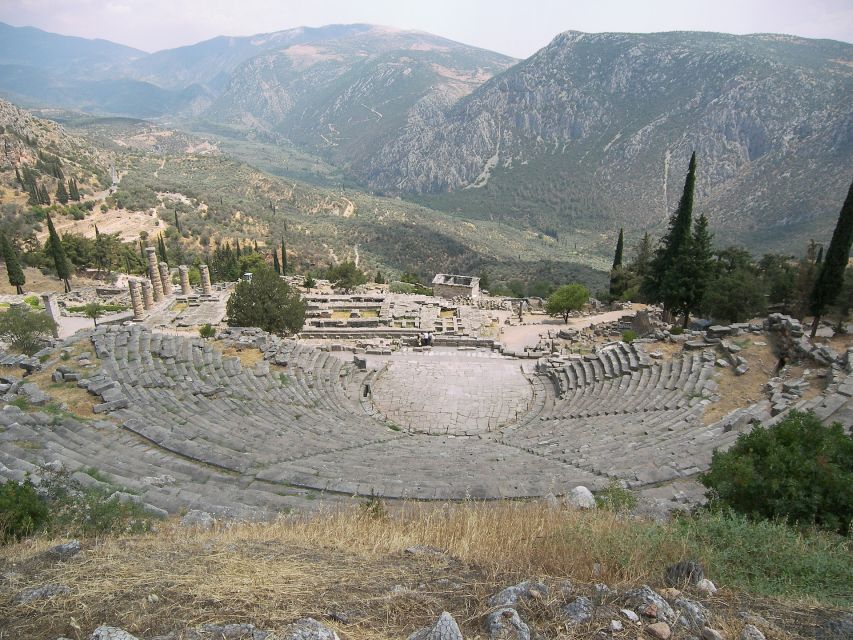
Then you continue to Epidaurus for the ancient theatre. This is one of those places where the physical space teaches you something. Epidaurus is famous for its acoustics, and the guided explanation helps you understand why people built it the way they did and what performance meant in that culture.
Practical note on Day 1 lunch
Lunch is optional and not included. If you’re the type who likes to plan meals around your energy, you can keep lunch flexible and choose something easy nearby rather than feeling forced into a fixed group meal.
More days made easy with a guide
What to watch for
This is a long first day. You’ll be outside for site visits, and you’ll likely do stairs and uneven surfaces in archaeological zones—comfortable shoes are non-negotiable.
Day 1 evening in Olympia: dinner and an easy reset
After the Epidaurus stop, you head toward Olympia. Dinner and overnight are included at the hotel, which is a quiet win on an itinerary like this.
When dinner is included, you don’t have to spend your evening hunting for a place that fits your schedule. And since your next morning starts with a full tour, getting a proper night’s rest matters.
One more small detail I appreciate: you’re based in Olympia for night one, rather than constantly changing hotels. Less moving around usually means more attention on the sites.
Day 2: Ancient Olympia stadium and museum, then the ride to Delphi
Day two starts with breakfast and check out, then a morning visit to Ancient Olympia. You’ll tour the archaeological site and museum, and you’ll also learn how Olympia became the place where the Olympic games were held.
That stadium connection is more than a fun fact. Once you stand there and get the context, you begin to see how “sport” worked as a social and religious event for the ancient Greeks. It’s a different way of thinking about competition than what you might associate with modern stadiums.
After the morning, lunch is optional again. Then you depart Olympia by bus and travel to Delphi, where you’ll have dinner and overnight at the hotel.
The bus ride matters more than you think
This route relies on a lot of road time. The luxury A/C coach helps a lot, especially in warmer months, and WiFi onboard can be handy if you want to recharge your phone or map-plan for the next day.
If you don’t do well with long rides, pack a hat, water where you can, and keep your day-night routine simple. Your energy will drive how much you enjoy the archaeological stops.
Day 3: Delphi’s oracle story, Apollo, and the Navel of the Earth
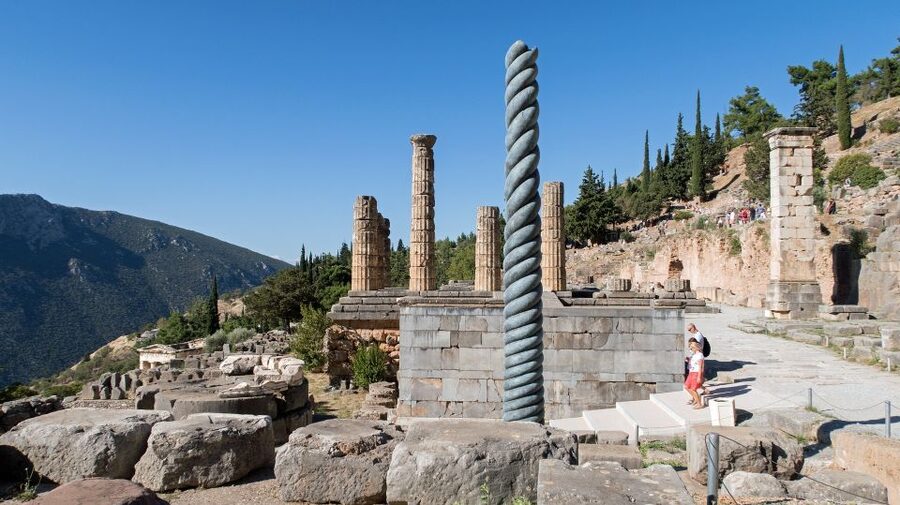
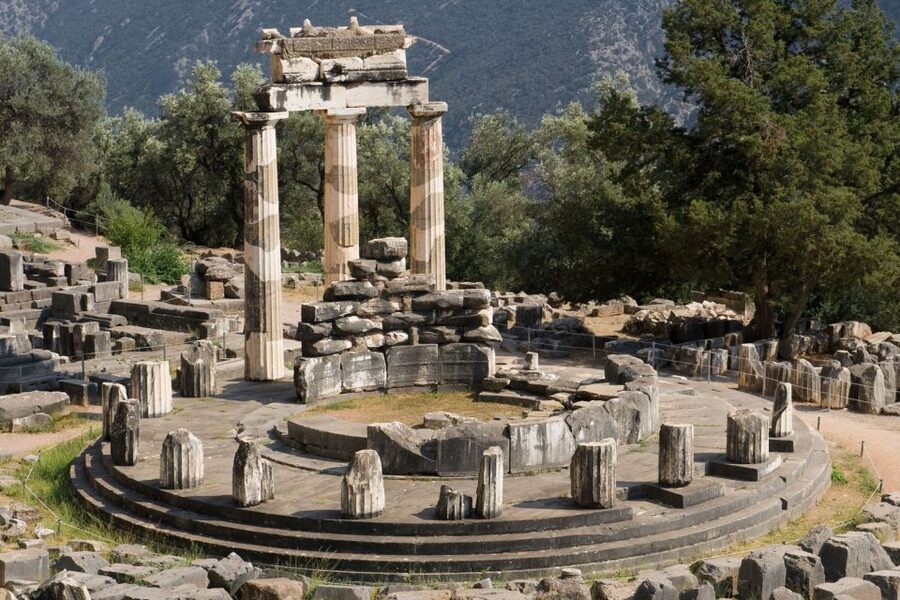
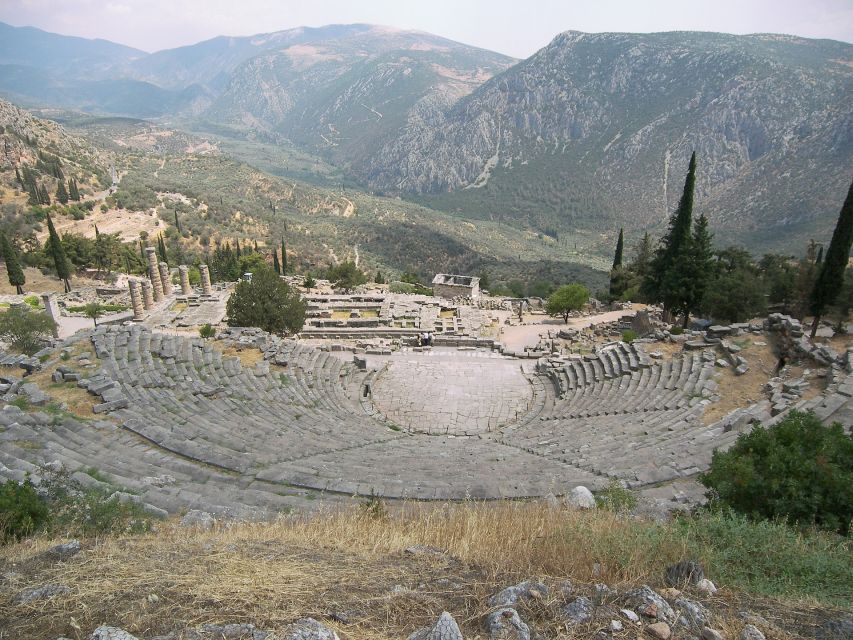
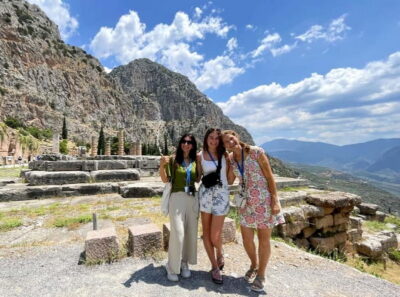
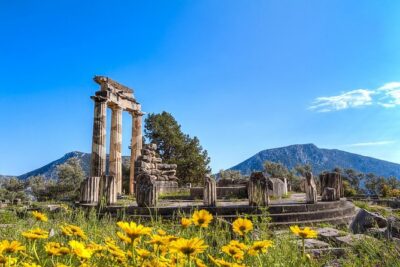
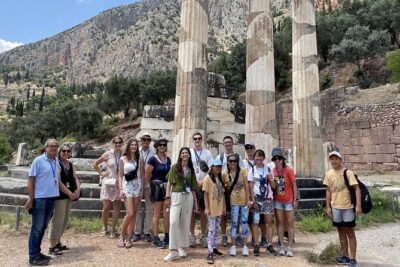
On the final day, breakfast and check out come first, then you head into Delphi. You’ll tour the archaeological site and museum, and you’ll learn about Delphi’s oracle—dedicated to Apollo and administered through Pythia, the High Priestess.
This is the day where the tour feels most like a guided worldview. Delphi wasn’t just a place with impressive ruins; it was a system where people sought answers, guidance, and legitimacy. When the guide explains the oracle’s role, you start to understand why Delphi was so important across the ancient Greek world.
You’ll also meet the Navel of the Earth, described as a spiritual center for all Ancient Greeks. Even if you approach it as history rather than belief, it adds meaning to what you’re standing in front of.
After the tour ends, you have time for optional lunch at a traditional Greek tavern. Then you return to Athens after about 2.5 hours of journey.
Spanish-only guiding: what it feels like when language support is built in
The tour’s guides are professional and exclusively Spanish speaking, and you’ll have headsets throughout. That combination is huge for comprehension, especially in places where you’re walking and multitasking.
I also like that the guiding style is practical and story-driven. One guide example is Faneri, who was described as giving precise, entertaining, didactic explanations. If you’re lucky enough to have a guide with that mix of clarity and warmth, you’ll get more out of the monuments than just dates and names.
One caution: since the narration is in Spanish, you’ll benefit most if you can follow basic conversation. You don’t need to be fluent to enjoy it, but if you speak almost no Spanish, this is still manageable thanks to headsets—but your understanding may be lighter.
Hotels, dinners, and the real value of the $506 price
At $506 per person for 3 days, you’re paying for more than sightseeing. You’re getting:
- hotel accommodation in 3 or 4 star categories
- breakfast x 2 and dinner x 2
- entrance fees to the sites and museums
- professional Spanish guides and headsets
- transportation with luxury A/C coaches and WiFi onboard
- skip-the-line access
That package matters because you avoid the typical “nickel-and-dime” problem. Entrance fees alone add up quickly across Mycenae, Epidaurus, Olympia, and Delphi, and guided time is often the most expensive part of a tour you’d otherwise try to DIY.
The trade-off is that lunch and drinks are not included. So factor in at least a couple of casual meals during the optional lunch windows.
Accommodation tax: don’t let it surprise you
There’s an extra overnight fee paid at the hotel reception. The amount depends on season (April to October vs. November to December) and hotel category (3-star vs. 4-star). Plan to settle it on the spot each night.
If you like budgeting with certainty, I suggest you set aside a small buffer for the tax and for a couple of lunches. That way the tour price feels like what it claims to be: a clear, guided package with a few planned add-ons.
What you’re actually touring (and why each stop is worth it)
Here’s the “why” behind the main sites, beyond the headlines:
Mycenae: power, myths, and the early Greek world
At Mycenae, you get both the site and the museum. That pairing is smart because museums help you interpret what you’re seeing in the ground and walls.
If you love the mythology angle, this is where stories become anchored to material remains. If you prefer archaeology, you still get enough structure to understand why the place mattered.
Epidaurus: theatre as engineering and culture
Epidaurus theatre is special because it’s not only pretty or old—it’s functional. The acoustics are part of the design, and a good guide helps you understand what audiences experienced before modern sound systems existed.
This stop is also a good reset. The setting is open-air and expansive, so it’s less like a tight museum and more like standing inside the world the ancients created.
Ancient Olympia: where ritual, sport, and identity meet
Olympia isn’t just a sports story. It’s where a major cultural event took shape, and your tour frames it as part of a broader ancient Greek life.
If you’re a detail person, you’ll enjoy how the museum and the archaeological grounds connect. If you’re more casual, you’ll still appreciate the scale and the stadium setting.
Delphi: oracle, Apollo, and the Navel concept
Delphi brings together belief and influence. The guide’s explanation of Apollo and Pythia gives you a reason to care about the ruins, because the oracle is why people came.
The Navel of the Earth detail adds a spiritual label to the physical experience. Whether you take it as symbolism or religion, it helps you read the space with more meaning.
Logistics that affect your comfort: meeting point, walking, and timing
You meet in front of the Melina Mercouri monument. The closest metro station is Acropolis, and representatives will board you in the bus to meet your guide.
That’s useful if you’re trying to keep your morning simple. You don’t need to figure out complicated meeting locations across multiple transfers.
Bring what you need
You’ll want comfortable shoes and a hat. You should also bring your passport or ID card. Most archaeological sites are strict about entry, and having ID ready avoids stress.
Accessibility
This tour is not suitable for people with mobility impairments or for wheelchair users. The nature of the sites and likely walking routes are part of that limitation.
Keep your day flexible
Lunch windows are optional. That means you’ll have some freedom, but you’ll also need to be ready to eat at a slower or faster pace depending on the group timing.
Should you book this 3-day Spanish classics tour?
Book it if you want a focused, guided way to see Peloponnese and Delphi without turning your trip into a logistics project. The biggest reasons are the Spanish-language guidance with headsets, the included entrances and meals, and the fact that your route hits four major anchors: Corinth Canal, Mycenae and Epidaurus, Olympia, and Delphi.
Consider it carefully if you struggle with long days and steady walking. This is an itinerary where you spend real time outside and moving between sites, and your comfort level will decide how enjoyable the experience feels.
If you’re a Spanish speaker (or you’re comfortable following Spanish explanations), this tour is a strong value. Even if your Spanish is basic, the structure and headset support still make it worthwhile—you’ll just get more the more you understand the guide.
FAQ
Is the tour guided in Spanish?
Yes. The tour includes professional live guides exclusively in Spanish, and you’ll use headsets to hear the guide during visits.
What is included in the price?
The price includes breakfast x 2, dinner x 2, entrance fees to the sites and museums, hotel accommodation in 3 or 4 star hotels, Spanish professional guides, headsets, and transportation with a luxury A/C coach. Skip-the-line access and WiFi on board are also included.
Are lunch and drinks included?
No. Lunch and drinks are not included. There are optional lunch opportunities on each day.
Where do we meet for the tour?
You meet in front of the Melina Mercouri monument, and representatives will board you in the bus to meet your guide.
Is skip-the-line access included?
Yes. Skip-the-line access is included for the tour’s included sites.
What hotels are used?
You’ll stay in a 3 or 4 star hotel, based on the category you choose. The tour includes hotel accommodation for the 3-day duration.
Do we need to pay an extra accommodation tax?
Yes. There is an overnight fee paid directly at the hotel reception (accommodation tax). The amount depends on hotel star category and season (April to October vs. November to December).
Is WiFi available on the bus?
Yes. WiFi is provided on board the coach.
Is this tour suitable for wheelchair users or mobility impairments?
No. It is not suitable for people with mobility impairments or wheelchair users.
More Tours in Athens
- Athens: Acropolis, Parthenon & Acropolis Museum Guided Tour★ 4.8 · 9,316 reviews
- The Acropolis, Parthenon & Acropolis Museum Guided Tour★ 4.7 · 8,493 reviews
- Acropolis: Premium Acropolis and Parthenon Guided Tour★ 4.8 · 5,208 reviews
- Athens: Mythology of Delphi, Museum and Arachova Guided Tour★ 4.7 · 5,102 reviews
- Acropolis and Parthenon Guided Walking Tour★ 5.0 · 4,755 reviews
- Greek Food Walking Tour in Athens★ 5.0 · 4,740 reviews
More Tour Reviews in Athens
- Athens: Acropolis & up to 5 Archaeological Sites Combo Pass★ 4.2 · 13,904 reviews
- Athens: Acropolis, Parthenon & Acropolis Museum Guided Tour★ 4.8 · 9,316 reviews
- The Acropolis, Parthenon & Acropolis Museum Guided Tour★ 4.7 · 8,493 reviews
- Athens: Cape Sounion & Poseidon Temple Sunset Half-Day Trip★ 4.8 · 8,241 reviews
- Acropolis: Premium Acropolis and Parthenon Guided Tour★ 4.8 · 5,208 reviews
- Athens: Mythology of Delphi, Museum and Arachova Guided Tour★ 4.7 · 5,102 reviews
North to Delphi: More Day Trips
- Athens: Mythology of Delphi, Museum and Arachova Guided Tour★ 4.7 · 5,102 reviews
- From Athens: Delphi Full Day V.R. Audio Guided Tour★ 4.6 · 3,028 reviews
- From Athens: Small-Group Delphi, Museum & Arachova Day Trip★ 4.8 · 2,476 reviews
- Delphi English Day Trip from Athens with Official Guide★ 4.5 · 2,199 reviews
- Athens: Delphi Oracle & Museum Tour with a Licensed Guide★ 4.8 · 2,121 reviews
- Historical Delphi One Day Tour with Arachova Stop & Expert Guide★ 4.5 · 1,247 reviews
Fresh Off the Boat: New Athens Reviews

Delphi Day Trips, compared.
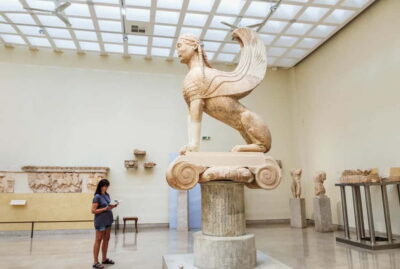 ★ 4.7Mythology of Delphi, Museum and Arachova Guided TourFrom $305,102 reviews
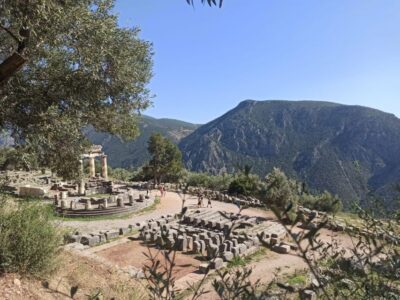 ★ 4.6From Athens: Delphi Full Day V.R. Audio Guided TourFrom $303,028 reviews
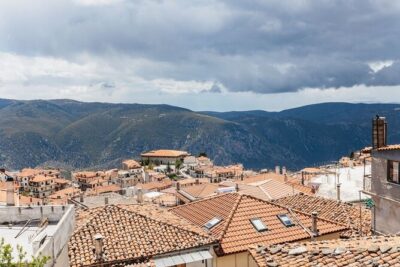 ★ 4.8From Athens: Small-Group Delphi, Museum & Arachova Day TripFrom $342,476 reviews
 ★ 4.5Delphi English Day Trip from Athens with Official GuideFrom $782,199 reviews
 ★ 4.8Delphi Oracle & Museum Tour with a Licensed GuideFrom $362,121 reviews
 ★ 4.5Historical Delphi One Day Tour with Arachova Stop & Expert GuideFrom $341,247 reviews
 ★ 4.5Premium Delphi Day Trip with an Expert Guide, Museum & LunchFrom $381,100 reviews
 ★ 4.5From Athens: Delphi and Meteora 2-Day Guided TourFrom $271825 reviews
Browse the lists this tour appears in