
Reviewed · DELPHI DAY TRIPS
4-Day Most Popular Greek Sites: Nafplio, Olympia, Delphi, Meteora
A good Greece trip starts with less stress, not more. This one is built for maximum time at the sites and a smoother rhythm than a bus packed with strangers, with a route that hits the big UNESCO names plus Meteora. I especially like the included lunch and drinks (it matters more than you’d think on long driving days), and the way the private setup keeps the day feeling flexible. The tradeoff: expect a lot of time on the road, and some walks can be quite steep.
What also stands out is the “small-group energy” you get even when you’re moving fast—your party and your tour leader, not a crowd. In the feedback I saw guides like Panayiotis and Theo/Theodore get praised for being personable and genuinely helpful, including strong lunch choices and solid site context. If you don’t like early starts or long days with limited free time, this may feel like too much.
In This Review
- Key things that make this tour worth your attention
- Private 4-day Greek sites, minus the bus chaos
- Price and value: what your $2,805.83 actually buys
- Day 1: Corinth Canal, Epidaurus acoustics, Palamidi steps, and Mycenae
- Corinth Canal: quick photo stop, big geographic punch
- Epidaurus Ancient Theatre: the acoustics are the star
- Palamidi Castle and Nafplio’s old-town charm
- Mycenae: Agamemnon’s world, plus a museum stop
- Optional Ancient Corinth: for those who want one more layer
- Day 1 consideration
- Day 2: Olympia’s stadium scale and the museum’s big sculptures
- Olympia ruins: where the Games began
- Olympia Museum: the sculptures that stick in your head
- Rio–Antirrio Bridge: engineering with a postcard view
- Day 3: Delphi’s oracle sites, the Tholos photo, Arachova, and Meteora timing
- Delphi: the oracle world, not just a viewpoint
- Delphi Archaeological Museum: short, high-value
- The Tholos of Athena Pronaia: the stop most people skip
- Arachova: a mountain break plus lunch
- Meteora: optional evening monastery time depending on arrival
- Day 4: Great Meteoron, Varlaam, Holy Trinity, then Thermopylae and back to Athens
- Great Meteoron: the biggest rock monastery
- Varlaam: a monk’s story behind the buildings
- Holy Trinity at Meteora: favorite for many reasons
- Thermopylae: short stop, major legend
- Meals, comfort, and the small details that keep days pleasant
- Who should book this tour, and who should think twice
- Should you book 4-Day Most Popular Greek Sites?
- FAQ
- What time does the tour start?
- Is hotel pickup and drop-off included?
- Are entrance fees included in the price?
- How many people are on the tour?
- Are meals included?
- How far in advance do I need to cancel for a full refund?
- Can I cancel closer than 6 days?
Key things that make this tour worth your attention
- Private driving schedule that prioritizes site time over bus logistics
- UNESCO hit list: Mycenae, Epidaurus, Olympia, plus major non-UNESCO legends like Delphi and Meteora
- Real meal value with breakfast (3) and lunch (4), often treated as a highlight rather than a quick stop
- Comfort upgrades: brand new 2021–2023 non-smoking vehicles, plus in-car bottled water
- Guides you’ll actually listen to, including feedback mentioning Panayiotis and Theodore/Theo
- Flexible “optional” moments like Ancient Corinth, Delphi’s Tholos photo stop, and Meteora evening views
North to the oracle, more Delphi runs
- Athens: Mythology of Delphi, Museum and Arachova Guided Tour
★ 4.7 · 5,102 reviews - From Athens: Delphi Full Day V.R. Audio Guided Tour
★ 4.6 · 3,028 reviews - From Athens: Small-Group Delphi, Museum & Arachova Day Trip
★ 4.8 · 2,476 reviews - Delphi English Day Trip from Athens with Official Guide
★ 4.5 · 2,199 reviews
Private 4-day Greek sites, minus the bus chaos
The headline promise here is simple: you’ll see the most popular Greek sites in a way that feels calmer. A big reason is the private format—you’re not sharing the van with strangers, and you’re not fighting for timing or listening to a taped history track. Your tour leader can adjust pacing, help you plan where to stand, and keep the day moving without rushing you through the good parts.
You should also know what this tour trades away. Yes, you’ll get lots of driving—covering the Peloponnese and Central Greece over four days. But instead of losing hours to group delays, you gain control. You’ll usually have more time on-site because the vehicle schedule is built around your group, not around ten different stops for ten different personalities.
And the route is designed like a storyline. You start with Corinth and the eastern Peloponnese mood, move into UNESCO ruins (Epidaurus and Mycenae), then swing to Olympia. After that, you cross the Rio–Antirrio Bridge toward Delphi and end with the vertical rock monasteries of Meteora. It’s a lot, but it feels connected.
Price and value: what your $2,805.83 actually buys
At $2,805.83 per person, this isn’t the “cheap and cheerful” style of tour. The value comes from the parts that usually cost you extra or slow you down on your own: transport, lodging, and meals.
Here’s what’s included that makes a real difference:
- Hotel pickup and drop-off in Athens (huge time-saver, especially on a multi-day plan).
- Top-quality accommodation and breakfast/lunch on the days covered. Lunch is called out as a highlight, and that tracks with feedback where the guide selected excellent Greek cuisine.
- In-car bottled water plus an information booklet for the stops.
- Brand new 2021–2023 non-smoking vehicles and a dedicated driver.
What’s not included is equally important:
- Entrance fees to archaeological sites and museums. That means you should budget extra for admissions as you go.
- A professional/licensed guide is marked optional. Your tour leader handles guiding as part of the experience, and reviews mention very strong guide knowledge, but you shouldn’t assume that a separate licensed guide fee is covered.
In short: you pay for comfort, logistics, and meals that keep the day enjoyable. If you’re the kind of traveler who hates waiting, hates navigating between distant sites on a tight schedule, and wants someone to handle the rhythm, this price starts to make sense.
Day 1: Corinth Canal, Epidaurus acoustics, Palamidi steps, and Mycenae
Day 1 has a classic Greek mix: a quick engineering marvel, one of the world’s most famous theaters, a big-town viewpoint hike, and then UNESCO-level ruins.
Monasteries in the sky, more Meteora trips
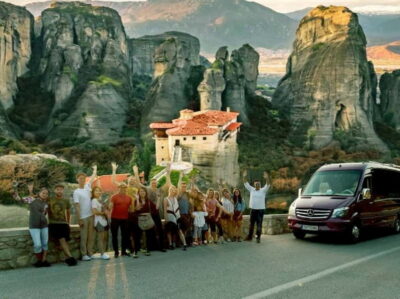



Corinth Canal: quick photo stop, big geographic punch
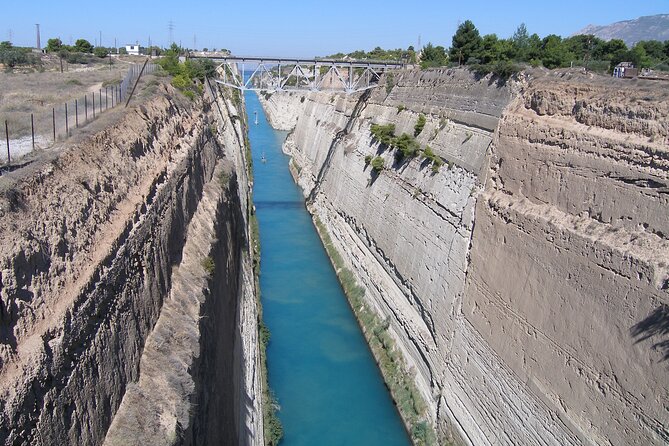
You’ll pause at the Corinth Canal, which slices through the narrow Isthmus of Corinth. In plain terms, it’s one of those places that instantly explains why the Peloponnese feels like a separate world. The stop is short (about 15 minutes), but it gives you a mental map before you start driving.
Epidaurus Ancient Theatre: the acoustics are the star
Next is the Ancient Theatre of Epidaurus, given up to 1.5 hours. The big draw here is the theater’s reputation for extraordinary acoustics. Even if you’re not a theater nerd, you’ll feel how intentionally this space was built for voice and performance. Budget extra time if you want to find the best sightlines and take a moment to absorb the scale.
One practical note: comfortable shoes help. You may be moving on uneven stone paths.
Palamidi Castle and Nafplio’s old-town charm
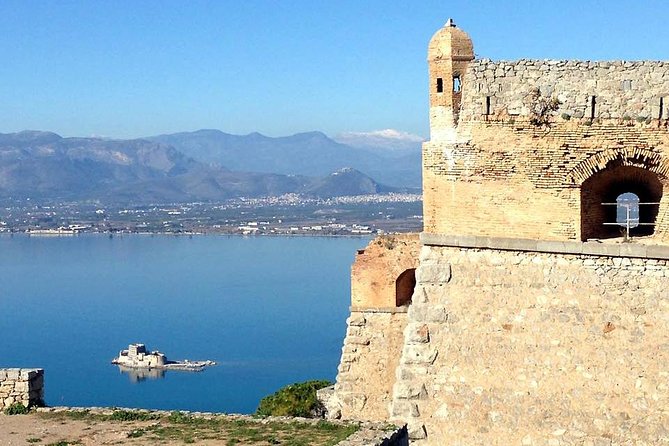
Then it’s to Palamidi Castle, including time for the walk down 999 steps into old Nafplio (you won’t do all the steps in one go, but the steep vibe is real). This is where the day turns from ruins to views. The castle and descent set you up for Nafplio’s “romantic city” reputation without feeling like a postcard trap.
Nafplio itself gets about 2 hours, with lunch in town, plus a walk through the old town and the port. This is one of those places where just wandering works—small streets, sea air, and lots of photo chances without needing a checklist.
There’s also an optional evening out from the port area if you want to dine and explore more, with a free ride drop-off and pick-up from Nafplio back to your hotel.
Mycenae: Agamemnon’s world, plus a museum stop
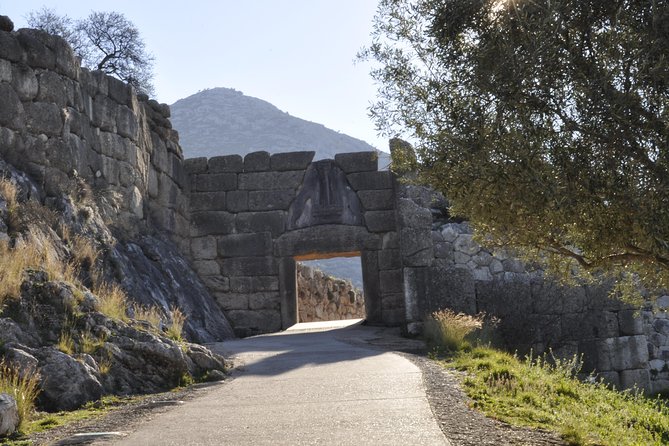
After Nafplio, you move into Archaeological Site Mycenae for about 2 hours, with time to wander and visit the accompanying museum. This is UNESCO territory tied to the Mycenean civilization and the stories around King Agamemnon. Even if you don’t know the myth details, the site layout helps you connect legend to stone.
If you’re short on energy, Mycenae is the place where it’s easiest to feel tired—because it’s long and you’re looking at a lot of preserved ruins. The payoff is that it’s major Greece, not a side stop.
Optional Ancient Corinth: for those who want one more layer
There’s an optional add-on for Ancient Corinth. If you take it, it’s about 1 hour and covers early habitation plus the city’s later prosperity period. This is a good choice if you like history that spans centuries. Skip it if you want more recovery time after a strong Day 1.
Day 1 consideration
The potential downside is simple: Day 1 stacks a lot. You start with quick stops, hit a serious theater visit, climb and descend at Palamidi, have lunch, and then go into Mycenae. If you prefer to end your day early, plan for a slower evening back at the hotel.
Day 2: Olympia’s stadium scale and the museum’s big sculptures
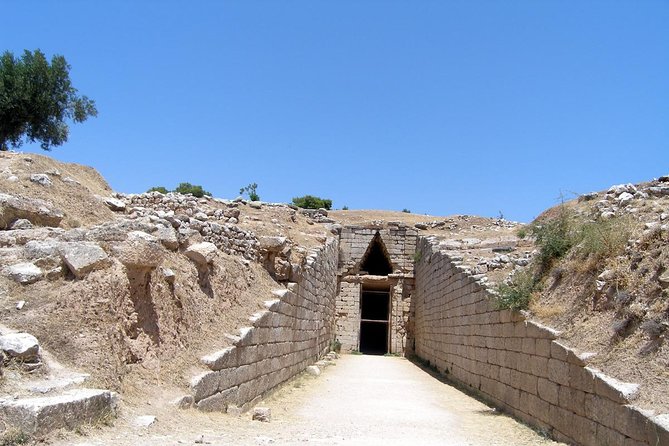
Day 2 is Olympia day—Olympic Games origins, plus museum highlights, and then a scenic crossing toward Delphi.
Olympia ruins: where the Games began
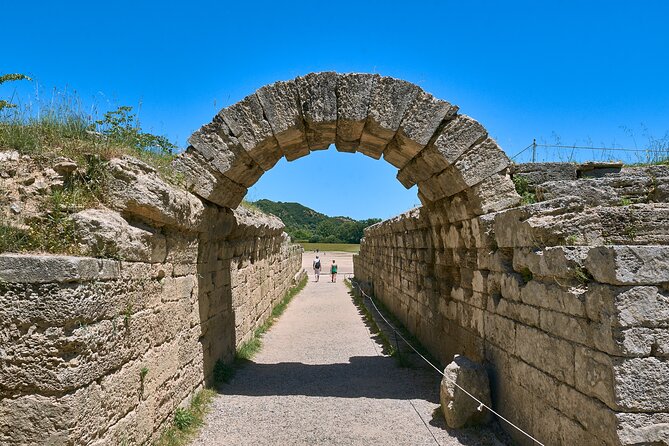
You’ll spend time at the Archaeological Site of Olympia, with about 1 hour. Olympia is where the original Olympic Games began in the 8th century BC. The ruins include athletic training areas, the stadium, and temples for Hera and Zeus.
What I like about Olympia is that it’s physical history. You aren’t just looking at columns—you’re walking around the shapes of competition: stadium seating, training spaces, and temple zones. It helps you picture how athletes once moved through these places.
Olympia Museum: the sculptures that stick in your head
Next comes Olympia’s museum for up to 2 hours. This is where the tour’s “more than monuments” angle matters. You’ll have a chance to see famous sculptures, including decoration from the marble temple of Zeus and a notable Hermes sculpture associated with ancient Greek sculptor Praxiteles.
Museum time is also your break from sun and walking. If you’re sensitive to heat, this stop is a relief. It’s also where a guide’s context can really help you make sense of what you’re seeing.
Rio–Antirrio Bridge: engineering with a postcard view
Before reaching Delphi, you cross the Rio–Antirrio Bridge. It’s a short stop (about 10 minutes), but the bridge is described as one of the world’s longest multi-span cable-stayed structures, linking Peloponnese to mainland Greece by road. Even at a quick pace, it’s the kind of crossing that makes the driving feel like part of the story.
Day 3: Delphi’s oracle sites, the Tholos photo, Arachova, and Meteora timing
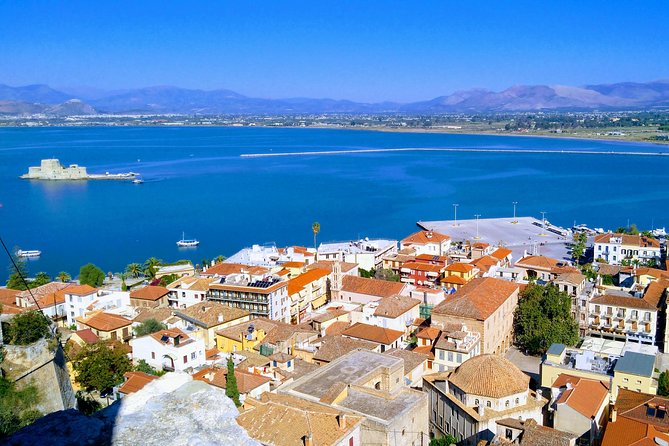
Day 3 is Delphi first—then a mountain-town pause—then Meteora, depending on arrival time.
Delphi: the oracle world, not just a viewpoint
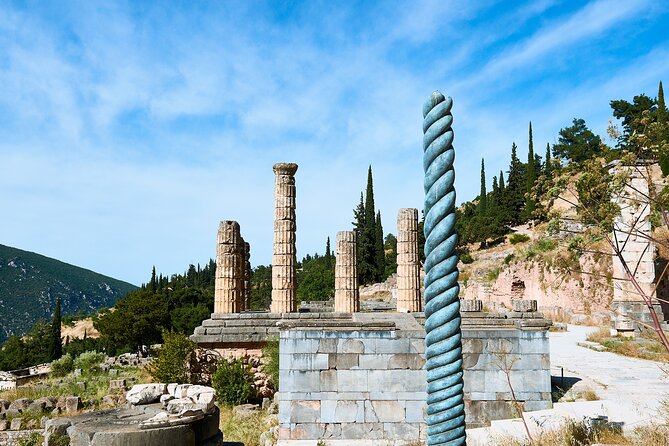
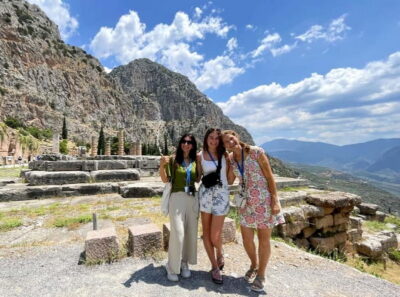
You’ll get around 2 hours in Delphi. Delphi is the sanctuary where the oracle of Apollo spoke, and it’s tied to the idea of the omphalos, the navel of the world. The tour gives you time to move through the sanctuary area, so you can focus on what grabs you: inscriptions, temple remains, and the general sense of “this is where people came to ask questions of gods.”
Delphi Archaeological Museum: short, high-value
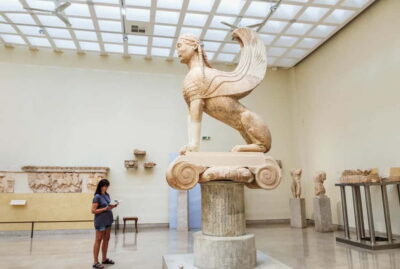
There’s also the Archaeological Museum of Delphi for about 30 minutes. That’s not long, so you’ll want to prioritize the pieces that connect to the sanctuary story. A guide can help here by pointing out what matters, especially if you’re seeing it after a morning of walking.
The Tholos of Athena Pronaia: the stop most people skip
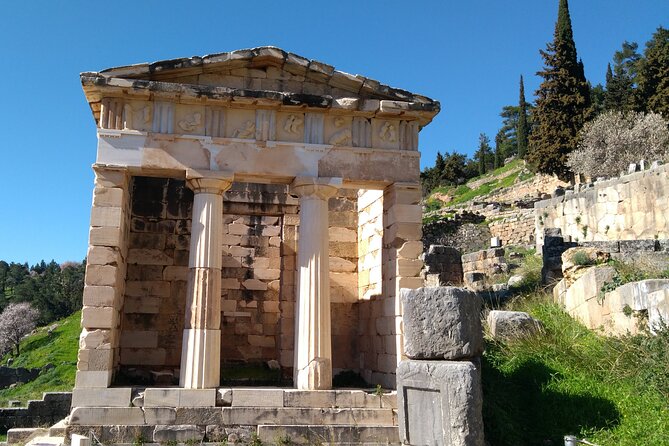
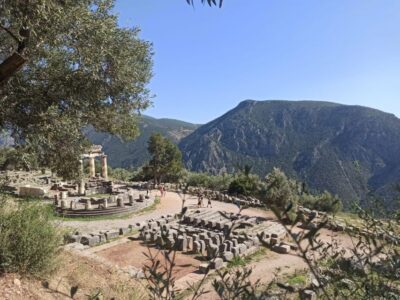
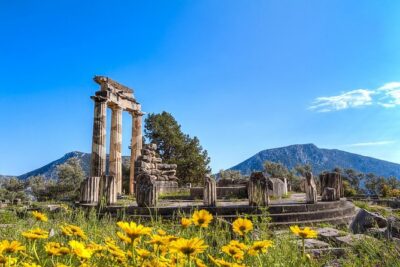
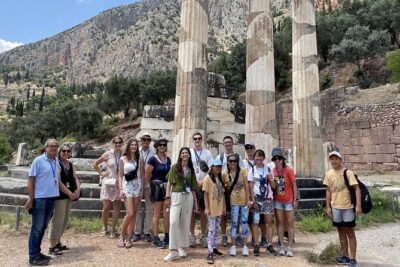
One of the best practical ideas on this tour is the Tholos of Athena Pronaia. It’s called out as something 95% of visitors and tour agencies skip, yet it’s also the first photo you’ll likely see when you search Delphi. You’ll have about 25 minutes.
This is a great example of why this tour feels different from rushed checklists. You’re not only going to the “main” ruins; you’re also getting the image and perspective that usually gets cut.
Arachova: a mountain break plus lunch
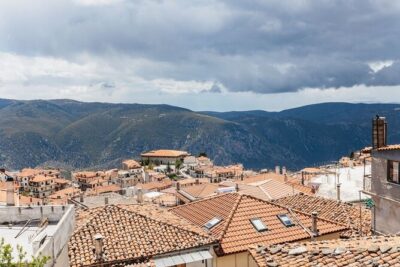
Then you head to Arachova, a mountainous village with a reputation for ski connections and celebrity visitors, plus a cozy vibe for first-timers. You’ll have around 30 minutes for pictures and lunch.
This stop helps you reset. Delphi can be intense and ancient; Arachova is more about a pause, food, and views.
Meteora: optional evening monastery time depending on arrival
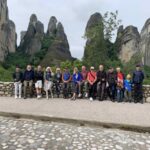
Finally, you go to Meteora. If timing allows, you may explore and take evening photos and see one monastery. The stop is about 1 hour, but it’s flexible based on arrival.
Here’s the consideration: Meteora is what people come for, so you’ll want good light. If you arrive late, you may only get limited monastery access or a quick overview. The “optional depending on arrival time” detail is honest—and worth planning around.
Day 4: Great Meteoron, Varlaam, Holy Trinity, then Thermopylae and back to Athens
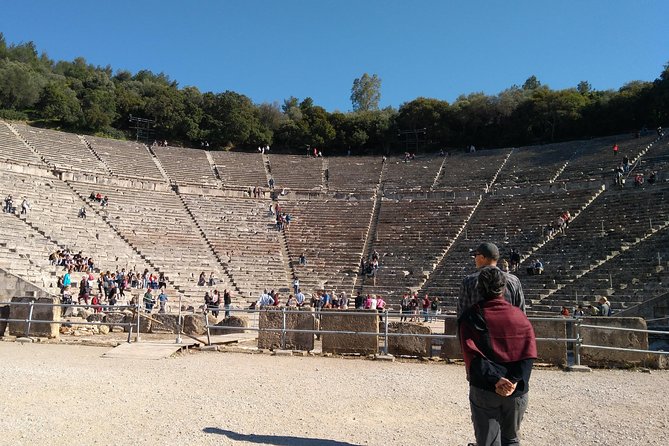
Day 4 is Meteora-focused, with an extra historical stop before heading back.
Great Meteoron: the biggest rock monastery
You’ll visit the Holy Monastery of the Great Meteoron (Transfiguration of the Saviour) for about 1 hour. It’s described as the oldest, biggest, and most important of the monasteries preserved today, built on a commanding rock.
This is the place where Meteora’s main wow factor hits: those monasteries aren’t just “on a hill.” They’re perched above you, built into the vertical feel of the rocks. If you’ve only seen Meteora in photos, this stop explains why those images look dramatic.
Varlaam: a monk’s story behind the buildings
Next is Varlaam Monastery, about 45 minutes. The story centers on an ascetic who ascended to the rock in 1350, then the site later grew when construction resumed around 1517. You’ll get time to see three churches and related structures mentioned in the tour description, plus the sense of a place that developed over centuries.
Holy Trinity at Meteora: favorite for many reasons
Then there’s Monastery of the Holy Trinity at Meteora, about 1 hour. It’s described as the tour’s favorite, with historical sources placing its building between 1458 and 1476.
If you’re choosing where to spend energy, this is the one I’d angle toward. You’ll still see the key sights across the rocks, but Holy Trinity is the moment the tour signals as special.
Thermopylae: short stop, major legend
After Meteora, you stop at the Battlefield of Thermopylae for about 30 minutes. It’s the famed 480 BC battle involving King Leonidas of Sparta and the Persian Empire under Xerxes I.
This stop is brief by design. It gives you a “Greek history anchor” before you drive back to Athens.
Meals, comfort, and the small details that keep days pleasant
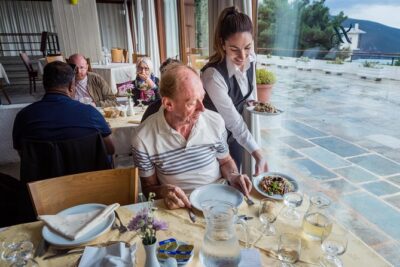
One thing I really value on Greek multi-day tours is the food rhythm. Here, lunch with drinks is included each day it’s scheduled, and breakfast is included on the days listed. That matters because your touring time is packed. When meals are handled well, you don’t lose half a day searching for something open, or getting stuck with a mediocre fallback.
The info booklet and bottled water also help. You’re not trying to guess where to go next in the middle of a long driving stretch. And the vehicles being non-smoking is an underrated comfort point, especially if you’re sensitive to indoor smells.
From the feedback, the guide Theo/Theodore and Panayiotis are praised for being attentive and for making good choices—especially for lunch. So if food quality matters to you, this tour looks like it takes it seriously, not as an afterthought.
Who should book this tour, and who should think twice
This tour fits best if you want:
- A private plan across multiple regions without the “group bus” feeling
- To see Nafplio, Olympia, Delphi, and Meteora within a tight timeline
- Included meals and hotel support, rather than planning every step
- Enough stamina for a day that includes walks like the Palamidi steps descent and a lot of moving between sites
Think twice if:
- You dislike long drives. The tour description is honest about extensive driving across Peloponnese and Central Greece.
- You’re highly sensitive to pacing. This is not slow travel. It’s structured touring with some optional extras.
- You don’t want to manage entrance fees, since those are not included.
Should you book 4-Day Most Popular Greek Sites?
I’d book it if your priority is seeing the “big names” with enough time to enjoy them, and you’re okay trading rest time for momentum. The private format, included meals, and comfort-focused vehicle setup are exactly what you want when you’re trying to cover Nafplio, Olympia, Delphi, and Meteora without turning your trip into logistics homework.
Before you commit, do two quick reality checks:
- Budget for entrance fees on top of the tour price.
- Pack for walking and slopes (good shoes). Palamidi is the clearest clue, but the ruins and monastery stairs are part of the deal.
If those points work for you, this is a strong way to experience Greece’s classics with a guide who can make the sites click.
FAQ
What time does the tour start?
The start time is listed as 8:00 am.
Is hotel pickup and drop-off included?
Yes. Hotel pickup and drop-off are included, and the tour operates with pickup and drop-off in Athens.
Are entrance fees included in the price?
No. Entrance fees to the sites and museums are not included, so you should plan to pay them separately on-site.
How many people are on the tour?
This is a private tour/activity. Only your group participates.
Are meals included?
Yes. Breakfast (3) and lunch (4) are included, and lunch also includes drinks as part of the experience.
How far in advance do I need to cancel for a full refund?
You can cancel up to 6 days in advance for a full refund. The policy states that for a full refund, you must cancel at least 6 full days before the experience’s start time.
Can I cancel closer than 6 days?
Yes, but the refund amount changes: cancel 2–6 full days before for a 50% refund, and if you cancel less than 2 full days before, the amount paid is not refunded.
Into the Argolid: Mycenae and Nafplio
- From Athens: Small-Group Mycenae, Epidaurus & Nafplio Trip★ 4.8 · 2,805 reviews
- From Athens: Mycenae, Epidaurus & Nafplio Full-Day Tour★ 4.5 · 2,530 reviews
- Mycenae, Epidaurus and Nafplio Tour from Athens★ 4.6 · 2,201 reviews
- 4-Day Classical Greece Tour: Epidaurus, Mycenae, Olympia, Delphi, Meteora★ 4.5 · 732 reviews
- Athens: Ancient Corinth & Nafplio Full Day Trip with Swim★ 4.8 · 531 reviews
- Mycenae and Nafplion Day Trip from Athens with Official guide★ 4.5 · 501 reviews
The Monasteries of Meteora
- Athens: Meteora Monasteries Day Trip with Caves and Lunch★ 4.7 · 4,670 reviews
- Athens to Meteora: Monasteries, Caves & Seaside Stopovers★ 4.7 · 2,958 reviews
- Athens: Full-Day Meteora Tour with Local Guide & Greek Lunch★ 4.8 · 2,101 reviews
- Athens: Meteora Monasteries, Caves & Coastal Stopovers with Lunch★ 4.5 · 1,432 reviews
- Meteora Monasteries & Caves DayTrip from Athens with Greek Lunch★ 4.5 · 879 reviews
- From Athens: Delphi and Meteora 2-Day Guided Tour★ 4.5 · 825 reviews
North to Delphi: More Day Trips
- Athens: Mythology of Delphi, Museum and Arachova Guided Tour★ 4.7 · 5,102 reviews
- From Athens: Delphi Full Day V.R. Audio Guided Tour★ 4.6 · 3,028 reviews
- From Athens: Small-Group Delphi, Museum & Arachova Day Trip★ 4.8 · 2,476 reviews
- Delphi English Day Trip from Athens with Official Guide★ 4.5 · 2,199 reviews
- Athens: Delphi Oracle & Museum Tour with a Licensed Guide★ 4.8 · 2,121 reviews
- Historical Delphi One Day Tour with Arachova Stop & Expert Guide★ 4.5 · 1,247 reviews
Fresh Off the Boat: New Athens Reviews

Delphi Day Trips, compared.
 ★ 4.7Mythology of Delphi, Museum and Arachova Guided TourFrom $305,102 reviews
 ★ 4.6From Athens: Delphi Full Day V.R. Audio Guided TourFrom $303,028 reviews
 ★ 4.8From Athens: Small-Group Delphi, Museum & Arachova Day TripFrom $342,476 reviews
 ★ 4.5Delphi English Day Trip from Athens with Official GuideFrom $782,199 reviews
 ★ 4.8Delphi Oracle & Museum Tour with a Licensed GuideFrom $362,121 reviews
 ★ 4.5Historical Delphi One Day Tour with Arachova Stop & Expert GuideFrom $341,247 reviews
 ★ 4.5Premium Delphi Day Trip with an Expert Guide, Museum & LunchFrom $381,100 reviews
 ★ 4.5From Athens: Delphi and Meteora 2-Day Guided TourFrom $271825 reviews
Browse the lists this tour appears in