
Reviewed · METEORA DAY TRIPS
Meteora Monasteries & Caves DayTrip from Athens with Greek Lunch
Meteora in one long day can be epic. You’ll ride from Athens to Kalabaka, visit the cliff-perched monasteries up close, and finish with the hermit caves—while a local guide keeps the day moving, often with Maria or Clement leading the tour.
I especially like the focus on the most important sites: you’ll spend real time at Great Meteoron and Varlaam, plus you’ll get inside three of the major monasteries during the 4-hour Meteora block. I also love the photo-friendly pacing—panoramic stops, viewpoints over the rock formations, and audio support in lots of languages.
My main caution is simple: it’s a long travel day (about 14 hours total), and while the schedule is structured, delays can push you back to Athens late—so you need to be okay with a late finish.
In This Review
- Key things I’d bank on before you go
- First Impressions: Why this day trip works from Athens
- Price and what you actually get for your money
- The Athens to Kalabaka drive: comfort, timing, and the big “long day” reality
- Kalabaka and Kastraki: where the rocks meet real life
- The Meteora circuit: how the stops actually add up
- Great Meteoron and Varlaam: the two “go early, look closely” monasteries
- Holy Trinity, Rousanou, and the shorter cliff monasteries
- St Stephen (Agios Stefanos) and what “accessible” really means here
- Hermit caves and Badovas: the quieter, earlier Meteora side
- Lunch in Meteora: when the included meal helps more than you think
- What to wear and what to bring to avoid last-minute stress
- Comfort and group size: the “long bus day” temperament test
- Who this day trip suits (and who should reconsider)
- Should you book this Meteora day trip?
- FAQ
- How long is the Meteora day trip from Athens?
- Is lunch included, and what’s in it?
- Are monastery entrance fees included in the price?
- What languages are available for the tour and audio guide?
- What clothing do I need for the monasteries?
- Can I cancel for a full refund?
Key things I’d bank on before you go
- Small-group Meteora route (up to 35 travelers) with a local tour leader
- Coach comfort built for the long haul (air-conditioned bus, free Wi‑Fi, USB chargers)
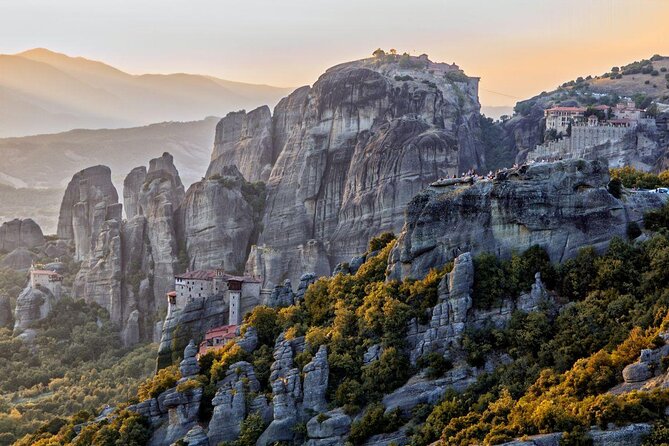
- Four hours in Meteora with panoramic stops and time at multiple monasteries
- Hermit Caves and Badovas area—a quieter, earlier side of Meteora’s story
- Optional Greek lunch at a reserved local restaurant (vegetarian options available)
- Monastery entrance fees aren’t included, so plan on €5 per monastery and bring cash
Monasteries in the sky, more Meteora trips
- Athens: Meteora Monasteries Day Trip with Caves and Lunch
★ 4.7 · 4,670 reviews - Athens to Meteora: Monasteries, Caves & Seaside Stopovers
★ 4.7 · 2,958 reviews - Athens: Full-Day Meteora Tour with Local Guide & Greek Lunch
★ 4.8 · 2,101 reviews - Athens: Meteora Monasteries, Caves & Coastal Stopovers with Lunch
★ 4.5 · 1,432 reviews
First Impressions: Why this day trip works from Athens
Meteora is one of those places where your brain keeps asking how anyone built monasteries up there. From the coach, you get the first hints early—then the whole setting snaps into focus when the rocks rise around you near Kalabaka.
This tour is designed to remove the hard parts of planning. You don’t need to coordinate transport, navigate parking, or figure out the monastery order. Instead, you meet your guide in Kalabaka and move through a tight, thoughtful circuit of sites over about four hours.
And because the day starts early (departure at 8:00 am), you get daylight time for the best views. The tradeoff is that you’re committing to a long day overall, with a late return to Athens around 10:30 pm under normal conditions.
Price and what you actually get for your money
At $87.07 per person, the value is mostly in the logistics. You’re paying for roundtrip coach transport from Athens (air-conditioned, with free Wi‑Fi and USB charging), plus a local guide in the Meteora area and a smart audio guide in multiple languages.
Here’s the key cost detail many people miss: monastery entrances cost extra. Each Meteora monastery is listed at €5 per person, and there’s no ATM nearby. That means your true Meteora cost is the tour price plus those entrance fees.
If you add the lunch option, the upgrade is also part of the value equation. Lunch includes a main dish, Greek salad (listed as an atomic salad on the menu description), bread, and water, with vegetarian and vegan options available. You’re not paying extra for a fancy meal—you’re paying to keep the day from turning into scavenger-hunt time.
The Athens to Kalabaka drive: comfort, timing, and the big “long day” reality
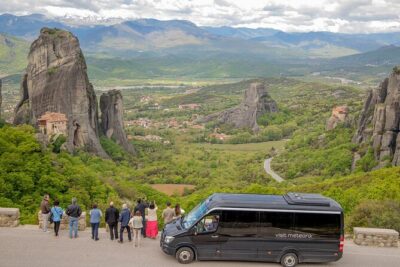
You’ll depart Athens at 8:00 am from Larissa Station. The operator asks you to arrive at least 15 minutes early, and you’ll look for a bus marked Meteora Thrones – Travel Center across the street from the station.
Once you’re on board, the ride is meant to feel doable. The bus is air-conditioned and comes with free Wi‑Fi plus USB chargers. There’s also a short break mid-journey at Kamena Vourla, around 30 minutes, by the sea, with views of Evia on clear days.
Then it’s forward to Kalabaka, where you arrive around 12:30. That arrival time matters because you’ll want your energy for the walking and stair climbs at Meteora. If you’re someone who gets stiff on long rides, this is still a fairly manageable schedule as long as you hydrate and wear shoes you can move in.
One more reality check: Meteora is a day trip for a reason. If traffic is heavy due to road disruptions, travel time can stretch. That doesn’t change that Meteora itself is the star—but it can change how much daylight you have for the later stops.
Worth comparing before you book this Athens tour:

Kalabaka and Kastraki: where the rocks meet real life
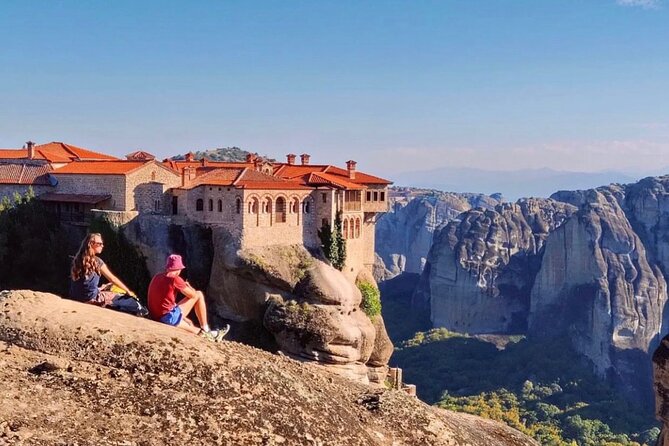
Kalabaka is the launchpad town for Meteora, and it’s more than a parking lot. It’s known for traditional charm plus modern convenience—so even if you just get a short look, you understand why people base themselves here.
The tour also includes a stop to see Kastraki, the village under the rocks. It’s the kind of place that feels quiet and lived-in, with traditional stone houses and easy access to hiking trails that start right from the area. For me, Kastraki is the reminder that Meteora is not only monasteries—it’s a whole mountain community shaped by the cliffs.
In practical terms, this stop is also a breather. After a long coach ride, stepping out near Kastraki helps you reset before climbing up and down between monastery areas.
The Meteora circuit: how the stops actually add up
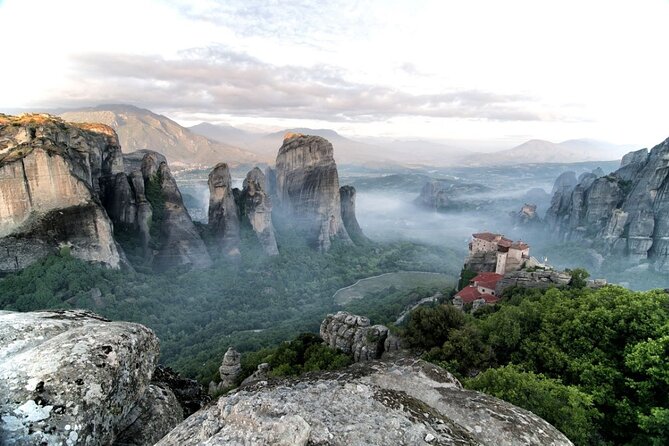
Once you’re in Meteora, you’ll spend about four hours moving through multiple monastery viewpoints. The flow is built so you get variety: big-name monasteries, smaller cliff sites, and a cave-focused stop that shows the hermit side of the story.
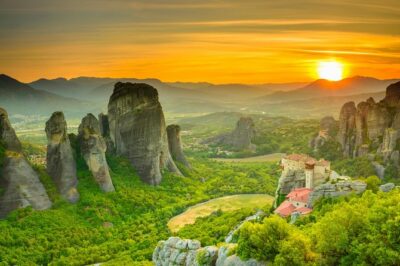
The route includes several monasteries around the rock formations and time for photos at scenic points. You’ll also have panoramic photo opportunities over the monasteries’ rock-tower perch—exactly the kind of view that makes Meteora look unreal on camera.
The big practical difference is how long each stop lasts. Some are longer (like Great Meteoron), while others are shorter, which can be ideal if you want to see a lot without feeling trapped in one spot. The schedule works best if you’re comfortable moving at a steady pace.
Great Meteoron and Varlaam: the two “go early, look closely” monasteries
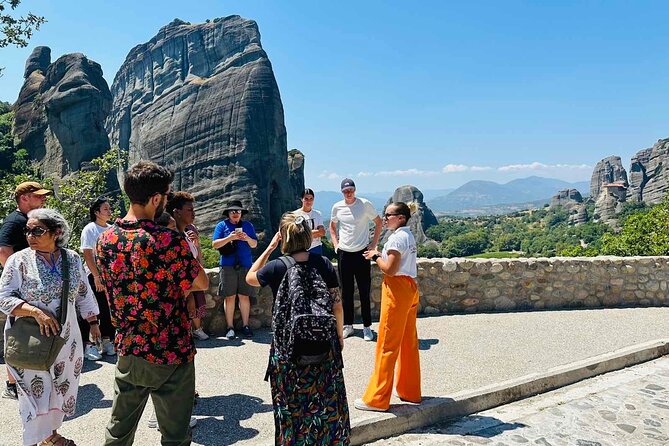
If you care about seeing the monasteries in a way that feels more than just a quick photo, Great Meteoron and Varlaam are the anchors.
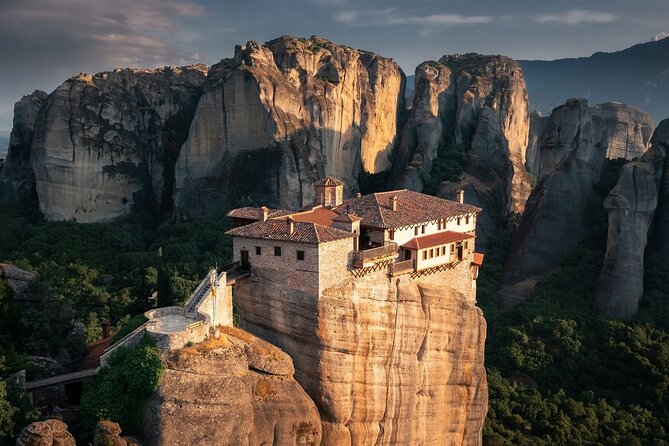
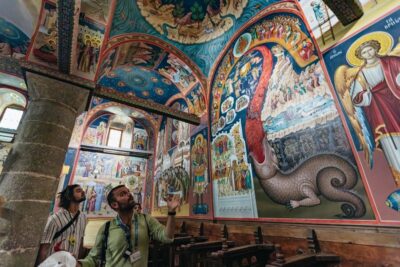
Great Meteoron is the biggest and oldest monastery in Meteora, founded in the 14th century by Saint Athanasios. You’ll get about an hour here. Expect to see historic chapels, impressive frescoes, and a small museum, plus the best kind of payoff for the climb: wide views over the valleys and rock formations.
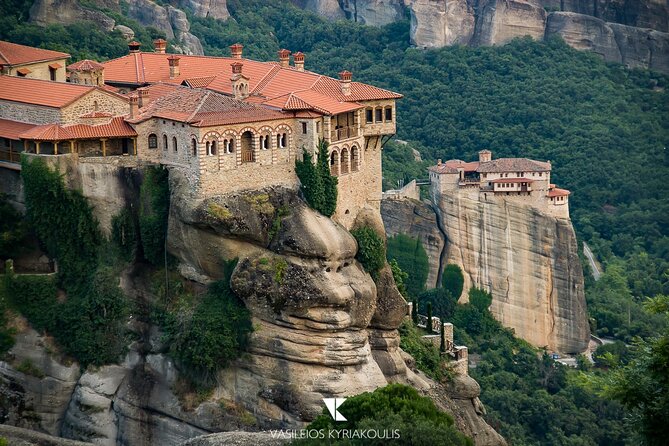
Varlaam Monastery is the second largest and comes with striking visual details—built in the 16th century, with frescoes and a remarkable wooden barrel. It’s also a place that feels calmer as you pause in the courtyard. You’ll have about 45 minutes, which is usually enough time to see key interiors if you’re not trying to do everything at a sprint.
Even if you don’t go inside every site, these longer stops matter. They’re where you pick up the meaning behind Meteora’s architecture and how the rock setting shaped daily monastic life.
Holy Trinity, Rousanou, and the shorter cliff monasteries
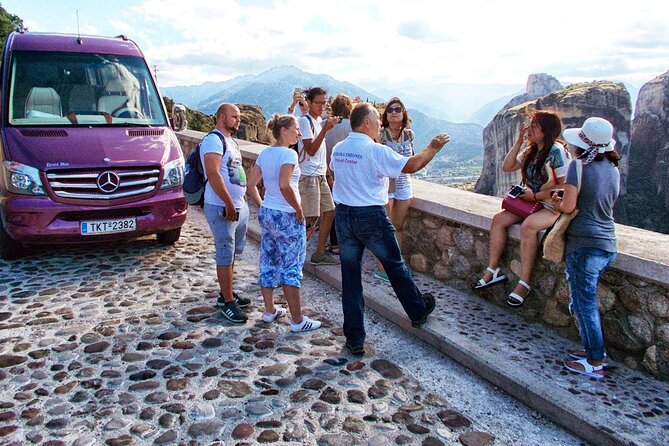
After the major stops, the route widens your perspective.
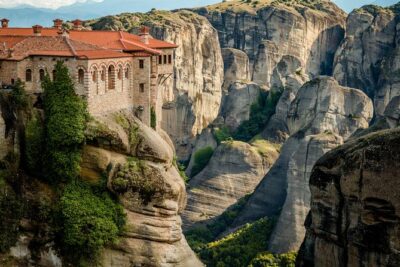
Holy Trinity Monastery is one of the most iconic, perched dramatically on a steep cliff and reached via a scenic path and stairs carved into the rock. You’ll have around 35 minutes, which is a good chunk for absorbing the view and getting inside if it’s part of your day’s timing.
Rousanou Monastery (Saint Barbara) sits on a narrow rock pillar and stands out for frescoes and well-preserved architecture. It’s another nunnery community site now, and the balconies give you another layer of panorama over the valley and the town below.
You’ll also stop at Agios Nikolaos Anapaphsas, the smallest monastery, built on a narrow rock with limited space. It’s shorter on time (about 15 minutes), but it can feel more intimate simply because you’re not stuck for long in a crowd flow.
These quicker stops are not filler. They’re the way Meteora earns its reputation. You start to see how each monastery carved its own solution into the same cliff world.
St Stephen (Agios Stefanos) and what “accessible” really means here
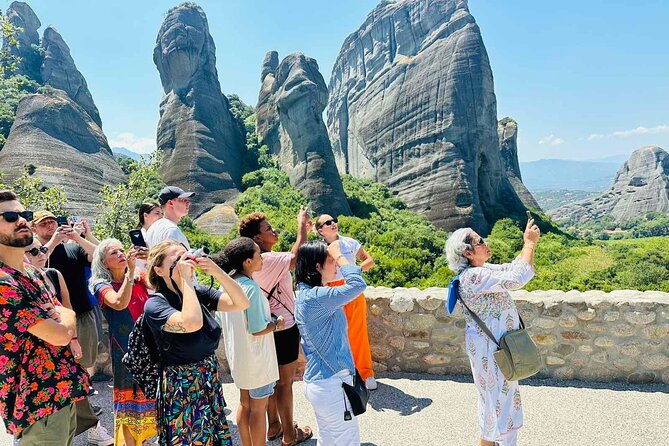
Agios Stefanos is often easier to reach than some of the others. The tour calls out that it’s connected by a small bridge instead of stairs, and you’ll have about 40 minutes.
Originally built in the 14th century, it’s now home to a vibrant community of nuns. Inside, you can see frescoes and a serene chapel, and the location gives views over Kalambaka’s valley.
This is a stop I’d value if you want a change of pace. It doesn’t remove the need for walking (Meteora isn’t flat), but the route can feel less punishing than the stair-heavy climbs at some of the bigger sites.
Hermit caves and Badovas: the quieter, earlier Meteora side
One of the most memorable parts of this tour is the Hermit Caves stop. You’ll reach the area tied to Holy Monastery of Saint Nicholas Anapafsas, including the hermitage of Badovas and the secret hermit caves.
This is where the story shifts from grand monastery complexes to solitude. The caves are carved into the cliffs and include simple shelters where ascetics lived high up, in isolation. If monasteries are about community and continuity, the hermit caves are about discipline and early experimentation with life above the world.
The time here is shorter (about 15 minutes), so don’t expect a long lecture. But it’s a key contrast stop—one that helps the bigger picture click.
Lunch in Meteora: when the included meal helps more than you think
If you book the lunch upgrade, you’ll eat at a reserved local restaurant (fully air-conditioned). The lunch description is straightforward: a main dish, Greek salad, bread, and water.
It’s not presented as a gourmet experience, and you shouldn’t plan your day like you’re going to a white-tablecloth event. But in a day trip, food is about function: keeping energy steady so you don’t crash halfway through the stairs.
Vegetarian and vegan options are available. There’s also mention of a snack/food stop on the way (including a Greek salad with multiple flavor choices and a vegetarian plate option). That matters because it keeps you from arriving at Meteora starving—or worse, spending your brief time in the area hunting for something to eat.
What to wear and what to bring to avoid last-minute stress
Monasteries have rules, and the tour explicitly follows them.
For ladies: skirts at the knee or longer are required. No pants, no shorts, and no sleeveless shirts.
For men: sleeveless clothing and shorts over the knee are prohibited.
Also bring cash for entrances. The price given is €5 per monastery, and the info notes there’s no ATM in the area. If you’re coming from Athens with a card-only routine, swap a little cash before you leave.
Finally: expect steps. The climbs to monastery tops involve climbing, and there are no elevators. If you have mobility concerns, this is the main thing to consider before booking.
Comfort and group size: the “long bus day” temperament test
The tour sets a maximum of 35 travelers. That’s small enough to feel human, especially once you’re in Meteora, where everyone’s moving at similar speeds.
A practical upside from the tour design is that you’re not stuck waiting around. You get planned photo stops and guided timing, plus a smart audio guide on the coach and for site context in multiple languages.
One more comfort detail: the bus is air-conditioned and includes free Wi‑Fi and USB chargers, which helps if you’re traveling with kids, or if you just want your phone alive for photos.
Who this day trip suits (and who should reconsider)
This is a great fit if:
- You have limited time in Athens and want Meteora without handling transport.
- You want to see multiple monasteries in one day but still get interior time at major sites.
- You like guided structure, especially when stairs and rules can slow you down.
You might reconsider if:
- You can’t handle long travel days or late returns.
- You prefer a slower pace at one or two monasteries with more time for quiet wandering.
- Mobility is a concern due to stairs and uneven paths.
If your schedule allows, some people prefer staying overnight so Meteora feels less like a sprint. But if you’re here for a short visit, this tour gives you the best shot at seeing the highlights without planning chaos.
Should you book this Meteora day trip?
I’d book it if you want a high-effort day without the headache of planning. The mix of coach comfort, a strong local guide component, multiple monastery viewpoints, and the hermit caves stop makes it a smart one-day strategy from Athens.
Book it with eyes open on three things: the day is long, you’ll climb steps, and monastery entrances need cash. If you can handle that, you’ll come away with exactly what Meteora is famous for—those impossible rock perches, plus the human story carved into cliffside churches and caves.
FAQ
How long is the Meteora day trip from Athens?
The duration is about 14 hours, with departure at 8:00 am and an expected return to Athens around 10:30 pm (22:30), depending on the day’s conditions.
Is lunch included, and what’s in it?
Lunch is included if you select the lunch option during booking. It’s described as a main dish, Greek salad, bread, and water, with vegetarian and vegan options available.
Are monastery entrance fees included in the price?
No. Entrance fees for each Meteora monastery are not included and are listed as €5.00 per person. You should bring cash since there’s no ATM in the area.
What languages are available for the tour and audio guide?
The tour is guided in English or Spanish (with a live local guide). Smart audio guides are available in English, French, Italian, Dutch, Spanish, Portuguese, Polish, Russian, Japanese, Korean, and Chinese.
What clothing do I need for the monasteries?
You’ll need appropriate clothing: for women, a skirt at the knee or longer (no pants, no shorts, no sleeveless tops). For men, sleeveless clothing and shorts over the knee are prohibited.
Can I cancel for a full refund?
Yes, free cancellation is available up to 24 hours before the experience start time for a full refund. If you cancel less than 24 hours before, the amount paid is not refundable.
More Lunch Experiences in Athens
- All Day Cruise -3 Islands to Agistri,Moni, Aegina with lunch and drinks included★ 5.0 · 4,958 reviews
- Athens: Meteora Monasteries Day Trip with Caves and Lunch★ 4.7 · 4,670 reviews
- From Athens: Hydra, Poros, and Aegina Day Cruise with Lunch★ 4.1 · 4,305 reviews
- Athens: Full-Day Meteora Tour with Local Guide & Greek Lunch★ 4.8 · 2,101 reviews
- Athens: Islands Swimming Day Cruise. DJ, Lunch & Drinks inc.★ 4.6 · 1,887 reviews
- Athens cruise: Agistri, Moni/Metopi, Aegina with lunch & drinks★ 5.0 · 1,783 reviews
More Tour Reviews in Athens
- Athens: Acropolis & up to 5 Archaeological Sites Combo Pass★ 4.2 · 13,904 reviews
- Athens: Acropolis, Parthenon & Acropolis Museum Guided Tour★ 4.8 · 9,316 reviews
- The Acropolis, Parthenon & Acropolis Museum Guided Tour★ 4.7 · 8,493 reviews
- Athens: Cape Sounion & Poseidon Temple Sunset Half-Day Trip★ 4.8 · 8,241 reviews
- Acropolis: Premium Acropolis and Parthenon Guided Tour★ 4.8 · 5,208 reviews
- Athens: Mythology of Delphi, Museum and Arachova Guided Tour★ 4.7 · 5,102 reviews
The Monasteries of Meteora
- Athens: Meteora Monasteries Day Trip with Caves and Lunch★ 4.7 · 4,670 reviews
- Athens to Meteora: Monasteries, Caves & Seaside Stopovers★ 4.7 · 2,958 reviews
- Athens: Full-Day Meteora Tour with Local Guide & Greek Lunch★ 4.8 · 2,101 reviews
- Athens: Meteora Monasteries, Caves & Coastal Stopovers with Lunch★ 4.5 · 1,432 reviews
- From Athens: Delphi and Meteora 2-Day Guided Tour★ 4.5 · 825 reviews
- 4-Day Classical Greece Tour: Epidaurus, Mycenae, Olympia, Delphi, Meteora★ 4.5 · 732 reviews
Fresh Off the Boat: New Athens Reviews

Meteora Day Trips, compared.
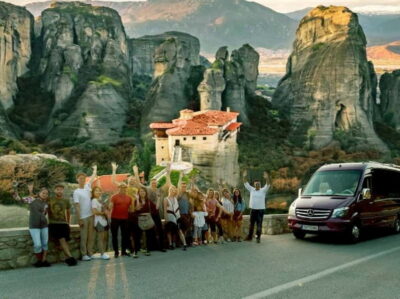 ★ 4.7Meteora Monasteries Day Trip with Caves and LunchFrom $874,670 reviews
 ★ 4.7Athens to Meteora: Monasteries, Caves & Seaside StopoversFrom $832,958 reviews
 ★ 4.8Full-Day Meteora Tour with Local Guide & Greek LunchFrom $822,101 reviews
 ★ 4.5Meteora Monasteries, Caves & Coastal Stopovers with LunchFrom $881,432 reviews
 ★ 4.5From Athens: Delphi and Meteora 2-Day Guided TourFrom $271825 reviews
 ★ 4.54-Day Classical Greece Tour: Epidaurus, Mycenae, Olympia, Delphi, MeteoraFrom $766732 reviews
 ★ 4.5Meteora Monasteries, Hermit Caves Tour with PickupFrom $87724 reviews
 ★ 4.02-Day Tour to Delphi & Meteora with Guide and Tickets From AthensFrom $269692 reviews
Browse the lists this tour appears in