
Reviewed · DELPHI DAY TRIPS
4-Day Tour of Mycenae, Epidaurus, Olympia, Delphi & Meteora
Ancient Greece, tightly packed and well-guided. I like the licensed guide and included entry fees with headphones, which makes the sites feel explained instead of just photographed. One thing to keep in mind: the days are long with serious driving time, and some roads can feel windy.
This route also has a nice balance of “big-name” ruins and unforgettable settings: Mycenae and Epidaurus in the Peloponnese, then Delphi’s oracle world, ending with Meteora monasteries hanging above the valley. Guides like Eustasis, Xenia, Rose, and Joy get mentioned often for turning myths into clear stories you can follow (and yes, they manage the timing).
In This Review
- Key reasons this tour works
- Connecting the myths: from Agamemnon to the monasteries in the clouds
- Day 1: Corinth Canal, Mycenae gold, and Epidaurus theater
- Day 2: Olympia’s stadium life, the Rio bridge, and the road toward Delphi
- Day 3: Delphi’s oracle world and the Charioteer bronze statue
- Day 4: Meteora monasteries on the rocks, then Thermopylae for the photo
- What you really get: licensed guide, headphones, and included entrances
- Hotels and meals: half-board convenience with buffet trade-offs
- Transport reality: comfortable bus, but expect long days
- Meteora dress code: the one rule that can ruin your day if you ignore it
- Value check: does $747 buy enough for the time you spend?
- Who should book this tour
- Should you book the 4-Day Mycenae, Epidaurus, Olympia, Delphi & Meteora tour?
- FAQ
- What’s included in the tour price?
- Are lunch and drinks included?
- Where does the tour start in Athens?
- Which language is the live guide?
- Is there an extra environmental fee?
- What are the Meteora clothing rules?
- Is this tour suitable for mobility issues or wheelchair users?
Key reasons this tour works
- Licensed guide plus headphones at major stops so you do not miss the points
- Mycenae and Epidaurus with guided time where it matters most
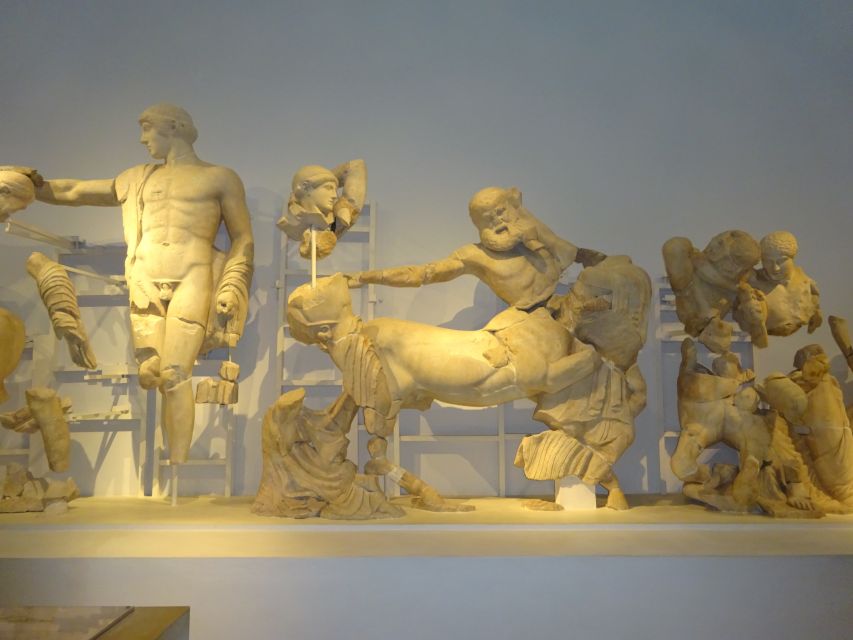
- Olympia’s stadium and museum for the Olympic Games story behind the stones
- Delphi Museum highlights including the bronze statue of the Charioteer
- Two Meteora monasteries in one day, with the monastic history explained as you climb in
- 4-star hotels with breakfast and dinner included to keep the days simple
North to the oracle, more Delphi runs
- Athens: Mythology of Delphi, Museum and Arachova Guided Tour
★ 4.7 · 5,102 reviews - From Athens: Delphi Full Day V.R. Audio Guided Tour
★ 4.6 · 3,028 reviews - From Athens: Small-Group Delphi, Museum & Arachova Day Trip
★ 4.8 · 2,476 reviews - Delphi English Day Trip from Athens with Official Guide
★ 4.5 · 2,199 reviews
Connecting the myths: from Agamemnon to the monasteries in the clouds
If you want Greece at full speed, this is built for you. In four days you cover the Peloponnese and central Greece, hitting major UNESCO-linked landmarks that most first-time visitors dream about. The pacing is structured: guided time at the big archaeological sites, then enough breathing room to eat and wander on your own.
What makes the itinerary feel coherent is the way it moves through themes. You start with the Aegean age and its legendary kings. Then you shift to places built around sacred worship and public competition. After that comes Delphi, where religion and politics mixed. Finally you end in Meteora, where faith was literally built upward, onto towering rock.
One practical note: this is not a “slow travel” tour. Expect long stretches on the bus, with plenty of scenic roads but limited total downtime.
Day 1: Corinth Canal, Mycenae gold, and Epidaurus theater
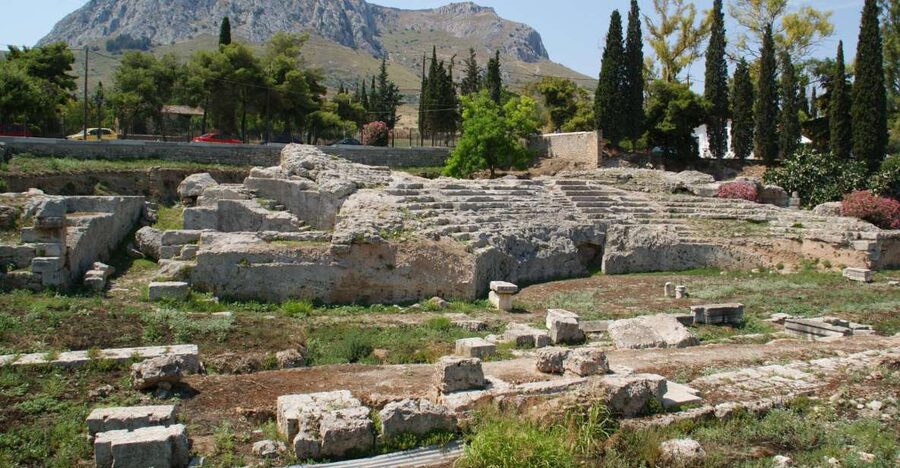
The day begins with a westward drive from Athens, then a photo stop at the Corinth Canal. The canal is short, but the view hits fast. It helps set the tone: you’re leaving the city and dropping into a geography full of ancient travel routes and hard-to-forget scale.
Next up is Mycenae, guided for about an hour. The focus here is the kingdom behind the stories: Mycenae is tied to Homer’s epics and the mythical Agamemnon. This isn’t just ruins-on-a-map. A good guide will help you see the place as a power center, not a random pile of stone.
After the guided time, you get free time for lunch on your own. That freedom matters on a day like this, because your appetite and your pace can be different from everyone else’s.
Then you drive to Epidaurus for the Ancient Theatre, also with guided time. The theater’s big selling point is the acoustics, and it’s easy to understand why people still talk about it. The cavea (seating area) and stonework are remarkably intact, and once you’re inside, it’s clear why performances and healing legends belonged here.
To break up the evening, you stop in Nafplio for free time. Nafplio is a classic Greek town to walk and reset. If you’re deciding between this tour and renting a car, that Nafplio stop is one of the reasons tours can feel worth it: you get a taste of a charming place without the logistics.
Accommodation is on a half-board basis (breakfast plus dinner). One practical detail: there can be a possibility that your first overnight is provided in Olympia, depending on the arrangement.
Day 2: Olympia’s stadium life, the Rio bridge, and the road toward Delphi
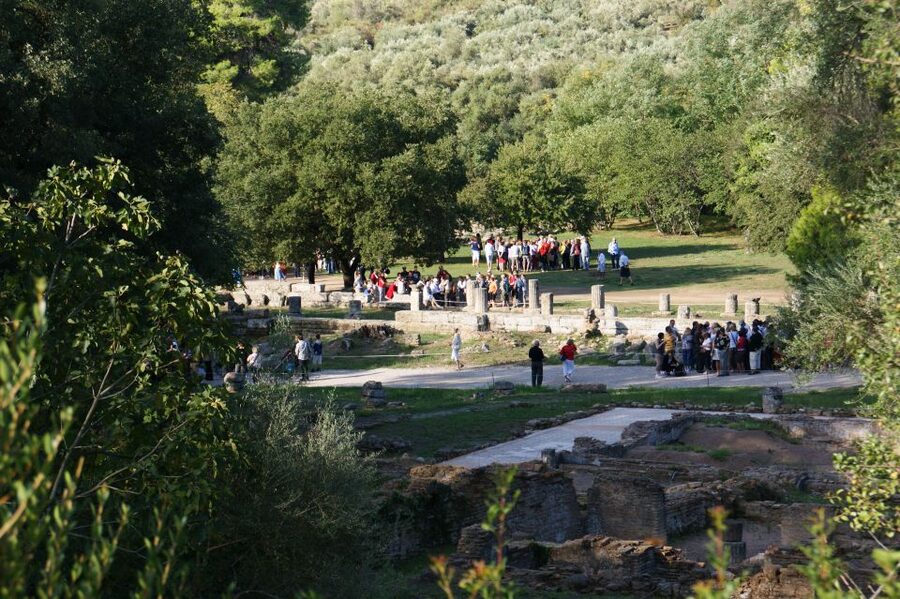
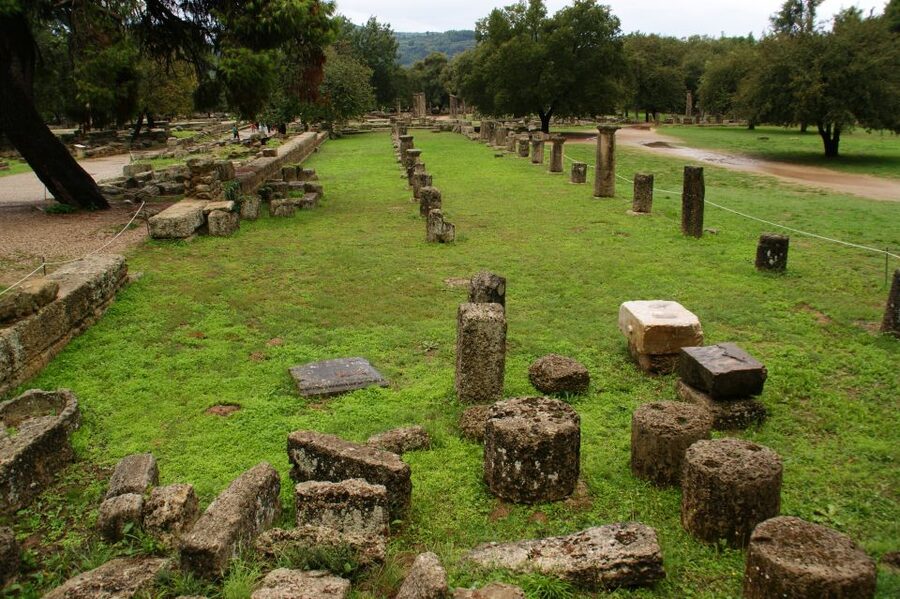
After breakfast, the tour heads to Olympia, ancient Greece’s major sanctuary and athletic hub. Olympia’s reputation rests on the Olympic Games, held every four years to honor Zeus. Seeing Olympia with a guide helps you understand why this place was bigger than sport. It was religion, identity, and politics in one package.
You’ll visit the Archaeological Site of Olympia and the Museum with guided time. The museum component is key. If you only saw the open-air ruins, you’d miss a lot of context that turns artifacts into meaning.
Then comes one of those “wait, that’s impressive” moments: the drive includes the Rio-Antirrio crossing, using the newer suspended bridge. It’s not an ancient site, but it gives you perspective on how modern Greece handles big geography.
You continue toward Delphi, arriving in time for dinner and overnight. Delphi is where the tour really sharpens. By day three, you’ll see why people once described it as the center of the world.
Monasteries in the sky, more Meteora trips
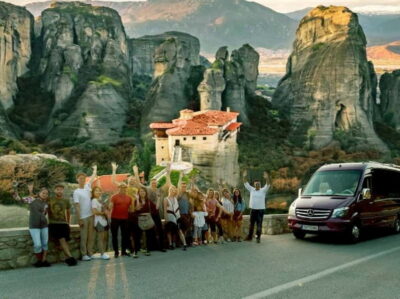



Day 3: Delphi’s oracle world and the Charioteer bronze statue
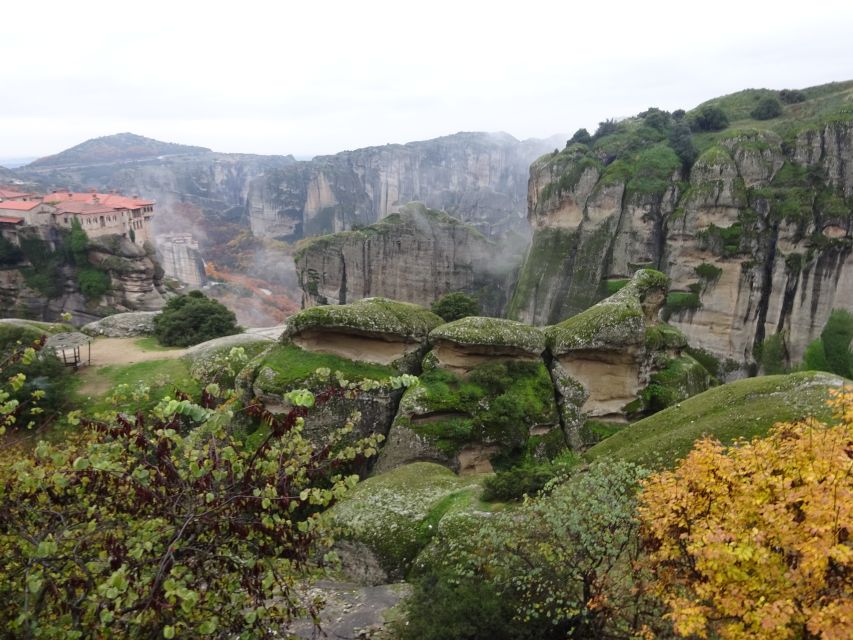
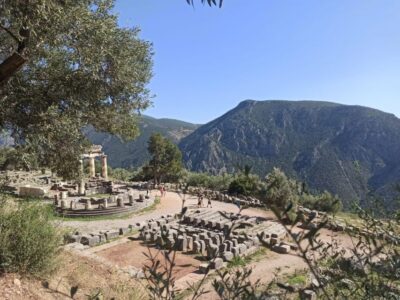
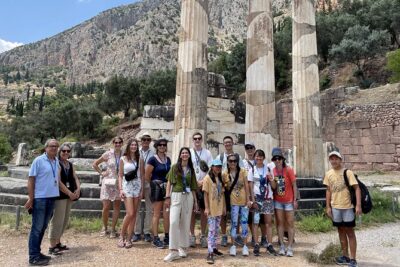
Delphi sits at the foot of Mount Parnassos, tucked between twin rock formations called the Phaedriades. The setting is dramatic, and the guide’s job is to connect the scenery to the story: Delphi was home to the most famous oracle in ancient Greece, and it became a symbol of unity for the Hellenic world.
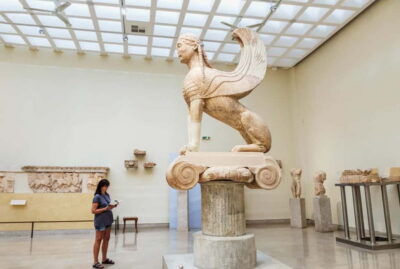
You’ll visit the archaeological site and then the Delphi Museum. This museum stop is one of the best reasons to pick this specific route rather than piecing together day trips. It houses standout objects that give you a stronger sense of ceremony and belief.
One highlight is the bronze statue of the Charioteer, dedicated to Apollo by Polyzalos, tyrant of Gela, after a chariot-race victory at the Pythian Games in 478 B.C. Even if you don’t memorize every name, you’ll feel the weight of the event. It’s the kind of piece that makes ancient sport look like a serious religious offering.
By the end of the day, you continue to Kalambaka for dinner and overnight. Kalambaka is your base for Meteora, and getting there the night before helps you avoid rushing on the mountain day.
Day 4: Meteora monasteries on the rocks, then Thermopylae for the photo
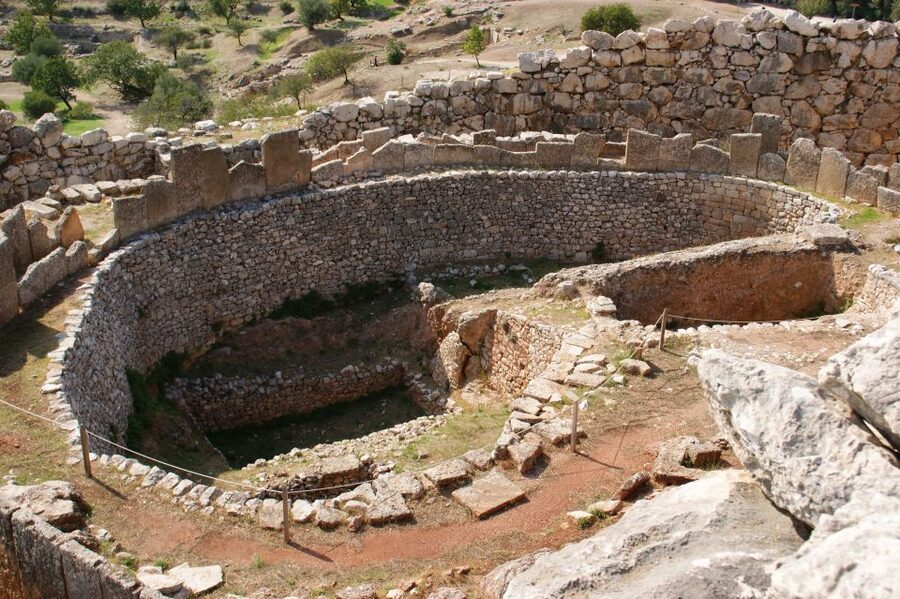
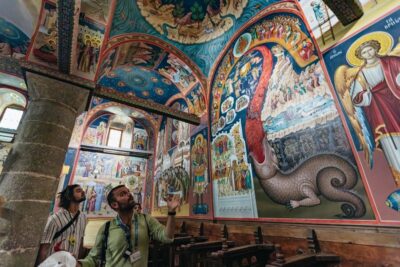
Today is the big visual payoff: Meteora. The name is often explained as suspended in air, but the bigger idea is the rock-community of monasteries above the valleys. The tour description covers the core backstory: monks worked with nets or long retractable ladders up to around 40 meters, farming below while building spiritual life above.
Meteora is also recognized by UNESCO as a unique phenomenon of cultural heritage. That matters because the story isn’t only about architecture. It’s about human choices made in a harsh, steep place—how communities survived, organized, and protected their faith.
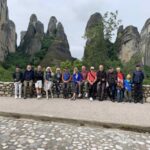
On this tour, you visit two incredible Meteora monasteries with guided time. Dress rules matter here. Men must wear long trousers. Women must wear dresses or skirts (the provided note specifies that they need to be down to the knees). If you forget, you might need to solve it quickly on-site.
After Meteora, the return drive includes a Thermopylae photo stop. You get the classic historical stop without turning the day into a museum marathon, then you’re back to Athens around 19:00 with drop-offs at many central hotels.
What you really get: licensed guide, headphones, and included entrances
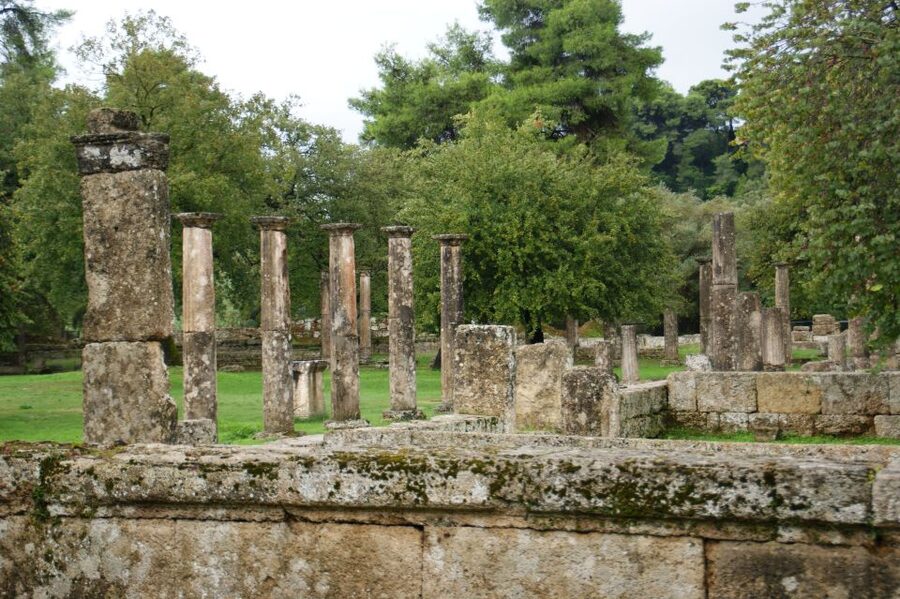
The inclusion list is what makes this kind of tour feel efficient. You get a licensed guide and headphones during attraction visits, which is a practical upgrade for large sites. It helps when you’re walking through crowds, standing in open areas, or just trying to hear explanations clearly.
Entry fees and museum tickets are covered, which means you spend your time inside the sites instead of hunting down payment counters. It also reduces the “surprise bill” feeling that can happen with self-guided trips where you pay add-ons one by one.
The guide quality shows up in how the day feels. In past groups on this route, names like Eustasis, Xenia, Rose, Joy, Christina, Stathi, and George have been highlighted for storytelling and keeping people moving on schedule. That’s not trivia—it’s the difference between a tour where you see stones and a tour where you understand what you’re seeing.
Hotels and meals: half-board convenience with buffet trade-offs
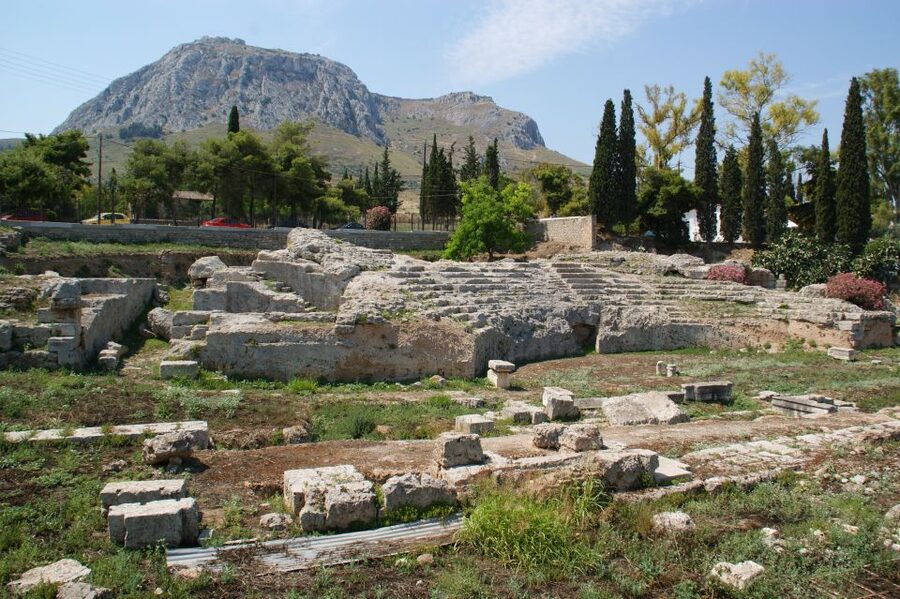
You’ll stay in 4-star hotels for three nights on a half-board basis. That means breakfast and dinner are at the hotel, while lunch isn’t included (you handle it on your own during free time or during breaks).
This structure is useful for two reasons. First, you do not have to plan meals while you’re juggling four different regions. Second, dinner is usually timed to the day’s travel rhythm.
Now the trade-off: many hotel dinners on group tours can lean repetitive because the food is buffet-style. Several comments mention meals that were average to good rather than stand-out. Breakfast tends to land better than dinner for many people, so if breakfast is your favorite meal, you’ll likely enjoy it.
If you like more variety, use the free time stops—especially Nafplio and the dinner breaks—to grab a separate lunch or snack when you can.
Transport reality: comfortable bus, but expect long days
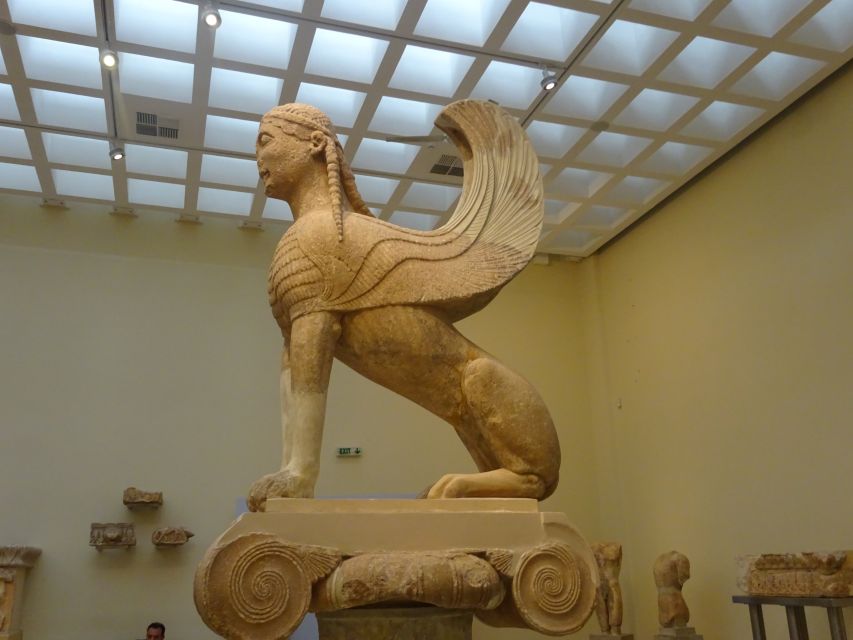
You’re traveling by air-conditioned bus with a driver, and Wi‑Fi is available on the coach. That helps for small down-time between sites, especially on transfer days.
Still, plan your expectations. This itinerary includes multiple long drives: Peloponnese sites on day one, the Olympia-to-Delphi push on day two, and the Delphi-to-Kalambaka movement on day three, plus the Meteora day and the return. The roads can be windy, and there’s not much control over how your body feels on a bus.
If you have motion sickness, or you struggle with long seated stretches, this is not the best match. The tour data also says it isn’t suitable for mobility impairments, wheelchair users, people over 80, or people with claustrophobia or a cold.
Meteora dress code: the one rule that can ruin your day if you ignore it
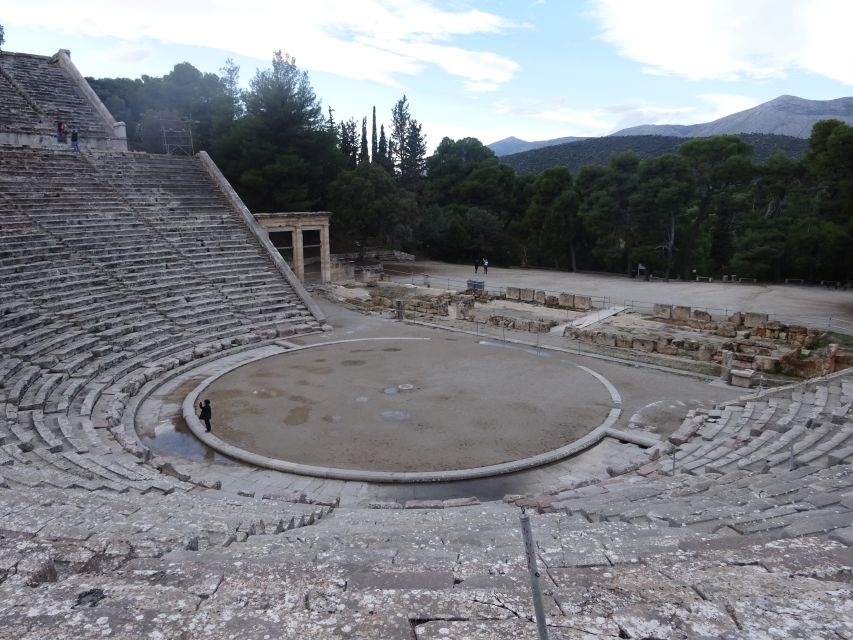
Meteora is where preparation pays off. The monastery visits come with a clear clothing expectation: men need long trousers, and women need dresses or skirts (down to the knees, per the note).
If you show up in the wrong clothes, you may have limited options at the hotel or on-site. So I’d rather you plan ahead than rely on last-minute fixes. Wear something comfortable you can walk in, then adjust for the rules before you enter.
Also pack comfortable shoes. Even with buses and guided logistics, you’ll still be walking on uneven paths and stairs.
Value check: does $747 buy enough for the time you spend?
At $747 per person for a four-day tour, the value comes from what’s included: licensed guiding, headset use, entry fees, 4-star lodging (three nights), and hotel breakfast and dinner. You’re also covering five headline regions and a major modern engineering sight (the Rio-Antirrio bridge).
If you tried to do this route yourself, you’d pay for entrance tickets, museum tickets, and multiple long-distance transfers. You’d also spend time figuring out schedules across rural areas and coordinating museum opening hours. The price is trying to buy you less stress and more interpretation.
Where the value can feel weaker is the parts you can’t control: bus time and hotel food style. If you hate group schedules, or if you’re a fussy eater, you might feel less satisfied with the dinner quality.
My take: this is solid value if you want a structured “greatest hits” Greece trip and you’re okay with the trade-offs of a packaged itinerary.
Who should book this tour
Book it if:
- You want a first-timer-friendly route with major classics: Mycenae, Epidaurus, Olympia, Delphi, and Meteora
- You like guided explanations and want fewer logistics headaches
- You’re comfortable with long bus days and you can walk through archaeological sites
Consider another style of trip if:
- You need lots of free time in towns (this route prioritizes sites)
- You’re sensitive to motion sickness
- You can’t meet Meteora dress expectations
- You strongly prefer small group travel (some departures can be larger)
Should you book the 4-Day Mycenae, Epidaurus, Olympia, Delphi & Meteora tour?
Yes, if your top goal is to see the big ancient highlights in a short window and have them explained in plain, story-driven language by a licensed guide. The route works because it pairs each famous site with enough context to make it click, and it ends with Meteora’s monasteries, which are the kind of place you remember for years.
If you hate bus time or you want more independent exploration, you might find the schedule tight. But if you’re the type who likes a plan and wants to check major Greece landmarks off the list with smart pacing, this is a good choice.
FAQ
What’s included in the tour price?
The price includes a licensed guide, entrance fees to attractions and museums, headphones during attraction visits, air-conditioned coach transport, and 3 night stays in 4-star hotels with breakfast and dinner.
Are lunch and drinks included?
No. Lunch and drinks are not included, so you’ll usually pay for lunch on your own during free time.
Where does the tour start in Athens?
Meeting is at Hotel Amalia Athens, with a departure time listed as 8:30 AM. Pickup from selected Athens central hotels is also offered earlier for hotels with bus access.
Which language is the live guide?
The tour offers a live English/French guide. The language note also specifies English and French on Monday departures.
Is there an extra environmental fee?
Yes. There is an environmental fee of 10 EUR per room per night, paid directly to the hotel reception.
What are the Meteora clothing rules?
At Meteora, men must wear long trousers and women must wear dresses or skirts (with the note that skirts/dresses need to be down to the knees).
Is this tour suitable for mobility issues or wheelchair users?
No. The tour data states it is not suitable for people with mobility impairments and it’s not suitable for wheelchair users. It’s also not suitable for people with motion sickness.
Into the Argolid: Mycenae and Nafplio
- From Athens: Small-Group Mycenae, Epidaurus & Nafplio Trip★ 4.8 · 2,805 reviews
- From Athens: Mycenae, Epidaurus & Nafplio Full-Day Tour★ 4.5 · 2,530 reviews
- Mycenae, Epidaurus and Nafplio Tour from Athens★ 4.6 · 2,201 reviews
- 4-Day Classical Greece Tour: Epidaurus, Mycenae, Olympia, Delphi, Meteora★ 4.5 · 732 reviews
- Athens: Ancient Corinth & Nafplio Full Day Trip with Swim★ 4.8 · 531 reviews
- Mycenae and Nafplion Day Trip from Athens with Official guide★ 4.5 · 501 reviews
The Monasteries of Meteora
- Athens: Meteora Monasteries Day Trip with Caves and Lunch★ 4.7 · 4,670 reviews
- Athens to Meteora: Monasteries, Caves & Seaside Stopovers★ 4.7 · 2,958 reviews
- Athens: Full-Day Meteora Tour with Local Guide & Greek Lunch★ 4.8 · 2,101 reviews
- Athens: Meteora Monasteries, Caves & Coastal Stopovers with Lunch★ 4.5 · 1,432 reviews
- Meteora Monasteries & Caves DayTrip from Athens with Greek Lunch★ 4.5 · 879 reviews
- From Athens: Delphi and Meteora 2-Day Guided Tour★ 4.5 · 825 reviews
North to Delphi: More Day Trips
- Athens: Mythology of Delphi, Museum and Arachova Guided Tour★ 4.7 · 5,102 reviews
- From Athens: Delphi Full Day V.R. Audio Guided Tour★ 4.6 · 3,028 reviews
- From Athens: Small-Group Delphi, Museum & Arachova Day Trip★ 4.8 · 2,476 reviews
- Delphi English Day Trip from Athens with Official Guide★ 4.5 · 2,199 reviews
- Athens: Delphi Oracle & Museum Tour with a Licensed Guide★ 4.8 · 2,121 reviews
- Historical Delphi One Day Tour with Arachova Stop & Expert Guide★ 4.5 · 1,247 reviews
Fresh Off the Boat: New Athens Reviews


Delphi Day Trips, compared.
 ★ 4.7Mythology of Delphi, Museum and Arachova Guided TourFrom $305,102 reviews
 ★ 4.6From Athens: Delphi Full Day V.R. Audio Guided TourFrom $303,028 reviews
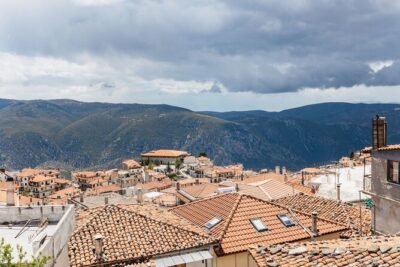 ★ 4.8From Athens: Small-Group Delphi, Museum & Arachova Day TripFrom $342,476 reviews
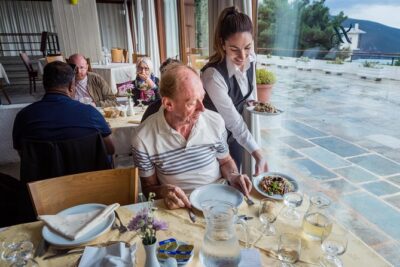 ★ 4.5Delphi English Day Trip from Athens with Official GuideFrom $782,199 reviews
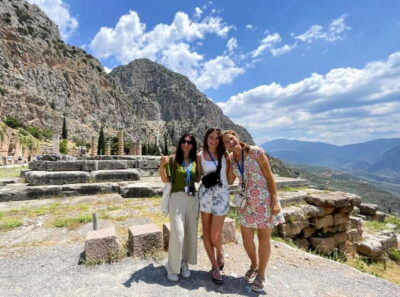 ★ 4.8Delphi Oracle & Museum Tour with a Licensed GuideFrom $362,121 reviews
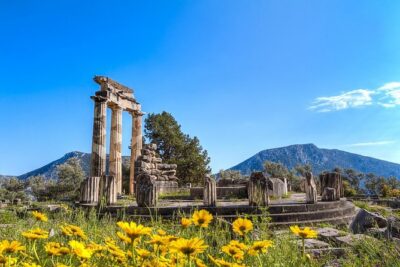 ★ 4.5Historical Delphi One Day Tour with Arachova Stop & Expert GuideFrom $341,247 reviews
 ★ 4.5Premium Delphi Day Trip with an Expert Guide, Museum & LunchFrom $381,100 reviews
 ★ 4.5From Athens: Delphi and Meteora 2-Day Guided TourFrom $271825 reviews
Browse the lists this tour appears in