
Reviewed · DELPHI DAY TRIPS
4 Days Classical Private Tour/ Corinth,Mycenae,Nafplio,Sparta,Olympia,Delphi
Four days, five eras, one unforgettable drive. You’ll connect the big-name classical stops with smart timing: private transport and direct pickup/drop-off make it feel effortless, and the route hits multiple UNESCO World Heritage areas. I especially like the mix of major ruins plus small moments, like walking through Ancient Corinth and later catching views from Palamidi. The onboard Wi‑Fi also makes the longer stretches more pleasant.
One thing to consider: the sightseeing fees and museum entries are not included, and you’ll also be doing a lot of walking at sites with stairs and uneven ground. If you want extra depth, there’s an option to hire an archaeological guide, but that’s an added cost.
In This Review
- Key Things You’ll Notice on This 4-Day Classical Route
- Aegean to Oracle: Why This Route Feels Efficient
- Corinth Canal and Ancient Corinth: Seeing the Split Between Seas
- Mycenae and the Citadel: Bronze Age Power Without the Fuzz
- Nafplio’s Palamidi Castle: The View Is the Payoff
- Day 2 in Nafplio and Argos: Fortress Views and Museum Detail
- Sparta’s Theater, Leonidas, and Mystras’ UNESCO Ruins
- Olympia: Stadium Time Travel and Three Museums
- Rio–Antirion and the Gulf Town Detour Before Delphi
- Delphi’s Oracle: Apollo Temple, Museum Context, and the Tholos
- Price and Logistics: What Your Money Actually Buys
- What This Tour Suits Best (and Who Might Want Something Else)
- Should You Book This 4-Day Classical Private Tour?
- FAQ
- What cities does the tour cover?
- Is pickup and drop-off included?
- What time does the tour start?
- Is Wi‑Fi provided during the drive?
- Are archaeological site and museum tickets included?
- Will we stay overnight during the tour?
- Can I hire a guide to walk through the sites with us?
Key Things You’ll Notice on This 4-Day Classical Route
- UNESCO stops in four places: Mycenae, Mystras, Olympia, and Delphi.
- Private door-to-door in Athens: pickup and drop-off from your hotel or apartment (or another requested location).
- Wi‑Fi on board: helpful on long drives between the Peloponnese and central Greece.
- A mix of ruins and context: museums are built near sites so you’re not just guessing what you’re seeing.
- Venetian and fortress views: Palamidi Castle and Acronafplia bring the drama without needing a ticket to understand why.
- A driver-led experience, not a licensed guide: you can add a separate archaeologist guide for the walk-throughs if you want.
North to the oracle, more Delphi runs
- Athens: Mythology of Delphi, Museum and Arachova Guided Tour
★ 4.7 · 5,102 reviews - From Athens: Delphi Full Day V.R. Audio Guided Tour
★ 4.6 · 3,028 reviews - From Athens: Small-Group Delphi, Museum & Arachova Day Trip
★ 4.8 · 2,476 reviews - Delphi English Day Trip from Athens with Official Guide
★ 4.5 · 2,199 reviews
Aegean to Oracle: Why This Route Feels Efficient
This is built as a classic Greece loop with the driving handled for you. You start at 8:00 am, then the day-by-day structure keeps you moving between the Peloponnese and Delphi without awkward transfers. Because it’s private—only your group—your pace stays yours.
Two practical perks matter more than they sound. First, pickup and drop-off are from your Athens accommodation (or Athens-area location you request), which saves real time. Second, the vehicle is air-conditioned and kept clean, and the route includes onboard Wi‑Fi, which is a lifesaver for long road stretches.
The main trade-off is effort: you’re stacking major archaeology sites into four days. If you like a tight plan, great. If you want lots of free time in cafés, you may feel the schedule.
Corinth Canal and Ancient Corinth: Seeing the Split Between Seas

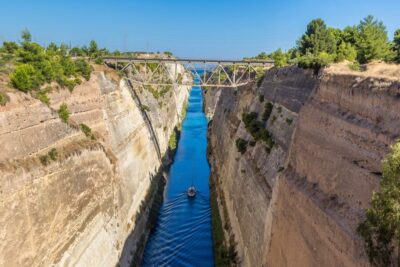
Day 1 begins with the Corinth Canal, a man-made cut joining the Aegean and Ionian Seas. It’s the kind of spot that’s short on time but big on wow factor. You’ll pause for photos, walk onto the pedestrian bridge, and view the canal from about 80 meters up.
Next comes Ancient Corinth (Archaia Korinthos), where history layers fast. The Romans demolished the city in 146 BC, then a new Roman city rose later, and the site became important again in early Christian times. Ancient Corinth is also tied to Saint Paul’s letters (First and Second Corinthians), so it’s more than marble and columns—it’s connected to ideas and people.
You’ll also visit the Temple of Apollo on Temple Hill. The remains sit high and rocky, built in Doric style around 550 BC on top of earlier ruins. Even with only parts surviving, it helps you understand why Corinth grew prosperous enough to build something this dominant.
A good break follows at the Archaeological Museum of Corinth. It’s free and compact enough to fit the day. It covers everything from Geometric to Hellenistic, plus Roman and Byzantine finds, so your walk through the site has context instead of guesswork.
Mycenae and the Citadel: Bronze Age Power Without the Fuzz

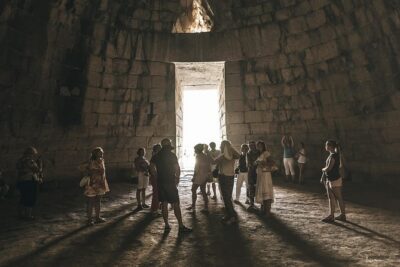
Still on Day 1, you jump into the Citadel and Treasury of Atreus area. The Treasury of Atreus (also called the Tomb of Agamemnon) is a Bronze Age tholos from around 1250 BC. The name “Agamemnon” is tied to earlier assumptions, and archaeologists believe the burial likely predates Agamemnon’s era—but the monument itself is what hits. It’s one of the most impressive Mycenaean survivals.
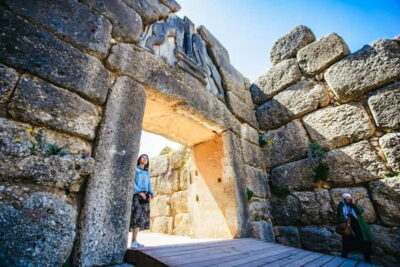
Then you move to the Archaeological Site of Mycenae, with defensive walls, the Lions Gate, and the famous corbelled tholos tombs. The site sits strategically over the Argolid plain, so even if you didn’t read a page of myth, the geography explains why this place mattered.
To close the loop, the Archaeological Museum of Ancient Mycenae is right next door. That’s valuable because it keeps your brain from turning the whole day into one blur. You’ll see objects excavated nearby, which helps you connect what’s on the ground with what ended up in the ground.
If you want the smoothest experience, keep your walking shoes simple and comfortable. Mycenae is all about endurance: uneven ground, some stairs, and lots of time spent looking up at stone that was built to impress.
Into the Argolid, past the Lion Gate

Nafplio’s Palamidi Castle: The View Is the Payoff
After Mycenae, the tour reaches Náfplio, and you stay overnight here. This matters because it breaks up the day and gives you a real base for dinner and evening wandering.
Before you fully enjoy the town, you’ll visit Palamidi Castle (Venetian fortification). It’s a preserved fort on a hill with a system of bastions designed so defenders could keep fighting even if one area was breached. It’s also known for a darker chapter: it served as a prison in the 1800s.
Then there’s the best practical reason to go: the view. Palamidi commands the Argolic Gulf and the town below. You’ll be facing stairs—there’s a famous local joke about 999 steps to the fortress—so pace yourself if stairs are an issue.
Náfplio itself is one of the most picturesque stops on mainland Greece. It has a medieval seaport story, then Venetian and Ottoman layers, and it even served as capital during parts of the Greek Revolution era. Overnight here helps you feel that the route isn’t just about monuments. You get a coastal town rhythm too.
Day 2 in Nafplio and Argos: Fortress Views and Museum Detail
Day 2 starts with the Archaeological Museum of Nauplion, housed in a Venetian-style stone building. It’s one of those stops that works well between big outdoor ruins. You’ll see finds including the Bronze Armor from Dendra, plus tools and equipment excavated from the region.
Next, Acronafplia Fortress gives you a different angle on the same town. This one rises from the old town, and parts of it reach back to earlier periods before later Romans, Franks, Venetians, and Turks expanded it. The restoration work and footpaths inside make it feel like you’re walking through layers rather than just looking at a wall.
You also have time for Argos, often described as continuously inhabited for thousands of years. The city is large for the region, and it’s tied to ancient monuments and an agricultural economy. Even if you’re mostly passing through, it’s a useful reminder that Greece wasn’t frozen in ancient times.
Later in the day, you head to Sparta, and that shifts the mood back toward classical and military themes.
Sparta’s Theater, Leonidas, and Mystras’ UNESCO Ruins
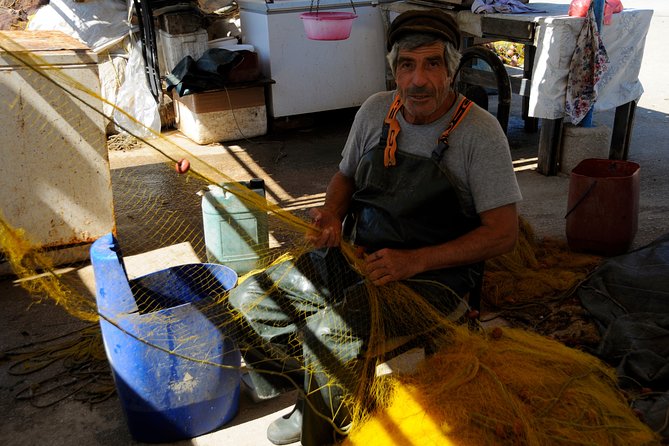
In Sparta, you’ll visit the Archaeological Museum of Sparta. It’s an older provincial museum building from the late 1800s and focused on local archaeological material. The ticket is not included, but it’s a short, structured stop—perfect when you need a change from open-air walking.
Then come the Acropolis and Ancient Theater. Sparta’s legacy is tied to military training and hoplites, with the city-state’s rivalries fueling the big wars of the Classical period. Even if you’re not chasing battle dates, it helps to see how Sparta’s ruins fit together.
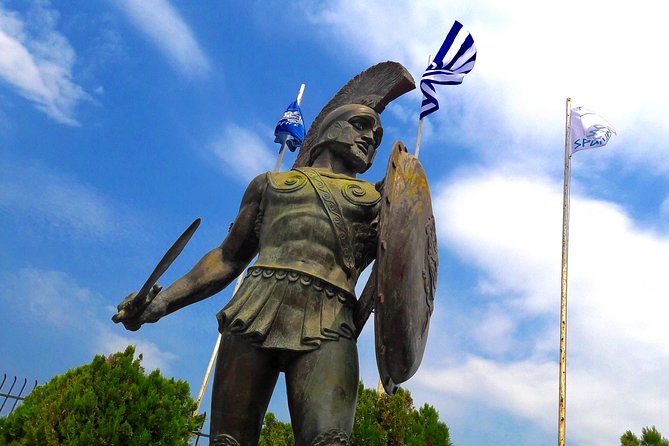
A quick, memorable stop follows at the Leonidas Monument and the nearby Leonidas tomb theory. There’s a monument in front of a stadium, and excavations uncovered a limestone edifice dated to the 5th century BC. Even though the exact purpose isn’t verified, the site is tied to the legend of Leonidas after Thermopylae.
Finally, the day turns to the UNESCO Archaeological Site of Mystras. This is the “stop that feels like a whole civilization” moment. Mystras grew around a fortress established in 1249, then passed between powers—Byzantines, Turks, Venetians—and was abandoned in 1832. What remains is a medieval ruin set into a dramatic hillside setting.
Mystras is where the route earns its UNESCO credit beyond ancient Greece. It’s a bridge from Classical myth into Byzantine reality, and it’s best when you let your time stretch out—at least 2 hours here feels right.
Olympia: Stadium Time Travel and Three Museums

Day 3 is centered on Olympia, one of the most influential ancient Greek sanctuaries. The ruins sit in a quiet valley near where rivers meet, and in antiquity it was known for the Olympic Games every four years starting in 776 BCE.
You’ll visit the Archaeological Site of Olympia first. Entrance fees are not included, but the included plan is structured: you get about two hours at the sanctuary area, with the ancient stadium included. That’s the part that makes Olympia feel real. You stand where athletes competed, not just near a collection of artifacts.
Then there are two museums. The Archaeological Museum of Olympia is where the finds go, including famous statuary like the Hermes of Praxiteles and the Nike of Paionios. The Museum of the Olympic Games focuses on how the Games worked, with explanations about the events and even what happened when women tried to watch despite prohibitions.
This museum pairing is one of the best value moves on the whole itinerary. If you’re the type who likes to understand what you’re seeing, your day doesn’t become “look, read, move on.” It becomes “see the place, then learn the system.”
Rio–Antirion and the Gulf Town Detour Before Delphi

After Olympia, you’ll head to the Rio–Antirion Bridge area. You’ll take a ferry for about 20 minutes and admire the bridge from the water. This is a smart change of pace. After hours of stone and statues, the gulf and the bridge feel like a reset button.
Then you visit coastal stops on the north coast of the Gulf of Corinth: Nafpaktos and Galaxidi. Nafpaktos (also known historically as Lepanto) is tied to Crusades-era power shifts and Ottoman–Venetian wars. Galaxidi is smaller and port-focused, with a natural double harbor and a laid-back vibe that’s easy to enjoy even with limited time.
The day also includes a drive via Mount Parnassus, and you’ll overnight on the slopes in a traditional village. That matters because Delphi feels better when you’re not rushing in at the last second. Even a simple overnight helps you wake up with the right mood.
Delphi’s Oracle: Apollo Temple, Museum Context, and the Tholos
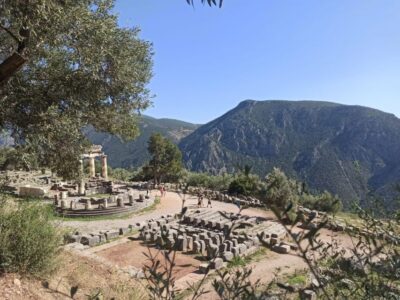
Day 4 is all-in on Delphi, the UNESCO sanctuary that grew rich from the oracle of Pythia. It’s set on the slopes of Mount Parnassus, overlooking the coastal plain and the valley of Phocis. You’ll also hear the famous idea that Delphi marked the center of the ancient world, tied to the omphalos stone monument.
Your first big stop is the Temple of Apollo at Delphi. It’s about 1.5 hours at the site, and you’ll see how Delphi’s importance attracted city-states across the Greek world. This is where the architecture and the inscriptions feel like politics and religion sharing the same stage.
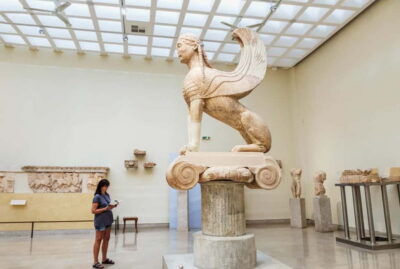
Next is the Delphi Archaeological Museum. It’s one of the best ways to make the site click. You’ll see sculpture, statues, and small objects connected to the sanctuary’s religious and political activity over many centuries.
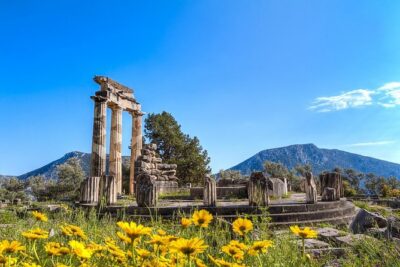
Then comes Tholos of Athena Pronaia, a circular building built between 380 and 360 BC. You’ll see the Doric column exterior and the different column orders inside. This is the kind of stop that’s short but satisfying because it shows design choices that weren’t random.
After Delphi, you make two more context stops in central Greece: Livadia and Thebes’ museum. Livadia is tied to the oracle of Trophonius, which people consulted even after other oracles faded. The Archaeological Museum of Thebes covers finds from Paleolithic through Post Byzantine periods, which gives you a broader sense of how the region kept changing over time.
Finally, you return to Athens in the evening. It’s a full day, but the order makes sense: site first, museum context second, then surrounding regional stories before the drive back.
Price and Logistics: What Your Money Actually Buys
The tour price is listed as $1,376.08 per person for about four days, and the experience is private. What you’re paying for is the end-to-end routing: pickup and drop-off in Athens, air-conditioned private vehicles, fuel and tolls, parking, and even ferry tickets.
One caution: accommodation and many entrances are not included. Lodging is priced as an additional cost per booking (with a per-double-room-per-night figure), and site/museum admissions are charged per person, with winter pricing and summer pricing listed separately. That means your final budget depends on the season and how many paid sites you choose to include.
If you like straightforward value math, treat it like this: the transport and planning are handled, while the “ticket stack” is your responsibility. If you’re traveling as a group and want a single driver doing the heavy lifting, it can still be a good deal compared to trying to coordinate cars and hotels on your own.
Also note that the driver is described as not being a licensed tour guide for walking inside sites. If you want an archaeologist to guide you on-site, there’s an additional hire option.
What This Tour Suits Best (and Who Might Want Something Else)
This route is ideal if you want a classics-focused itinerary with serious landmarks packed into a small number of days. You’ll enjoy it most if you’re comfortable trading some free time for efficient logistics and more ruins-per-day.
It’s also a good choice if you prefer learning in small bursts. You get museums near key sites and enough structure to avoid confusion, especially at Olympia and Delphi.
If your top priority is slow travel—long meals, fewer stops, and minimal walking—you might feel rushed. And if you don’t want to manage entrance fees, you’ll want to budget for them upfront.
Should You Book This 4-Day Classical Private Tour?
Book it if you want someone to handle the driving, you like stacking major archaeological hits, and you’ll appreciate museum context built into the schedule. The private door-to-door service from Athens, the Wi‑Fi on longer drives, and the mix of UNESCO sites are the big reasons this works.
Skip or switch to a lighter plan if stairs and rough ground wear you out fast, or if you dislike paying for multiple sites and museums as you go. Also think about timing: some museums close on Tuesdays and around major holidays, which can change what’s open when you travel.
If this is your dream itinerary—Corinth to Mycenae, Sparta to Mystras, Olympia to Delphi—this is one of the more practical ways to do it in a short window.
FAQ
What cities does the tour cover?
The route focuses on Corinth and Ancient Corinth, Mycenae and its museum, Náfplio (overnight), Sparta, Mystras (UNESCO), Olympia (overnight), plus stops leading to Delphi, Livadia, and Thebes, with return to Athens in the evening.
Is pickup and drop-off included?
Yes. Pickup and drop-off are offered from your hotel or apartment in Athens, Piraeus, or another location you request.
What time does the tour start?
Start time is 8:00 am.
Is Wi‑Fi provided during the drive?
Yes. Onboard Wi‑Fi is listed as included.
Are archaeological site and museum tickets included?
No. Entrance fees are not included, and you’ll pay per site or per museum. Winter and summer prices are listed in the tour information.
Will we stay overnight during the tour?
Yes. The itinerary includes overnight stays in Náfplio, Olympia, and a traditional village on the slopes of Mount Parnassus, with accommodation costs listed as additional.
Can I hire a guide to walk through the sites with us?
Yes. The driver is not described as a licensed tour guide for on-site walking. If you want an archaeologist guide, there is an additional charge available.
Corinth and the Canal
- From Athens: Ancient Corinth Day Trip with Canal & VR Guide★ 4.6 · 1,073 reviews
- Biblical Tour Letters ToThe Corinthians St Paul’s Footsteps 6Hour★ 5.0 · 1,065 reviews
- Private Biblical Tour Ancient Corinth & Isthmus Canal from Athens★ 5.0 · 762 reviews
- Athens: Ancient Corinth & Nafplio Full Day Trip with Swim★ 4.8 · 531 reviews
- Athens: Corinth Canal, Mycenae & Nafplio Premium Guided Tour★ 4.7 · 322 reviews
- Private Tour of Apostle Paul’s Footsteps in Ancient Corinth★ 5.0 · 275 reviews
Into the Argolid: Mycenae and Nafplio
- From Athens: Small-Group Mycenae, Epidaurus & Nafplio Trip★ 4.8 · 2,805 reviews
- From Athens: Mycenae, Epidaurus & Nafplio Full-Day Tour★ 4.5 · 2,530 reviews
- Mycenae, Epidaurus and Nafplio Tour from Athens★ 4.6 · 2,201 reviews
- 4-Day Classical Greece Tour: Epidaurus, Mycenae, Olympia, Delphi, Meteora★ 4.5 · 732 reviews
- Athens: Ancient Corinth & Nafplio Full Day Trip with Swim★ 4.8 · 531 reviews
- Mycenae and Nafplion Day Trip from Athens with Official guide★ 4.5 · 501 reviews
North to Delphi: More Day Trips
- Athens: Mythology of Delphi, Museum and Arachova Guided Tour★ 4.7 · 5,102 reviews
- From Athens: Delphi Full Day V.R. Audio Guided Tour★ 4.6 · 3,028 reviews
- From Athens: Small-Group Delphi, Museum & Arachova Day Trip★ 4.8 · 2,476 reviews
- Delphi English Day Trip from Athens with Official Guide★ 4.5 · 2,199 reviews
- Athens: Delphi Oracle & Museum Tour with a Licensed Guide★ 4.8 · 2,121 reviews
- Historical Delphi One Day Tour with Arachova Stop & Expert Guide★ 4.5 · 1,247 reviews
Fresh Off the Boat: New Athens Reviews





Delphi Day Trips, compared.
 ★ 4.7Mythology of Delphi, Museum and Arachova Guided TourFrom $305,102 reviews
 ★ 4.6From Athens: Delphi Full Day V.R. Audio Guided TourFrom $303,028 reviews
 ★ 4.8From Athens: Small-Group Delphi, Museum & Arachova Day TripFrom $342,476 reviews
 ★ 4.5Delphi English Day Trip from Athens with Official GuideFrom $782,199 reviews
 ★ 4.8Delphi Oracle & Museum Tour with a Licensed GuideFrom $362,121 reviews
 ★ 4.5Historical Delphi One Day Tour with Arachova Stop & Expert GuideFrom $341,247 reviews
 ★ 4.5Premium Delphi Day Trip with an Expert Guide, Museum & LunchFrom $381,100 reviews
 ★ 4.5From Athens: Delphi and Meteora 2-Day Guided TourFrom $271825 reviews
Browse the lists this tour appears in