
Reviewed · CORINTH DAY TRIPS
8 Days Apostle Paul tour/Neapolis, Philippi, Veria,Thessaloniki, Athens,Corinth
Apostle Paul steps, minus the tour-bus rush. This private 8-day drive links Apostle Paul sites with UNESCO-listed Meteora monasteries and major Macedonian capitals, then finishes with Greece’s classic big hits in Athens and Corinth. I love the flexible driving style that lets you pause for viewpoints and small detours, and I love that the route connects classical Greece to early Christianity in a way that feels logical, not random. One possible drawback: entrance fees and a few of the overnight stops are extra, so your total depends on season and which add-on stays you choose.
The format is simple: pickup in Athens (or Piraeus) in the morning, then a private, air-conditioned vehicle with an experienced English-speaking driver. You get audio documentary narration during the drive, but your driver is not a licensed archaeology guide once you’re on foot, so plan to enjoy the sites at your own pace or hire a specialist guide if you want expert commentary at every ruin.
In This Review
- The Key Things That Make This Apostle Paul Tour Work
- Entering Greece’s Biblical Route: Thermopylae to Meteora (Day 1)
- Meteora at Dawn and Aigai’s Royal Tombs (Day 2)
- Pella, St. Demetrius, the White Tower, and the Rotunda (Day 3)
- Philippi and Lydia’s Baptistery: Paul Gets Specific (Day 4)
- From Amphipolis and Dion to Olympus Nights (Day 5)
- Delphi’s Oracle Complex and the Road South (Day 6)
- Ancient Corinth and Athens by Areios Pagos (Day 7–8)
- Practical Pricing and Value: What $2,961.45 Covers (and What Doesn’t)
- Logistics You Should Plan For (Without Overthinking It)
- Who This Tour Is Best For
- Should You Book It? My Straight Answer
- FAQ
- FAQ
- Where does the tour pick me up?
- What time does the tour start?
- Is this a private tour?
- Are entrance fees included?
- Will I have an archaeological guide at the sites?
- How long is the tour?
The Key Things That Make This Apostle Paul Tour Work
- Flexible route, not fixed treadmill timing: the day-by-day plan is structured, but you can slow down at places that catch your eye.
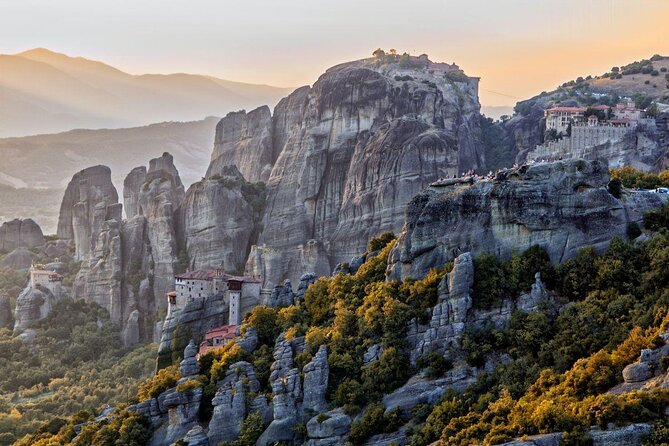
- Meteora twice, with different light: you get a sunset/photography-style loop one day and an early-morning look the next, which really changes the feel of the rock monasteries.
- Paul’s story stitched through real locations: Philippi, Lydia’s baptistery, and key Thessaloniki/Veria sites are built into the same drive, so the timeline feels connected.
- Macedonia’s backbone, not just Athens: Vergina/Aigai, Pella, Dion, Amphipolis, and Aristotle’s school area help you understand the wider world Paul moved through.
- A practical private-car pace: you’re not fighting crowds just to get to the next stop, and you can manage long drives more comfortably.
The canal and old Corinth, a few more days
- From Athens: Ancient Corinth Day Trip with Canal & VR Guide
★ 4.6 · 1,073 reviews - Biblical Tour Letters ToThe Corinthians St Paul’s Footsteps 6Hour
★ 5.0 · 1,065 reviews - Private Biblical Tour Ancient Corinth & Isthmus Canal from Athens
★ 5.0 · 762 reviews - Athens: Ancient Corinth & Nafplio Full Day Trip with Swim
★ 4.8 · 531 reviews
Entering Greece’s Biblical Route: Thermopylae to Meteora (Day 1)
Day 1 starts with Thermopylae, famous for the stand between Greek forces and Persian invaders. You’ll stop by the Leonidas monument area and then head to the small interactive museum tied to the 480 BC battle. If you’re the kind of traveler who likes context before monuments, this sets a strong tone. Ticket pricing is listed at 3€ for the museum, and it’s a quick add-on that helps you see more than just a statue.
From there, you move into central Greece with a stop in Trikala’s Old City, which is anchored to an ancient settlement dating back thousands of years. The city’s story is also linked to Asclepius, the healing god, and you’ll learn why Trikala was once tied to important healing-temple activity in antiquity. A fun practical detail: the river is crossed by ten bridges, including a metal one built by the French in 1886. It’s the sort of place that feels calmer than the headline sites, which is a good reset before the big views later.
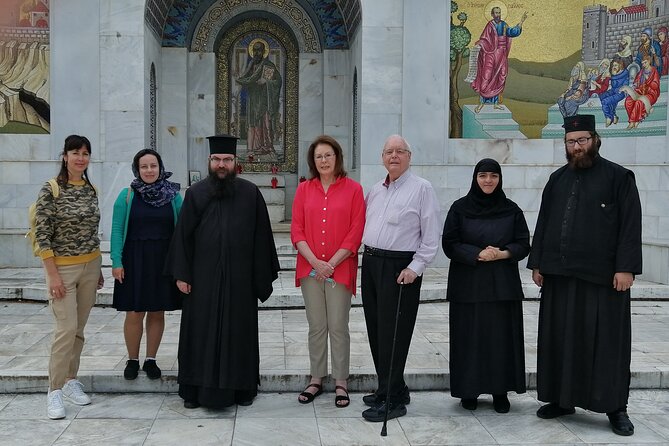
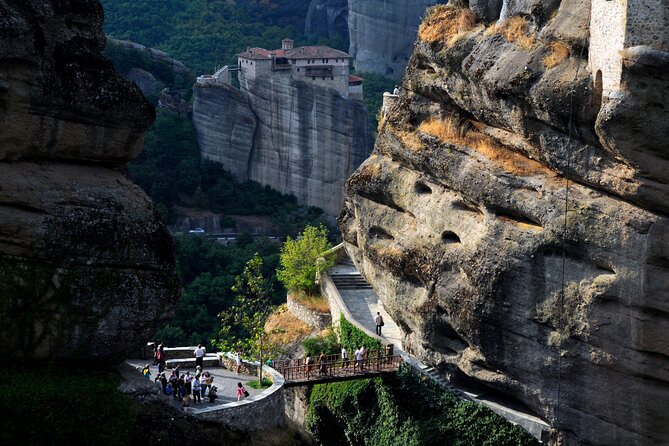
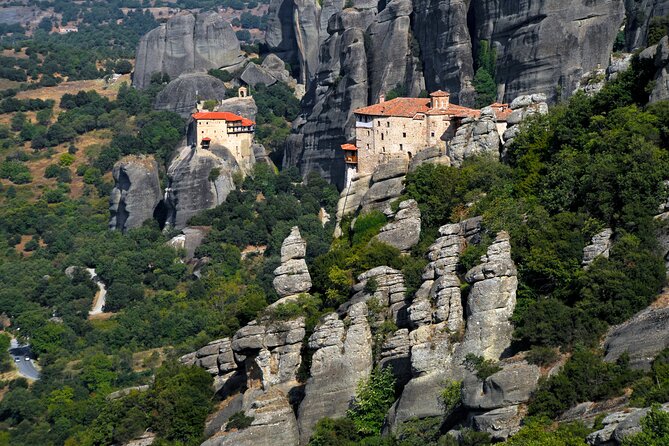
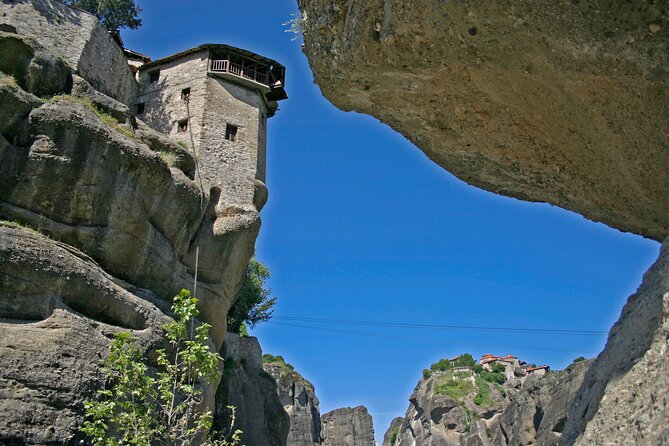
Then comes the day’s main spectacle: Meteora. The plan includes visiting at least two Orthodox monasteries, with the note that monastery tickets are typically 3€ per monastery. Meteora’s UNESCO status is part of the pitch for a reason: you’re looking at monasteries built on huge rock pillars, with structures that feel daring even if you’ve seen plenty of European church architecture before. Expect real walking and steps, so plan for a relaxed pace rather than trying to sprint from viewpoint to viewpoint.
That evening, you overnight in Kastraki, a small village at the base of the rocks. The tour includes a sunset/photography style outing, and the driver aims for the best spots for the light. This is a key reason the trip feels special: Meteora isn’t just a stop; it’s the emotional high point of the first night.
Meteora at Dawn and Aigai’s Royal Tombs (Day 2)
Day 2 starts with Meteora again, but this time the emphasis is different: early morning light and fewer people. The same rocks, different mood. You’ll drive around the Meteora rock area and revisit monasteries with that calmer feel you only get at opening time.
Next, you shift from the cliff tops to royal Macedonia at Aigai (Vergina), the first capital of Macedon. The stop includes the Museum of the Royal Tombs of Aigai. Here, the tour gives you more than a name on a sign: you’re at the site tied to Philip II’s assassination and Alexander the Great’s proclamation as king. The museum is also where the major finds from 1977 changed the story, including the tomb of Philip II, noted as undisturbed.
Tickets vary by season in the provided info: 6€ in winter and 12€ in summer, so it’s worth checking your travel dates if you’re trying to budget tightly.
After Vergina, you move into direct New Testament geography. A short stop at Vima Apostolou Pavlou connects to Paul’s preaching journey after leaving Thessaloniki in the AD 50/51 (or 54/55) timeframe referenced in the tour notes. Then you head to the School of Aristotle at Mieza. This part works well for two kinds of travelers: people focused on religion and people interested in the intellectual world Paul traveled in. Aristotle taught Alexander here, and the tour links it to the Temple of the Nymphs area as the classroom setting.
The last big part of Day 2 is Loutra Pozar thermal baths. You’ll hear why these hot springs matter historically as a place of restoration after battles, with the tour notes tying the baths to Macedonian kings and later Roman/Byzantine periods. It also states the springs are about 37°C and that the water is drinkable. You overnight on the slopes of Mount Kaimaktsalan, and the tour notes flag this as an additional cost depending on the period.
Pella, St. Demetrius, the White Tower, and the Rotunda (Day 3)
Day 3 leans into Thessaloniki’s roots and early Christian context, but it starts with Pella, the capital of ancient Macedonia and Alexander’s birthplace. The plan includes a museum stop at Pella, with the tour notes explaining how the museum is located near the ancient palace area and how key exhibits tie to Alexander and local mythic imagery. Admission is listed as 8€, with reduced 4€. The tour also points out that the museum shows models, maps, and a short video, which is useful if you want to orient yourself fast.
Next is the Holy Church of Saint Demetrius, a UNESCO site since 1988. The tour notes emphasize what makes it powerful: the church incorporates the area connected to Demetrius’s imprisonment and martyrdom. Since the ground level rose over centuries, the martyrdom area acquired a crypt-like form. You also get mention of an older bathhouse association and a fountain converted into holy water.
After that, you’ll visit the White Tower, which serves as a symbol of Thessaloniki. The tour notes track its story across empires: it replaced an earlier Byzantine fortification and later became a prison under Ottoman rule, including mass executions. Ticket pricing is 6€, and from the top you get a 360° panorama of the city. That view isn’t just scenery—it helps you picture the city that Paul helped change.
Then comes the Rotunda, a Roman-era circular monument associated with Emperor Galerius. The tour notes say it began as a mausoleum plan and later became a Christian church, with mosaics and architectural changes tied to Christianity’s rise in Thessaloniki. It’s one of those stops where you see how religious meaning can repurpose the same stone over time.
Philippi and Lydia’s Baptistery: Paul Gets Specific (Day 4)
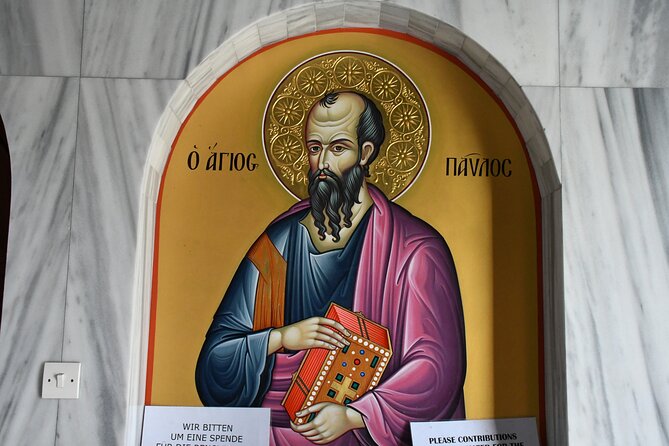
Day 4 focuses tightly on Paul’s mission connections in Eastern Macedonia. You start with the Archaeological Museum of Philippi, which is important because Philippi isn’t just a church-stop. It’s a Roman colony story, shaped by the battle of Philippi (42 BC) and later renewed settlement patterns under Antonios and Octavian Augustus.
The tour notes emphasize Philippi’s transformation under Roman rule and its connection to Paul’s presence around 49–50 AD. Since this is a museum stop, it’s a strong place to mentally organize what you’ll see and what the names mean.
Then you visit Saint Lydia’s Baptistery. Lydia is described in the tour notes as the first documented convert to Christianity in Europe, connected to Acts 16. The emphasis here is on hospitality: Lydia’s decision to host Paul and companions in Philippi and support their journey onwards. This is exactly the kind of site that makes Paul’s letters and Acts feel less like textbooks and more like lived moments.
The day also includes Palea Kavala (Neapolis/Kavala area). The tour notes connect Neapolis to Paul’s timeline and claim it was the first European city to accept Christianity, along with a monument to Apostle Paul outside the Church of Agios Nikolaos. If you’re trying to follow Paul’s geography like a puzzle, this stop helps you connect the coast-and-road logic of the journey.
There’s also a long on-the-clock section listed for this day, so keep expectations realistic: this is a “drive + visit + absorb” day, not a slow wandering day.
From Amphipolis and Dion to Olympus Nights (Day 5)
Day 5 continues through Macedonia with stops that give you the broader world behind the biblical names.
You visit the Archaeological Museum of Amphipolis first. The tour notes connect Amphipolis to a Spartan–Athenian battle (422 BC), Alexander the Great’s preparation for campaigns, and the later imprisonment and murder of Roxana and Alexander IV. Then it links the site to Paul and Silas passing through in the early AD 50s on the way between Philippi and Thessaloniki.
From there you go to Dion Archaeological Park, famous for the sanctuary of Zeus and the ancient city around it. The tour notes mention Philip II and Alexander celebrating victories here and Alexander performing sacrifices on the eve of his campaign to Asia. It’s a good stop for understanding how Macedonian royal identity and religion were entangled in public life long before Christianity arrived.
Finally, you overnight on Mount Olympus. The tour notes don’t promise a hiking summit; they frame it as the mountain’s mythic and ecological significance. Still, it’s a powerful switch from museum rooms and stone ruins to the feeling of being under a real mountain scale. If you prefer creature comforts over mountain air, you might want to ask what the overnight setup feels like for your dates.
Delphi’s Oracle Complex and the Road South (Day 6)
Day 6 is classical Greece in its most famous form: Delphi. You start at the Temple of Apollo, with the tour notes explaining how Delphi grew rich through the seat of the Pythia oracle and how the sanctuary influenced decisions across the ancient Greek world. The site is also connected to the omphalos stone symbolizing the center of the world in ancient belief.
Tickets vary by season and age group in the tour notes. In summer, the combined site and museum ticket is 12€, while in winter it’s 6€. You’ll also stop at the Delphi Archaeological Museum, which focuses on artifacts connected to the sanctuary’s religious, political, and artistic role from the 8th century BC onward.
A shorter stop follows at the Tholos of Athena Pronaia, described as a circular temple connected to the sanctuary of Athena Pronaia. Even if you only spend a few minutes here, it adds texture to the bigger Delphi story.
After Delphi, you drive via Mount Parnassus, with the tour notes mentioning its sacred connections in Greek mythology. You overnight in a traditional village on the slopes, again flagged as an additional overnight setup depending on your choice. This part is about resetting your body after museum-heavy days while still staying in the ancient world.
Ancient Corinth and Athens by Areios Pagos (Day 7–8)
Day 7 starts with Livadia, then heads through fertile Boeotia country. The tour includes a stop by the river and references the ancient location of the Oracle of Trophonius Zeus, where springs tied to Mnemosyne (remembrance) and Lethe (oblivion) were part of the legend. Even if you treat myths as stories rather than instruction, it makes Delphi’s oracle culture feel less like a standalone event.
Later, you drive via Mount Kithaeron and stop near Eleutherai, linked to Dionysus in local tradition and tied to Athens’ influence at the border between territories. Then you reach the biggest Christian anchor of the day: Ancient Corinth.
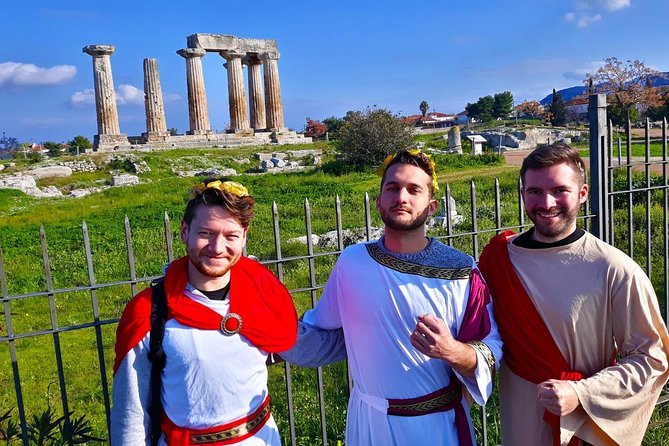
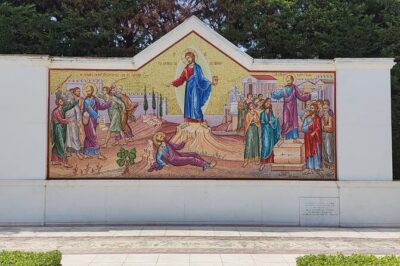
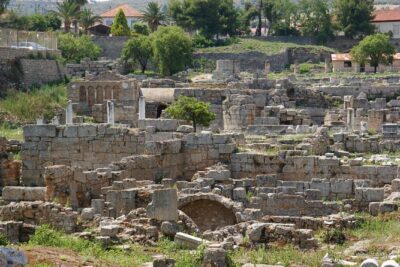
In Corinth, the tour notes explicitly frame why Christians care: Paul’s letters to the Corinthians are tied here, and Corinth is part of Paul’s missionary travel described in Acts. There’s also a highlighted stop for the Apostle Paul Vema in the middle of the ancient agora area. Tickets are listed as a combined Corinth ticket of 8€ in summer and 4€ in winter. It’s a great moment to see Paul’s world with your own eyes instead of just reading about it.
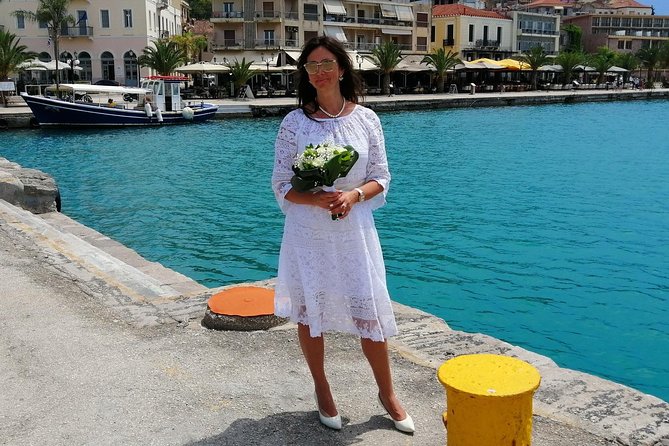
Then you overnight in Nafplio, described as a former capital of Greece in modern times. The tour also notes that it can arrange accommodations for you in selected boutique and 3/4* hotels with breakfast, with pricing that varies by city and season. This is a good “breathing space” night before Athens.
On Day 8, the tour finishes with views and major Athens highlights.
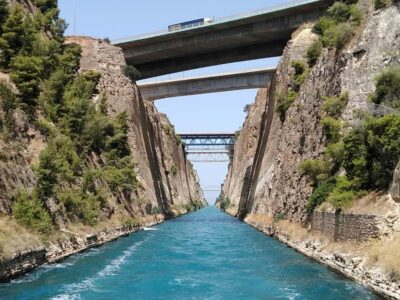
First: the Corinth Canal. You’ll stop for photos and walk across on a pedestrian bridge, admiring the canal from about 80 m high. It’s one of those engineering moments that feels like a bridge between ancient geography and modern infrastructure.
Then you move into Athens for Acropolis Hill and Areios Pagos Hill. The tour notes mention that around 51 AD Paul was led to Areios Pagos and preached to Athenians. That’s a powerful pairing with the Acropolis ruins: you see the place where a new message met an older civic-religious world.
Next is the Acropolis Museum, noted for housing findings from the Acropolis site. Finally, you get dropped at your Athens hotel.
Practical Pricing and Value: What $2,961.45 Covers (and What Doesn’t)
The price shown is $2,961.45 per person for an 8-day private program. Since this is private transportation for only your group, you’re paying for comfort and direct routing across Greece, not for a big shared group bus experience.
What you’re included in:
- private, air-conditioned vehicle
- pickup and drop-off in Athens/Piraeus (or another requested location)
- English-speaking experienced driver, plus audio documentary during drives
- accommodation arrangements for you can be part of your package planning, and the driver’s room is complimentary
What usually isn’t included:
- entrance fees to sites and museums (the tour gives a helpful estimate: summer is about 20€ per site, winter is about half)
- certain overnight stays noted as additional cost depending on period (for places like Kastraki/Meteora, Mount Olympus area, and other mountain-slope overnights)
So is it good value? It tends to work best when:
- you care about a tight itinerary built around Paul’s route (not just random classics)
- you want a private driver who can manage mountain roads and timing
- you’re okay with paying site fees separately
If you hate museum tickets and prefer completely self-planned travel, the added admissions can feel like a letdown. If you like seeing many sites in a single trip without stress, the structure earns its price.
Logistics You Should Plan For (Without Overthinking It)
A few practical notes from the tour details that matter on the ground:
- Start time is 8:00 am. That’s a full-day rhythm, especially on days with multiple stops.
- Site hours vary by season, and some places can close on Tuesday. If you’re traveling around weekdays, check your exact dates so you’re not stuck hoping everything is open.
- The tour driver is not a licensed archaeological guide. You’ll get narration during the drive, but for hands-on archaeology guidance at ruins, you’d need to hire a specialist guide separately.
- You should be prepared for a lot of walking at major sites (museums, towers, ruins, and monasteries all involve stairs and uneven ground). Wear shoes you trust.
Who This Tour Is Best For
This program fits you if you want:
- a religion-plus-history trip that follows Paul through real geography
- the sweep of Greece from Thermopylae to Athens, without giving up the Macedonian storyline
- private comfort with audio narration during long drives
It might not fit you if:
- you want a very slow pace with lots of free time and fewer stops
- you dislike paying separate museum and site admission fees
- you expect a guide to act as a licensed on-site archaeologist at every ruin
Should You Book It? My Straight Answer
If your goal is an Apostle Paul tour in Greece that connects biblical places with the classical world around them, this is a strong match. The itinerary gives you more than just churches: it builds context through Meteora, Macedonia’s royal sites, and Delphi before ending in Athens and Corinth.
If your budget is tight, don’t ignore the extra costs: site fees add up, and the mountain overnights flagged as additional will affect your total. Ask what’s included for your exact dates, then decide with open eyes.
FAQ
FAQ
Where does the tour pick me up?
Pickup is offered from your hotel/apartment in Athens or Piraeus, and you can request another location.
What time does the tour start?
The start time is 8:00 am.
Is this a private tour?
Yes. It is private, and only your group participates.
Are entrance fees included?
No. Entrance fees to sites and museums are not included, and the tour provides seasonal estimates.
Will I have an archaeological guide at the sites?
Your driver is not a licensed archaeological tour guide to accompany you on walks to archaeological sites or museums. If you require an archaeologist guide, you need to hire one additionally.
How long is the tour?
The tour duration is 8 days (approx.).
More Tours in Athens
- Athens: Acropolis, Parthenon & Acropolis Museum Guided Tour★ 4.8 · 9,316 reviews
- The Acropolis, Parthenon & Acropolis Museum Guided Tour★ 4.7 · 8,493 reviews
- Acropolis: Premium Acropolis and Parthenon Guided Tour★ 4.8 · 5,208 reviews
- Athens: Mythology of Delphi, Museum and Arachova Guided Tour★ 4.7 · 5,102 reviews
- Acropolis and Parthenon Guided Walking Tour★ 5.0 · 4,755 reviews
- Greek Food Walking Tour in Athens★ 5.0 · 4,740 reviews
More Tour Reviews in Athens
- Athens: Acropolis & up to 5 Archaeological Sites Combo Pass★ 4.2 · 13,904 reviews
- Athens: Acropolis, Parthenon & Acropolis Museum Guided Tour★ 4.8 · 9,316 reviews
- The Acropolis, Parthenon & Acropolis Museum Guided Tour★ 4.7 · 8,493 reviews
- Athens: Cape Sounion & Poseidon Temple Sunset Half-Day Trip★ 4.8 · 8,241 reviews
- Acropolis: Premium Acropolis and Parthenon Guided Tour★ 4.8 · 5,208 reviews
- Athens: Mythology of Delphi, Museum and Arachova Guided Tour★ 4.7 · 5,102 reviews
Corinth and the Canal
- From Athens: Ancient Corinth Day Trip with Canal & VR Guide★ 4.6 · 1,073 reviews
- Biblical Tour Letters ToThe Corinthians St Paul’s Footsteps 6Hour★ 5.0 · 1,065 reviews
- Private Biblical Tour Ancient Corinth & Isthmus Canal from Athens★ 5.0 · 762 reviews
- Athens: Ancient Corinth & Nafplio Full Day Trip with Swim★ 4.8 · 531 reviews
- Athens: Corinth Canal, Mycenae & Nafplio Premium Guided Tour★ 4.7 · 322 reviews
- Private Tour of Apostle Paul’s Footsteps in Ancient Corinth★ 5.0 · 275 reviews
Fresh Off the Boat: New Athens Reviews

Corinth Day Trips, compared.
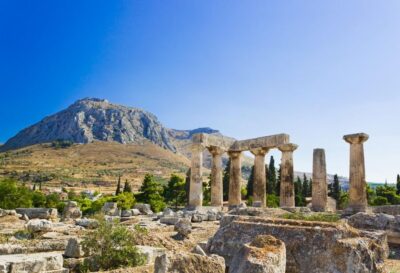 ★ 4.6From Athens: Ancient Corinth Day Trip with Canal & VR GuideFrom $411,073 reviews
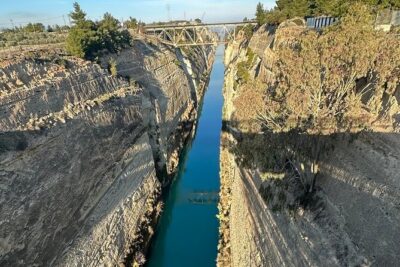 ★ 5.0Biblical Tour Letters ToThe Corinthians St Paul’s Footsteps 6HourFrom $1701,065 reviews
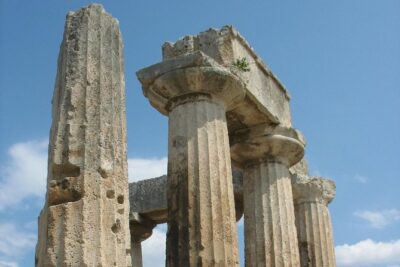 ★ 5.0Private Biblical Tour Ancient Corinth & Isthmus Canal from AthensFrom $301762 reviews
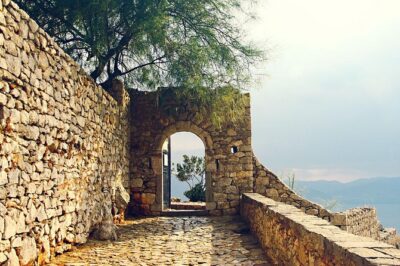 ★ 4.8Ancient Corinth & Nafplio Full Day Trip with Swim531 reviews
 ★ 4.7Corinth Canal, Mycenae & Nafplio Premium Guided TourFrom $32322 reviews
 ★ 5.0Private Tour of Apostle Paul’s Footsteps in Ancient CorinthFrom $169275 reviews
 ★ 4.3Corinth Canal, Mycenae and Nafplio Day TourFrom $129252 reviews
 ★ 4.5Corinth Half-Day Trip from Athens with Entrance TicketsFrom $91242 reviews
Browse the lists this tour appears in