
Reviewed · ACROPOLIS & PARTHENON TOURS
Acropolis of Athens Historical Tour For History Enthusiasts
Walking into the Acropolis is awe.
What makes this tour different is the way it gives you context before you start staring at marble. You’ll move through the big monuments with earset headsets and a guide who connects gods, politics, theatre, and real life into one story.
Two things I really like: first, the historian-led explanations (often from working historians/archaeologists) that keep the myths from feeling like vague bedtime tales. Second, the stop-by-stop pacing—from the Theatre of Dionysus up to the Parthenon—so you know what you’re looking at instead of guessing.
One possible drawback: it’s a fixed route for a set length of time, and you’ll be on your feet in the sun. Also, the listed admission fees are only included if you pick the option that covers them, so double-check what your ticket includes.
In This Review
- Key things to know before you go
- The Acropolis, but with the plot explained first
- South Slope orientation: how civilization connects to Athens
- Theatre of Dionysus: where Greek drama became a public event
- Odeon of Herodes Atticus: a Roman-era tribute with a personal story
- Temple of Athena Nike: victory, religion, and civic ambition
- Propylaea: the gateway walk that sets your expectations
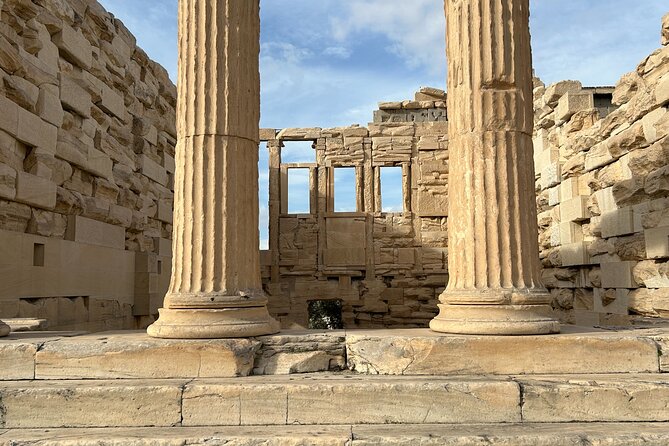
- Erechtheion: the myths you can point at
- Parthenon time: the jewel, explained like it matters
- Group size, headsets, and how the timing feels on the ground
- Who this tour is best for (and who might prefer another plan)
- The guide experience: historian energy, not rote recitation
- Practical details you should plan around
- Should you book this Acropolis of Athens Historical Tour?
- FAQ
- How long is the Acropolis Historical Tour for History Enthusiasts?
- What does the tour cost?
- Is this tour offered in English?
- Are admission tickets included?
- What’s included besides the guide?
- Where does the tour start and end?
- How big are the groups?
- Is the experience weather-dependent?
Key things to know before you go
- Headsets for every guest mean you don’t miss the details while you look around at the rocks and sculptures.
- The tour starts with a civilization lesson on the South Slope, so the Classical Age hits harder.
- You’ll see the Theatre of Dionysus, tied to early tragedy and comedy and major playwrights.
- Odeon of Herodes Atticus adds a “Roman-era memory” story, not just Ancient Greece.
- The route ends at the Parthenon, with time set aside to focus on what matters up close.
More ways up the sacred rock, set side by side
- Athens: Acropolis & up to 5 Archaeological Sites Combo Pass
★ 4.2 · 13,904 reviews - Athens: Acropolis, Parthenon & Acropolis Museum Guided Tour
★ 4.8 · 9,316 reviews - The Acropolis, Parthenon & Acropolis Museum Guided Tour
★ 4.7 · 8,493 reviews - Acropolis: Premium Acropolis and Parthenon Guided Tour
★ 4.8 · 5,208 reviews
The Acropolis, but with the plot explained first
The Acropolis can feel like a bunch of famous buildings on a hill. This tour fights that problem in a smart way: it begins with an orientation lesson, then builds toward the monuments in order. That means you’re not just collecting photos. You’re learning how the pieces connect.
You get about 2 hours 40 minutes total, and the group is limited to 25 people. In real-world terms, that helps the guide keep control of timing and crowd flow, especially on the upper paths and at the Parthenon viewpoint where everyone wants the same angle.
At $36.14 per person, it’s priced like a mid-range guided experience for a site visit that’s famously hard to “interpret” without help. The best value here is the structure: you’re buying guided meaning, plus admission coverage if you choose the ticket option that includes it.
One more detail that matters: this is English, and you get personal earset receivers. It’s a simple tool, but it changes everything—less leaning in, less straining, more time actually looking at what the guide is pointing out.
South Slope orientation: how civilization connects to Athens
Before you climb, you start at the South Slope of the Acropolis, and the first 40 minutes are basically a guided “big picture” setup. The tour presents a concise lesson on how human civilization develops, then places ancient Greek civilization—and Athens specifically—inside that longer timeline.
This matters because Athens is often taught as if it popped into existence fully formed. Here, you’re given enough background to understand why Athenians cared about theatre, civic life, architecture, and religious power. When you later stand at the Parthenon or the Erechtheion, it stops being “pretty ruins” and starts being evidence of systems: politics, belief, and public life.
It’s also where you’ll learn the tour’s rhythm. Expect the guide to keep returning to themes—people, ideas, and how those ideas moved forward. That’s a big reason people describe the experience as memorable rather than just scenic.
Theatre of Dionysus: where Greek drama became a public event
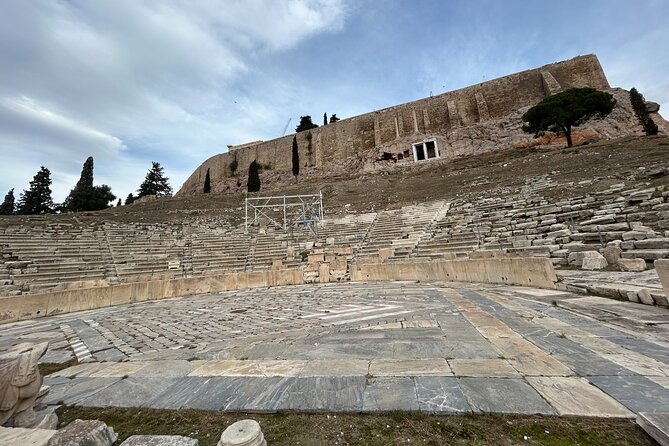
Next up is the Theatre of Dionysus for about 20 minutes. This spot is historically heavy: it’s tied to the idea of theatre and drama as a public practice—where early tragedies and comedies were performed for the Athenian public.
What makes this stop useful is the names and the context. You’re not just told that theatre existed. You hear how it functioned as part of civic identity. The guide connects famous playwrights—including Sophocles, Euripides, and Aeschylus—to the place you’re standing in. That turns the theatre from a “cool ancient building” into a window on what Athenians talked about when they gathered.
Practical note: the area can feel busy. The headset audio helps you follow the story even if you’re pausing to look up at the seating or the way the space is shaped.
Deeper into old Athens


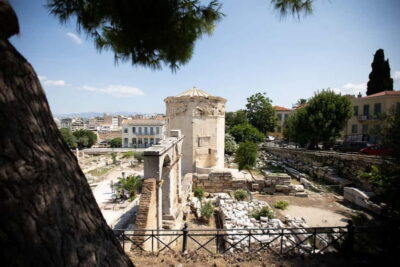

Odeon of Herodes Atticus: a Roman-era tribute with a personal story
On the way up, you’ll also see the Odeon of Herodes Atticus. The tour frames it as a 2nd-century AD monument built by a benefactor and famous philosopher in memory of his deceased wife.
That detail is more than a trivia nugget. It reminds you the Acropolis was not frozen in time. Even after the Classical period, people still invested meaning and money into these hill-top spaces. That theme—layers of rebuilding and re-use—shows up again and again during the climb.
If you like architecture history, this stop helps you read the site as a living place. Athens kept reinterpreting itself using older symbols.
Temple of Athena Nike: victory, religion, and civic ambition

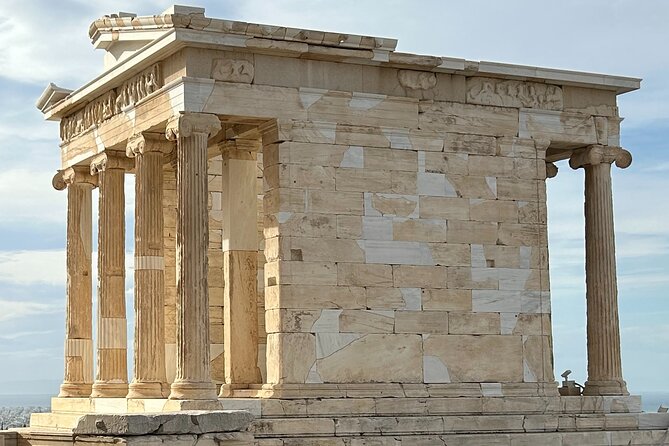
At the main entrance of the Acropolis sanctuary, you reach the Temple of Athena Nike for around 20 minutes. The tour connects it to the goddess of victory, which is a good starting point for understanding why the Greeks tied religion to public goals.
This stop is especially helpful if you want a reason behind the artistry. “Dedicated to a goddess” can sound abstract until the guide explains what victory meant in Athenian thinking—winning not only battles, but status, unity, and civic pride.
And yes, you’ll likely get great views in this zone. The key is that you’re not just sightseeing. You’re learning how a sanctuary layout is meant to guide your attention and your sense of importance as you move deeper.
Propylaea: the gateway walk that sets your expectations
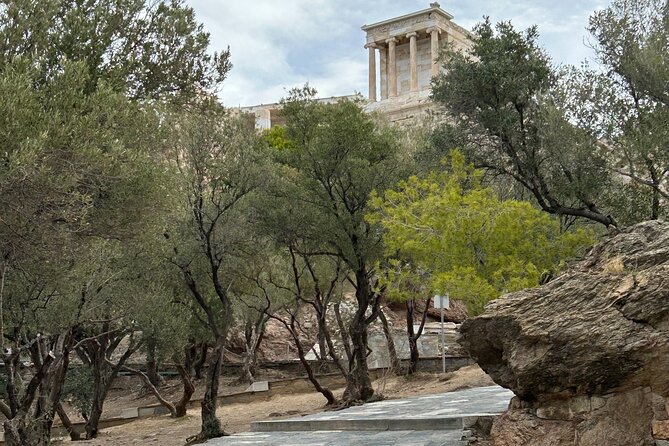
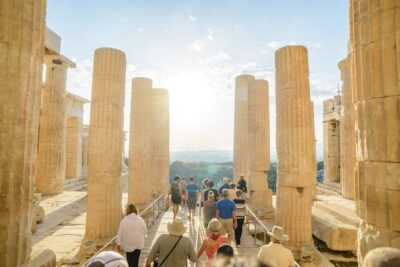
Next is the Propylaea, a 20-minute stop with both views and movement. You’ll admire the historically important surrounding hills and then walk up the main stairway toward the sanctuary interior, taking in the monumental gateway.
This is one of those parts of the Acropolis experience that’s hard to fully appreciate when you rush. The Propylaea works like a “transition device” in the physical world: it lifts you from the city-side perspective to a more sacred, ceremonial feeling.
If your walking pace is slow, you’ll still be okay here because the stop includes both looking and stepping. If you’re in a hurry, it can feel like just another set of stairs—but the guide usually uses the momentum to explain what gateways mean in sacred architecture and political symbolism.
Erechtheion: the myths you can point at
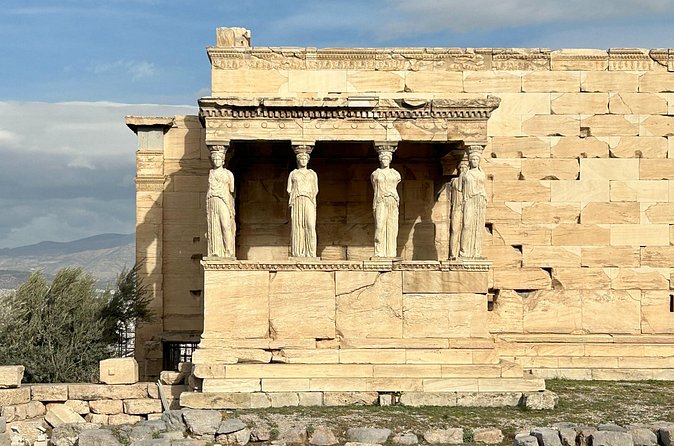
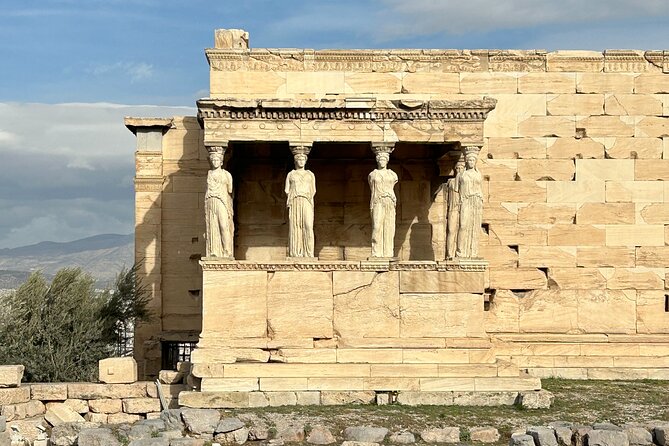
The penultimate stop is the Erechtheion, about 20 minutes. This is described as the temple of myths and legends, famous for its unique sculptures.
What you’re really doing here is learning how to “read” sculpture. Without guidance, it’s easy to see carved figures and just move on. With the guide’s explanation, those forms become characters—part of the story Athenians built around their gods, their origin stories, and their claims to legitimacy.
This stop is a good balance between big-picture history and close-up detail. If you care about how religion becomes art, it’s one of the more satisfying parts of the route.
Parthenon time: the jewel, explained like it matters
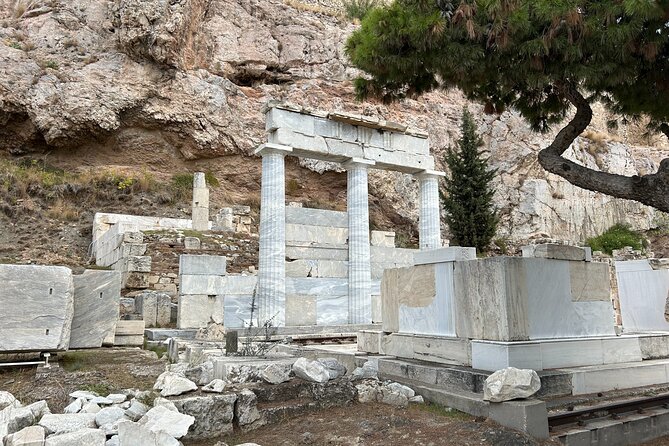
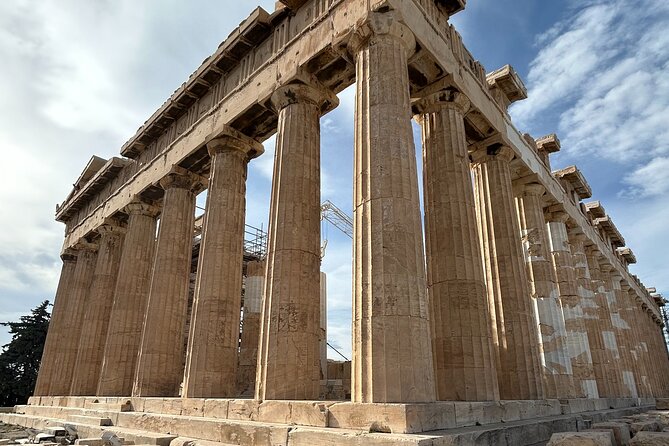
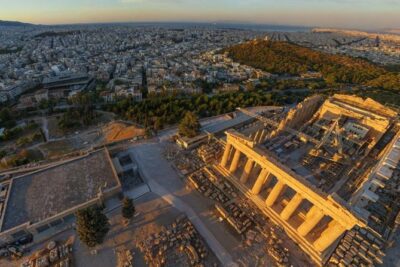
Then you reach the climax: the Parthenon for about 30 minutes. The guide frames it as the centerpiece, a masterpiece of Classical-period architecture and a technical achievement tied to the democratic state. It’s also described as a gift to Athens’ patron goddess, and the symbol of Western civilization.
That last phrase can sound like museum talk. Here’s where the tour makes it more real: the guide uses the Parthenon to connect ideas—how a society expresses power and values through buildings, and how those ideas echo long after the original world is gone.
You’ll likely spend this time both looking outward and studying the monument’s structure up close. The guide’s attention to what to notice is what turns this into more than a photo stop. And if you’ve never visited before, this is where you’ll finally understand why people line up and why it’s worth standing there longer than you planned.
From the review stories you can expect a guide who will actively help you get the best photo spots—pausing when needed and pointing out where the angles actually look good, not just where the crowd funnels you.
Group size, headsets, and how the timing feels on the ground
This isn’t a 60-minute “hit the highlights and go” tour. The pacing gives each stop enough time for meaning, without turning it into a slow slog.
A couple of practical points based on what this format typically requires:
- You’ll be walking uphill on uneven terrain. Wear grippy shoes.
- Sun and wind can change quickly on the Acropolis. If you’re sensitive to heat, plan extra water on your own.
- The headset system means you can step aside to look longer without losing the thread.
The group limit of 25 also helps for questions. If you like to ask why something was built or how it functioned, you’ll get more chances here than on huge tours.
And because the tour is designed for good weather, keep an eye on the day’s conditions. If conditions don’t cooperate, you’ll be offered a different date or a full refund.
Who this tour is best for (and who might prefer another plan)
This tour is built for people who like structure: you want to know what you’re seeing and you’re happy to spend time on ideas, not just stone. If you’re a history fan, a literature fan (theatre!) or you like how art connects to politics, you’ll get a lot out of it.
It can also work well for families, depending on the guide’s style. One common theme from past experiences is a lively approach—humor, quick quizzes, and story moments that keep kids from zoning out. If your child likes being asked questions instead of being lectured, that’s a good fit.
If you already know a lot about Classical Greece and prefer maximum freedom, you might feel constrained by a set route. In that case, you could choose a self-guided plan. But if your goal is to leave with real understanding of how everything connects, this route does the job.
The guide experience: historian energy, not rote recitation
This is the big differentiator. The tour uses local licensed English-speaking tour guides, and the description emphasizes they are either historians or archaeologists with deep historical knowledge. In practice, guides like Harris and Haralampos (names that have appeared for past groups) are described as high-energy teachers who use humor and discussion to keep the story moving.
You can expect more than a list of dates and rulers. The guide ties in themes like the origins of democracy, philosophy, athletics, and how those ideas echo in today’s world. You’ll also get room for discussion—sometimes reflective at the end, when you stop and connect what you saw to what it might mean.
One practical bonus from guide stories: they often help with photo timing and stand positions. If you’ve ever had a guide “point vaguely” while the crowd blocks your camera, you’ll appreciate how intentional this style tends to be.
Practical details you should plan around
Start is at Dionysiou Areopagitou 17, Athina 117 42, Greece, and the tour ends at the Parthenon on top of the Acropolis hill (the end point listed is in front of the Parthenon). The route is designed as an uphill progression, so if you’re planning the rest of your Athens day, give yourself time afterward to wind down and explore nearby at your own pace.
Food and drinks aren’t included. Bring your own water bottle, and consider a hat or sunscreen.
Admission tickets are included only if you pick the option that covers them. If you skip admission, you may need to purchase tickets separately before entering certain areas. Since the tour lasts a long stretch on a protected site, it’s worth matching your option to your priorities—so you don’t end up managing ticket issues mid-tour.
Should you book this Acropolis of Athens Historical Tour?
Book it if you want the Acropolis to feel like a story with a spine: theatre, religion, civic life, architecture, and the reasons all of it still matters. The price is fair for a guided experience that includes headsets, a licensed historian/archaeologist guide, and a route that gives each major stop real time.
Skip it (or consider a different style) if you hate walking uphill, prefer to go at your own pace with minimal guidance, or already have a deep knowledge of the site and want to spend your time reading placards instead of listening.
If you’re booking in peak season, plan ahead. This tour is often booked around 50 days in advance, so earlier reservations can help you lock in a time that fits your schedule.
FAQ
How long is the Acropolis Historical Tour for History Enthusiasts?
It runs about 2 hours 40 minutes (approx.).
What does the tour cost?
The price is $36.14 per person.
Is this tour offered in English?
Yes, it’s offered in English.
Are admission tickets included?
Admission is included only if you choose the option that includes entry fees. The tour notes that admission fees are not included if you choose the option that does not include them.
What’s included besides the guide?
You get a local licensed English-speaking tour guide (historian or archaeologist), personal earset receivers/headsets for each guest, and some surprises.
Where does the tour start and end?
It starts at Dionysiou Areopagitou 17, Athina 117 42, Greece and ends in front of the Parthenon temple at the top of the Acropolis hill (ParthenonAthens 105 58).
How big are the groups?
The tour has a maximum of 25 travelers.
Is the experience weather-dependent?
Yes. It requires good weather, and if it’s canceled due to poor weather, you’ll be offered a different date or a full refund.
More Tours in Athens
- Athens: Acropolis, Parthenon & Acropolis Museum Guided Tour★ 4.8 · 9,316 reviews
- The Acropolis, Parthenon & Acropolis Museum Guided Tour★ 4.7 · 8,493 reviews
- Acropolis: Premium Acropolis and Parthenon Guided Tour★ 4.8 · 5,208 reviews
- Athens: Mythology of Delphi, Museum and Arachova Guided Tour★ 4.7 · 5,102 reviews
- Acropolis and Parthenon Guided Walking Tour★ 5.0 · 4,755 reviews
- Greek Food Walking Tour in Athens★ 5.0 · 4,740 reviews
More Tour Reviews in Athens
- Athens: Acropolis & up to 5 Archaeological Sites Combo Pass★ 4.2 · 13,904 reviews
- Athens: Acropolis, Parthenon & Acropolis Museum Guided Tour★ 4.8 · 9,316 reviews
- The Acropolis, Parthenon & Acropolis Museum Guided Tour★ 4.7 · 8,493 reviews
- Athens: Cape Sounion & Poseidon Temple Sunset Half-Day Trip★ 4.8 · 8,241 reviews
- Acropolis: Premium Acropolis and Parthenon Guided Tour★ 4.8 · 5,208 reviews
- Athens: Mythology of Delphi, Museum and Arachova Guided Tour★ 4.7 · 5,102 reviews
The Acropolis, a Few More Ways Up
- Athens: Acropolis & up to 5 Archaeological Sites Combo Pass★ 4.2 · 13,904 reviews
- Athens: Acropolis, Parthenon & Acropolis Museum Guided Tour★ 4.8 · 9,316 reviews
- The Acropolis, Parthenon & Acropolis Museum Guided Tour★ 4.7 · 8,493 reviews
- Acropolis: Premium Acropolis and Parthenon Guided Tour★ 4.8 · 5,208 reviews
- Acropolis and Parthenon Guided Walking Tour★ 5.0 · 4,755 reviews
- Athens: Acropolis, Parthenon & Acropolis Museum Guided Tour★ 4.8 · 3,579 reviews
Fresh Off the Boat: New Athens Reviews





Acropolis & Parthenon Tours, compared.
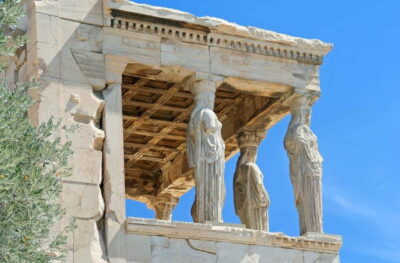 ★ 4.2Acropolis & up to 5 Archaeological Sites Combo PassFrom $4213,904 reviews
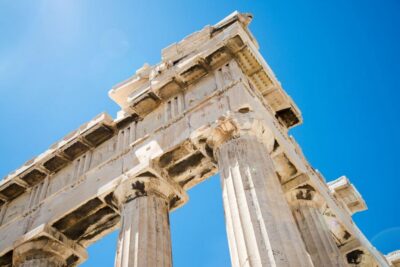 ★ 4.8Acropolis, Parthenon & Acropolis Museum Guided TourFrom $409,316 reviews
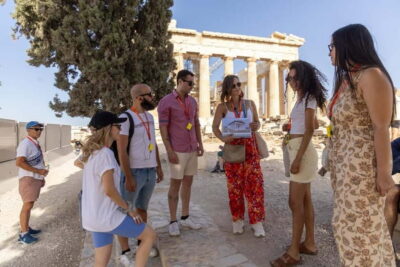 ★ 4.7The Acropolis, Parthenon & Acropolis Museum Guided TourFrom $408,493 reviews
 ★ 4.8Acropolis: Premium Acropolis and Parthenon Guided TourFrom $405,208 reviews
 ★ 5.0Acropolis and Parthenon Guided Walking TourFrom $414,755 reviews
★ 4.8Acropolis, Parthenon & Acropolis Museum Guided TourFrom $413,579 reviews
★ 5.0Acropolis and Parthenon Guided Walking TourFrom $414,755 reviews
★ 4.8Acropolis, Parthenon & Acropolis Museum Guided TourFrom $413,579 reviews
 ★ 4.0Acropolis Ticket with Audio GuideFrom $473,575 reviews
 ★ 5.0Athens Scenic Electric Bike Tour with optional Acropolis visitFrom $353,350 reviews
Browse the lists this tour appears in