
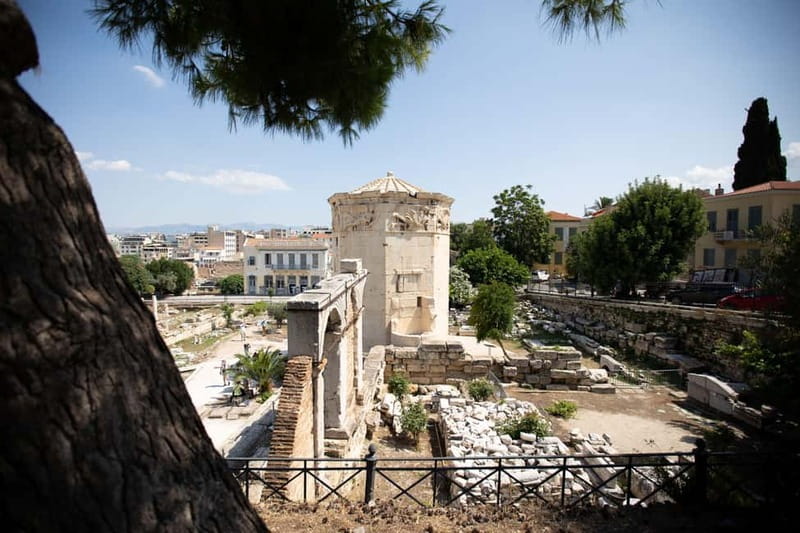
Reviewed · ACROPOLIS & PARTHENON TOURS
Acropolis, Parthenon & Athens Old City Heritage Walking Tour
The Acropolis is loud, hot, and crowded. This tour keeps it organized, using early entry and a licensed guide to make the monuments make sense. I like how you get wireless audio so the commentary stays clear even when people are shuffling around. My other favorite is the way the walk continues into Plaka, so you trade temple views for old-street Athens. One thing to plan for: the climb up to the Acropolis is moderate difficulty and can feel intense in summer.
You start with the south slope, then work your way toward the Parthenon and the Erechtheion, with panoramic breaks along the historic path. After the big-ticket temples, you head downhill to Roman-era sights and the Bathhouse of the Winds, ending in the Monastiraki area. It’s a smart mix of must-see landmarks and smaller stops that help you connect the dots—if you can handle uneven stone underfoot and sun on your head.
In This Review
- Key things you’ll notice on this walk
- Why this Acropolis + Old City route actually feels practical
- Timing: early access and why the start time matters
- The climb up: Theater of Dionysus to the Parthenon
- Erechtheion, free time, and what to look at without guessing
- Anafiotika and the downhill shift into old Athens
- Plaka and Monastiraki: Roman Forum, Tower of the Winds, and baths
- Audio devices: the underrated upgrade
- Guides you might encounter, and how they tend to teach
- What to bring (and what to skip) for a smoother day
- Value check: is $34 a good deal?
- Who this is best for (and who should reconsider)
- Should you book this Acropolis, Parthenon & Athens Old City tour?
- FAQ
- How long is the Acropolis and Old City Heritage walking tour?
- What’s included in the tour price?
- Do I need to buy Acropolis tickets separately?
- What languages are the guided tour offered in?
- What should I bring?
- Is this tour suitable for wheelchair users or mobility impairments?
Key things you’ll notice on this walk
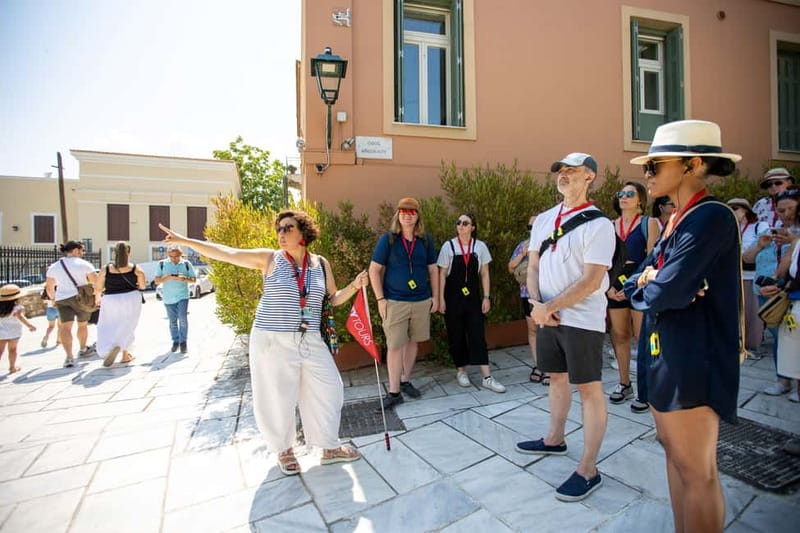
- Early Acropolis access that helps you beat the worst crowd pressure
- Wireless audio devices so you can actually follow the guide’s story
- Story-led route covering Parthenon, Erechtheion, Propylaea, and Temple of Athena Nike
- Plaka’s cobblestone lanes plus major Roman and Byzantine-era touchpoints
- Bathhouse of the Winds as the highlight of the public-baths angle
- Guide variety: some guides bring comedy, songs, or extra-style explanations (you may catch this depending on who you get)
More ways up the sacred rock, set side by side
- Athens: Acropolis & up to 5 Archaeological Sites Combo Pass
★ 4.2 · 13,904 reviews - Athens: Acropolis, Parthenon & Acropolis Museum Guided Tour
★ 4.8 · 9,316 reviews - The Acropolis, Parthenon & Acropolis Museum Guided Tour
★ 4.7 · 8,493 reviews - Acropolis: Premium Acropolis and Parthenon Guided Tour
★ 4.8 · 5,208 reviews
Why this Acropolis + Old City route actually feels practical
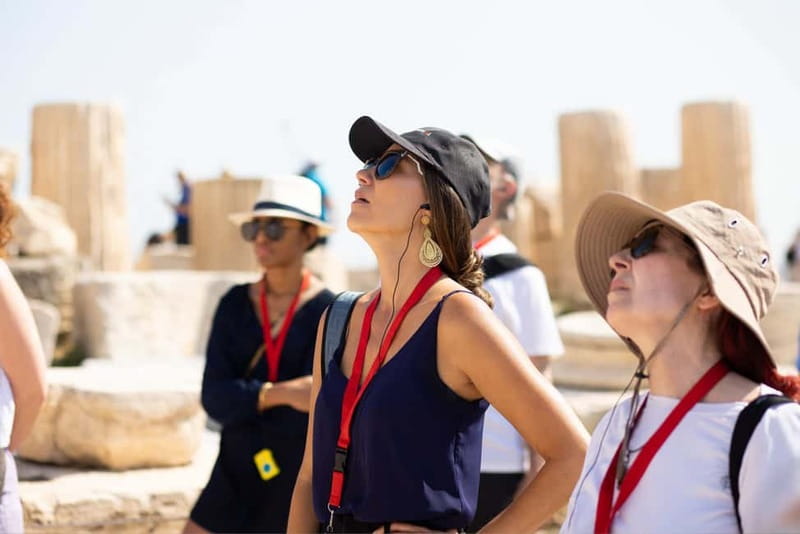
A lot of Athens tours dump you in front of monuments and then hope you figure it out. This one is different because it gives you a walking order that matches how the site is laid out, starting on the south slope and climbing toward the central icons. You’re not just looking at stones—you’re learning where to stand, what to look for, and why each building mattered.
I also like that the tour is designed for real pacing. You get planned photo chances, plus guided stops that don’t turn into a sprint. When the group moves as one unit, it’s easier to enjoy the views instead of spending energy playing navigation games.
And yes, you’ll be in crowds at the Acropolis no matter what you do. The early start and tight guidance reduce the chaos. You still need patience, water, and good shoes, but the day feels manageable rather than random.
Timing: early access and why the start time matters
You’re scheduled for a total 210 minutes, which is long enough to do the heavy-hitter monuments with guidance and still reach Plaka. You also get early Acropolis access, plus a ticket setup that can include admission depending on the option you choose. That combination matters because the Acropolis is timed-entry territory, not a casual walk-up museum.
If you’re choosing an early slot, you’ll likely feel a difference right away. People report that going early helps with both heat and crowd density around the Parthenon area. Even if you’re not chasing perfect photos, earlier hours keep you from spending your whole visit sweating and squinting.
One practical tip: the meeting area can feel busy at the beginning, because multiple groups gather around the same time. Once you’re moving, it’s much smoother. Arrive a few minutes early, listen for your group call, and don’t worry if the first five minutes feel a bit chaotic.
The climb up: Theater of Dionysus to the Parthenon
The tour begins on the south slope near the Theatre of Dionysus, often described as the birthplace of ancient drama. This is a great first stop because it sets up the big theme: Greece didn’t just build temples. It staged performances, argued politics, and turned myth into public life. You get context before you hit the iconic buildings, which makes the rest click.
Next you move along the route toward the Odeon of Herodes Atticus. From there, you reach the Propylaea, the monumental gateway system that controls the flow into the Acropolis. These transitions help you understand the site as a place you entered intentionally, not a random hill you happened to climb.
Then come the temple highlights:
- Temple of Athena Nike: a quick but meaningful stop, tied to Athena and victory symbolism.
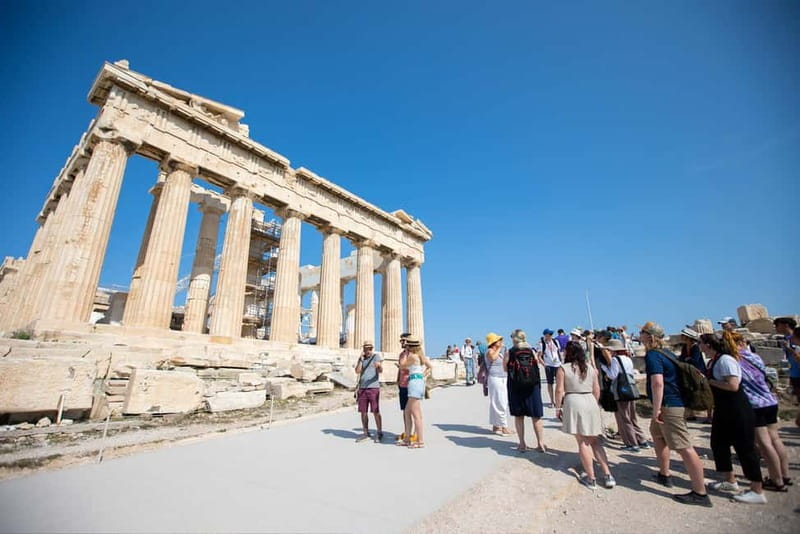
- Parthenon: the star of the show, where guided explanation helps you see design choices rather than just the famous silhouette.
- Erechtheion: especially notable for its distinct structure and the stories attached to it.
A smart part of the route is that it includes short guided segments plus photo stops. At the Parthenon you get time to step back, look up, and take photos without feeling rushed. You also catch panoramic views of the city from key points on the ascent, which breaks up the effort.
If you’re sensitive to heat, plan your mindset accordingly. The tour is rated moderate difficulty because of the climb and the sun exposure, especially in summer. You’ll want to treat the day like a hike: water, hat, and steady pace.
On foot through Plaka and beyond



Erechtheion, free time, and what to look at without guessing
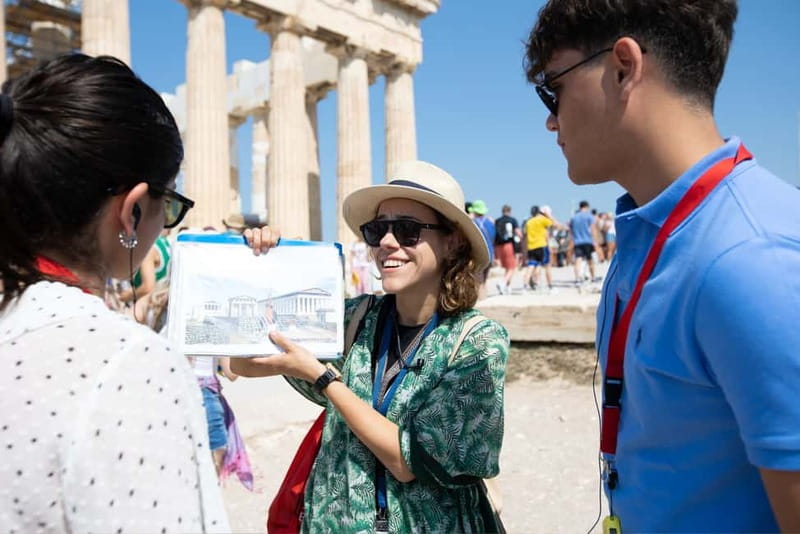
The Erechtheion is one of those structures where your first glance can miss what makes it special. With a guide, you’re pointed toward the architectural details and the myth-and-religion connections that are easy to overlook on your own. This is exactly the kind of stop where audio matters, because the group can’t stop in the same way a ticketed indoor exhibit can.
After that, there’s a photo stop and free time at the Acropolis area. This is your moment to do two things: (1) re-check the viewpoints you most care about and (2) take photos when the sun angle and crowd flow are momentarily less annoying. If you’ve been listening closely, you’ll know what you’re aiming at instead of just framing a background.
One reason this section works: you’re not thrown into free wandering immediately. You’ve already been given a mental map, so your free time becomes useful rather than stressful.
Anafiotika and the downhill shift into old Athens
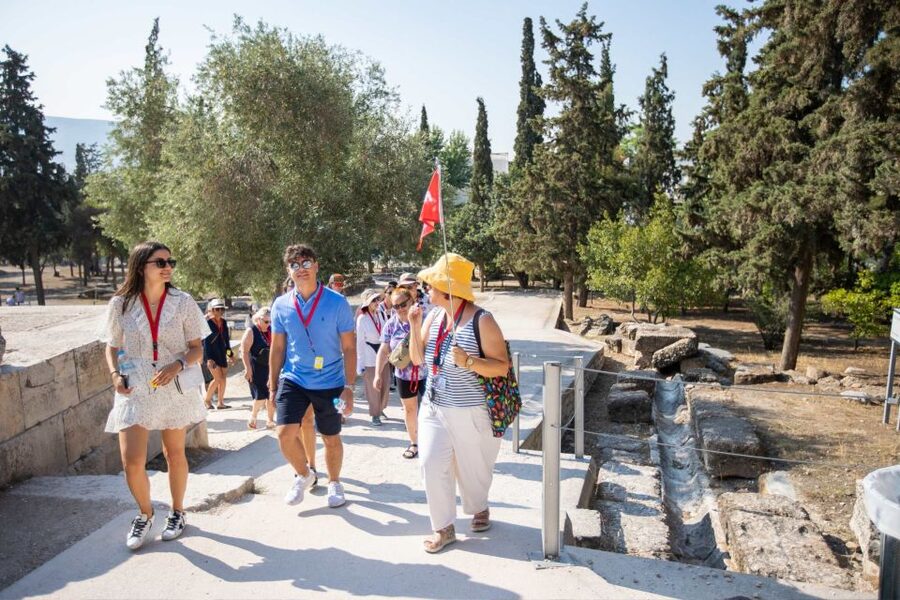
After the main Acropolis monuments, you head toward Anafiotika. This part of the experience is less about grand architecture and more about atmosphere: small lanes and that classic Athens feel of low buildings hugging the hill. It’s a palate cleanser after the marble giants.
From there you transition into the Roman and later layers of the city, which is where the tour earns its value. Athens isn’t frozen in one era. You’re walking through streets where new civilizations reused, repurposed, and built over earlier settings.
Expect the day to feel like a time sequence: ancient drama and gateways, then temple icons, then streets that reveal later empires and civic life.
Plaka and Monastiraki: Roman Forum, Tower of the Winds, and baths
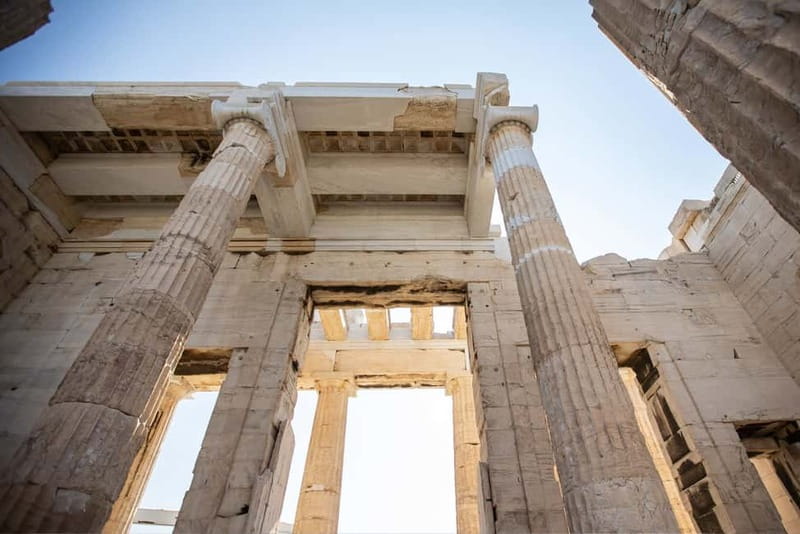
Plaka is the historic core, and cobblestone streets can make you slow down in a good way. This is where the tour becomes more of an urban walk: you’re not only staring at monuments, you’re moving through the city’s human scale.
On the route, you pass and hear about:
- Ancient Agora views and National Observatory of Athens glimpses while heading downhill
- Roman Forum of Athens
- Tower of the Winds (a standout stop for how it ties timekeeping and architecture together)
- Fethiye Mosque Museum
- Hadrian’s Library
- Tzisdarakis Mosque
- Monastiraki Square to end the walking loop
The biggest “this is why the tour has a theme” moment is the Bathhouse of the Winds. It fits the public-baths angle and gives you something physical and everyday compared with all the temple symbolism. Even if you’ve never thought about ancient hygiene, this stop helps you imagine daily life in Athens rather than only ceremonial life.
By the time you reach Monastiraki Square, you’ll have enough context to wander on your own afterward. You’ll know what you’re looking at when you spot ruins, courtyards, and Ottoman-era structures nearby.
Audio devices: the underrated upgrade
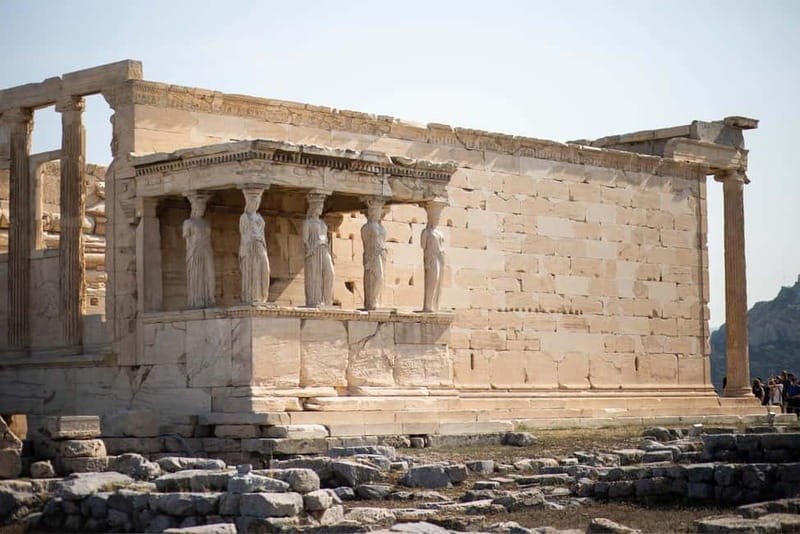
The wireless audio system is a real comfort feature. Without it, you’re forced to choose between standing near the front or losing the guide’s explanation. With audio, you can position yourself for better photos and still catch the story.
This also helps for crowded sections like the Parthenon area, where people bunch up and block sightlines. You can still hear why the guide wants you to look at a specific corner, alignment, or detail.
It’s also worth noting that guide styles vary. Some guides bring humor and pacing that keeps the group moving efficiently. Some have even added musical moments along the route, which can be a fun break from the nonstop walking-and-listening rhythm.
Guides you might encounter, and how they tend to teach
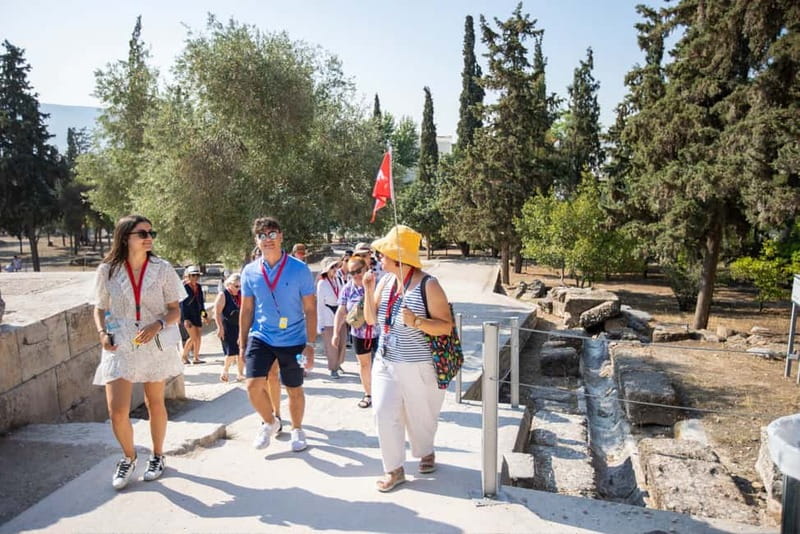
You’ll have a live guide in Spanish or English, and you’ll hear everything clearly through the devices. Different guides emphasize different angles, but the common thread is storytelling that ties buildings to people.
For example, one guide named Panagiota (nicknamed Yoda) is described as extremely clear about where you’ll go next and how long you’ll spend at each stop. Another guide, Michael, is mentioned as bringing an encyclopedia-level sense of detail with enthusiasm and humor. Kiki is praised for keeping the group comfortable and finding shade. Julia and Evri are noted for their pacing and ability to keep the group engaged through long stretches.
The point isn’t who you personally get. It’s that this tour is built around a guide-led format, and people consistently leave feeling like they understood what they saw.
What to bring (and what to skip) for a smoother day
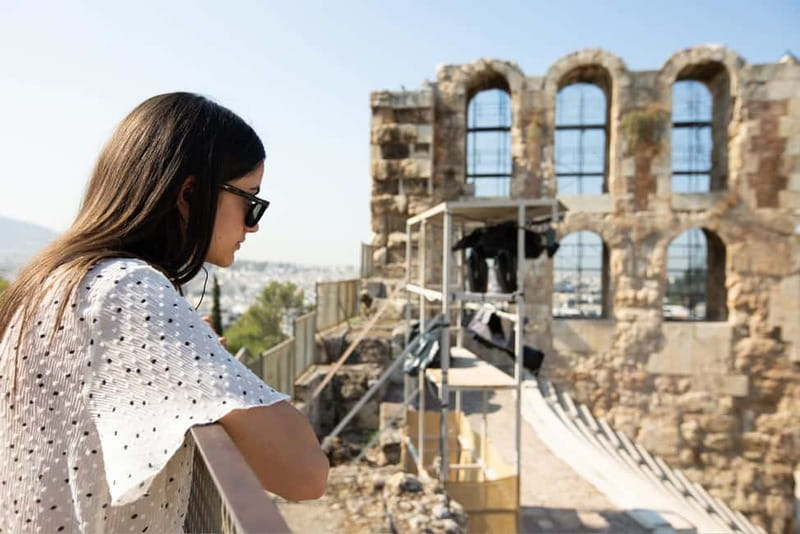
Come prepared for sun and uneven stone. The basics:
- Comfortable shoes (the climb and cobblestones will test you)
- Water
- Sunglasses
- Sun hat
- Passport or ID card
Also, plan for the rules: no pets, no baby strollers, and no luggage or large bags. If you’re traveling light, this is easy. If you’re carrying extra stuff, rethink your packing so you’re not the person who has to step out of the way repeatedly.
The tour includes a lot of outdoor time, and there’s limited control over shade. In summer, it can get hot fast. Even if you’re fit, you’ll feel the sun. Pace yourself early so you’re not running out of energy right before the best photo moments.
Value check: is $34 a good deal?
At around $34 per person for a 210-minute guided walk that includes licensed guidance, early Acropolis access, and (in some options) the Acropolis entrance ticket, this can be strong value. You’re paying for three things most independent visitors struggle to manage:
1) timed-entry headaches and ticket lines, depending on your option
2) interpretation of architecture (what you’re seeing and why it matters)
3) a structured route that covers major sights without you spending half the day planning
The audio devices also reduce fatigue. It sounds small, but being able to listen without constantly repositioning is a real quality-of-life upgrade.
If you choose the option that doesn’t include entry tickets, you must buy the tickets yourself at the correct time slot before you enter with your group. If that timing stress would make you anxious, pick the option that handles admission.
Who this is best for (and who should reconsider)
This tour is a good fit if you want structure. It’s ideal for first-timers who want the big Acropolis monuments explained and then a guided walk through Plaka’s historic lanes without guessing.
It’s less ideal if you have mobility limits, because it’s rated moderate difficulty with a demanding ascendance. It’s also not suitable for wheelchair users or people with mobility impairments, based on the tour’s notes.
If you love cities you can walk and you want a clear route with a guide calling out details, you’ll probably enjoy it. If you prefer slow, independent wandering with zero schedules, you might find the pace a bit guided for your style.
Should you book this Acropolis, Parthenon & Athens Old City tour?
I think you should book it if you want to see the Acropolis correctly the first time—temples, gateways, and the logic of the site—then keep going into Plaka with a guide so the city feels connected. The combination of early access, wireless audio, and an itinerary that includes both the monuments and the bathhouse-focused old city makes it a practical use of a half-day in Athens.
Skip it only if you know you can’t handle uphill walking in heat, or if you’d rather trade guided stops for long, solo exploration with no interpretation. For most visitors, this is a strong way to turn the Acropolis from a collection of photos into a story you can actually follow.
FAQ
How long is the Acropolis and Old City Heritage walking tour?
The tour lasts about 210 minutes.
What’s included in the tour price?
In general, you get a licensed guide, early Acropolis access, guided time through Plaka’s old town (if you select that option), audio devices for clear commentary, and an Acropolis entrance ticket if you choose the option that includes it.
Do I need to buy Acropolis tickets separately?
If you choose the option without entrance tickets, you’ll need to purchase the Acropolis tickets before the tour at the time slot of your departure time.
What languages are the guided tour offered in?
The tour is available in Spanish and English.
What should I bring?
Bring your passport or ID card, comfortable shoes, sunglasses, a sun hat, and water.
Is this tour suitable for wheelchair users or mobility impairments?
No. The tour is not suitable for people with mobility impairments or wheelchair users.
More Tour Reviews in Athens
- Athens: Acropolis & up to 5 Archaeological Sites Combo Pass★ 4.2 · 13,904 reviews
- Athens: Acropolis, Parthenon & Acropolis Museum Guided Tour★ 4.8 · 9,316 reviews
- The Acropolis, Parthenon & Acropolis Museum Guided Tour★ 4.7 · 8,493 reviews
- Athens: Cape Sounion & Poseidon Temple Sunset Half-Day Trip★ 4.8 · 8,241 reviews
- Acropolis: Premium Acropolis and Parthenon Guided Tour★ 4.8 · 5,208 reviews
- Athens: Mythology of Delphi, Museum and Arachova Guided Tour★ 4.7 · 5,102 reviews
Athens on Foot, Continued
- Acropolis and Parthenon Guided Walking Tour★ 5.0 · 4,755 reviews
- Greek Food Walking Tour in Athens★ 5.0 · 4,740 reviews
- Athens: Guided Greek Food Walking Tour with Tastings★ 4.9 · 2,859 reviews
- Acropolis monuments & Parthenon Walking Tour with Optional Acropolis Museum★ 5.0 · 2,678 reviews
- Athens Acropolis and Parthenon Walking Tour★ 4.5 · 1,355 reviews
- Athens Authentic Greek Food Walking Tour (Small Group)★ 5.0 · 809 reviews
The Acropolis, a Few More Ways Up
- Athens: Acropolis & up to 5 Archaeological Sites Combo Pass★ 4.2 · 13,904 reviews
- Athens: Acropolis, Parthenon & Acropolis Museum Guided Tour★ 4.8 · 9,316 reviews
- The Acropolis, Parthenon & Acropolis Museum Guided Tour★ 4.7 · 8,493 reviews
- Acropolis: Premium Acropolis and Parthenon Guided Tour★ 4.8 · 5,208 reviews
- Acropolis and Parthenon Guided Walking Tour★ 5.0 · 4,755 reviews
- Athens: Acropolis, Parthenon & Acropolis Museum Guided Tour★ 4.8 · 3,579 reviews
Fresh Off the Boat: New Athens Reviews





Acropolis & Parthenon Tours, compared.
 ★ 4.2Acropolis & up to 5 Archaeological Sites Combo PassFrom $4213,904 reviews
 ★ 4.8Acropolis, Parthenon & Acropolis Museum Guided TourFrom $409,316 reviews
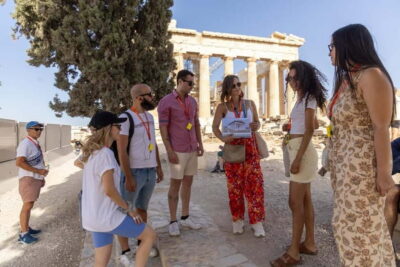 ★ 4.7The Acropolis, Parthenon & Acropolis Museum Guided TourFrom $408,493 reviews
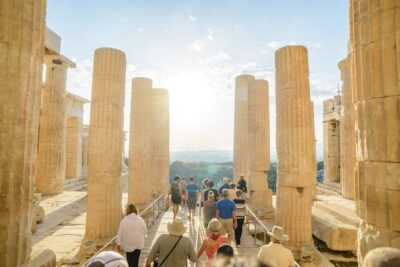 ★ 4.8Acropolis: Premium Acropolis and Parthenon Guided TourFrom $405,208 reviews
 ★ 5.0Acropolis and Parthenon Guided Walking TourFrom $414,755 reviews
★ 4.8Acropolis, Parthenon & Acropolis Museum Guided TourFrom $413,579 reviews
★ 5.0Acropolis and Parthenon Guided Walking TourFrom $414,755 reviews
★ 4.8Acropolis, Parthenon & Acropolis Museum Guided TourFrom $413,579 reviews
 ★ 4.0Acropolis Ticket with Audio GuideFrom $473,575 reviews
 ★ 5.0Athens Scenic Electric Bike Tour with optional Acropolis visitFrom $353,350 reviews
Browse the lists this tour appears in