
Reviewed · ACROPOLIS & PARTHENON TOURS
Athens Acropolis and Parthenon Walking Tour
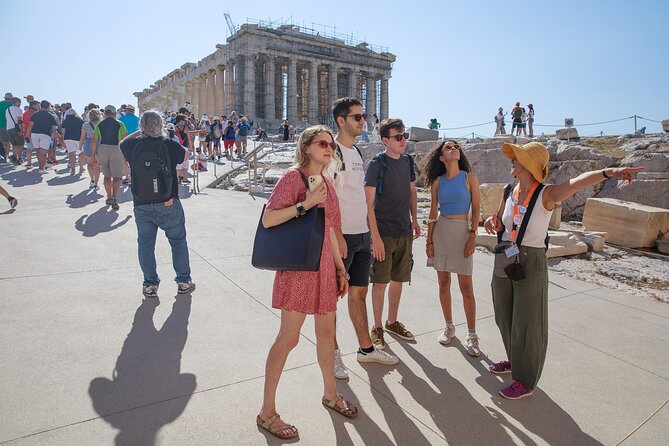
Walking the Acropolis feels like stepping into a story. This 2-hour Athens tour strings together the big monuments of the UNESCO-listed hill with a licensed guide and earsets so you can hear every explanation. You’ll hit classic Athens landmarks in a tight route, then get an Athens map and guide magazine to keep exploring afterward.
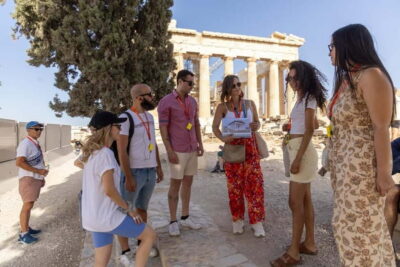
I like that you’re not just staring at ruins; your guide connects the sites to how Athenians lived, staged drama, worshipped, and celebrated victory. I also like the practical setup: a small group size (max 24) and skip-the-line help when you choose the admission option. One possible drawback: this is uphill, uneven walking on a busy hill, and the tour is timed—late arrivals don’t get waited for, so you’ll want to arrive early and wear good shoes.
In This Review
- Key highlights worth your time
- First steps: finding the group and starting up the hill
- How the earsets and small group change the experience
- The route up: Acropolis highlights in a smart order
- Acropolis base to the major monuments
- Theatre of Dionysus: where drama got its start
- The Temple of Asclepios: a calmer pause for medicine
- Odeon of Herodes Atticus: ancient stone theater still in use
- Philopappos Hill (Hill of the Muses): viewpoint time
- Temple of Athena Nike: victory + great angles
- Propylaea: the grand gateway feeling
- Erechtheion: the Caryatid Porch and temple details
- Parthenon: the centerpiece you can finally place
- Price and ticket value: when $41.12 feels like a bargain
- What to wear and bring so the day stays easy
- Who this tour fits best (and who should skip it)
- Quick booking call: should you book this tour?
- FAQ
- How long is the Athens Acropolis and Parthenon Walking Tour?
- Where does the tour meet and where does it end?
- Is the tour offered in English?
- Does the tour include Acropolis admission tickets?
- What is the Acropolis entrance fee mentioned for this tour?
- Are earsets/headphones provided?
- How big is the group?
- Is the tour suitable for people with moderate physical fitness?
- Are baby strollers allowed on the Acropolis site?
Key highlights worth your time
- Earsets for clear listening on a hill full of noise and crowds
- Two ticket styles: with admission (pre-arranged) or without (you’ll still need a valid entry)
- A guided route that covers more than the Parthenon in about 2 hours
- Story stops beyond the main temple like Dionysus Theatre and Asclepios’ sanctuary
- View breaks that aren’t random (Temple of Athena Nike and Philopappos Hill)
- Group pacing you can actually handle with moderate fitness and comfort tips for sun and shoes
More ways up the sacred rock, set side by side
- Athens: Acropolis & up to 5 Archaeological Sites Combo Pass
★ 4.2 · 13,904 reviews - Athens: Acropolis, Parthenon & Acropolis Museum Guided Tour
★ 4.8 · 9,316 reviews - The Acropolis, Parthenon & Acropolis Museum Guided Tour
★ 4.7 · 8,493 reviews - Acropolis: Premium Acropolis and Parthenon Guided Tour
★ 4.8 · 5,208 reviews
First steps: finding the group and starting up the hill
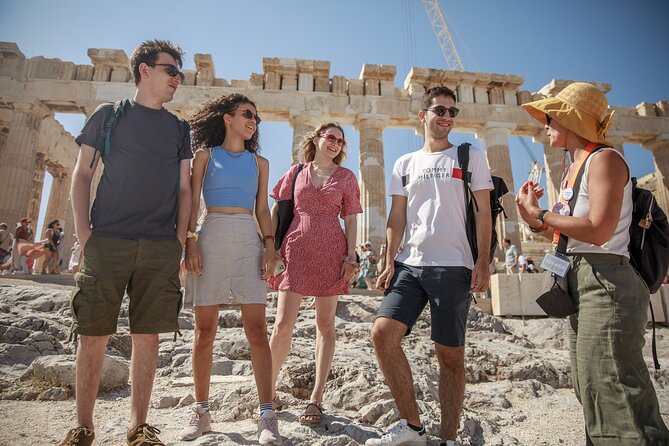
You’ll meet your guide and group near the base of the Acropolis at a yogurt bar on Dionysiou Areopagitou. The tour ends at the Acropolis area, so you’re not sent back down immediately—you can keep wandering once the guided part is done.
This start matters more than it sounds. Acropolis entry is timed, and security is airport-style. That means you should plan to arrive early, especially in peak season when waits can stretch to 30+ minutes. The hill itself is steep and you won’t be hanging around long breaks until you’re already inside the site.
If you chose the option without admission tickets, you’ll need a valid Acropolis entry ticket to join. The tour information also notes a prepaid approach at the meeting point for certain ticket options, so make sure you read your booking details carefully before you go.
How the earsets and small group change the experience
This tour is built for hearing and movement. Each person gets earsets, and the tour is designed so the guide’s commentary stays clear even while you’re walking between monuments. In a place like the Acropolis, that’s not a small thing. The wind can carry sound off-axis, and crowds create constant noise. When the headset works well, you get the stories without straining your voice or asking the guide to repeat everything.
Group size is capped at 24 travelers. That helps. You can still get questions answered without feeling like you’re in a crowded school trip where everyone’s stuck behind someone else.
One small “expectation setting” note: the route is short enough to be doable, but the ground can be uneven. More than one guide moment can become a timing moment—people stop for views, the group regroups, and you keep moving on a schedule.
The route up: Acropolis highlights in a smart order
You’ll start with the Acropolis itself, then work through a sequence of cultural landmarks that explains what each place was for. You’re not just ticking off famous names—you’re learning why they mattered.
On foot through Plaka and beyond



Acropolis base to the major monuments
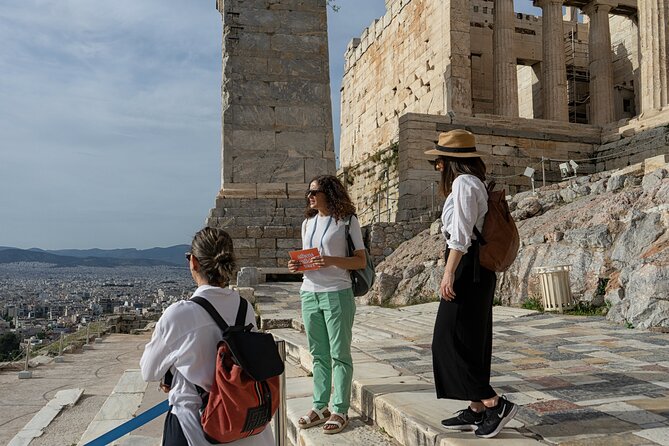
The first leg introduces the hill as a UNESCO World Heritage site and sets the context. Your guide walks you up passing major features such as the Propylaea (the gateway) and the Dionysus Sanctuary as you approach the main platforms.
This early framing helps later. When you reach the Parthenon and the other temples, you’ll have a mental map for where you are and what role each monument played in classical Greek culture—religion, civic pride, drama, and ceremonies all show up in the route.
Theatre of Dionysus: where drama got its start
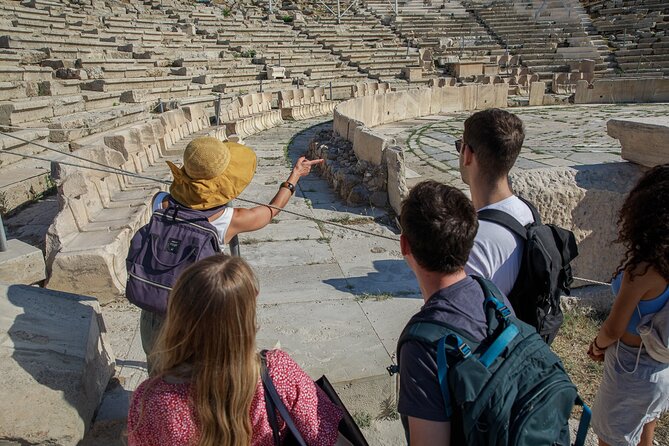
One of the most compelling stops is the Theatre of Dionysus. You’ll hear how it connects to the birthplace of theater and the works of Aeschylus, Sophocles, and Euripides—names you’ll spot everywhere in Greek mythology and literature.
Even if you don’t think of yourself as a theater person, this stop adds a layer most quick Acropolis visits miss. It turns the ruins into something you can picture: crowds, performances, and cultural identity.
Practical note: this is a standing-and-looking stop. Wear shoes that grip and don’t count on shade.
The Temple of Asclepios: a calmer pause for medicine
Next comes the Temple of Asclepios, an Asklepeion sanctuary tied to medicine and healing. The tone here shifts from civic spectacle to personal wellbeing. It’s described as a peaceful refuge—exactly the kind of contrast that makes the whole tour feel more human.
This is also a good moment to slow down and reset your attention. By now, you’re hearing a lot of names. A stop like this helps your brain catch up.
Odeon of Herodes Atticus: ancient stone theater still in use
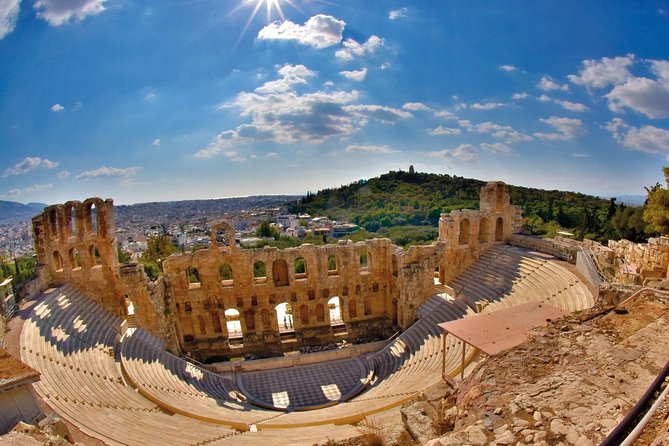
Then you’ll see the Odeon of Herodes Atticus. Built in 161 AD, this stone theater still hosts performances, which is one of the easiest ways to understand continuity: the physical site is ancient, but the function hasn’t disappeared.
It’s also one of the better “wow, that’s still happening” moments of the day. If you like places that connect past and present, this is for you.
Philopappos Hill (Hill of the Muses): viewpoint time
There’s a stop at Philopappos Hill, also called the Hill of the Muses. You’ll see the Philopappos monument and get one of those pause-and-look breaks with city views below.
This is a smart recovery stop. The walk keeps moving, but this gives you a chance to take photos and breathe before you head deeper into the core temple area.
Temple of Athena Nike: victory + great angles
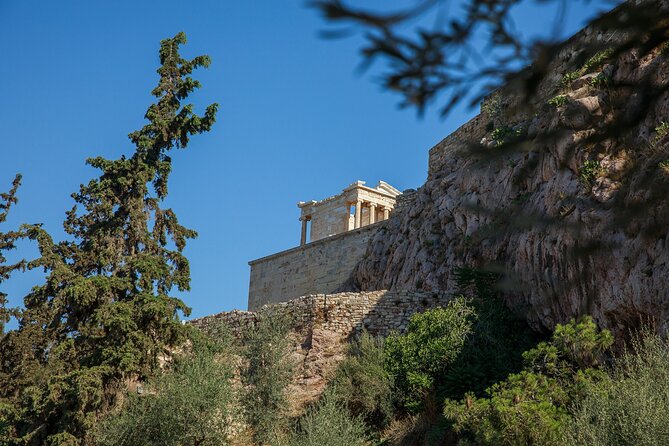
At the Temple of Athena Nike, you’ll learn why it’s linked to Athena as the goddess of victory. It’s perched on the southwestern edge of the Acropolis, and the payoff is panoramic city views.
This is a short stop, but it’s one of the most photogenic moments because the vantage point is naturally framed. If you’re planning your photo strategy, use this moment for your “from here you can see the city” pictures.
Propylaea: the grand gateway feeling
Then you pass through the Propylaea, described as a marble gateway designed by Mnesikles. The feeling here is all about arrival: you’re not just walking into open space—you’re entering a ceremonial zone.
Think of it as the architectural setup. The gateway helps you mentally switch modes from street Athens to ancient Athens.
Erechtheion: the Caryatid Porch and temple details
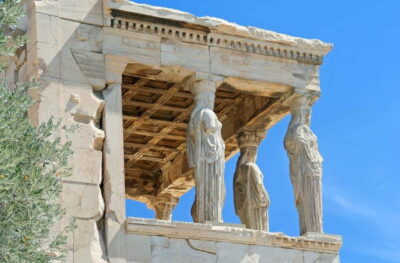
The Erechtheion is next, with special attention on its architecture and the Caryatid Porch—six female statues supporting the structure.
This is where the tour gets more detailed. Instead of only sweeping temple views, you’re nudged into noticing proportions and distinctive sculptural elements. If you enjoy close-looking, this stop tends to be a favorite.
Parthenon: the centerpiece you can finally place
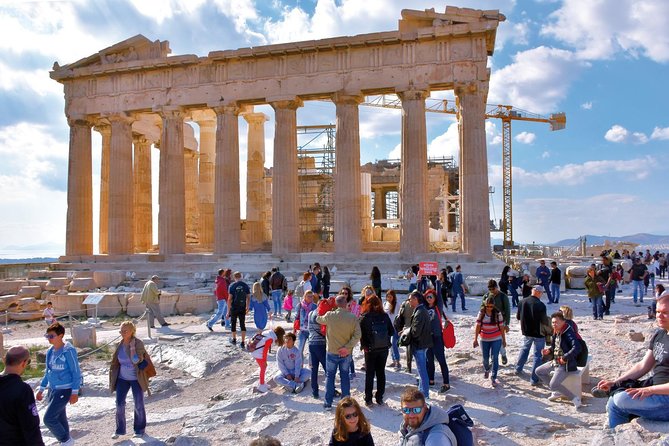
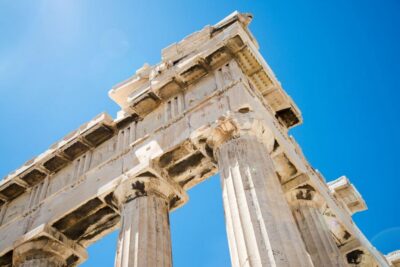
Finally, you reach the Parthenon, the headline monument and an enduring symbol of classical Greek civilization. Your guide explains it as the temple dedicated to Athena Parthenos and ties it to the highest points of classical architectural and cultural achievement.
What makes this moment land is the build-up. Because the tour covered drama, medicine, theaters, gateways, and victory worship, the Parthenon doesn’t feel isolated. It feels like the capstone of a whole religious and civic system.
You’ll also get time to stand and take it in. It’s not rushed through like a drive-by stop.
Price and ticket value: when $41.12 feels like a bargain
The tour price is listed at $41.12 per person for about 2 hours. That’s usually the kind of money that makes sense when you consider what you’re actually buying:
- A licensed guide who organizes the hill into a story you can follow
- Earsets that make the sound quality work in a loud, windy outdoor site
- An Athens map and guide magazine for after the tour
- Time saved when you choose the option that includes admission and skip-line assistance
The big variable is the entry ticket. The admission fee is listed as €30.00 per person unless you choose the upgrade that provides the admission ticket. If you’re on a tight schedule and don’t want to manage timed entry plus security plus ticket lines, bundling the ticket tends to be the smarter move.
One more value angle: this is a short route. If you’ve only got a few hours in Athens and you want the “main monuments plus meaning” package, this tour is built for that.
What to wear and bring so the day stays easy

This tour is marketed for moderate physical fitness, but you should plan for real uphill walking. Surfaces can be uneven, and there are strict entry times. That combo means your comfort gear matters.
Here’s my practical checklist based on the tour guidance:
- Comfortable walking shoes with grip
- Sunscreen and a hat (sun can be relentless on the hill)
- Bring a bottle of water
- Dress for the weather and expect security lines
- Expect airport-style security screening on the way in
- Know that baby strollers are not allowed on the Acropolis archaeological site, and there’s no cloakroom at the side entrance used to enter
Also, plan your restroom strategy. Once you’re on the hill, you shouldn’t count on easy access.
If you’re worried about hearing, keep your earsets secure the whole time. In windy conditions, it can help to make sure your headset isn’t slipping away from the sweet spot.
Who this tour fits best (and who should skip it)
This tour is a strong match if you:
- Have limited time and want a guided overview of the UNESCO Acropolis area
- Want more than photos—stories that connect monuments to classical life
- Like asking questions and getting answers on-site
- Appreciate a structured route where you don’t have to navigate between stops alone
It may be less ideal if you:
- Struggle with steep uphill walking and uneven surfaces
- Need to make frequent pauses for long breaks (the tour is scheduled and can’t wait for latecomers)
- Are extremely sensitive to sound in windy or crowded conditions—headsets help, but outdoor listening isn’t the same as indoors
Quick booking call: should you book this tour?
Yes, I’d book it if you want the Acropolis and Parthenon experience without turning your day into a logistics puzzle. The licensed guide + earsets + timed focus on major sites is exactly what makes a short 2-hour tour feel worth it.
Book the admission-included option if you can. It’s a clean way to reduce friction on a site with timed entry and security. Choose the without-ticket option only if you’re confident handling the entry ticket step ahead of time and you won’t forget the details.
And if you’re choosing between doing it on your own versus with a guide, go guided. The hill is famous, but it’s the connections—drama at Dionysus, healing at Asclepios, victory at Athena Nike—that make the Parthenon moment land with meaning, not just awe.
FAQ
How long is the Athens Acropolis and Parthenon Walking Tour?
The tour lasts about 2 hours.
Where does the tour meet and where does it end?
You meet at LUKUMAΔΕΣ, Dionysiou Areopagitou 3, Athina 117 42, Greece, and the tour ends at Acropoli Athens 117 42, Greece.
Is the tour offered in English?
Yes, the tour is offered in English.
Does the tour include Acropolis admission tickets?
Admission is not included by default. You can choose an option that includes the admission ticket, or you can book without tickets and still need a valid entry ticket.
What is the Acropolis entrance fee mentioned for this tour?
The entrance fee is listed as €30.00 per person (unless an option is selected that includes it).
Are earsets/headphones provided?
Yes. Earsets are provided so you can hear the guide clearly.
How big is the group?
The maximum group size is 24 travelers.
Is the tour suitable for people with moderate physical fitness?
Yes, travelers should have a moderate physical fitness level, since it involves uphill walking.
Are baby strollers allowed on the Acropolis site?
No, baby strollers are not allowed on the Acropolis archaeological site.
If you want, tell me your travel month and your fitness level, and I’ll suggest the best approach for timing (especially around security and heat).
More Tour Reviews in Athens
- Athens: Acropolis & up to 5 Archaeological Sites Combo Pass★ 4.2 · 13,904 reviews
- Athens: Acropolis, Parthenon & Acropolis Museum Guided Tour★ 4.8 · 9,316 reviews
- The Acropolis, Parthenon & Acropolis Museum Guided Tour★ 4.7 · 8,493 reviews
- Athens: Cape Sounion & Poseidon Temple Sunset Half-Day Trip★ 4.8 · 8,241 reviews
- Acropolis: Premium Acropolis and Parthenon Guided Tour★ 4.8 · 5,208 reviews
- Athens: Mythology of Delphi, Museum and Arachova Guided Tour★ 4.7 · 5,102 reviews
Athens on Foot, Continued
- Acropolis and Parthenon Guided Walking Tour★ 5.0 · 4,755 reviews
- Greek Food Walking Tour in Athens★ 5.0 · 4,740 reviews
- Athens: Guided Greek Food Walking Tour with Tastings★ 4.9 · 2,859 reviews
- Acropolis monuments & Parthenon Walking Tour with Optional Acropolis Museum★ 5.0 · 2,678 reviews
- Acropolis, Parthenon & Athens Old City Heritage Walking Tour★ 4.5 · 876 reviews
- Athens Authentic Greek Food Walking Tour (Small Group)★ 5.0 · 809 reviews
The Acropolis, a Few More Ways Up
- Athens: Acropolis & up to 5 Archaeological Sites Combo Pass★ 4.2 · 13,904 reviews
- Athens: Acropolis, Parthenon & Acropolis Museum Guided Tour★ 4.8 · 9,316 reviews
- The Acropolis, Parthenon & Acropolis Museum Guided Tour★ 4.7 · 8,493 reviews
- Acropolis: Premium Acropolis and Parthenon Guided Tour★ 4.8 · 5,208 reviews
- Acropolis and Parthenon Guided Walking Tour★ 5.0 · 4,755 reviews
- Athens: Acropolis, Parthenon & Acropolis Museum Guided Tour★ 4.8 · 3,579 reviews
Fresh Off the Boat: New Athens Reviews





Acropolis & Parthenon Tours, compared.
 ★ 4.2Acropolis & up to 5 Archaeological Sites Combo PassFrom $4213,904 reviews
 ★ 4.8Acropolis, Parthenon & Acropolis Museum Guided TourFrom $409,316 reviews
 ★ 4.7The Acropolis, Parthenon & Acropolis Museum Guided TourFrom $408,493 reviews
 ★ 4.8Acropolis: Premium Acropolis and Parthenon Guided TourFrom $405,208 reviews
 ★ 5.0Acropolis and Parthenon Guided Walking TourFrom $414,755 reviews
★ 4.8Acropolis, Parthenon & Acropolis Museum Guided TourFrom $413,579 reviews
★ 5.0Acropolis and Parthenon Guided Walking TourFrom $414,755 reviews
★ 4.8Acropolis, Parthenon & Acropolis Museum Guided TourFrom $413,579 reviews
 ★ 4.0Acropolis Ticket with Audio GuideFrom $473,575 reviews
 ★ 5.0Athens Scenic Electric Bike Tour with optional Acropolis visitFrom $353,350 reviews
Browse the lists this tour appears in