
Reviewed · CORINTH DAY TRIPS
Ancient Athens Corinth Biblical Tour Following Paul 51.A.D
Paul’s footsteps come with great context. This private Athens-to-Corinth day tour gives you hotel pickup for an easy start and an English driver-guide to connect the sites to Paul’s visit around 51 A.D., all in an air-conditioned van with Wi‑Fi and bottled water. One thing to factor in: the big Ancient Corinth entrance fee is extra, and the driver-guide typically does not accompany you inside the main archaeological areas.
I like how this tour is built for your pace. You get set stops with enough time to look closely, pause for photos, and ask questions, without feeling trapped in a huge bus schedule.
If you want the day to feel more spiritual than academic, you may want to do a bit of reading first. The tour is more about historical setting and on-the-ground context, and some stops can involve walking and ticket lines on your own.
In This Review
- Key highlights you’ll actually feel
- A smooth private Athens-to-Corinth setup (and why it matters)
- Starting at Areopagus (Mars Hill) tied to 51 A.D.
- Roman Agora stop: where the conversation gets political and public
- The Diolkos portage: boats hauled over land for 2,700 years
- Corinth Canal: the dramatic shortcut between seas
- Ancient Corinth and the Step of Paul (Bhma): the main moment
- Temple of Apollo: a photogenic claim tied to 716 B.C.
- Acrocorinth: Caesar’s winter palace and the long view
- Kechries and Apostolos Pavlos Church: harbors, tents, and mosaics
- Timing, comfort, and how to keep the day from feeling rushed
- Price and value: why $313 for a group can feel fair
- Who should book this tour (and who might not love it)
- Should you book the Ancient Athens and Corinth Biblical Tour with Paul?
- FAQ
- How long is the Ancient Athens Corinth Biblical Tour?
- What is the price for the tour?
- Does the tour include hotel pickup and drop-off?
- Is lunch included in the price?
- Are entrance fees included?
- Is there Wi‑Fi and air-conditioning on board?
- Will a tour guide walk with you inside the archaeological sites?
- Can I cancel for a full refund?
Key highlights you’ll actually feel
- Hotel pickup and drop-off keeps the day stress-free, especially if you are starting from a hotel or cruise port
- Driver-guide context ties each location back to Paul’s journey and letters
- Comfort and connectivity: air-conditioning, Wi‑Fi on board, and bottled water for a long sightseeing loop
- Temple-to-harbor variety: you go from Areopagus and Roman Agora to Corinth Canal, Ancient Corinth, Acrocorinth, and Kechries
- Real-world photo time: stops are timed so you can see the views, not just rush past them
- Private format for small groups (up to 2 in your party) means less waiting and easier timing
The canal and old Corinth, a few more days
- From Athens: Ancient Corinth Day Trip with Canal & VR Guide
★ 4.6 · 1,073 reviews - Biblical Tour Letters ToThe Corinthians St Paul’s Footsteps 6Hour
★ 5.0 · 1,065 reviews - Private Biblical Tour Ancient Corinth & Isthmus Canal from Athens
★ 5.0 · 762 reviews - Athens: Ancient Corinth & Nafplio Full Day Trip with Swim
★ 4.8 · 531 reviews
A smooth private Athens-to-Corinth setup (and why it matters)

This is the kind of day trip that works because logistics are handled for you. You get hotel/cruise pickup and drop-off, plus a luxury, private vehicle with air-conditioning, onboard Wi‑Fi, and bottled water. For a route like Athens down toward Corinth, that comfort matters, because you are spending most of the day in transit and on your feet.
It is priced per group (up to 2), which is often a sweet spot if you are traveling as a couple or a small unit and want the flexibility of a private guide. The duration runs about 7 to 8 hours, so it is long enough to feel like a real excursion, but not so long that you lose the plot.
The practical tradeoff: lunch is not included in the price. Your driver-guide may help you find a good place, but you should still budget for food and any snacks you want during the day.
Starting at Areopagus (Mars Hill) tied to 51 A.D.
The day begins at Areopagus, described here as the area connected with Paul around 51 A.D. You start with the view-point side of the story, the part where you can imagine the setting and the audience. Your driver-guide frames it in plain, human terms—where you are standing, what kind of public space it was, and why Paul’s message landed there.
A bonus detail: one guide angle included a link to St. Denis in the setting of this tradition, which is the sort of historical thread you would never pick up from signage alone. Another key note from real-world timing: Mars Hill may be closed for repairs on some dates, so you might only see it from outside rather than climbing up. On those days, the value is still in understanding the location and getting the context, not in chasing an exact stair-by-stair view.
If you like to follow stories visually, this is a strong opener. It helps you “get your bearings fast” before you start moving through the rest of Corinth’s layers.
Roman Agora stop: where the conversation gets political and public
Next comes the Roman Agora, one of Athens’s ancient agora areas often tied to civic life in later periods. In this tour framing, it connects to Paul’s early arrival context and the idea of taking his message toward the next key discussion space—Areopagus—where the tour places the preaching moment for 51 A.D.
This stop is shorter (around 30 minutes), and that’s fine. You are not trying to do deep reading here. Instead, you’re using it like a bridge: this is the public-world stage that helps you understand why Paul’s message was heard in official and civic settings.
One practical consideration: the Roman Agora admission is listed as not included, so don’t assume it’s free like the other photo stops. If you’re building a budget, this small detail can matter more than you think.


The Diolkos portage: boats hauled over land for 2,700 years
Then you jump out of the preaching story and into the nuts-and-bolts world of ancient transportation: the Diolkos. This is the famous boat portage track idea—dragging vessels overland so ships could bypass the route. The tour highlights the Diolkos as about 2,700 years old, with the concept of moving boats between the Corinthian Sea and the Aegean Sea (and back).
This is one of my favorite kinds of stops on a day like this, because it gives you a sense of the place beyond religion. It turns Corinth into a working crossroads, not just a list of Bible locations. When you see infrastructure like this, Paul’s travel routes start to make more sense.
You’ll get about 30 minutes here, which is enough time for photos and for your driver-guide to connect why a place like this could matter for trade, travel, and the movement of people who later formed communities.
Corinth Canal: the dramatic shortcut between seas
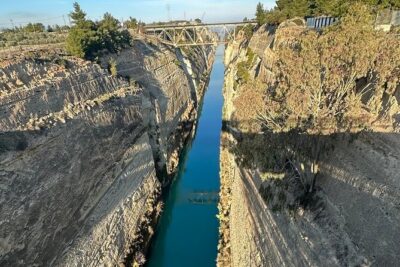
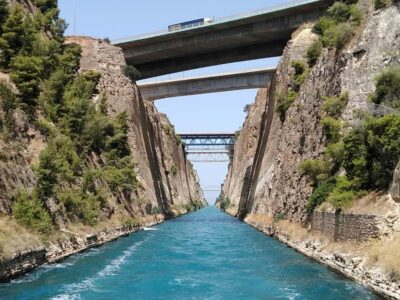
At the Corinth Canal, you get one of those views that makes even non-history buffs pause. The tour description includes specific measurements (about 6 km long, 80 meters high, 24 meters wide, and 10 meters deep), and it connects the canal story to King George and excavations beginning in 1882 A.D. It also explains the canal’s purpose: connecting the Aegean Sea with the Ionian Sea.
This stop also runs about 30 minutes, which is a good amount of time. You are there for the visual impact and the geography. Spend a few minutes imagining ships moving through rather than just snapping pictures—your driver-guide usually turns it into a quick mental map you can carry the rest of the day.
Admission is listed as free, so it’s also a low-friction stop.
Ancient Corinth and the Step of Paul (Bhma): the main moment

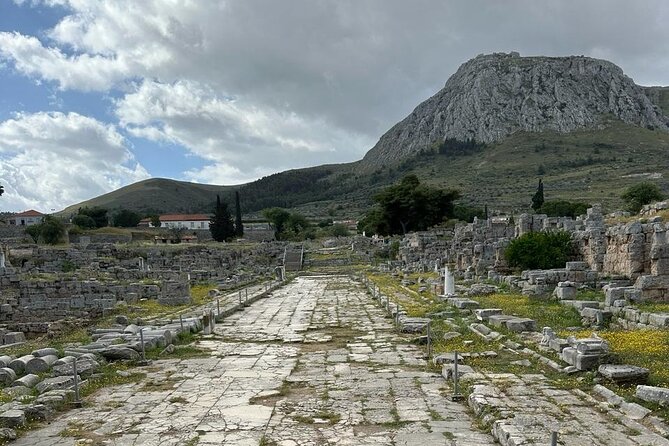
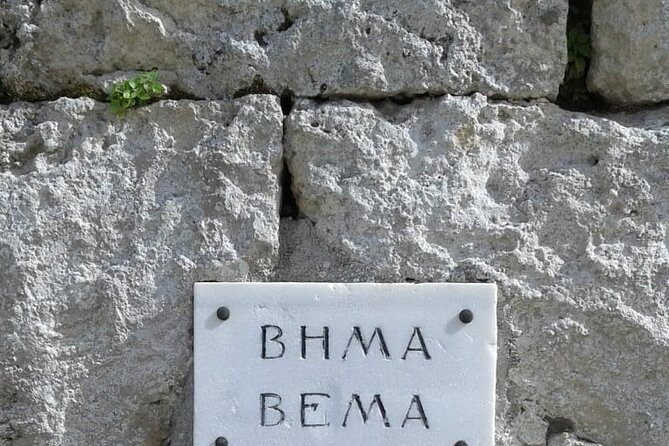
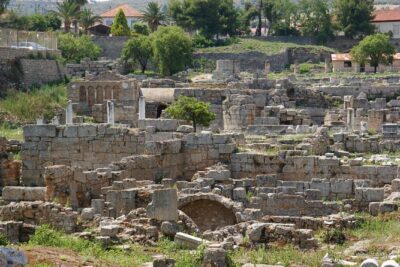
This is the big one. You’ll spend time at Ancient Corinth (Archaia Korinthos), including the Bhma, described here as the step of Paul. This is where the tour frames Paul having to address different audiences—Romans and Corinthians—and why that public-space context mattered.
This stop is not free. The Ancient Corinth entrance fee is €15.00 per person. It is the only explicit site fee in the provided details, and it’s the one you will feel because it directly affects your budget for the day.
Another practical point from real experiences on this tour: the driver-guide may not accompany you inside the archaeological area. The package does not include a guide to walk the sites with you inside. That means you’ll likely explore at your own pace while the driver-guide stays available outside or at the meeting point.
If you want to maximize this time, do one simple prep move: read a short overview of Ancient Corinth before you go. Even a few key points about the city layout and Paul’s context will make the ruins feel connected instead of random.
Temple of Apollo: a photogenic claim tied to 716 B.C.
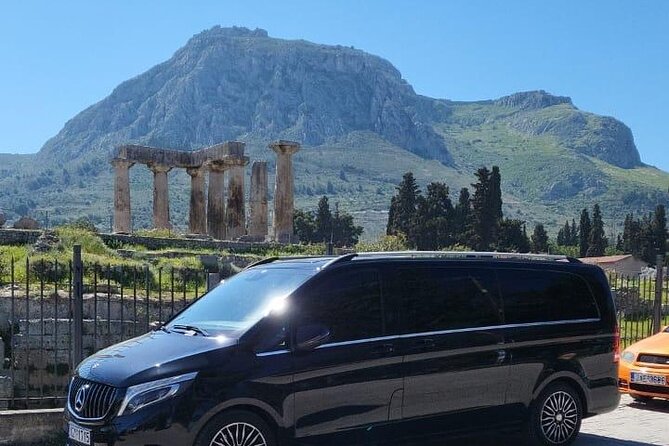
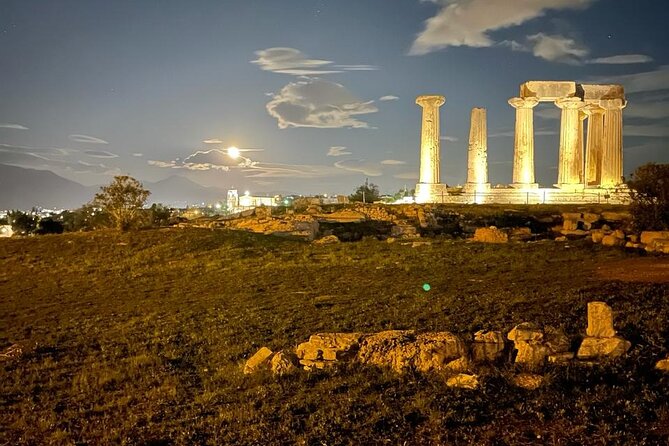
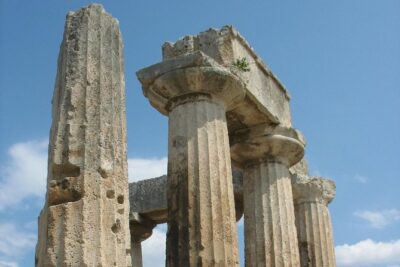
Next up is the Temple of Apollo, described as the oldest temple of Apollo in Greece, with Apollo as the local god of light and music for Corinthians. The tour also includes a very specific highlight: a note that sunlight hits the temple from all sides (as described in the tour) and the temple’s date as 716 B.C.
The stop is short (about 30 minutes), which is typical for temple ruins where you are mostly taking in placement and views. If the light angle is important to your experience, aim for this part of the day when the sun supports your photos. Your driver-guide can usually tell you when to step to the best viewing side.
Admission is listed as not included here as well. Still, the temple stop often feels like a good pacing break between more intense ruins and climbing.
Acrocorinth: Caesar’s winter palace and the long view
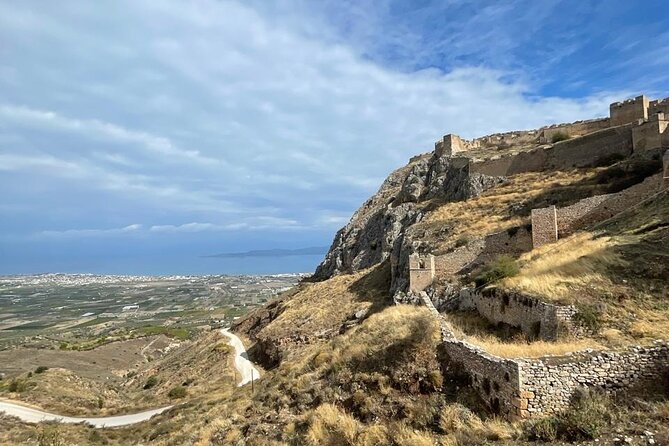
Then you climb into Acrocorinth, described as the winter palace of Caesar, with a temple of Aphrodite included in the framing. The tour also labels Acrocorinth as a castle-like highpoint, with details like being about 530 meters high and referenced as a major stronghold.
Your time here is about 100 minutes (this is one of the longer segments in the day), and it is for good reason. Acrocorinth is where the geography comes alive. The views help you understand why ancient cities were built to be seen, defended, and controlled from above.
The tour also includes local storytelling elements—like a mention of insights about “1000 most beautiful women” tied to the site’s legend. Treat that as part of the narrative flavor your driver-guide shares, not as something you would verify from stone tablets during the visit.
If Mars Hill closure affected your earlier timing, Acrocorinth can still deliver the big payoff. Even when you skip one viewpoint, the high views and sweeping context can carry the day.
Kechries and Apostolos Pavlos Church: harbors, tents, and mosaics
On the way back toward the city story, the tour takes you to Kechries, described as the ancient harbor where Paul met Priscilla and Aquila, making tents by the water. This stop also frames a church setting tied to Paul and later community practice.
You’ll spend about 30 minutes here, and it’s a different kind of connection. Instead of standing in the heart of civic ruins, you’re in a place meant to bring the “daily life” angle into focus: where people came and went, where work and community would form.
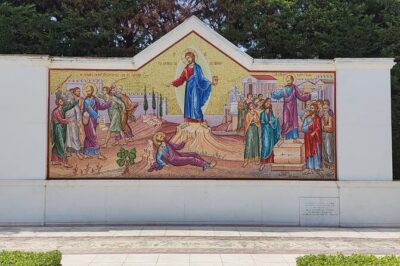
Then comes Apostolos Pavlos Church, described as a Church of Paul in Ancient Corinth with an amazing mosaic called The vision of Paul. You’ll have about 20 minutes for this last major spiritual-image stop, and the mosaic is often the moment where people slow down and stop thinking like tourists.
Even if you are not religious, it helps to see how later generations portrayed Paul visually. It turns Paul into a face and a scene, not only a text.
Timing, comfort, and how to keep the day from feeling rushed
The tour is built around multiple short stops (often around 20–30 minutes each), plus a few longer moments at key places like Acrocorinth. That rhythm is good because it prevents museum fatigue. You get enough time to look around, but you’re not stuck forever waiting for a slow stop.
The comfort package helps a lot: the vehicle is air-conditioned, there’s Wi‑Fi, and you’ll have bottled water. On a hot Greek day, that keeps the rest of the plan from collapsing. Your driver-guide also typically uses the ride time to connect dots, so the day feels like one story instead of disconnected photo stops.
One more real-world note: because the driver-guide may not go inside the archaeological site with you, you’ll want to manage your own pace there. Plan on a bit of light walking, and consider using your phone notes (or a pre-downloaded map) so you do not waste time orienting yourself.
Price and value: why $313 for a group can feel fair
At $313.01 per group (up to 2), this can be strong value if you compare it to the cost of doing several separate paid activities plus private transport. You are paying for one vehicle, one driver-guide, and one organized route that links Athens context to Corinth’s main sites in a single day.
What you should mentally budget for:
- Ancient Corinth entrance fee (€15 per person)
- Lunch (not included)
- Any additional site admissions labeled as not included on the tour details
Even with that add-on math, the value comes from the “why this matters” part. Guides like Konstantinos and Jorge are singled out in past experiences for being organized and energetic, and Nick is mentioned as a driver-guide who fits many Paul-related landmarks into a full schedule without rushing. That kind of structure is what makes a one-day route actually work.
If you split the price across two people, the per-person cost can be reasonable for a full day. If you are traveling solo, it may feel pricier because the group rate is still the group rate.
Who should book this tour (and who might not love it)
I think this tour is ideal if you want Paul’s story tied to geography. It suits Christians looking for on-the-ground context, and it also suits general history lovers who enjoy religious history as part of civic life.
You might want a different style of tour if you prefer a strict spiritual retreat with quiet time. This one is more of a structured “walk the sites and understand the setting” format, and part of that is because some visits require you to handle exploration inside on your own.
If you care about photo views, you’ll like the emphasis on scenic stops like Corinth Canal and Acrocorinth. And if you dislike crowds, the private format for up to 2 people helps keep your day calmer than large-bus sightseeing.
Should you book the Ancient Athens and Corinth Biblical Tour with Paul?
If your goal is a single-day route that connects Athens and Corinth to Paul’s journey, I’d book it. The combination of hotel pickup, comfort on board, and a driver-guide who connects the story makes it easy to follow along without doing homework all day.
One call to make before you go: decide how you want to handle the archaeological exploration. Since the guide-to-enter is not included, you’ll get more out of the ruins if you come prepared with a few key ideas about Ancient Corinth and Paul’s context.
If you can handle paying the Ancient Corinth entrance fee and planning for lunch, this tour offers a focused day that feels purposeful from start to finish.
FAQ
How long is the Ancient Athens Corinth Biblical Tour?
The tour lasts about 7 to 8 hours.
What is the price for the tour?
It is priced at $313.01 per group, up to 2 people.
Does the tour include hotel pickup and drop-off?
Yes. Hotel or cruise pickup and drop-off are included. The driver waits at the entrance with a name sign for port pickups.
Is lunch included in the price?
No. Lunch is not included.
Are entrance fees included?
Ancient Corinth (Archaia Korinthos) has an entrance fee of €15.00 per person, and other admissions are listed as not included as well.
Is there Wi‑Fi and air-conditioning on board?
Yes. The vehicle has air-conditioning and Wi‑Fi, plus bottled water.
Will a tour guide walk with you inside the archaeological sites?
No. A separate tour guide to accompany you into the archaeological site is not included.
Can I cancel for a full refund?
Yes. Free cancellation is available up to 24 hours in advance for a full refund.
More Tours in Athens
- Athens: Acropolis, Parthenon & Acropolis Museum Guided Tour★ 4.8 · 9,316 reviews
- The Acropolis, Parthenon & Acropolis Museum Guided Tour★ 4.7 · 8,493 reviews
- Acropolis: Premium Acropolis and Parthenon Guided Tour★ 4.8 · 5,208 reviews
- Athens: Mythology of Delphi, Museum and Arachova Guided Tour★ 4.7 · 5,102 reviews
- Acropolis and Parthenon Guided Walking Tour★ 5.0 · 4,755 reviews
- Greek Food Walking Tour in Athens★ 5.0 · 4,740 reviews
More Tour Reviews in Athens
- Athens: Acropolis & up to 5 Archaeological Sites Combo Pass★ 4.2 · 13,904 reviews
- Athens: Acropolis, Parthenon & Acropolis Museum Guided Tour★ 4.8 · 9,316 reviews
- The Acropolis, Parthenon & Acropolis Museum Guided Tour★ 4.7 · 8,493 reviews
- Athens: Cape Sounion & Poseidon Temple Sunset Half-Day Trip★ 4.8 · 8,241 reviews
- Acropolis: Premium Acropolis and Parthenon Guided Tour★ 4.8 · 5,208 reviews
- Athens: Mythology of Delphi, Museum and Arachova Guided Tour★ 4.7 · 5,102 reviews
Corinth and the Canal
- From Athens: Ancient Corinth Day Trip with Canal & VR Guide★ 4.6 · 1,073 reviews
- Biblical Tour Letters ToThe Corinthians St Paul’s Footsteps 6Hour★ 5.0 · 1,065 reviews
- Private Biblical Tour Ancient Corinth & Isthmus Canal from Athens★ 5.0 · 762 reviews
- Athens: Ancient Corinth & Nafplio Full Day Trip with Swim★ 4.8 · 531 reviews
- Athens: Corinth Canal, Mycenae & Nafplio Premium Guided Tour★ 4.7 · 322 reviews
- Private Tour of Apostle Paul’s Footsteps in Ancient Corinth★ 5.0 · 275 reviews
Fresh Off the Boat: New Athens Reviews




Corinth Day Trips, compared.
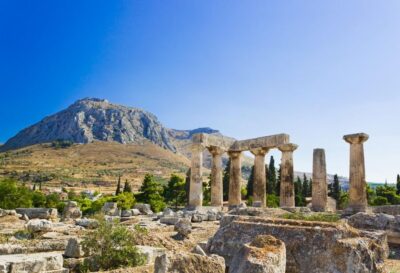 ★ 4.6From Athens: Ancient Corinth Day Trip with Canal & VR GuideFrom $411,073 reviews
 ★ 5.0Biblical Tour Letters ToThe Corinthians St Paul’s Footsteps 6HourFrom $1701,065 reviews
 ★ 5.0Private Biblical Tour Ancient Corinth & Isthmus Canal from AthensFrom $301762 reviews
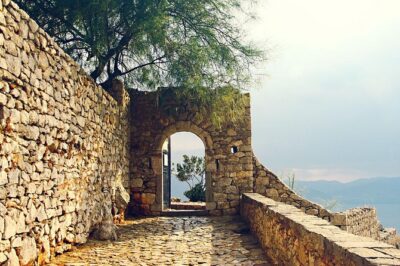 ★ 4.8Ancient Corinth & Nafplio Full Day Trip with Swim531 reviews
 ★ 4.7Corinth Canal, Mycenae & Nafplio Premium Guided TourFrom $32322 reviews
 ★ 5.0Private Tour of Apostle Paul’s Footsteps in Ancient CorinthFrom $169275 reviews
 ★ 4.3Corinth Canal, Mycenae and Nafplio Day TourFrom $129252 reviews
 ★ 4.5Corinth Half-Day Trip from Athens with Entrance TicketsFrom $91242 reviews
Browse the lists this tour appears in