
Reviewed · FOOD & DRINK
Athens: Cretan Olive Oil Tasting Experience
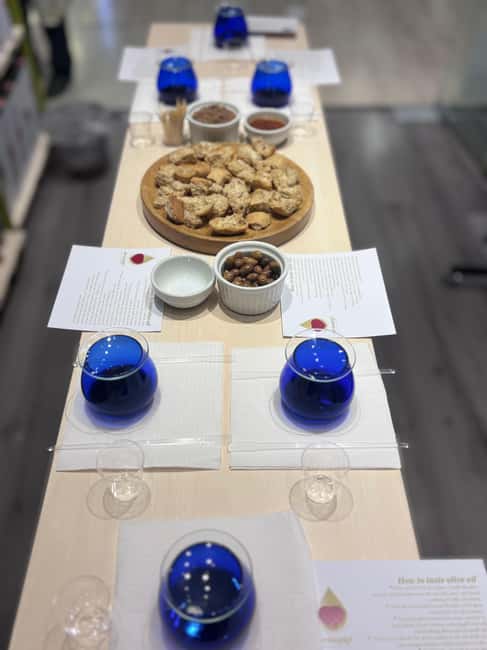
Cretan olive oil teaches fast, if you taste it right. This 30-minute extra virgin olive oil tasting at Chrisopigi Deli in central Athens turns everyday shopping into a guided lesson on aroma, texture, and flavor, with a focus on what makes premium oil taste the way it should.
I especially like the side-by-side comparison of oils from different harvest periods, and the hands-on way you get to taste olives, olive paste, and Cretan snacks while learning how to read what you’re tasting. If you’re mainly hunting for a big sit-down meal or a long tour, this is a short session and you’ll want to plan time afterward for purchases or a proper dinner.
In This Review
- Key things I’d circle on your map
- Where to find it: Voulis 7 and the Bolani stoa
- What you actually taste in 30 minutes
- From tree to bottle: how the guide explains production
- How to taste like a pro without turning it into homework
- The pairings: rusk, olive paste, raki, and cherry tomato chutney
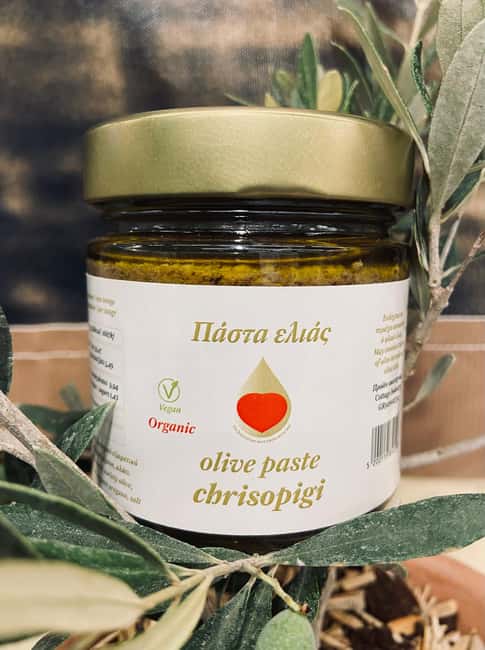
- Handmade olive paste
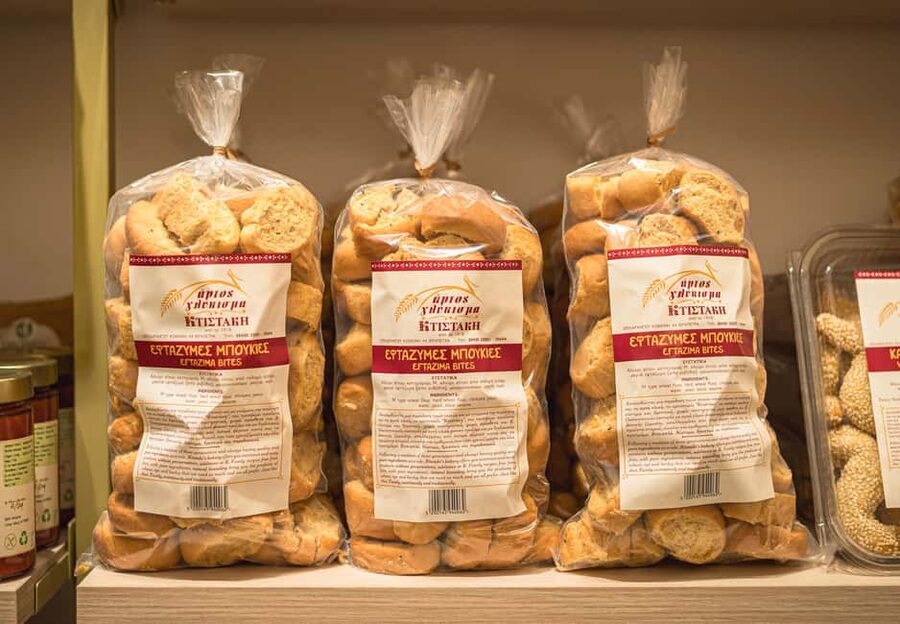
- Traditional Cretan rusk
- Raki and cherry tomato chutney
- Price and value: why $23 makes sense for a guided lesson
- Shopping after: taking your tasting knowledge home
- Who this fits—and who should skip it
- Should you book it?
- FAQ
- Where is the meeting point?
- How long does the tasting last?
- What is the price per person?
- What oils are included in the tasting?
- What olives do you taste?
- Is there food included besides olives and olive oil?
- What languages is the guide speaking?
- Can I buy what I taste?
- Is transportation included?
- Is this experience wheelchair accessible?
Key things I’d circle on your map
- Two harvest periods, one tasting method so you can actually notice the difference instead of guessing
- Koroneiki from Sitia (Crete) and Kalamata olives in the same tasting flow
- Handmade olive paste + Cretan rusk that help flavors click in your mouth
- Organoleptic features explained (how aroma, texture, and taste signal quality)
- Ioanna-style hosting: clear, friendly, and instruction-led in a relaxed pace
- Everything tasted is for sale right in the shop, so you can bring home what you liked
Other plates and glasses worth the detour
- Greek Food Walking Tour in Athens
★ 5.0 · 4,740 reviews - Athens: Street Food Tasting Tour
★ 4.9 · 3,343 reviews - Athens: Guided Greek Food Walking Tour with Tastings
★ 4.9 · 2,859 reviews - Small Group Greek Traditional Food Tour in Athens 20+ Tastings
★ 5.0 · 1,759 reviews
Where to find it: Voulis 7 and the Bolani stoa
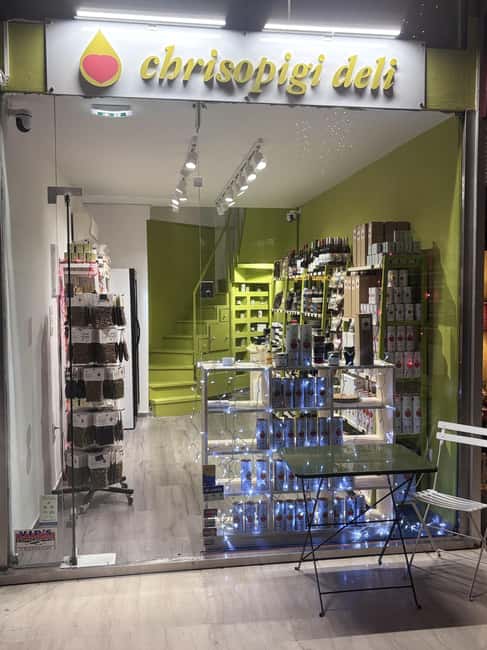
This tasting is in the center of Athens, at Voulis 7 Street, inside the covered walkway (stoa) called BOLANI. You’ll enter the stoa and look for the shop, Chrisopigi. That matters because central Athens can feel like a pinball machine of streets. Being in a covered walkway helps you get in and out without stress, especially if the weather is changing.
The format is simple: you’re not bouncing across town. You’re doing one focused stop in a shop that sells what you taste. That makes the experience feel practical, not just educational.
Also, you get a live guide speaking English and Greek, and the tasting is wheelchair accessible. If you want a quick cultural stop that doesn’t demand a full afternoon, this fits.
What you actually taste in 30 minutes
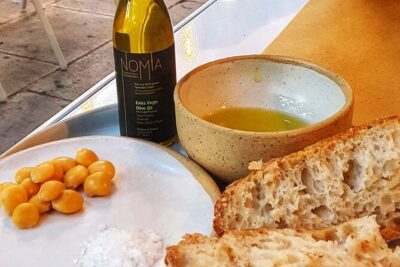
The core of the experience is tasting extra virgin olive oil from Crete, including oils from different harvest periods. Instead of one oil on autopilot, you taste two types—one is described as early harvest olive oil, and the session compares it to another extra virgin olive oil. That contrast is the whole point: early harvest oils often taste sharper and more “alive,” while later harvest oils can feel rounder. You’ll learn how to notice those differences.
You also taste two kinds of olives:
- Koroneiki variety of Sitia (Crete)
- Kalamata olive
Then the food component brings it home:
- Handmade olive paste made from Koroneiki (listed as Koronian olives)
- A traditional Cretan rusk (from a small bakery in Crete)
- Raki
- A chutney made from cherry tomatoes
That mix is smart. Oil alone can be hard to judge if you don’t have a baseline for salt, bread texture, and the kick of spirits. With rusk, paste, and raki in the mix, you start learning faster what parts of the flavor come from the oil versus what parts come from what you’re eating with it.
From tree to bottle: how the guide explains production
A big reason this tasting feels more useful than a quick pour-and-smile is that the guide walks you through the traditional olive oil production process in a way that connects directly to what’s in your glass.
You’re guided through:
- how olive oil is produced using traditional methods
- how harvest timing affects what ends up in the oil
- how to connect the process to what you perceive during tasting
This is where I think the “teacher” style matters. In multiple experiences of this type, the explanation can be vague. Here, the emphasis is on how you taste and what you should notice. That’s what makes the production story feel practical instead of like trivia.
One more detail: the session focuses on the history and tradition of Cretan extra virgin olive oil production, but it’s not history for history’s sake. The goal is that by the end, you understand the organoleptic markers of premium oil—meaning you can tell more accurately what you’re buying next time.




How to taste like a pro without turning it into homework
The tasting is built around organoleptic features—basically, the sensory signs that premium extra virgin olive oil shows in your mouth and nose. You’re not expected to be a trained food scientist. You’re guided through what to pay attention to and what each sensation means.
Here’s how the tasting technique pays off for you:
- Aroma first: You learn to treat smell as part of the flavor map, not an extra step.
- Texture matters: You start noticing whether the oil feels lighter, more viscous, or more “grippy” on your palate.
- Flavor and finish: The guide helps you identify the signals that make the oil feel high-quality rather than generic.
That’s the value. Once you know what to look for—aroma, texture, and taste—you can shop smarter later. Even if you don’t remember every term, you’ll remember the difference between the oils you tasted and what you liked about each one.
The pairings: rusk, olive paste, raki, and cherry tomato chutney
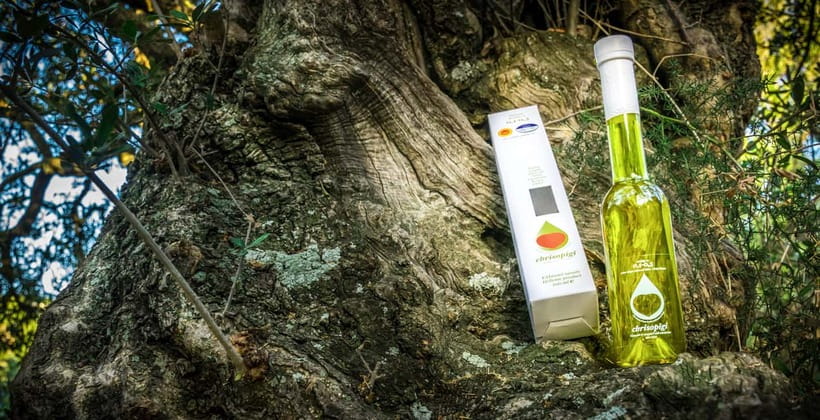
This part is fun, but it’s also functional. Each item helps you taste the oil in a different context.
Handmade olive paste
The session includes handmade olive paste from Koroneiki olives. Paste changes the game because it’s concentrated flavor. You’ll likely notice how the oil’s character works alongside something richer and more savory—so you can separate oil flavor from olive flavor.
Traditional Cretan rusk
The Cretan rusk is a dry, crunchy companion. Breadlike foods give your palate something stable to measure oil against. It also makes it easier to taste without feeling like everything is sliding around.
Raki and cherry tomato chutney
Raki and cherry tomato chutney add contrast. Alcohol and tangy chutney shift how the oil reads in your mouth, which can help you understand why certain oils feel smoother while others feel more intense.
That combination is also why this works as a “food stop” rather than a purely technical tasting.
Price and value: why $23 makes sense for a guided lesson
At $23 per person for about 30 minutes, you’re paying for two main things:
- Professional guidance in how to taste and interpret oil
- Multiple samples (two oils from different harvest periods, two olive varieties, olive paste, rusk, plus raki and cherry tomato chutney)
If you tried to replicate this on your own, you’d likely end up buying a few bottles without knowing what differences actually matter. Here, you get the tasting framework first. Then you’re in the shop with your senses “trained” on what you just compared.
There’s also an added practical win: the products you taste are available for purchase in the same place. If you fall in love with one oil style, you don’t have to guess where to find it later.
And if you like flexible plans, the booking options are set up to be forgiving: you can cancel up to 24 hours in advance and you can often reserve without paying right away.
Shopping after: taking your tasting knowledge home
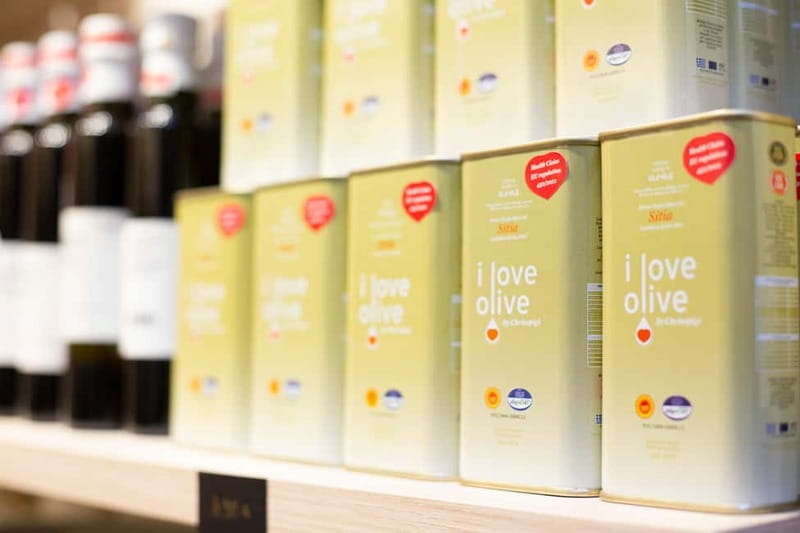
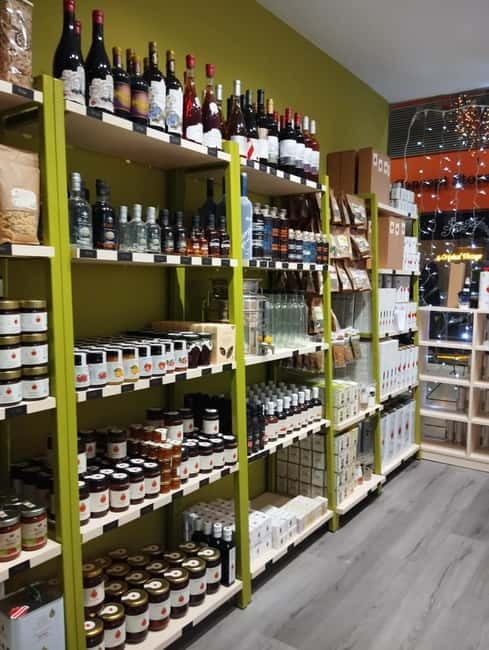
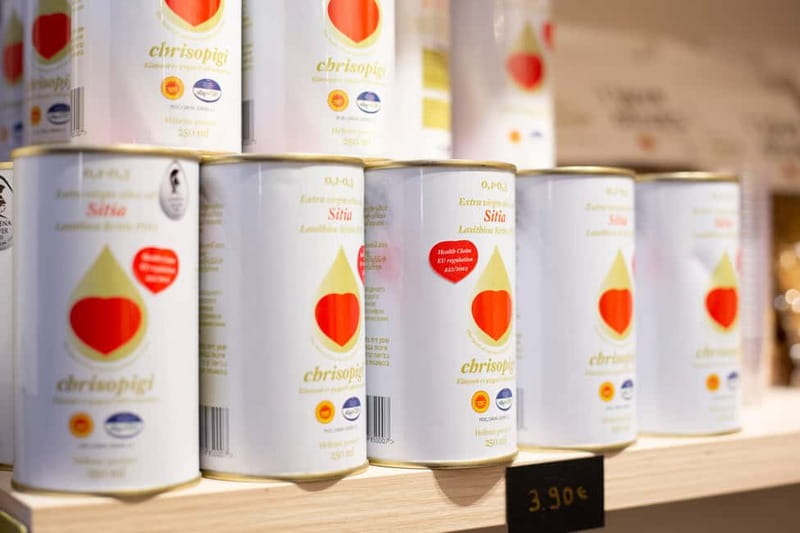
Because the tasting happens inside a shop, shopping isn’t an interruption—it’s part of the flow. The shop sells the products you taste, plus other Cretan products from family-owned businesses.
What I’d do with your new knowledge:
- Buy at least one oil you liked for everyday use (if you’re choosing between the oils you tasted)
- Consider buying an extra bottle if you liked the early harvest style more intense and bright
- Pair what you buy with pantry staples you already use (rusk, simple bread, tomatoes, or olives) so you can actually taste the difference over the next week
Also: if you want to bring home more than oil, the shop’s range includes Cretan specialty items, and the vibe here is built for people who want to go a step beyond the basics.
Who this fits—and who should skip it
This tasting is a great match if you:
- enjoy food experiences where learning connects directly to taste
- want a quick Athens activity in central locations
- like olive oil as a hobby, not just as background flavor
- want a guide-led explanation of premium quality using your senses
You might skip it if you:
- want a long walking tour or lots of different stops
- are hungry for a full meal during the session
- prefer experiences that don’t involve tasting alcohol (there is raki included)
Should you book it?
If you want a short, satisfying food education in Athens, this is an easy yes. For $23, you get multiple olive oil and olive tastings plus Cretan snacks, and you leave with a clearer way to judge quality based on aroma, texture, and flavor. The format is compact, the guide instruction is a big part of the value, and the fact that everything tasted is sold on-site makes it simple to act on what you learned.
If olive oil is even a little bit your thing, book ahead and plan to do your shopping with a purpose.
FAQ
Where is the meeting point?
The tasting meets at Voulis 7 Street in central Athens, inside the covered walkway called BOLANI. You enter the stoa and look for Chrisopigi.
How long does the tasting last?
The experience lasts 30 minutes.
What is the price per person?
The price is $23 per person.
What oils are included in the tasting?
You taste extra virgin olive oil and early harvest olive oil, with two types from different harvest periods.
What olives do you taste?
You taste two types: Koroneiki (Sitia, Crete) and the famous Kalamata olive.
Is there food included besides olives and olive oil?
Yes. You also taste handmade olive paste, traditional Cretan rusk, raki, and a chutney made from cherry tomatoes.
What languages is the guide speaking?
The live guide provides instruction in English and Greek.
Can I buy what I taste?
Yes. All products tasted are available for purchase at the shop, along with other Cretan products.
Is transportation included?
No. Transportation to the shop is not included.
Is this experience wheelchair accessible?
Yes. The activity is listed as wheelchair accessible.
Eat Your Way Round Athens
- Greek Food Walking Tour in Athens★ 5.0 · 4,740 reviews
- Athens: Street Food Tasting Tour★ 4.9 · 3,343 reviews
- Athens: Guided Greek Food Walking Tour with Tastings★ 4.9 · 2,859 reviews
- Small Group Greek Traditional Food Tour in Athens 20+ Tastings★ 5.0 · 1,759 reviews
- Athens: Food Market Visit and Cooking Class with Wine★ 4.9 · 1,087 reviews
- Athens Authentic Greek Food Walking Tour (Small Group)★ 5.0 · 809 reviews
More Tour Reviews in Athens
- Athens: Acropolis & up to 5 Archaeological Sites Combo Pass★ 4.2 · 13,904 reviews
- Athens: Acropolis, Parthenon & Acropolis Museum Guided Tour★ 4.8 · 9,316 reviews
- The Acropolis, Parthenon & Acropolis Museum Guided Tour★ 4.7 · 8,493 reviews
- Athens: Cape Sounion & Poseidon Temple Sunset Half-Day Trip★ 4.8 · 8,241 reviews
- Acropolis: Premium Acropolis and Parthenon Guided Tour★ 4.8 · 5,208 reviews
- Athens: Mythology of Delphi, Museum and Arachova Guided Tour★ 4.7 · 5,102 reviews
Fresh Off the Boat: New Athens Reviews





Food & Drink, compared.
 ★ 5.0Greek Food Walking Tour in AthensFrom $874,740 reviews
 ★ 4.9Street Food Tasting TourFrom $693,343 reviews
 ★ 4.9Guided Greek Food Walking Tour with TastingsFrom $812,859 reviews
 ★ 5.0Small Group Greek Traditional Food Tour in Athens 20+ TastingsFrom $841,759 reviews
 ★ 4.9Food Market Visit and Cooking Class with WineFrom $811,087 reviews
 ★ 5.0Athens Authentic Greek Food Walking Tour (Small Group)From $83809 reviews
 ★ 5.0Athens Greek Food Tour Small-Group ExperienceFrom $107802 reviews
 ★ 5.0Athens Evening Food TourFrom $96766 reviews
Browse the lists this tour appears in