
Reviewed · CORINTH DAY TRIPS
Biblical Corinth: St. Paul and His Letters to the Corinthians
Paul’s words still echo on this route. This private Athens-to-Corinth trip links Mars Hill to the places where Paul taught and wrote, with views at the Corinth Canal, stops at Isthmia, and time in Ancient Corinth. I like that it’s a private setup, so you can move at your pace without herding. I also like the practical comfort details—air-conditioning, bottled water, and onboard Wi‑Fi to keep you connected. One drawback to plan for: your driver isn’t a licensed guide inside the ruins, so if you want hands-on explanations throughout, you may want to add a licensed tour guide on request.
You’ll be picked up and dropped off where you prefer, with an adjustable start time, and the driver can fill in the story as you travel. In past departures, drivers like Alex, George, Stephanos, and Spiros have been praised for clear English, careful driving, and patience with extra time for pictures, bathrooms, and questions—exactly the stuff that makes a long day feel easier.
In This Review
- Key Reasons This Trip Works So Well
- How the Athens-to-Corinth Day Trip Runs (And What You Control)
- Areopagus Hill and Mars Hill: Paul in the Heart of Athens
- Corinth Canal and the Diolkos: Where Sea Power Met Engineering
- Isthmia’s Games: Poseidon, Palaimon, and Paul’s Tentmaker Moment
- Museum Time at Isthmia: Artifacts That Make the Area Feel Real
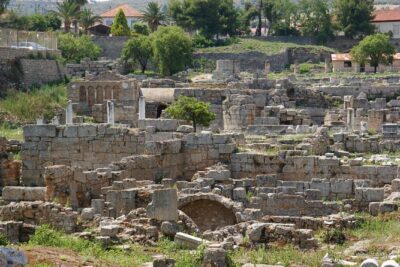
- Ancient Corinth: The Bema, the Temple of Apollo, and Paul’s Writing World
- The Bema area connected to Gallio
- The Temple of Apollo as Corinth’s skyline icon
- Kenchreai (Kechries): The Port Where Paul’s Journey Moves On
- Apostolou Pavlou Church: A Modern Place of Memory
- Akrokorinthos Fortress: Read the City From Above
- Lunch in Corinth: Plan for a Real Break, Not a Sandwich Stop
- Price and Value: Is $218.43 a Good Deal?
- Should You Book This Paul and Corinth Footsteps Tour?
- FAQ
- How long is the tour?
- Is this tour private?
- Do you get pickup and drop-off?
- Can the pickup time be adjusted?
- Is Wi-Fi included?
- What language is the tour in?
- Is lunch included?
- Are entrance fees included for Ancient Corinth and the Isthmia museum?
- Do the drivers enter the archaeological sites with you?
- Is free cancellation available?
Key Reasons This Trip Works So Well
- Mars Hill on your feet: Walk to the spot associated with Paul’s Unknown God sermon and get the Athens-to-Corinth connection.
- Corinth’s engineering in one morning: Corinth Canal views plus the remnants of the Diolkos ship-transport road.
- Isthmia’s Games world: See Poseidon’s sanctuary area, the stadium setting, and nearby religious sites Paul likely encountered.
- Ancient Corinth without the rush: Focus on key spots like the Bema area (Gallio) and the Temple of Apollo skyline.
- Driver-led context, not inside-site guiding: Great for pacing, but you’ll be self-guided inside archaeological sites unless you request a licensed add-on.
- Lunch timing that fits the day: A traditional seaside taverna stop is built in, not bolted on at the end.
The canal and old Corinth, a few more days
- From Athens: Ancient Corinth Day Trip with Canal & VR Guide
★ 4.6 · 1,073 reviews - Biblical Tour Letters ToThe Corinthians St Paul’s Footsteps 6Hour
★ 5.0 · 1,065 reviews - Private Biblical Tour Ancient Corinth & Isthmus Canal from Athens
★ 5.0 · 762 reviews - Athens: Ancient Corinth & Nafplio Full Day Trip with Swim
★ 4.8 · 531 reviews
How the Athens-to-Corinth Day Trip Runs (And What You Control)

This is a long, single-day excursion—about 8 to 9 hours—done as a private experience for your group. That matters because Corinth takes time: you want minutes to stand still, ask questions, and read what you can at each ruin without a clock-punching vibe.
You get hotel/port pickup and return, and the pickup time can be adjusted by request. Once you’re on the road, you’re in an air-conditioned vehicle with onboard Wi‑Fi, bottled water, and a driver who shares context in fluent English. The important nuance: the driver is not a licensed archaeological guide who walks into sites with you. You’ll explore the archaeological areas on your own, while the driver gives historical background and points out what to look for from outside (or at the entrances).
If you’re the type who likes deep narration inside museums and excavations, know this upfront: a licensed tour guide can be added only “upon request and depending on availability,” and it’s not automatically included. On the upside, the private pacing means you can still linger where you care most.
Areopagus Hill and Mars Hill: Paul in the Heart of Athens
Most Athens visitors see the big-ticket views first. This day starts a little deeper, by taking you up to Areopagus Hill, also called Mars Hill. You’ll walk through the sacred grounds connected with the Acropolis area, then get the specific stop tied to Paul’s sermon to the Athenians.
Why this matters for a Corinth-focused trip: it gives you the philosophical and religious setting Paul stepped into when he entered a city famous for debate, ideas, and gods with names for everything. The highlight here is the context around Paul’s speech of the Unknown God—a blunt challenge to the prevailing beliefs he saw in Athens and a clear introduction of Christianity into that intellectual center.
Practical tip: because this is a walk in an ancient setting, wear shoes that handle uneven ground. The payoff is that when you later reach Corinth, you’ll understand Paul wasn’t just preaching in one “religion world.” He was translating his message across very different cultures.
Corinth Canal and the Diolkos: Where Sea Power Met Engineering
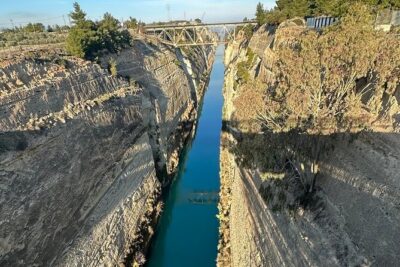
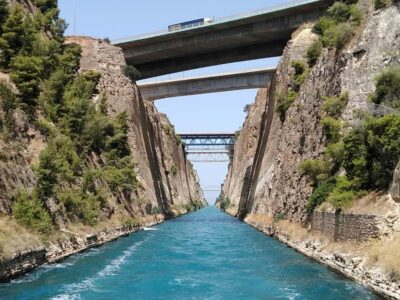
After Athens, you head toward the Peloponnese connector—part sightseeing, part “how the ancient world moved.” The first major engineering stop is the Corinth Canal, where you’ll pause for views from above. Seeing the isthmus from a high viewpoint helps you grasp why this crossing mattered so much: the canal links the Ionian Sea and the Aegean Sea, slicing through the narrow land between them.
Then comes the Diolkos, an ancient overland transport route that predates the modern canal. The idea was simple but brilliant: move ships across the isthmus by hauling them along this roadway, avoiding the longer and riskier sea route. At the remnants, you can picture merchants, sailors, and travelers moving between seas long before modern shipping lanes existed.
Why this section is a strong fit for a Paul-themed day: Paul’s story shows up in places where travel, ports, and movement mattered. Even if you’re not a “technical history” person, standing near these traces makes the Mediterranean feel practical instead of just scenic.


Isthmia’s Games: Poseidon, Palaimon, and Paul’s Tentmaker Moment
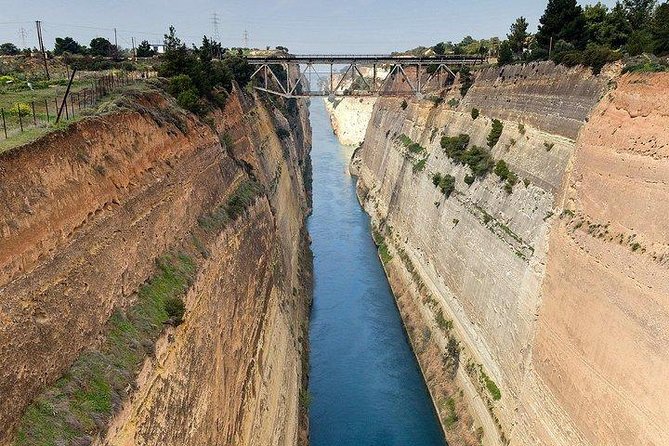
The day’s spiritual-and-cultural center shifts to Isthmia, where the ancient Isthmian Games once took place in honor of Poseidon. This is a place where religion and athletics met, drawing people across the Greek world. The setting is also a good reminder that public life in the ancient Mediterranean wasn’t separated into “church stuff” and “sports stuff.” It was all mixed together in one public culture.
Paul’s connection here is tied to the idea that he worked as a tentmaker in the area, which would have put him close to travelers and athletes who needed practical services—lodging, supplies, and work. That creates a compelling “lived-in” angle: instead of only imagining Paul as a speaker, you can picture him among crowds at a major public event, sharing his message while working.
At Isthmia, you’ll also see the Temple of Poseidon area and the stadium setting where the games were held. Nearby is the Sanctuary of Palaimon, devoted to the patron associated with sailors—another nod to the mixed religious ecosystem Paul encountered and responded to.
Two extra context stops fit naturally in this part of the day:
- The Ancient Theater of Isthmia area (associated with musical contests) adds to the picture of festivals being more than athletic events.
- A look at Isthmia’s role as a strategic meeting place highlights that politics and religion often traveled together. From here, it’s easier to understand why Paul’s message could land differently in regions where leaders, envoys, and ideas flowed.
Common sense planning: this section can include walking between ruins and viewpoints, so pace yourself and don’t feel bad about stopping for water and shade when you need it. The itinerary is designed to keep moving, but you still control how long you stay at each spot.
Museum Time at Isthmia: Artifacts That Make the Area Feel Real

In the middle of the Isthmia portion, you’ll have time at the Archaeological Museum of Isthmia (entrance fee not included). This is where the day turns from “I’m seeing stones” to “I can hold the world in my mind.”
The museum focuses on the cultural and religious setting tied to the Sanctuary of Poseidon and the games. A notable highlight includes rare glass panels from Kenchreai, the nearby port linked with Paul’s departure routes. You also see statues, votive offerings, and burial artifacts—things that give weight to everyday life around these major festivals.
Even if you only spend the planned time here, it helps you make sense of what you’re seeing outside. Without this step, ruins can feel like disconnected piles. With it, the day clicks into place.
Ancient Corinth: The Bema, the Temple of Apollo, and Paul’s Writing World
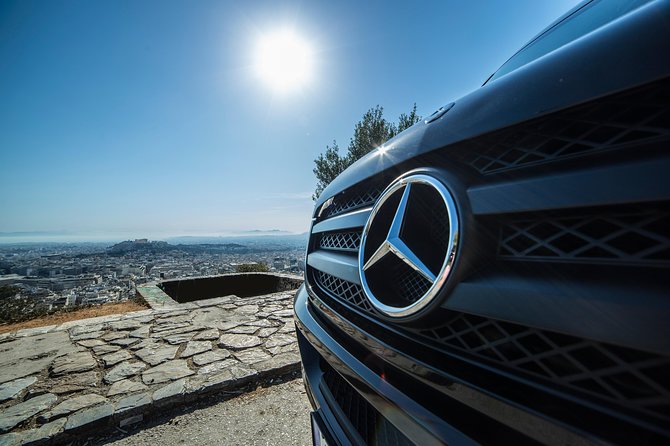
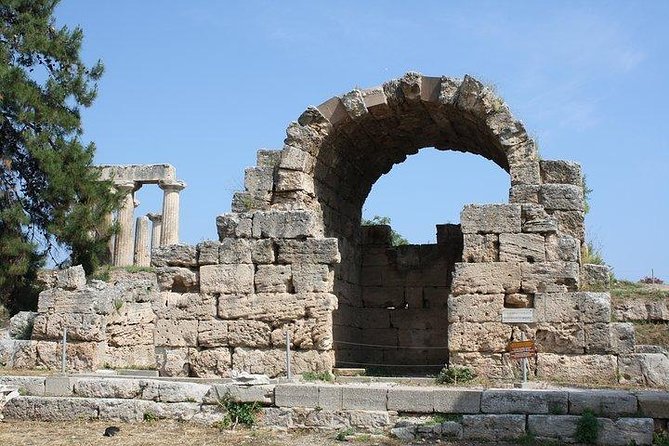
The biggest draw is the time in Ancient Corinth (Archaia Korinthos). Corinth was a trade and religious crossroads, and Paul spent significant time here—about 18 months is the figure given in the background for this trip. That length of stay connects directly to why Corinthians shows up in the New Testament: Paul didn’t just visit. He planted a community and then wrote to address real moral and spiritual challenges.
At the site, you’ll focus on a few key highlights.
The Bema area connected to Gallio
One of the most moving moments is the Bema, tied to Paul’s appearance before Proconsul Gallio. The story matters because Gallio’s refusal to judge the dispute allowed Paul’s mission to continue without Roman interference.
When you stand at a place linked to this, it changes the tone of the day. It’s not only spiritual history; it’s also legal and political reality—how power shaped what could happen.
The Temple of Apollo as Corinth’s skyline icon
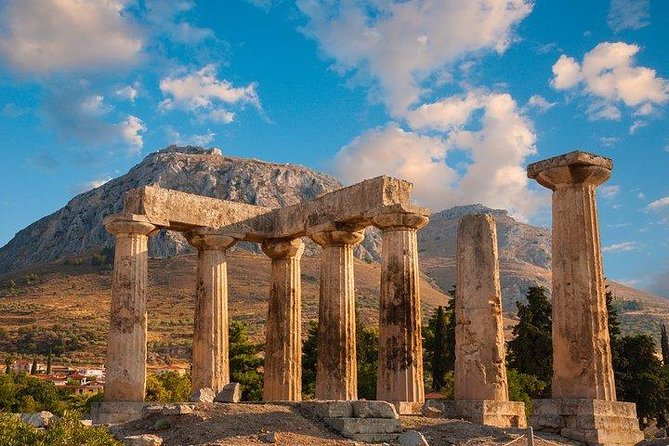
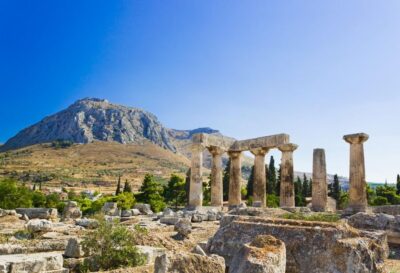
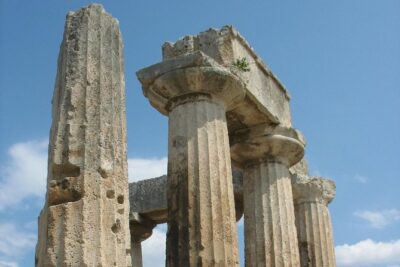
Next is the visit to the Temple of Apollo, built around 560 BC and famous for its imposing Doric architecture. Even when you don’t read every detail, the effect is immediate: this is the kind of monument that dominates a city’s skyline.
For a Paul-focused itinerary, this helps you see what Paul preached against. The temple represents a city centered on multiple gods, prophecy, and public worship. Paul’s message of one God and Jesus Christ would have felt like a dramatic alternative in that setting.
Practical note: Ancient Corinth and the museum both have entrance fees not included in the tour price. The tour data says you can buy on-site, and it specifies €15.00 per person for those entries.
Kenchreai (Kechries): The Port Where Paul’s Journey Moves On

After Ancient Corinth, you go to Kenchreai (Kechries), the eastern port of Corinth. This is a calmer, more seaside feeling stop, and it’s tied to Paul’s second missionary journey.
Here you’ll walk the area associated with Paul’s departure toward Syria with Priscilla and Aquila, as recorded in Acts 18:18. There’s also a personal detail in the background: Paul cutting his hair to fulfill a vow, likely linked to a Nazirite practice. It’s the kind of small detail that makes the journey feel human rather than abstract.
Kenchreai also connects to an early Christian community. The day’s context includes Paul’s mention of Phoebe, described as a trusted servant (diakonos) in Romans—an example of how women appear in the early church story.
If you’re the type who likes seeing geography line up with Bible passages, this is where the dots connect quickly.
Apostolou Pavlou Church: A Modern Place of Memory
You’ll also stop at Apostolou Pavlou, a church dedicated to Apostle Paul, associated with the time he spent in Corinth around 51–52 AD. This part is more “living history” than ruins.
It gives you a space to pause after walking among ancient foundations. It’s also a reminder that Paul’s legacy isn’t only academic. It’s part of how people still mark the story in Corinth today.
Akrokorinthos Fortress: Read the City From Above
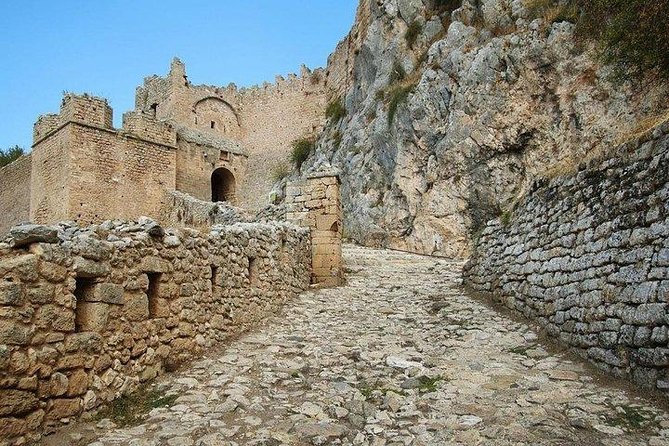
The day ends with Akrokorinthos, the fortress overlooking Ancient Corinth. Ascending it is a real shift: you’re not only looking at ancient sites, you’re looking at the geography that made the city defensible and influential.
This stop adds meaning because you can imagine Paul looking out over the Corinth area—seeing routes, settlements, and the strategic position that helped Corinth become the kind of city where ideas spread fast.
Plan for steady walking here. The time allotted is about 1 hour, so treat it like your main stretch break from the day’s earlier ruins.
Lunch in Corinth: Plan for a Real Break, Not a Sandwich Stop
Lunch is part of the experience in Corinth. You’ll have time at a traditional seaside Greek taverna. If you choose the With Greek traditional food option, the meal cost is included in your tour price.
Why I like this approach: it stops the day from turning into a string of “just enough time” stops. You’re also more likely to enjoy the day if you’re not hungry later while trying to see Ancient Corinth in full.
One small practical suggestion: eat like you’re on a sightseeing day—don’t go so heavy that your energy crashes when you’re heading up Akrokorinthos.
Price and Value: Is $218.43 a Good Deal?
At $218.43 per person, you’re paying for comfort and time efficiency more than for museum ticket bundles. The value shows up in these included items:
- Private transportation in an air-conditioned vehicle
- Hotel/port pickup and drop-off
- Wi‑Fi on board, bottled water
- A lunch option that can be included
- Driver support in fluent English while you explore on your own
What you should treat as extra:
- Entrance fees not included for Ancient Corinth and the Archaeological Museum of Isthmia (listed as €15.00 per person in the tour data).
For me, the math works best if you want a day that’s structured but not rushed, and you like asking questions while driving between major sites. If you’re trying to recreate the experience with buses, taxis, and ticket lines, this private setup often saves mental energy even before you compare the total cost.
Where it may not fit:
If you need a licensed guide inside each archaeological site to get maximum interpretation, this isn’t the default “all narration inside the ruins” package. The driver can explain a lot, but the tour data is clear that site entry guiding isn’t included.
Should You Book This Paul and Corinth Footsteps Tour?
Book it if:
- You want a Paul-focused route that connects Athens (Mars Hill) to Corinth (Paul’s long stay, Gallio/Bema, and key port links).
- You prefer private pacing over sprinting through ruins.
- You’ll appreciate the engineering stops (Corinth Canal + Diolkos), not just the temples and theaters.
Consider another option or request the licensed add-on if:
- You’re hoping for a guide to walk with you inside Ancient Corinth and the museum for detailed, stop-by-stop commentary.
- You dislike self-guided museum and ruin time.
My bottom line: this is a strong fit for people who want the geography of Paul’s world to make sense in a single day, with comfort and enough time to actually stand where the story happened.
FAQ
How long is the tour?
It runs about 8 to 9 hours.
Is this tour private?
Yes. It’s private, so only your group participates.
Do you get pickup and drop-off?
Yes. There is hotel or port pickup and return to the same place or to a point you prefer.
Can the pickup time be adjusted?
Yes. The pick-up time is adjustable upon your request.
Is Wi-Fi included?
Yes. Wi‑Fi is available onboard.
What language is the tour in?
The driver provides commentary in English.
Is lunch included?
Lunch is included if you select the option with Greek traditional food.
Are entrance fees included for Ancient Corinth and the Isthmia museum?
No. The entrance fee for Ancient Corinth and the Archaeological Museum of Isthmia can be purchased on-site (listed as €15.00 per person).
Do the drivers enter the archaeological sites with you?
No. Drivers are not licensed to accompany guests inside the archaeological sites, but they are allowed to provide commentary and answer questions. A licensed tour guide can be requested depending on availability.
Is free cancellation available?
Yes. You can cancel up to 24 hours in advance for a full refund.
More Tour Reviews in Athens
- Athens: Acropolis & up to 5 Archaeological Sites Combo Pass★ 4.2 · 13,904 reviews
- Athens: Acropolis, Parthenon & Acropolis Museum Guided Tour★ 4.8 · 9,316 reviews
- The Acropolis, Parthenon & Acropolis Museum Guided Tour★ 4.7 · 8,493 reviews
- Athens: Cape Sounion & Poseidon Temple Sunset Half-Day Trip★ 4.8 · 8,241 reviews
- Acropolis: Premium Acropolis and Parthenon Guided Tour★ 4.8 · 5,208 reviews
- Athens: Mythology of Delphi, Museum and Arachova Guided Tour★ 4.7 · 5,102 reviews
Corinth and the Canal
- From Athens: Ancient Corinth Day Trip with Canal & VR Guide★ 4.6 · 1,073 reviews
- Biblical Tour Letters ToThe Corinthians St Paul’s Footsteps 6Hour★ 5.0 · 1,065 reviews
- Private Biblical Tour Ancient Corinth & Isthmus Canal from Athens★ 5.0 · 762 reviews
- Athens: Ancient Corinth & Nafplio Full Day Trip with Swim★ 4.8 · 531 reviews
- Athens: Corinth Canal, Mycenae & Nafplio Premium Guided Tour★ 4.7 · 322 reviews
- Private Tour of Apostle Paul’s Footsteps in Ancient Corinth★ 5.0 · 275 reviews
Fresh Off the Boat: New Athens Reviews



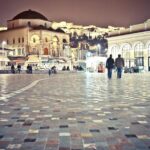
Corinth Day Trips, compared.
 ★ 4.6From Athens: Ancient Corinth Day Trip with Canal & VR GuideFrom $411,073 reviews
 ★ 5.0Biblical Tour Letters ToThe Corinthians St Paul’s Footsteps 6HourFrom $1701,065 reviews
 ★ 5.0Private Biblical Tour Ancient Corinth & Isthmus Canal from AthensFrom $301762 reviews
 ★ 4.8Ancient Corinth & Nafplio Full Day Trip with Swim531 reviews
 ★ 4.7Corinth Canal, Mycenae & Nafplio Premium Guided TourFrom $32322 reviews
 ★ 5.0Private Tour of Apostle Paul’s Footsteps in Ancient CorinthFrom $169275 reviews
 ★ 4.3Corinth Canal, Mycenae and Nafplio Day TourFrom $129252 reviews
 ★ 4.5Corinth Half-Day Trip from Athens with Entrance TicketsFrom $91242 reviews
Browse the lists this tour appears in