
Reviewed · CORINTH DAY TRIPS
Biblical Tour Letters to The Corinthians – St Paul’s Footsteps
Paul’s trail starts on a hill in Athens. This private, flexible trip ties together St. Paul’s message and the places in Greece where it likely landed, from Mars Hill to the ports of Corinth. I especially like the custom pacing and how your driver can explain the Bible-to-ruins connections as you move between stops.
One thing to watch: this is mostly driver commentary, not a full licensed guide walking inside every site. If you want that extra layer of storytelling throughout, you’ll need to arrange the licensed guide option (availability varies).
On previous days, drivers like Kostas, Michael, Alex, Pantelis, Spyros, Pericles, Constantine, and Vicky have made the difference—showing up on time, adjusting the plan when you’ve already seen certain Athens highlights, and pointing out where Paul’s world would have felt close, not abstract.
In This Review
- Key Highlights You’ll Feel More Than You’ll Memorize
- A Private St. Paul Footsteps Day That Actually Feels Flexible
- Mars Hill (Areopagus Hill) and the Unknown God Challenge
- Corinth Canal and the Diolkos: Where Travel Was the Real Story
- Isthmia: Poseidon, the Stadium, and Paul’s Tentmaker World
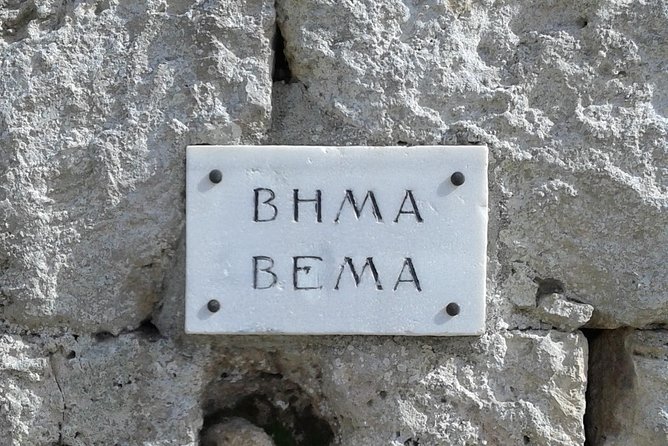
- Ancient Corinth (Archaia Korinthos) and the Bema: Gallio’s Dismissal
- Temple of Apollo and Kechries (Cenchreae): Two Sides of Corinth
- Apostolou Pavlou Church, Akrokorinthos Views, and a Final Reality Check
- Lunch Break and Time Management: How Not to Feel Rushed
- Price and Value: $386 for Up to 4, Plus What You May Pay On Site
- Should You Book This Paul’s Footsteps Tour?
- FAQ
- How long is the tour?
- What does the price include for a group?
- Are there any entrance fees?
- Does the tour include lunch?
- Is a licensed guide provided?
- Can I cancel for a full refund?
Key Highlights You’ll Feel More Than You’ll Memorize
- Private day with choice in transportation, so you can match comfort to your group.
- Mars Hill (Areopagus Hill) first, which sets the tone for everything that follows in Corinth.
- Engineering stops near Corinth like the Corinth Canal and the Diolkos, where trade and travel shaped people’s lives.
- Isthmia links faith to the games, with Paul’s tentmaker work and athletic imagery in mind.
- Ancient Corinth + the Bema, tying Paul’s clash with Gallio to real stone and layout.
- Port of Cenchreae (Kechries) for the mission route and the early church thread.
The canal and old Corinth, a few more days
- From Athens: Ancient Corinth Day Trip with Canal & VR Guide
★ 4.6 · 1,073 reviews - Biblical Tour Letters ToThe Corinthians St Paul’s Footsteps 6Hour
★ 5.0 · 1,065 reviews - Private Biblical Tour Ancient Corinth & Isthmus Canal from Athens
★ 5.0 · 762 reviews - Athens: Ancient Corinth & Nafplio Full Day Trip with Swim
★ 4.8 · 531 reviews
A Private St. Paul Footsteps Day That Actually Feels Flexible
This is the kind of tour that works because it’s private. You’re not stuck with a one-size-fits-all group pace, and pickup from your place in Athens helps you avoid the morning scramble.
The day runs about 8 hours, and you’ll usually book it well ahead (it’s popular). That matters because Corinth is not a short hop, and a planned route helps you squeeze in the meaningful stops without turning the day into a travel slog.
At the heart of the experience is a simple idea: your guide is trying to connect the letters of Paul to geography you can see. That approach can make the Bible text feel more human. Instead of reading Paul in a vacuum, you’re looking at the places where crowds, sailors, merchants, and athletes would have been moving through the same streets.
You also get practical comfort. The tour includes air-conditioning, bottled water, and WiFi on board, plus a luxurious vehicle and professional driving. One more plus: your driver isn’t there as a licensed site guide, but they can still answer questions while you’re on the move.
Mars Hill (Areopagus Hill) and the Unknown God Challenge
Starting at Areopagus Hill, you’re on ground tied to Paul’s sermon in Athens. The setting is the Acropolis area, and the famous point is that Paul addressed the Athenians through their own assumptions—specifically the idea of an Unknown God—then introduced Christianity to people who were used to debating big ideas.
I like this start because it gives you a mental key for the rest of the day. In Corinth, you’ll keep seeing how Paul worked among different belief systems—so hearing his Athens approach first makes his Corinth letters feel less like random theology and more like mission.
You’ll have about 20 minutes here, with admission ticket free. That timing is good. If you linger too long, you risk arriving at Corinth feeling rushed later. If you’re the kind of person who likes a slow moment, take one long look at the city view, then use the time to reframe Paul’s message as something delivered in a public, political, and intellectual setting.
A small practical note: if you’ve already visited Athens highlights like the Parthenon or Mars Hill, you can often adjust the route so you spend more of the day on Corinth-side stops. That flexibility has been a highlight with other guests on similar private days.
Corinth Canal and the Diolkos: Where Travel Was the Real Story
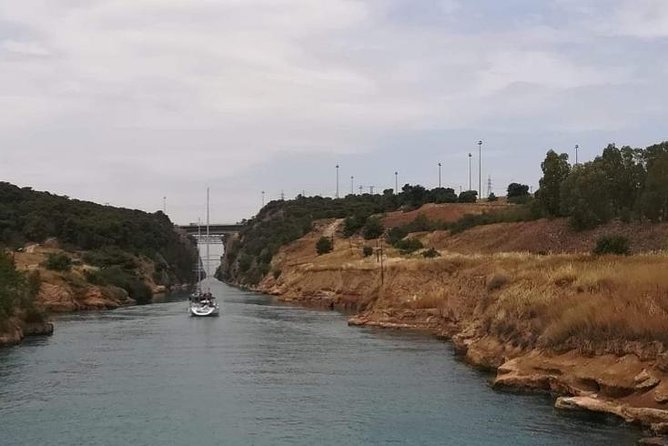
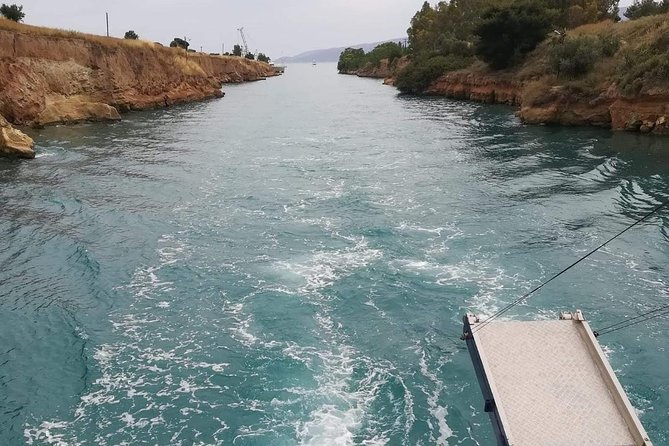
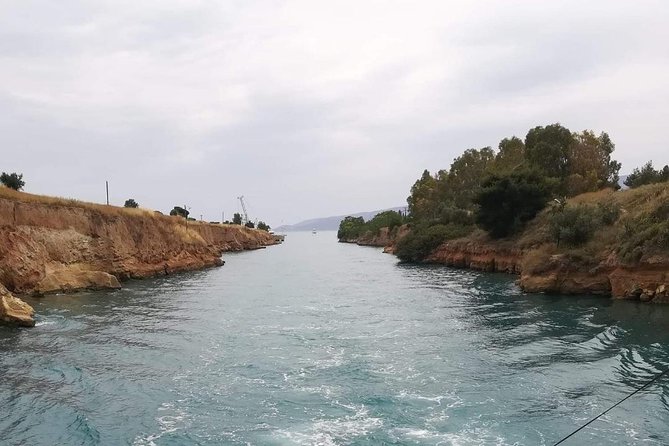
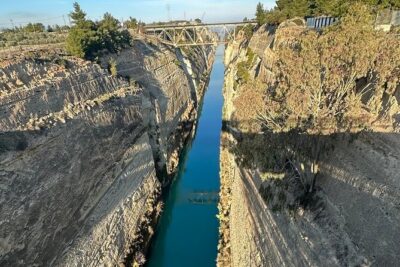
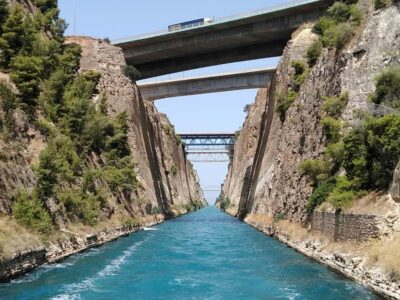
Next comes the Corinth Canal, a dramatic cut that links the Gulf of Corinth with the Saronic Gulf. It’s often easier to appreciate the canal when you think about why it matters: it saves ships from making the long loop around the Peloponnese.
What makes this stop worth your time is the connection to ancient thinking. The canal’s concept dates back over 2,000 years, linked to Periander of ancient Corinth. That’s a helpful reminder that engineering choices can shape where people go, what goods get traded, and how ideas spread.
You’ll have around 30 minutes, and the admission ticket is free. Use the time to do two things: look at the canal itself, then look at the surrounding sense of movement. Corinth wasn’t just a city; it was a crossroads.
Then you head to the Diolkos, an ancient trackway used to move ships across the Isthmus of Corinth. It’s one of those locations where you can almost feel the daily work—sailors, merchants, and people trying to beat the clock. And that fits Paul’s world, too, because his life and message traveled through human networks, not just spiritual ideas.
Expect about 20 minutes and free entry here. If you enjoy infrastructure and “how the world worked,” this will be a treat. If you don’t, at least use it as a pause point to reset before the more story-heavy stops.
Isthmia: Poseidon, the Stadium, and Paul’s Tentmaker World
Isthmia is where the day starts to feel like you’re walking inside Paul’s schedule. The site connects religion, athletics, and travel—exactly the mix that brought people from far away.
At Isthmia, you’ll get about 1 hour at a free admission stop. The big idea is that these games were second in importance only to the Olympics and were held in honor of Poseidon. That means big crowds, visiting athletes, families, and merchants. It’s the kind of environment where Paul could meet diverse people and use everyday conversations for his message.
The tour also leans into a specific biblical biography detail: Paul is believed to have worked as a tentmaker in the region. In a place filled with athletes and visitors, that job isn’t just background. It puts Paul at the social center, where he could speak while providing practical help.
Two more things make this section especially good for Christians. First, the tour frames Paul’s mission as real outreach in public life, not only in private gatherings. Second, you get a concrete reason for why Paul’s letters use athletic imagery—it’s easier to feel that connection after you’ve seen a stadium setting and the rhythm of games.
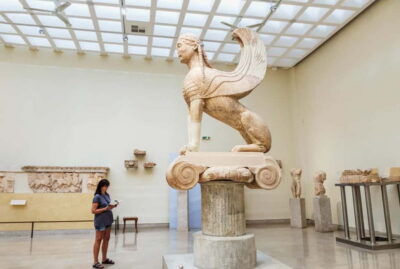
You’ll also spend time at the Archaeological Museum of Isthmia, roughly 30 minutes. Here, you’re looking at artifacts tied to the sanctuary of Poseidon and the world around the games. One standout detail: the museum includes glass panels from Kenchreai, the port connected with Paul’s departure route toward Syria. If you like the “follow the mission trail” style, this is the part that ties geography to the story of movement.
Finally, there’s time at the Archaeological Site of Isthmia (about 40 minutes). You’ll see elements tied to worship and athletics, including the Temple of Poseidon area and the sanctuary of Palaimon dedicated as protector of sailors. Even if you don’t connect every detail, you’ll get the theme: Paul preached in a region with lots of belief systems, all competing for attention in daily life.
Ancient Corinth (Archaia Korinthos) and the Bema: Gallio’s Dismissal
Now you get to the main stage: Ancient Corinth. This is the city where Paul lived and preached for more than 18 months, and where his letters to the Corinthians addressed challenges faced by the early Christian community.
Expect about 1 hour here, and you’ll likely need to budget for entrance fees on site for Ancient Corinth and the Archaeological Museum of Corinth at €15 per person. The tour doesn’t include those fees, so it’s smart to carry cash or a card you trust for day-of payment.
The most story-heavy location is the Bema, the judgment seat. Paul’s presence is linked to his appearance before the Roman proconsul Gallio. In Acts, Gallio dismisses the case as a dispute about religion and refuses to interfere. Standing in a Roman-style forum area gives the moment extra weight because you’re thinking about law, public order, and power—then you realize Paul’s message still continued despite Roman friction.
I like tours that handle this with care. It’s easy to get overly dramatic about ancient conflict. The real value is understanding what the dismissal allowed: Paul could keep teaching, which is the practical turning point for the mission.
Also, don’t rush the rest of the site. Even with a time limit, try to notice how the city layout and the Roman presence would shape daily life. That’s what makes Paul’s letters feel less like distant lectures and more like instructions given to a community trying to live under real-world pressures.
Temple of Apollo and Kechries (Cenchreae): Two Sides of Corinth
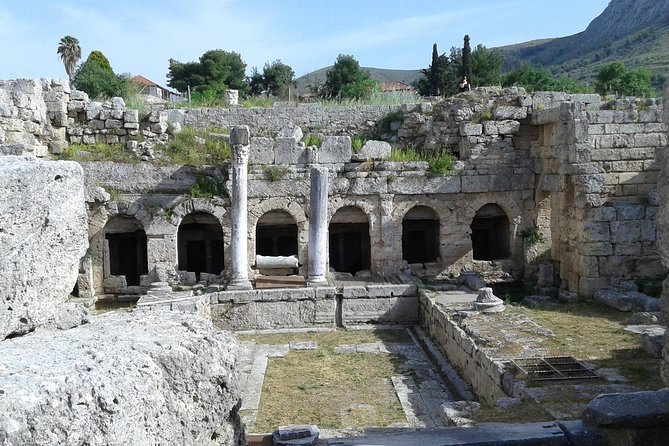
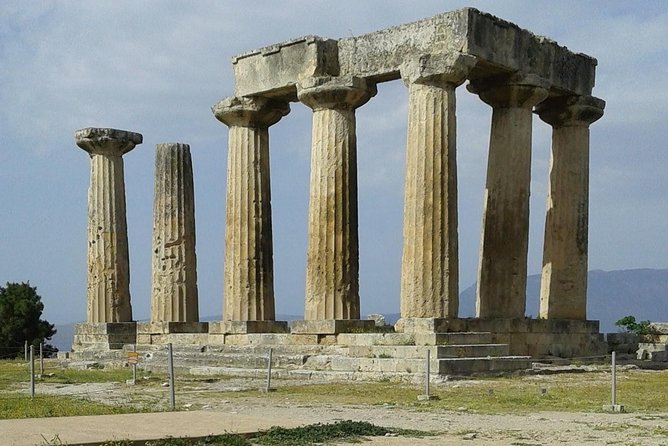
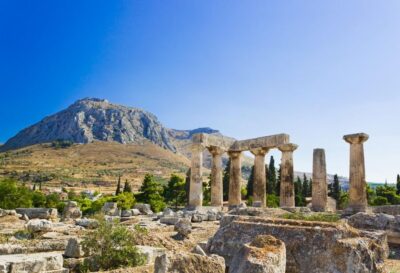
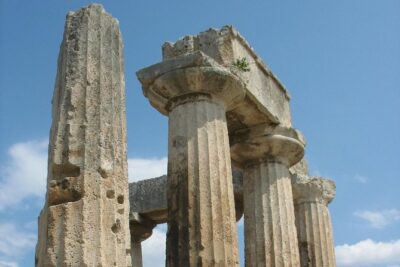
In the center of Ancient Corinth, you’ll visit the Temple of Apollo, built around 560 BC. You’ll see Doric architecture with monolithic limestone columns that still stand today, and it’s hard not to feel the contrast between this old-world worship and Paul’s proclamation of one God through Jesus.
This stop is about 30 minutes and listed as free admission. If you’re the kind of person who likes symbolism, take a few minutes here and compare the atmosphere of religious monuments with the idea of Christian outreach among ordinary people. Paul preached in a city filled with temples and gods, not in a spiritual blank space.
Then you head toward the eastern port area: Kechries, tied to ancient Cenchreae. This is a quieter kind of stop than the main ruins. Expect about 30 minutes, free admission, and a walk that helps you understand how far travel shaped the early church.
The biblical detail here is Acts 18:18, when Paul stopped at Cenchreae during his second missionary journey. The tour also points to Romans and the early Christian community connection through Phoebe, described as serving in Cenchreae. That’s a helpful reminder that the mission route included real relationships, and not only famous sermons.
Kechries is also a good place to slow down and think about shipping and timing. Corinth’s influence reached by sea, and ports are where faith, commerce, and cultures actually mixed.
Apostolou Pavlou Church, Akrokorinthos Views, and a Final Reality Check
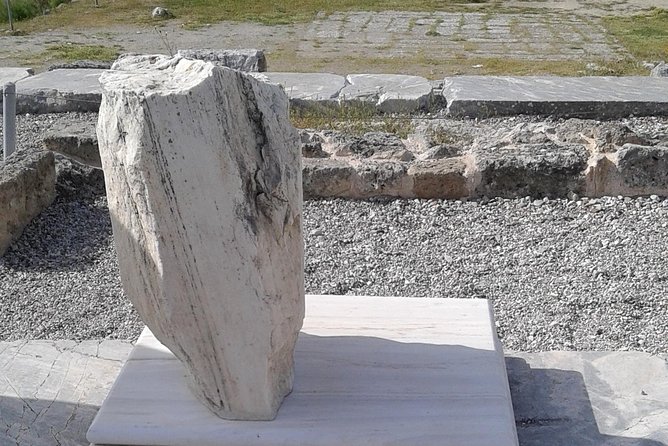
One of the most calming moments of the day comes at Apostolou Pavlou, a church honoring Paul and his time in Corinth. It’s about 20 minutes, and the stop is free. It works well as a decompression break after the more intense Roman and archaeological portions.
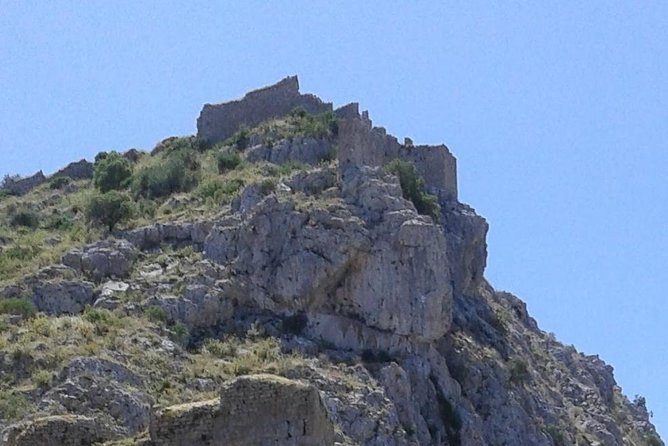
Next up is Akrokorinthos, the fortress above Corinth. You’ll spend about 40 minutes here, and the goal is less “check off another ruin” and more “see the city from the height Paul might have looked down from.” The views help your brain connect the ruins to the geography: where movement would happen, where people would gather, and how the city’s shape framed daily life.
This part of the day is also a good reset for people who feel Bible sites should be paired with landscape cues. Even though you’re not getting hours up there, the vantage point can make the whole route feel more coherent.
Lunch Break and Time Management: How Not to Feel Rushed
The tour includes a lunch stop option: a traditional seaside Greek taverna for about 1 hour. Lunch itself isn’t included in the price, so you’ll need to plan on paying for your meal.
Time can be a concern on any 8-hour day—especially one with multiple archaeological and religious stops. If you’re sensitive to pace, tell your driver what matters most to you on day one. The private format is your advantage: you can often prioritize the places that connect to your interests, and you can cut lower-priority moments to protect your energy.
One smart tip: decide ahead of time whether you want to spend longer on the most meaningful Christian connections (Mars Hill, Bema, Kechries, and the Paul-linked church stops) or whether you want extra time for photos and viewpoints. Your day will feel better when you control that choice before the clock starts ticking.
Price and Value: $386 for Up to 4, Plus What You May Pay On Site
The price is $386.18 per group for up to 4 people, which can feel very different depending on how you split it. If you fill all four spots, you’re basically paying about $96 per person for private round-trip transportation and guided driving commentary, plus the stops that are free by entry.
On top of that, plan for €15 per person entrance fees on site for Ancient Corinth and the Archaeological Museum of Corinth. Other stops are listed as free admission (like Areopagus Hill, Corinth Canal, Diolkos, Isthmia, Temple of Apollo, Kechries, and the church stop), so your main budget item is that €15 entrance.
The value is best for three types of travelers:
- Christians who want Paul’s route through Greece explained with practical context.
- Visitors who prefer a private driver who can tailor the day, instead of a crowded group shuffle.
- Anyone who likes connecting Bible stories to physical places, not just reading plaques.
If you’re someone who expects a professional licensed guide walking into every site with you, you should arrange the licensed guide option in advance. The default approach uses the driver’s fluent English commentary while you explore.
Should You Book This Paul’s Footsteps Tour?
I’d book it if you want a day that feels intentional. The route links Athens to Corinth in a way that makes the Bible geography feel real: Mars Hill’s public sermon setting, Corinth’s travel and ship technology, Isthmia’s games where crowds gathered, and Ancient Corinth’s courtroom space at the Bema.
I wouldn’t rush to book it if you need a fully licensed guide at every stop or you’re trying to pack this alongside a dozen other Athens must-sees. In that case, choose your priorities early and confirm whether you’ll want the local guide add-on.
If you go with the right expectations and you’re open to a driver who talks history and Bible context through the ride, this is the kind of Christian heritage day trip that can stick with you long after you’re back in Athens.
FAQ
How long is the tour?
It lasts about 8 hours.
What does the price include for a group?
The price is $386.18 per group (up to 4 people) and includes private transportation, bottled water, WiFi on board, and an air-conditioned vehicle with pickup offered.
Are there any entrance fees?
Yes. You should budget €15 per person for Ancient Corinth and the Archaeological Museum of Corinth, which can be purchased on-site. Some other stops are listed as free admission.
Does the tour include lunch?
Lunch is not included, but there is time for lunch at a traditional seaside Greek taverna during the day.
Is a licensed guide provided?
The drivers are knowledgeable and can provide commentary in fluent English, but they are not official site tour guides. A licensed tour guide may be available on request, depending on availability.
Can I cancel for a full refund?
Yes. You can cancel for a full refund up to 24 hours in advance. If you cancel less than 24 hours before the start time, the amount paid is not refunded.
More Tours in Athens
- Athens: Acropolis, Parthenon & Acropolis Museum Guided Tour★ 4.8 · 9,316 reviews
- The Acropolis, Parthenon & Acropolis Museum Guided Tour★ 4.7 · 8,493 reviews
- Acropolis: Premium Acropolis and Parthenon Guided Tour★ 4.8 · 5,208 reviews
- Athens: Mythology of Delphi, Museum and Arachova Guided Tour★ 4.7 · 5,102 reviews
- Acropolis and Parthenon Guided Walking Tour★ 5.0 · 4,755 reviews
- Greek Food Walking Tour in Athens★ 5.0 · 4,740 reviews
More Tour Reviews in Athens
- Athens: Acropolis & up to 5 Archaeological Sites Combo Pass★ 4.2 · 13,904 reviews
- Athens: Acropolis, Parthenon & Acropolis Museum Guided Tour★ 4.8 · 9,316 reviews
- The Acropolis, Parthenon & Acropolis Museum Guided Tour★ 4.7 · 8,493 reviews
- Athens: Cape Sounion & Poseidon Temple Sunset Half-Day Trip★ 4.8 · 8,241 reviews
- Acropolis: Premium Acropolis and Parthenon Guided Tour★ 4.8 · 5,208 reviews
- Athens: Mythology of Delphi, Museum and Arachova Guided Tour★ 4.7 · 5,102 reviews
Corinth and the Canal
- From Athens: Ancient Corinth Day Trip with Canal & VR Guide★ 4.6 · 1,073 reviews
- Biblical Tour Letters ToThe Corinthians St Paul’s Footsteps 6Hour★ 5.0 · 1,065 reviews
- Private Biblical Tour Ancient Corinth & Isthmus Canal from Athens★ 5.0 · 762 reviews
- Athens: Ancient Corinth & Nafplio Full Day Trip with Swim★ 4.8 · 531 reviews
- Athens: Corinth Canal, Mycenae & Nafplio Premium Guided Tour★ 4.7 · 322 reviews
- Private Tour of Apostle Paul’s Footsteps in Ancient Corinth★ 5.0 · 275 reviews
Fresh Off the Boat: New Athens Reviews


Corinth Day Trips, compared.
 ★ 4.6From Athens: Ancient Corinth Day Trip with Canal & VR GuideFrom $411,073 reviews
 ★ 5.0Biblical Tour Letters ToThe Corinthians St Paul’s Footsteps 6HourFrom $1701,065 reviews
 ★ 5.0Private Biblical Tour Ancient Corinth & Isthmus Canal from AthensFrom $301762 reviews
 ★ 4.8Ancient Corinth & Nafplio Full Day Trip with Swim531 reviews
 ★ 4.7Corinth Canal, Mycenae & Nafplio Premium Guided TourFrom $32322 reviews
 ★ 5.0Private Tour of Apostle Paul’s Footsteps in Ancient CorinthFrom $169275 reviews
 ★ 4.3Corinth Canal, Mycenae and Nafplio Day TourFrom $129252 reviews
 ★ 4.5Corinth Half-Day Trip from Athens with Entrance TicketsFrom $91242 reviews
Browse the lists this tour appears in