
Reviewed · CORINTH DAY TRIPS
Full day Christian tour following Paul In Athens and Corinth
Paul’s story feels close in Athens. This full-day Christian tour links the sites tied to St. Paul’s travels and preaching, with hotel or port pickup, an English-speaking driver, and a route that takes you from the Acropolis area to the Corinth canal and Ancient Corinth. It’s built for one group at a time (up to 3), so you can keep your day from feeling like a race.
Two things I like a lot: first, the convenience. You’re collected in Athens (or from the Piraeus cruise pier) and dropped back off at the same spot, with air-conditioned transport and bottled water included. Second, the human factor—the driver’s English and cultural context help you understand what you’re looking at as you move between stops, especially around the places tied to Paul.
One consideration: entrance fees are not included, and the driver does not accompany you inside archaeological sites or museums. That means your timing depends on how quickly you buy tickets (or get them arranged) and how much you plan to walk on hills and steps.
In This Review
- Key highlights to watch for on this Paul’s footsteps route
- Why a Christian-focused Athens-to-Corinth day makes sense
- Getting started in Piraeus: the coastal drive sets the tone
- The Acropolis zone: quick stops that still land the story
- Are you seeing the Parthenon up close?
- Propylaea and Athena Nike: small time, big meaning
- Erectheion: caryatids and cultural memory
- Areopagus: the Unknown God moment (and why it’s more than a factoid)
- Ancient Agora: seeing everyday life after the speeches
- The Peloponnese drive and Corinth Canal: the geography clue for the day
- Lunch in Corinth: time to eat like a local (with one catch)
- Ancient Corinth: where trade meets faith
- Transportation, timing, and what the driver can (and can’t) do
- Value check: is $508.66 per group worth it?
- Who this tour suits best
- Should you book this Paul’s footsteps day?
- FAQ
- How long is the tour?
- How many people are in the private group?
- Is pickup included from Athens hotels and from Piraeus cruise ships?
- Are entrance fees included?
- Does the driver go inside the sites with you?
- Is lunch included, and is food provided?
- What time does the tour start, and is it in English?
Key highlights to watch for on this Paul’s footsteps route
- Private tour for up to 3 people, so the pace is adjustable
- Pickup from Athens hotels or Piraeus cruise port, with round-trip convenience
- Acropolis area focus, including Areopagus where Paul is associated with preaching
- Corinth Canal and Ancient Corinth, connecting geography with the story
- Food break in Corinth with time to choose lunch, though it’s not included
- English-speaking driver guidance up to site entry, plus optional state guide add-on
The canal and old Corinth, a few more days
- From Athens: Ancient Corinth Day Trip with Canal & VR Guide
★ 4.6 · 1,073 reviews - Biblical Tour Letters ToThe Corinthians St Paul’s Footsteps 6Hour
★ 5.0 · 1,065 reviews - Private Biblical Tour Ancient Corinth & Isthmus Canal from Athens
★ 5.0 · 762 reviews - Athens: Ancient Corinth & Nafplio Full Day Trip with Swim
★ 4.8 · 531 reviews
Why a Christian-focused Athens-to-Corinth day makes sense
Athens and Corinth can feel like two separate trips. This tour stitches them into one narrative day—St. Paul’s footsteps—so you aren’t just ticking famous ruins. You get a route that moves from the religious and civic heart of ancient Athens to the trade-and-letters world of Corinth.
The “Christian” angle isn’t just a theme label. The itinerary places you near the places tied to Paul’s message, including Areopagus and the well-known connection to an altar associated with an Unknown God. That context helps you read the city with fresh eyes: you’re not only seeing columns and carvings, you’re thinking about where public speaking happened, where ideas spread, and how ordinary people would have encountered faith.
The format also works for real schedules. With an ~8-hour day and frequent short stops (instead of one mega site), you get a mix of big moments and smaller “oh wow” points. It’s a smart approach when you’re on limited time in Athens or you’re docking at Piraeus.
Getting started in Piraeus: the coastal drive sets the tone
The day begins with pickup either from your Athens accommodation or directly from the cruise ship pier at Piraeus port. Then you ride along the coastal road of the Saronic Gulf. That drive matters more than you might think—it gives you a first mental map of the region before you ever hit the Acropolis.
The tour’s pacing is built around getting you to the city’s historic core without wasting the morning. Some stops are quick, but the travel between them is handled with an air-conditioned vehicle suitable for the group size. Bottled water is included, which helps when you’re moving between outdoor areas in Athens.
This is also where you’ll feel whether the tour fits your style. If you like structure with room for personal preferences, this route gives it. If you prefer to linger for long stretches inside museums, you’ll need to plan around ticketing and the fact that the driver cannot go inside with you.
The Acropolis zone: quick stops that still land the story
The center of the day is the Acropolis precinct and its immediate surroundings. The stop list moves through key points around the hill rather than only focusing on one monument, and that’s a strong way to experience the area.
Worth comparing before you book this Athens tour:


Are you seeing the Parthenon up close?
You do. The Parthenon is scheduled as a longer stop (about 45 minutes), which is the time you need to really take it in—especially if you stand in the right spots and look upward at the architecture. The Parthenon is described as the culmination of Doric order development, dedicated to Athena Parthenos, and tied to the Periclean rebuilding program after the Persian Wars. That kind of context gives meaning to what can otherwise feel like just another “big temple.”
Propylaea and Athena Nike: small time, big meaning
You’ll also pass through the Propylaea area and the Temple of Athena Nike, each with shorter allotted times. Even at five minutes, these stops help you understand that the Acropolis wasn’t a single building—it was a layered sacred complex with gates, bastions, and defensive edges.
The tour descriptions tie Athena Nike to its location on the southwestern edge of the Acropolis and its relief themes (including battles like Marathon). Even if you skim the details due to time, you’ll leave knowing what you’re looking at.
Erectheion: caryatids and cultural memory
The Erectheion stop focuses on the porch with caryatid maidens. The tour also points out that some original figures were removed and that replicas were placed—plus the famous story of Lord Elgin’s removal of sculptures in the early 1800s, which ended up displayed in London. You won’t get a full museum-style lesson in five minutes, but you’ll get the important frame: art and power have always moved around, and so has cultural ownership.
One practical note: several Acropolis points are outdoor and on uneven ground. This tour asks for moderate physical fitness, and it helps to wear shoes you’re comfortable walking in.
Areopagus: the Unknown God moment (and why it’s more than a factoid)
Areopagus is next door to the Acropolis exit area, known in the classical world for its civic and judicial role. The hill’s identity ranges from council and courts (including trials associated in ancient stories) to the Persian siege campsite role in 480 BC.
Then the Christian connection lands. The tour points out the association with Paul’s preaching and the sermon commonly linked to an altar devoted to the Unknown God. There’s even a bronze plaque near the base of the rock that you can see.
This is one of the best places on the route for a Christian-focused day because it’s not just about a single building. It’s about setting: a speaker’s platform in a civic-religious space. When you understand that the Areopagus was a place where public reasoning and judgment took place, Paul’s message starts to feel more like something delivered in a real public square—not an abstract Bible story.
It’s also short on time (about 20 minutes). Use that as a cue: stand where you can see the surroundings, look for the plaque, and don’t rush your own reading of the site.
Ancient Agora: seeing everyday life after the speeches
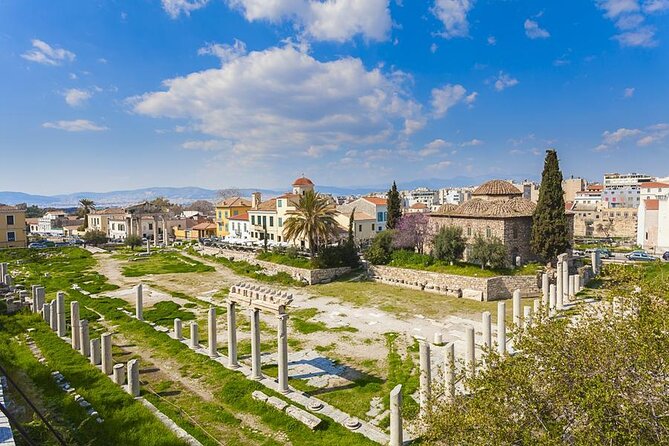
After the Acropolis, you move on to the Ancient Agora. This is scheduled for about 1 hour 20 minutes, which gives you enough room to shift from “sacred monuments” to “where people lived, traded, and gathered.”
The agora is explained as a place of assembly and, in modern Greek, a marketplace. The key value here is the timescale: the area is described as being in use for around 5,000 years and having undergone repeated building, destruction, and rebuilding cycles. That matters because Paul’s message was aimed at people in motion—shoppers, neighbors, visitors, and merchants.
If you’re expecting another monument-heavy stop, the Agora will feel different. It’s more about context and spatial understanding. You’re meant to think about how faith, debate, commerce, and community overlapped in the same city grid.
One practical drawback: because this is still an outdoors walking area, your comfort depends on your shoes and pace. This isn’t the tour where you want to squeeze in long bathroom breaks and then catch up.
The Peloponnese drive and Corinth Canal: the geography clue for the day
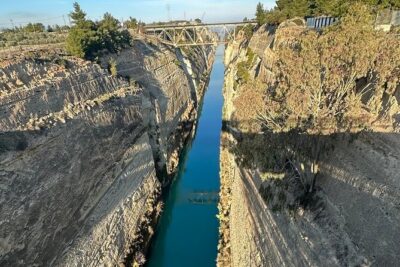
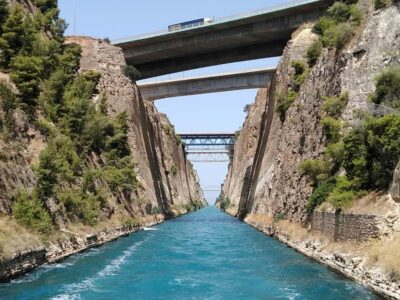
After Athens, the tour heads toward the Corinth region with a drive along the coastal road of the Saronic Gulf to the famous Corinth Canal. You also get a stop designed to connect the “why this matters” angle: the canal links the Gulf of Corinth and the Saronic Gulf, separating mainland Greece from the Peloponnese.
The tour description emphasizes the canal’s narrow width and length, and it frames the canal as a 2000-year dream—something people wanted because ships previously had to circle the Peloponnese, adding about 185 nautical miles to journeys. It even mentions that Periander is believed to have conceived the idea and that he built a diolkós stone road for transferring ships over land.
This is more than an Instagram moment. It’s a geography lesson that helps you understand how people, goods, and ideas traveled. Paul’s world wasn’t stationary. It was connected by routes, ports, and bottlenecks.
Lunch in Corinth: time to eat like a local (with one catch)
Lunch is handled with free time in a traditional restaurant in Ancient Corinth, framed as a food-tour style pause to eat and live like a local. It’s about 1 hour, and it’s explicitly not included in the price.
Here’s how I’d plan it: treat lunch as part of your pacing control. If you’re vegetarian or have dietary needs, you’ll want to mention it when ordering. Since the itinerary doesn’t guarantee a fixed restaurant, your best move is to communicate quickly and avoid lingering.
Also, if you’re ticket timing–sensitive, keep your lunch efficient. The tour schedule continues on to Ancient Corinth after the canal.
Ancient Corinth: where trade meets faith
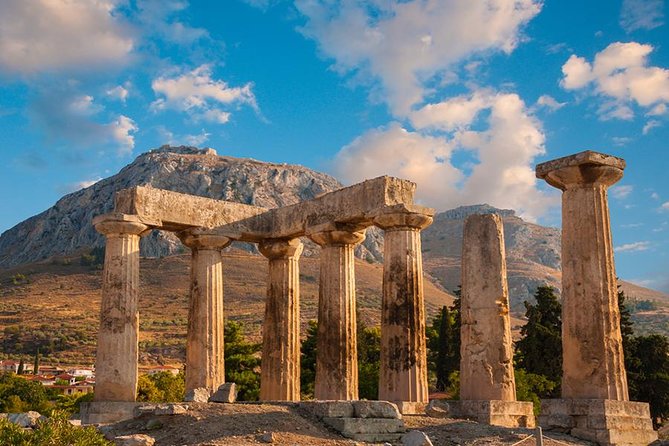
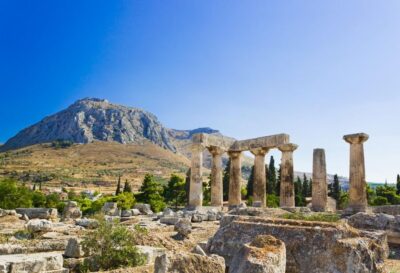
Ancient Corinth is scheduled for about 1 hour 20 minutes. The tour frames the city as inhabited since the Neolithic period and highlights how its fertile soil and strategic location—between land routes and sea connections toward the western Mediterranean and beyond—brought prosperity and trade.
Then it shifts to growth through the Mycenaean period and into historical expansion, including Corinthian colonies founded by the 8th century BC (like Corfu and Syracuse). The key takeaway for a Christian day is that Corinth wasn’t an isolated religious town. It was a hub with steady movement through it.
That matters because Paul’s letters and preaching would have landed in a place where people from many backgrounds met. Even if you don’t quote verses, you’ll feel the setting: roads, routes, and a city built for exchange.
The tour also includes an optional-feeling kind of extra from one of the guide examples: one driver reportedly provided a drive up for a picture view of Acrocorinth Castle. That sort of photo stop isn’t listed as a fixed part of the route, but it gives you a sense of what customized attention can look like.
Transportation, timing, and what the driver can (and can’t) do
This tour is private, with an air-conditioned vehicle and bottled water included. Pickup and drop-off are handled smoothly in Athens or at Piraeus for cruise passengers.
One big practical detail: the English-speaking driver is there to guide you until you enter the archaeological sites and museums. Tour drivers are not licensed to accompany you inside the sites and museums. If you want a licensed state tour guide inside, the operator says it can be arranged for an additional cost, subject to availability.
This affects your experience in a real way. If you love deep interpretation and longer indoor browsing, budget for the optional licensed guide add-on—or bring a little background reading so your time inside doesn’t feel under-explained.
I also recommend pre-thinking your ticket plan. The tour suggests having admission tickets pre-purchased because availability might be limited. They also say they can buy tickets in advance with a small service fee. If you don’t want stress on the day, this is where you save yourself headaches.
On the “people” side, multiple named drivers were praised for professionalism and timing. Names you might encounter include Spyros and Dimitris—both called out for being prompt and informative in different ways.
Value check: is $508.66 per group worth it?
The price is $508.66 per group (up to 3) for an ~8-hour private tour. That pricing is often easier to justify when you split it among people, because you’re not paying per seat like a big-group bus tour. If you travel as a couple, your per-person cost is higher than if you bring a third person—but you still get the private pacing and the pickup convenience that group tours often struggle to deliver.
What’s included:
- air-conditioned transport
- hotel or cruise pickup and drop-off
- bottled water
- fuel surcharge and local road costs
- an English-speaking driver with cultural and historical guidance up to site entry
What costs extra:
- entrance fees to archaeological sites and museum areas
- food and drinks
- optionally, a licensed state guide to go inside
So the value comes down to this question: do you want a private, story-connected day with pickup convenience, and are you okay managing ticketing and site entry on your own? If yes, this is a strong deal for an Athens-and-Corinth combo. If you want everything bundled and worry about ticket lines, you’ll need to budget time (or pay for the ticket help).
Who this tour suits best
This fits you if:
- you want a Christian-themed route tied to St. Paul’s associated places
- you prefer a private format with a driver who can explain context in English
- you have limited time in Athens or you’re on a cruise docking at Piraeus
- you like mixing major sights (Acropolis/Parthenon) with narrative stops (Areopagus and Corinth)
It might feel less ideal if:
- you want a long, slow museum day
- you get frustrated by walking on hills and uneven ground
- you dislike managing entrance fees separately
Should you book this Paul’s footsteps day?
I’d book it if you want one day that actually connects the geography and the story. Athens and Corinth are both huge topics, and this route gives you a clean way to see the essentials without getting lost in logistics.
Do it with a couple of practical decisions made in advance: pre-plan your entrance tickets, wear comfortable shoes under a formal dress code, and consider adding a licensed state guide inside if you want deeper narration without relying on quick on-site explanations.
If you’re traveling with up to two friends or family members, the private price structure makes the most sense. If you’re solo or a couple, it can still be worth it for the pickup convenience and the focused route—just know entrance fees and lunch will add to the total.
FAQ
How long is the tour?
The tour runs for about 8 hours.
How many people are in the private group?
It’s a private tour for up to 3 people per group.
Is pickup included from Athens hotels and from Piraeus cruise ships?
Yes. You’ll be picked up from your hotel in Athens or from the cruise ship pier at Piraeus, and dropped back off at the same spot.
Are entrance fees included?
No. Entrance fees to archaeological sites and museums are not included.
Does the driver go inside the sites with you?
No. The driver guides you until you enter sites and museums, but tour drivers are not licensed to accompany you inside.
Is lunch included, and is food provided?
Lunch is not included. You’ll have free time for lunch at a traditional restaurant in Ancient Corinth.
What time does the tour start, and is it in English?
It starts at 8:00 am and is offered in English, with a mobile ticket provided.
More Tours in Athens
- Athens: Acropolis, Parthenon & Acropolis Museum Guided Tour★ 4.8 · 9,316 reviews
- The Acropolis, Parthenon & Acropolis Museum Guided Tour★ 4.7 · 8,493 reviews
- Acropolis: Premium Acropolis and Parthenon Guided Tour★ 4.8 · 5,208 reviews
- Athens: Mythology of Delphi, Museum and Arachova Guided Tour★ 4.7 · 5,102 reviews
- Acropolis and Parthenon Guided Walking Tour★ 5.0 · 4,755 reviews
- Greek Food Walking Tour in Athens★ 5.0 · 4,740 reviews
More Tour Reviews in Athens
- Athens: Acropolis & up to 5 Archaeological Sites Combo Pass★ 4.2 · 13,904 reviews
- Athens: Acropolis, Parthenon & Acropolis Museum Guided Tour★ 4.8 · 9,316 reviews
- The Acropolis, Parthenon & Acropolis Museum Guided Tour★ 4.7 · 8,493 reviews
- Athens: Cape Sounion & Poseidon Temple Sunset Half-Day Trip★ 4.8 · 8,241 reviews
- Acropolis: Premium Acropolis and Parthenon Guided Tour★ 4.8 · 5,208 reviews
- Athens: Mythology of Delphi, Museum and Arachova Guided Tour★ 4.7 · 5,102 reviews
Corinth and the Canal
- From Athens: Ancient Corinth Day Trip with Canal & VR Guide★ 4.6 · 1,073 reviews
- Biblical Tour Letters ToThe Corinthians St Paul’s Footsteps 6Hour★ 5.0 · 1,065 reviews
- Private Biblical Tour Ancient Corinth & Isthmus Canal from Athens★ 5.0 · 762 reviews
- Athens: Ancient Corinth & Nafplio Full Day Trip with Swim★ 4.8 · 531 reviews
- Athens: Corinth Canal, Mycenae & Nafplio Premium Guided Tour★ 4.7 · 322 reviews
- Private Tour of Apostle Paul’s Footsteps in Ancient Corinth★ 5.0 · 275 reviews
Fresh Off the Boat: New Athens Reviews



Corinth Day Trips, compared.
 ★ 4.6From Athens: Ancient Corinth Day Trip with Canal & VR GuideFrom $411,073 reviews
 ★ 5.0Biblical Tour Letters ToThe Corinthians St Paul’s Footsteps 6HourFrom $1701,065 reviews
 ★ 5.0Private Biblical Tour Ancient Corinth & Isthmus Canal from AthensFrom $301762 reviews
 ★ 4.8Ancient Corinth & Nafplio Full Day Trip with Swim531 reviews
 ★ 4.7Corinth Canal, Mycenae & Nafplio Premium Guided TourFrom $32322 reviews
 ★ 5.0Private Tour of Apostle Paul’s Footsteps in Ancient CorinthFrom $169275 reviews
 ★ 4.3Corinth Canal, Mycenae and Nafplio Day TourFrom $129252 reviews
 ★ 4.5Corinth Half-Day Trip from Athens with Entrance TicketsFrom $91242 reviews
Browse the lists this tour appears in