
Mycenae, Nemea, wine, and a canal in one day. This private 8-hour Peloponnese loop packs big-name sites into a smooth schedule, from the Corinth Canal to the Lions Gate, then out to Nemea’s stadium and vineyards. I love the private Wi‑Fi vehicle and the fact that the day feels well paced (not like a rushed checklist). One consideration: key entries are extra, and you’ll likely add costs for Mycenae site access plus the wine tasting.
This is also the kind of tour where the guide really matters. In the feedback I reviewed, guides such as Yannis and Terry are repeatedly praised for shaping the flow around your interests and giving you enough breathing room at each stop.
In This Review
- Key highlights you’ll feel immediately
- Why this Mycenae–Nemea day feels smarter than a pile of bus stops
- What you should know upfront about cost creep
- Getting picked up in Athens: comfort, timing, and fewer headaches
- Corinth Canal: the gateway to the Peloponnese (and the myth angle)
- Archaeological Museum of Ancient Mycenae: gold in 30 minutes
- Ancient Mycenae citadel: Lions Gate, Cyclopean walls, and the tholos tombs
- The big-ticket moments you’ll want to prioritize
- The Treasury of Atreus: a short stop with a strong payoff
- Time reality check
- Nemea: temples, a stadium for 40,000, and the athlete tunnel effect
- Temple of Nemean Zeus and the “three columns” detail
- The ancient baths: athletics as a lifestyle
- The stadium area: what makes it special is the crypt
- Palivou Estates winery in Nemea: organic grapes and a calmer pace
- Ancient Corinth lunch with terrace views of Apollo’s temple
- Price and value: what $312.76 covers, and what you’ll add
- Who this private day trip is best for
- The guide factor: why people keep naming specific drivers
- Should you book this tour?
- FAQ
- What does the tour include?
- Are entrance fees included?
- How long is the tour?
- Is this tour private or shared?
- Can I buy the wine tasting during the day?
- Do I need to bring a ticket?
Key highlights you’ll feel immediately
- Private door-to-door comfort with hotel pickup/drop-off and Wi‑Fi in the vehicle
- Corinth Canal + information center to set the stage for the Peloponnese myth-and-matter mix
- Mycenae at two levels: museum highlights plus the full citadel walk (Lions Gate, palace, tholos tombs)
- Nemea’s sports theater: the stadium crypt and the 330BC track details
- Ktima Palivou organic winery with a vineyard-to-tasting experience (wine tasting paid locally)
Into the Argolid, past the Lion Gate
- From Athens: Small-Group Mycenae, Epidaurus & Nafplio Trip
★ 4.8 · 2,805 reviews - From Athens: Mycenae, Epidaurus & Nafplio Full-Day Tour
★ 4.5 · 2,530 reviews - Mycenae, Epidaurus and Nafplio Tour from Athens
★ 4.6 · 2,201 reviews - 4-Day Classical Greece Tour: Epidaurus, Mycenae, Olympia, Delphi, Meteora
★ 4.5 · 732 reviews
Why this Mycenae–Nemea day feels smarter than a pile of bus stops
If you only have one day away from Athens, you usually face a choice: either see one site in depth, or see a lot and accept the tradeoff. This trip aims for a third option—hit the big ones without feeling frantic—and that’s where the value comes from. The order also works. You start with a dramatic “gateway” (Corinth Canal), then step into the Late Bronze Age world of Mycenae, and finally end in vineyard country at Nemea.
The private format matters. You’re not fighting for position, and the driver can keep things on track while your guide focuses on what to see first and what to skip if the day starts running tight. That’s why the same tour can work for history fans and for people who just want great photos and a sense of place.
What you should know upfront about cost creep
This isn’t a “everything is included” package. Site entrances for Mycenae are extra, and the winery tasting is paid locally. That’s not a flaw—it’s common for tours like this—but it’s the one thing you should plan for so the final bill doesn’t surprise you.
Getting picked up in Athens: comfort, timing, and fewer headaches
You begin with pickup from your Athens hotel, Airbnb, or apartment. The driver meets you at the lobby for hotels, and for an apartment they’ll coordinate so you can meet at the building entrance. Then you’re off in a private first-class vehicle with Wi‑Fi and bottled water.
That sounds small, but on an 8-hour day it’s a big deal. You lose less energy than you would with multiple transit changes, and you can stay flexible if your group wants extra photo time. Also, the itinerary is designed around short, focused windows at each stop, which is exactly what a comfortable ride helps you handle.
One more practical note: there’s an option for skip-the-line ticket service (on request). It doesn’t change the fact that you’re still visiting sites, but it can reduce waiting—especially around the museum and major ruins.
More private options, your group only


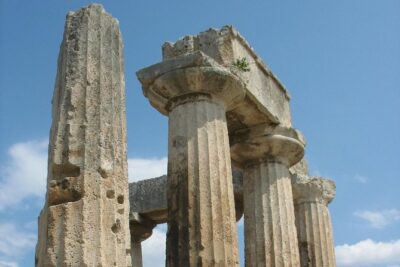

Corinth Canal: the gateway to the Peloponnese (and the myth angle)
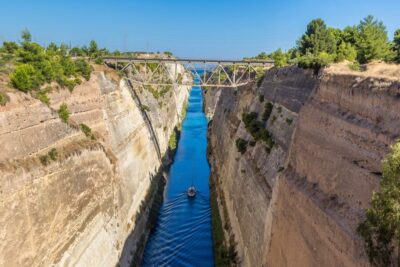
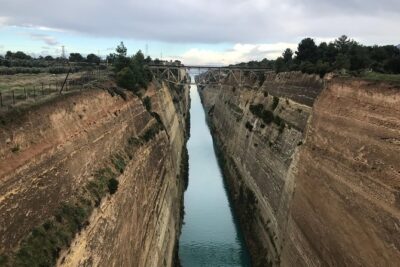
At the Corinth Canal (the Isthmus Canal), you get a quick introduction to what you’re about to do. The information center shows you a themed look at the Peloponnese called Mythical Peloponnese. It’s a short stop, but it helps connect the later sites to the stories people tell about the region.
You also learn the engineering side: this is an Austrian Hungarian engineering project from the 19th century, described as a major trade connector for the Mediterranean. That matters because it gives you a “then and now” frame. You’re not just looking at ruins; you’re seeing how geography shaped movement for both ancients and modern travelers.
Drawback? The canal stop is only about 30 minutes, so it’s not a deep exploration. Think of it as setting the scene.
Archaeological Museum of Ancient Mycenae: gold in 30 minutes
Before you walk among the stones, the museum gives you the backstory in objects. Plan for around 30 minutes here. Admission isn’t included, so budget that extra time and expense.
What you’ll notice fast is the material culture. The museum highlights Late Bronze Age treasures—things like gold grave goods, burial masks, jewelry, bronze weapons, worship idols, and even fragments of frescoes. Even if you’re not a “museum person,” the museum helps you understand what kind of power and belief system built the citadel you’ll see next.
This stop is one reason the day feels coherent. It’s not just transport between monuments. It’s a quick on-ramp into the world of Mycenae.
Ancient Mycenae citadel: Lions Gate, Cyclopean walls, and the tholos tombs
Mycenae is where the tour earns its reputation. You’ll get about 1 hour at the archaeological site, plus a shorter stop at the Treasury of Atreus area.
The big-ticket moments you’ll want to prioritize
Inside the citadel, these are the highlights you’ll want your camera ready for:
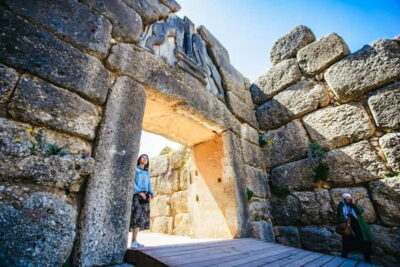
- Lions Gate: the main entrance of the citadel, built around the 13th century BC
- Cyclopean Walls: huge limestone boulders fitted together—one of the signature looks of Mycenaean fortifications
- The Royal Palace area: including the Throne Room suite, the Grand Staircase, and rooms linked with officials
- Grave Circles A and B: royal cemeteries just outside the main citadel space
- The tomb of Klytemnistra: a tholos (beehive) tomb, described as remarkable and a key visual stop for understanding Mycenaean burial practices
The tholos tombs are especially important because they’re not just “another ruin.” They show the architectural planning and status tied to the ruling class.
The Treasury of Atreus: a short stop with a strong payoff
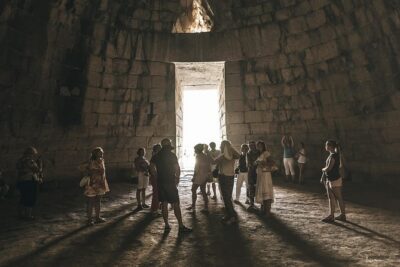
You’ll also see the Treasury of Atreus, sometimes called the tomb of Agamemnon. It’s an elaborate late Bronze Age tholos around 1250 BC. Even in a short time window, it hits hard visually, and it’s the kind of structure that makes the entire Mycenae story feel real.
Time reality check
Because the day is packed, your Mycenae time is not meant to replace a full day there. If you want to read every sign and walk slowly, you may feel the pressure. But if you want the core experience—Lions Gate, walls, palace areas, and the tombs—this timing is a practical compromise.
Nemea: temples, a stadium for 40,000, and the athlete tunnel effect
After Mycenae, the scenery changes fast. Nemea is described as soft hills with vineyards—sometimes compared to the California Napa Valley vibe of the Peloponnese. That shift is more than pretty scenery. It helps break up the heavy Bronze Age focus before you hit the athletics of the sanctuary.
Temple of Nemean Zeus and the “three columns” detail
In Nemea, you’ll visit the Temple of Zeus area. It’s around 4th century BC, and the standout detail is that three columns still stand from the original construction, which keeps your mental image anchored.
The tour also connects Zeus here to shepherd life and the region’s identity. You’ll walk away understanding why this place mattered beyond being a ruin with photo value.
The ancient baths: athletics as a lifestyle
You’ll also see the Ancient baths, described as an athletic bathing house at the Panhellenic sanctuary of Nemea. Even if you don’t “feel” baths as a must-see, the context is useful: this was a place where training and ritual were part of the experience.
The stadium area: what makes it special is the crypt
The Ancient Nemea portion focuses on the stadium built around 330BC. There was a track of about 178 metres and seating for roughly 40,000 visitors. That scale matters. It turns Nemea from a “nice stop” into a real sports arena you can picture with crowds.
The most distinctive detail here is the Ancient Stadium Crypt, an entrance tunnel about 36+ metres long where athletes transitioned from modern life into the ancient games setting. It’s tied to how participants moved and what you’re expected to imagine—names engraved on the walls and dedications to Nike mentioned for this area.
You’ll also see practical remnants like the stadium track and starting grid with toe grooves cut into stone. If you like details you can picture working, this is a great section of the day.
Palivou Estates winery in Nemea: organic grapes and a calmer pace
Wine is the reset button here. You’ll stop at Ktima Palivou, described as a certified organic winery and a multi-generational family operation. It’s set up for a proper tasting experience rather than a quick pour.
The tasting itself is paid locally (so it’s not automatically included), and the tour block is about 1 hour 15 minutes. What you’re likely to appreciate is the structure: a tour through the vineyard and into the area where the wine is aged before tasting.
This is one of the parts of the day that turns it from history tour into vacation day. One guide name that comes up strongly in feedback is Terry, and the Palivou experience gets described as a boutique setup with a vineyard experience before tasting. That pairing—ruins, then grapes—works well because it changes your brain pace without stopping the story.
Ancient Corinth lunch with terrace views of Apollo’s temple
Lunch happens at Ancient Corinth, with time around 1 hour 20 minutes at the site. The day includes a complimentary village-style lunch on a terrace overlooking ancient Corinth’s archaeological site and the temple of Apollo.
This is a smart end to the main sightseeing loop. Corinth sits between worlds: it’s not just a stop; it’s a place that helps you see how the Peloponnese connected. Even if you don’t wander too far into the site, the terrace view is a strong payoff.
If you’re the type who likes to slow down after ruins, this lunch window is where you’ll feel relief.
Price and value: what $312.76 covers, and what you’ll add
At $312.76 per person, you’re paying for a fully private day with hotel pickup/drop-off and transportation in a first-class vehicle with Wi‑Fi and bottled water. For many visitors, the value is the ability to do multiple major stops without sacrificing comfort or spending half the day on logistics.
Included highlights:
- Fully private tour with a first-class vehicle and Wi‑Fi
- Professional tour drivers with deep Greek history
- Hotel/port pickup and drop-off (for this Athens start, it’s your chosen hotel/Airbnb)
- Bottled water in the vehicle
- Mobile ticket
- Skip-the-line ticket service on request
- Lunch at Ancient Corinth is presented as a complimentary bonus
Not included (and likely add-ons):
- Entrance fees to Mycenae sites: €20 per person
- Wine tasting experience: €20 per person, paid locally
- Tips
- A licensed tour guide to accompany you inside the museum and sites (available on request)
My practical take: this is good value if you want the “big monuments in one day” experience and you’d rather pay for comfort than spend your energy coordinating transit. If you’re trying to keep costs ultra-low, the add-on fees matter—but the structure still helps you avoid losing time.
Who this private day trip is best for
This tour is a strong fit if:
- you want one well-organized day covering Mycenae, Nemea, and Corinth
- you prefer private transport and flexibility over group pacing
- you like both museum objects and outdoor ruins
- you’ll enjoy a winery stop as a break, not just a checkbox
It may feel less ideal if:
- you need long reading time at every sign
- you hate moving between sites every hour or so
- you want an unhurried, deep-dive level of time only at Mycenae (this is structured as a condensed overview)
The guide factor: why people keep naming specific drivers
One pattern in the feedback is consistency: the guide’s role in pacing and storytelling. Names that stand out include Yannis, George, Manos, Tas, and Terry. What they seem to do well is manage time so you get meaningful exploration at each stop, with enough breathing room for photos and questions.
Also, some guides are described as getting you to places before tour buses. That’s a real advantage. It means calmer moments at the ruins and fewer crowd interruptions, especially around the citadel and stadium areas.
Should you book this tour?
If you’re choosing between a rushed group day and a scattered DIY plan, I’d book this. It’s built for people who want the Peloponnese’s headline acts without spending the trip stressed about timing.
Book it if you care about:
- Mycenae’s key structures (Lions Gate, walls, tholos tombs)
- Nemea’s sports sanctuary details (including the stadium crypt concept)
- a winery stop that actually feels like a break
- terrace lunch at Ancient Corinth instead of a car-between-coffee kind of day
Skip it only if you want to spend most of the day slowly inside Mycenae itself or you’d rather do Nemea as a standalone visit. In that case, you’ll get more satisfaction by splitting the trip into two days.
FAQ
What does the tour include?
You get fully private transportation in a first-class vehicle with Wi‑Fi and bottled water, plus hotel pickup and drop-off. The day also includes a skip-the-line ticket service on request and a complimentary village-style lunch at Ancient Corinth.
Are entrance fees included?
Mycenae entrance fees are not included, listed as €20 per person. The wine tasting is also not included and is paid locally (€20 per person).
How long is the tour?
It runs about 8 hours.
Is this tour private or shared?
It’s a private tour/activity, meaning only your group participates.
Can I buy the wine tasting during the day?
Yes. The winery stop includes a wine tasting experience, but you pay it locally at €20 per person.
Do I need to bring a ticket?
You’ll use a mobile ticket for this experience, and there is an on-request skip-the-line ticket service for smoother entry.
If you tell me your travel month and how history-heavy your group wants the day to feel, I can suggest a simple plan for which stops to prioritize (especially inside Mycenae).
Private Days, Your Group Only
- Best of Athens Half Day Private Tour★ 5.0 · 3,714 reviews
- Athens Full Day Private Tour★ 5.0 · 2,903 reviews
- Athens Airport Private Arrival Transfer with Meet & Greet★ 4.5 · 1,495 reviews
- Athens Airport to Athens Hotels Private Arrival Transfer★ 5.0 · 947 reviews
- Athens Greece Full Day private tour★ 5.0 · 785 reviews
- Private Biblical Tour Ancient Corinth & Isthmus Canal from Athens★ 5.0 · 762 reviews
More Tour Reviews in Athens
- Athens: Acropolis & up to 5 Archaeological Sites Combo Pass★ 4.2 · 13,904 reviews
- Athens: Acropolis, Parthenon & Acropolis Museum Guided Tour★ 4.8 · 9,316 reviews
- The Acropolis, Parthenon & Acropolis Museum Guided Tour★ 4.7 · 8,493 reviews
- Athens: Cape Sounion & Poseidon Temple Sunset Half-Day Trip★ 4.8 · 8,241 reviews
- Acropolis: Premium Acropolis and Parthenon Guided Tour★ 4.8 · 5,208 reviews
- Athens: Mythology of Delphi, Museum and Arachova Guided Tour★ 4.7 · 5,102 reviews
Into the Argolid: Mycenae and Nafplio
- From Athens: Small-Group Mycenae, Epidaurus & Nafplio Trip★ 4.8 · 2,805 reviews
- From Athens: Mycenae, Epidaurus & Nafplio Full-Day Tour★ 4.5 · 2,530 reviews
- Mycenae, Epidaurus and Nafplio Tour from Athens★ 4.6 · 2,201 reviews
- 4-Day Classical Greece Tour: Epidaurus, Mycenae, Olympia, Delphi, Meteora★ 4.5 · 732 reviews
- Athens: Ancient Corinth & Nafplio Full Day Trip with Swim★ 4.8 · 531 reviews
- Mycenae and Nafplion Day Trip from Athens with Official guide★ 4.5 · 501 reviews
Fresh Off the Boat: New Athens Reviews




Mycenae & Nafplio Day Trips, compared.
 ★ 4.8From Athens: Small-Group Mycenae, Epidaurus & Nafplio TripFrom $342,805 reviews
 ★ 4.5From Athens: Mycenae, Epidaurus & Nafplio Full-Day TourFrom $332,530 reviews
 ★ 4.6Mycenae, Epidaurus and Nafplio Tour from AthensFrom $332,201 reviews
 ★ 4.54-Day Classical Greece Tour: Epidaurus, Mycenae, Olympia, Delphi, MeteoraFrom $766732 reviews
 ★ 4.8Ancient Corinth & Nafplio Full Day Trip with Swim531 reviews
 ★ 4.5Mycenae and Nafplion Day Trip from Athens with Official guideFrom $78501 reviews
 ★ 4.2Argolis: Full-Day Tour in Mycenae & NafplioFrom $41350 reviews
 ★ 4.53-Day Classical Greece Tour: Epidaurus, Mycenae, Nafplion, Olympia, DelphiFrom $520342 reviews
Browse the lists this tour appears in