
Reviewed · MYCENAE & NAFPLIO DAY TRIPS
Private Tour of Epidaurus, Ancient Corinth & Isthmus Canal From Athens
One day, three big ancient wow-factors. This private tour from Athens gives you door-to-door pickup and an easy, air-conditioned ride to the UNESCO Epidaurus theatre, with Wi-Fi on board so you can look things up as you go. I especially like how the route stitches together ancient “how it worked” (the Corinth Canal and Diolkos) with “why it mattered” (Acrocorinth, Ancient Corinth, and Epidaurus). The main thing to consider is that entrance fees aren’t included, and some of the best add-on time (like museums) can cost extra unless you plan for it.
I also like the small creature comforts that make a long day feel manageable: bottled water, refreshing wipes, and even fresh handmade Greek biscuits in the car. Plus, the drive is private, so you’re not trapped in a crowd shuffle at each stop, and you can move at a human pace. The route runs close to a full workday, so if you dislike long vehicle time, you’ll want to mentally budget for it.
What makes this one feel practical is the hands-on guidance from your driver, not just transportation. The day is built around major sites, but you still get context along the drive—especially useful when you’re seeing things like Doric columns, Roman-era remains, and medicine sanctuary ruins that all sit on top of each other over centuries. If you want a licensed guide inside museums or archaeological areas, that’s available as an extra cost on request.
In This Review
- Key things that make this tour worth your time
- Why this Corinth and Epidaurus route works
- Hotel pickup in Athens, plus Wi-Fi so you don’t fall behind
- Corinth Canal and Ancient Diolkos: the trade route you can picture
- Acrocorinth’s fortress rock: Acropolis energy without guesswork
- Upper Peirene and Geraneia: short stops that reset your eyes
- Ancient Corinth: Temple of Apollo, the Agora, and Paul’s Bema
- The Temple of Apollo and the Doric columns
- Agora and the Bema linked to Apostle Paul
- Roman buildings, plus the theatre and Odeon/Asklepieion
- Lechaion road and St. Paul’s church mosaic
- Lunch with a view: village-style on a terrace near the ruins
- Kenchreai (Cenchreae) port: Paul’s vow stop
- Epidaurus theatre: acoustics you can test with your own senses
- Epidaurus museum and Asclepius sanctuary: medicine meets performance
- Value: what you’re paying for with a private 8-hour day
- Who this tour fits best
- Should you book this private Corinth and Epidaurus tour?
- FAQ
- Is this tour private or shared?
- How long is the tour?
- Do you pick me up from my hotel in Athens?
- Is Wi-Fi provided during the trip?
- What’s included in the tour price?
- Are entrance fees included for the sites?
- Is a licensed tour guide included for the sites?
- What is the cancellation policy?
Key things that make this tour worth your time
- Private, hotel-based pickup and drop-off that saves you the Athens bus-train-taxi math
- Wi-Fi in the air-conditioned vehicle, so you can read as you travel
- Corinth Canal plus Ancient Diolkos for a real sense of engineering behind the trade route
- Acrocorinth (Acrocorinthos) fortress views from the monolithic rock above Corinth
- Ancient Corinth highlights like the Temple of Apollo, Agora, and the Bema tied to Paul
- Epidaurus amphitheatre and the Asclepius sanctuary for an unforgettable acoustics-and-medicine day
Into the Argolid, past the Lion Gate
- From Athens: Small-Group Mycenae, Epidaurus & Nafplio Trip
★ 4.8 · 2,805 reviews - From Athens: Mycenae, Epidaurus & Nafplio Full-Day Tour
★ 4.5 · 2,530 reviews - Mycenae, Epidaurus and Nafplio Tour from Athens
★ 4.6 · 2,201 reviews - 4-Day Classical Greece Tour: Epidaurus, Mycenae, Olympia, Delphi, Meteora
★ 4.5 · 732 reviews
Why this Corinth and Epidaurus route works
Corinth and Epidaurus are not “close together” in a way that makes casual DIY easy. They’re spread across the Peloponnese, and a private vehicle really changes the experience because you’re spending your time at sites, not in transit chaos.
This also helps you understand the big story: Corinth sat right on the crossroads of sea travel, politics, and religion, while Epidaurus is famous for performance and healing. Seeing them in one day makes the ancient world feel less like separate facts and more like a connected system.
Hotel pickup in Athens, plus Wi-Fi so you don’t fall behind
If you’ve ever tried to stitch together a Peloponnese day by yourself, you know the pain: schedules, lines, and the “where exactly do I meet?” moments. Here, your driver comes to your chosen hotel, Airbnb, or apartment in Athens, meeting you at the lobby or entrance. If you’re coming from the airport or port, you’ll meet at the arrivals area with a name signboard.
The car is air-conditioned and private, and it includes Wi-Fi on board. That matters more than you’d think. While you’re driving between sites, you can quickly look up names, dates, or what you’re about to see—so the day feels active instead of like you’re just following a checklist.
On board you also get bottled water and refreshing wipes, plus fresh handmade Greek biscuits. Small perks, big difference when you’re doing long stretches and want to stay comfortable.
Corinth Canal and Ancient Diolkos: the trade route you can picture
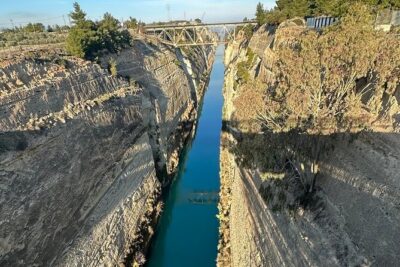
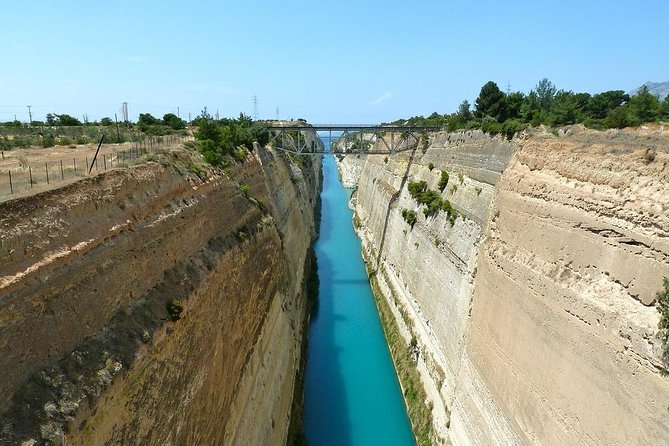
The first “wow” is the Corinth Canal, a 19th-century engineering project that played a catalytic role in Mediterranean trade. Even if you know the canal existed, it hits different when you stop and look at the scale. It’s the kind of place that makes you think about logistics: ships, time, and why shortcuts matter.
Then you visit Ancient Diolkos, a paved trackway in ancient Greece that allowed boats to be moved overland across the Isthmus of Corinth. This is where the past becomes very practical. It’s not just temples and statues; it’s people solving a transportation problem with what they had at the time.
Expect the drive to put you in the right mindset: you’re moving through geography that shaped power and wealth, not just passing through countryside.
The canal and old Corinth, a few more days
Acrocorinth’s fortress rock: Acropolis energy without guesswork
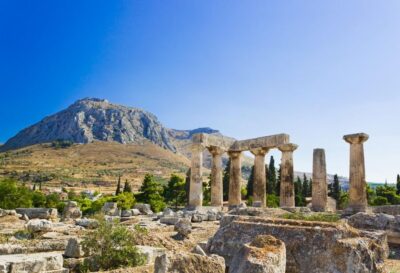
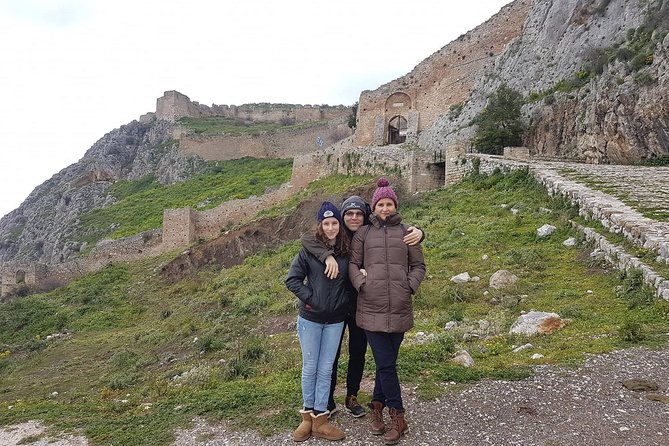
Next comes Acrocorinth (Acrocorinthos), the acropolis-like fortress towering above ancient Corinth. The site sits on a monolithic rock, and you can feel why it controlled the region. The whole place is built around dominance—three circuit walls reinforced by towers, plus a fortified keep.
A few parts you’ll want to pay attention to:
- Temple of Aphrodite traces on the highest point, tied to the highest ground on the mountain
- The Frankish Tower on the SW edge, fortified during Frankish times
- Remains of churches, mosques, houses, fountains, and cisterns, which shows the site didn’t stop after one empire
This stop is also one of the best for good photos, since the views tie the ruins to the geography. Wear comfortable shoes. Even without a “hard hike” promise, a fortress built on rock naturally rewards anyone who’s prepared for uneven terrain and lots of standing.
Upper Peirene and Geraneia: short stops that reset your eyes
After Acrocorinth, you get two smaller breathing spots that still add meaning.
You’ll pause at Upper Peirene Fountain, connected to the Peirene Spring inside the encircling walls. The admission for this specific stop isn’t included, and it’s brief—think of it as a quick “water source in the fortress world” moment, not a long museum-style visit.
Then you head to Geraneia for views of Geraneia Mountain and the Corinthian gulf with the SW coast of the Peloponnese. These view breaks are valuable because they prevent fatigue from turning into impatience. When your eyes reset, the next site—Ancient Corinth—lands harder.
Ancient Corinth: Temple of Apollo, the Agora, and Paul’s Bema
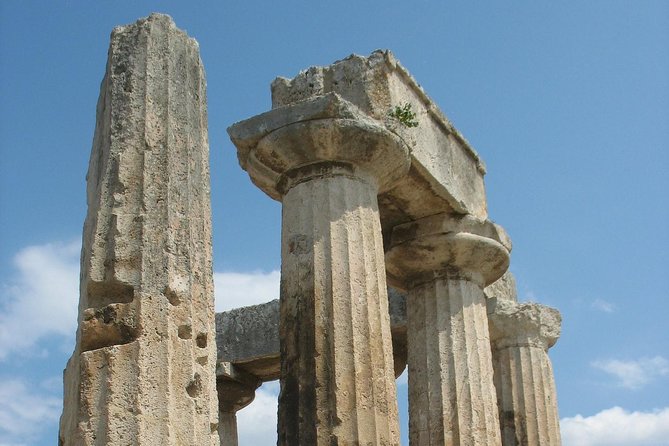
Ancient Corinth (Archaia Korinthos) is the centerpiece, and it’s the kind of place where you’ll feel the layers. You’ll move through points tied to different periods, with enough structure that even a first-time visitor can follow the logic.
Start with the area’s water stories, including Hadgimoustafa spring from the Ottoman empire. Then you can choose how you handle the museum time, since the archaeological museum isn’t included in entrance costs.
The Temple of Apollo and the Doric columns
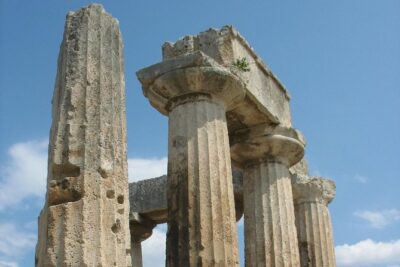
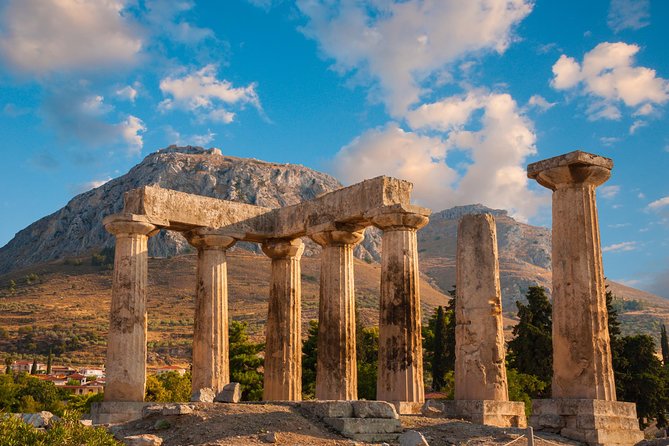
One highlight is the Temple of Apollo, noted as one of the earliest Doric temples in the Peloponnese and Greek mainland. What catches attention is the mention of monolithic columns—rare in the ancient world and worth your focus when you’re standing there.
Agora and the Bema linked to Apostle Paul
The Agora is rectangular, built around central shops, small temples, and an altar. There’s also the Bema or Pedestal, known as the platform from where Apostle Paul addressed the Corinthians in 52 AD.
This is where the day becomes more than archaeology. You’re not only seeing stones; you’re standing near the kinds of public spaces where speeches, religion, and daily life collided.
Roman buildings, plus the theatre and Odeon/Asklepieion
You’ll also see Roman-era buildings and the theatre plus Odeon/Asklepieion areas. The big practical takeaway is that Epidaurus later will feel less random. You’re already seeing performance-and-ritual structures here, so the patterns make more sense when you get to Epidaurus.
Lechaion road and St. Paul’s church mosaic
Don’t miss the Lechaion road, facing the Corinthian gulf toward the port of Lechaion. It’s a reminder that Corinth’s power wasn’t only “in town,” it was tied to movement of goods and people.
There’s also St. Paul’s church with a mosaic mural depicting Saul’s vision from Christ while traveling to Damascus. It’s a brief spiritual art stop that helps you connect the site to later Christian tradition.
Lunch with a view: village-style on a terrace near the ruins
This tour is timed to treat you to an authentic village style lunch on a terrace overlooking Ancient Corinth’s archaeological site and the Temple of Apollo. It’s one of those details that turns the day from educational to actually enjoyable.
If you like Greek grill food, ask for the mixed grill, and pair it with a Greek salad. A driver named Peter was praised for taking people to a restaurant where the mixed grill and Greek salad were a highlight, and it fits the idea here: good meal, local feel, not a rushed stop.
After lunch, you can stroll village shops to pick up handmade souvenirs. It’s a nice counterbalance to the archaeological pace—something tangible to bring home without turning the afternoon into a shopping spree.
Kenchreai (Cenchreae) port: Paul’s vow stop
Kenchreai (Cenchreae) is the port town connected to Corinth, and it adds a second perspective on the city. It’s one of two ports for the Corinthian inland city-state, so you’re seeing the “other side” of what made Corinth wealthy.
A key detail tied to this place: in Acts 18:18, the Apostle Paul stopped at Kenchreai during his second missionary journey and cut his hair to fulfill a vow (Nazirite vow). The time here is around three hours, and while it can be relaxed, it’s still part of the arc of the day.
If you like religious stories grounded in geography, this is where that interest pays off. It’s also useful if you find pure archaeology emotionally dry; this stop gives you a narrative thread.
Epidaurus theatre: acoustics you can test with your own senses
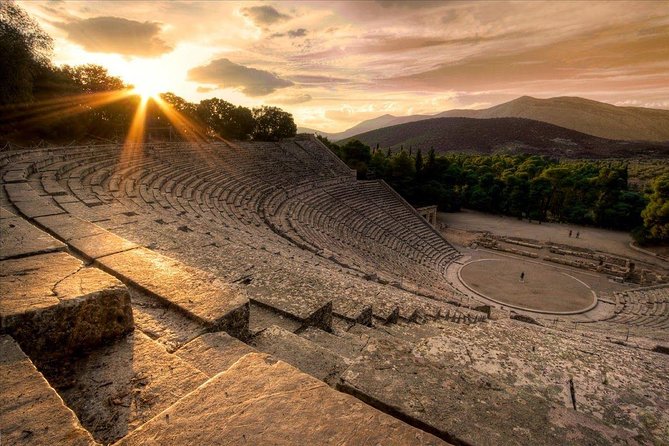
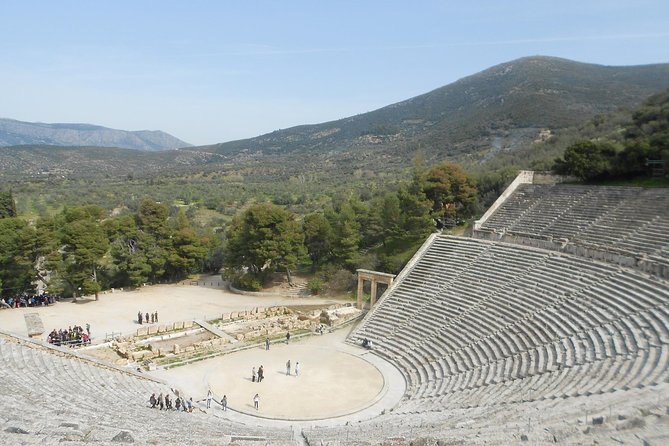
Then comes Epidaurus, and it’s the UNESCO experience most people come for. The Epidaurus amphitheatre is famous for classic Greek construction and astounding acoustics. The idea is simple and kind of fun: you can drop a pin or coin on the stage, and it should carry to the last seats.
You’ll enjoy time to look around and take in the setting. This is the kind of place where the design makes the experience feel bigger than the numbers. And if you’re into theatre traditions, this is one of Greece’s best places to think about performance as “architecture that helps voices travel.”
Expect about 45 minutes here with entrance marked as free for this stop.
Epidaurus museum and Asclepius sanctuary: medicine meets performance
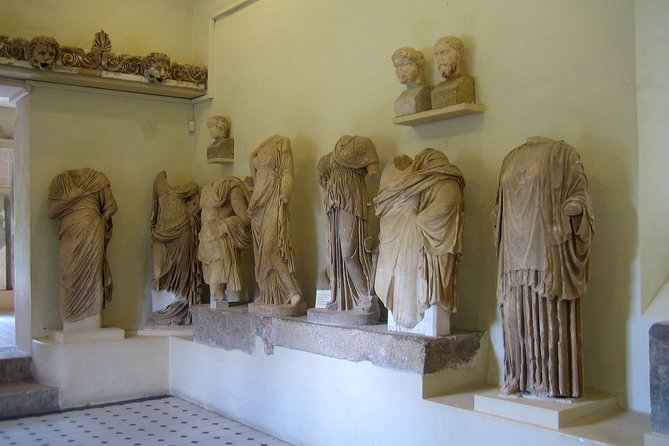
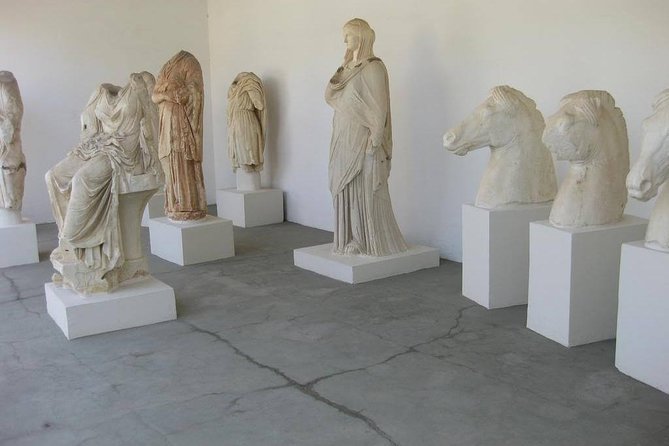
After the amphitheatre, you can continue with the Epidaurus Archaeological Museum (entrance not included in the tour price). The museum is noted for reconstructions of temples and columns with inscriptions. That kind of information is gold when you’re trying to visualize what you’re seeing outdoors.
Then comes the sanctuary of Asclepius, the ancient Greek demi-god associated with medicine. This part feels different from a temple “tour.” It’s more like stepping into a medical retreat concept—an ancient place built around care, ritual, and healing expectations.
This stop is also marked around 45 minutes, with entrance not included. If you’re hoping for a deeper story of what people believed and how healing worked, spend your attention here, not just on photos.
Value: what you’re paying for with a private 8-hour day
At $297.26 per person, this is not a cheap “bus tour.” But it’s also not priced like a luxury chauffeur with no explanations. You’re paying for a private day drive with an in-depth history focused driver, plus hotel/port pickup and drop-off, plus transportation in a first-class air-conditioned vehicle.
The included extras matter:
- Wi-Fi on board (useful for site understanding, not just entertainment)
- bottled water, refreshing wipes, and fresh handmade Greek biscuits
- a mobile ticket
- on-request skip-the-line ticket service (helpful when you’re trying to keep your schedule smooth)
Entrance fees to sites are not included, so your total day cost depends on what you choose to enter (and the museum components). Still, for many travelers, this feels like good value because you’re buying back time, comfort, and stress.
If you’re the kind of traveler who likes structure but hates crowds, a private format like this often makes the price easier to swallow.
Who this tour fits best
This works well if you:
- want a single organized day to see Corinth and Epidaurus without dealing with multiple transit connections
- care about practical context (trade routes, fortresses, public spaces, and how stories attach to places)
- appreciate comfort on long driving stretches
It may feel like a lot if you prefer a slow, minimal-moving vacation rhythm. The day is packed with major stops, and even with breaks, you’ll spend a good chunk of the day in transit and standing outdoors.
Should you book this private Corinth and Epidaurus tour?
I’d book it if you want a smart one-day Athens escape that links engineering, fortress power, civic life, and the special acoustic-and-medicine experience of Epidaurus. The combination of private pickup, in-car Wi-Fi, and time at the big sites makes it feel built for real visitors, not just checkmarks.
Skip booking if entrance fees and museum costs would be a stretch for your budget, or if you know you dislike long days and lots of moving between viewpoints. If you’re unsure, look closely at what entrance fees you’ll want to include—because the tour is strong, but you still need to plan for site admissions.
If you want to maximize your experience, wear comfortable walking shoes and consider requesting a licensed guide for the museum/archaeological areas if you want more detailed interpretation than the driver explanations alone.
FAQ
Is this tour private or shared?
This is a private tour/activity, so only your group participates.
How long is the tour?
The duration is about 8 hours.
Do you pick me up from my hotel in Athens?
Yes. Pickup is offered from your chosen hotel, Airbnb, or apartment in Athens, and your driver will meet you at the lobby or entrance.
Is Wi-Fi provided during the trip?
Yes. Wi-Fi is provided in the vehicle.
What’s included in the tour price?
Included items are fully private tour service, professional drivers with in-depth knowledge, hotel/port pickup and drop-off, private first-class vehicle transportation, Wi-Fi on board, bottled water and refreshing wipes, fresh handmade Greek biscuits, and skip-the-line ticket service on request (where available).
Are entrance fees included for the sites?
No. Entrance fees to the sites are not included. The tour notes that some stops have free admission, while others (like certain museums/areas) are not included.
Is a licensed tour guide included for the sites?
A licensed tour guide to accompany you into the site and museum is not included, but it can be arranged as an additional cost on request.
What is the cancellation policy?
Free cancellation is available up to 24 hours in advance for a full refund.
Just Your Group: More Private Days
- Best of Athens Half Day Private Tour★ 5.0 · 3,714 reviews
- Athens Full Day Private Tour★ 5.0 · 2,903 reviews
- Athens Greece Full Day private tour★ 5.0 · 785 reviews
- 4 Hours – Athens & Acropolis Highlights Private Tour★ 5.0 · 681 reviews
- Athens Full Day Private Tour★ 5.0 · 667 reviews
- Enjoy Cape Sounio Private Majestic Sunset With Seaside Dinner★ 5.0 · 613 reviews
Corinth and the Canal
- From Athens: Ancient Corinth Day Trip with Canal & VR Guide★ 4.6 · 1,073 reviews
- Biblical Tour Letters ToThe Corinthians St Paul’s Footsteps 6Hour★ 5.0 · 1,065 reviews
- Private Biblical Tour Ancient Corinth & Isthmus Canal from Athens★ 5.0 · 762 reviews
- Athens: Ancient Corinth & Nafplio Full Day Trip with Swim★ 4.8 · 531 reviews
- Athens: Corinth Canal, Mycenae & Nafplio Premium Guided Tour★ 4.7 · 322 reviews
- Private Tour of Apostle Paul’s Footsteps in Ancient Corinth★ 5.0 · 275 reviews
Into the Argolid: Mycenae and Nafplio
- From Athens: Small-Group Mycenae, Epidaurus & Nafplio Trip★ 4.8 · 2,805 reviews
- From Athens: Mycenae, Epidaurus & Nafplio Full-Day Tour★ 4.5 · 2,530 reviews
- Mycenae, Epidaurus and Nafplio Tour from Athens★ 4.6 · 2,201 reviews
- 4-Day Classical Greece Tour: Epidaurus, Mycenae, Olympia, Delphi, Meteora★ 4.5 · 732 reviews
- Athens: Ancient Corinth & Nafplio Full Day Trip with Swim★ 4.8 · 531 reviews
- Mycenae and Nafplion Day Trip from Athens with Official guide★ 4.5 · 501 reviews
Fresh Off the Boat: New Athens Reviews




Mycenae & Nafplio Day Trips, compared.
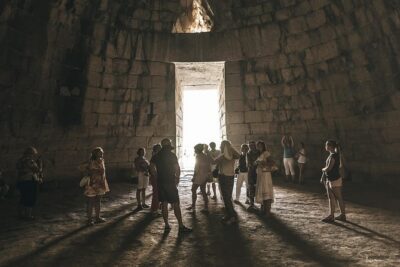 ★ 4.8From Athens: Small-Group Mycenae, Epidaurus & Nafplio TripFrom $342,805 reviews
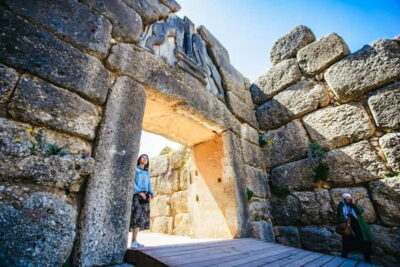 ★ 4.5From Athens: Mycenae, Epidaurus & Nafplio Full-Day TourFrom $332,530 reviews
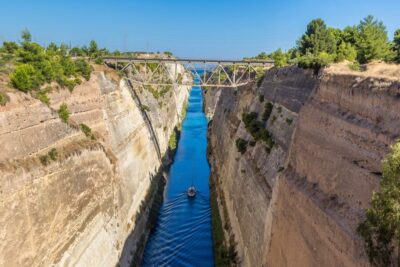 ★ 4.6Mycenae, Epidaurus and Nafplio Tour from AthensFrom $332,201 reviews
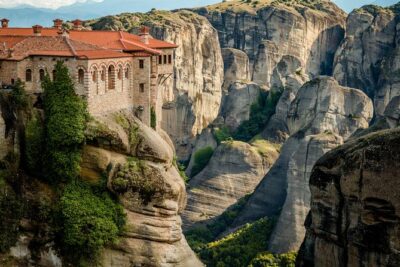 ★ 4.54-Day Classical Greece Tour: Epidaurus, Mycenae, Olympia, Delphi, MeteoraFrom $766732 reviews
 ★ 4.8Ancient Corinth & Nafplio Full Day Trip with Swim531 reviews
 ★ 4.5Mycenae and Nafplion Day Trip from Athens with Official guideFrom $78501 reviews
 ★ 4.2Argolis: Full-Day Tour in Mycenae & NafplioFrom $41350 reviews
 ★ 4.53-Day Classical Greece Tour: Epidaurus, Mycenae, Nafplion, Olympia, DelphiFrom $520342 reviews
Browse the lists this tour appears in