
Reviewed · CLASSICAL GREECE MULTI-DAY TOURS
4-Day Private Tour of Classical Greece from Athens
Greek history hits different on a private drive. This 4-day classical Greece route strings together major sites with smart pacing: you get hotel pickup and drop-off from Athens, then move by private vehicle with onboard Wi‑Fi. It also saves you from the logistics headache of buses and connections, so you spend your energy looking at the ruins instead of planning transport every morning.
What I like most is the time you gain. With pickup and a private car, you’re not wasting half-days getting from one ticket line to another. And the day-by-day focus is strong: Thermopylae to Delphi to Olympia, then on to Nafplio, Epidaurus, Mycenae, and finally Corinth. One thing to think through before booking: the big archaeological-site entry fees are not included, and you’ll also want to plan for meals on top of what you pay for the tour.
In This Review
- Key Things That Make This Tour Worth Your Time
- The Big Picture: How This 4-Day Route Feels in Real Life
- Day 1: Thermopylae’s Battle Story, Delphi’s Oracle, and the Road to Olympia
- Thermopylae: the “Gates of Fire” and the human-scale details
- Drive to Delphi: breakfast first, then the oracle center of the world
- Delphi Archaeological Museum: where the sculpture details get real
- Overnight shift to Olympia
- Day 2: Olympia’s Temples and Zeus, Plus Museums and Nafplio Old Town
- Olympia: where “original Olympics” comes from
- The Temple of Zeus and Heraion: the Doric template
- Olympia Archaeological Museum: Zeus gets its size back
- Filoxenia and the Museum of Archimedes: old ideas, hands-on feel
- Nafplio next: fortress views without losing your evening
- Day 3: Epidaurus for Theatre Acoustics, then Mycenae’s Lions Gate and Golden Finds
- Nafplio to Epidaurus: a theatre that can still surprise you
- Asclepius sanctuary: medicine meets myth
- Drive to Mycenae: where the myths come with walls
- Evening in Ancient Corinth: terrace time with real views
- Day 4: Acrocorinth, Corinth’s Apollo Temple and Agora, plus the Corinth Canal to Athens
- Acrocorinth: the acropolis that dominates the region
- Corinth: Temple of Apollo, Agora, and the story tied to Paul
- Diolkos, Corinth Canal, and finishing by the water
- Price and Logistics: Does It Feel Like Good Value?
- Tips to Make This Trip Feel Effortless (Not Exhausting)
- Should You Book This Private Classical Greece Tour?
- FAQ
- How long is the 4-Day Private Tour of Classical Greece from Athens?
- Does the tour include hotel pickup and drop-off in Athens?
- Is the tour private or shared?
- What language is the tour offered in?
- Are entrance fees included for Delphi, Olympia, Mycenae, Epidaurus, and Ancient Corinth?
- Is accommodation included for the 3 nights?
- Can I cancel for a full refund, and how far in advance?
Key Things That Make This Tour Worth Your Time
- Hotel pickup and drop-off from Athens means fewer transfers and less stress
- Onboard Wi‑Fi, bottled water, and wipes for long-drive comfort
- Thermopylae + modern museum stops for context, not just monuments
- Olympia and its museums with a mix of arenas, temples, and artifacts
- Nafplio’s old-town atmosphere paired with fortress views and simple local food stops
- Acrocorinth and Corinth’s religious layers connect ruins with stories tied to Paul
Olympia to Delphi over several days
- 4-Day Classical Greece Tour: Epidaurus, Mycenae, Olympia, Delphi, Meteora
★ 4.5 · 732 reviews - Delphi, Thermopylae, Corycian Cave 300 Spartans Tour
★ 5.0 · 492 reviews - Athens: Delphi, Corycian Cave, and 300 Battlefield Day Trip
★ 4.8 · 344 reviews - 3-Day Classical Greece Tour: Epidaurus, Mycenae, Nafplion, Olympia, Delphi
★ 4.5 · 342 reviews
The Big Picture: How This 4-Day Route Feels in Real Life
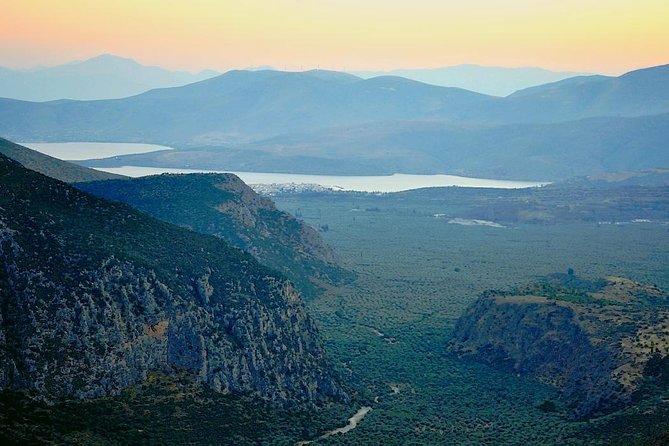
This is the kind of trip that works because it keeps the travel portion efficient. Instead of hopping between departures, you’re on a single schedule driven by one team, moving you from site to site in a comfortable vehicle. Even with full days, the private format helps you keep momentum.
You’re also not just visiting “the highlights.” The route includes major sanctuaries and museums where the details matter. Delphi isn’t only about seeing stones—it’s also about understanding the oracle’s role in Greek life. Olympia isn’t only about the stadium—it’s about the temples, sculpture craft, and artifacts that explain what the Olympics meant.
The trade-off is that it’s not a slow sightseeing stroll. Expect walking at ruins and museums, and some areas have steep footing. If you’re sensitive to stairs, plan for it on fortress viewpoints and acropolis areas.
Day 1: Thermopylae’s Battle Story, Delphi’s Oracle, and the Road to Olympia
Thermopylae: the “Gates of Fire” and the human-scale details
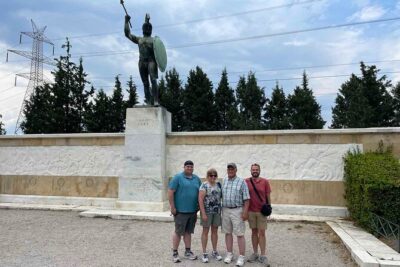
You start with Thermopylae, a name that carries big meaning: the narrow passage where Leonidas of Sparta and Greek allies faced Xerxes’ Persian forces. What makes this stop stronger than a quick photo break is the way the visit is framed.
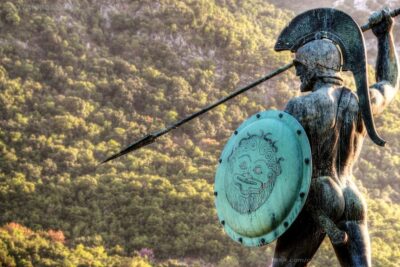
You’ll see the Leonidas monument—erected in 1955 by sculptor Vasos Falireas—with its brass figure of the Spartan king holding spear and shield. Then comes the Thermopylae Museum, designed to explain the 480 BC battle and why it mattered beyond that single fight.
And yes, the hotsprings are part of the story too. The route points you toward the “paradise of healing spas” idea, with hydrotherapy facilities and multiple recognized springs. Even if you don’t turn it into a long soak day, it’s a nice contrast: battlefield memory in the morning, wellness and myth in the same landscape later.
Practical note: if you want to keep energy for Delphi, treat the hot springs as optional downtime, not a full-day reset.
Just your group, at your own pace


Drive to Delphi: breakfast first, then the oracle center of the world
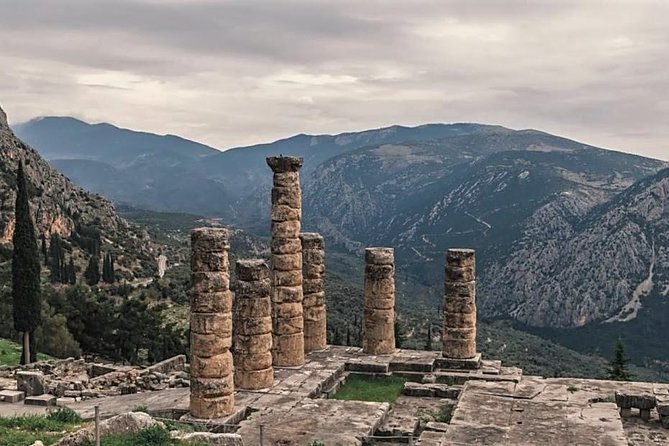
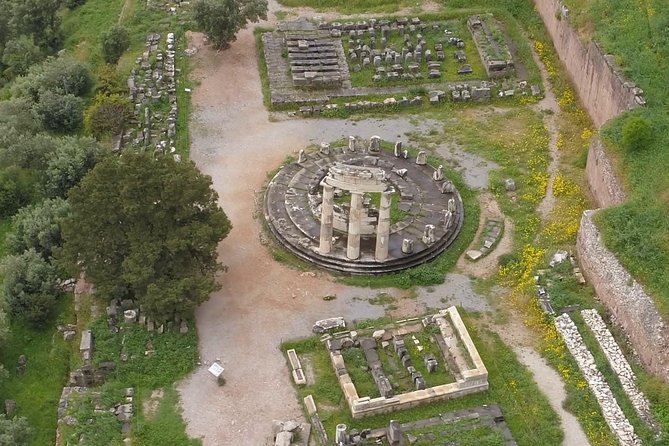
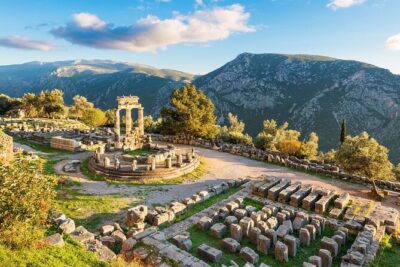
After the Thermopylae segment, you drive to Delphi and check in at your chosen hotel. Delphi works best when you can take your time, because the ruins are layered with purpose. Delphi (formerly Pytho) was home to the sanctuary where the Pythia oracle was consulted across the ancient world.
The highlights you can expect include:
- Temple of Apollo (core of the sanctuary)
- Ancient Theater and the Stadium
- Athenian Treasury, plus other treasuries and sacred structures
- Sanctuary of Athena Pronaia
- The Omphalos, the stone monument tied to the center-of-the-world concept
Delphi Archaeological Museum: where the sculpture details get real
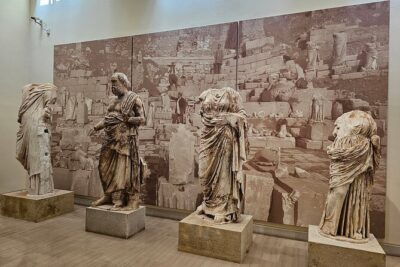
The museum is where Delphi stops feeling like a postcard. You’ll spend time with major carved works and statues, including:
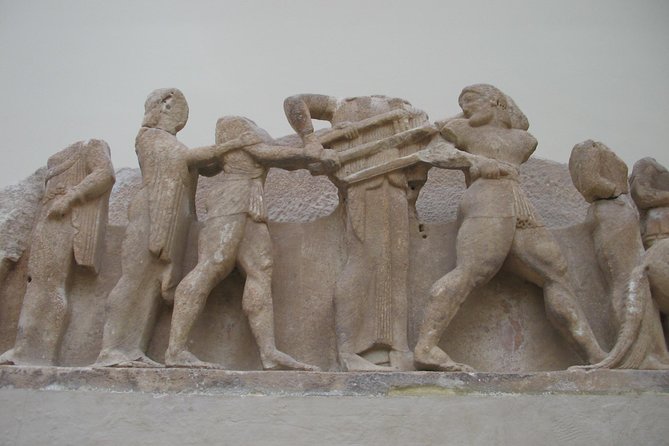
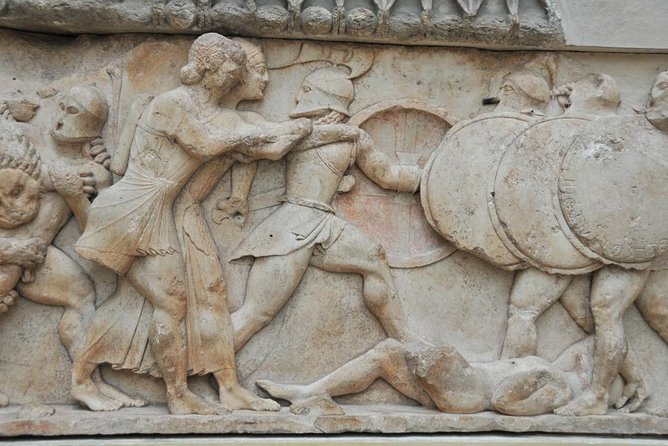
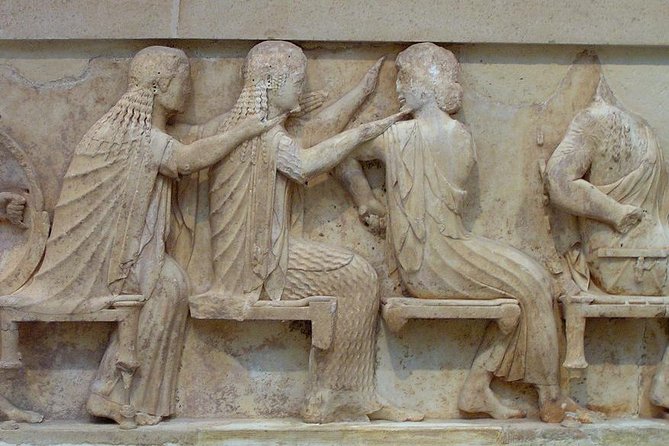
- The Frieze of the Treasury of Sifnias
- The Naxian Sphinx (dated to 560 BC)
- Multiple metopes from the Athenian Treasury, with myth scenes like Theseus and the Minotaur, Heracles stories, and the Nemean lion
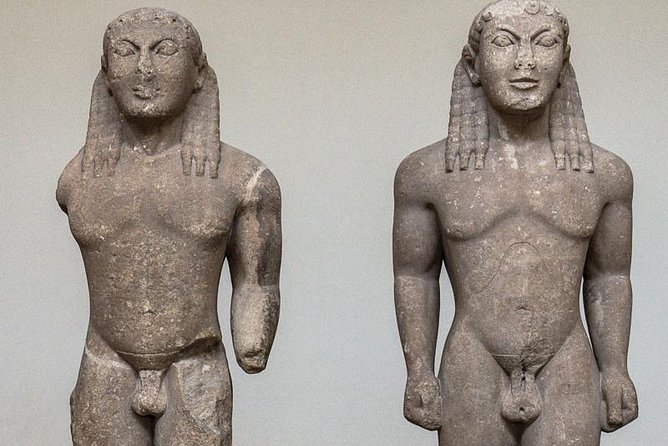
- Kleobis and Biton, early kouros-style statues from the end of the 7th century BC
- The Charioteer
- The Statue of Antinoos, noted as an excellent neoclassical-style revival work from the 2nd century AD
This museum stop is a win because it gives you meaning for what you saw outside. When you understand the myths and craftsmanship, even worn stone feels more alive.
Overnight shift to Olympia
You’ll have time for lunch in Delphi with views over the area. Then it’s on to Olympia, with check-in at your hotel. The day stays full, but it’s well-ordered: battle context, oracle meaning, then the next destination’s legendary sports legacy.
If you want an extra human moment in the middle of ancient monuments, there’s an option for dinner at La Belle Helene, with home-cooked Greek meals and Konstantina. It’s the kind of add-on that turns a “ruins day” into a more complete trip.
Day 2: Olympia’s Temples and Zeus, Plus Museums and Nafplio Old Town
Olympia: where “original Olympics” comes from
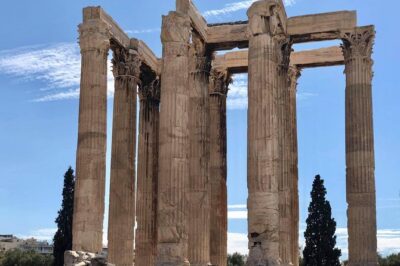
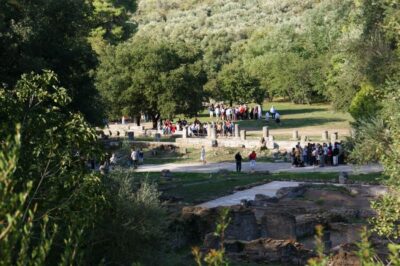
Olympia was the host of the ancient Olympic Games, founded in the 8th century BC. You’ll see training spaces, the stadium setting, and temples dedicated to Hera and Zeus. The power here is the scale and the layout. This wasn’t just a sports event—it was sacred space where athletic competition and religion overlapped.
The Temple of Zeus and Heraion: the Doric template
At Olympia’s archaeological area, you’ll focus on:
- Temple of Zeus: a Doric temple from the second quarter of the 5th century BC
- Temple of Hera (Heraion): built around 590 BCE
- The Philippeion: a circular building dedicated to Zeus by Philip II after victory at Chaironeia, completed by Alexander the Great
Then there’s the athletic side in plain physical terms:
- Hippodrome and stadium space for chariot and horse races
- The Palaestra used for practice and combat training
- The Workshop of Pheidias, tied to the sculptor who crafted the huge chryselephantine Zeus
That workshop stop matters because it shifts you from “look at ruins” to “picture the people who made them.”
Olympia Archaeological Museum: Zeus gets its size back
The Archaeological Museum of Olympia is a major part of the day. One standout is the Statue of Zeus, described as about 13 meters tall, created in ivory and gold. Even if you’ve seen photos before, the museum format helps you understand scale and artistry.
Filoxenia and the Museum of Archimedes: old ideas, hands-on feel
You’ll also visit Filoxenia (Museum of the History of the Olympic Games in Antiquity) and a museum of Archimedes. The idea here is great: Olympia isn’t only athletics and temples; it’s also education, science, and inventions. The Archimedes museum includes replicas of inventions and interactive elements, so it’s a break from only looking and reading.
Nafplio next: fortress views without losing your evening
After Olympia, you head to Nafplio and check in. Nafplio is one of those towns that makes a classical itinerary feel human again: waterfront air, cobblestone streets, and fortress drama.
Expect time around:
- Palamidi Castle (with the famous 999 steps if you choose the climb)
- Freedom Square, with an obelisk tied to the French contribution in the independence struggle
- Bourtzi, a Venetian fortress in the harbor
There are also historic layers in smaller spots:
- Constitution Square and the first Greek parliament reference
- Church areas like Anastasios of Nafplia (dome and wall paintings)
- St. Spyridon and the assassination of Ioannis Kapodistrias in 1831
And yes, simple stops are built in. You might find yourself going for gelato at Antica Gelateria di Roma and sweet loukoumades at Pergamonto. Those breaks sound minor, but they stop the day from becoming one long monument sprint.
Day 3: Epidaurus for Theatre Acoustics, then Mycenae’s Lions Gate and Golden Finds
Nafplio to Epidaurus: a theatre that can still surprise you
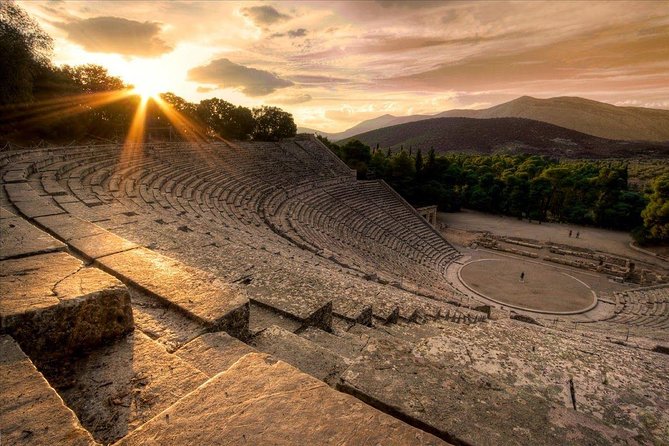
On Day 3, you leave Nafplio and head to Epidaurus, one of the most popular archaeological sites in Greece. The amphitheatre is known for classic construction and astonishing acoustics. The route even frames the magic trick idea: sound carries in a way that still feels unreal when you’re in the seats.
You’ll also spend time at the Epidaurus Archaeological Museum, where you can see reconstructions and column inscriptions. That museum angle matters because it helps you connect the amphitheatre to the larger setting.
Asclepius sanctuary: medicine meets myth
Epidaurus isn’t only about performance. The Asclepius sanctuary is tied to ancient medicine and healing as a kind of retreat. When you’re tired from earlier sites, this part often feels restorative because it’s calmer—more “ritual space” and less “monument rush.”
Drive to Mycenae: where the myths come with walls
Next is Mycenae, tied to Homeric stories and a late Bronze Age powerhouse. You’ll see the Lions Gate, framed by massive stonework from the 13th century BC. Nearby are the grave circles A and B, plus the Cyclopean Walls built with huge limestone boulders.
Then you move into palace and tomb highlights:
- The Royal Palace areas, including the throne-related rooms, grand staircase, and official spaces
- The Treasury of Atreus, a beehive tomb around 1250 BC
- The Tomb of Clytemnestra, another tholos tomb dated around 1250 BC
- The Mycenaenean Archaeological Museum, where you can view gold burial goods, masks, jewelry, weapons, frescoes, and worship objects
The Mycenae museum is the moment where “gold” stops being a general word and starts becoming evidence of power, trade, and ritual.
Evening in Ancient Corinth: terrace time with real views
After Mycenae, you drive to Ancient Corinth and check in. The plan includes late lunch / early dinner at an authentic Greek taverna with a terrace overlooking the Temple of Apollo area.
This is a good place to reset mentally. After the palace-and-tomb heaviness, you get food and a view that connects ruins to daily life.
Day 4: Acrocorinth, Corinth’s Apollo Temple and Agora, plus the Corinth Canal to Athens
Acrocorinth: the acropolis that dominates the region
Day 4 starts with Akrokorinthos (Acrocorinth), the acropolis that sits on a monolithic rock above ancient Corinth. This is the stop that often feels most dramatic on foot because you’re literally walking in the shadow of the fortress.
You’ll notice:
- Three circuit walls reinforced by towers
- A Peirene Spring inside the walls (connected to Asopus and Sisyphus)
- Traces of the Temple of Aphrodite
- A Frankish Tower, plus preserved remains such as churches, mosques, houses, fountains, and cisterns
- Strong views over the Corinthian gulf and the southwest Peloponnese coast
The drawback? It’s a fortress. If you’re not into steep climbs, give yourself a slower pace and take breaks. The reward is the feeling that you understand why this place mattered strategically.
Corinth: Temple of Apollo, Agora, and the story tied to Paul
Then you return to Corinth proper and visit key sights:
- Hadgimoustafa spring, built in the Ottoman period
- Ancient Corinth Archaeological Museum
- Temple of Apollo, with monolithic columns and a date around 560 BCE
- The Agora, including a long marketplace area and the Bema podium where Apostle Paul addressed Corinthians in 52 AD
- Roman buildings and the theatre / Odeon / Asklepieion area
- The Lechaion road, leading toward the port at Lechaion
A standout religious stop is St. Paul’s church, with a mosaic mural depicting Saul’s vision as he traveled to Damascus to persecute Christians.
Even if religion isn’t your main focus, this part connects archaeology to the living thread of stories people kept telling long after the ancient cities changed.
Diolkos, Corinth Canal, and finishing by the water
The itinerary then connects ancient engineering to modern engineering:
- Ancient Diolkos: an ancient passageway from the time of Periander’s era
- Isthmus Canal: a major 19th-century engineering project that affected Mediterranean trade
- Kechries Port, tracing the footsteps of St Paul
- Lunch by the Saronic sea at the Baths of Helen of Troy
Finally, you return to Athens, with drop-off at your hotel or accommodation.
Price and Logistics: Does It Feel Like Good Value?
At $1,529.22 per person for a private, multi-day route, value comes down to what’s included versus what you’ll pay separately.
Here’s what you do get in the tour price:
- Fully private multi-day format
- Professional drivers with in-depth knowledge of Greek history
- Hotel/port pick-up and drop-off
- Private luxury vehicle with Wi‑Fi
- Bottled water, refreshing wipes, and handmade Greek biscuits
Where you should expect extra spending:
- Entrance fees for major sites like Delphi, Olympia, Mycenae, Epidaurus, and Ancient Corinth (listed as €135 per person)
- Accommodation (the plan notes 3 nights accommodation not included, with an option to request hotel reservation)
- Food and drinks
- A licensed tour guide to go into sites and museums is additional on request
So, is it worth it? If you want classical Greece with minimal friction—no arranging trains, no chasing buses, no juggling timing across multiple ticket offices—private transport is usually the make-or-break factor. The route is also packed with major museums, not just open-air monuments, which adds value because tickets and time have real purpose here.
If you’re traveling as a group of two to four who want comfort and a steady rhythm, the per-person cost tends to feel more reasonable than you’d expect for the amount of ground covered.
Tips to Make This Trip Feel Effortless (Not Exhausting)
- Plan your shoe choice like you’re going to wear them a lot. Fortress and acropolis areas can be uneven.
- Consider splitting your day mentally into two halves: sacred context in the morning (Thermopylae/Delphi/Olympia), then museum-heavy learning blocks later.
- If you climb Palamidi or Acrocorinth, treat it as part of the day, not a quick detour. Go slower than you think you need.
- Use the onboard Wi‑Fi and wipes. Long drives feel shorter when you can take small breaks.
- For meals, don’t assume every stop includes a full sit-down lunch. The plan references lunch and dinner options at points, but food and drinks aren’t included in the tour price.
Should You Book This Private Classical Greece Tour?
Book it if you want your classical Greece days to feel organized and human: one car, one pace, hotel pickup, and history explanations that connect monuments to stories. I especially like this format for first-timers, because the itinerary includes museum time where the myths and artifacts actually click.
Think twice if you want a fully included package where everything is paid upfront. The tour price covers transport and the main guiding experience, but you still need to budget for site entrance fees, meals, and three nights of accommodation unless you request the hotel reservation option.
If you’re the type who loves ruins but also wants meaning—battle context, oracle culture, the Olympics’ sacred role, and Corinth’s links to Paul—this tour is a strong match.
FAQ
How long is the 4-Day Private Tour of Classical Greece from Athens?
It’s listed as 4 days (approx.).
Does the tour include hotel pickup and drop-off in Athens?
Yes. Your driver/guide will pick you up and return you to your hotel in Athens, meeting you at the lobby (and coordinating with Airbnbs at the building entrance).
Is the tour private or shared?
It’s a private tour/activity. Only your group participates.
What language is the tour offered in?
The tour is offered in English.
Are entrance fees included for Delphi, Olympia, Mycenae, Epidaurus, and Ancient Corinth?
No. Entrance fees are not included and are listed as €135.00 per person for those sites.
Is accommodation included for the 3 nights?
No. 3 nights accommodation is not included, but there’s an option for hotel reservation upon request.
Can I cancel for a full refund, and how far in advance?
You can cancel up to 6 days in advance for a full refund.
More Tour Reviews in Athens
- Athens: Acropolis & up to 5 Archaeological Sites Combo Pass★ 4.2 · 13,904 reviews
- Athens: Acropolis, Parthenon & Acropolis Museum Guided Tour★ 4.8 · 9,316 reviews
- The Acropolis, Parthenon & Acropolis Museum Guided Tour★ 4.7 · 8,493 reviews
- Athens: Cape Sounion & Poseidon Temple Sunset Half-Day Trip★ 4.8 · 8,241 reviews
- Acropolis: Premium Acropolis and Parthenon Guided Tour★ 4.8 · 5,208 reviews
- Athens: Mythology of Delphi, Museum and Arachova Guided Tour★ 4.7 · 5,102 reviews
Just Your Group: More Private Days
- Best of Athens Half Day Private Tour★ 5.0 · 3,714 reviews
- Athens Full Day Private Tour★ 5.0 · 2,903 reviews
- Athens Greece Full Day private tour★ 5.0 · 785 reviews
- 4 Hours – Athens & Acropolis Highlights Private Tour★ 5.0 · 681 reviews
- Athens Full Day Private Tour★ 5.0 · 667 reviews
- Enjoy Cape Sounio Private Majestic Sunset With Seaside Dinner★ 5.0 · 613 reviews
Classical Greece, Coast to Coast
- 4-Day Classical Greece Tour: Epidaurus, Mycenae, Olympia, Delphi, Meteora★ 4.5 · 732 reviews
- Delphi, Thermopylae, Corycian Cave 300 Spartans Tour★ 5.0 · 492 reviews
- Athens: Delphi, Corycian Cave, and 300 Battlefield Day Trip★ 4.8 · 344 reviews
- 3-Day Classical Greece Tour: Epidaurus, Mycenae, Nafplion, Olympia, Delphi★ 4.5 · 342 reviews
- Delphi & Thermopylae Full Day Private Tour from Athens★ 5.0 · 259 reviews
- Thermopylae, Meteora and Delphi Private Full Day Tour★ 5.0 · 216 reviews
Fresh Off the Boat: New Athens Reviews



Classical Greece Multi-Day Tours, compared.
 ★ 4.54-Day Classical Greece Tour: Epidaurus, Mycenae, Olympia, Delphi, MeteoraFrom $766732 reviews
 ★ 5.0Delphi, Thermopylae, Corycian Cave 300 Spartans TourFrom $169492 reviews
 ★ 4.8Delphi, Corycian Cave, and 300 Battlefield Day TripFrom $170344 reviews
 ★ 4.53-Day Classical Greece Tour: Epidaurus, Mycenae, Nafplion, Olympia, DelphiFrom $520342 reviews
 ★ 5.0Delphi & Thermopylae Full Day Private Tour from AthensFrom $338259 reviews
 ★ 5.0Thermopylae, Meteora and Delphi Private Full Day TourFrom $287216 reviews
 ★ 4.84-Day Tour of Mycenae, Epidaurus, Olympia, Delphi & MeteoraFrom $747168 reviews
 ★ 5.0Thermopylae and Delphi Private Full-Day Tour from AthensFrom $270114 reviews
Browse the lists this tour appears in