
Reviewed · ATHENS SIGHTSEEING TOURS
8 Days Peloponnese: Sightseeing, Historical & Tasting Private Tour from Athens
Your camera will work overtime here. This 8-day Peloponnese tour is built around Greek history you can see and photography-friendly stops, including sunrise and sunset timing, plus time for local tastings. The one real thing to plan for is money for site admissions—they’re not included, and they add up fast per stop.
I like the way the driving and explaining work together: pickup in Athens (or Piraeus), air-conditioned transport, and an English-speaking driver with serious photography instincts. With Nikolaos guiding the experience, you’re not just getting dates—you’re getting ways to see architecture, terrain, and people as part of the story.
And yes, the route is a lot of ground—days start early and you’ll walk at monasteries, castles, museums, beaches, and caves. If you love variety and can handle a packed itinerary, this trip fits. If you want a slow, sit-all-day vacation, you’ll probably feel rushed.
In This Review
- Key highlights you’ll feel on the road
- Why this Peloponnese route feels different than the usual highlights
- Price and what you’re really paying for (and why it can still be a deal)
- Day 1: Corinth Canal, Diakopto, and Kalavryta’s monastery cliff-habitats
- Day 2: The Cave of the Lakes and the Olympic valley from Bronze Age to museum
- Day 3: Pylos/Mycenaean ruins, Voidokilia’s omega-shaped beach, and Navarino’s dramatic past
- Day 4: Methoni Castle early, Kardamili for the coastal view, and Diros caves into Areopoli
- Day 5: Gerolimenas and Vathia’s perichora, then Cape Tainaron’s mythology
- Day 6: Monemvasia’s Rock fortress, Sparta’s museums, and the wonder of Mystras ruins
- Day 7: Arcadia port life, Palamidi’s Venetian power, and romantic Nafplio
- Day 8: Nauplion’s Venetian museum, Akronafplia walls, Nemea’s Zeus sanctuary, and Loutraki springs
- Who should book this Peloponnese tour (and who should skip it)
- Should you book it?
- FAQ
- Where do they pick you up for this tour?
- Is accommodation included?
- Are archaeological site and museum fees included?
- Do I need an archaeologist guide for the sites?
- What time does the tour start?
- If I cancel, do I get a refund?
Key highlights you’ll feel on the road
- Photo timing built in: sunrise and sunset sessions, plus scenic stops planned for your camera
- A driver who thinks visually: Nikolaos works as a photographer/portrait painter and brings that eye to the tour
- Monasteries and fortresses you can picture: Mega Spileo, Agia Lavra, Methoni Castle, Monemvasia, Palamidi, and more
- Ancient Greece plus real places: Olympia, Nemea, Mycenaean Pylos, and then coastal towns and villages
- Greek food and wine are part of the point: tastings are explicitly included in the tour concept
- You still get context without an archaeologist license: the driver explains, but some site walking may require a hired archaeologist guide
The big Athens hits in one go
- Athens: City Sightseeing Hop-On Hop-Off Bus Tour
★ 4.3 · 4,520 reviews - Best of Athens Half Day Private Tour
★ 5.0 · 3,714 reviews - Athens & Acropolis Highlights: Greek Mythology Small-Group Tour
★ 5.0 · 2,370 reviews - Athens: Acropolis and Mythology Highlights Small Group Tour
★ 4.8 · 2,275 reviews
Why this Peloponnese route feels different than the usual highlights
Most Peloponnese tours hit the big names. This one is also about how those places look at different hours. The plan openly anticipates sunrise and sunset photography, which matters because many of the best views—coasts, castle walls, mountain monasteries—are mood-dependent. You’ll be in the right spots at the right times rather than sprinting between photos.
The second big strength is your driver’s visual approach. Nikolaos is described as a professional artist who worked as a photographer and portrait painter for websites and newspapers. That background shows up in how the tour frames architecture, landscapes/views, and the human details around each stop.
And the third strength is that it’s not “only ancient.” You go from Bronze Age sites to Byzantine ruins, Frankish/Venetian fortifications, Ottoman-era history, and modern Greece—so the region feels like a continuous timeline rather than isolated museums.
Price and what you’re really paying for (and why it can still be a deal)
The price is $2,659.81 per person, and it’s not cheap. The value comes from the structure: you get pickup and drop-off in Athens (or Piraeus), private transportation with fuels, tolls, and parking covered, plus an air-conditioned vehicle throughout. You’re also not sharing the van with the general public—this is set up as a private activity for your group.
Where cost can creep up is admissions. Archaeological sites and museums have separate fees, and the schedule is date-dependent:
- 1 Nov to 31 Mar: 10€ per person per site
- 1 Apr to 30 Oct: 20€ per person per site
Also, the tour mentions a train Rack railway ticket option/cost of 10€ per person, and some cave and castle admissions can vary by season. So if you’re budgeting, treat admission fees as a major line item, not a minor add-on.
Accommodation is another big variable. The tour can arrange hotels, but it’s listed as an additional cost:
- from 100€ per double room
- or 130€ per double room on weekend/holidays
- with a discount if you book more than two rooms
The driver’s room is complimentary if you’re using the arranged plan.
If your group is flexible on timing and you’re happy to pay for convenience (private transport + a photography-focused guide), the price can feel justified. If you want to control every cost tightly, you’ll need to watch admissions and add your own hotel strategy.
Day 1: Corinth Canal, Diakopto, and Kalavryta’s monastery cliff-habitats
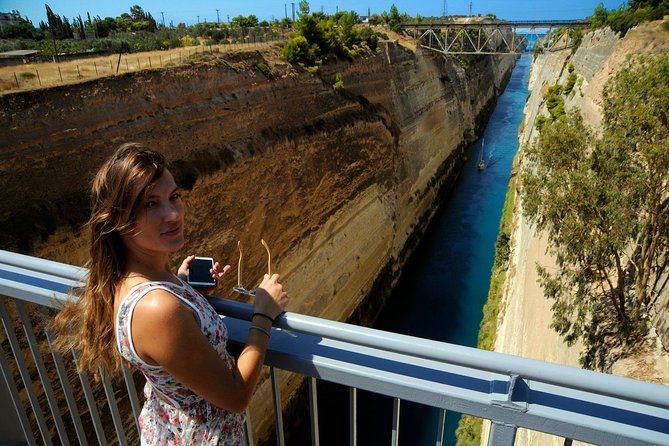
You start with engineering before you start with legend. The Corinth Canal is one of those places that instantly gives scale—man-made, joining the Aegean and Ionian seas, and cutting through the Peloponnese like a shortcut for shipping. The tour includes a photo stop at the pedestrian bridge at about 80 meters high, plus the chance to walk across.
After that, you shift toward a more human pace in Diakopto, a Gulf of Corinth town near the mouth of the Vouraikos Gorge. It’s a good reset stop: not every day needs to be a major archaeological landmark.
Then come the monastery moments, and these are special because they’re not museum-flat. Mega Spileo Monastery is described as sitting in a cave within a sheer cliff. That setting changes the way you experience the monastery—your photos and your walking route feel more like you’re entering a cliff-world than touring a building. The tradition ties it to antiquity (Pausanias is mentioned), and also to early Christian hermits, so it carries layered meaning even before you read a single caption.
Later, Agia Lavra Monastery adds the Greece-of-independence connection. It sits at altitude 961 meters, built in the 10th century, and it’s been burned and rebuilt multiple times through history. The stop is explicitly linked to the Greek War of Independence: on 21 March 1821, the flag of the revolt was raised here by bishop Germanos III of Old Patras. That’s the kind of detail that turns a monastery visit into a story you can hold.
You finish with Kalavryta overnight, setting you up for mountain scenery the next morning. Expect cold-morning air potential and a heavier walking day mix than an easy beach holiday.
Just your group, at your own pace


Day 2: The Cave of the Lakes and the Olympic valley from Bronze Age to museum
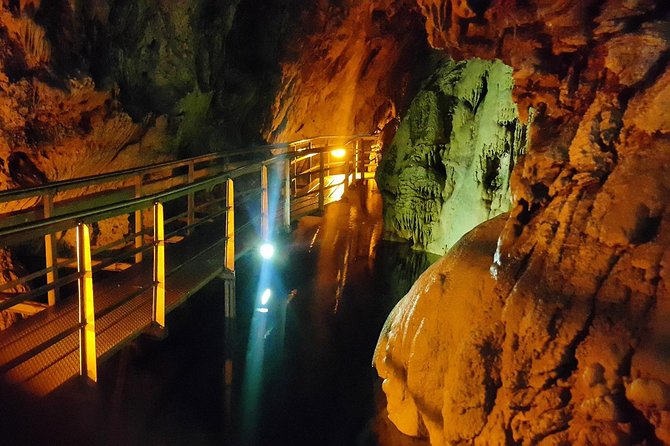
Day 2 starts underground. The Kastria Cave of the Lakes is an old subterranean river with three levels. The big seasonal twist: in winter it can transform into a flowing river with waterfalls after snowmelt, while in summer it dries up and leaves behind 13 lakes. That means your experience depends on when you go, even if the location is the same.
The tour gives you a fixed visiting window and notes the standard ticket range, which helps you plan your time there. It’s also the kind of stop where comfortable shoes matter because you’ll be moving around in a cave environment.
From the caves, you drive through Aroania (Chelmos) area and up into the mountain region feel. The tour notes Aroania/Chelmos as the third highest mountain in the Peloponnese, with rare plants and animals and a nearby ski center. Even if you’re not skiing, it’s a scenic “engine of the day” that changes the visual palette away from coast and into mountain air.
You also stop for Lampeia, a mountain village tied to river mythology via Pausanias, and then for Dasos tis Folois (Foloi oak forest), a Natura 2000 protected area tied to the centaur Pholus myth and Hercules. These stops aren’t just filler—they add ecological and myth context, so Olympia doesn’t feel like it arrived out of nowhere.
Then you land in the main event: Olympia. The archaeological site covers ruins from the Bronze Age through Byzantine eras and includes the ancient stadium. The setting is described as a serene valley—so you’re not just standing in dust; you’re walking in a landscape frame that ancient people likely understood as sacred.
The Museum of the Olympic Games is also part of the plan and is marked as included. It’s a great pairing because Olympia the site gives you the “where,” while the museum helps with the “when and why.” The tour’s description includes the chronology of the first Olympiad at 776 BC, plus the first recorded winner Koroibos.
Overnight is in Olympia, with hotel options arranged if you want the tour team to handle it.
Day 3: Pylos/Mycenaean ruins, Voidokilia’s omega-shaped beach, and Navarino’s dramatic past
This day is the coast-and-classics combo. You start with the Palace of Nestor, a Mycenaean center described in Homer’s epics as Nestor’s sandy Pylos kingdom. What I like about this stop (and why it works in a driving tour) is that it’s one of the best-preserved Mycenaean palaces, with walls and layout clues you can still read on foot.
Then you shift to beaches with real geography. Voidokilia Beach is described as omega-shaped (Ω) with sand dunes and Gialova Lagoon on the landward side—an important bird habitat. It’s also noted as a protected area with the “Place of Particular Natural Beauty” label. If you care about photography, this beach has that “clean shape” advantage: you can frame dunes and water against each other without a messy background.
Above the beach are additional layers: Nestor’s Cave, ruins of a 13th-century Frankish castle (Old Navarino/Palaiokastro), and the tomb of Nestor’s son Thrasymedes. Even if you’re not hiking to everything, the stop gives you a meaningful reason to look around rather than treat it as just a swim break.
Next is Divari Beach / Gialova. Here the tour leans into bird habitat importance, noting 258 species, with 79 listed in the Red Book, and positions the area as the southernmost habitat of national importance in the Balkans. That’s a lot of conservation weight for what looks like a simple water-and-shore stop.
Midway through the day you’ll have time for photography and lunch in front of the water. Then you get the historical jolt: Ormos Navarinou, where the Battle of Navarino was fought in 1827 during the Greek War of Independence. The tour includes details about the allied fleets (Britain, France, Russia) defeating Ottoman and Egyptian forces, and it calls it the last major naval battle fought entirely with sailing ships.
You finish at the New Castle of Pylos, also called Niokastron, built by the Turks in 1573, taken by Venetians in 1686, back to Turkish domination in 1715, then used by Ibrahim Pasha from 1816 until liberation by the French general Maison in 1828. In World War II, it’s noted as Italian and then German headquarters. It’s a lot of power history on one hill.
Overnight is in Methoni, with sunset explicitly encouraged for photography.
Day 4: Methoni Castle early, Kardamili for the coastal view, and Diros caves into Areopoli
Start strong: Methoni Castle early in the day. The tour describes it as one of the most important and beautiful castles in Greece, built by Venetians after 1209 at a strategic sea-penetrating rock. The fortress is separated from land by an artificial moat, so you get a clear “fortress mindset” even in ruins.
The next stop is Kalamata, which adds a break from fortress life. The tour connects Kalamata’s history to Homer, mentioning the ancient city Firai/Pharai and the idea that earlier periods believed the area was covered by sea—later archaeology at Akovitika is referenced as evidence otherwise.
Then comes Kardamili in the Mani region. This is a pure scenery and village feel stop: cypress, olive groves, and the dramatic coastline that people often talk about when they say the Mani feels different from the rest of Greece. You get time there for a relaxed look and a harbor/bay perspective.
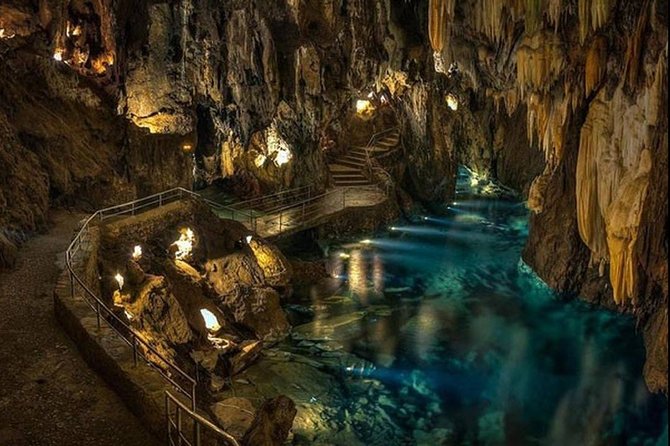
After that, you move underground to the Caves of Diros—specifically Alepotripa and Vlichada. The tour notes human habitation from Paleolithic times, ending after an earthquake in 4 B.C.E. Boat trips are on an underground lake, with illuminated caverns and stalactites and stalagmites. It’s also clear that you’ll need to negotiate steps to reach the cave entrance, so plan footwear and energy for this one.
Finally, you reach Areopoli, a well-preserved Mani town with stone paths and traditional tower houses. The tour highlights defensive architecture and notes the town’s role as capital of Inner Mani (Mesa Mani). A focused detail here is the statue in Platia Athanaton Square of Petrompeis Mavromichalis from the Mavromichali family.
You end the day in the Mani area with overnight time.
Day 5: Gerolimenas and Vathia’s perichora, then Cape Tainaron’s mythology
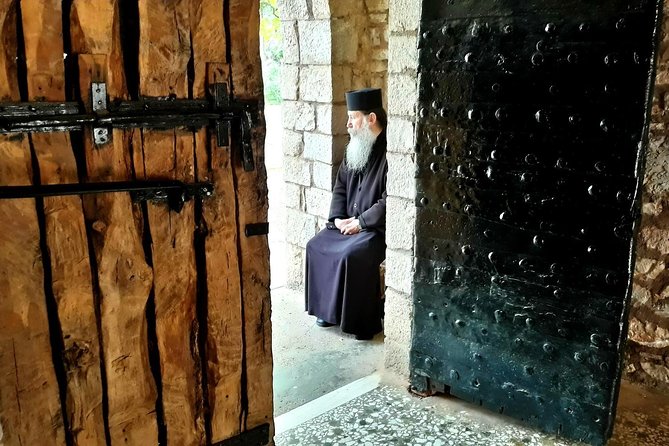
This is a day for slow looking. Gerolimenas is a small coastal village at the southern edge of Mani, historically tied to boat access until the 1970s and once used as a major fishing center with shipyard and fish market infrastructure. Today it’s tourism-led, which makes it easier to pause without feeling like you’re in a forgotten place.
Then you go to Vathia, famous for its tower houses built on hills and for the abandoned clusters around it called perichora (environs). The tour specifically frames this as a photography opportunity, and you’re guided through the area—so you’re not just walking alone through ruins.
From there, you drive to Cape Tainaron (Cape Matapan area), the southernmost point of mainland Greece and also noted as the second southernmost point in mainland Europe. This stop is heavy on legend: there’s a cave connected to stories of Hades, and Spartans built temples there. The tour also points to remnants of a temple dedicated to Poseidon and mentions that under Byzantine rule, it was converted into a Christian church where rites are still conducted.
The day ends at Porto Kagio Beach. The tour notes the ancient port of Psamathous mentioned by Pausanias, and it ties later names to Venetian and French references (Porto Quaglio and Port des Cailles). It also describes Ottoman castle protection and a back-and-forth with Venetian control. It’s the kind of place where you can connect past navigation to modern coastline fast.
Day 6: Monemvasia’s Rock fortress, Sparta’s museums, and the wonder of Mystras ruins
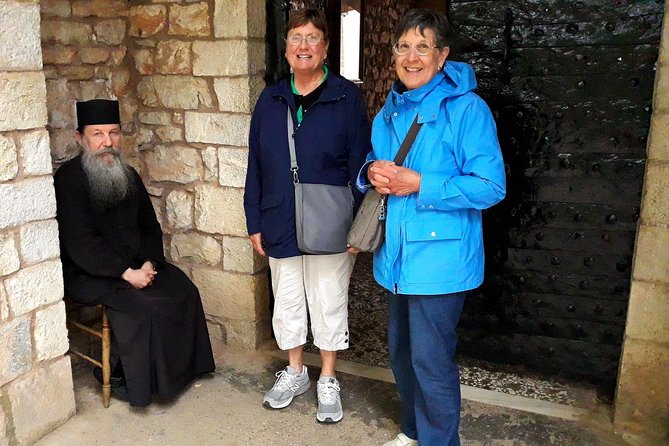
Monemvasia is built for photos. The town sits on a small island connected to the mainland by a causeway about 200 meters long. Above, you find a large plateau with a medieval fortress, and the town walls plus Byzantine churches are still there.
Even the name is part of the story: the tour says Monemvasia comes from Greek words meaning single entrance, and it notes the Italian form Malvasia led to the name Malmsey wine. That’s the kind of detail that makes a fortress stop feel like it affects more than just walls—it affected trade, culture, and branding long after armies moved on.
Then you head to Sparta’s museum side. The Archaeological Museum of Sparta is described as the oldest provincial archaeological museum in Greece, housed in a neoclassical building from the mid-1870s. It has an entrance fee listed in the tour data.
After that, you visit the Acropolis and Ancient Theater. The tour frames Sparta’s reputation through its Archaic/Classical era city-state role, focusing on Spartan hoplites and key battles like Thermopylae and Plataea, plus the rivalry with Athens and Corinth that fed conflicts including the Peloponnesian Wars.
Next is Mystras. The tour calls it the “wonder of the Morea” and describes it as a city built around a fortress created in 1249 by William of Villehardouin. You’ll hear about Byzantine reconquest, later Ottoman and Venetian occupation, and abandonment in 1832, leaving the medieval ruins in a dramatic setting.
To round the day out, there’s a Museum of the Olive and Greek Olive Oil. It’s focused on how olive culture shaped the Mediterranean identity, from prehistoric times through early 20th century, covering economy, nutrition, uses, religious worship, art, and technology. In a trip full of stones and mortar, it’s a nice shift to something that shaped daily life.
Overnight is in Sparta, so you can rest before the coastal and capital-fortress vibe of the next days.
Day 7: Arcadia port life, Palamidi’s Venetian power, and romantic Nafplio
Day 7 starts with mountains and air at Agios Petros, a traditional village on Mount Parnonas slopes at about 950 meters. It’s described as a place for peace and fresh air, with food in taverns and hotels/hostels available. If you’re carrying camera gear and tired legs, this is a useful day to mix breathing space with city stops.
Then you go to Paralio Astros in Arcadia. The tour notes it resembles an island with its amphitheatrical coastal setting and tile-roofed houses. It also ties the port to the 2nd National Assembly in April 1823, which is a concrete modern history thread inside the rural scene.
On the same day, you visit Palamidi Castle. The tour emphasizes Venetian fortification architecture and lists a specific construction window: 1711 to 1714, with Venetian superintendent Agostino Sagredo credited, and engineers Giaxich and Lasalle. Even if you don’t count ramparts like an engineer, the idea here is that this was fast, intentional defensive design.
Then the tour finishes the day in Nafplio, one of the region’s most romantic towns. The tour highlights Nafplio as the first capital of the newly born Greek state from 1827 to 1834, and it gives the mythology behind its founding. You’ll also get the layered conquest history—Frankish, Venetian, Turkish marks—so you can feel why the town has so many architectural accents.
Day 8: Nauplion’s Venetian museum, Akronafplia walls, Nemea’s Zeus sanctuary, and Loutraki springs
You start in Nafplion again with the Archaeological Museum of Nauplion. The description notes it’s inside a strict-symmetry Venetian building from 1713, created as a navy depository, with a marble Latin inscription mentioned. It’s also described as one of the best preserved Venetian structures in Greece.
Then you climb into Akronafplia Fortress, Nafplio’s oldest castle. The tour says parts go back to the Bronze Age, with later expansion by Romans, Franks, Venetians, and Turks. A practical tip built into the description: explore on foot and walk off the road through the castle to see the old walls more clearly.
After Nafplio, you shift to Ancient Nemea and the Sanctuary of Zeus. The tour notes the Panhellenic Nemean Games and a timeline that includes major sanctuary building phases in the 6th century BC onward, with temples, treasuries, baths, stadium, and the Heraion. The site is built for people who like tracing how ritual spaces evolved.
Then you get wine—properly. The Cooperative Winery of Nemea is described as focusing on the native red grape Agiorgitiko. It includes a specific origin timeline: founded in 1937, first experimental bottling of Agiorgitiko in 1959, and by now it has more than 500 members and potential to vinificate up to 7,000 tons. If you’re expecting tastings, this is the place the tour’s “wine + culture” idea connects to real production.
Right after, you visit the Monastery of the Dormition Rock Nemea, described as a monastery-fort with panoramic views over the valley and vine yards. It’s noted as renovated, and the view is framed as seasonal.
Finally, you end at Loutraki, a seaside resort known for thermal springs and therapeutic spas. The tour says the springs were famous since antiquity (called Thermai), tied to Thermia Artemis, and notes the town’s later popularity, plus the first casino in Greece in 1928 and a major casino reopening in 1995. It’s a good “wind down” stop: you go from ruins and temples to a relaxing seaside atmosphere.
Who should book this Peloponnese tour (and who should skip it)
This is ideal for you if you:
- love photos with a reason (sunrise/sunset timing is part of the plan)
- want history that spans from Mycenaean to Byzantine to Venetian/Ottoman eras
- like having your driver explain context while you move between sites
- enjoy the idea of combining castles/monasteries with beaches and villages
It may not fit you if:
- you want a slow trip with long free afternoons every day
- you struggle with stairs and uneven surfaces (caves and fortress areas are part of the route)
- you expect a licensed archaeological guide walking inside every site
Should you book it?
I think this tour is a strong choice if you’re the type who takes photos and wants meaning behind them. The value isn’t just in the number of stops—it’s in the pacing: monasteries, fortresses, and sanctuaries are paired with scenery and shooting times, and the driver’s art/photography background helps you see the details instead of just ticking boxes.
Book it if your budget can handle admissions per site and any hotel add-ons you choose. Don’t book it if you want one or two big days and a lot of downtime—this route is active, and the driving plus walking adds up.
FAQ
Where do they pick you up for this tour?
Pickup is offered from your hotel or apartment in Athens or Piraeus, and you can request another location.
Is accommodation included?
Accommodation for you is not included. The tour can arrange hotels with breakfast for an extra cost (with options listed for double rooms), and the driver’s room is complimentary.
Are archaeological site and museum fees included?
No. Archaeological sites and museums have separate fees (10€ per person per site from 1 Nov–31 Mar, and 20€ per person per site from 1 Apr–30 Oct).
Do I need an archaeologist guide for the sites?
Your driver is not a licensed archaeological guide for walking tours inside archaeological sites or museums. If you need an archaeologist guide, you have to hire one additionally.
What time does the tour start?
The tour start time is 8:00 am.
If I cancel, do I get a refund?
No. The experience is non-refundable and cannot be changed for any reason.
More Tour Reviews in Athens
- Athens: Acropolis & up to 5 Archaeological Sites Combo Pass★ 4.2 · 13,904 reviews
- Athens: Acropolis, Parthenon & Acropolis Museum Guided Tour★ 4.8 · 9,316 reviews
- The Acropolis, Parthenon & Acropolis Museum Guided Tour★ 4.7 · 8,493 reviews
- Athens: Cape Sounion & Poseidon Temple Sunset Half-Day Trip★ 4.8 · 8,241 reviews
- Acropolis: Premium Acropolis and Parthenon Guided Tour★ 4.8 · 5,208 reviews
- Athens: Mythology of Delphi, Museum and Arachova Guided Tour★ 4.7 · 5,102 reviews
Just Your Group: More Private Days
- Best of Athens Half Day Private Tour★ 5.0 · 3,714 reviews
- Athens Full Day Private Tour★ 5.0 · 2,903 reviews
- Athens Greece Full Day private tour★ 5.0 · 785 reviews
- 4 Hours – Athens & Acropolis Highlights Private Tour★ 5.0 · 681 reviews
- Athens Full Day Private Tour★ 5.0 · 667 reviews
- Enjoy Cape Sounio Private Majestic Sunset With Seaside Dinner★ 5.0 · 613 reviews
All of Athens in a Day
- Athens: City Sightseeing Hop-On Hop-Off Bus Tour★ 4.3 · 4,520 reviews
- Best of Athens Half Day Private Tour★ 5.0 · 3,714 reviews
- Athens & Acropolis Highlights: Greek Mythology Small-Group Tour★ 5.0 · 2,370 reviews
- Athens: Acropolis and Mythology Highlights Small Group Tour★ 4.8 · 2,275 reviews
- City Sightseeing Athens, Piraeus & Beach Riviera Hop-On Hop-Off Bus Tours★ 4.0 · 1,887 reviews
- Athens Half-Day Sightseeing Tour with Tickets of Acropolis★ 4.0 · 1,402 reviews
Fresh Off the Boat: New Athens Reviews

Athens Sightseeing Tours, compared.
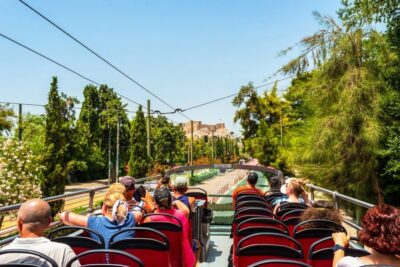 ★ 4.3City Sightseeing Hop-On Hop-Off Bus TourFrom $254,520 reviews
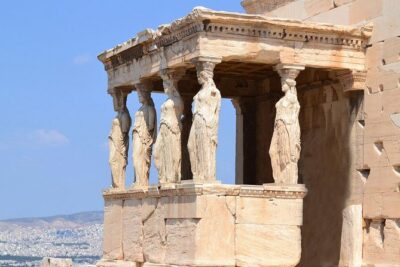 ★ 5.0Best of Athens Half Day Private TourFrom $913,714 reviews
 ★ 5.0Athens & Acropolis Highlights: Greek Mythology Small-Group TourFrom $542,370 reviews
 ★ 4.8Acropolis and Mythology Highlights Small Group TourFrom $532,275 reviews
 ★ 4.0City Sightseeing Athens, Piraeus & Beach Riviera Hop-On Hop-Off Bus ToursFrom $261,887 reviews
 ★ 4.0Athens Half-Day Sightseeing Tour with Tickets of AcropolisFrom $1041,402 reviews
 ★ 4.3From Athens: Temple of Poseidon & Cape Sounion Half-Day TourFrom $221,082 reviews
 ★ 5.0Highlights of Athens biketourFrom $47840 reviews
Browse the lists this tour appears in