
Reviewed · METEORA DAY TRIPS
9 Day Private Tour Ancient Peloponnese and Meteora
Nine days. One driver. Big classical memories. This private route strings together major Ancient Peloponnese sites with Meteora’s cliff monasteries, with hotel pickup and an English-speaking driver so planning stays painless. I really like the day’s mix of big monuments plus hands-on moments like the Cog Railway through Vouraikos Gorge and the included tastings at Olympia. Meteora sunset and private comfort are the two highlights that can make or break this kind of trip.
The main drawback is the pace and the add-ons: many top sites have admission fees not included, and local guides aren’t part of the package. Also, you’re switching locations often, so you’ll want to pack light and stay organized.
If you want first-time-friendly classical Greece with comfort and room for your driver’s local tips, this is a strong match—especially for couples and small groups who’d rather travel together than coordinate buses.
In This Review
- Key highlights worth planning for
- Why this Ancient Peloponnese and Meteora route is built for comfort
- Ancient Corinth, the Corinth Canal, and a Cog Railway day you’ll remember
- Lousios Gorge monasteries and Nafplio: a gentler side of Peloponnese
- Nafplio, Mycenae, and Epidaurus: big names, tightly packed
- Sparta to Mystras to Monemvasia: Byzantine cities and sea-carved walls
- Gytheio, Diros Caves, and Kalamata: underground wonder and olive-town energy
- Ancient Messene, Pylos, and the Palace of Nestor—then on to Olympia
- Olympia’s ruins plus olive oil, wine, and honey (all included)
- Delphi and Arachova, ending with Meteora sunset in Kalambaka
- Meteora’s Great Meteoro and Varlaam, plus Thermopylae on the way back
- Price and what this $4,855.75 per person is really buying
- What to expect day-to-day (and where this schedule can feel tiring)
- Private driver comfort: why Spyros and Panos get mentioned
- Who should book this tour (and who should skip it)
- Should you book this 9-day Ancient Peloponnese and Meteora private tour?
- FAQ
- Is this tour private?
- Where does the tour start and what language is offered?
- Does the tour include hotel pickup?
- How many nights of accommodation are included?
- Are breakfasts included?
- What experiences at Olympia are included?
- Is Meteora sunset included?
- Are local guides included?
- Is the hotel city tax included?
- Do I need printed tickets?
Key highlights worth planning for
- Diakofto Cog Railway through Vouraikos Gorge: a dramatic rail ride with streams, tunnels, waterfalls, cliffs, and forest scenery.
- Cave of Lakes at Kalavryta area: rare underground pools with different colors and those water features that feel like a floating corridor.
- Sparta to Mystras to Monemvasia: the Byzantine city of Mystras plus a medieval sea fortress-town carved into rock.
- Olympia tastings included: honey, olive oil, and wine tasting stops, plus a separate honey farm visit with coffee/juice and desserts.
- Delphi museum + key sanctuary stops: Ancient Oracle, stadium, Ancient Theatre, and the Delphi Museum with the Charioteer.
- Meteora sunset and monasteries: sunset around the rocks, then a full morning visit to Great Meteoro and Varlaam.
Monasteries in the sky, more Meteora trips
- Athens: Meteora Monasteries Day Trip with Caves and Lunch
★ 4.7 · 4,670 reviews - Athens to Meteora: Monasteries, Caves & Seaside Stopovers
★ 4.7 · 2,958 reviews - Athens: Full-Day Meteora Tour with Local Guide & Greek Lunch
★ 4.8 · 2,101 reviews - Athens: Meteora Monasteries, Caves & Coastal Stopovers with Lunch
★ 4.5 · 1,432 reviews
Why this Ancient Peloponnese and Meteora route is built for comfort
This itinerary is designed like a relay race across the best-known parts of southern Greece. Instead of you figuring out trains and transfers, you get a private car with an English-speaking driver. That matters because distances here add up fast, and the road days are usually the part that drains your energy—not the ruins.
The other big comfort factor is the rhythm: you’re not only doing “photo stops.” Several days include longer site time (Mycenae, Epidaurus, Mystras, Olympia, Delphi) and at least a couple of breaks that feel like Greece beyond ancient stone. The included food-and-drink moments at Olympia also help you slow down in a good way.
One thing to keep in mind: “private” doesn’t mean “easy walking.” A few visits involve paths and uneven terrain. You’ll want sensible shoes and the mindset that some days are active even when you’re on a car schedule.
Ancient Corinth, the Corinth Canal, and a Cog Railway day you’ll remember
Day 1 starts with Ancient Corinth (Archaia Korinthos) and the Corinth Canal—an engineering moment that links the Aegean and Ionian Seas. If you like connecting geography to history, this is a good opener. Ancient Corinth is also tied to St. Paul’s preaching in the 1st century (the route notes 52 AD), so the ruins feel more like a story than just ruins.
Then you pivot to something very Greek and very different: the Cog Railway journey. From Diakofto, the Odontotos railway runs toward Kalavryta through the Vouraikos Canyon. The ride is described with the kind of detail that usually only happens when the route is genuinely scenic: narrow gorge, streams, tunnels, waterfalls, cliffs, and forests of pine and oleander. This is a rare day where you’re not just traveling—you’re sightseeing from your seat.
The day ends with the Cave of Lakes at Kalavryta area. This is the kind of stop that breaks up the “temples and theatres” pattern. Expect multiple small and large lakes underground, with different colors tied to rock oxides. The itinerary also calls out the hanging bridge and waterfalls that create that strange, corridor-like feeling. It’s a good contrast to the bright canal-and-ruins start.
Practical note: part of this day is marked with admissions not included (for example the Ancient Corinth ticket), so budget for entry fees if you’re trying to keep your total cost predictable.
Lousios Gorge monasteries and Nafplio: a gentler side of Peloponnese
Day 2 moves into nature and spiritual architecture. After breakfast, you drive to the start of the path for the Monastery of Agios Ioannis Prodromos, built in the 19th century. The walk is short—about 20 to 30 minutes—but it’s not flat tourism. You’re walking toward a viewpoint over the Lousios River under your feet. That “view first” approach helps you reset after the heavier Day 1.
From there you visit the Holy Monastery of the Philosopher, noted as one of the oldest monasteries of Greece. The route gives a clear historical timeline: an older monastery phase from 963 and a newer one from 1691. It’s the kind of place where context helps. Even if you’re not an architecture specialist, knowing the layers of building makes it feel less like a random stop.
Then you head to Nafplio for the night—Peloponnese’s classic “pretty town” break. You’ll get a sea-coast walk and harbour scenery later, but arriving early helps you land without racing.
Just your group, at your own pace


Nafplio, Mycenae, and Epidaurus: big names, tightly packed
Day 3 is built for people who want the most famous ancient sites in a single hit. First up is Nafplio: a walk along the coast, the castle area, and a view toward Bourtzi, the small island in the harbor. Even if you’re tired from the road, this kind of harbour view gives you that reset moment.
After that, the tour focuses on two legendary classical stops:
- Ancient Mycenae (including the Gate of Lions and the Atreus King Tomb). The itinerary also flags this as a major history anchor, and it’s one of those places where stone details feel intentional rather than random.
- The Ancient Theatre of Epidaurus, built for up to 15,000 spectators. This is one of the best-known theatre sites in Greece, and the structure itself is the lesson—how Romans and Greeks engineered space for crowd and performance.
Then it’s on to Sparta for check-in and relaxation. That’s an underrated benefit of this schedule: after two very heavy history days, you get an actual “pause night.”
Sparta to Mystras to Monemvasia: Byzantine cities and sea-carved walls
Day 4 is a long day with a clear theme: Byzantium. You start with a Museum of Olive & Olive Oil stop. If you care about how food and daily life connect to a country’s identity, this is a smart bridge from ruins to lived culture.
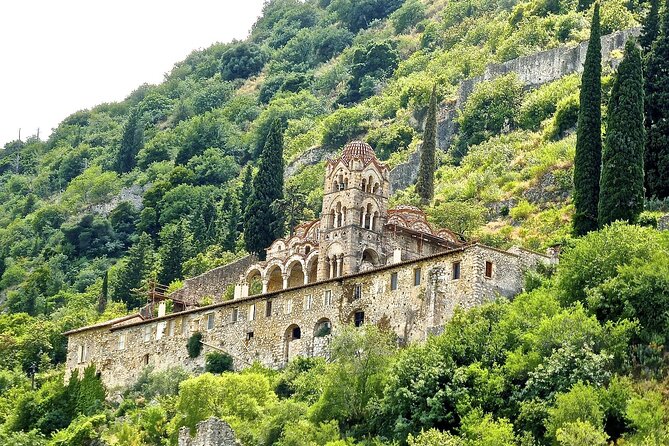
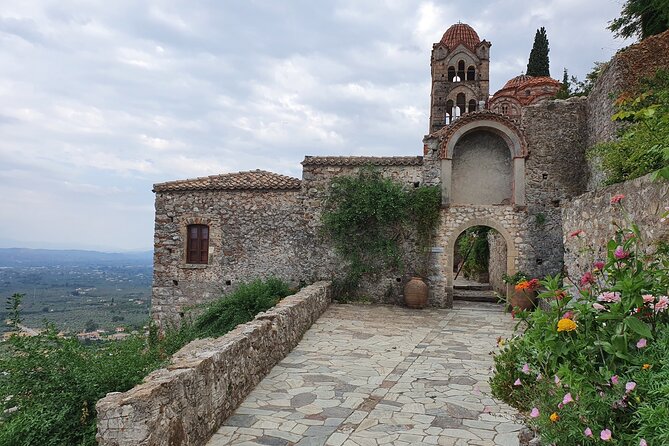
Next is Mystras, the Byzantine glory town. The route calls it a castle city with Upper and Lower Town areas, and it points you toward the main places: the Palace of the Despots (Anaktora), houses like Laskaris and Frangopoulos, the Cathedral of Saint Dimitrios, plus major monasteries such as Our Lady Pantánassa and Our Lady Perivleptos. Even with limited time, you’ll feel how a Byzantine city worked—power, worship, and defense in one place.
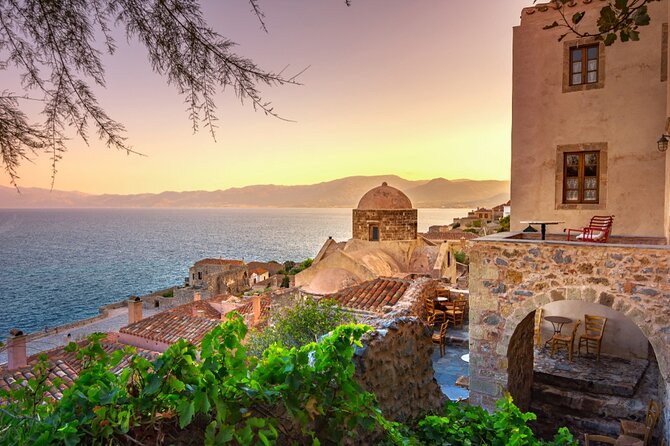
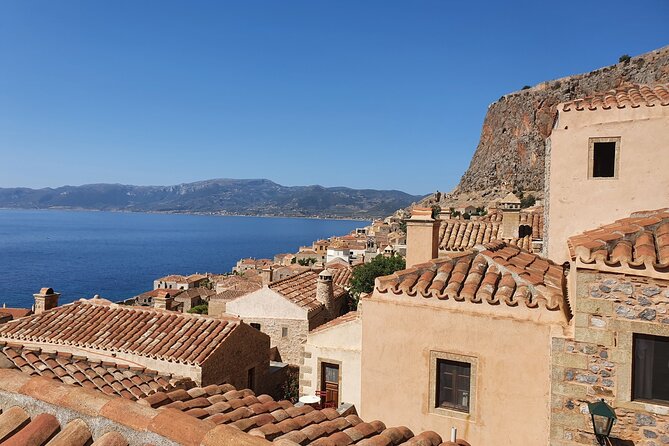
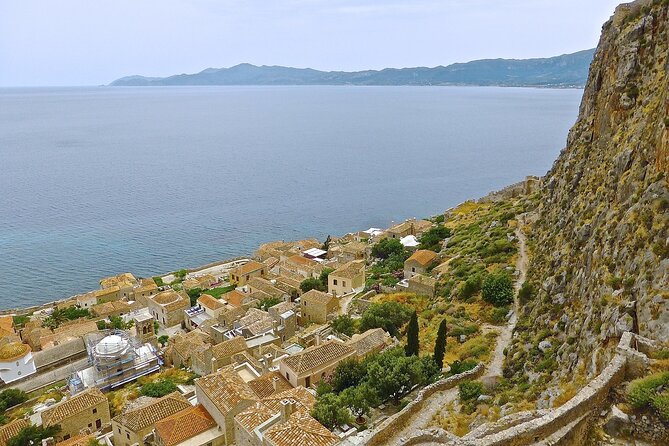
Then you head to Monemvasia, described as a medieval fortress-town carved into a massive rock by the sea. This is one of the best types of stops for people who like wandering. Narrow cobbled alleys, old mansions, Byzantine chapels—you’re not stuck looking straight at a monument. You’re inside the maze.
Overnight is listed as Gythio, with a later afternoon return to Sparta for another overnight. That suggests a bit of back-and-forth in the schedule. If you’re sensitive to long transit days, plan your expectations: you’ll likely spend more time in the car on Day 4 than on some other days.
Gytheio, Diros Caves, and Kalamata: underground wonder and olive-town energy
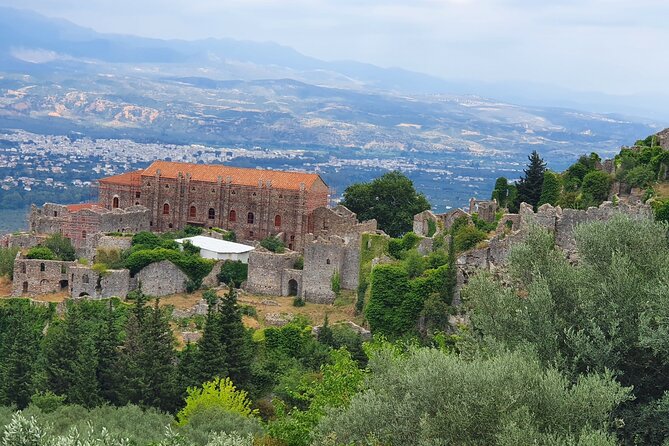
Day 5 is lighter on ruins and heavier on “surprise.” You get free time in Gytheio, a charming seaside town, which is a good moment to grab a meal without feeling like you’re on a strict clock.
Then comes the Diros Caves. This is an underground river system navigated by boat, surrounded by stalactites and stalagmites. The route notes that these caves were once thought of as entrances to the underworld. You don’t need the mythology to enjoy it—the boat ride structure does the work. It’s one of those experiences where your eyes keep adjusting as the cave walls change.
After that, you reach Kalamata for the night. Kalamata is known for olive groves and seafront dining, and the itinerary frames it as Peloponnesian “real life,” not just history tourism. This makes Day 6 feel more enjoyable because you’ve already seen a different side of the region.
Ancient Messene, Pylos, and the Palace of Nestor—then on to Olympia
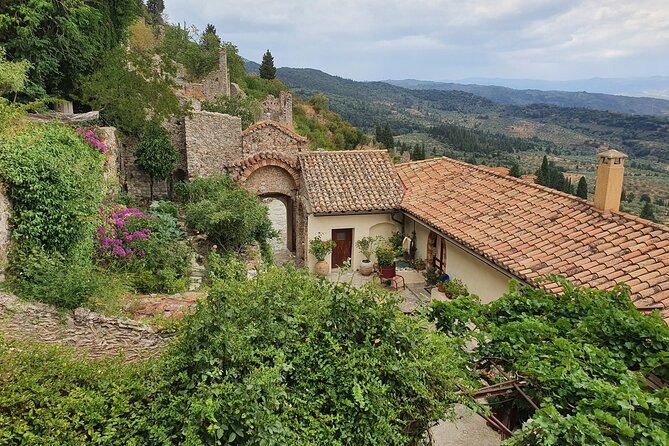
Day 6 packs three high-value stops and uses the coastline well. First is Ancient Messene, described as a spectacular UNESCO site. It’s founded in the 4th century B.C. by Epaminondas, and it sits against the Messenian valley. Even if you don’t know every name, the site’s scale usually helps your brain understand how cities organized power and movement.
Then you go to Pylos, a picturesque coastal town with a natural harbor and naval history. The route suggests an optional lunch with views over the Bay of Navarino, plus time to stroll the main square. This is a good day to slow down slightly and let your driver’s local pacing work for you.
After Pylos, you visit the Palace of Nestor, described as one of the best-preserved Mycenaean palaces in Greece. The itinerary emphasizes the grand halls and original frescoes, plus how it connects to Homer’s epics. If you’re the type who likes when literature and archaeology talk to each other, this is a satisfying stop.
The day ends in Olympia for check-in and relaxation. After Messene’s fortification feel and Nestor’s palace scale, Olympia gives you the classic “religion + games + crowds” anchor.
Olympia’s ruins plus olive oil, wine, and honey (all included)
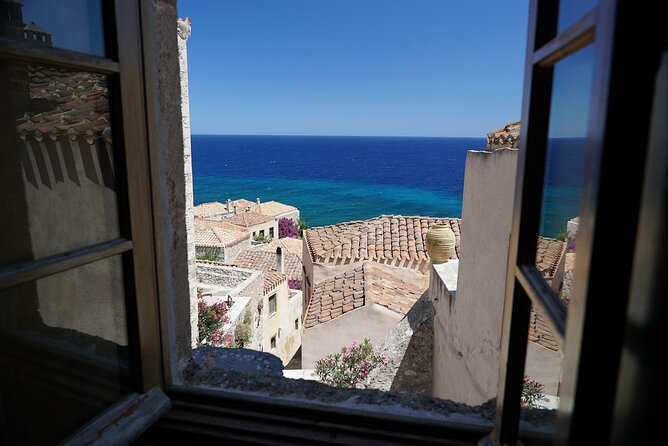
Day 7 is a major ancient Greece day, but it’s built in a smart way: ruins first, then sensory breaks.
You start at Ancient Olympia in the lush valley of the Alfios River. The tour covers the core sanctuary elements: the Temple of Zeus and the gold-and-ivory statue (created by Phedias, dedicated to Zeus). You’ll also see the Temple of Hera, the shrine of Pelops, the Council House where athletes took the Olympic oath, Treasury houses, Gymnasium and Palestra, and then the stadium.
If you want to understand why this matters, the value here is that you’re walking through a system, not just looking at isolated buildings. Olympia was a cultural machine for the ancient world—religious ceremony and athletic ritual in one place.
Then the itinerary adds what makes Olympia feel human instead of museum-only:
- Market of Ancient Olympia with free wine and olive oil tastings
- Klio’s Honey Farm, included, with coffee/juice and handmade local desserts made with honey produced there
After that, you stop in Nafpaktos (Naupactus) for a short seaside break near the Venetian Castle and Venetian Port. Then you reach Delphi for overnight.
I love how this day uses food and drink tasting without turning into a full-on shopping detour. It’s still on-theme, still regional, and it helps you keep energy for Delphi the next day.
Delphi and Arachova, ending with Meteora sunset in Kalambaka
Day 8 is Delphi-first and scenery-second. You start with the Delphi Archaeological Museum and key sanctuary elements. The itinerary highlights:
- Ancient Oracle
- Stadium
- Ancient Theatre (more than 5,000 seated spectators)
- Museum displays including the Charioteer bronze statue
Delphi can feel overwhelming because it’s both geography and belief. This schedule helps by combining the main ruins with the museum piece you’ll remember most.
Then you head to Arachova, a mountain village about 1,000 meters altitude. It’s described as a bustling winter destination, and the itinerary suggests coffee or lunch plus trying formaela (Arachova’s traditional cheese) in different forms. Even if you’re not buying anything, it’s a good cultural stop that breaks up the intensity of the archaeology.
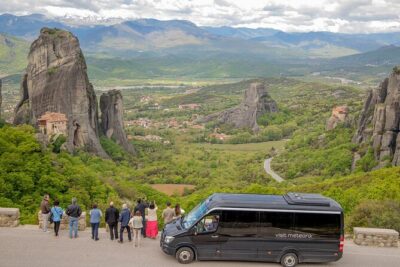
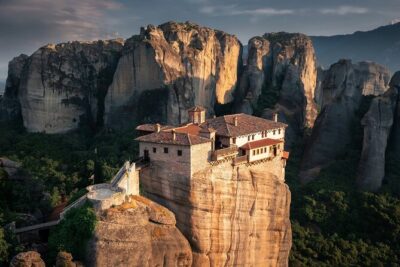
From Arachova you drive to Kalambaka, then check in and get the sunset tour around Meteora rocks. This is one of the best ways to see Meteora because the light changes how the monasteries look against the grey cliffs. The tour promises that sunset timing is built in, which is a big deal for this sight.
Meteora’s Great Meteoro and Varlaam, plus Thermopylae on the way back
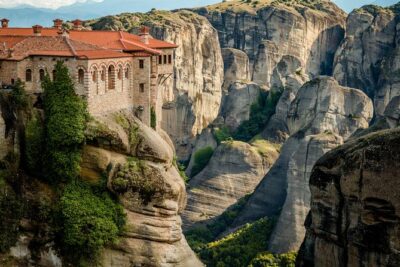
Day 9 is your final morning focused on Meteora. You’ll be picked up at 09:00 and taken to two Byzantine monasteries included in the route: the Holy Monastery of Great Meteoro (described as the biggest and oldest) and the monastery of Varlaam, founded in the 16th century and located on a rock about 380 meters high.
The itinerary’s “meteoro” explanation matters here. The whole point is that the monastery was built on top of a gigantic rock formation—so the setting is the architecture. You’re looking at humans doing engineering and faith on the edge of gravity.
After Meteora, you return to the village of Kalambaka for a traditional Greek lunch, then it’s back to Athens with a short stop at Thermopylae. At Thermopylae you’ll see the statue of Leonidas as a memorial of the Battle of the 300 Spartans against thousands of Persian Empire soldiers. It’s a brief stop, but it lands the day with a strong story hook.
Price and what this $4,855.75 per person is really buying
At $4,855.75 per person, this is not an economy tour. You’re paying for three things that are hard to recreate on your own:
- A private car and an English-speaking driver for nearly the whole journey
- 8 nights accommodation
- Several meaningful included experiences (Olympia tastings, honey farm, Meteora sunset, and 8 breakfasts)
That makes the price feel more reasonable if you’re traveling as a couple or small group and you want comfort and route control. If you’re a solo traveler or you don’t mind bus schedules and self-transport, cheaper options likely exist. But the “cost of stress” often shows up later—especially when you’re trying to connect sites that are spread out.
Two cost items to plan for: hotel city tax and site admissions. The city tax is listed as €40 per person (for 4-star hotels). Many major attractions are marked as admission not included, including places like Ancient Corinth, Mycenae, Epidaurus, Mystras, and the big archaeology sites. Local guides are also not included, which can matter if you want deeper narration at every stop.
A simple way to budget: treat this as a premium private transport + accommodation package, then add a line item for entry fees at sites marked not included.
What to expect day-to-day (and where this schedule can feel tiring)
This is a “move nearly every day” itinerary. You’ll sleep in different places through the week—Dimitsana, Nafplio, Sparta, Kalamata, Olympia, Delphi, and Kalambaka are all part of the rotation.
That has two effects:
1) You spend time enjoying new towns instead of returning to the same hotel base.
2) You also have less time to linger slowly. If you’re the kind of traveler who likes long, unplanned afternoons, you might feel the schedule squeeze.
The good news is that the itinerary builds in breaks that aren’t just roadside pauses. That includes seaside time in Gytheio, harbour views in Nafplio, and tastings and farm dessert time in Olympia. Also, Meteora is not rushed into a single photo stop. It’s given a sunset evening and a separate morning visit.
Also, note this detail: audio support at the sites may not be included. If you want to understand what you’re seeing at a deeper level, I recommend either reading ahead or arranging at least some local guiding where possible. Even a small amount of extra interpretation can turn a theatre or palace into a story you actually remember.
Private driver comfort: why Spyros and Panos get mentioned
One recurring theme with this kind of tour is trust: you’re sitting in a car with your driver for long stretches, and you’ll be relying on their instincts about timing and where to eat.
From the experiences shared, Spyros and Panos are praised specifically for safe, careful driving plus local recommendations. That kind of driver doesn’t just get you from A to B. They can also help you decide where to pause, where to eat, and how to handle the day when you’re tired.
If you book, ask your driver questions early. Good topics: best meal types near the day’s stop, how to pace the morning walk, and whether an extra short viewpoint exists on the way to a major site.
Who should book this tour (and who should skip it)
This tour is best for you if:
- You want the classics of southern Greece—Mycenae, Epidaurus, Olympia, Delphi—without self-driving.
- You care about comfort and a private setup.
- You want Meteora done right, with sunset and two monastery visits.
- You like food experiences tied to place (Olympia tastings, honey farm, local cheese in Arachova).
You might want to skip or adjust if:
- You dislike fast hotel changes and travel days.
- You expect everything to be fully guided at every site (local guides aren’t included).
- You want a low-cost plan without extra admission fees.
Should you book this 9-day Ancient Peloponnese and Meteora private tour?
If your priority is comfort + major sites + a serious Meteora visit, I think this is an excellent choice. The route is packed, but it’s not random packing. It connects big archaeology days with scenery and food breaks in a way that keeps the trip from turning into one long checklist.
Before you book, do one practical thing: read the admission-not-included list and budget for it. Also, decide how much guidance you want at the sites. If you want deeper explanations on every stop, plan for local guides or bring a guidebook with you.
If you match those expectations, this kind of private tour makes southern Greece feel doable, not exhausting—and Meteora is the part you’ll keep talking about long after the trip ends.
FAQ
Is this tour private?
Yes. It’s listed as a private tour/activity, and only your group participates.
Where does the tour start and what language is offered?
The location is Athens, Greece, and it’s offered in English. You also get an English-speaking driver.
Does the tour include hotel pickup?
Yes, pickup is offered.
How many nights of accommodation are included?
The tour includes 8 nights accommodation.
Are breakfasts included?
Yes. Breakfast (8) is included.
What experiences at Olympia are included?
Included items at Olympia are honey, olive oil, and wine tasting, plus a honey farm visit with coffee/juice and handmade local desserts.
Is Meteora sunset included?
Yes. A sunset tour around the rocks at Meteora is included.
Are local guides included?
No. Local guides are listed as not included.
Is the hotel city tax included?
No. Hotel City Tax is listed as €40.00 per person.
Do I need printed tickets?
A mobile ticket is listed. The program is provided on your mobile device or in chat, and you can request a printed version if needed.
More Tour Reviews in Athens
- Athens: Acropolis & up to 5 Archaeological Sites Combo Pass★ 4.2 · 13,904 reviews
- Athens: Acropolis, Parthenon & Acropolis Museum Guided Tour★ 4.8 · 9,316 reviews
- The Acropolis, Parthenon & Acropolis Museum Guided Tour★ 4.7 · 8,493 reviews
- Athens: Cape Sounion & Poseidon Temple Sunset Half-Day Trip★ 4.8 · 8,241 reviews
- Acropolis: Premium Acropolis and Parthenon Guided Tour★ 4.8 · 5,208 reviews
- Athens: Mythology of Delphi, Museum and Arachova Guided Tour★ 4.7 · 5,102 reviews
Just Your Group: More Private Days
- Best of Athens Half Day Private Tour★ 5.0 · 3,714 reviews
- Athens Full Day Private Tour★ 5.0 · 2,903 reviews
- Athens Greece Full Day private tour★ 5.0 · 785 reviews
- 4 Hours – Athens & Acropolis Highlights Private Tour★ 5.0 · 681 reviews
- Athens Full Day Private Tour★ 5.0 · 667 reviews
- Enjoy Cape Sounio Private Majestic Sunset With Seaside Dinner★ 5.0 · 613 reviews
The Monasteries of Meteora
- Athens: Meteora Monasteries Day Trip with Caves and Lunch★ 4.7 · 4,670 reviews
- Athens to Meteora: Monasteries, Caves & Seaside Stopovers★ 4.7 · 2,958 reviews
- Athens: Full-Day Meteora Tour with Local Guide & Greek Lunch★ 4.8 · 2,101 reviews
- Athens: Meteora Monasteries, Caves & Coastal Stopovers with Lunch★ 4.5 · 1,432 reviews
- Meteora Monasteries & Caves DayTrip from Athens with Greek Lunch★ 4.5 · 879 reviews
- From Athens: Delphi and Meteora 2-Day Guided Tour★ 4.5 · 825 reviews
Fresh Off the Boat: New Athens Reviews

Meteora Day Trips, compared.
 ★ 4.7Meteora Monasteries Day Trip with Caves and LunchFrom $874,670 reviews
 ★ 4.7Athens to Meteora: Monasteries, Caves & Seaside StopoversFrom $832,958 reviews
 ★ 4.8Full-Day Meteora Tour with Local Guide & Greek LunchFrom $822,101 reviews
 ★ 4.5Meteora Monasteries, Caves & Coastal Stopovers with LunchFrom $881,432 reviews
 ★ 4.5Meteora Monasteries & Caves DayTrip from Athens with Greek LunchFrom $87879 reviews
 ★ 4.5From Athens: Delphi and Meteora 2-Day Guided TourFrom $271825 reviews
 ★ 4.54-Day Classical Greece Tour: Epidaurus, Mycenae, Olympia, Delphi, MeteoraFrom $766732 reviews
 ★ 4.5Meteora Monasteries, Hermit Caves Tour with PickupFrom $87724 reviews
Browse the lists this tour appears in