
Reviewed · METEORA DAY TRIPS
A unique day private tour to Meteora Monasteries from Athens
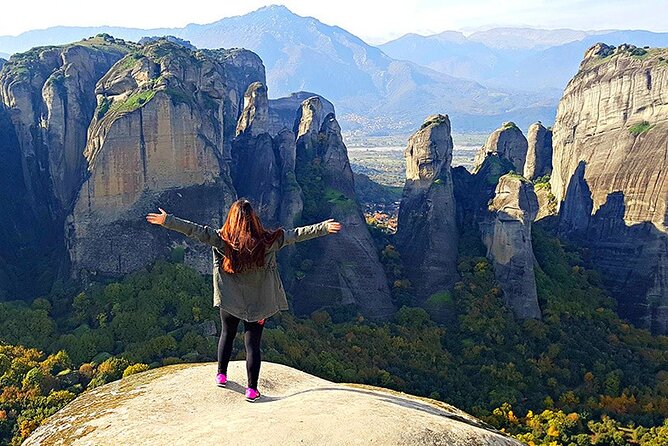
Meteora from Athens in one full day sounds wild. What makes this trip genuinely interesting is the mix of serious monastery time and big Greece-name stops, all handled by a private driver with hotel pickup. I also like that the day is built around Meteora’s real-world limits, so you’re not just chasing a checklist.
I especially like the way the route sets up Meteora first with the Central Greece drive through Thessaly, then into the Meteora base area around Kastraki and Kalambaka. You also get a planned, stop-by-stop rhythm, with enough breaks to keep it from feeling like one long commute with no views.
The main drawback to consider is time: it’s about 12 hours, and not every monastery is open every day. If you’re unlucky with opening days, you may end up seeing fewer monasteries than you hoped, and more of the day can feel like it’s in the car.
In This Review
- Key things to know before you go
- A long day from Athens to Meteora that actually makes sense
- Price and what you’re paying for (up to 3 people)
- Tour rhythm: how the day is paced across Greece
- Thessaly and Kastraki: the setup before you look up at monasteries
- Meteora monasteries: how you’ll actually visit them (and why timing is everything)
- Great Meteoron: the oldest and largest stop you’ll likely remember most
- St. Stephen: a monastery with a long build timeline
- Varlaam, Rousanou, and St. Nicholaos Anapafsas: what you’re looking for at each
- Kalambaka for lunch time and a place to reset
- Thermopylae and the Leonidas Monument: short, but memorable
- Practical tips that will save your day
- Who this private Meteora day trip fits best
- Should you book this Athens to Meteora private tour?
Key things to know before you go
- Private, door-to-door Athens pickup and A/C vehicle for a group up to 3
- Meteora visits are limited by opening days; you’ll typically see two monasteries, with a possible third
- Driver handles transport and parking, so you focus on the rocks and the churches
- Stops pair religion + ancient history, including Thermopylae and the Leonidas Monument
- Entrance fees and food aren’t included, so budget for tickets and lunch separately
- Comfort matters: the tour requires a strong physical fitness level and a formal dress code
Monasteries in the sky, more Meteora trips
- Athens: Meteora Monasteries Day Trip with Caves and Lunch
★ 4.7 · 4,670 reviews - Athens to Meteora: Monasteries, Caves & Seaside Stopovers
★ 4.7 · 2,958 reviews - Athens: Full-Day Meteora Tour with Local Guide & Greek Lunch
★ 4.8 · 2,101 reviews - Athens: Meteora Monasteries, Caves & Coastal Stopovers with Lunch
★ 4.5 · 1,432 reviews
A long day from Athens to Meteora that actually makes sense
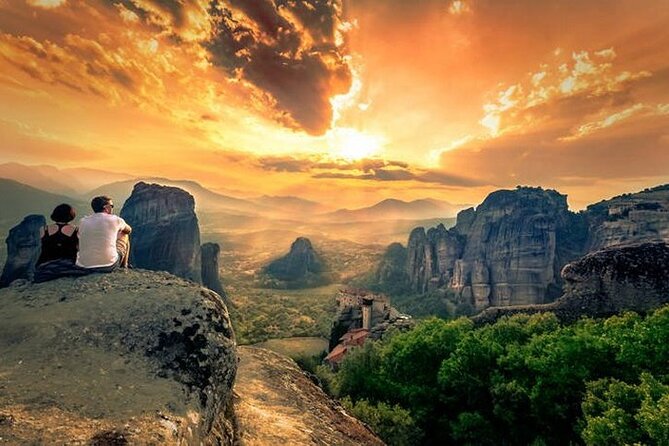
This is the kind of day trip where you don’t want to be improvising. You’re leaving Athens for Meteora, which means a lot of hours on the road, then trading that for a front-row view of monasteries built on massive rock pillars. If you like having the day organized—pickup, parking, timing, and a clear sequence of stops—this format works well.
You’re also not stuck with only Meteora. The itinerary folds in Thermopylae and a Leonidas Monument stop on the way back, which turns the day into a mini “greatest-hits” history route. That’s a big plus if you’d rather keep a single-day trip moving instead of just doing scenic driving until evening.
Price and what you’re paying for (up to 3 people)
At $817.04 per group (up to 3), this is not a cheap day trip. The value comes from what’s included: hotel pickup and drop-off in Athens, a private vehicle with bottled water, and a professional English-speaking tour driver who can handle the practical parts of the route.
What’s not included matters for your budget. Entrance fees for archaeological sites and museums aren’t included, and food and drinks are on you too. Also, while you get an English-speaking guide/driver for the day, the driver is not licensed to accompany you inside archaeological sites and museums—an added licensed guide inside can be arranged for an extra cost if you want that layer.
So the math is simple: if you split the group price, and you care about having someone manage the transport and the Meteora monastery order, the price starts to feel more reasonable. If you’re trying to keep costs tight and you don’t need private logistics, you might question the spend.
Tour rhythm: how the day is paced across Greece
The day is built around a single, long loop. You start with pickup from your Athens hotel, then drive through Central Greece and into Thessaly, where the itinerary assigns about 4 hours 30 minutes to that travel stretch.
Once you reach the Meteora area, the stops become more intentional. You’re positioned around Kastraki (a town base under the cliffs) and Kalambaka (the municipality seat and a common launch point for Meteora visits). That’s useful because it gives you towns to orient yourself in, grab a meal, and reset your legs before monastery steps and viewpoints.
Then you finish with two quick-but-famous history stops: Thermopylae (about 15 minutes) and the Leonidas Monument (about 10 minutes). This final segment is short, so it’s best for a quick hit rather than a full museum-style visit.
Just your group, at your own pace


Thessaly and Kastraki: the setup before you look up at monasteries
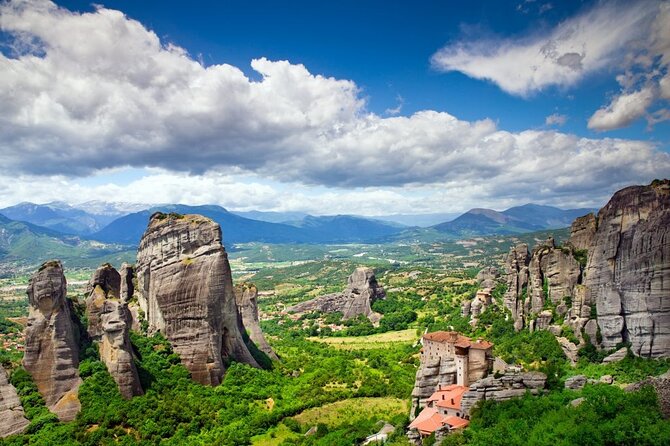
Thessaly is more than a driving corridor here. The tour uses the region as a context stop, tying it to ancient references (including Achilles and Aeolus-related mythology) while you roll through the mountainous region and toward the Meteora rocks.
When the trip reaches Kastraki, you’re entering the western Meteora side village area, built among the towering cliffs. Kastraki is also described as a base for climbers and visitors drawn to the rock shapes and the dramatic vertical feel of the area. Even if you don’t climb, this is the moment where Meteora stops being an idea and starts being a reality—you can see how monasteries make sense when the cliffs dominate everything.
If you want the best payoff from Meteora itself, arriving first at Kastraki and later at Kalambaka is a smart move. It helps you understand the geography so your monastery photos aren’t random snapshots—they’re tied to where you are on the rock formation.
Meteora monasteries: how you’ll actually visit them (and why timing is everything)
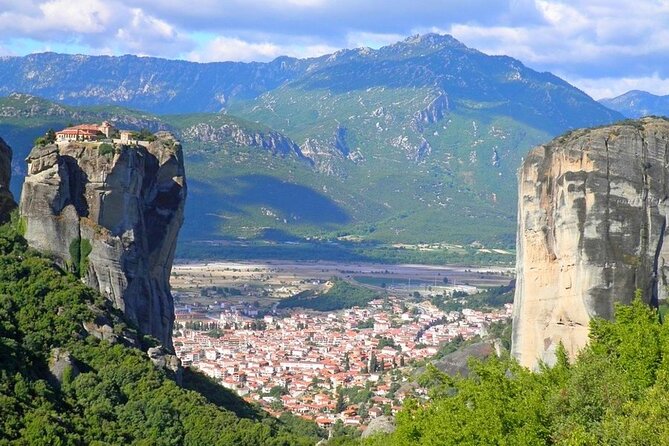
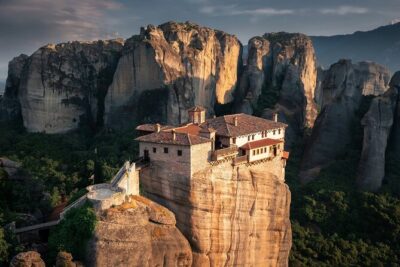
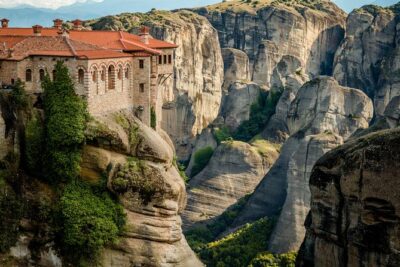
Meteora is one of those places where the “wow” isn’t just the buildings. It’s the fact that Eastern Orthodox monasteries sit on huge natural pillars and rounded boulders rising more than 600 meters from the plains of Thessaly. The monastery complex is also described as one of the largest and most precipitously built of its kind, with UNESCO listing in 1988 and the area included in the Natura 2000 network for rare species.
Here’s the practical key: there are six monasteries, but they don’t all open on the same days. This tour is designed around that reality. You’ll have the chance to visit two monasteries, and if you’re fast and fit, then a third may be possible.
The itinerary also lists specific closure days by monastery and season. For example:
- Great Meteoron: closed on Tuesday (and additional days that vary by season)
- St. Stephen: closed on Mondays
- Varlaam: closed on Thursdays–Fridays in winter, and Fridays in summer
- Rousanou: closed on Wednesdays
So if you care deeply about seeing a particular monastery, don’t just assume it will be open. The day-of schedule affects the outcome more than most people expect, and that’s a big part of why some day trips feel perfect while others feel frustrating.
Great Meteoron: the oldest and largest stop you’ll likely remember most

The Great Meteoron (Holy Monastery of the Metamorphosis / Transfiguration of Christ) is described as both the oldest and the largest monastery at Meteora, and it’s the starting point of organized monastic life at the site. It’s a male monastery and sits in a commanding position among the complex.
This stop is given about 1 hour 15 minutes, and the ticket is not included. That time usually isn’t about rushing through walls; it’s about letting the scale and layout hit you. Great Meteoron is also the one many people use as their anchor point, since its name alone signals you’re in the main game of Meteora’s monastic story.
One more reality check: Great Meteoron’s closure days include Tuesdays and other days depending on season. So on days when it’s shut, your “best case” plan changes fast.
St. Stephen: a monastery with a long build timeline
Holy Monastery of Saint Stephen is described with roots stretching back to monk life in the late 12th century. The building assembly, founded in the 14th century, completes across later centuries—so when you’re standing there, you’re seeing layers of long-term monastic development rather than a quick “one era” construction.
This stop is scheduled for about 50 minutes, with entrance tickets not included. It’s also noted as closed on Mondays, which means your monastery pairing on the day depends heavily on what weekday you land on.
If you like monasteries for their “story across centuries,” St. Stephen is one of the stronger choices in a limited-time day structure.
Varlaam, Rousanou, and St. Nicholaos Anapafsas: what you’re looking for at each

Not every monastery listed will be open or visited on a given day, but you should know what each one represents.
Varlaam is named after a hermit-anchorite, Varlaam, who first inhabited the rock in the 14th century. The monastery’s organized development is tied to Ioannina brothers and later major construction work described in the early 1500s, including a winch tower and the building of a church dedicated to All Saints in 1541. Varlaam’s closure pattern changes by season, with Thursdays–Fridays in winter and Fridays in summer.
Rousanou is described as founded in 1529 over older ruins by monks Ioasaf and Maximos from Ioannina. It’s notable for its 4-story complex, and the Church of the Transfiguration is described as taking its present form from scratch around 1530 AD. It’s closed on Wednesdays, so again, day-of timing controls the outcome.
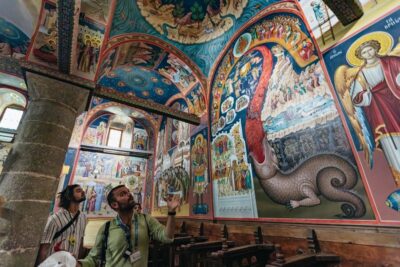
St. Nicholaos Anapafsas is close to Kastraki and described as having an imposing, elegant, and cramped feel—right on the rock near the village. It was renovated in the early 16th century, and the second-floor church paintings are attributed to Theophanes Strelitzas, a Cretan painter connected to the Byzantine Cretan School of hagiography.
If you’re trying to “pick favorites,” these descriptions give you a good way to choose mentally once you’re there: Varlaam for the construction story and All Saints focus, Rousanou for its multi-story structure and Transfiguration church, and St. Nicholaos for the close-to-Kastraki rock feel and painted church.
Kalambaka for lunch time and a place to reset
Kalambaka is where you regain your bearings after the monastery stops. The itinerary includes about 1 hour of free time for lunch (not included). This is enough time to grab something simple, use the restroom, and walk off the day’s steep effort without turning lunch into a whole mission.
Kalambaka itself is described as the seat of the municipality of Meteora in the Trikala regional unit, and it’s built at the feet of the rocks, beside the river Pinios. It’s also a starting place for visitors heading to Meteora sites and nearby areas like Aspropotamos of Hasia and Koziakas—so the town is wired for day-trippers and short stays.
This is a good moment to slow down. When you’ve been looking up at stone pillars for hours, even a short coffee stop feels like a breather.
Thermopylae and the Leonidas Monument: short, but memorable
After Meteora, Thermopylae is a clever change of topic. Thermopylae is described as a narrow coastal passage in antiquity, with the name tied to hot sulfur springs. It’s also the stage for the battle in 480 BC between Greeks and Persians, and the itinerary summarizes the Leonidas story with the third-day betrayal by Efialtes.
You’ll get about 15 minutes, and admission is listed as free. This is not enough time for deep museum study, so think of it as a quick, respectful stop that connects the names you’ve heard for years to the actual place.
Then comes the Leonidas Monument, described as near the national road connecting Athens to Thessaloniki. The itinerary notes that the ancient passage area doesn’t exist the same way anymore due to sediment changes, but the monument provides the “remember this” moment with an inscription based on a Greek line about telling the Spartans that they laid there faithful to Sparta’s laws. This is scheduled for about 10 minutes.
If you’re the type who likes context while keeping your schedule efficient, these two short stops work nicely as a finale.
Practical tips that will save your day
Because this tour hits both Meteora and Thermopylae in one shot, small decisions matter.
First, assume you’ll be walking and climbing. The tour states a strong physical fitness level is required, and Meteora monasteries are not designed for slow lounging. Wear shoes you can trust on steps and uneven ground.
Second, plan for ceremony-level dress expectations. The tour lists a formal dress code, so don’t show up in anything that feels too casual for a church setting. If you’re unsure, bring a layer that covers you comfortably.
Third, set expectations around monastery access. Since you’re visiting two monasteries and possibly a third depending on time and fitness, your “must-see list” should be flexible. This is especially true because the itinerary explicitly gives closure patterns by monastery and season.
Finally, budget time for entrances and tickets. Entrance fees and museum tickets are not included, and you’ll also be responsible for lunch and drinks. Bottled water is included, which helps, but it’s not a substitute for planning a meal break.
Who this private Meteora day trip fits best
This works best if you want:
- A private Athens pickup and a driver who handles transport and parking
- A structured day with Meteora plus Thermopylae, without having to coordinate bus schedules
- The option for a faster itinerary if you’re fit and ready to move between stops
It may be a mismatch if:
- You’re hoping for a long, slow monastery day with multiple extra visits
- You get upset if one or more monasteries are closed on your travel day
- You’re looking for a lowest-cost option; entrance fees and meals add up
Also, if you’re imagining the driver as a museum-lecture guide inside every site, note the limitation: the driver guides you until you enter sites, and licensed guides inside can be arranged for an additional cost subject to availability.
Should you book this Athens to Meteora private tour?
I’d book it if you want the Meteora experience without the stress of transport planning. The private setup, hotel pickup/drop-off, and the realistic way the day is built around monastery access make it feel like a practical way to do Meteora as a one-day trip.
I wouldn’t book it blindly if Meteora is your only priority and you have a strict list of specific monasteries you must see. Opening-day closures are real, and when they hit, the day can shift toward fewer visited sites and a longer feel in the car.
If you can stay flexible, bring good shoes, dress appropriately, and accept that two monasteries is the baseline with a possible third, this is a strong way to do Meteora from Athens in a single day.
More Tour Reviews in Athens
- Athens: Acropolis & up to 5 Archaeological Sites Combo Pass★ 4.2 · 13,904 reviews
- Athens: Acropolis, Parthenon & Acropolis Museum Guided Tour★ 4.8 · 9,316 reviews
- The Acropolis, Parthenon & Acropolis Museum Guided Tour★ 4.7 · 8,493 reviews
- Athens: Cape Sounion & Poseidon Temple Sunset Half-Day Trip★ 4.8 · 8,241 reviews
- Acropolis: Premium Acropolis and Parthenon Guided Tour★ 4.8 · 5,208 reviews
- Athens: Mythology of Delphi, Museum and Arachova Guided Tour★ 4.7 · 5,102 reviews
Just Your Group: More Private Days
- Best of Athens Half Day Private Tour★ 5.0 · 3,714 reviews
- Athens Full Day Private Tour★ 5.0 · 2,903 reviews
- Athens Greece Full Day private tour★ 5.0 · 785 reviews
- 4 Hours – Athens & Acropolis Highlights Private Tour★ 5.0 · 681 reviews
- Athens Full Day Private Tour★ 5.0 · 667 reviews
- Enjoy Cape Sounio Private Majestic Sunset With Seaside Dinner★ 5.0 · 613 reviews
The Monasteries of Meteora
- Athens: Meteora Monasteries Day Trip with Caves and Lunch★ 4.7 · 4,670 reviews
- Athens to Meteora: Monasteries, Caves & Seaside Stopovers★ 4.7 · 2,958 reviews
- Athens: Full-Day Meteora Tour with Local Guide & Greek Lunch★ 4.8 · 2,101 reviews
- Athens: Meteora Monasteries, Caves & Coastal Stopovers with Lunch★ 4.5 · 1,432 reviews
- Meteora Monasteries & Caves DayTrip from Athens with Greek Lunch★ 4.5 · 879 reviews
- From Athens: Delphi and Meteora 2-Day Guided Tour★ 4.5 · 825 reviews
Fresh Off the Boat: New Athens Reviews

Meteora Day Trips, compared.
 ★ 4.7Meteora Monasteries Day Trip with Caves and LunchFrom $874,670 reviews
 ★ 4.7Athens to Meteora: Monasteries, Caves & Seaside StopoversFrom $832,958 reviews
 ★ 4.8Full-Day Meteora Tour with Local Guide & Greek LunchFrom $822,101 reviews
 ★ 4.5Meteora Monasteries, Caves & Coastal Stopovers with LunchFrom $881,432 reviews
 ★ 4.5Meteora Monasteries & Caves DayTrip from Athens with Greek LunchFrom $87879 reviews
 ★ 4.5From Athens: Delphi and Meteora 2-Day Guided TourFrom $271825 reviews
 ★ 4.54-Day Classical Greece Tour: Epidaurus, Mycenae, Olympia, Delphi, MeteoraFrom $766732 reviews
 ★ 4.5Meteora Monasteries, Hermit Caves Tour with PickupFrom $87724 reviews
Browse the lists this tour appears in