
Reviewed · ACROPOLIS & PARTHENON TOURS
Acropolis & Ancient Agora Guided tour included all Entrances
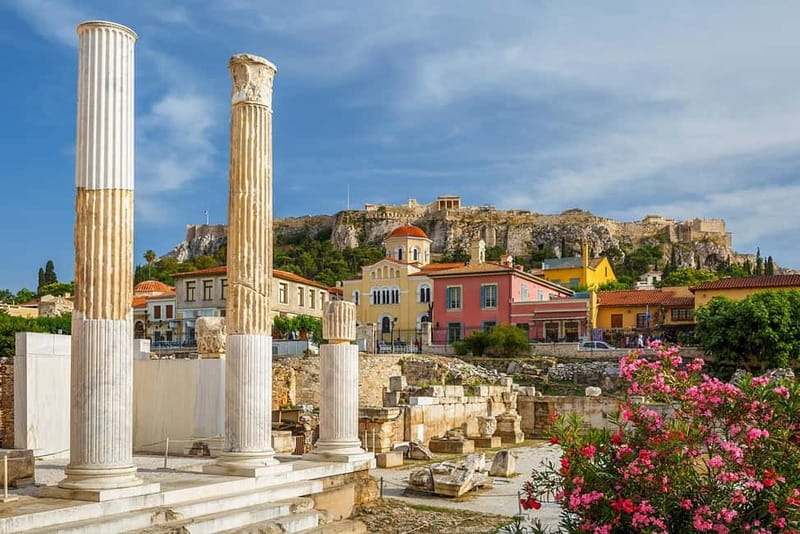
Athens has a way of grabbing you by the collar. This Acropolis + Ancient Agora guided tour is a smart way to see the big hitters without wasting time in lines, and the wireless headsets help you hear every story even when the sites get crowded.
I especially like the route up the South Slopes of the Acropolis, which feels more scenic and less chaotic than the usual crush. The main catch is that it’s a moderate, mostly uphill walking day, so it’s not a great fit for anyone with mobility limits or anyone who hates stairs in heat.
In This Review
- Key things I’d plan around
- The value of doing Acropolis and Agora together
- Meeting at Porinou 5: easy start, smart location
- South Slopes of the Acropolis: the part many people rush past
- The theater stop: Dionysus sets the mood
- Parthenon, Erechtheion, Temple of Athena Nike: what you’re actually looking at
- Parthenon: democracy in stone form
- Erechtheion and the Caryatids
- Temple of Athena Nike: smaller, but sharp
- Break time on the Acropolis: use it well
- Ancient Agora: the civic Athens you can feel
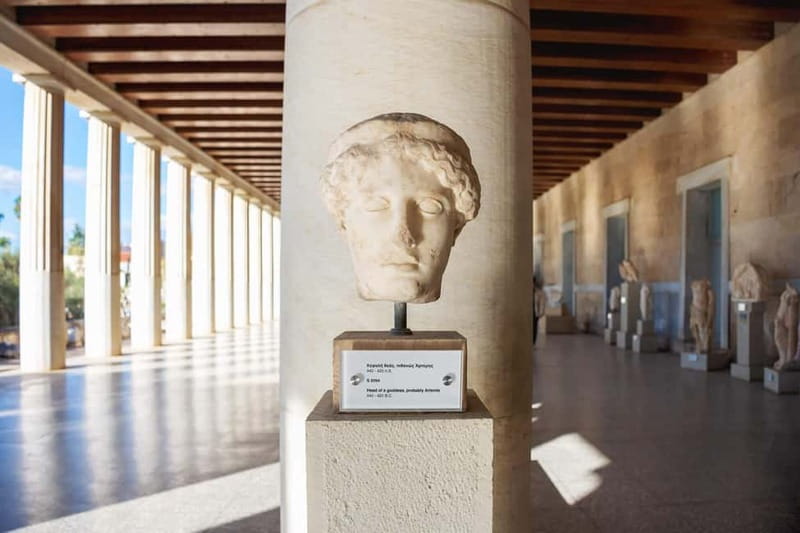
- Stoa of Attalos: where artifacts live today
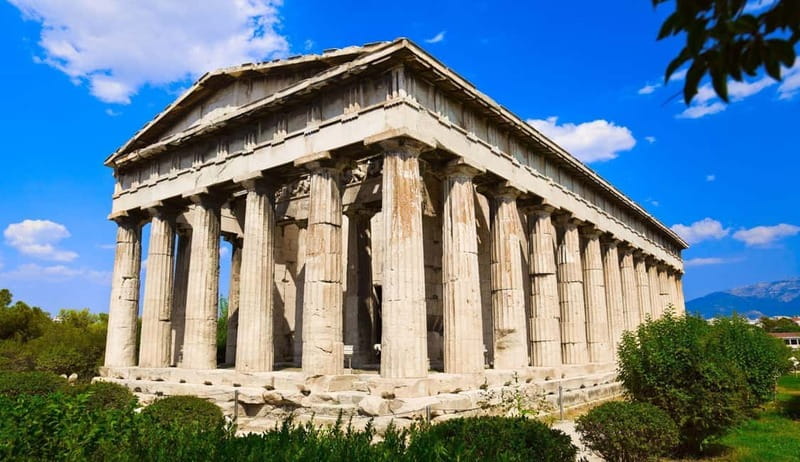
- Temple of Hephaestus: one of the best-preserved
- The guide makes the difference: licensed, English-led, and tuned to pace
- Practical tips to make the 4 hours feel easy
- Who this tour fits best (and who might want something else)
- Should you book the Acropolis & Ancient Agora tour?
- FAQ
- What’s included in the tour price?
- How long is the tour?
- Where do we meet the guide?
- Is this tour offered in English?
- Can we take photos?
- What should I bring?
- Is the tour suitable for people with mobility issues or young children?
Key things I’d plan around
- Skip-the-line access to both the Acropolis and the Ancient Agora saves serious time
- Wireless hearing headsets mean you won’t miss key details over crowd noise
- South Slopes route gives you classic views plus a calmer approach
- All entrances included, so you’re not hunting down extras once you arrive
- Agora focus beyond the ruins, including the Stoa of Attalos area and the civic story
More ways up the sacred rock, set side by side
- Athens: Acropolis & up to 5 Archaeological Sites Combo Pass
★ 4.2 · 13,904 reviews - Athens: Acropolis, Parthenon & Acropolis Museum Guided Tour
★ 4.8 · 9,316 reviews - The Acropolis, Parthenon & Acropolis Museum Guided Tour
★ 4.7 · 8,493 reviews - Acropolis: Premium Acropolis and Parthenon Guided Tour
★ 4.8 · 5,208 reviews
The value of doing Acropolis and Agora together
Seeing the Acropolis alone is already a full day. Seeing it plus the Ancient Agora in one half-day is the real win. The Acropolis is where Athens projected power, culture, and religious life. The Agora is where people actually talked politics, bought goods, argued philosophy, and ran the civic show. Put them together and you get the Athenian “head and heart” in one arc.
At $126 per person for a 4-hour guided walk, this tour can feel like a deal once you see what’s included. You’re not just paying for a guide’s time. You’re getting licensed, English-speaking guidance, wireless headsets, and entry tickets for both sites with no extra fees at the door. Add skip-the-line access and it stops being just a sightseeing walk. It becomes a time-saver.
Also, the pacing matters. The tour is designed as a walking route with planned stops and built-in viewing time, including a short break on the Acropolis. When you’re paying for guidance, you want more than someone reading dates. You want help seeing what your eyes might miss—construction details, why a temple faced where it did, and how the Agora’s layout shaped public life.
Meeting at Porinou 5: easy start, smart location
You meet at the Office of Athens Walks on Porinou 5, very close to the Acropolis Metro Station. That matters more than it sounds. Athens has multiple entrances and multiple “you’ll find it easily” meeting points. This one is straightforward, and you’ll start the day with momentum instead of stress.
Plan to arrive about 15 minutes early. You’ll want time to check in, get oriented, and settle your water-and-sunscreen routine before you start climbing. This tour is described as a moderate walking experience, and the Acropolis portion includes an ascent up the South Slopes. Comfortable shoes aren’t optional—they’re the difference between enjoying the views and spending the day thinking about your calves.
One small but important note: flash photography is not allowed. Regular photos without flash are fine, but turn off flash mode on your phone or camera before you begin.
South Slopes of the Acropolis: the part many people rush past
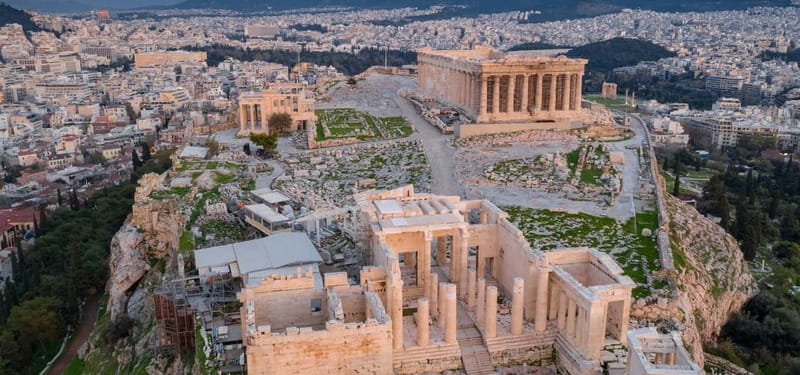
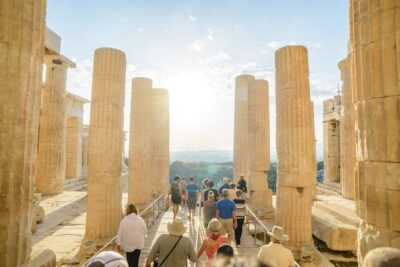
The tour’s approach to the Acropolis is one of its best practical choices. You enter via a less crowded and scenic route, then work your way up the South Slopes. Instead of treating the Acropolis as one big staircase to the Parthenon, you get time to notice what sits on the slopes—plants, archaeological features, and the general feel of the place as a living religious and cultural setting.
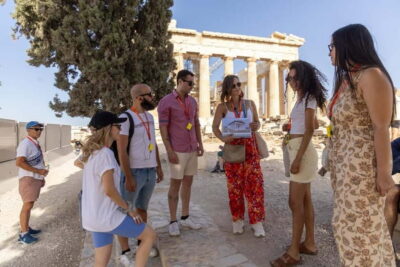
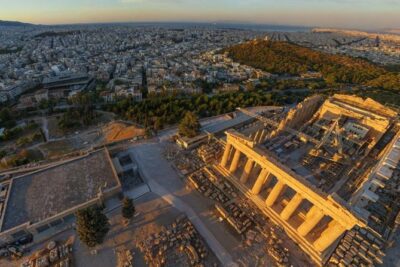
As you climb, the guide’s job is to translate scale. The Acropolis can look like one set of ruins from a distance, but on the ground it’s layers of design. You’ll hear how the site functioned in ancient Greek religion and culture, and why the monuments were placed where they were.
This is where wireless headsets really earn their keep. Even if you’re standing near other groups, you can still focus on what your guide is pointing out—small architectural cues and the reasoning behind them.
And yes, you get the views. You’re up high, you’re moving slowly enough to look around, and you’ll be in position for photos that make Athens look like it’s been waiting under your feet.
Down where the old city met and traded

The theater stop: Dionysus sets the mood
Before you reach the main temple zone, you pass by the Theatre of Dionysus and then the Odeon of Herodes Atticus area. These aren’t random warm-up points. They help frame the Acropolis as part of a wider Athens—one where performance, civic identity, and religion intersected.
The Theatre of Dionysus gets your attention early because it anchors the idea that the Greeks didn’t just build for worship. They staged community life. Your guide gives context before the grand temples, so when the sacred architecture shows up, it feels less like sightseeing and more like understanding a system.
This segment is also a good reminder that Athens is not one monument. It’s an entire city of connected spaces.
Parthenon, Erechtheion, Temple of Athena Nike: what you’re actually looking at
Once you’re in the Acropolis complex, the tour goes for the icons: Propylaea, Parthenon, Erechtheion, and the Temple of Athena Nike.
Here’s what I like about this structure: each stop teaches a different lesson.
Parthenon: democracy in stone form
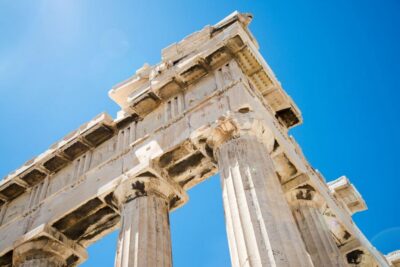
The Parthenon is treated as the centerpiece, dedicated to Athena. You’ll hear about how it was constructed and why it became a symbol of Greek culture and democracy. The guide’s focus helps you see the building as more than a famous photo backdrop. You start understanding why it mattered to Athenian identity.
Erechtheion and the Caryatids
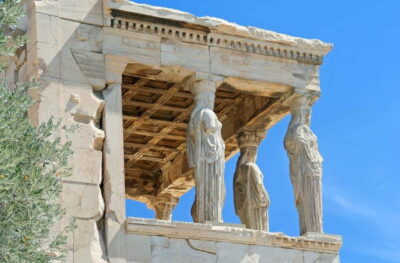
Next comes the Erechtheion, known for its unusual architecture and the famous Caryatids. This is a great stop for anyone who likes details—human figures carved as supporting columns. The guide connects those features to the broader story of what the site represented and how it influenced later art and architecture.
Temple of Athena Nike: smaller, but sharp
Then you get Temple of Athena Nike. It’s smaller than the Parthenon, but the guide approach helps you appreciate the craftsmanship and the specific theme—victory—tied to the goddess.
Between these three, you come away with a better sense of how Greek temple design could communicate big ideas. Shape, placement, and decoration weren’t just aesthetics. They were communication tools.
Break time on the Acropolis: use it well
You get a 15-minute break on the Acropolis. That’s a real quality-of-life feature, especially if you’re visiting in warmer months. During the break, refill water, use sunscreen again, and take a slow lap with your own eyes. Then you’ll be ready for the next step.
If you’re prone to museum fatigue, this is the moment to reset. The Acropolis portion can stack up fast: iconic structures, explanations, and constant looking up. The break helps keep your attention from turning into autopilot.
Ancient Agora: the civic Athens you can feel
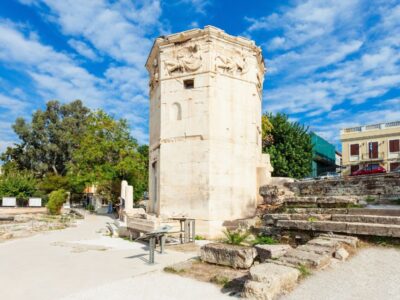
After the Acropolis, you head down to the Ancient Agora, the civic and commercial heart of ancient Athens. This section shifts the story from gods and monuments to people and daily life.
The Agora isn’t just about what’s left standing. It’s about what happened on the ground. The guide walks you through how political, social, and commercial activity worked here, turning ruins into a mental map of interaction.
Stoa of Attalos: where artifacts live today
One highlight is the Stoa of Attalos, which now houses a museum space showing artifacts from the site. Even if you don’t spend ages inside, it adds meaning. The Agora doesn’t feel like a dead open-air set. It feels like a place with a continuous afterlife through objects and research.
Temple of Hephaestus: one of the best-preserved
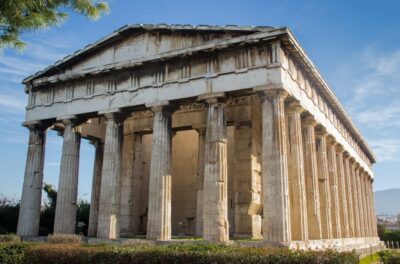
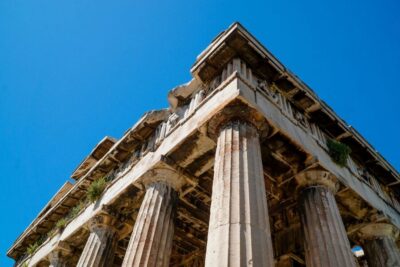
You’ll also see the Temple of Hephaestus, widely noted as one of the best-preserved ancient temples. The dedication to Hephaestus (craftsmanship) gives you another lens for why the Agora mattered. Athens wasn’t only about thinking and arguing. It depended on skills, production, and trade.
As you walk, the guide points out other monuments and statues that once adorned the Agora, so your brain can connect the present ruins with the past visual noise of a functioning city.
The guide makes the difference: licensed, English-led, and tuned to pace
A big selling point here is the type of guide. This tour is led by a licensed archaeologist or historian, speaking English. You can feel the difference when your guide is explaining not just what you see, but how to read it.
From the pattern of guide names and feedback, you’ll likely get someone with strong pacing and a friendly teaching style. Names that show up include Anastasia, Lisa, Annie, Artemis, Kostas, Yannis, Demos, Hermes, Alia, Helena, and Aphrodite. Across those different personalities, the common thread is clear: they keep the group moving while still making time for photos and shade when the weather demands it.
That balance is key. In Athens, you can easily end up with a guide that talks non-stop or one that rushes you through the most meaningful spots. This tour is built to keep you oriented and interested without turning the day into a lecture marathon.
Practical tips to make the 4 hours feel easy
This tour is designed for real walking. Do a little prep and you’ll enjoy it more.
- Bring water and plan to sip more often than you think. Greece heat can sneak up on you.
- Wear comfortable shoes. The climb up the South Slopes is part of the deal.
- Add a hat, sunscreen, and sunglasses. You’ll be exposed during parts of the route.
- Use your camera in the right places: the Temple of Athena Nike area and the Parthenon viewpoints are where your photos tend to look best. Just remember no flash.
- If you’re visiting during peak crowds, the skip-the-line plan helps, but you’ll still want patience inside the sites. It’s normal.
The other quiet advantage is the meeting point. Getting started close to the metro helps you stay on schedule. On a short, 4-hour tour, delays hurt more than you’d expect.
Who this tour fits best (and who might want something else)
This is a great choice if you want the cleanest path through Athens’ two main ancient zones: the Acropolis and the Ancient Agora. You’ll enjoy it if you like guided explanations that turn ruins into stories, and if you appreciate hearing context instead of wandering alone.
It’s also ideal if you’re traveling with mixed ages and want a guided pace with clear highlights. The guide group is flexible in approach, and the day includes a break to reset.
It’s not the best fit if you:
- have mobility impairments or use a wheelchair
- are looking for a fully stroller-friendly route
- are bringing children under 6, since the tour isn’t suitable for kids below that age
Should you book the Acropolis & Ancient Agora tour?
I think you should book it if you want a smart use of a half day. The combination of skip-the-line entry, wireless headsets, licensed English guidance, and tickets included makes the price feel justified. You’re not just buying access; you’re buying time, clarity, and a guided route that hits the big monuments while still teaching you what the Agora meant.
If you’re the type who hates climbing or prefers a slow, self-guided wander with no set pace, you may feel constrained. In that case, you might prefer a lighter plan. But for most people—first-timers, history fans, and anyone who wants the highest payoff per hour—this tour is a strong bet.
FAQ
What’s included in the tour price?
The tour includes expert licensed guidance, wireless hearing headsets, skip-the-line access, and all entry tickets for the Acropolis and Ancient Agora with no additional fees.
How long is the tour?
The tour lasts about 4 hours.
Where do we meet the guide?
You meet at the Office of Athens Walks on Porinou 5, which is close to the Acropolis Metro Station.
Is this tour offered in English?
Yes, the tour is English only.
Can we take photos?
You can bring a camera, but flash photography is not allowed.
What should I bring?
Bring comfortable walking shoes, a hat, sunscreen, water, and your camera.
Is the tour suitable for people with mobility issues or young children?
The tour is not suitable for wheelchair users or people with mobility impairments, and it is not suitable for children under 6.
More Tour Reviews in Athens
- Athens: Acropolis & up to 5 Archaeological Sites Combo Pass★ 4.2 · 13,904 reviews
- Athens: Acropolis, Parthenon & Acropolis Museum Guided Tour★ 4.8 · 9,316 reviews
- The Acropolis, Parthenon & Acropolis Museum Guided Tour★ 4.7 · 8,493 reviews
- Athens: Cape Sounion & Poseidon Temple Sunset Half-Day Trip★ 4.8 · 8,241 reviews
- Acropolis: Premium Acropolis and Parthenon Guided Tour★ 4.8 · 5,208 reviews
- Athens: Mythology of Delphi, Museum and Arachova Guided Tour★ 4.7 · 5,102 reviews
More Hours in the Ancient Agora
- Athens Half Day Tour, Acropolis, Parthenon, Temple of Olympian Zeus & Hephaistus★ 5.0 · 609 reviews
- Athens: Agora and Hephaistos Temple Entrance Ticket★ 4.0 · 449 reviews
- Athens: Ancient Agora E-Ticket and Audio Tour★ 3.9 · 413 reviews
- Athens: Roman Agora & Ancient Agora E-ticket & 2 Audio Tours★ 4.1 · 107 reviews
- Ancient Athens Segway Tour with Agora and Kerameikos★ 5.0 · 94 reviews
- Acropolis of Athens, Ancient Agora and the Agora Museum Tour★ 5.0 · 86 reviews
The Acropolis, a Few More Ways Up
- Athens: Acropolis & up to 5 Archaeological Sites Combo Pass★ 4.2 · 13,904 reviews
- Athens: Acropolis, Parthenon & Acropolis Museum Guided Tour★ 4.8 · 9,316 reviews
- The Acropolis, Parthenon & Acropolis Museum Guided Tour★ 4.7 · 8,493 reviews
- Acropolis: Premium Acropolis and Parthenon Guided Tour★ 4.8 · 5,208 reviews
- Acropolis and Parthenon Guided Walking Tour★ 5.0 · 4,755 reviews
- Athens: Acropolis, Parthenon & Acropolis Museum Guided Tour★ 4.8 · 3,579 reviews
Fresh Off the Boat: New Athens Reviews





Acropolis & Parthenon Tours, compared.
 ★ 4.2Acropolis & up to 5 Archaeological Sites Combo PassFrom $4213,904 reviews
 ★ 4.8Acropolis, Parthenon & Acropolis Museum Guided TourFrom $409,316 reviews
 ★ 4.7The Acropolis, Parthenon & Acropolis Museum Guided TourFrom $408,493 reviews
 ★ 4.8Acropolis: Premium Acropolis and Parthenon Guided TourFrom $405,208 reviews
 ★ 5.0Acropolis and Parthenon Guided Walking TourFrom $414,755 reviews
★ 4.8Acropolis, Parthenon & Acropolis Museum Guided TourFrom $413,579 reviews
★ 5.0Acropolis and Parthenon Guided Walking TourFrom $414,755 reviews
★ 4.8Acropolis, Parthenon & Acropolis Museum Guided TourFrom $413,579 reviews
 ★ 4.0Acropolis Ticket with Audio GuideFrom $473,575 reviews
 ★ 5.0Athens Scenic Electric Bike Tour with optional Acropolis visitFrom $353,350 reviews
Browse the lists this tour appears in