

Reviewed · ANCIENT AGORA TOURS
Athens: Ancient Agora E-Ticket and Audio Tour
The Ancient Agora works best when you control the pace. This visit pairs a pre-booked e-ticket with an offline audio tour so you can hear the story of Athenian democracy while you walk. The trade-off: it’s self-guided, so you’ll be relying on your phone and good route sense in spots where signage can feel a bit vague.
I like that the audio doesn’t just name ruins. It ties places together, starting with the reforms of Solon and moving through the spaces where citizens argued, voted, and even punished. One practical drawback to plan around: you need your own headphones and you must download everything before you arrive, since there’s no internet access in the archaeological area.
In This Review
- Key highlights worth planning for
- Why this Ancient Agora audio route feels efficient (and not exhausting)
- Entering the Ancient Agora: e-ticket entry and your first museum moment
- Solon’s reforms and the Agora’s political “origin story”
- Tholos area and the Bouleuterion: where laws got made
- Mars Hill, the Pnyx views, and the Rock of Ares mindset shift
- Philopappos hill and the Prison of Socrates area
- Museum of the Ancient Agora: what you should not skip (especially the 2nd floor)
- Theatre of Dionysus: the finish line near the Acropolis area
- Price and value: is $30 for e-ticket + offline audio a good deal?
- Who this Ancient Agora e-ticket + audio tour fits best
- Quick practical advice so your 2 hours go smoothly
- Should you book this Ancient Agora e-ticket and audio tour?
- FAQ
- How long is the Ancient Agora e-ticket and audio tour?
- Do I need a live guide for this experience?
- Will I have internet access inside the archaeological site?
- What languages are available for the audio guide?
- Do I need headphones or a smartphone to use the tour?
- Which phones are compatible with the audio tour?
- Where do I get the e-ticket after booking?
- Are there free or reduced ticket options for students or older visitors?
- Can I bring luggage or large bags?
Key highlights worth planning for

- Fast, pre-booked entry into the Ancient Agora so you spend less time waiting and more time walking
- Offline interactive map + audio for use with roaming charges avoided
- Democracy storytelling that connects Solon, the Bouleuterion, and key personalities like Pericles
- Power stops for views and ideas: Pnyx, Mars Hill, the Rock of Ares, and the Prison of Socrates area
- Museum time with options including an especially worthwhile look from the 2nd floor back toward the Panathenaic Way
- Easy wrap-up near the Acropolis area at the theatre of Dionysus, including the feeling of Athens theater life
Down where the old city met and traded
- Athens Half Day Tour, Acropolis, Parthenon, Temple of Olympian Zeus & Hephaistus
★ 5.0 · 609 reviews - Athens: Agora and Hephaistos Temple Entrance Ticket
★ 4.0 · 449 reviews - Athens: Ancient Agora E-Ticket and Audio Tour
★ 3.9 · 413 reviews - Athens: Roman Agora & Ancient Agora E-ticket & 2 Audio Tours
★ 4.1 · 107 reviews
Why this Ancient Agora audio route feels efficient (and not exhausting)
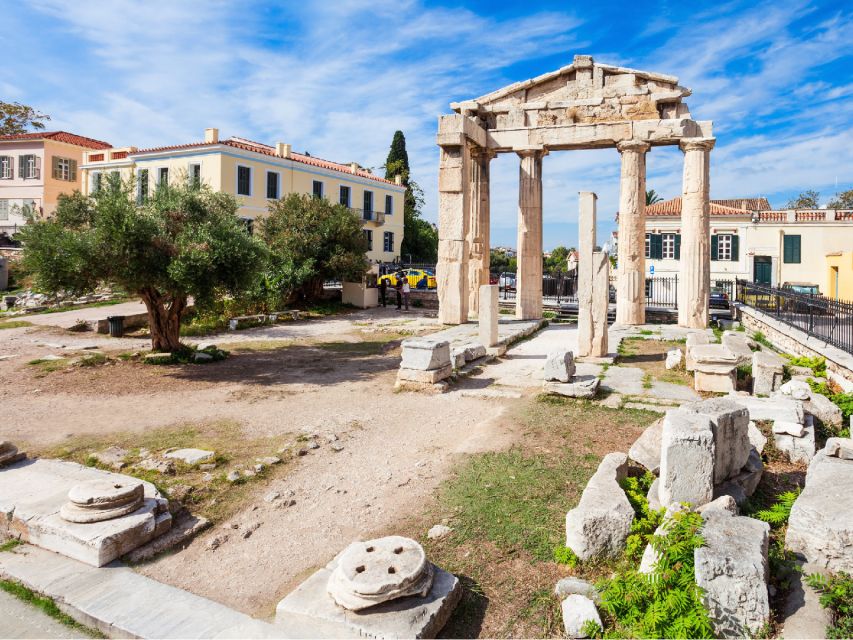
Athens ruins can feel either magical or messy, depending on how you approach them. This format helps you avoid the messy part. You enter with an e-ticket, then you follow a timed, stop-by-stop story on your Android or iOS phone. The key is that you can listen at a comfortable walking speed instead of keeping up with a group.
It’s also a smart choice if you’ve already seen the Acropolis from the outside and want the political “engine room” behind it. The Ancient Agora is where people met, debated, and built the civic habits that shaped the city. You’ll hear that through the evolution of Athenian democracy as you move between major sites.
The biggest thing to know upfront: this is not a guided lecture with a person fielding questions. If you like asking why, how, and what happened next, you might miss that. If you like wandering with a clear narrative, this works well.
Entering the Ancient Agora: e-ticket entry and your first museum moment
Your visit starts with a pre-booked e-ticket and a smoother entry flow than the slow, paper-heavy version. After booking, you get a separate email from the local partner with your e-ticket and audio-tour instructions. Check your spam folder, because that email can end up there.
At the entrance, you’ll need to validate using the on-site validating machines. The important part: printed tickets or a downloaded ticket on your phone are required. Also, GetYourGuide vouchers aren’t accepted at the entrance, so don’t show up holding only that.
Once inside, you’ll likely gravitate toward the Museum of the Ancient Agora if you want air-conditioned breathing room. The museum adds context to what you’ll see outside, and it’s also where you can slow down and learn what the ruins likely meant in daily life.
Practical tip that makes the whole experience better: go into the visit with your phone charged and your headphones ready. If your battery runs low, you’ll lose the audio guide, and that guide is the main way the story ties the sites together.
Solon’s reforms and the Agora’s political “origin story”
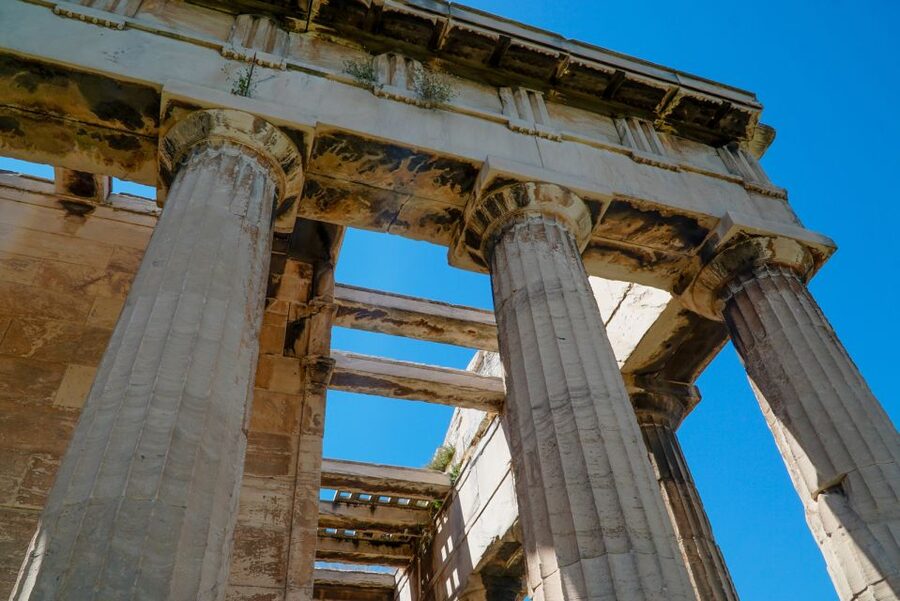
The audio tour begins with the chain of events that made democracy possible in ancient Athens, starting near the foot of the hill where the temple of Hephaestus is still visible. This is a great opening because it turns the Agora from a collection of stones into a system of laws and civic habits.
You’ll learn about Solon and his legal reforms—legal changes that helped form an early civil society. The story matters because it explains why certain places mattered, not just what they looked like. Instead of guessing, you get the “why” as you walk.
Then the narration moves uphill near the Tholos, pointing you toward the ruined Bouleuterion. This is where 500 Athenians met daily to draw up laws and proposals presented to the city’s popular assembly. When you hear that number and understand the job, the space feels more specific. You’re no longer reading a history label; you’re picturing meetings.
If you’re the type who likes thinking through systems—who had power, how decisions were made, and what counted as citizenship—this segment will click fast.
Worth comparing before you book this Athens tour:


Tholos area and the Bouleuterion: where laws got made
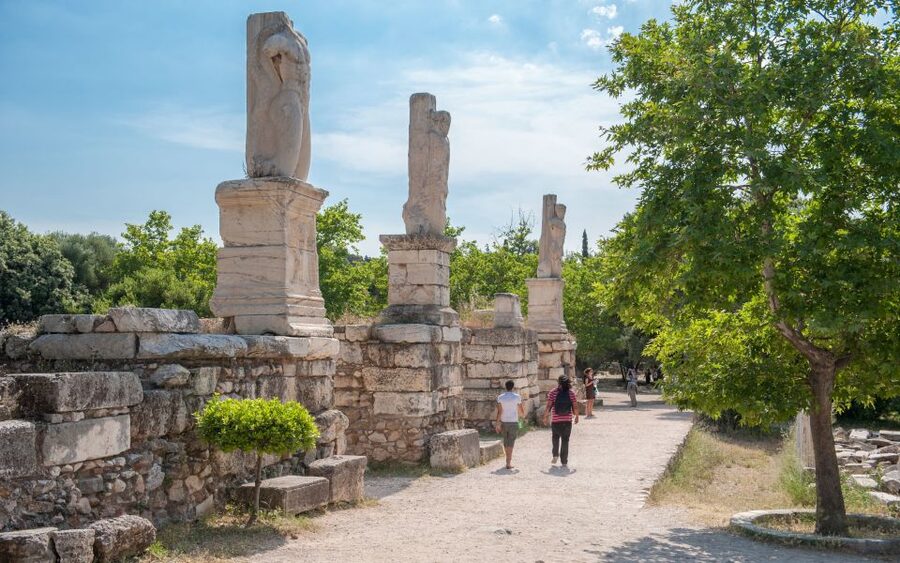
This part of the route is where the audio tour really earns its keep. Ancient Athens is often described in big terms—democracy, citizen power, debate. But the Bouleuterion story gives you a grounded mechanism. You’re hearing about a daily process, not a once-a-year spectacle.
As you walk, the tour includes anecdotal stories tied to prominent figures such as Aristides the Just and Pericles. Those personality threads help you keep names straight and avoid the common problem of tours that recite facts but don’t connect them to real people.
One consideration: the route depends on you following stop prompts and on the map. Some visitors find the walking directions less than perfect, with paths that can run parallel and names that are hard to spot. If you’re not confident with navigation, give yourself extra time and check the map often, especially at turn points.
Mars Hill, the Pnyx views, and the Rock of Ares mindset shift

From here, the tour shifts from “how decisions got made” to “what it felt like to stand in the space where decisions happened.” You’ll encounter viewpoints connected to Mars Hill, the Pnyx, and the Rock of Ares.
These stops are valuable because they help you connect scale and geography to politics. The Pnyx area is tied directly to the idea of popular assembly, so when you look out, you can imagine why gathering in that spot mattered. Even if you don’t know the exact foot-by-foot layout, you’ll understand that Athens politics wasn’t happening in a vacuum. People could see the city and the civic identity was anchored in place.
The Rock of Ares is also part of that mental map. It’s the kind of location that makes history feel physical, even when you’re looking at ruins.
If you prefer your tours with scenery as a side benefit, you’ll enjoy these segments. If you want everything strictly indoors or heavily structured, you might find the pacing more walk-and-listen than “museum-only.”
Philopappos hill and the Prison of Socrates area

As the route climbs toward Philopappos hill, the audio tour guides you to the prison of Socrates and offers insights into the life and death of the philosopher. This is one of those stops where a story can outweigh the amount of stone you actually see.
The value here is in how the narration connects philosophy to civic life. Socrates isn’t presented just as a name from school. You hear his story in relation to a society that debated, judged, and punished in the name of public order.
You’ll also start to feel the tour building toward its finale near the Acropolis archaeological site. That transition matters because it helps you see the larger Athens picture: Agora for civic process, then the Acropolis area for the city’s big cultural symbols.
Also, this is a good time to think about timing. If the weather is warm, plan to do the walking segments earlier or later in the day, when the heat is less intense. The best strategy is to match your listening pace to your comfort.
Museum of the Ancient Agora: what you should not skip (especially the 2nd floor)

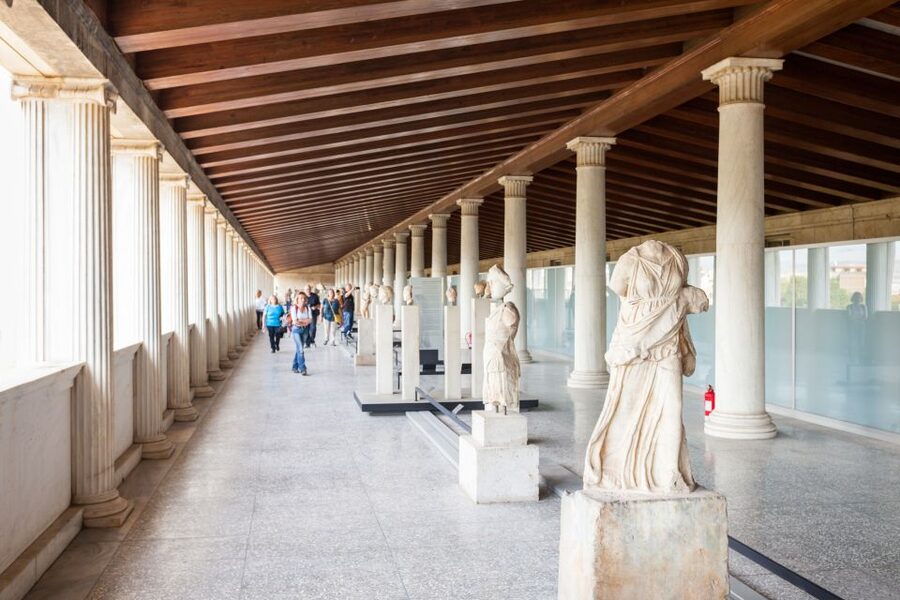
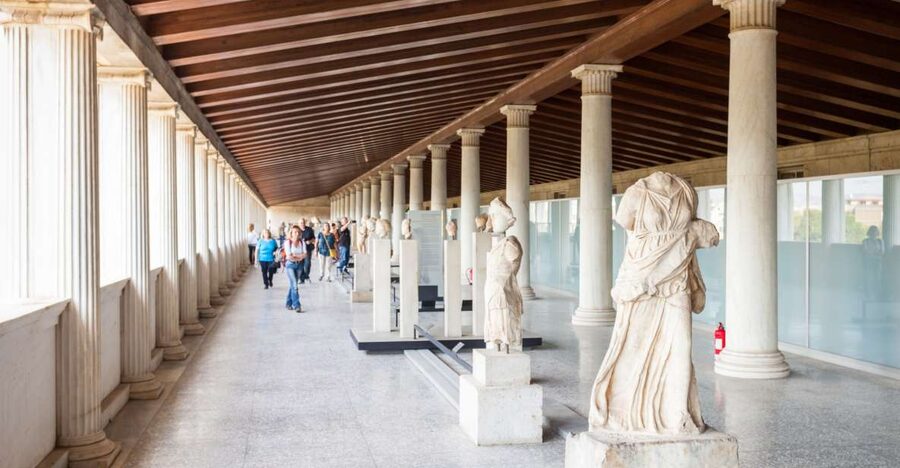
If you only give the museum a quick glance, you’ll likely miss the best “aha” moment. A highlight is the 2nd floor, which gives an elevated perspective of the Panathenaic Way. That viewpoint changes how the complex reads, and it’s the kind of detail that many people overlook when they only focus on street-level ruins.
The museum itself is also a good break in the day. It’s a practical refuge from sun and heat, and it helps you reset your focus before returning to outdoor sites.
Inside, you can expect exhibits that explain how Athenians defended their democracy—and also how those methods could be cruel. That combination is important. Democracy here isn’t portrayed as a gentle ideal only; it’s shown as a working system that still had teeth.
One tip that improves retention: listen to the audio outside, then revisit museum context right after. The museum helps explain what you just saw, and the audio makes the museum feel less like isolated artifacts.
Theatre of Dionysus: the finish line near the Acropolis area
The audio tour ends in easy reach of the Acropolis archaeological site, in front of the theatre of Dionysus. This ending works because theatre in ancient Athens is tied to civic identity, storytelling, and public life—so it feels like a natural extension of the democracy theme.
The tour highlights the idea that this is the oldest theatre of the world and points you to the actual place where tragedies by Aeschylus, Sophocles, and Euripides were once staged. Even if you can’t visualize every detail, the location gives you a strong sense of why Athens mattered culturally, not only politically.
If you plan to continue to the Acropolis area afterward, this finale is a convenient handoff. You’ll already be mentally connected to the city’s larger story instead of feeling like you’re switching topics.
Price and value: is $30 for e-ticket + offline audio a good deal?
At about $30 per person for 90 minutes to 2 hours, you’re not paying for a live guide. You’re paying for two things that matter a lot in Athens: faster entry and an audio experience designed to reduce guesswork.
The fast-track element saves time, which is often the real cost of a ruin visit—your limited hours in a busy city. And the offline audio package is genuinely practical. You can download before you arrive, avoid roaming charges, and listen without scrambling for connectivity where internet access isn’t available.
If you’re the type who enjoys learning while walking, this is good value. If you prefer reading at your own speed with printed materials only, or if you dislike phone-based navigation, the value drops. In that case, you might prefer another format that’s more human-led.
One more value angle: if your Athens plan includes both the Agora and the Acropolis, pairing the two can make sense. The Agora focuses on civic systems, while the Acropolis often gives you the big artistic and monumental story. Together, they give you a more complete picture for your time.
Who this Ancient Agora e-ticket + audio tour fits best
This tour is a strong match if you:
- Want a clear narrative while you walk through multiple sites
- Like self-guided pacing and hate feeling rushed
- Prefer offline phone support over printed maps
- Are curious about how democracy actually worked, including civic decision-making and public life
You might want to think twice if you:
- Need a live guide to answer questions
- Rely on Windows phones (the audio tour isn’t compatible)
- Are using older iPhone or iPad models listed as not compatible
- Want wheelchair access throughout (some points aren’t wheelchair accessible)
- Hate phone tech while sightseeing, especially if navigation directions seem vague to you
Quick practical advice so your 2 hours go smoothly
- Download the audio tour and the e-ticket before you go, since the site has no internet access.
- Bring headphones and keep your phone charged.
- Don’t expect roaming or live routing inside the ruins.
- If you want photos while listening, know that the recording may stop when you zoom in—so take a photo, then resume.
- If you want a cooler walk, aim for earlier hours or late afternoon.
Should you book this Ancient Agora e-ticket and audio tour?
I’d book it if you want the Agora’s democracy story without the pressure of a group pace. The combination of offline audio, an interactive map, and an entry process that reduces waiting makes it a practical way to get more from a limited Athens visit.
Skip it or choose a different format if you strongly prefer live guidance, you can’t use the listed compatible devices, or you know you get frustrated by navigation gaps. For the right traveler, though, this is a smart, low-stress way to turn classical Athens into an understandable walk.
FAQ
How long is the Ancient Agora e-ticket and audio tour?
It lasts between 90 minutes and 2 hours, depending on the starting time you select.
Do I need a live guide for this experience?
No. You get a self-guided audio tour on your smartphone, along with the e-ticket for entry.
Will I have internet access inside the archaeological site?
No internet access is available in the archaeological site, so you should download the audio tour and ticket content before you arrive.
What languages are available for the audio guide?
The audio guide is available in English, Italian, Greek, German, Spanish, and French.
Do I need headphones or a smartphone to use the tour?
Yes, you’ll need a smartphone to run the audio tour and headphones to listen comfortably.
Which phones are compatible with the audio tour?
It’s compatible with Android and iOS devices as stated, but it is not compatible with Windows phones and certain older Apple devices (including iPhone 5/5C or older, iPod Touch 5th generation or older, iPad 4th generation or older, and iPad Mini 1st generation).
Where do I get the e-ticket after booking?
After booking, you’ll receive a separate email from the local partner with your e-ticket and instructions. Check your spam folder too.
Are there free or reduced ticket options for students or older visitors?
EU students and minors can enter for free with ID or passport, but they must queue to receive the zero-value pass. Non-EU students and participants over 65 can get reduced tickets, but they must queue at the ticket office.
Can I bring luggage or large bags?
No. Luggage or large bags are not allowed.
More Tours in Athens
- Athens: Acropolis, Parthenon & Acropolis Museum Guided Tour★ 4.8 · 9,316 reviews
- The Acropolis, Parthenon & Acropolis Museum Guided Tour★ 4.7 · 8,493 reviews
- Acropolis: Premium Acropolis and Parthenon Guided Tour★ 4.8 · 5,208 reviews
- Athens: Mythology of Delphi, Museum and Arachova Guided Tour★ 4.7 · 5,102 reviews
- Acropolis and Parthenon Guided Walking Tour★ 5.0 · 4,755 reviews
- Greek Food Walking Tour in Athens★ 5.0 · 4,740 reviews
More Tour Reviews in Athens
- Athens: Acropolis & up to 5 Archaeological Sites Combo Pass★ 4.2 · 13,904 reviews
- Athens: Acropolis, Parthenon & Acropolis Museum Guided Tour★ 4.8 · 9,316 reviews
- The Acropolis, Parthenon & Acropolis Museum Guided Tour★ 4.7 · 8,493 reviews
- Athens: Cape Sounion & Poseidon Temple Sunset Half-Day Trip★ 4.8 · 8,241 reviews
- Acropolis: Premium Acropolis and Parthenon Guided Tour★ 4.8 · 5,208 reviews
- Athens: Mythology of Delphi, Museum and Arachova Guided Tour★ 4.7 · 5,102 reviews
More Hours in the Ancient Agora
- Athens Half Day Tour, Acropolis, Parthenon, Temple of Olympian Zeus & Hephaistus★ 5.0 · 609 reviews
- Athens: Agora and Hephaistos Temple Entrance Ticket★ 4.0 · 449 reviews
- Athens: Roman Agora & Ancient Agora E-ticket & 2 Audio Tours★ 4.1 · 107 reviews
- Acropolis & Ancient Agora Guided tour included all Entrances★ 4.9 · 102 reviews
- Ancient Athens Segway Tour with Agora and Kerameikos★ 5.0 · 94 reviews
- Acropolis of Athens, Ancient Agora and the Agora Museum Tour★ 5.0 · 86 reviews
Fresh Off the Boat: New Athens Reviews





Ancient Agora Tours, compared.
 ★ 5.0Athens Half Day Tour, Acropolis, Parthenon, Temple of Olympian Zeus & HephaistusFrom $314609 reviews
 ★ 4.0Agora and Hephaistos Temple Entrance TicketFrom $30449 reviews
 ★ 4.1Roman Agora & Ancient Agora E-ticket & 2 Audio ToursFrom $51107 reviews
 ★ 4.9Acropolis & Ancient Agora Guided tour included all EntrancesFrom $126102 reviews
 ★ 5.0Ancient Athens Segway Tour with Agora and KerameikosFrom $8394 reviews
 ★ 5.0Acropolis of Athens, Ancient Agora and the Agora Museum TourFrom $6786 reviews
 ★ 3.9Ancient Agora Self-Guided Tour with 3D & Audio (No Ticket)From $859 reviews
 ★ 3.9Roman Agora E-Ticket and Audio GuideFrom $1841 reviews
Browse the lists this tour appears in