
Reviewed · ACROPOLIS & PARTHENON TOURS
Acropolis and Agora Tour: The Rise & Fall of Democracy
Athens can feel loud, but this tour tells it straight. This small-group Acropolis and Agora tour follows the sites tied to philosophy, theater, and civic life, with a clear story arc built around the rise and fall of democracy.
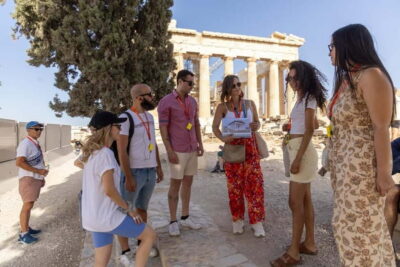
I especially like how the route forces you to connect monuments to real public life, not just take photos. I also like the pacing for a morning plan—Acropolis first, then the Ancient Agora, ending near where Athens political life actually happened. The main drawback: you’ll pay separate entry fees for the attractions (listed as about €50 per person) and the Acropolis has strict carry rules (no strollers and no big backpacks).
One more practical note: this is short on time, so you need to arrive ready to walk and ask questions. The good news is the guide style can make quick stops feel satisfying, especially when you’re interested in how ideas became public culture in Athens.
In This Review
- Key takeaways before you go
- A democracy lens on the Acropolis and Agora
- Price and value: $67.43 plus the real entry-ticket total
- The 9:00 meeting point and how the tour timing really feels
- Stop 1: Acropolis first—where Athena’s story turns into stone
- Acropolis practical heads-up
- Stops 2 to 5 on the ridge: Dionysus, Nike, the Erechtheion, and the Parthenon
- Stop 6: Ancient Agora—politics, justice, and everyday life in one place
- Stop 7: Temple of Hephaestus—craft, trade, and the work behind power
- Certified guides who shape the story (Demi, Christina, Kimon, Vassia)
- Who this tour is best for (and who should skip it)
- Comfort and practical tips that make the day easier
- Should you book this Acropolis and Agora Rise & Fall of Democracy tour?
- FAQ
- How long is the Acropolis and Agora tour?
- What does the $67.43 price include?
- How much are the entry fees?
- Where does the tour start and end?
- What time does the tour start?
- Is this tour in English?
- How big is the group?
- Are strollers or big backpacks allowed at the Acropolis?
- Do I need ID for discounts?
- What if the weather is bad?
- Can I get a full refund if I cancel?
Key takeaways before you go
- Small group (max 15) means less waiting and more chance to ask your guide follow-ups.
- Acropolis + Ancient Agora in one run helps you see civic life and sacred life as parts of the same city.
- Democracy-themed explanations connect myths, architecture, and political space without turning it into a lecture.
- Multiple Acropolis stops hit the Theatre of Dionysus, Temple of Athena Nike, and the Erechtheion, not just the Parthenon.
- You get a fun ancient Athens map so you can keep the story going after the tour ends.
- Guides can use remote headsets on some departures, which helps in noisy areas (if yours includes them).
More ways up the sacred rock, set side by side
- Athens: Acropolis & up to 5 Archaeological Sites Combo Pass
★ 4.2 · 13,904 reviews - Athens: Acropolis, Parthenon & Acropolis Museum Guided Tour
★ 4.8 · 9,316 reviews - The Acropolis, Parthenon & Acropolis Museum Guided Tour
★ 4.7 · 8,493 reviews - Acropolis: Premium Acropolis and Parthenon Guided Tour
★ 4.8 · 5,208 reviews
A democracy lens on the Acropolis and Agora

If you want Athens at street level, this is a strong format. You start on the Acropolis, where religious identity and civic pride were built into stone. Then you move to the Agora, the daily stage for politics, law, trade, and debate.
The title Rise & Fall of Democracy is more than a catchy phrase. The tour’s explanations are built to help you think about how a society organizes power, then how that power changes over time. Even if your Greek history is patchy, you’ll still get the big ideas because the guide keeps tying buildings to public life.
Price and value: $67.43 plus the real entry-ticket total
The tour price is $67.43 per person, and it includes the guide, a small-group experience, and a map. What’s not included is admission to the attractions—listed as €50 per person—and that matters when you compare “cheap vs. worth it.”
Here’s the value logic I use: the $67.43 buys you an expert certified guide and a structured route. Without that, you could wander the Acropolis and Agora on your own—but you’d likely spend more time guessing what matters. With this format, your time is guided, and you get context fast.
One more detail: the operator says they can pre-purchase entry tickets for you if you want. That’s helpful when you’re trying to keep the morning smooth.
The 9:00 meeting point and how the tour timing really feels
You meet at Dionysiou Areopagitou 45, Athina 117 42 at 9:00 am, and you end at the Ancient Agora of Athens (Athens 105 55). The schedule is listed at about 3 hours, and that’s usually a good target for planning the rest of your day.
In practice, the pace can stretch depending on questions, how long people spend looking at details, and how the group moves through the most popular sections. If you’re the type to ask “one quick question” that turns into five, build in a bit of cushion.
Down where the old city met and traded

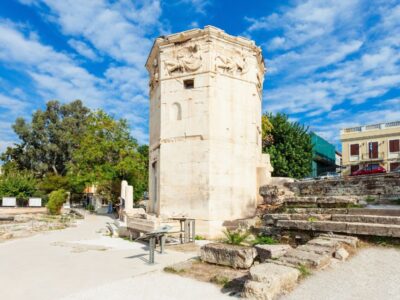
Stop 1: Acropolis first—where Athena’s story turns into stone
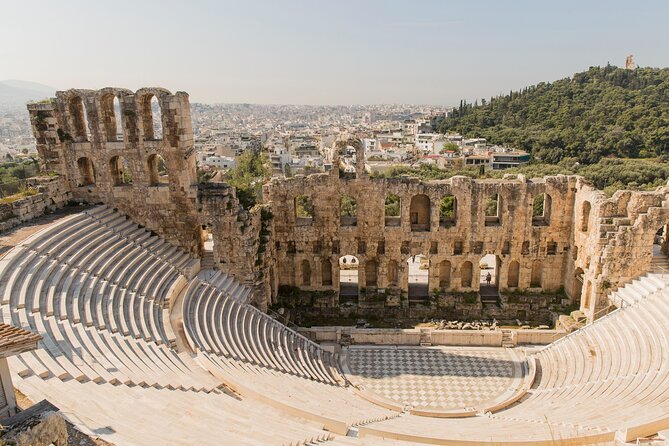
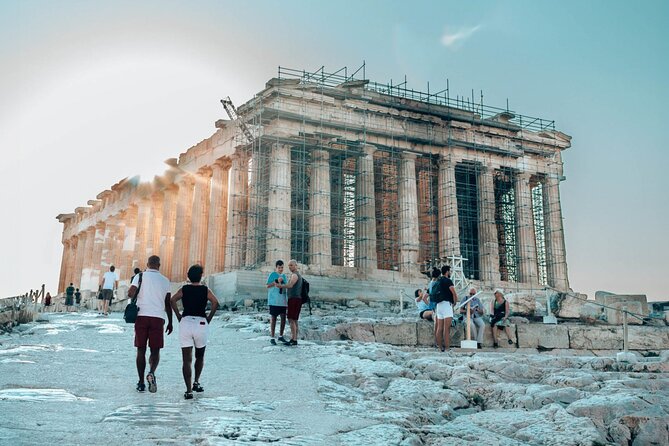
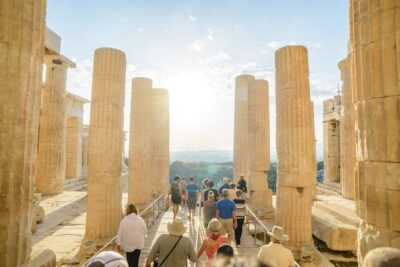
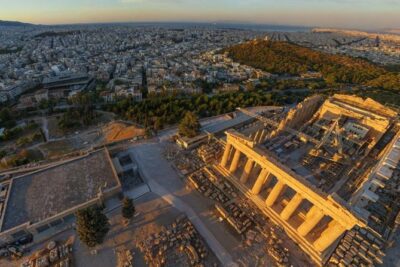
The tour starts at the Acropolis, and you get about 1 hour there. Expect the main landmarks: the Parthenon, the Temple of Athena Nike, the Erechtheion, the Propylae, and the Theatre of Dionysus area—framed as masterpieces that shaped art and culture for centuries.
What I like about starting here is that the Acropolis works best when you understand the “why.” This sanctuary was dedicated primarily to Athena, and the guide’s explanations help you see each structure as part of a larger civic-religious identity.
Acropolis practical heads-up
You can’t bring strollers, backpacks, or big bags onto the Acropolis, and that restriction can change your morning. Wear something you can move in, and keep your carry minimal.
Stops 2 to 5 on the ridge: Dionysus, Nike, the Erechtheion, and the Parthenon

After the initial Acropolis orientation, the stops get more specific—almost like walking through chapters.
Stop: Theatre of Dionysus Eleuthereus (about 15 minutes)
This is where culture met public life. The theatre is described as the oldest to be founded in Athens, and it’s tied to the first performances of major Greek playwrights: Aeschylus, Sophocles, Euripides, and Aristophanes. If you care about how public debate and public theater share the same roots, this is a great moment.
Stop: Temple of Athena Nike (about 15 minutes)
Here the story gets symbolic. The temple is dedicated to Athena and Nike, goddess of victory. There’s a legend attached to the cult statue: that it had no wings so it would never leave Athens. It’s short, but it’s a memorable way to think about how “winning” and “belonging” were intertwined.
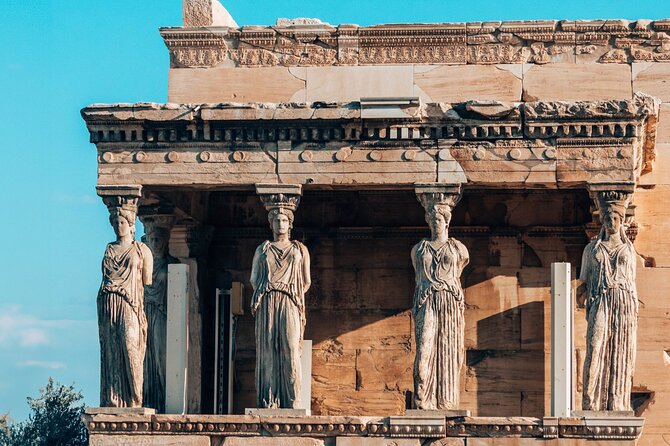
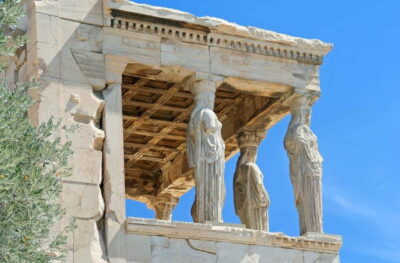
Stop: Erechtheion (about 15 minutes)
This is the temple tied to the city’s sacred authority. The description focuses on the wooden cult statue of Athena and how the temple relates to Athens at the height of its power and influence.
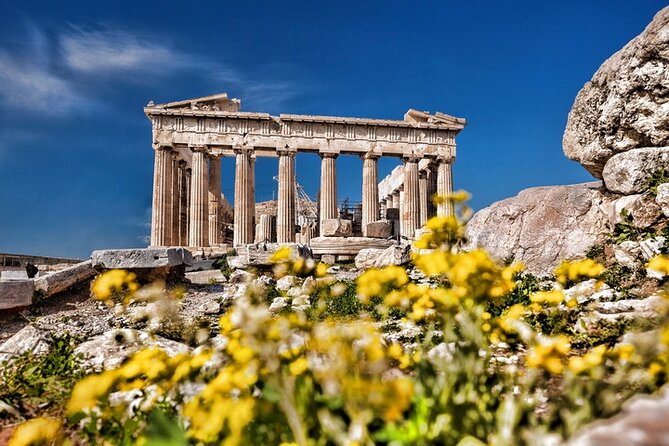
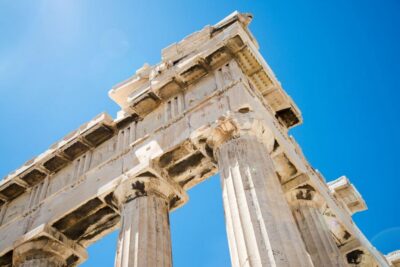
Stop: Parthenon (about 30 minutes)
You get the time a landmark like this deserves. The Parthenon is described as built in the mid-5th century BCE and dedicated to Athena Parthenos, Athena the Virgin. The guide also frames it as a culmination of the Doric order.
The trade-off of all these stops: you’re not going to linger for ages in one spot. But you do get a sequence that shows how the Acropolis isn’t just one monument—it’s a whole civic statement.
Stop 6: Ancient Agora—politics, justice, and everyday life in one place
Then the tour drops you into the Ancient Agora, and suddenly it feels less “myth on a hill” and more “life happening.” This part is about 30 minutes, and the Agora is described as the heart of Athens: political, commercial, administrative, social, religious, cultural, and even the seat of justice.
That’s a lot of jobs for one neighborhood, and the guide’s job is to help you picture how people used the space. Even without memorizing dates, you’ll get what made the Agora central: it was where decisions got made and where civic identity showed up in daily routine.
If your goal is understanding democracy rather than just seeing ruins, this stop is the payoff. It’s where “theory” turns into “where people argued, traded, judged, and lived.”
Stop 7: Temple of Hephaestus—craft, trade, and the work behind power

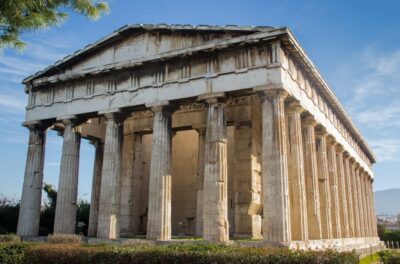
The final stop is listed as Temple of Aries on the schedule, but the description clearly centers on Hephaestus—along with Athena Ergani. This matters because it shifts the focus from rulers and philosophers to the people whose work sustained the city.
The temple of Hephaestus is described as one of the best preserved ancient temples in the world. The guide connects it to worship for:
- Hephaestus, protector of metallurgists
- Athena Ergani, protector of potters and cottage industries
So instead of ending on pure spectacle, the tour closes with a practical idea: democracy wasn’t only speeches and votes. It also depended on craftspeople, production, and the economy moving day to day.
Certified guides who shape the story (Demi, Christina, Kimon, Vassia)
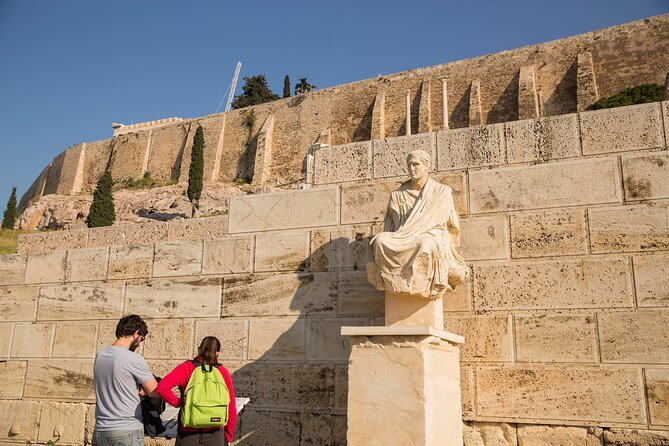
The tour is led by an expert certified guide, and the difference shows up in pacing and Q&A. In the guides I’ve seen associated with this route—like Demi, Christina, Kimon, and Vassia—the common thread is that they explain monuments while staying friendly and flexible with different group moods.
You’ll also notice how they connect myth and architecture. One guide approach is to use mythology as a map: the story helps you remember what you’re looking at and why it mattered to Athenian civic identity.
About audio: remote headsets have been mentioned on some departures, which can help when background noise makes it harder to hear. But if you don’t get them on your date, I’d still plan to stand close when the guide speaks.
Who this tour is best for (and who should skip it)
This fits you if:
- you like structured history that stays tied to real places
- you want a short walking plan instead of spending hours self-planning
- you enjoy mythology and want it connected to civic life, not treated like random stories
It may not be ideal if:
- you expect a slow, sit-everywhere kind of tour (the schedule is built for several stops)
- you need to carry a lot of gear, since big bags and strollers aren’t allowed at the Acropolis
- you’re purely chasing the longest possible time at the Parthenon, because the itinerary spreads time across multiple Acropolis sites
Comfort and practical tips that make the day easier
This morning is mostly walking and standing on ancient surfaces. Wear shoes that handle uneven stone. Bring water if you’re the type who likes it during breaks, since meals aren’t included.
Also keep your start smooth: arrive a few minutes early at 9:00 am at Dionysiou Areopagitou 45. The itinerary has multiple stops on the Acropolis ridge, so late arrivals can squeeze your group.
And if you’re under 25, the tour data notes that you may need an ID card or passport for possible discounts. Don’t rely on memory—bring the document.
Should you book this Acropolis and Agora Rise & Fall of Democracy tour?
I think it’s a great pick if you want Athens with a point of view. The combination of Acropolis landmarks (Athena, Nike, Dionysus theater, the Erechtheion, the Parthenon) and the Agora’s political center gives you a more complete picture than doing either area alone.
Book it if you value:
- a small group guided route
- democracy-focused explanations that connect architecture and civic space
- the time efficiency of covering key sites in a single morning
I’d hesitate if you’re sensitive to the Acropolis rules about bags or if you hate paying extra for entry fees. But if you’re ready for the realities of Acropolis access and you want context you can carry home, this tour is a smart use of your Athens time.
If the weather looks shaky, note the tour requires good weather and may be offered another date or a full refund if it’s canceled for poor conditions.
FAQ
How long is the Acropolis and Agora tour?
The tour runs for about 3 hours (approx.). Some departures may feel a bit longer depending on the pace and questions.
What does the $67.43 price include?
It includes an expert certified guide, a small-group tour, and a fun ancient Athens map. The tour is offered in English and uses a mobile ticket.
How much are the entry fees?
Entry fees are not included in the tour price. The listed cost to budget for is €50.00 per person.
Where does the tour start and end?
It starts at Dionysiou Areopagitou 45, Athina 117 42, Greece. It ends at the Ancient Agora of Athens (Athens 105 55, Greece).
What time does the tour start?
The start time is 9:00 am.
Is this tour in English?
Yes, the tour is offered in English.
How big is the group?
The maximum group size is 15 travelers.
Are strollers or big backpacks allowed at the Acropolis?
No. Strollers, backpacks, and big bags are not allowed at the Acropolis and shouldn’t be taken on the tour.
Do I need ID for discounts?
If you are under 25, the tour notes that an ID card or passport is required for possible discounts.
What if the weather is bad?
The tour requires good weather. If it’s canceled due to poor weather, you’ll be offered a different date or a full refund.
Can I get a full refund if I cancel?
Yes. Free cancellation is offered up to 24 hours in advance for a full refund.
More Tour Reviews in Athens
- Athens: Acropolis & up to 5 Archaeological Sites Combo Pass★ 4.2 · 13,904 reviews
- Athens: Acropolis, Parthenon & Acropolis Museum Guided Tour★ 4.8 · 9,316 reviews
- The Acropolis, Parthenon & Acropolis Museum Guided Tour★ 4.7 · 8,493 reviews
- Athens: Cape Sounion & Poseidon Temple Sunset Half-Day Trip★ 4.8 · 8,241 reviews
- Acropolis: Premium Acropolis and Parthenon Guided Tour★ 4.8 · 5,208 reviews
- Athens: Mythology of Delphi, Museum and Arachova Guided Tour★ 4.7 · 5,102 reviews
More Hours in the Ancient Agora
- Athens Half Day Tour, Acropolis, Parthenon, Temple of Olympian Zeus & Hephaistus★ 5.0 · 609 reviews
- Athens: Agora and Hephaistos Temple Entrance Ticket★ 4.0 · 449 reviews
- Athens: Ancient Agora E-Ticket and Audio Tour★ 3.9 · 413 reviews
- Athens: Roman Agora & Ancient Agora E-ticket & 2 Audio Tours★ 4.1 · 107 reviews
- Acropolis & Ancient Agora Guided tour included all Entrances★ 4.9 · 102 reviews
- Ancient Athens Segway Tour with Agora and Kerameikos★ 5.0 · 94 reviews
The Acropolis, a Few More Ways Up
- Athens: Acropolis & up to 5 Archaeological Sites Combo Pass★ 4.2 · 13,904 reviews
- Athens: Acropolis, Parthenon & Acropolis Museum Guided Tour★ 4.8 · 9,316 reviews
- The Acropolis, Parthenon & Acropolis Museum Guided Tour★ 4.7 · 8,493 reviews
- Acropolis: Premium Acropolis and Parthenon Guided Tour★ 4.8 · 5,208 reviews
- Acropolis and Parthenon Guided Walking Tour★ 5.0 · 4,755 reviews
- Athens: Acropolis, Parthenon & Acropolis Museum Guided Tour★ 4.8 · 3,579 reviews
Fresh Off the Boat: New Athens Reviews





Acropolis & Parthenon Tours, compared.
 ★ 4.2Acropolis & up to 5 Archaeological Sites Combo PassFrom $4213,904 reviews
 ★ 4.8Acropolis, Parthenon & Acropolis Museum Guided TourFrom $409,316 reviews
 ★ 4.7The Acropolis, Parthenon & Acropolis Museum Guided TourFrom $408,493 reviews
 ★ 4.8Acropolis: Premium Acropolis and Parthenon Guided TourFrom $405,208 reviews
 ★ 5.0Acropolis and Parthenon Guided Walking TourFrom $414,755 reviews
★ 4.8Acropolis, Parthenon & Acropolis Museum Guided TourFrom $413,579 reviews
★ 5.0Acropolis and Parthenon Guided Walking TourFrom $414,755 reviews
★ 4.8Acropolis, Parthenon & Acropolis Museum Guided TourFrom $413,579 reviews
 ★ 4.0Acropolis Ticket with Audio GuideFrom $473,575 reviews
 ★ 5.0Athens Scenic Electric Bike Tour with optional Acropolis visitFrom $353,350 reviews
Browse the lists this tour appears in