
Reviewed · ACROPOLIS & PARTHENON TOURS
Acropolis monuments, Parthenon and Plaka, Monastiraki walking tour
The Acropolis hits different with a plan. In about 3.5 hours, you’ll move from the Parthenon viewpoint to Plaka streets and on to Monastiraki, with skip-the-line entry and a guide who puts the stones in context.
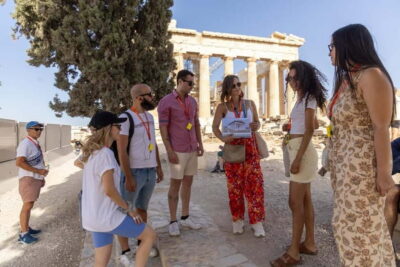
I like that this route checks off major UNESCO World Heritage stops without feeling rushed. I also like the pacing: breaks built in, plus a headset system that helps when you’re with a group of up to 20.
One thing to consider: there’s uphill walking on the hill, and parts of the route can feel steep. Bring comfortable shoes, and if weather is hot or the ground is slick, take it slow—this isn’t a flat stroll.
In This Review
- Key things to know before you go
- The 3.5-Hour Route That Keeps Athens From Feeling Like a Checklist
- Entering the Acropolis: Skip-the-Line Start Plus the Right Kind of Orientation
- Parthenon Time: How the Delian League Era Still Shows in the Stones
- Temple of Athena Nike: The Short Stop That Explains Why Details Matter
- Roman Agora and the Tower of the Winds: Time, Weather, and Real Tech
- Plaka Old Town and the Anafiotika Feel: Neighborhood Athens, Not Just Monuments
- Monastiraki Finish: Where the City Feels Most Like It’s Ongoing
- Price and Logistics: What $105.26 Buys You (and What It Doesn’t)
- Who Should Book This Tour (and Who Might Want a Different Plan)
- Guides Matter: Why the Best Tours Sound Like Stories
- Should you book this Acropolis, Plaka, and Monastiraki tour?
- FAQ
- What time does the tour start, and how long is it?
- Where do I meet the guide?
- Where does the tour end?
- Is admission included for the main Acropolis sites?
- What snacks are included?
- What’s the group size and fitness level needed?
- Bottom line: what to pack for a smooth day
Key things to know before you go
- Skip-the-line Acropolis tickets help you beat the worst queue time.
- Headsets make it easier to hear your guide even with a group up to 20.
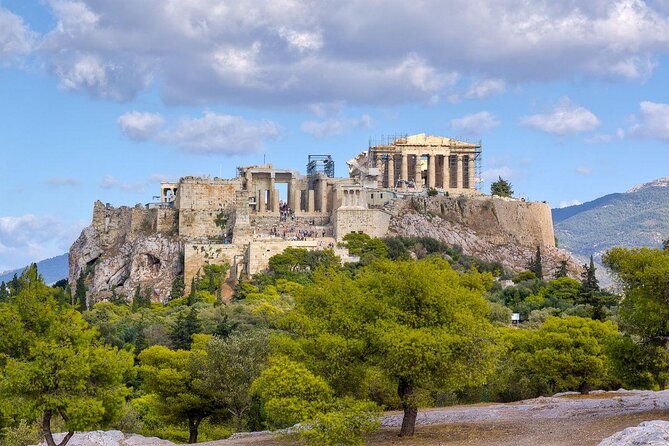
- Parthenon + Temple of Athena Nike give you the star monuments and the smaller-but-important stops.
- Tower of the Winds connects Greek ideas of time and weather to what you can still see today.
- Plaka and Anafiotika-style streets show you Athens as a neighborhood, not a museum set.
- Tour ends in Monastiraki, so you can keep exploring without needing extra plans.
More ways up the sacred rock, set side by side
- Athens: Acropolis & up to 5 Archaeological Sites Combo Pass
★ 4.2 · 13,904 reviews - Athens: Acropolis, Parthenon & Acropolis Museum Guided Tour
★ 4.8 · 9,316 reviews - The Acropolis, Parthenon & Acropolis Museum Guided Tour
★ 4.7 · 8,493 reviews - Acropolis: Premium Acropolis and Parthenon Guided Tour
★ 4.8 · 5,208 reviews
The 3.5-Hour Route That Keeps Athens From Feeling Like a Checklist
This is a smart format for a first visit to Athens because it strings together the big names and the good context. You start near central Athens in the morning, then work your way up to the Acropolis, then down into Plaka and onward to Monastiraki. That flow matters because it keeps you from bouncing around the city on your own when your energy is still good.
You’ll also get a small group size (max 20), which makes the tour easier to manage at tight monuments and crowded streets. In practice, the headset system helps too. If you like taking photos, it’s calmer to pause without losing the thread of the story.
The walking is real, though. Expect uneven ground and at least some incline. If you’re the type who gets winded easily, plan for slower moments and extra water time.
Entering the Acropolis: Skip-the-Line Start Plus the Right Kind of Orientation
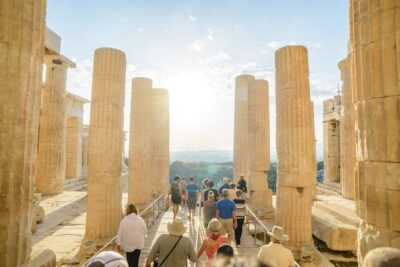
You begin at Porinou 5 and head toward the Acropolis with your Acropolis skip-the-line admission tickets. Getting on the hill faster is not just a time-saver—it also helps you avoid losing your best mental energy to waiting. Once you’re on the rocks above Athens, everything gets clearer: where buildings sit, why sightlines matter, and how the hill functions like a backdrop for the city.
One of the first things your guide will likely clarify is the word acropolis itself. The term comes from Greek words meaning upper city, which is a useful mental picture before you start scanning carvings and columns. After that, you’ll focus on the key remains of the complex, including how the Parthenon became the headline of the site.
A practical note: the Acropolis area can feel bright and exposed. Even if shade exists in pockets, you’ll likely be outdoors more than you expect. I’d pack water and consider an umbrella if the forecast looks questionable.
Parthenon Time: How the Delian League Era Still Shows in the Stones
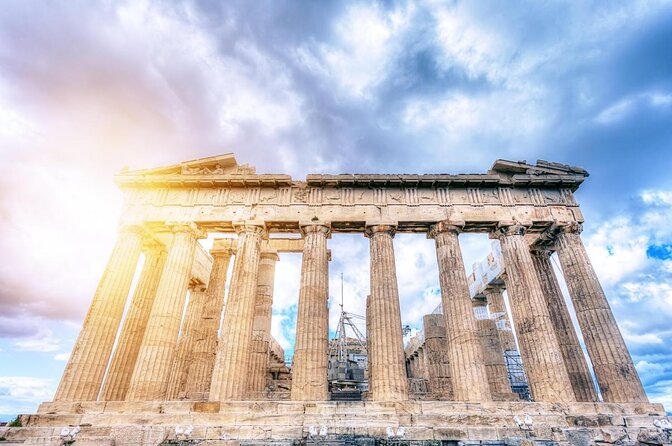
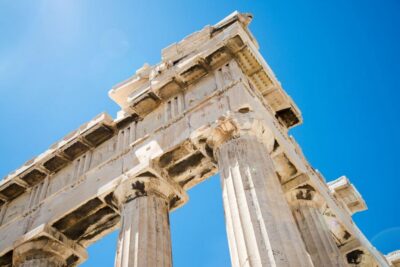
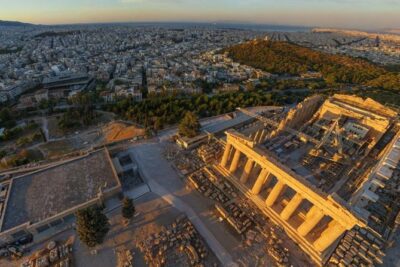
The Parthenon stop is where the tour earns its reputation. You’ll spend about 30 minutes here, and the guide’s job is to help you read what you’re seeing—because from street level, it’s hard to grasp the scale. The Parthenon was a temple dedicated to Athena, and construction started in 447 BC when the Delian League was at a peak of power. That historical framing helps you understand this wasn’t a casual building project. It was political, religious, and about identity all at once.
What I like about a guided Parthenon visit is that you stop looking at it like a single monument and start treating it like a composition. Your guide can point out relationships between parts of the structure, and that makes the views more meaningful. You’ll also get better at spotting details while you’re standing there trying to take a picture.
If you’re visiting at a busy time, the skip-the-line advantage is huge. You’ll still face crowds, but you’ll spend less time locked in a slow moving line and more time looking at the actual thing.
On foot through Plaka and beyond



Temple of Athena Nike: The Short Stop That Explains Why Details Matter
Right after the Parthenon, you’ll hit the Temple of Athena Nike for about 5 minutes. This is a “quick but important” stop, and that’s exactly what makes it valuable. It’s dedicated to Athena and Nike, and it was built around 420 BC. Your guide will also likely highlight that it’s the earliest fully Ionic temple on the Acropolis.
This matters because it gives you a contrast moment. If the Parthenon feels like grand architecture on a massive scale, Athena Nike helps you see how style and symbolism worked together on the hill. Ionic design has its own character, and when you learn what makes this temple Ionic, the sight stops being just pretty angles. It becomes a visual clue to how Greeks communicated meaning through design choices.
Also, since the stop is short, it doesn’t steal time from the rest of the day. You get a meaningful detour without turning your afternoon into a marathon.
Roman Agora and the Tower of the Winds: Time, Weather, and Real Tech
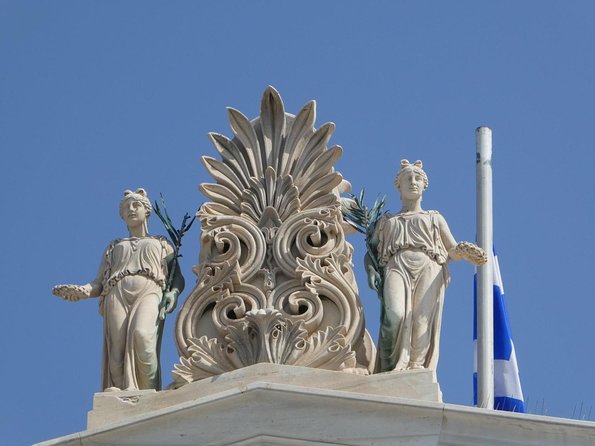
After the Acropolis monuments, you’ll move through the lower areas and spend time near the Roman Agora and the Tower of the Winds. The Tower of the Winds is the star here, with about 10 minutes built in. It’s an octagonal Pentelic marble clocktower sometimes called the Horologion of Andronikos Kyrrhestes.
Here’s the kind of detail that makes this stop worth paying attention to: it likely functioned as a timepiece and is often described as the world’s first meteorological station. You can see how it combined sundials, a water clock, and a wind vane. That mix of instruments turns it into something beyond a photo stop. It’s a reminder that ancient people measured the sky and planned around it.
The timeline is also interesting. The structure is commonly linked to Andronicus of Cyrrhus around 50 BC, though other sources suggest it might date to a 2nd century BC period. Either way, restoration work took place between 2014 and 2016, so you’re seeing a conserved monument rather than a purely ruined silhouette.
If you like history that feels practical, this is one of the best moments in the day. It’s Greek science you can stand next to, not just Greek myths from behind glass.
Plaka Old Town and the Anafiotika Feel: Neighborhood Athens, Not Just Monuments
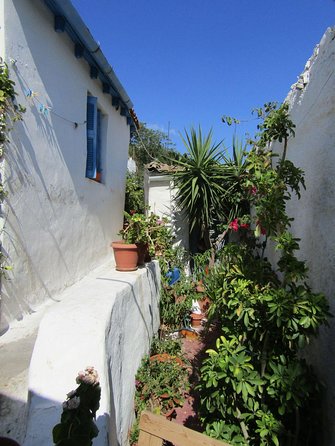
Plaka is where you shift from monuments to streets. You’ll spend about 30 minutes here, under the Acropolis shadow. Plaka has that village feel: narrow cobblestoned lanes, tiny shops selling jewelry, clothes, and ceramics, plus sidewalk cafes and family-run tavernas.
One specific Athens touch you might hear about is Cine Paris, which shows classic movies al fresco. That’s the kind of detail that makes a neighborhood stop feel like a place you could actually hang out in, not a pass-through zone.
Another highlight is the Anafiotika area vibe. The whitewashed homes there give a Greek-island feel, which is a fun mental reset after the stone weight of the Acropolis. Even if you only catch small corners, it’s a different texture of Athens, both visual and emotional.
A realistic drawback: Plaka streets can be souvenir-heavy. If you want quiet, go slow and pick your moments. Otherwise, treat it like a place to snack, look, and decide what you want to revisit later.
Monastiraki Finish: Where the City Feels Most Like It’s Ongoing
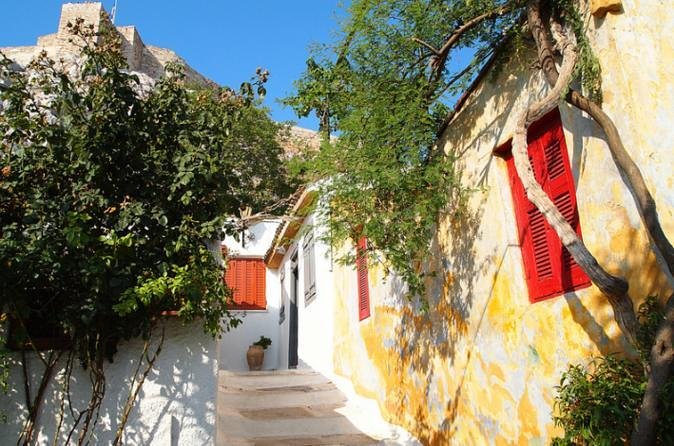
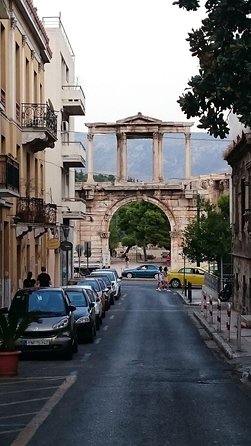
Your tour ends in Monastiraki after about half a day of wandering. Monastiraki is one of Athens’ most lively central areas, and you’ll spend around 10 minutes in the main square zone. The benefit of ending here is simple: you can extend your day without planning a new route or hunting down the last stop on your list.
Monastiraki is also a good place to connect the tour to what comes next. You’ll have just come from the Acropolis world of temples and timekeepers, then walked down into a living market neighborhood. That contrast helps Athens make sense: old stone doesn’t sit in a separate bubble—it lives inside the city’s daily rhythm.
Also, your guide’s snack stop is part of this energy. You’ll get Greek pastry options like semolina custard cream and traditional spanakopita. It’s not a full meal, but it’s enough to keep you steady while you keep walking afterward.
Price and Logistics: What $105.26 Buys You (and What It Doesn’t)
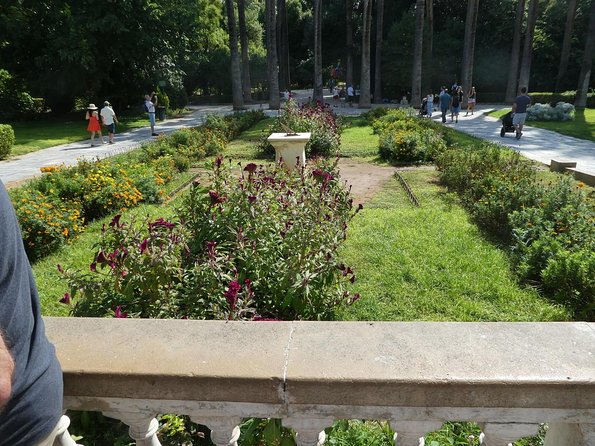
At $105.26 per person for roughly 3 hours 30 minutes, you’re paying for three big things: a licensed guide, skip-the-line Acropolis tickets, and structure. If you tried to do this route on your own, you’d spend time figuring out entrances, paths, and what matters most at each stop. This tour compresses that decision-making into a single plan.
You also get a small-group experience (up to 20), plus a mobile ticket option and an English guide. The headset system is a quiet upgrade too. When the group is larger than a few friends, hearing your guide becomes the difference between a fun walk and a frustrating one.
What’s not included is hotel pickup and drop-off and gratuities. There’s also a “moderate physical fitness” expectation. This doesn’t mean you need to be an athlete, but it does mean you should be comfortable with uphill sections and uneven ground.
One extra tip: if you need accessibility support, ask about options ahead of time. One of the guide notes from past visitors points out that elevator access may require permission when booked, not at the last second.
Who Should Book This Tour (and Who Might Want a Different Plan)
I’d book this tour if you’re visiting Athens for the first time and want an organized introduction. It’s ideal for you if you care about getting the key monuments explained instead of wandering and guessing. It also fits well if you like walking but want the day to feel guided, with breaks and snack stops.
You might rethink it if you have trouble with steep uphill walking or if you’re sensitive to slippery descents. Even with rest breaks, the Acropolis hill is not flat work. If you have mobility concerns, plan around that and check what support is possible before you go.
For families: the minimum age is 10, and the route includes a lot of standing and looking. If your kids are comfortable with that, they can handle it. If not, you might want a lighter option.
Guides Matter: Why the Best Tours Sound Like Stories
One pattern I really like about this kind of Athens walking tour is how the guide turns facts into something you can picture. In past experiences with guides such as Sophia, Eleni, Demos, Anna, Lisa, Artemis, Daphne, Sapfo, Alexia, and Marissa, the common theme was clear: they explained the sites with humor, and they made the connections you’d miss on your own.
That storytelling style is not just entertainment. It helps you remember what you saw later. The Parthenon is easier to recall when you know what political power started the building and what Athena represented. The Tower of the Winds is easier to respect when you understand it as a time and weather tool.
So even if you’ve read about Athens before, you’ll still likely come away with a sharper mental map.
Should you book this Acropolis, Plaka, and Monastiraki tour?
Yes, if you want a guided route that hits the essentials and still shows Athens as neighborhoods. The skip-the-line Acropolis entry, the structured stops (Parthenon, Athena Nike, Tower of the Winds), and the pairing with Plaka and Monastiraki make the day feel efficient without turning into a sprint.
Book it with a sensible expectation: you’ll walk uphill, you’ll be outside, and you’ll need good shoes. If that sounds doable, this is a strong value way to get your Athens footing fast.
FAQ
What time does the tour start, and how long is it?
It starts at 9:00 am and runs for about 3 hours 30 minutes.
Where do I meet the guide?
You meet at Porinou 5, Athina 117 42, Greece.
Where does the tour end?
The tour ends in Monastiraki, Athens.
Is admission included for the main Acropolis sites?
Skip-the-line Acropolis tickets are included, and specific stops like the Parthenon and Temple of Athena Nike list admission as included.
What snacks are included?
The tour includes a snack stop with Greek pastry options such as semolina custard cream and traditional spanakopita.
What’s the group size and fitness level needed?
The tour has a maximum of 20 travelers, and it’s designed for travelers with a moderate physical fitness level. Comfortable shoes are advised.
Bottom line: what to pack for a smooth day
Wear comfortable shoes, bring water, and consider an umbrella if the forecast looks unpredictable. In the sun on the hill, a little planning goes a long way, and it lets you enjoy the stories and the views instead of focusing on your feet.
More Tour Reviews in Athens
- Athens: Acropolis & up to 5 Archaeological Sites Combo Pass★ 4.2 · 13,904 reviews
- Athens: Acropolis, Parthenon & Acropolis Museum Guided Tour★ 4.8 · 9,316 reviews
- The Acropolis, Parthenon & Acropolis Museum Guided Tour★ 4.7 · 8,493 reviews
- Athens: Cape Sounion & Poseidon Temple Sunset Half-Day Trip★ 4.8 · 8,241 reviews
- Acropolis: Premium Acropolis and Parthenon Guided Tour★ 4.8 · 5,208 reviews
- Athens: Mythology of Delphi, Museum and Arachova Guided Tour★ 4.7 · 5,102 reviews
Athens on Foot, Continued
- Acropolis and Parthenon Guided Walking Tour★ 5.0 · 4,755 reviews
- Greek Food Walking Tour in Athens★ 5.0 · 4,740 reviews
- Athens: Guided Greek Food Walking Tour with Tastings★ 4.9 · 2,859 reviews
- Acropolis monuments & Parthenon Walking Tour with Optional Acropolis Museum★ 5.0 · 2,678 reviews
- Athens Acropolis and Parthenon Walking Tour★ 4.5 · 1,355 reviews
- Acropolis, Parthenon & Athens Old City Heritage Walking Tour★ 4.5 · 876 reviews
The Acropolis, a Few More Ways Up
- Athens: Acropolis & up to 5 Archaeological Sites Combo Pass★ 4.2 · 13,904 reviews
- Athens: Acropolis, Parthenon & Acropolis Museum Guided Tour★ 4.8 · 9,316 reviews
- The Acropolis, Parthenon & Acropolis Museum Guided Tour★ 4.7 · 8,493 reviews
- Acropolis: Premium Acropolis and Parthenon Guided Tour★ 4.8 · 5,208 reviews
- Acropolis and Parthenon Guided Walking Tour★ 5.0 · 4,755 reviews
- Athens: Acropolis, Parthenon & Acropolis Museum Guided Tour★ 4.8 · 3,579 reviews
Fresh Off the Boat: New Athens Reviews





Acropolis & Parthenon Tours, compared.
 ★ 4.2Acropolis & up to 5 Archaeological Sites Combo PassFrom $4213,904 reviews
 ★ 4.8Acropolis, Parthenon & Acropolis Museum Guided TourFrom $409,316 reviews
 ★ 4.7The Acropolis, Parthenon & Acropolis Museum Guided TourFrom $408,493 reviews
 ★ 4.8Acropolis: Premium Acropolis and Parthenon Guided TourFrom $405,208 reviews
 ★ 5.0Acropolis and Parthenon Guided Walking TourFrom $414,755 reviews
★ 4.8Acropolis, Parthenon & Acropolis Museum Guided TourFrom $413,579 reviews
★ 5.0Acropolis and Parthenon Guided Walking TourFrom $414,755 reviews
★ 4.8Acropolis, Parthenon & Acropolis Museum Guided TourFrom $413,579 reviews
 ★ 4.0Acropolis Ticket with Audio GuideFrom $473,575 reviews
 ★ 5.0Athens Scenic Electric Bike Tour with optional Acropolis visitFrom $353,350 reviews
Browse the lists this tour appears in