
Reviewed · MYCENAE & NAFPLIO DAY TRIPS
Ancient Corinth, Isthmus/ Kechries Private biblical tour from Athens or Nafplion
A full day at Corinth without the hassle of logistics. You’ll ride in comfort, get an audio history layer on the way, then spend your time exactly where you want. It’s a great way to connect the biblical places with the archaeology—without feeling rushed.
What I like most is the private door-to-door pickup and drop-off, paired with a driver who can shape the day around your interests. Second, you get a WiFi-equipped vehicle plus an audio documentary as you travel, so you’re not just driving through blank scenery.
One thing to keep in mind: this is private transportation plus audio, not a licensed archaeologist walking with you through Ancient Corinth and the museum. If you want that deeper, site-by-site interpretation, you’ll need to arrange an additional licensed guide.
In This Review
- Key points to know before you go
- Private Athens to Corinth: why this day feels easy
- Price and value: what $191.17 buys (and what doesn’t)
- The drive west from Athens: a useful warm-up for Corinth
- Corinth Canal: a fast photo stop with real wow factor
- Kenchreai (Kechries): the biblical port stop many people skip
- Ancient Corinth and the museum: where you spend your biggest chunk
- Acrocorinth castle: fortress time, not museum time
- Modern Corinth cathedral: a quick stop with deep naming
- The Diolkos: engineering that saved sailors from a hard detour
- Loutraki: sea time plus olive oil tasting (a nice change of pace)
- Pacing tips: how to customize without losing the day
- Who this tour suits best (and what to adjust for your style)
- Should you book this Ancient Corinth and Kechries private tour?
- FAQ
- How long is the private tour?
- Is hotel pickup and drop-off included?
- Is this a private tour?
- What vehicle types are available?
- Is WiFi provided during the ride?
- What’s included in the price?
- Which major sites require separate tickets?
- Can I hire an archaeologist licensed guide for the site?
- Is there time for swimming and lunch at Loutraki?
- What if the weather is poor?
Key points to know before you go
- Corinth Canal photo stop at the bridge point with big views, quick but scenic
- Kenchreai (Kenckreai) includes a meaningful biblical stop tied to Paul, plus a calm 30-minute window
- Ancient Corinth + museum time is built in, but the site ticket is separate
- Acrocorinth hilltop castle adds the classic fortress angle, with time to take in the views
- Loutraki sea break and olive oil tasting makes the day feel like more than ruins
- Driver provides audio history, while you handle the on-site walking at your own pace
Into the Argolid, past the Lion Gate
- From Athens: Small-Group Mycenae, Epidaurus & Nafplio Trip
★ 4.8 · 2,805 reviews - From Athens: Mycenae, Epidaurus & Nafplio Full-Day Tour
★ 4.5 · 2,530 reviews - Mycenae, Epidaurus and Nafplio Tour from Athens
★ 4.6 · 2,201 reviews - 4-Day Classical Greece Tour: Epidaurus, Mycenae, Olympia, Delphi, Meteora
★ 4.5 · 732 reviews
Private Athens to Corinth: why this day feels easy
You’re dealing with a classic problem in the Peloponnese: you want the big sights, but coordinating trains, buses, and timing can steal the whole day. This tour solves that with an air-conditioned private vehicle and pickup from your accommodation (Athens city center, or other locations by request with extra distance fees).
Once you’re in the car, the day runs on a simple rhythm. You drive west along the Saronic Gulf area, stop for the major checkpoints, then you get time at the places that actually matter. There’s WiFi in the vehicle, so you can keep maps handy, check messages, or plan your next stop while still traveling comfortably.
If you’re the type who wants structure but not a rigid schedule, this is a smart fit. The itinerary is planned, but you also have room to adjust within the overall hours.
Price and value: what $191.17 buys (and what doesn’t)
At $191.17 per person, you’re paying primarily for the private logistics: vehicle, fuel and tolls, parking fees, and a professional English-speaking driver for the day. You’re also paying for the convenience of being collected and returned to your hotel.
What’s separate is the cost of some archaeology entries. Here’s the practical breakdown:
- Included: Ancient Corinth ticket is not included (see below), plus transport and driver services are included.
- Ancient Corinth (Archaia Korinthos) + museum: the combined ticket is not included.
- Winter: 10€ (Nov 1 to Mar 31)
- Summer: 20€ (Apr 1 to Oct 30)
- Acrocorinth castle: not included
- Other stops: Corinth Canal, Kenchreai, the Orthodox cathedral, and the Diolkos stop are described as free at the time of writing.
- Optional: a licensed archaeologist guide for the site can be hired on request.
So the value question becomes simple: if you like doing archaeology with some context and a comfortable transport plan, this price tends to make sense. If you already have a car and don’t mind paying for your own tickets and navigating, you could do it cheaper independently—but you’d lose the easy pacing and the audio support.
The drive west from Athens: a useful warm-up for Corinth
Your day starts with a drive from Athens toward the Corinth region. You’ll head along the scenic coast of the Saronic Gulf, passing through areas such as Elefsis and Megara Kineta. Even before you reach the archaeological core, this stretch helps you understand why Corinth mattered: it sits at a junction where routes—by sea and by land—were constantly trying to shave off time.
And while you ride, you’re not stuck with silence. The driver provides an informative audio documentary with historical details during the travel time. That’s a big deal for a place like Corinth, where the story can otherwise feel scattered: ports, empires, church history, and engineering projects overlap.
Practical tip: if you’re prone to motion sickness, sit where you feel most stable (usually front seats). The audio makes it tempting to focus inward, so plan breaks if needed.
The canal and old Corinth, a few more days
Corinth Canal: a fast photo stop with real wow factor
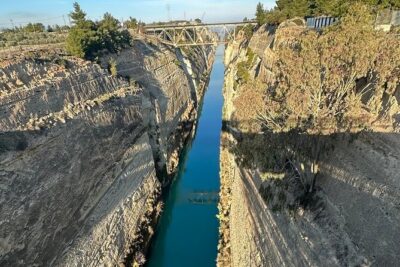
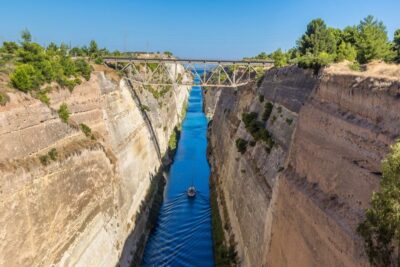
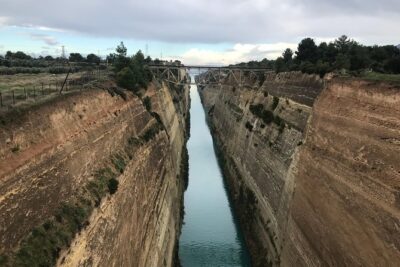
You reach the Corinth Canal relatively early. The tour plan keeps it short: a quick stop on the bridge, described as the highest point of the canal. That matters because you get the dramatic “cut through the land” perspective without needing a long detour.
This is a free admission stop, so you can treat it as a bonus viewpoint rather than a paid commitment. Even if you’re not a canal-person, this one gives you immediate scale: Corinth isn’t only ruins—it’s also infrastructure that changed how ships moved through Greece.
What to do in your short window:
- Take a few photos, but also look across and along the cut.
- If your group is small, you can spread out for angle shots without slowing everyone down.
Kenchreai (Kechries): the biblical port stop many people skip
Next is Kenchreai, the eastern port connected to the ancient city of Corinth. In Greek and Roman times, Corinth wasn’t just one city with one harbor. It was a two-port setup: Kenchreai on the east, and Lechaion on the west, helping ships and goods route around the Peloponnese.
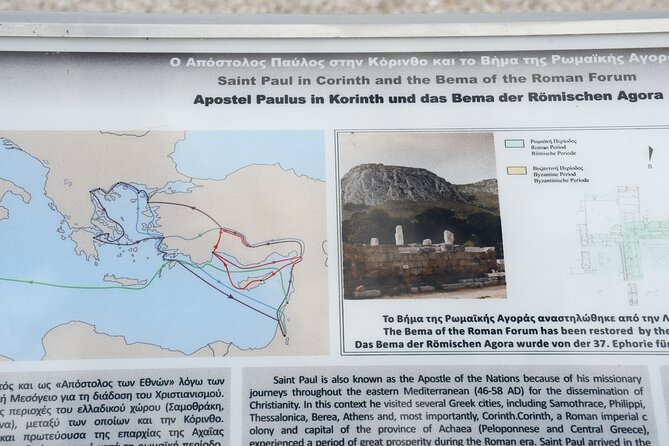
This stop ties directly to early Christianity. The tour notes Acts 18:18, describing how Paul stopped at Kenchreai, had his hair cut to fulfill a vow (likely a Nazirite vow), and connected the story to Phoebe.
What I love about putting Kenchreai on the same day as Ancient Corinth is that it gives the biblical text a physical address. You’re not only seeing stone buildings from empires; you’re also visiting a place that fits the movement of people and ideas.
Timing is part of the value here: you get about 30 minutes, which is enough to read, look around, and feel the place without turning it into a long hike.
Ancient Corinth and the museum: where you spend your biggest chunk
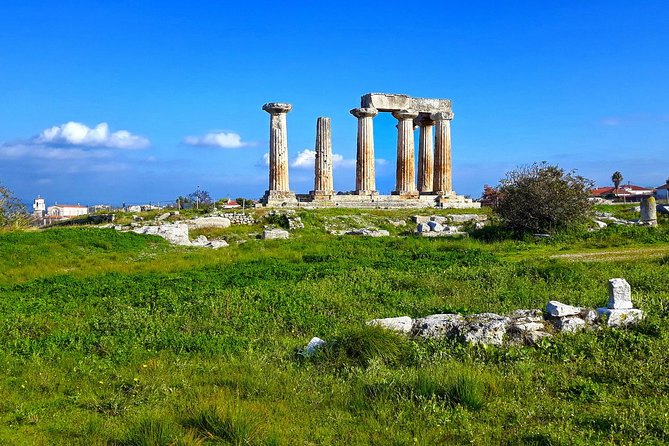
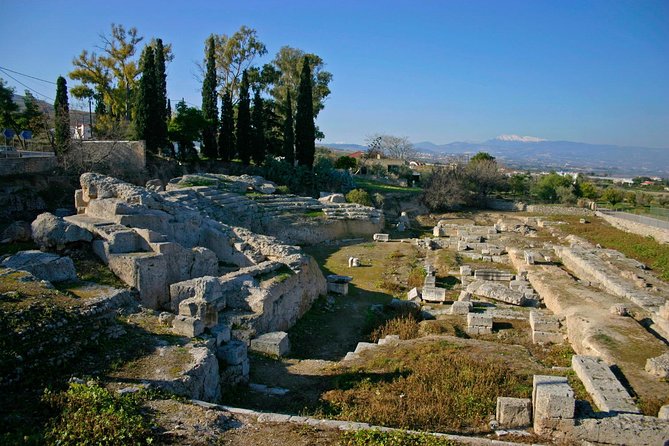
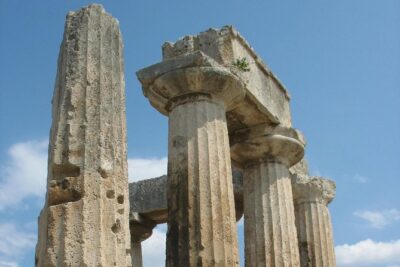
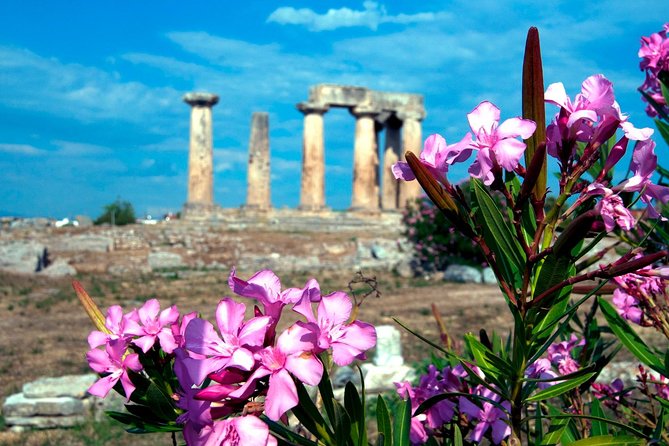
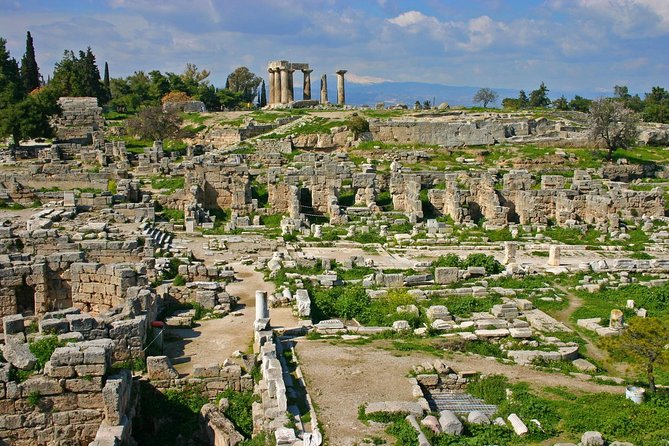
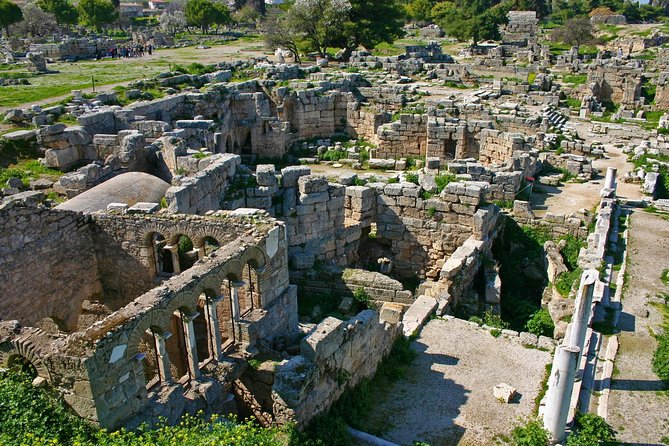
This is the core of the day: Ancient Corinth (Archaia Korinthos) and the museum. You’ll have around 1 hour 30 minutes, and the ticket for the archaeological site and museum is not included. You’ll need to budget the combined admission (10€ winter, 20€ summer).
Even with limited time, you can get a lot if you go in with a simple focus. The site highlights include:
- Roman Agora (the political and commercial center)
- The famous Vema
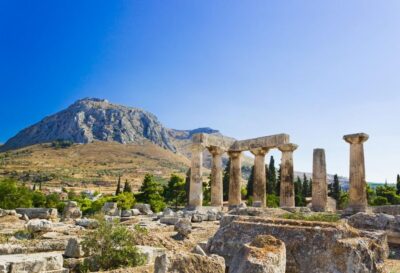
- The Temple of Apollo
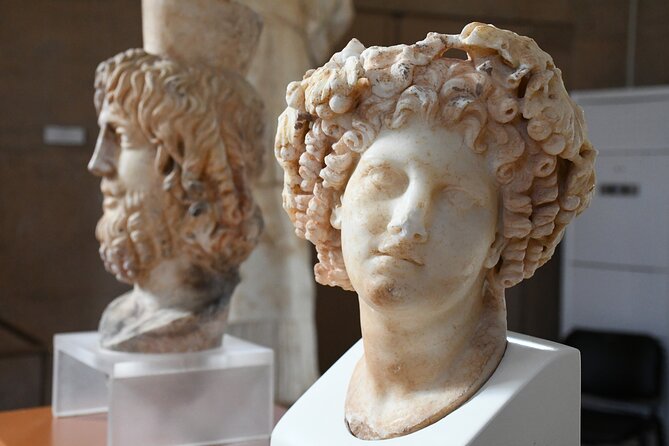
- The museum for objects tied to the site
Because there’s no licensed archaeologist accompanying you as part of the driver service, your experience depends on how you like to learn. The audio history in the car helps set context, but once you’re walking, you’ll guide yourself through the ruins.
If you want more depth at the site, the tour information points to hiring an archaeologist-licensed guide on request. If that’s your priority, it’s worth asking before the day starts so you can match the guide to the time you’ll actually spend on-site.
Practical pacing idea: spend the first chunk orienting and reading labels, then move through the main structures for photos and key views. Don’t try to “collect everything” in 90 minutes.
Acrocorinth castle: fortress time, not museum time
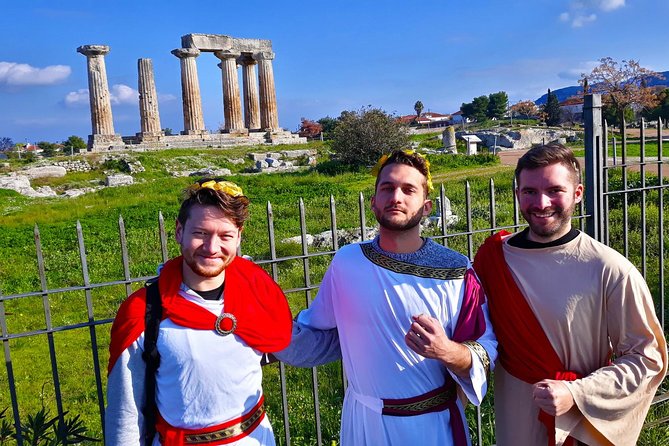
Then the day climbs up to Acrocorinth, the hilltop fortress. You’ll drive up for a visit of about 1 hour. The ticket for this stop is not included.
This is where Corinth turns dramatic. The ruins you see at ground level feel different once you understand the defensive purpose of the hilltop. Even if you’re not a medieval history nut, Acrocorinth helps you grasp why the region kept being contested.
What to bring:
- Comfortable shoes with grip, since hill paths can be uneven
- A water plan for warmer months
If you’re visiting in summer, plan to spend less time standing still and more time moving between viewpoints. It’s the kind of place where shade can be limited.
Modern Corinth cathedral: a quick stop with deep naming
Next you’ll visit the Greek Orthodox cathedral dedicated to Saint Paul in modern Corinth. The tour frames it as the seat of the bishop of Modern Corinth and connects it to Saint Paul, who lived in ancient Corinth for around four years.
This is a short, 15-minute free stop. Think of it as a spiritual context checkpoint: a pause where the biblical connection shifts from ruins to living religious tradition.
Even if you’re not visiting as a religious traveler, I find these quick stops valuable. They help me stop treating “biblical Greece” as only stones and start seeing how the story continues in real communities.
The Diolkos: engineering that saved sailors from a hard detour
The final historical checkpoint in the archaeology-and-engineering theme is the Diolkos. The Diolkos was a system designed to move ships over land to avoid a dangerous sea journey around the Peloponnese.
The tour notes:
- The sea route around the Peloponnese involved headlands with reputations for gales, including Cape Matapan and Cape Malea
- The protected option was using the Gulf of Corinth and the Saronic Gulf
- The overland shortcut crossed the Isthmus, only 6.4 km (4.0 mi) at its narrowest
Even if little survives to “wow” you visually, the Diolkos stop helps you understand how planning, geography, and risk shaped daily life for sailors and merchants. Corinth wasn’t just a place in a book. It was a solution to a problem.
The Diolkos stop is about 15 minutes and marked as free.
Loutraki: sea time plus olive oil tasting (a nice change of pace)
After the inland history stops, the day shifts toward relaxation in Loutraki. You’ll have time for a swim in Corinthian waters, and there’s an optional lunch in front of the water with seafood.
This stop is also where the tour adds a local-food angle through:
- Olive oil tasting
- A visit to a local olive oil shop
- Learning how olives turn into olive oil
- A look at soap made with olive oil and how it differs from common soaps
You get about 1 hour here, and the activities are described as free as part of the tour experience.
I like this portion because it prevents the classic “all ruins, no release” feeling. You’re still in the region, still learning, but you’re not standing under sun for hours. If you’re traveling with family, this part often lands better than one more archaeological stop.
Bring a small towel and plan swim time carefully. If you’re not swimming, the food and tasting still make the stop worth it.
Pacing tips: how to customize without losing the day
The biggest advantage of a private tour is that you can shape it to your energy level. Here’s a simple way to do that while staying realistic with time:
- Keep the Corinth Canal stop short as planned. It’s a view, not a linger.
- At Ancient Corinth, decide what matters most to you: the Roman Agora and Vema, the Temple of Apollo, or a deeper museum look. Choose one “main focus” to avoid time-sink wandering.
- At Acrocorinth, move steadily and aim for a couple of key viewpoints instead of trying to cover every path.
- Use Loutraki as your reset button. If you skip the swim, you can use that energy for a longer tasting or a leisurely lunch.
The tour is flexible up to 8 hours. If you want to run longer, there’s an added cost per extra hour depending on the vehicle type, so make sure you confirm it early with your driver.
Who this tour suits best (and what to adjust for your style)
This is a strong match for:
- Couples and small families who want the big Corinth sites without transportation stress
- Biblical history travelers who want Paul-linked locations (especially Kenchreai)
- Anyone who appreciates engineering context, not just temples and theaters
- Travelers who like self-paced walking but still want narration in the car
It may be less ideal if:
- You specifically want a step-by-step archaeologist-led walk through Ancient Corinth and the museum
- You need lots of time at each site for slow reading or guided interpretation
In that case, plan for an additional licensed archaeologist guide, since the driver is not the archaeologist who leads you inside the ruins.
Should you book this Ancient Corinth and Kechries private tour?
If you want an efficient, comfortable day that pairs biblical places with major archaeological highlights—while still giving you a sea-and-olive-oil break—this is a very reasonable way to do it.
I’d book it if:
- You’d rather control your walking pace on-site than follow a strict group script
- You care about convenience as much as you care about history
- You’re happy to use the on-site experience with audio context and signage, or you can add a licensed archaeologist if you want more depth
I wouldn’t book it if:
- You want a fully guided, archaeologist-led narrative inside Ancient Corinth included in the base price
- You prefer spending most of the day in one location rather than doing multiple stops
FAQ
How long is the private tour?
It runs for about 8 hours (flexible up to 8 hours).
Is hotel pickup and drop-off included?
Yes. Pickup and drop-off from your hotel/apartment in Athens is included, and you can request another location. Longer distances can add a fee.
Is this a private tour?
Yes. It’s private, and only your group participates.
What vehicle types are available?
You can choose among Sedan/SUV (up to 3 adults or family of 4 with free kids up to 10), Minivan (1 to 7 persons), or Minibus (up to 14 persons). Free kids up to 10 apply as described.
Is WiFi provided during the ride?
Yes, the vehicle is described as WiFi-equipped.
What’s included in the price?
Included are air-conditioned transportation, high cleanliness, private transport costs (fuel, tolls, parking), a professional English-speaking driver, pickup/drop-off, and an informative audio documentary during travel.
Which major sites require separate tickets?
Ancient Corinth and its museum require a combined ticket (not included). Acrocorinth admission is also not included. Corinth Canal, Kenchreai, the Orthodox cathedral, and the Diolkos stop are described as free.
Can I hire an archaeologist licensed guide for the site?
Yes. The driver is not an archaeological guide for the on-site walk, but you can hire a licensed archaeologist guide on request.
Is there time for swimming and lunch at Loutraki?
Yes. You’ll have time for a swim, and lunch with seafood is optional.
What if the weather is poor?
The experience requires good weather. If it’s canceled due to poor weather, you’ll be offered a different date or a full refund.
More Tour Reviews in Athens
- Athens: Acropolis & up to 5 Archaeological Sites Combo Pass★ 4.2 · 13,904 reviews
- Athens: Acropolis, Parthenon & Acropolis Museum Guided Tour★ 4.8 · 9,316 reviews
- The Acropolis, Parthenon & Acropolis Museum Guided Tour★ 4.7 · 8,493 reviews
- Athens: Cape Sounion & Poseidon Temple Sunset Half-Day Trip★ 4.8 · 8,241 reviews
- Acropolis: Premium Acropolis and Parthenon Guided Tour★ 4.8 · 5,208 reviews
- Athens: Mythology of Delphi, Museum and Arachova Guided Tour★ 4.7 · 5,102 reviews
Corinth and the Canal
- From Athens: Ancient Corinth Day Trip with Canal & VR Guide★ 4.6 · 1,073 reviews
- Biblical Tour Letters ToThe Corinthians St Paul’s Footsteps 6Hour★ 5.0 · 1,065 reviews
- Private Biblical Tour Ancient Corinth & Isthmus Canal from Athens★ 5.0 · 762 reviews
- Athens: Ancient Corinth & Nafplio Full Day Trip with Swim★ 4.8 · 531 reviews
- Athens: Corinth Canal, Mycenae & Nafplio Premium Guided Tour★ 4.7 · 322 reviews
- Private Tour of Apostle Paul’s Footsteps in Ancient Corinth★ 5.0 · 275 reviews
Into the Argolid: Mycenae and Nafplio
- From Athens: Small-Group Mycenae, Epidaurus & Nafplio Trip★ 4.8 · 2,805 reviews
- From Athens: Mycenae, Epidaurus & Nafplio Full-Day Tour★ 4.5 · 2,530 reviews
- Mycenae, Epidaurus and Nafplio Tour from Athens★ 4.6 · 2,201 reviews
- 4-Day Classical Greece Tour: Epidaurus, Mycenae, Olympia, Delphi, Meteora★ 4.5 · 732 reviews
- Athens: Ancient Corinth & Nafplio Full Day Trip with Swim★ 4.8 · 531 reviews
- Mycenae and Nafplion Day Trip from Athens with Official guide★ 4.5 · 501 reviews
Fresh Off the Boat: New Athens Reviews



Mycenae & Nafplio Day Trips, compared.
 ★ 4.8From Athens: Small-Group Mycenae, Epidaurus & Nafplio TripFrom $342,805 reviews
 ★ 4.5From Athens: Mycenae, Epidaurus & Nafplio Full-Day TourFrom $332,530 reviews
 ★ 4.6Mycenae, Epidaurus and Nafplio Tour from AthensFrom $332,201 reviews
 ★ 4.54-Day Classical Greece Tour: Epidaurus, Mycenae, Olympia, Delphi, MeteoraFrom $766732 reviews
 ★ 4.8Ancient Corinth & Nafplio Full Day Trip with Swim531 reviews
 ★ 4.5Mycenae and Nafplion Day Trip from Athens with Official guideFrom $78501 reviews
 ★ 4.2Argolis: Full-Day Tour in Mycenae & NafplioFrom $41350 reviews
 ★ 4.53-Day Classical Greece Tour: Epidaurus, Mycenae, Nafplion, Olympia, DelphiFrom $520342 reviews
Browse the lists this tour appears in