

Reviewed · CITY TOURS
Athens City of Rebellion Small-Group Walk
Resistance has a street-level map. This Athens City of Rebellion Small-Group Walk connects big moments of Greek resistance to what you see now, from Ottoman-era uprising roots to today’s activism in Exarchia. You’ll move site to site and let the city explain itself, with stops that link past oppression to modern demands for justice.
What I like most is the way the tour sticks to Athens after the ancient postcard era, so you get context for the society you’re walking through. I also like the small group format (max 6), which makes it easier to ask questions and get real back-and-forth from the guide—Maelle in particular is known for making modern Athens feel like a story you can follow on foot.
One thing to consider: this is a mostly outdoor walk focused on streets and neighborhoods, and it’s not recommended for walking difficulties. If the weather turns, the tour may be rescheduled or refunded.
In This Review
- Key things to know before you go
- Why this Athens walk goes beyond the classics
- 2.5 hours, up to 6 people: pace and comfort
- Step-by-step stops: Monastiraki, Ottoman clues, and the revolution’s roots
- Syntagma Square’s resistance layers, plus the Nazi-era shadow
- Royal power, students’ liberties, and civic pressure in the city
- Exarchia Square: street art, activism, police violence, and gentrification
- Price and value for a small-group history walk
- Who should book this Athens City of Rebellion walk?
- Should you book this tour or skip it?
- FAQ
- How long is the Athens City of Rebellion small-group walk?
- What is the group size?
- Where do I meet the tour, and where does it end?
- Is there an admission fee for the stops?
- Do I need an internet connection or paper ticket?
- Is this tour suitable if I have walking difficulties?
- Can I bring a service animal?
- What if plans change or the weather is bad?
Key things to know before you go
- Small group (max 6): easier pacing, more conversation, less wandering in silence.
- A very “modern Athens” storyline: Ottoman occupation, Nazi-era Athens, and present-day social struggles are front and center.
- Exarchia is the heart of it: you’ll spend the longest time there, with examples of activism and street messaging.
- Free admission sites along the route: the listed stops don’t require paid entry tickets.
- Mobile ticket + free meeting points: it’s simple to start, and you end near Exarchia Square.
Athens at walking pace, more routes
- Acropolis and Parthenon Guided Walking Tour
★ 5.0 · 4,755 reviews - Greek Food Walking Tour in Athens
★ 5.0 · 4,740 reviews - Athens: Guided Greek Food Walking Tour with Tastings
★ 4.9 · 2,859 reviews - Acropolis monuments & Parthenon Walking Tour with Optional Acropolis Museum
★ 5.0 · 2,678 reviews
Why this Athens walk goes beyond the classics

Most first-time Athens plans center on the Acropolis and the big ancient sites. This walk shifts the spotlight to Athens as a city that keeps fighting back—against empires, dictators, and systems that people consider unjust. You’re not just learning dates. You’re learning why certain locations became symbols.
You’ll also get a sense of how modern political identity shows up in ordinary corners: plazas where power was challenged, churches tied to resistance networks, and neighborhoods where dissent turned into culture. Exarchia isn’t treated like a rumor or a headline. It’s treated like a living place, with a visible creative edge.
2.5 hours, up to 6 people: pace and comfort
The tour runs about 2 hours 30 minutes. With short stops and a longer stretch in Exarchia, it’s designed for steady walking rather than long museum stays. The route is also built for public-transit access, and the meeting point is right in the Monastiraki area.
The max group size of 6 people is a big deal in Athens, where “history walks” can sometimes feel like a race with a megaphone. Here, the small size helps keep the experience thoughtful. If you like asking practical questions—like how power worked in the Ottoman era or how political pressure shows up today—this setup is more comfortable.
It’s not recommended if you have walking limitations, since it’s an on-foot city route. If you’re unsure, plan on a pair of shoes you’d wear for a solid neighborhood walk, not a quick sightseeing stroll.
Step-by-step stops: Monastiraki, Ottoman clues, and the revolution’s roots
You start at Pl. Monastirakiou 2, right by the energetic Monastiraki square area. This is a smart opening because it gets you oriented fast: you’re in central Athens, close to where the city’s layers overlap.
From there, the walk goes into the Ottoman-era story. One of the early stops is the Tzisdarakis Mosque, where you’ll look at Ottoman presence in Greece and make the connection to how the Greek revolution against Ottoman rule gained momentum. The point isn’t to treat history like a lecture. It’s to help you see how buildings and place-names keep memory.
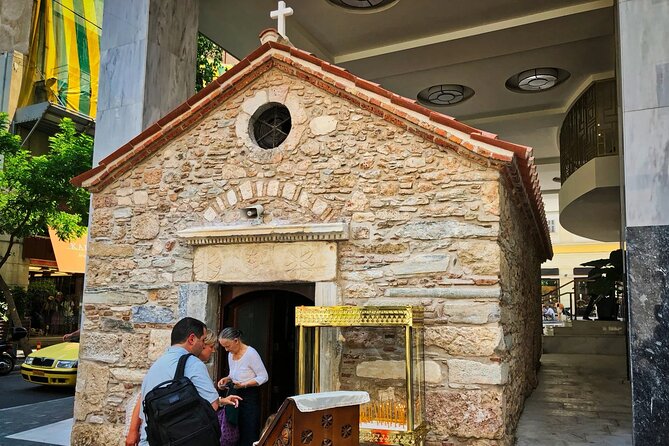
Next comes the Holy Church of the Sacred Power (Ayìa Dynami). You’re guided to understand why resistance networks used places like this during Ottoman occupation. That detail matters because it shows how resistance wasn’t only about famous battles. It was also about community spaces, communication, and protection.
Bigger sweeps across the city
Syntagma Square’s resistance layers, plus the Nazi-era shadow
The big symbolic stop is Syntagma Square. This location has a way of turning political history into something you can almost feel in the pavement. You’ll explore what the square has held over time: the old royal palace presence, the tomb of the unknown soldier, and the darker chapters tied to Nazi headquarters in Athens.
This is also where the tour balances the past with the present. It’s easy to treat Syntagma as just a landmark. Here, it becomes a “why this matters” stop, showing how public space can be a stage for resistance, pressure, and identity.
There’s a quieter but important segment after that: a building that’s now a luxurious hotel but carried dark moments when Nazis had power in Athens. The emphasis stays on how to read the city’s surface without ignoring what happened underneath it. That’s a powerful theme for an Athens first-timer, because it explains why some people look at the same street view and see totally different meanings.
Then you’ll get to the Monument to the Unknown Soldier, where you learn about the soldiers guarding the tomb and the standout details of their outfits. It’s brief, but it’s a useful reminder that national symbolism can be as visual as it is political.
Royal power, students’ liberties, and civic pressure in the city
After Syntagma, the walk connects post-revolution Athens with what came next in public life. One stop focuses on the old Palace of the First King after the revolution’s victory. You’ll discover how the building and its story reflect the shift from struggle toward the question of who gets to rule and how legitimacy is built.
Next comes the National and Kapodistrian University of Athens. This part leans into the idea that students and universities weren’t bystanders. They became tools—and targets—in fights for citizens’ liberties. If you’ve ever wondered why Greek politics can feel so tied to youth movements, this stop gives you a grounded explanation without requiring you to already know the full timeline.
Then you shift toward neighborhood-scale activism with Navarinou. This park is described as a citizen initiative in the heart of Exarchia. That word—citizen—matters. It frames the tour’s theme that resistance isn’t only armed conflict or top-level coups. It can also be people quietly (or not so quietly) taking ownership of public space.
Exarchia Square: street art, activism, police violence, and gentrification

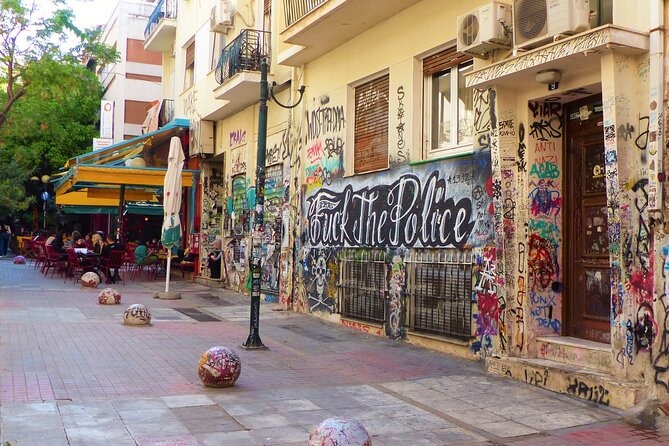
The final stretch is Exarchia, starting around Exarchia Square. This neighborhood is treated as the epicenter of today’s resistance and activism, and you’ll spend the most time here (about 20 minutes on the provided route). The guide points out the atmosphere of ongoing tension: crisis, police violence, gentrification, and creative public expression.
You can expect to see how street art and citizens’ initiatives communicate politics without waiting for official statements. That’s one of the best reasons to do this walk: it helps you read a neighborhood like a document. You’re not just looking at art. You’re learning what kinds of messages people choose to place where everyone can see them.
Exarchia is described as welcoming to anarchists, refugees, queers, and artists, and the tour treats that mix as part of why the area has become a hotspot for activism. If you’re the type who likes to understand a city’s social map, this is the stop that gives you the most immediate context.
You finish at Themistokleous 68, Athina 106 81, near Exarchia Square, which is convenient for continuing your day on your own.
Price and value for a small-group history walk

At $46.29 per person, this isn’t a bargain-bucket deal, but it’s also not priced like a museum-only experience. The value comes from three things you can feel right away: the small group size (max 6), the fact that the focus is on modern Athens (often skipped), and the guide’s ability to connect “what happened” to “what you see now.”
Also, several listed stops have free admission tickets, so you’re not stacking up surprise entrance fees while you’re already paying for the guide and route. The tour uses a mobile ticket, which keeps the start simple.
If you’re already planning your Athens week around the major classical sites, this walk fills a gap. It gives you the missing half of the city: how people organized resistance over centuries and how that attitude shows up in neighborhoods today.
Who should book this Athens City of Rebellion walk?
This is a great fit if you want Athens in a broader frame. Book it if you’re curious about modern Greek society, political movements, and how public spaces and institutions became symbols of resistance. It’s also a smart choice if you feel a little lost between the classical era and modern Greece—you’ll get help placing the puzzle pieces together, including how various figures and royal structures fit into the larger story.
It’s probably less ideal if you’re mainly looking for ancient ruins and scenic viewpoints, or if you’re uncomfortable with topics like fascism, oppression, and police violence. This tour is political by design, because the sites are political by nature.
Should you book this tour or skip it?
I’d book it if you want Athens to feel like a real living place, not just a museum with good lighting. The route is focused and guided, and the small group size helps you keep up without feeling rushed.
Skip it if your ideal Athens day is all about archaeology and you don’t want your walking route to include modern political tensions. Also consider your mobility: it’s not recommended for walking difficulties.
If the weather is good, this is the kind of tour that changes how you interpret the city for the rest of your trip—especially once you’ve spent time in Exarchia and seen how people translate history into present-day messages.
FAQ
How long is the Athens City of Rebellion small-group walk?
It lasts about 2 hours 30 minutes.
What is the group size?
The group is small, with a maximum of 6 travelers.
Where do I meet the tour, and where does it end?
You start at Pl. Monastirakiou 2, Athina 105 55, Greece, and the tour ends at Themistokleous 68, Athina 106 81, Greece (near Exarchia Square).
Is there an admission fee for the stops?
The listed stops include free admission tickets.
Do I need an internet connection or paper ticket?
You use a mobile ticket.
Is this tour suitable if I have walking difficulties?
It is not recommended for travelers with walking difficulties.
Can I bring a service animal?
Yes, service animals are allowed.
What if plans change or the weather is bad?
You can cancel for a full refund up to 24 hours in advance. If the tour is canceled due to poor weather, you’ll be offered a different date or a full refund.
The City, End to End
- Athens: City Sightseeing Hop-On Hop-Off Bus Tour★ 4.3 · 4,520 reviews
- City Sightseeing Athens, Piraeus & Beach Riviera Hop-On Hop-Off Bus Tours★ 4.0 · 1,887 reviews
- Athens: City Electric Bike Tour with Acropolis Visit Option★ 4.9 · 1,017 reviews
- Acropolis, Parthenon & Athens Old City Heritage Walking Tour★ 4.5 · 876 reviews
- Athens: City Pass with Acropolis, Museums, HoHo & Transport★ 3.9 · 802 reviews
- Athens: City Bike tour with Acropolis Visit Option★ 4.9 · 665 reviews
Athens on Foot: More Walks
- Acropolis and Parthenon Guided Walking Tour★ 5.0 · 4,755 reviews
- Greek Food Walking Tour in Athens★ 5.0 · 4,740 reviews
- Athens: Guided Greek Food Walking Tour with Tastings★ 4.9 · 2,859 reviews
- Acropolis monuments & Parthenon Walking Tour with Optional Acropolis Museum★ 5.0 · 2,678 reviews
- Athens Acropolis and Parthenon Walking Tour★ 4.5 · 1,355 reviews
- Acropolis, Parthenon & Athens Old City Heritage Walking Tour★ 4.5 · 876 reviews
More Tour Reviews in Athens
- Athens: Acropolis & up to 5 Archaeological Sites Combo Pass★ 4.2 · 13,904 reviews
- Athens: Acropolis, Parthenon & Acropolis Museum Guided Tour★ 4.8 · 9,316 reviews
- The Acropolis, Parthenon & Acropolis Museum Guided Tour★ 4.7 · 8,493 reviews
- Athens: Cape Sounion & Poseidon Temple Sunset Half-Day Trip★ 4.8 · 8,241 reviews
- Acropolis: Premium Acropolis and Parthenon Guided Tour★ 4.8 · 5,208 reviews
- Athens: Mythology of Delphi, Museum and Arachova Guided Tour★ 4.7 · 5,102 reviews
Fresh Off the Boat: New Athens Reviews





City Tours, compared.
 ★ 4.3City Sightseeing Hop-On Hop-Off Bus TourFrom $254,520 reviews
 ★ 4.0City Sightseeing Athens, Piraeus & Beach Riviera Hop-On Hop-Off Bus ToursFrom $261,887 reviews
 ★ 4.9City Electric Bike Tour with Acropolis Visit OptionFrom $531,017 reviews
 ★ 4.5Acropolis, Parthenon & Athens Old City Heritage Walking TourFrom $34876 reviews
 ★ 3.9City Pass with Acropolis, Museums, HoHo & TransportFrom $93802 reviews
 ★ 4.9City Bike tour with Acropolis Visit Option665 reviews
 ★ 4.9Discover the City Electric Bike TourFrom $54544 reviews
 ★ 5.0The Acropolis, Athens Walking City Tour and Acropolis MuseumFrom $12442 reviews
Browse the lists this tour appears in