
Reviewed · WALKING TOURS
Athens Ghost Walk: Mystical Ruins & Ancient Legends
Lanterns turn Athens into a scary story. This Athens Ghost Walk leans into ancient legends and shadowy street corners, with suspenseful stops and lantern-light pacing that makes the city feel half myth, half history. I especially like how it pairs major archaeological sights with spooky folklore, and I also like the small group size (up to 10) so you can actually ask questions instead of shouting over other people.
One thing to consider: this is primarily a walking and storytelling experience, and site entry is not included, so you may need tickets for any areas that require them.
In This Review
- Key takeaways
- A lantern-led Athens ghost walk that treats myths like history
- Pompeion Propylon and the opening mood: where the tour starts to haunt you
- Ancient Agora of Athens: philosophy, debate, and the feeling of old footsteps
- Hadrian’s Library: Roman-era learning with a shadowed twist
- Roman Agora and the idea of ancient conspiracies
- Plaka’s shadowed alleys: Byzantine spirits and medieval ghost lore
- Circling the Acropolis base and ending with the theatre vibe
- Price and value: is $36 worth it?
- Who should take this Athens Ghost Walk
- Should you book it? My straight advice
- FAQ
- How long is the Athens Ghost Walk?
- Where does the tour start and how do I find the meeting point?
- What sites will we pass during the walk?
- Is entry to the archaeological sites included in the price?
- What is included besides the guided walk?
- What languages are available?
Key takeaways
- Lantern-led suspense with whispered storytelling and timed pauses that keep the mood tight
- Small group pacing that helps you connect with the guide and get answers
- Big-name stops around the Ancient Agora, Hadrian’s Library, and the Roman Agora
- Plaka at dusk for medieval-by-Byzantine-era ghost lore and urban legends
- Acropolis-area wrap-up near the theatre spaces, capped with a specialized card reading
- Multiple language options (English, Arabic, French, Spanish) with live guiding
Athens at walking pace, more routes
- Acropolis and Parthenon Guided Walking Tour
★ 5.0 · 4,755 reviews - Greek Food Walking Tour in Athens
★ 5.0 · 4,740 reviews - Athens: Guided Greek Food Walking Tour with Tastings
★ 4.9 · 2,859 reviews - Acropolis monuments & Parthenon Walking Tour with Optional Acropolis Museum
★ 5.0 · 2,678 reviews
A lantern-led Athens ghost walk that treats myths like history

Athens has a way of making you feel like you’re walking through layers. One minute you’re on a modern street; the next you’re in the mental world of philosophers, scholars, merchants, and rituals. This tour leans hard into that effect. You’re not asked to suspend logic so much as to notice how stories attach themselves to places.
The mood is built with practical theatrics: lanterns, slowed-down moments, and the kind of story pacing that gives you time to look at what’s in front of you. If you like local legends mixed with real landmarks, you’ll probably enjoy the tone. It’s not just a ghost-story circuit; it’s ghost stories tied to ancient setting.
And the guides matter. From the experiences shared, guides like Beyla and Emese stand out for delivering the stories with feeling while still keeping the historical connections clear. That balance is what turns the walk from gimmick into something you’ll remember.
Pompeion Propylon and the opening mood: where the tour starts to haunt you
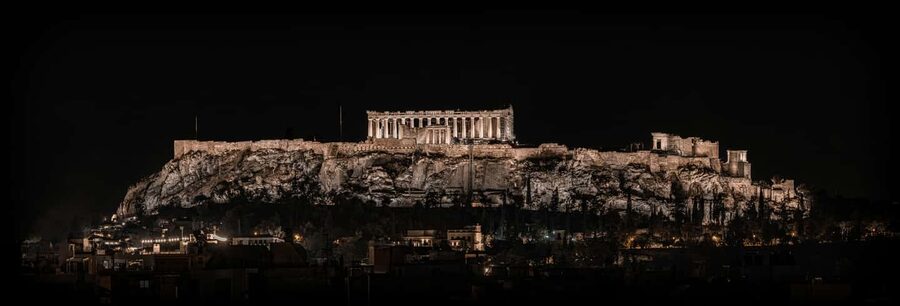
The meeting point is at Pompeion Propylon, where you’ll find a map of the archaeological site. Look for the big stone and the stairs. That matters because this tour starts you at a clear geographic anchor, not in a random plaza.
From the beginning, the tour’s vibe is set as a nighttime stroll through parts of Athens that have long been tied to memory and legend. Even if you’re not a hardcore paranormal fan, you’ll probably like the way the guide uses location to frame the stories. This is the difference between hearing a tale and feeling why that tale might belong to this exact corner of Athens.
If you’re the type who hates long introductions, good news: the tour’s structure moves you quickly into the sites and the story threads. And since the group is kept small, the guide can slow down or answer questions without the whole pace falling apart.
Ancient Agora of Athens: philosophy, debate, and the feeling of old footsteps
One of the first major stops is the Ancient Agora of Athens, guided on foot. This is where Athens’ reputation for ideas becomes more than a line in a museum placard. The Agora once served as a core public space, and it’s the kind of place that’s easy to picture as loud and animated.
On this walk, that historical energy gets paired with eerie framing. You’re asked to imagine presences in the ruins, like philosophical debates echoing through stone. The key is that the guide doesn’t treat the ghost angle as separate from the history. Instead, the legends behave like a second layer on top of the archaeology.
Practical consideration: the Agora area can be uneven in places and you’ll be moving steadily. Comfortable shoes are a real advantage here, especially if you’re not used to walking at night.


Hadrian’s Library: Roman-era learning with a shadowed twist
Next up is Hadrian’s Library, another stop where the story-to-place match works well. Libraries are already a little haunting as a concept—silent rooms full of knowledge. On a ghost walk, that quality gets amplified without turning the site into a cartoon.
The tour’s sweet spot here is the way it links everyday human activity to atmosphere. You’re not just hearing that people once studied here; you’re hearing what it might have felt like when scholarship and politics lived side by side. When you’re in the right mood, the building becomes part of the narration.
If you like history that feels human instead of textbook-only, this stop is likely one of your favorites. It also shows the tour’s theme: ancient Greece and Roman Athens are not frozen—they’re alive through the stories people attach to them.
Roman Agora and the idea of ancient conspiracies
Then comes the Roman Forum of Athens / Roman Agora area (you’ll hear it as the Roman political and public world). This is where the tour leans into echoes—scholars, merchants, and the sort of tense social energy that can fuel rumors.
Conspiracies might sound like a modern word, but the reality is that public spaces produce stories. That’s what the guide plays with: the idea that whispers travel fast when lots of people pass through the same corridors of daily life.
If you’re even mildly interested in how cities worked—who gathered, who sold, who argued—this segment tends to land. You get the feeling that you’re watching Athens in motion, even though you’re standing among ruins.
One drawback to keep in mind: if you’re expecting a tour that goes inside every site like a daytime ticket tour, you might find the experience more focused on outdoor pacing and story immersion. Since entry to sites isn’t included, there can be limits on what you access beyond the areas the guide can cover without tickets.
Plaka’s shadowed alleys: Byzantine spirits and medieval ghost lore
After the archaeological spine of the tour, you’ll shift into Plaka, the older neighborhood where Athens feels most like a living time capsule. This part matters because it blends eras. You’re not only hearing ancient legend. You’re also hearing the kinds of ghost tales that often stick around when a place gets reused for centuries.
Plaka at dusk is where the tour’s title starts to feel literal. Narrow lanes, stone edges, and the dimming light make it easy for stories to take shape. The guide connects the dots between myth, medieval echoes, Byzantine spirits, and the kinds of urban legends you can still hear in a city today.
If you’re traveling with someone who’s unsure about ghost tours, this is a good compromise section. You still get the fun spooky angle, but you also get a stronger sense of how Athens’ history continues to shape what people believe.
Circling the Acropolis base and ending with the theatre vibe
The tour then moves toward the base of the Acropolis, where myths and rituals start to overlap in your mind. The feeling here comes from context. Even if you’ve seen the Acropolis in daylight, there’s something different about the dusk atmosphere and the way the city’s sound carries.
Finally, the tour culminates at the Odeon of Herodes Atticus, an ancient theatre that naturally fits the ghost-walk tone. Theatre spaces are built for voices—tragedy, music, speeches. So when you add storytelling and a final ritual-like moment, it clicks.
And yes, you’ll end with the included finale: a specialized card reading by the guide. This is the most overtly mystical part of the tour, and it’s the one that will divide preferences. If you like symbolic storytelling, it can feel like a fun closer. If you don’t, just treat it as part of the performance layer of a themed experience, not a requirement.
Price and value: is $36 worth it?
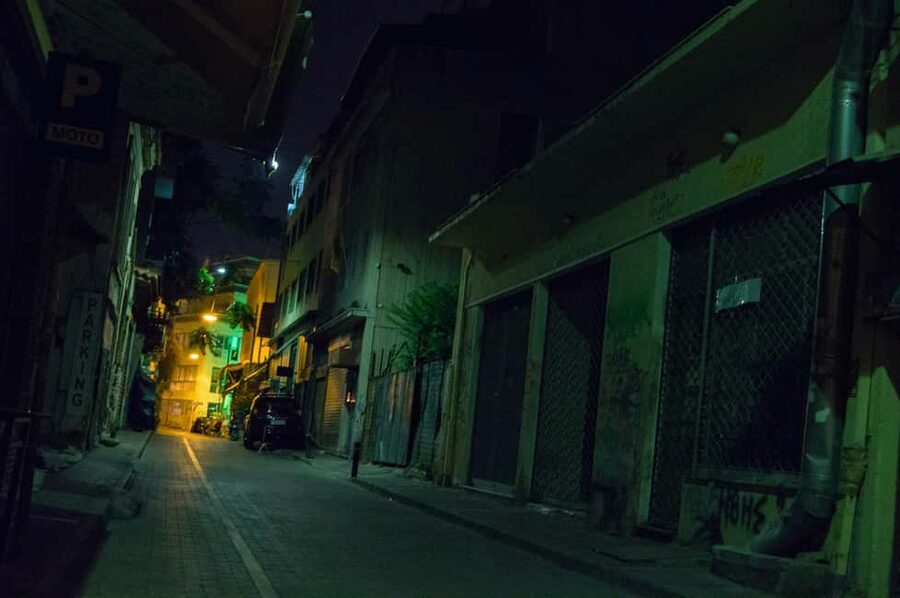
At $36 per person for about 90 minutes to 2 hours, this tour sits in the value zone for a guided night walk with major landmark stops. The biggest value drivers are the things you can’t recreate easily on your own:
- Lantern-led narration with suspenseful pacing
- Access to a guide who links stories to specific sites
- The card reading finale, included in the price
- A small group size capped at 10, which changes the vibe fast
The main “watch-out” for value is what’s not included: entry to sites. If you end up needing multiple tickets, you’ll want to factor those costs into your total. But if you’re happy focusing on the setting and the story connections around key archaeological areas, this can still feel like a solid evening use of your time.
In plain terms: you’re paying for guided mood, guided context, and a small-group evening that’s more memorable than a solo nighttime wander.
Who should take this Athens Ghost Walk
This tour is a good fit if you want:
- A night experience in Athens that still touches real landmarks
- A blend of history and folklore instead of either one alone
- A small-group vibe where your questions aren’t ignored
- A guide who can juggle atmosphere with background facts
It also works well if you’re traveling with someone who loves ancient Athens but finds daytime tours too dry. The ghost theme keeps attention high, and the archaeological stops keep it grounded.
Languages are another plus. The live guiding is available in English, Arabic, French, and Spanish, so you can choose what fits you best. That’s especially helpful if you’re traveling with family or friends who prefer something other than English.
If you’re the type who hates any supernatural elements, the card reading will likely be the sticking point. You can still enjoy the city walk and the storytelling, but you should know that the tour does commit to the mystical ending.
Should you book it? My straight advice
Book this Athens Ghost Walk: Mystical Ruins & Ancient Legends if you want an evening that feels like Athens has a pulse. The lantern-lit pacing, the focus on major stops like the Ancient Agora, Hadrian’s Library, and the Roman Agora, and the Plaka-at-dusk lore all work together into one coherent mood.
Skip it or rethink it if you mainly want museum-style interiors and ticket-based access, because site entry isn’t included. Also consider whether you’re comfortable with the card reading as part of the experience.
If you do book, show up on time at Pompeion Propylon and bring a curious mindset. This isn’t about chasing scares. It’s about understanding how Athens turns stone and street corners into stories you can feel.
FAQ
How long is the Athens Ghost Walk?
The tour runs 90 minutes to 2 hours.
Where does the tour start and how do I find the meeting point?
You meet at Pompeion Propylon. There’s a map of the archaeological site, and you’ll see a big stone and stairs. You’ll meet there.
What sites will we pass during the walk?
The tour includes guided time around the Ancient Agora of Athens, Hadrian’s Library, and the Roman Forum/Roman Agora area, and it also goes through Plaka. It finishes at the Odeon of Herodes Atticus.
Is entry to the archaeological sites included in the price?
No. Entry to any of the sites is not included, so you may need to cover any site entry requirements separately.
What is included besides the guided walk?
The price includes the walking tour with a guide and a specialized card reading at the end.
What languages are available?
The live guide is available in English, Arabic, French, and Spanish.
Athens on Foot: More Walks
- Acropolis and Parthenon Guided Walking Tour★ 5.0 · 4,755 reviews
- Greek Food Walking Tour in Athens★ 5.0 · 4,740 reviews
- Athens: Guided Greek Food Walking Tour with Tastings★ 4.9 · 2,859 reviews
- Acropolis monuments & Parthenon Walking Tour with Optional Acropolis Museum★ 5.0 · 2,678 reviews
- Athens Acropolis and Parthenon Walking Tour★ 4.5 · 1,355 reviews
- Acropolis, Parthenon & Athens Old City Heritage Walking Tour★ 4.5 · 876 reviews
More Tour Reviews in Athens
- Athens: Acropolis & up to 5 Archaeological Sites Combo Pass★ 4.2 · 13,904 reviews
- Athens: Acropolis, Parthenon & Acropolis Museum Guided Tour★ 4.8 · 9,316 reviews
- The Acropolis, Parthenon & Acropolis Museum Guided Tour★ 4.7 · 8,493 reviews
- Athens: Cape Sounion & Poseidon Temple Sunset Half-Day Trip★ 4.8 · 8,241 reviews
- Acropolis: Premium Acropolis and Parthenon Guided Tour★ 4.8 · 5,208 reviews
- Athens: Mythology of Delphi, Museum and Arachova Guided Tour★ 4.7 · 5,102 reviews
Fresh Off the Boat: New Athens Reviews





Walking Tours, compared.
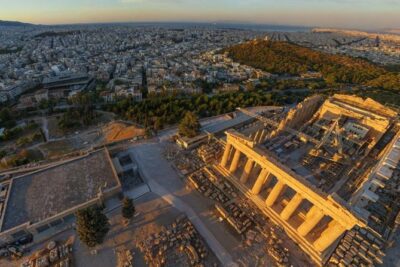 ★ 5.0Acropolis and Parthenon Guided Walking TourFrom $414,755 reviews
 ★ 5.0Greek Food Walking Tour in AthensFrom $874,740 reviews
 ★ 4.9Guided Greek Food Walking Tour with TastingsFrom $812,859 reviews
 ★ 5.0Acropolis monuments & Parthenon Walking Tour with Optional Acropolis MuseumFrom $422,678 reviews
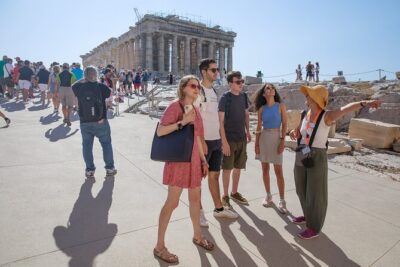 ★ 4.5Athens Acropolis and Parthenon Walking TourFrom $411,355 reviews
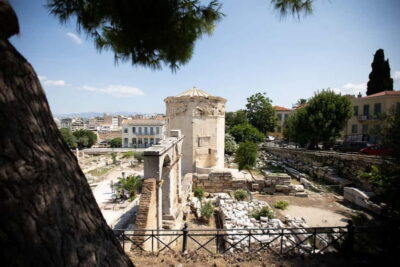 ★ 4.5Acropolis, Parthenon & Athens Old City Heritage Walking TourFrom $34876 reviews
 ★ 5.0Athens Authentic Greek Food Walking Tour (Small Group)From $83809 reviews
 ★ 4.9Ultimate Food Walking Tour with 15 TastingsFrom $93567 reviews
Browse the lists this tour appears in