
Reviewed · ATHENS COOKING CLASSES
Athens: Greek Souvlaki Pita Gyros Cooking Class with a Local
Somewhere between dinner and a lesson.
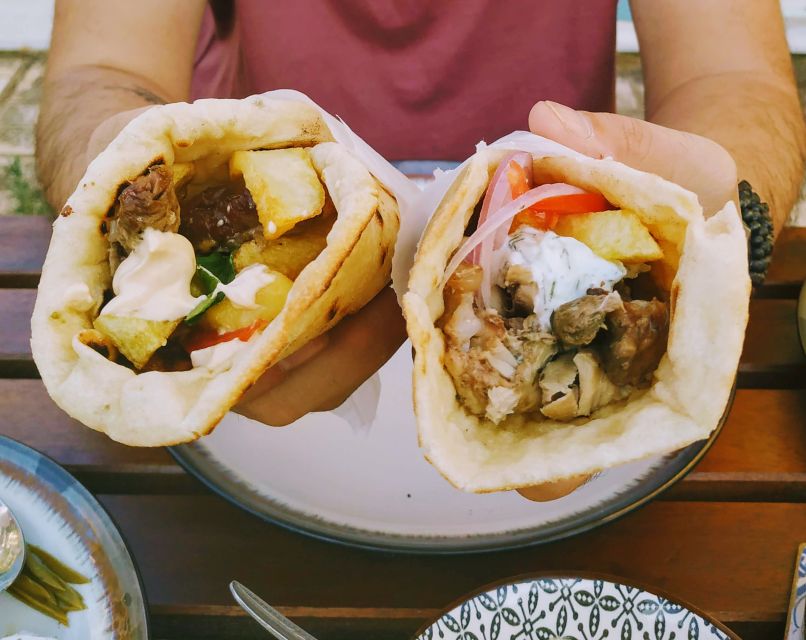
This Athens cooking class is built around hands-on gyros cooking with Dionysia and her husband in a kitchen that feels like a real Greek home. I like that you skip pre-made shortcuts and actually help make the pita dough and the gyros components from fresh ingredients, and I also like the way the evening blends cooking with stories and practical take-home recipes. One thing to consider: it’s not designed for mobility impairments, since it’s a home-style setup and you’ll be moving around as you cook.
You’ll start in a cozy, city-center kitchen, relax with a beer or wine from the fridge, and work at a steady pace without feeling rushed. The food portion is serious too, since it’s framed as an all-you-can-eat meal, and the class includes dessert such as Patsabouropita or Greek-style cheesecake. The only real “downside” is simple: come hungry, or you’ll be stuck pacing yourself while everyone else keeps eating.
In This Review
- Key highlights worth your time
- A home-kitchen feel in central Athens
- From flour to pillowy pita dough
- Gyros cooking lessons: seasoning and technique five ways
- Zero-waste culture that shows up at the table
- Dessert included: Patsabouropita or Greek-style cheesecake
- Eating what you make, with beer and wine
- Price and value: what $129 buys you in Athens
- Who this Athens gyros class is best for
- Should you book this gyros cooking class?
- FAQ
- How long is the Athens gyros cooking class?
- What does the class include?
- Are the drinks included?
- Do I take home recipes?
- What happens if I can’t finish the food?
- Is the class offered in English?
- Is it refundable if I change my plans?
- Is pickup available?
Key highlights worth your time
- Pita and gyros from scratch: you make components yourself, not just watch.
- Cooking gyros in multiple ways: you learn seasoning and techniques so you can repeat them at home.
- Greek zero-waste mindset: leftovers aren’t treated like trash; they’re handled thoughtfully.
- Unlimited drinks and food: beer or wine, plus plenty to eat during and after cooking.
- Dessert included: choose between Patsabouropita or Greek-style cheesecake.
- English instruction and recipes to take home: you leave with written guidance.
Aprons on for another Greek kitchen
- Athens: Classic Cooking Class with Market Visit and Wine
★ 5.0 · 1,101 reviews - Athens: Food Market Visit and Cooking Class with Wine
★ 4.9 · 1,087 reviews - Greek Cooking Class in Athens Including Rooftop Dinner with Acropolis View
★ 5.0 · 826 reviews - Greek Small-Group Athens Cooking Class & Dinner
★ 5.0 · 574 reviews
A home-kitchen feel in central Athens
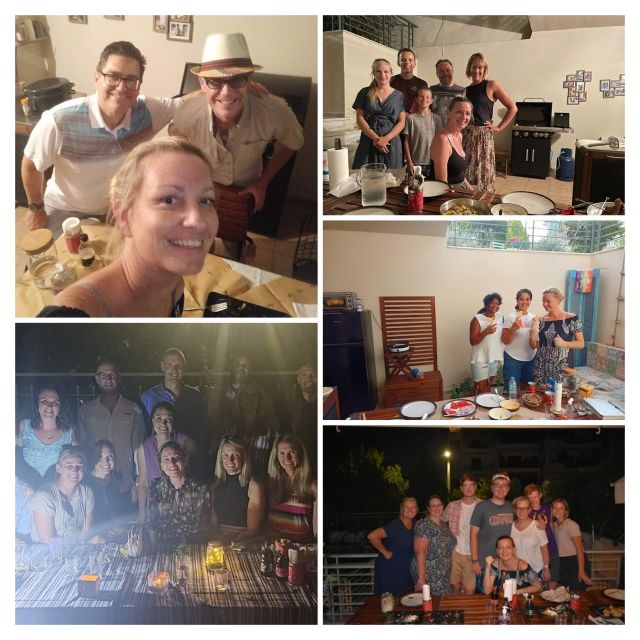
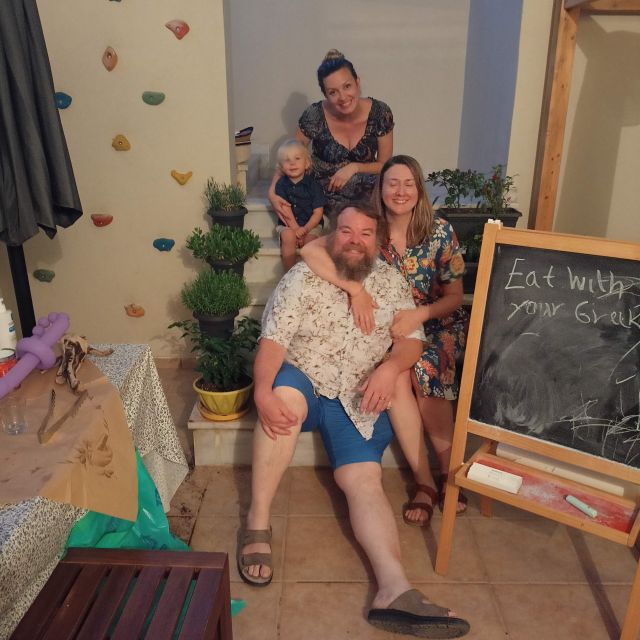
This class is set up like you’re being welcomed into a family kitchen, not marched through a scripted tourist program. The hosts describe the experience as growing from a humble seaside kitchen into a city-center setup after welcoming thousands of guests, and you can feel that intent in how they run the night: you’re invited to relax, get involved, and enjoy yourself while learning.
Dionysia is the main guide, and her husband helps keep things moving. Expect English instruction and a casual tone. You’re also encouraged to treat the evening like a real meal, not a performance. The format matters because it changes the vibe: instead of standing at the edge of the kitchen, you’ll be at workstations, hands on, while conversation and food planning happen around you.
Timing-wise, the class lasts about 3 hours. That’s long enough to learn several steps (dough, seasoning, cooking, and dessert) and still eat everything you make while the kitchen team shares stories. If you’re the type who wants food culture with your dinner, this pace fits.
Practical note: the experience is labeled as not suitable for people with mobility impairments, so if that applies to you, it’s worth looking for a different Athens food class with more suitable access.
From flour to pillowy pita dough
The heart of the evening is learning to make the Greek pita component, and you don’t just help at the last second. The class is structured around doing key tasks yourself—mixing and preparing the dough so you get the feel for what makes it soft and pliable.
Why this is worth doing in Athens: most “gyros-making” experiences focus on assembling already-made parts. Here, the message is clear: no shortcuts. When you make the dough, you understand the texture and the process that turns “bread” into pita that can actually hold fillings and sauces without going soggy.
You can also expect seasoning and technique lessons tied directly to the pita experience—because in Greek cooking, bread isn’t a side item. It’s part of the final bite. By working on it yourself, you’ll leave knowing what “good” feels like, which helps if you try it at home later.
You’ll also likely learn practical handling tips while you cook. For example, since the hosts emphasize fresh ingredients and doing things five different ways for gyros, it’s a good bet the kitchen shows you how small choices affect results (thickness, timing, and heat management). That’s the stuff you can’t get from a recipe card alone.
Gyros cooking lessons: seasoning and technique five ways
Now for the main event: the class focuses on Greece’s favorite street-food combo—pita gyros (souvlaki-style street food energy, cooked in a more at-home, family-kitchen way).
You’ll learn how to season and cook gyros five different ways, which is one of the best indicators of value in this class. “Five ways” matters because it gives you options. Greek food isn’t one rigid formula; it adapts to taste, heat level, spice preferences, and what’s available. Learning multiple methods means you can recreate the general flavor profile at home even if your kitchen setup isn’t identical to theirs.
What you’re getting isn’t just steps. It’s context:
- history behind recipes,
- culinary secrets the hosts have picked up over time,
- and the reasoning behind choices like seasoning emphasis and cooking approach.
That combination is why this class tends to feel less like a workshop and more like a guided family meal. The hosts don’t just instruct; they explain. Even if you’ve made gyros before, the “five ways” approach can help you refine what you do and adjust for your preferences.
A useful expectation to set: you’ll be working hands-on during the cooking portion, and the pace is designed to keep everyone involved without turning it into chaos. Reviews highlight that the evening stays fun and moving along without feeling rushed, which is exactly what you want from a class that lasts 3 hours and ends with eating.
More time at the stove
Zero-waste culture that shows up at the table
This class doesn’t treat waste like an afterthought. It’s framed around Greek zero waste culture, and you’ll actually see the mindset in how food handling works at the end of the meal.
Here’s what that looks like in real terms, based on the way the experience is described and how the hosts handle food: if you can’t finish something or you’d rather not eat a dish, you can take leftovers with you. If that’s not the plan, the hosts may donate or use the remaining food themselves so nothing goes to waste.
That’s more than feel-good PR. In a hands-on cooking class, waste can happen easily—especially when you’re learning multiple components and you’re encouraged to eat freely. The fact that the hosts plan for this means you can focus on learning and enjoying instead of worrying about what to do if you get too full.
It also fits the broader message of the night: this is a family meal, and families handle food with practical care. You’re not just learning gyros; you’re absorbing a way of thinking about ingredients, cooking, and responsibility.
Dessert included: Patsabouropita or Greek-style cheesecake
After the savory work, you get dessert—important because it brings closure to the meal and makes the experience feel complete.
You’ll have a choice between Patsabouropita and Greek-style cheesecake. Even if you’re not sure which one you’ll like, the point is that the dessert isn’t an afterthought. It’s part of the meal planning, and the host team frames it as a favorite ending.
This is also where the evening’s storytelling often lands. Dessert gives the hosts time to sit down a bit, talk traditions, and share recommendations for how to enjoy Athens beyond the kitchen. If you like travel that comes with food context and local tips, this is the sweet spot—literally and figuratively.
Eating what you make, with beer and wine
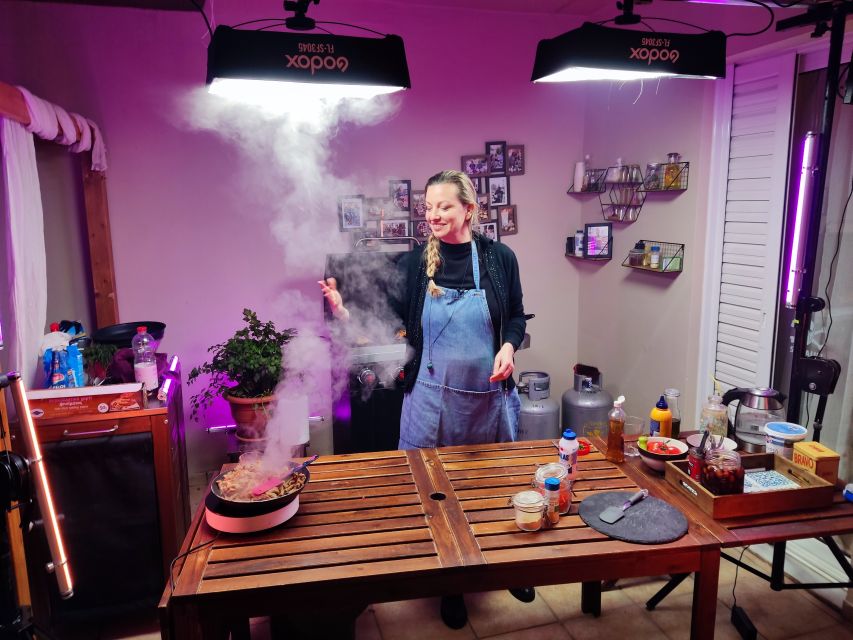
This class is built around tasting, not just producing. You’ll eat what you cook, and you won’t be handed a small sample.
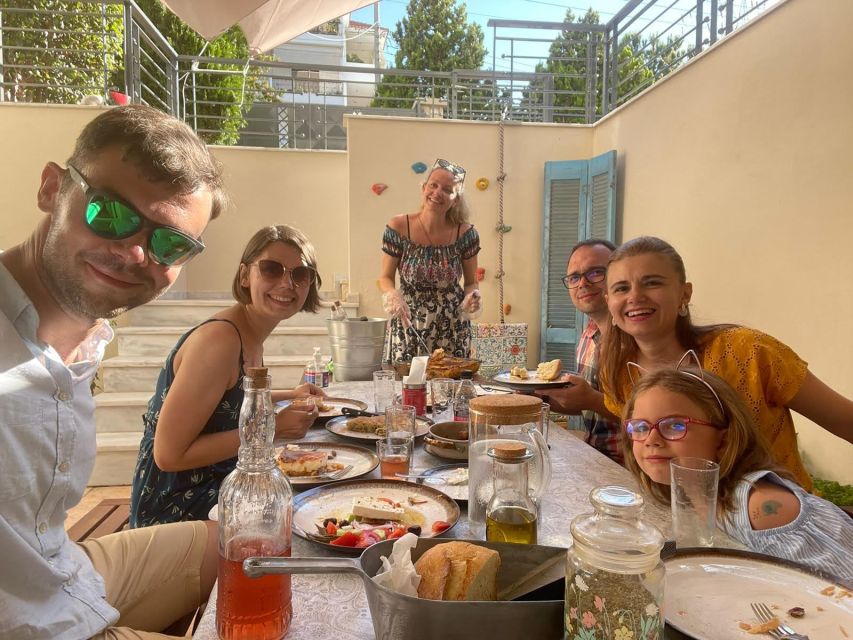
The experience includes unlimited drinks and food, and that typically means you can grab beer or wine from the fridge while you cook and while you sit down to eat. For many people, that’s what makes the class feel like a bargain. You’re not paying only for instruction; you’re paying for a full meal with drinks, plus recipes you can use later.
The all-you-can-eat element also changes your learning. When you can taste right away, you learn faster. You’ll figure out what seasoning you prefer, how sauces and textures work together, and how pita holds everything as a final bite.
One more detail that matters: the hosts share recipes to take home. That gives you a bridge between Athens and your kitchen, so you’re not stuck with good memories and vague recollection.
Price and value: what $129 buys you in Athens
At $129 per person for 3 hours, the price can look “high” if you compare it only to a casual meal. But this isn’t priced like dinner alone.
Here’s what you’re actually getting:
- instructor and cooking equipment,
- unlimited drinks and food during the class,
- recipes included so you can cook at home,
- and a guided, hands-on focus on pita and gyros from scratch.
If you’ve ever paid for a food tour that includes one small tasting, this class feels more “complete.” You’re getting a whole meal plus the practical training to recreate it.
Value also comes from the feel of the evening. A family-run kitchen with Dionysia and her husband as hosts tends to be interactive: conversation, history, and cooking decisions happen together. That kind of atmosphere costs something, and it’s part of why the reviews land so strongly on hospitality and engagement.
The main “cost” is time. You’re spending 3 hours in one place, so plan it for a night when you’re not trying to sprint through Athens sightseeing. If you build your schedule around it, the price starts to make sense quickly.
Who this Athens gyros class is best for
This is a great match if you:
- like hands-on cooking and want to do real prep, not just watch,
- want an authentic Greek family meal vibe in Athens,
- enjoy food history and small cultural context alongside cooking steps,
- and want recipes so you can repeat the results at home.
It’s also a strong choice for couples and families who enjoy conversation. Reviews repeatedly describe the evening as entertaining and engaging, with hosts making tasks approachable. That’s the sweet spot: you get the thrill of learning a real technique, and you still feel relaxed.
If you’re someone who hates eating during a class, pace might bother you. This experience explicitly frames the evening as eat as much as you can. It’s not a light nibble session.
And again, it’s not suitable for people with mobility impairments, so consider that before booking.
Should you book this gyros cooking class?
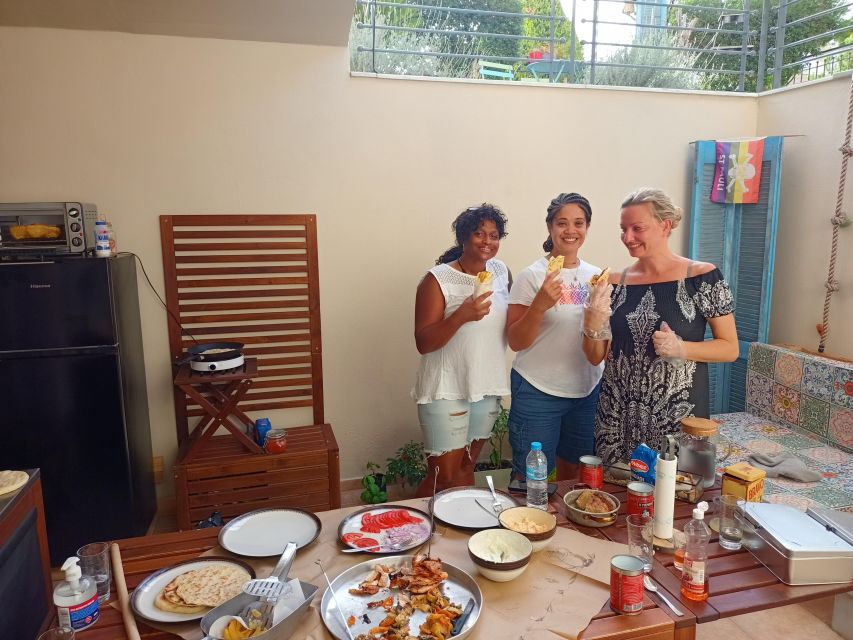
Book it if you want a practical Athens food experience where you cook, eat, and leave with recipes. The “no shortcuts” approach to pita and gyros, plus the unlimited food and drinks, makes it feel like you’re paying for a full evening of both learning and eating—not just a demonstration.
Skip or look elsewhere if you need an experience that’s wheelchair-friendly or low-movement. Also skip if you dislike hands-on cooking or if the idea of a 3-hour meal format doesn’t fit your style.
If you’re hungry for something real—pita dough you made yourself, gyros cooking techniques you can adapt, and dessert to close the loop—this is a smart bet in Athens.
FAQ
How long is the Athens gyros cooking class?
It lasts about 3 hours.
What does the class include?
You get an instructor, cooking equipment, and recipes. Food and drinks are unlimited.
Are the drinks included?
Yes. The experience includes unlimited drinks, with beer or wine available from the fridge.
Do I take home recipes?
Yes. Recipes are included so you can recreate the dishes back home.
What happens if I can’t finish the food?
You can take leftovers with you. The hosts also may donate or use leftover food, so it isn’t wasted.
Is the class offered in English?
Yes, the instructor teaches in English.
Is it refundable if I change my plans?
Yes. You can cancel up to 24 hours in advance for a full refund.
Is pickup available?
Pickup can be arranged. You’ll need to let the provider know if you want them to arrange it.
Learn Another Greek Dish
- Athens: Classic Cooking Class with Market Visit and Wine★ 5.0 · 1,101 reviews
- Athens: Food Market Visit and Cooking Class with Wine★ 4.9 · 1,087 reviews
- Greek Cooking Class in Athens Including Rooftop Dinner with Acropolis View★ 5.0 · 826 reviews
- Greek Small-Group Athens Cooking Class & Dinner★ 5.0 · 574 reviews
- Athens: Greek Cooking Class & Dinner on a Rooftop★ 5.0 · 383 reviews
- Athens: Greek Cuisine Cooking Class and 3-Course Dinner★ 4.8 · 270 reviews
More Tour Reviews in Athens
- Athens: Acropolis & up to 5 Archaeological Sites Combo Pass★ 4.2 · 13,904 reviews
- Athens: Acropolis, Parthenon & Acropolis Museum Guided Tour★ 4.8 · 9,316 reviews
- The Acropolis, Parthenon & Acropolis Museum Guided Tour★ 4.7 · 8,493 reviews
- Athens: Cape Sounion & Poseidon Temple Sunset Half-Day Trip★ 4.8 · 8,241 reviews
- Acropolis: Premium Acropolis and Parthenon Guided Tour★ 4.8 · 5,208 reviews
- Athens: Mythology of Delphi, Museum and Arachova Guided Tour★ 4.7 · 5,102 reviews
Cook It Yourself: Greek Classes
- Athens: Classic Cooking Class with Market Visit and Wine★ 5.0 · 1,101 reviews
- Athens: Food Market Visit and Cooking Class with Wine★ 4.9 · 1,087 reviews
- Greek Cooking Class in Athens Including Rooftop Dinner with Acropolis View★ 5.0 · 826 reviews
- Greek Small-Group Athens Cooking Class & Dinner★ 5.0 · 574 reviews
- Athens: Greek Cooking Class & Dinner on a Rooftop★ 5.0 · 383 reviews
- Athens: Greek Cuisine Cooking Class and 3-Course Dinner★ 4.8 · 270 reviews
Fresh Off the Boat: New Athens Reviews





Athens Cooking Classes, compared.
 ★ 5.0Classic Cooking Class with Market Visit and WineFrom $831,101 reviews
 ★ 4.9Food Market Visit and Cooking Class with WineFrom $811,087 reviews
 ★ 5.0Greek Cooking Class in Athens Including Rooftop Dinner with Acropolis ViewFrom $120826 reviews
 ★ 5.0Greek Small-Group Athens Cooking Class & DinnerFrom $118574 reviews
 ★ 5.0Greek Cooking Class & Dinner on a RooftopFrom $108383 reviews
 ★ 4.8Greek Cuisine Cooking Class and 3-Course DinnerFrom $115270 reviews
 ★ 5.0Traditional Greek cooking class and lunch or dinner with an Acropolis viewFrom $114250 reviews
 ★ 5.0Athens Greek Cooking Class Pita Gyros from Scratch with a LocalFrom $133175 reviews
Browse the lists this tour appears in