
Reviewed · ATHENS WALKING TOURS
Athens: Guided Walking Tour of Ancient Athens
Your Athens starts at a Roman gate. In this 2-hour walking tour, you get a clear, street-level story of Ancient Athens at the Roman Agora, then continue to landmark ruins like Hadrian’s Library, with an official Spanish-speaking guide who explains mythology, philosophy, and daily life. What I like most is how the guide makes big ideas feel simple, and how the route goes beyond the usual one-sight-only approach; one trade-off is you do not enter the archaeological sites, so this is best for orientation and context, not for deep ticketed exploring.
I also like the pacing. You spend enough time at the key points to understand what you’re looking at, and then the walk rolls naturally into Plaka so you can connect the ruins to the living neighborhood around them. Guides such as Juan and Lorena are singled out for being attentive, clear, and easy to follow in Spanish.
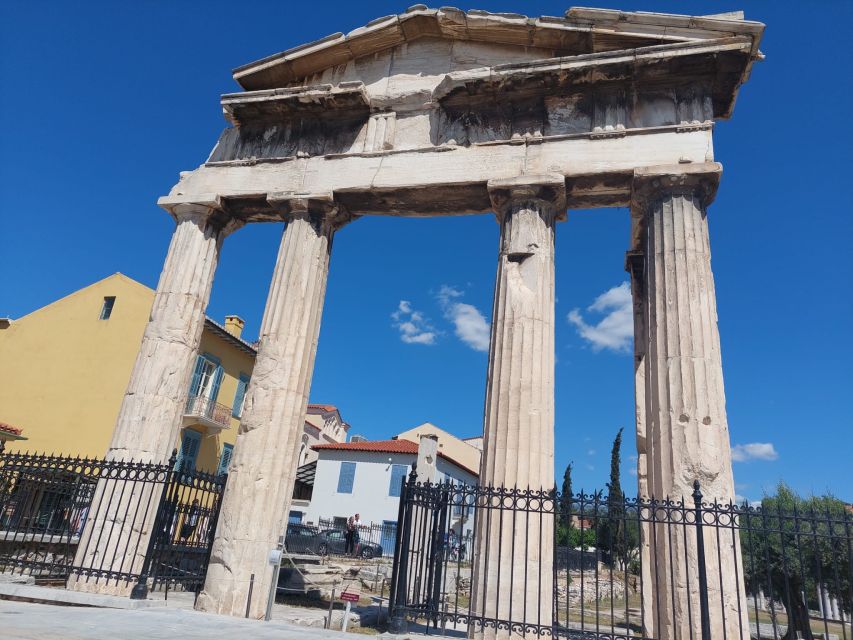
You’ll want to show up ready to walk. The meeting spot is outside at the Gate of Athena, the entrance to the Roman Agora, so bring comfortable shoes, sunscreen, and weather-appropriate clothing.
In This Review
- Key highlights to know before you go
- Starting at the Gate of Athena: Roman Agora, made understandable
- Hadrian’s Library: when Athens gets a Roman makeover
- Plaka after the ruins: turning explanations into street-smart context
- What the Spanish guide brings to the walk (and why it matters)
- A small note on learning expectations
- How to get the most out of a 2-hour walk
- Price and value: $30 for context that saves time
- Who should book this tour (and who might prefer something else)
- Practical tip: plan the rest of your day around the context
- Should you book this Athens walking tour?
- FAQ
- Is this tour guided?
- How long is the tour?
- Where do we meet?
- Do I need to buy archaeological site tickets?
- What’s included in the price?
- What language is the tour in?
- What should I bring?
- How much does it cost?
- What is the cancellation policy?
Key highlights to know before you go
- Meet at the Gate of Athena so you start with the Roman Agora in front of you, not behind you
- Roman Agora + Hadrian’s Library are the headline moments, with explanations tied to how Athens worked
- Official Spanish-speaking guide keeps the history practical, not academic
- Plaka walk for context helps you map ancient Athens onto the streets you’ll walk anyway
- No site entry required means no archaeological tickets are needed for this tour
On foot through Plaka and beyond
- Acropolis and Parthenon Guided Walking Tour
★ 5.0 · 4,755 reviews - Greek Food Walking Tour in Athens
★ 5.0 · 4,740 reviews - Athens: Guided Greek Food Walking Tour with Tastings
★ 4.9 · 2,859 reviews - Acropolis monuments & Parthenon Walking Tour with Optional Acropolis Museum
★ 5.0 · 2,678 reviews
Starting at the Gate of Athena: Roman Agora, made understandable
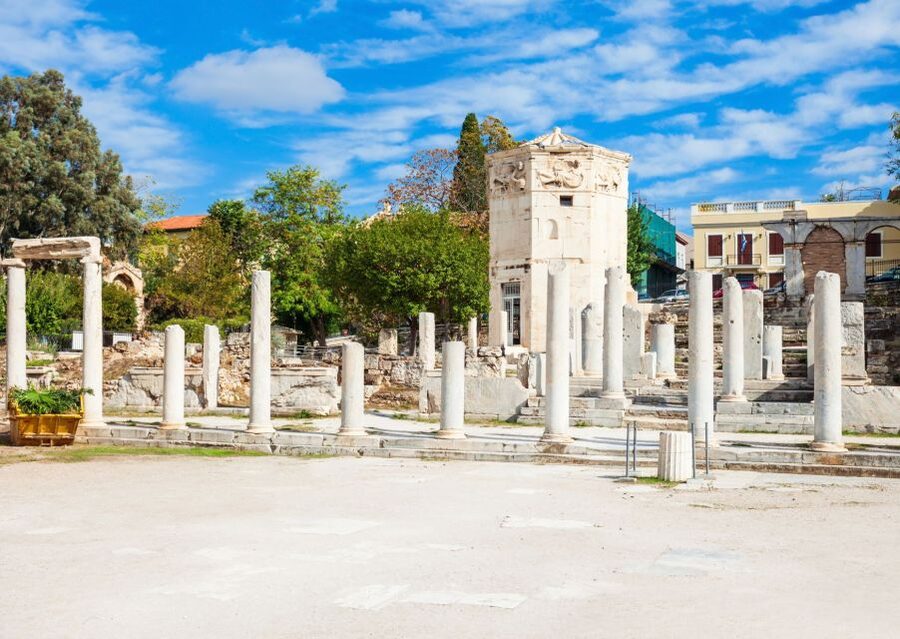
The tour begins outside the Roman Agora at the Gate of Athena. That matters more than you might think. When you start at the actual entrance point, you’re not trying to guess where everything is. You get your bearings fast, and your brain starts building a map: where commerce happened, where people gathered, and how the Romans repackaged Athens’ old glory.
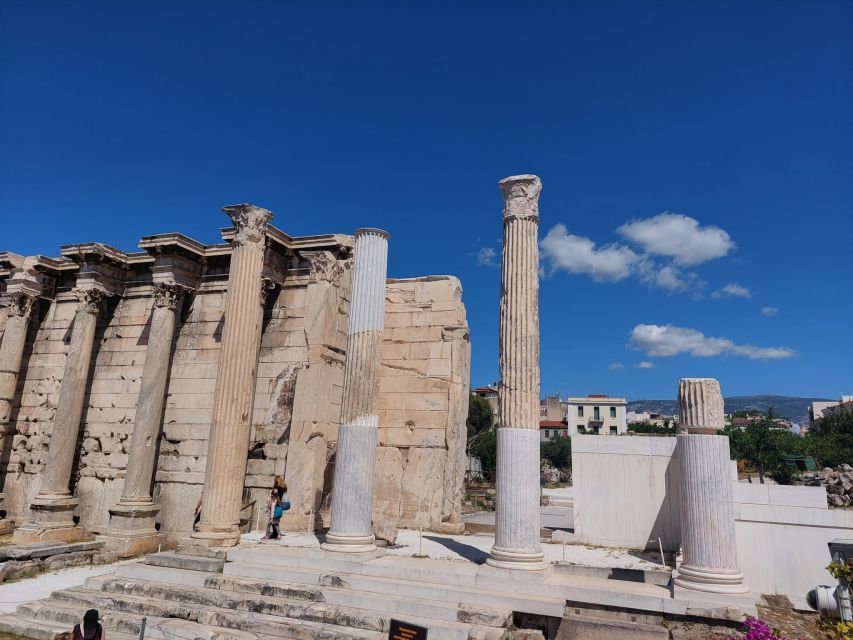
The Roman Agora is one of those places that’s easy to walk past without understanding what you’re seeing. This guided walk changes that. Your guide points out what the space was for and why it’s significant. They connect the physical remains to the idea of a city that wasn’t just temples and statues. Athens was also negotiations, public events, and the kind of civic life you’d recognize in any major city.
One reason I like this stop is that it helps you stop treating Ancient Athens like a museum diorama. Instead of only admiring ruins, you start asking functional questions: who used this area, what rituals or meetings happened nearby, and how political identity was displayed in stone. Even if you’ve read about Athens before, the tour framing makes it easier to “see” the city as people did.
Hadrian’s Library: when Athens gets a Roman makeover
After the Roman Agora, the tour’s focus shifts to Hadrian’s Library. This is the kind of site that can feel intimidating at first—there’s a lot going on historically, and the name alone doesn’t explain what made it special. With a good guide, it clicks.
Here’s the value: the story isn’t just “a building existed.” You get the bigger picture of how Athens remained important under Roman rule. Hadrian is often associated with building and patronage, and the guide helps you understand why Roman attention to Greek culture wasn’t random. It was a strategy. The Romans wanted legitimacy, prestige, and connection to the intellectual image Athens carried.
If you care about how history layers over itself, this is a strong moment. You’re looking at remains shaped by more than one era, which is exactly how many cities work. You don’t need perfect dates memorized to enjoy it, though the guide likely brings up key context like the classical period and the city’s intellectual reputation.
A small consideration: since the tour does not include entering the archaeological sites, your time at each stop is more about observation and explanation than full exploration inside structures. If your main goal is to spend hours inside monuments with tickets, you’ll need a separate, ticketed visit later. If your goal is to understand what you’re seeing while walking the area, this tour is a great fit.
Plaka after the ruins: turning explanations into street-smart context
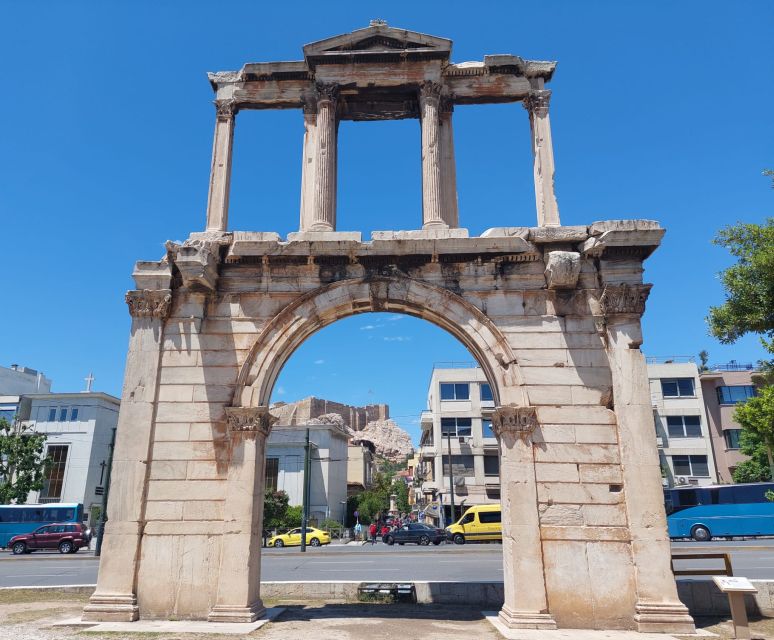
Once the tour shifts toward Plaka, the experience gets more practical. Plaka is one of those neighborhoods that’s easy to recognize, but it can be hard to connect to what came before unless someone gives you the threads. This walk does that by taking the history you heard at the archaeological points and translating it into what you see on the ground afterward.
What I like here is the “map-building” effect. After learning about Roman Athens and the significance of key sites, you start noticing alignments, viewpoints, and how the streets relate to the older urban fabric. You’re also better prepared to decide where to go next because you’re no longer just collecting photos. You’re collecting decisions.
Plaka also gives you an advantage for your wider day in Athens. A good walking tour doesn’t end at the last sentence. It sets you up for wandering. By the time you’re around Plaka’s most relevant tourist attractions, you’ve got enough historical context to make your exploration feel intentional rather than random.
If you’re the type who gets tired when history is only “stop, read, move on,” this part can help. You’ll still be listening, but the environment is more human scale, with streets that invite you to slow down on your own.
Athens at walking pace, more routes
What the Spanish guide brings to the walk (and why it matters)
This is an official Spanish-speaking guided experience. That sounds simple, but it’s huge for comprehension in a place like Athens. Roman Agora and Hadrian’s Library aren’t the kind of sites where you can always rely on easy signage or one-line explanations. Language access changes everything.
The guide’s job here is to make the classics feel relevant. The tour focuses on the classical period and talks history and mythology, plus a bit of philosophy and even scientific advances. You might not remember every detail after the walk, but you’ll likely keep the main threads: what Athens was known for, how its ideas influenced later eras, and why a place like Athens still matters when you walk through it.
From examples of past guides—Juan being praised for being attentive and clear, and Lorena highlighted for being exceptionally good at explaining the Roman Agora in an engaging way—you can expect a style that aims for clarity. The best part of a good guide isn’t only facts. It’s the ability to connect the facts into a story you can actually follow while you’re walking.
A small note on learning expectations
If you want a Partenon-centered experience with maximum detail inside ticketed zones, this walk isn’t that kind of tour. It’s designed to give context at the included points and help you appreciate ancient Athens beyond the single headline monument. Think of it as a high-quality orientation that improves everything you do later.
How to get the most out of a 2-hour walk
Two hours goes fast. That’s the whole trade: quick value versus slow, museum-style reading. To make it work for you, I suggest showing up ready to pay attention for short bursts.
Bring comfortable shoes because you’ll be standing, walking, and adjusting your position for better viewing while the guide explains. Bring sunscreen because Athens sun doesn’t care that you came for history. Wear weather-appropriate clothing—even if the day looks mild, the walk can still get hot, especially under direct sun.
Also, keep your expectations realistic:
- This is not about entering the archaeological sites.
- It’s about getting the meaning of what you see.
- The Plaka segment helps you continue the story on your own after the tour.
If you like to take photos, do it, but don’t let your phone become your whole attention. The places on this walk are about understanding. Photos are the easy part; comprehension takes a bit more focus.
Price and value: $30 for context that saves time
At $30 per person for a 2-hour guided walking tour, the value depends on your goal. If your goal is to buy tickets for everything and wander without guidance, you might question the cost. If your goal is to make sense of Ancient Athens quickly, the guide becomes the real “ticket.”
Here’s why the price feels fair based on what’s included:
- You get an official Spanish-speaking guide.
- You get guided explanation at the archaeological sites included in the route.
- You don’t have to worry about separate archaeological entrance tickets for this tour, since you’re not entering the sites.
That combination matters in Athens, where planning can get fiddly. You can spend your time walking and learning instead of trying to figure out what to prioritize on your own. For many people, that’s the biggest cost saver: fewer wrong turns, fewer wasted hours, and a better sense of what’s worth booking for deeper visits.
Who should book this tour (and who might prefer something else)
This tour is best for you if:
- You want a short orientation to Ancient Athens.
- You’d rather understand the story than just collect photos.
- Spanish is your comfort zone for history explanations.
- You want to connect ruins to real city streets via Plaka.
It may be less ideal if:
- You want a ticketed, inside-the-site type of experience with lots of time in a single major monument.
- You’re looking for a longer day trip with heavy, step-by-step archaeology exploration.
In plain terms: this is a smart first (or second) walk when you’re trying to get your bearings, not a substitute for the big ticket entries if you later decide you want that deeper access.
Practical tip: plan the rest of your day around the context
After you finish, you’ll be in Plaka area—meaning you can keep your momentum. I’d treat the tour like an “opening lecture” for Athens. Then choose your next stop with better judgment.
If you already know the big sights you want to visit, great. You’ll enjoy them more because you’ll understand the why behind what you see. If you’re still deciding, the tour helps you narrow down what you should spend money on for entry versus what you can appreciate just by walking around.
Also, because the route stays focused on included points and doesn’t require site entry, it can fit smoothly into a travel schedule where time is limited.
Should you book this Athens walking tour?
Yes, you should book it if you want a clear, Spanish-guided introduction to Ancient Athens that covers the Roman Agora, includes Hadrian’s Library as a key stop, and ends with a Plaka walk that turns history into something you can recognize on the street. The $30 price is a solid value if you care about context and want to avoid wasting time figuring out what you’re looking at.
Skip it (or pair it with something else) if your dream Athens day is mostly about inside-the-site exploration of major monuments. This tour is built for understanding first, then letting you choose your deeper stops afterward.
FAQ
Is this tour guided?
Yes. It includes an official Spanish-speaking tour guide.
How long is the tour?
The tour lasts 2 hours.
Where do we meet?
You meet in front of the Gate of Athena, which is the entrance to the Roman Agora, outside the archaeological site.
Do I need to buy archaeological site tickets?
No. You will not enter the archaeological sites, so you do not need tickets for this tour.
What’s included in the price?
You get a Spanish-speaking official guide and a guided tour at the included archaeological sites.
What language is the tour in?
The tour is in Spanish.
What should I bring?
Bring comfortable shoes, sunscreen, and weather-appropriate clothing.
How much does it cost?
The price is $30 per person.
What is the cancellation policy?
You can cancel up to 24 hours in advance for a full refund.
More Tours in Athens
- Athens: Acropolis, Parthenon & Acropolis Museum Guided Tour★ 4.8 · 9,316 reviews
- The Acropolis, Parthenon & Acropolis Museum Guided Tour★ 4.7 · 8,493 reviews
- Acropolis: Premium Acropolis and Parthenon Guided Tour★ 4.8 · 5,208 reviews
- Athens: Mythology of Delphi, Museum and Arachova Guided Tour★ 4.7 · 5,102 reviews
- Acropolis and Parthenon Guided Walking Tour★ 5.0 · 4,755 reviews
- Greek Food Walking Tour in Athens★ 5.0 · 4,740 reviews
More Tour Reviews in Athens
- Athens: Acropolis & up to 5 Archaeological Sites Combo Pass★ 4.2 · 13,904 reviews
- Athens: Acropolis, Parthenon & Acropolis Museum Guided Tour★ 4.8 · 9,316 reviews
- The Acropolis, Parthenon & Acropolis Museum Guided Tour★ 4.7 · 8,493 reviews
- Athens: Cape Sounion & Poseidon Temple Sunset Half-Day Trip★ 4.8 · 8,241 reviews
- Acropolis: Premium Acropolis and Parthenon Guided Tour★ 4.8 · 5,208 reviews
- Athens: Mythology of Delphi, Museum and Arachova Guided Tour★ 4.7 · 5,102 reviews
Athens on Foot, Continued
- Acropolis and Parthenon Guided Walking Tour★ 5.0 · 4,755 reviews
- Greek Food Walking Tour in Athens★ 5.0 · 4,740 reviews
- Athens: Guided Greek Food Walking Tour with Tastings★ 4.9 · 2,859 reviews
- Acropolis monuments & Parthenon Walking Tour with Optional Acropolis Museum★ 5.0 · 2,678 reviews
- Athens Acropolis and Parthenon Walking Tour★ 4.5 · 1,355 reviews
- Acropolis, Parthenon & Athens Old City Heritage Walking Tour★ 4.5 · 876 reviews
Fresh Off the Boat: New Athens Reviews





Athens Walking Tours, compared.
 ★ 5.0Acropolis and Parthenon Guided Walking TourFrom $414,755 reviews
 ★ 5.0Greek Food Walking Tour in AthensFrom $874,740 reviews
 ★ 4.9Guided Greek Food Walking Tour with TastingsFrom $812,859 reviews
 ★ 5.0Acropolis monuments & Parthenon Walking Tour with Optional Acropolis MuseumFrom $422,678 reviews
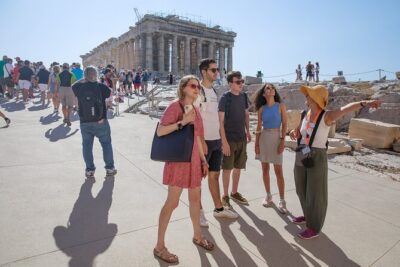 ★ 4.5Athens Acropolis and Parthenon Walking TourFrom $411,355 reviews
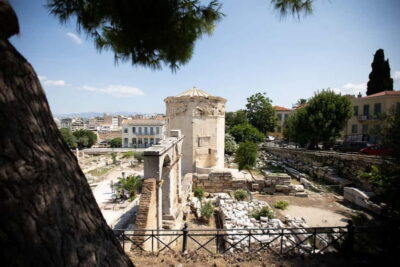 ★ 4.5Acropolis, Parthenon & Athens Old City Heritage Walking TourFrom $34876 reviews
 ★ 5.0Athens Authentic Greek Food Walking Tour (Small Group)From $83809 reviews
 ★ 4.9Ultimate Food Walking Tour with 15 TastingsFrom $93567 reviews
Browse the lists this tour appears in