
Reviewed · HISTORICAL TOURS
Athens Historical Center: Explore by Bike
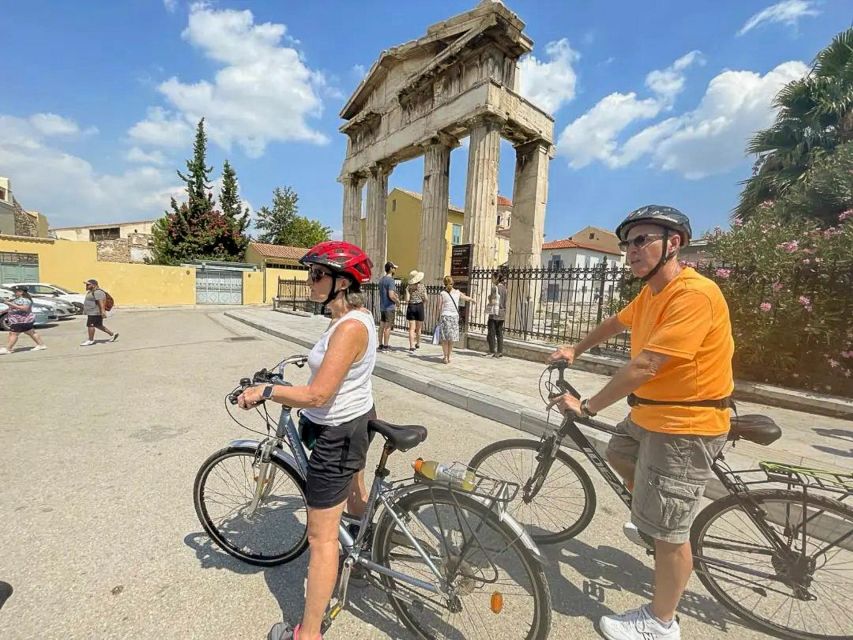
Athens reads faster on a bike. This small-group ride blends Athens history and street life, following bikelanes through neighborhoods like Psirri and Plaka. You’ll roll past major archaeological highlights, then end near the Historical Center with metro access close by.
I love how the tour starts with Kerameikos Cemetery, giving you real context for what you’re looking at before you hit the busier center. I also love the tight, efficient stops at Syntagma Square for the Evzones guards, followed by a smooth glide through the National Gardens toward the Olympic sites.
One thing to consider: this is for people who already know how to ride, and the tour won’t run in case of heavy rain. If you’re not confident on a bike (or you hate weather disruptions), plan an alternate day.
In This Review
- Key highlights worth your attention
- Price and what $39.52 buys you in Athens
- Where you meet and how the ride actually feels
- Kerameikos to markets: starting with the ancient layer, then switching gears
- Monastiraki and Plaka: the ride through Psirri and the Neighborhood of the Gods
- Ancient Agora, Roman Agora, and the Tower of Winds area
- Syntagma Square and the Evzones: a break that’s actually worth standing for
- Zappeion to Panathenaic Stadium: where the Olympics story lands
- Temple of Zeus, Hadrian’s Arch, and the Acropolis-area approach
- Filopappou Hill to Pnyka viewpoints: the walking moment that pays off
- What I think about the guide experience (and why reviews keep praising it)
- Who this bike tour is best for
- Should you book Athens Historical Center: Explore by Bike?
- FAQ
- How long is the Athens Historical Center bike tour?
- Where is the meeting point?
- What’s included in the price?
- What should I bring or plan to pay for separately?
- How big is the group?
- Is the tour in English?
- Do I need to know how to ride a bike?
- What happens if it rains?
- Is there free cancellation?
Key highlights worth your attention
- Kerameikos Cemetery first: you get an immediate ancient-site start, not a slow warm-up.
- Psirri detour: you pass through a lively district and see the Town Hall area and the main market vibe.
- Agoras + Tower of Winds area: the ride keeps you close to the Greek and Roman layers.
- Evzones at Syntagma Square: the stop is built for photos, with a break and viewing time.
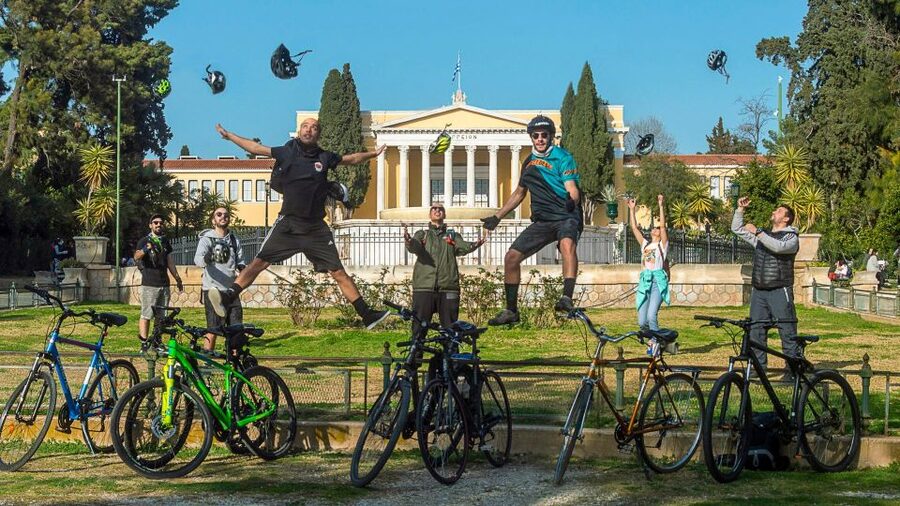
- Panathenaic Stadium: you connect the modern Olympics story to the ancient setting.
- Acropolis-area viewpoints: you finish with scenic walking time up toward Filopappou Hill and Pnyka.
More of Athens by bike
- Athens Scenic Electric Bike Tour with optional Acropolis visit
★ 5.0 · 3,350 reviews - Athens: City Electric Bike Tour with Acropolis Visit Option
★ 4.9 · 1,017 reviews - Athens Small Group E-Bike Tour
★ 5.0 · 1,013 reviews - Historic Athens: Small Group Electric Bike Tour
★ 4.9 · 966 reviews
Price and what $39.52 buys you in Athens
At $39.52 per person for about 2.5 hours, the value is in the setup: a guide, a bike (a 28-inch trekking model), a helmet, and a bottle of water are included. In Athens’ center, that matters because it saves time and stress—you’re not trying to coordinate parking, traffic, and finding the exact chain of sights on your own.
It also helps that the group is capped at 10 participants. A smaller pack means the guide can keep a steady pace without rushing you through photo stops, and it’s easier to pause when you want to look longer at something like an ancient landmark or a viewpoint.
The main trade-off is that you’re still outdoors and on a schedule. If you’re the type who wants to linger for hours in one place, this won’t feel as open-ended as wandering solo.
Where you meet and how the ride actually feels
You meet at Thessalonikis 140, and you’ll look for the Flat Tyres Psycling Club shop. The tour ends back at the same meeting point, very close to the Historical Center of Athens, with a metro stop about 150 meters away.
The route uses the metropolitan Athens bikelane network to move you through the city efficiently. That’s the big practical win: you spend less time fighting for space on foot and more time seeing a chain of sites that are spread out but still close enough to connect by bike.
Before you roll, you’ll be expected to ride your bike confidently. There’s no mention of adaptive bikes or beginner training, so if your biking comfort level is shaky, you’ll want to consider a different day or practice first.
Kerameikos to markets: starting with the ancient layer, then switching gears
The first major stop is Kerameikos, with a photo stop and a pass-by as you begin your Athens story. This is a smart first move because it anchors your eyes in antiquity before you move into the modern-day neighborhoods.
Next you head into the central market area, including the large traditional food market (Varvakios) and the Town Hall area you pass through. This part of the route isn’t just scenic. It gives you the contrast Athens is famous for: huge historical sites within reach of everyday city life and food culture.
A key practical note: even if some stops are brief, moving by bike keeps the day from turning into a string of long transfers. You get the sense of progress, not just a checklist.
Deeper into old Athens
Monastiraki and Plaka: the ride through Psirri and the Neighborhood of the Gods
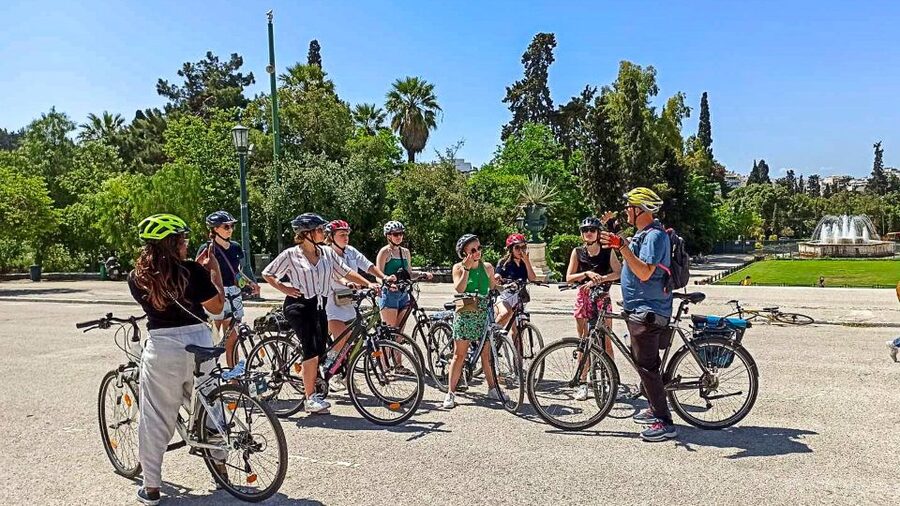
After the market zone, you reach Monastiraki Square, one of Athens’ most central meeting points. Photo stops here work because Monastiraki is both a landmark and a reference point. You can look around and get your bearings for the rest of the route.
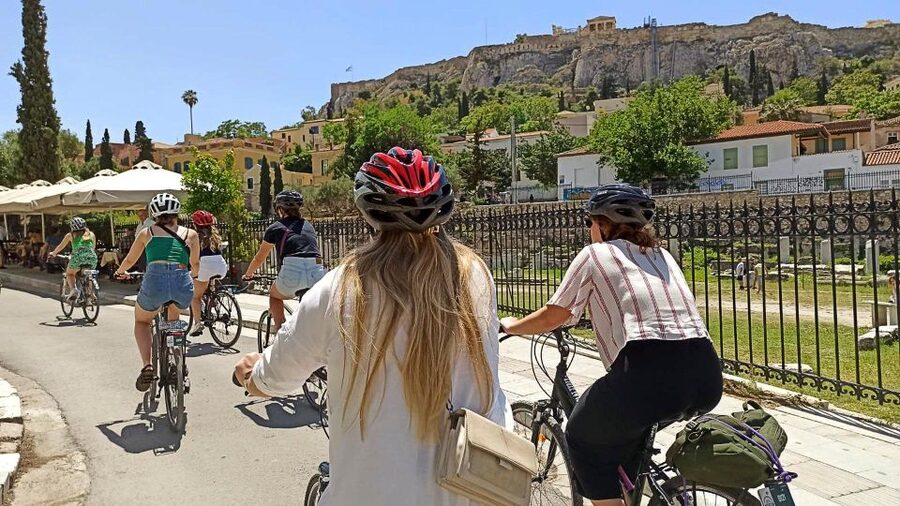
From there, you transition toward Plaka, often called the Neighborhood of the Gods. The route description mentions picturesque paths, and that’s exactly what you want from a bike tour: changing scenery, slower-feeling streets at the right moments, and places where you can glance up and soak in the setting.
Plaka also sets you up for the next wave of sites around the agoras. By the time you’re seeing ancient structures, you’re already in the right mood—history isn’t appearing out of nowhere, it’s unfolding as you ride.
Ancient Agora, Roman Agora, and the Tower of Winds area

Cycling next to the Ancient Greek Agora and the Roman Agora is the point where the trip shifts from neighborhoods back to archaeology. This is one of those stretches where having a guide matters, even when stops are labeled as photo stops or pass-bys.
The route specifically includes the Tower of Winds area. That kind of stop is valuable because it helps you connect buildings you may recognize from photos to the wider city plan and the ancient ideas of public space, trade, and civic life.
You should expect a mix of looking, listening, and quick stops. If you’re the kind of traveler who wants to read every label and walk every corridor, you’ll probably wish you had more time in this zone. But as a 2.5-hour highlights loop, it’s a solid way to taste multiple layers without burning your whole day.
Syntagma Square and the Evzones: a break that’s actually worth standing for
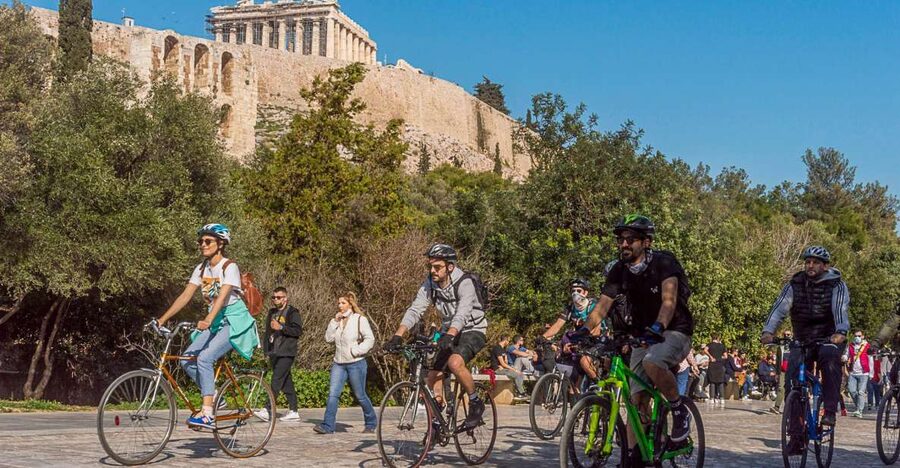
Reaching Syntagma Square is a big emotional beat in this ride. You’ll see the Greek Parliament, and there’s a break time with a photo stop focused on the famous Evzones guards.
This is one of the most praised parts of the experience, and the reason is simple: it’s a clear, dramatic moment that you can plan your photos around. Even if you’ve seen images before, seeing the guards in real life gives you a sense of ceremony and formality that’s harder to get wandering randomly.
After that, you roll through the National Gardens with a smooth ride. It’s a welcome reset. After city intensity and crowds, the garden stretch lets you breathe, cool down a bit, and keep your energy for the Olympic-area stops.
Zappeion to Panathenaic Stadium: where the Olympics story lands
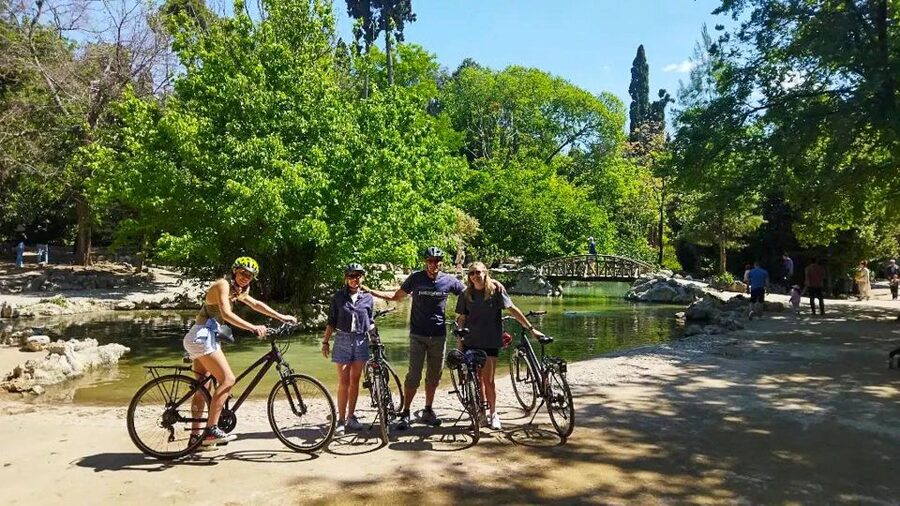
A couple of spins take you to Zappeion Hall and then onward to the Panathenaic Stadium for a photo stop and visit. The route ties it to the first modern Olympic Games in 1896, which helps you frame the stadium as more than a pretty landmark.
What’s especially helpful here is the bike format itself. You’re not only arriving; you’re arriving while already moving through related historic spaces. The result feels like a connected walk through time, but without the usual tiring detours.
The Panathenaic Stadium stop is also a good photo moment. Even if you don’t go deep into every detail, you’ll see why it’s famous: the scale, the setting, and the feeling that this site has been used and reused in different eras.
Temple of Zeus, Hadrian’s Arch, and the Acropolis-area approach
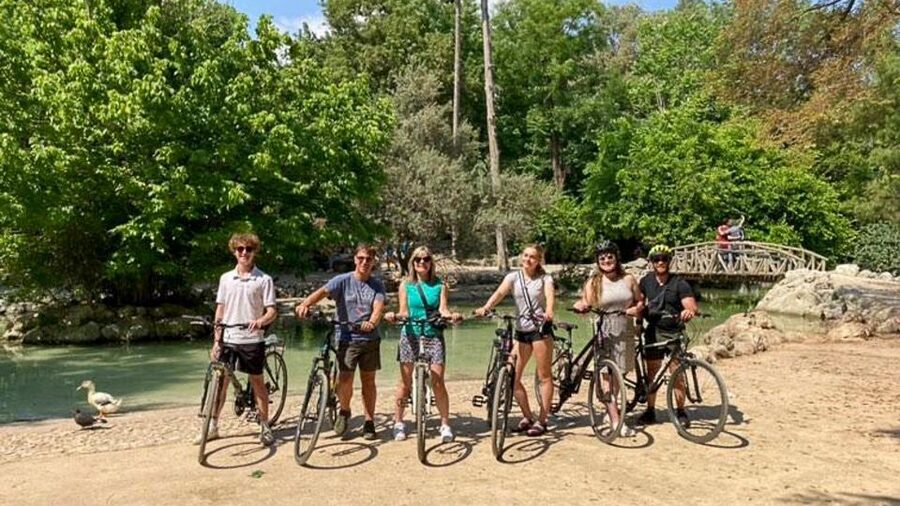
Next is the Temple of Olympian Zeus, followed by Hadrian’s Arch. These are big, visually striking landmarks, and the bike approach helps because you can see how they sit within their wider surroundings.
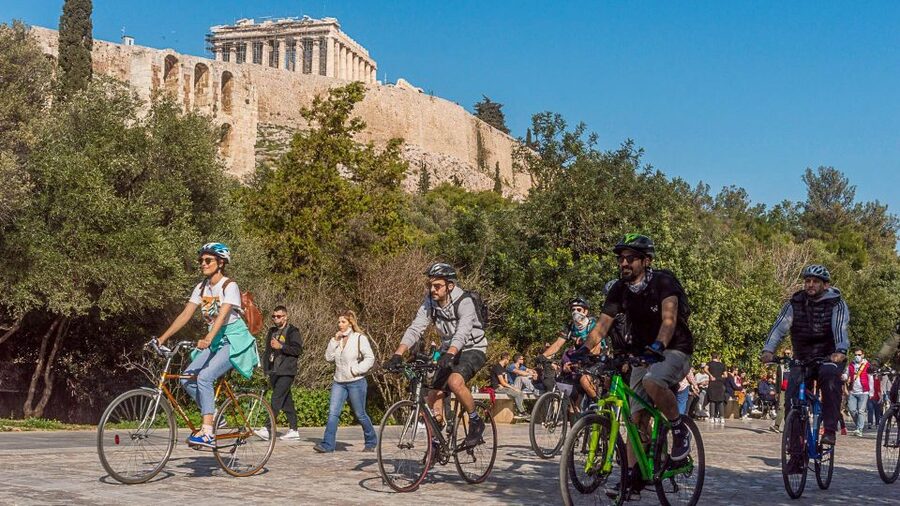
Then the route transitions toward the Acropolis area. You’ll cycle near the Museum of Acropolis, located right under the sacred rock of the Parthenon, with scenic views along the way. That specific positioning matters: you’re not just chasing one building—you’re seeing how modern Athens and ancient Athens overlap physically.
This is where the tour stays practical. You can get close and get context without needing a full half-day ticket plan or a complicated route between distant points. It’s a good taste of what makes the Acropolis region feel so important.
Filopappou Hill to Pnyka viewpoints: the walking moment that pays off

After cycling on the most famous pedestrian road of Athens, the day doesn’t end with just more riding. You’ll walk for a couple of minutes through Filopappou Hill, reaching Pnyka for a panoramic view of Athens.
That walking segment is short, but it’s a smart design choice. Bike tours can sometimes end too abruptly. Here, the tour gives you a payoff: open sightlines over the city, a chance to slow down, and a final memory that feels like a viewpoint, not another stop.
When you’re ready, you cycle down the rest of that well-known pedestrian road to finish back at Thessalonikis 140. It’s a satisfying close because you return with your bearings already set and the day’s sequence still fresh.
What I think about the guide experience (and why reviews keep praising it)
The tour runs with an English live guide, and the experience seems to hinge on how clearly the guide connects the places. In particular, the reviews highlight Stavros as a highly professional guide—patient, friendly, and willing to answer questions.
That question-friendly attitude is more than nice to have. Athens can feel overwhelming because so many sites are layered and close together. A guide who can explain what you’re looking at, and respond patiently when you ask follow-ups, turns the stops from photo moments into real understanding.
You’re also in a small group limited to 10 people, so you’re not stuck listening from far away. You’re close enough to hear the story and quick enough to keep a steady rhythm.
Who this bike tour is best for
This tour fits best if you want a high-value overview of Athens’ core highlights without spending the day in transit. You’re likely to enjoy it if you:
- like seeing multiple iconic sights in one morning or afternoon,
- want a guided route through places like the Ancient Agora and Roman Agora areas,
- prefer active sightseeing over sitting in a vehicle,
- and can already ride a bike comfortably.
It may not be ideal if you need long, slow museum-style time at each stop, or if you know your biking skills are still shaky. Also remember: the tour won’t take place in heavy rain.
Should you book Athens Historical Center: Explore by Bike?
I’d book it if you want a focused, well-paced way to connect neighborhoods to archaeology—Kerameikos to markets, Monastiraki to Plaka, then onward to Syntagma and the Panathenaic Stadium. At this price point, you’re buying a working route, a guide, and the equipment that keeps the day simple.
You should skip or reschedule if weather is uncertain for your dates or if you’re not confident riding. For everyone else, it’s a practical way to see a lot of Athens without feeling rushed or trapped in traffic.
FAQ
How long is the Athens Historical Center bike tour?
The tour lasts about 2.5 hours. Starting times can vary, so you’ll need to check availability for the exact schedule.
Where is the meeting point?
Meet at Thessalonikis 140. Look for the Flat Tyres Psycling Club shop.
What’s included in the price?
Included are the bike leader/tour guide, a 28-inch trekking bike, a helmet, and a 0.5 L bottle of water, plus all taxes.
What should I bring or plan to pay for separately?
Hotel pickup and drop-off aren’t included, and food and drinks aren’t included.
How big is the group?
It’s a small group, limited to 10 participants.
Is the tour in English?
Yes, the live tour guide provides the tour in English.
Do I need to know how to ride a bike?
Yes. All guests must know to ride a bike.
What happens if it rains?
The tour will not take place in case of heavy rain.
Is there free cancellation?
Yes. You can cancel up to 24 hours in advance for a full refund.
The Old Athens, Toured Properly
- Historical Delphi One Day Tour with Arachova Stop & Expert Guide★ 4.5 · 1,247 reviews
- Historic Athens: Small Group Electric Bike Tour★ 4.9 · 966 reviews
- Acropolis, Parthenon & Athens Old City Heritage Walking Tour★ 4.5 · 876 reviews
- Athens: Small Group E-Bike Tour of Historic Highlights★ 4.9 · 154 reviews
- The History of Athens: Greek Mythology Private Tour★ 5.0 · 138 reviews
- Athens Highlights by E-Bike: Small-Group Historic Tour★ 5.0 · 131 reviews
Athens on Two Wheels
- Athens Scenic Electric Bike Tour with optional Acropolis visit★ 5.0 · 3,350 reviews
- Athens: City Electric Bike Tour with Acropolis Visit Option★ 4.9 · 1,017 reviews
- Athens Small Group E-Bike Tour★ 5.0 · 1,013 reviews
- Historic Athens: Small Group Electric Bike Tour★ 4.9 · 966 reviews
- Athens Electric Bike Tour★ 5.0 · 836 reviews
- Athens: City Bike tour with Acropolis Visit Option★ 4.9 · 665 reviews
More Tour Reviews in Athens
- Athens: Acropolis & up to 5 Archaeological Sites Combo Pass★ 4.2 · 13,904 reviews
- Athens: Acropolis, Parthenon & Acropolis Museum Guided Tour★ 4.8 · 9,316 reviews
- The Acropolis, Parthenon & Acropolis Museum Guided Tour★ 4.7 · 8,493 reviews
- Athens: Cape Sounion & Poseidon Temple Sunset Half-Day Trip★ 4.8 · 8,241 reviews
- Acropolis: Premium Acropolis and Parthenon Guided Tour★ 4.8 · 5,208 reviews
- Athens: Mythology of Delphi, Museum and Arachova Guided Tour★ 4.7 · 5,102 reviews
Fresh Off the Boat: New Athens Reviews




Historical Tours, compared.
 ★ 4.5Historical Delphi One Day Tour with Arachova Stop & Expert GuideFrom $341,247 reviews
 ★ 4.9Historic Athens: Small Group Electric Bike TourFrom $41966 reviews
 ★ 4.5Acropolis, Parthenon & Athens Old City Heritage Walking TourFrom $34876 reviews
 ★ 4.9Small Group E-Bike Tour of Historic HighlightsFrom $53154 reviews
 ★ 5.0The History of Athens: Greek Mythology Private TourFrom $199138 reviews
 ★ 5.0Athens Highlights by E-Bike: Small-Group Historic TourFrom $54131 reviews
 ★ 5.0Half Day Historical Athens City Private Taxi Service TourFrom $11079 reviews
 ★ 5.0Half day tour to Acropolis and the must-see historical sites and downtownFrom $18069 reviews
Browse the lists this tour appears in